Most dash cameras ask you to choose: sharp video while you drive, or protection while you park. The Thinkware U3000 PRO refuses that trade. It is a flagship front and rear dash camera that records true 4K up front and 2K behind, both on Sony STARVIS 2 sensors, and it keeps watching after you switch off — radar built into both cameras, plus an LTE module that can send impact alerts and a live view to your phone.
In this review of the Thinkware U3000 PRO, we cover what the two cameras actually record, how the night vision holds up, what the LTE connection really gives you, and what dual radar parking mode does while your car sits unattended. We also compare it with the VIOFO A229 Pro and the Garmin 67W. One warning first: this is the PRO, not the cheaper base U3000 — the PRO has radar in both cameras and LTE support, and the bundle in this review includes the LTE module. If you want the short version first, the Quick Pick table below has it.
As an Amazon Associate I earn from qualifying purchases.
| Pick | Product | Why it stands out | Check Price |
|---|---|---|---|
| Overall Winner | Thinkware U3000 PRO 4K/2K 2CH Dash Cam with LTE Module | True 4K front + 2K rear on dual STARVIS 2 sensors, dual radar parking mode, LTE module included | |
| Best Budget | Garmin Dash Cam 67W | Single-channel 1440p through a 180-degree lens, voice control, GPS, 2-inch screen, 16GB card included | |
| Premium Pick | VIOFO A229 Pro 4K HDR Dash Cam (2CH) | Same native 4K front + 2K rear sensors as the Thinkware, with voice control and a supercapacitor — no LTE, no radar |
Table of Contents
What the Thinkware U3000 PRO Is: A Flagship Front and Rear Dash Camera
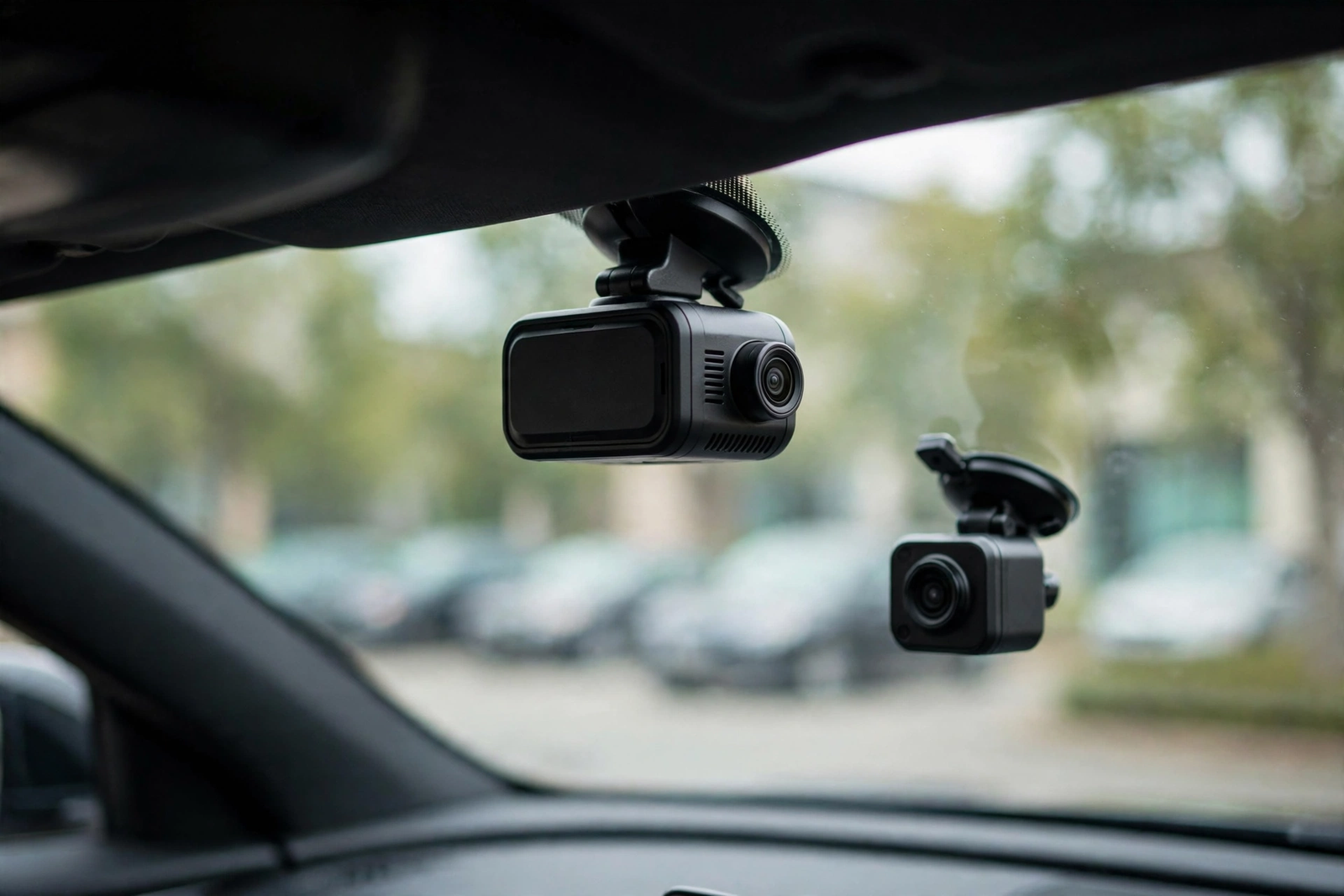
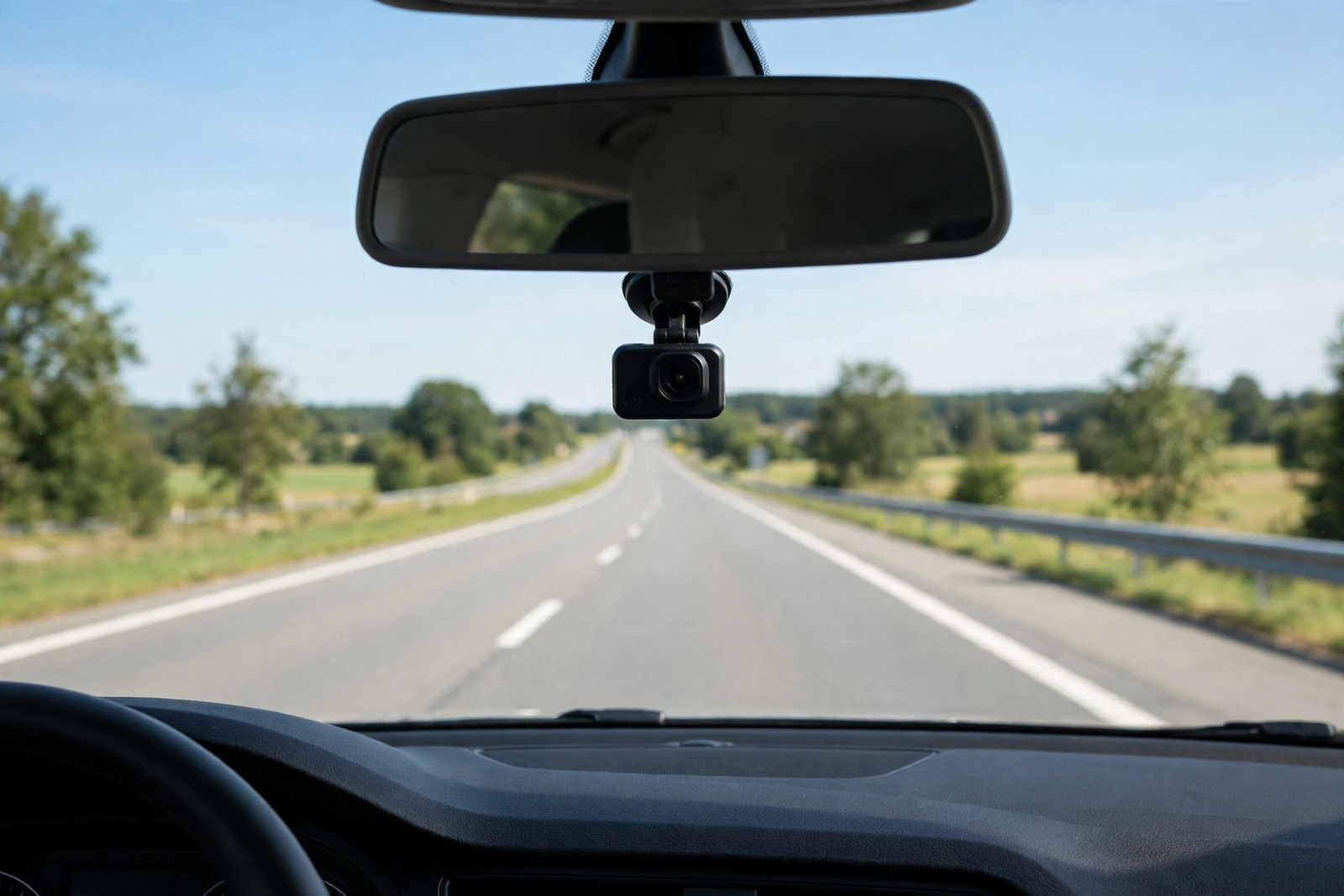
The U3000 PRO is a two-channel kit: a front unit on the windshield and a smaller rear unit on the rear glass, joined by a cable along the headliner. The front camera records in 4K and the rear in 2K, both on Sony STARVIS 2 sensors, and the listing for this bundle — model U3000 PRO, ASIN B0G4BGBKRJ, sold by THINKWARE USA — includes the LTE module. That matters, because Thinkware also sells the PRO without the module, and the base U3000 is a different, cheaper camera with a single radar and no LTE support at all.
In the box, retailer listings say, are the two cameras, a 64GB microSD card and an OBD cable for power — the OBD cable is what lets the camera draw power while parked. The camera supports cards up to 512GB, and Thinkware’s own store gives the recording times at 4K plus 2K: about 125 minutes on 64GB, 249 on 128GB, 500 on 256GB and 1,016 on 512GB before loop recording overwrites the oldest footage.
The rest of the kit is built for life on the windshield: 5GHz Wi-Fi, built-in GPS, Bluetooth, the THINKWARE DASH CAM LINK app, ADAS and safety camera alerts, thermal protection and H.265 compression. As a car dash camera front and rear kit, it is the most complete box Thinkware sells.
Video Quality: True 4K Front, 2K Rear
The headline spec is genuine this time: the front camera records 3840×2160 at 30 frames per second from an 8.4MP Sony STARVIS 2 IMX678 sensor, a 1/1.8-inch sensor that captures a real 4K image rather than stretching a smaller one. By contrast, our ROVE R2-4K Dual review documents a front 4K output upscaled from a native 2.5K sensor, and the REDTIGER F7NP does the same from a native 2.5K IMX335. Native 4K preserves more real detail when you crop into a number plate. If you would rather have smoother motion, the front camera also offers 2K at 60 frames per second.
The rear camera is no afterthought. It records at 2560×1440 at 30 frames per second from a 5.14MP Sony STARVIS 2 IMX675 sensor, the same generation as the front. That 2K rear is the U3000 PRO’s clearest advantage over the F7NP and the ROVE, which both pair their 4K-class front cameras with 1080p rear cameras. Both channels carry Dual HDR while driving, and the viewing angles are wide — 147 degrees up front, 156 degrees at the rear.
Two honest limits: at 30 frames per second in 4K, fast-moving plates can blur, and no camera guarantees plate readability. The front bitrate is 30 Mbps and the rear 10 Mbps — so use a fast, high-endurance card.
Night Vision and Super Night Vision 4.0
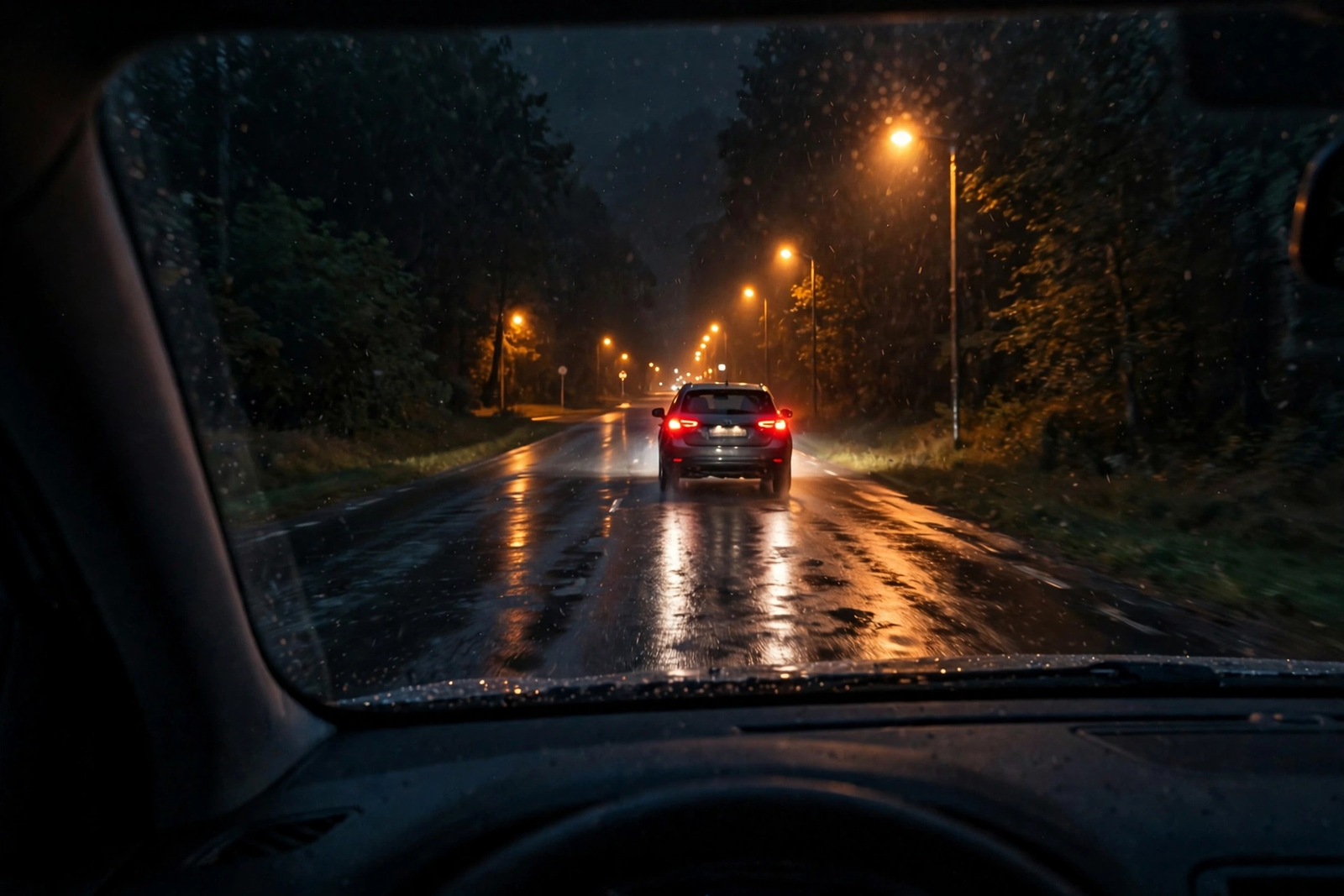
Night driving is where a dash camera earns its keep, and it is where the STARVIS 2 sensors do their best work. Both are back-illuminated designs built for low light, and Thinkware pairs them with Super Night Vision 4.0, its low-light processing mode. The listing presents it as the camera’s night-vision system; we have not tested it hands-on, so treat the name as a listing claim, not a measured result. The hardware behind it is sound: large, modern sensors with HDR on both channels.
HDR matters at night because of headlights: a bright headlight in a dark frame is the classic failure — the light blows out and the plate behind it disappears. HDR blends multiple exposures, holding the bright areas back while the shadows stay visible. It will not work miracles on a fast-moving plate under a streetlight, but it gives the U3000 PRO a better chance of keeping both halves of a night scene readable.
The rear camera is the weaker night performer, as you would expect from its smaller 1/2.8-inch sensor — its night footage shows what happened, not fine detail.
LTE and THINKWARE CONNECTED
The LTE module is what makes the U3000 PRO different from every other camera in this programme. With the module fitted, the camera connects to THINKWARE CONNECTED, and the listing describes remote live view, impact notifications, vehicle tracking, geofencing and last parking location — you can check on a parked car from your phone and be told when something hits it. The module in this bundle comes with a USIM and a free 3-year Basic Plan, according to the listing, and THINKWARE CONNECTED offers Basic and Premium plans. We state no subscription price here: the plan terms beyond the included Basic Plan were not verified.
Two practical points follow. First, the remote features need the module, power and mobile network coverage — Wi-Fi alone does not give you remote monitoring. Second, the LTE module and the optional in-cabin camera share one accessory port, so they cannot be used at the same time. Rideshare drivers face a real choice: the LTE module for remote alerts, or the cabin camera for interior footage, not both.
Day to day, the camera connects over 5GHz Wi-Fi to the DASH CAM LINK app for aiming, settings and pulling clips to your phone, and built-in GPS stamps speed and location onto the footage. Check what the Basic Plan covers before you buy.
Dual Radar Parking Mode
Parking mode is where the PRO earns its name over the base U3000. The base model has a single radar; the PRO has radar built into both the front and the rear cameras, watching for motion around the parked car — up to five metres out, according to one review of the camera. When motion or an impact is detected, the camera saves a 20-second clip including the moments before and after the event. Thinkware says the PRO uses 10% less power in this mode than the U3000.
There are four parking modes, trading coverage against power. Energy Saving records only when an impact is detected, Time Lapse records at two frames per second. Motion and Impact Detection saves a 20-second clip with ten seconds before and ten seconds after the trigger. Smart Parking Mode drops to a low-power state if the cabin gets too hot.
Parking mode still needs continuous power the 12V socket cannot give you: the included OBD cable or a hardwire kit wired to the fuse box. Without either, the camera starts when the car starts and stops when it stops, and the radar is irrelevant. If a parked-car hit-and-run is your main worry, the radar is the feature to buy — but only with the power to run it.
U3000 PRO vs the Alternatives (Garmin 67W, VIOFO A229 Pro, ROVE R2-4K Dual)
The VIOFO A229 Pro is the closest rival on paper. Our VIOFO A229 Pro review documents the same native 4K front camera on the Sony STARVIS 2 IMX678 and the same 2K rear on the IMX675, with HDR on both channels, 5GHz Wi-Fi and quad-mode GPS. What the VIOFO adds is voice control and a supercapacitor for hot windshields. What it lacks is what makes the Thinkware a flagship: no radar, no LTE, no remote alerts, and no card or hardwire kit in the box.
The Garmin 67W is the opposite idea: the budget route to a good front camera. Our Garmin 67W review covers a single-channel camera that records 1440p through an extra-wide 180-degree lens, with Clarity HDR, a 2-inch screen, voice control, GPS and a 16GB card included. It has no rear camera and no 4K, and its Parking Guard needs a Constant Power Cable and Wi-Fi in range. One flag: some retailers now list the 67W as no longer available, so confirm it is orderable before relying on the Best Budget slot. For the wider field, see our dash cam dashboard camera roundup.
One more name for tighter budgets: the ROVE R2-4K Dual. Our ROVE R2-4K Dual review documents a 4K front image upscaled from a native 2.5K sensor plus a 1080p rear camera, a 3-inch touchscreen, dual-band Wi-Fi, GPS, a supercapacitor and a 128GB card included. The front 4K is not native, the rear is 1080p, and parking mode needs a hardwire kit sold separately.
Who Should Buy It — and Who Should Skip It
Buy the U3000 PRO if you want the best video quality and remote parking surveillance in one purchase, and you accept the flagship outlay and the connected-services question that comes with it. It suits drivers who park on the street or in public car parks and want to be told when something hits the car.
Skip it if you only need a front camera: the Garmin 67W covers that job for far less. Skip it too if you want the sharpest video without the connected extras — the VIOFO A229 Pro gives you the same sensors and resolution with no LTE plan to think about. Skip it if you need a cabin camera as well as LTE. And skip parking mode unless you will use the included OBD cable or fit a hardwire kit — without continuous power, this is a driving recorder only.
Verdict
The Thinkware U3000 PRO is the only connected flagship here, and as a front and rear dash camera it earns the title: a native 4K front camera on the Sony STARVIS 2 IMX678, a 2K rear on the IMX675, Dual HDR, Super Night Vision 4.0, radar in both cameras and an LTE module in the box. Its limits are equally clear: the included 64GB card holds only a couple of hours at full resolution, the LTE module and the cabin camera cannot run together, and the cloud features run on a plan that needs checking before you buy. Accept those three facts and this is the strongest buy for drivers who want their car watched; if any of them is a deal-breaker, the VIOFO above is the honest next step.
Frequently Asked Questions
Is the Thinkware U3000 PRO the same as the Thinkware U3000?
No. The base U3000 is a cheaper camera with a single radar and no LTE support. The U3000 PRO has radar built into both the front and the rear cameras, and it supports the LTE module for remote alerts and live view. This review covers the PRO bundle, ASIN B0G4BGBKRJ, which includes the LTE module — check the listing title before ordering, because the PRO is also sold without the module.
Is the 4K on the U3000 PRO native 4K?
Yes. The front camera records at 3840×2160 at 30 frames per second from an 8.4MP Sony STARVIS 2 IMX678 sensor, which captures a genuine 4K image. That is different from cameras like the ROVE R2-4K Dual, whose 4K output is upscaled from a native 2.5K sensor. The rear camera records at 2K, not 4K, and this review does not describe it as 4K anywhere.
Does the LTE module need a subscription?
The module in this bundle comes with a USIM and a free 3-year Basic Plan, according to the listing, and THINKWARE CONNECTED offers Basic and Premium plans. The remote features — live view, impact notifications, vehicle tracking — run through those plans, so check what the Basic Plan covers and what sits behind the Premium tier before you buy. No subscription price is stated in this review, because the plan terms beyond the included Basic Plan were not verified.
Does parking mode work out of the box?
Almost. The bundle includes an OBD cable, according to retailer listings, and that cable lets the camera draw power with the ignition off so the radar parking modes can run. A hardwire kit wired to the fuse box is the tidier permanent install. Without either, the camera starts when the car starts and stops when it stops, and the radar cannot watch a parked car.
What size memory card does the U3000 PRO take?
A 64GB microSD card is included in the box, according to retailer listings, and the camera supports cards up to 512GB. At 4K plus 2K recording, Thinkware’s own store gives about 125 minutes on 64GB, 249 minutes on 128GB, 500 minutes on 256GB and 1,016 minutes on 512GB before loop recording overwrites the oldest footage, so buy a larger high-endurance card with the camera if you want more than a couple of hours of driving history.
Should I buy the Thinkware U3000 PRO or the VIOFO A229 Pro?
On the spec sheet they are close: both record native 4K up front and 2K at the rear on the same Sony STARVIS 2 sensors, with HDR on both channels. The Thinkware adds dual radar parking mode and the LTE module for remote alerts and live view, plus a 64GB card and OBD cable in the box. The VIOFO adds voice control and a supercapacitor, and it costs less — but it has no LTE, no radar, and no card or hardwire kit included. If remote parking surveillance is the reason you are buying, choose the Thinkware; if you want the same video quality without the connected extras, choose the VIOFO.