A two-channel dash cam that records true 4K up front and 1080p behind, with HDR on both channels, usually costs more than the 70mai A810. The A810-2 set pairs a Sony STARVIS 2 IMX678 front sensor with a 1080p HDR rear camera, built-in GPS, driver-assistance alerts and a 3-inch screen — the full dual-channel kit at a price that undercuts the premium dual-channel cameras. That is what makes this camera a best dash cam front and rear value pick: native 4K where the budget rivals upscale, and a rear channel that also gets HDR.
In this review of the 70mai A810, we cover what the two cameras actually record, how the night vision and dual HDR hold up, what GPS, Wi-Fi and ADAS add, and what parking mode really costs — the hardwire kit is sold separately. We also compare it with the ROVE R2-4K Dual and the VIOFO A229 Pro, the two rivals most buyers shortlist next to it. The Quick Pick table below has the short version first.
As an Amazon Associate I earn from qualifying purchases.
| Pick | Product | Why it stands out | Check Price |
|---|---|---|---|
| Overall Winner | 70mai Dash Cam A810 (A810-2, front + rear) | True 4K front + 1080p HDR rear, STARVIS 2 IMX678, GPS and ADAS | |
| Best Budget | ROVE R2-4K Dual Dash Cam | 4K front (upscaled) + 1080p rear, STARVIS 2 sensor, GPS and a 128GB card included | |
| Premium Pick | VIOFO A229 Pro Dash Cam (2CH) | Native 4K front + 2K rear, dual STARVIS 2 sensors, GPS, 5GHz Wi-Fi, supercapacitor |
Table of Contents
What the 70mai A810 Is: the Best Dash Cam Front and Rear Value Pick
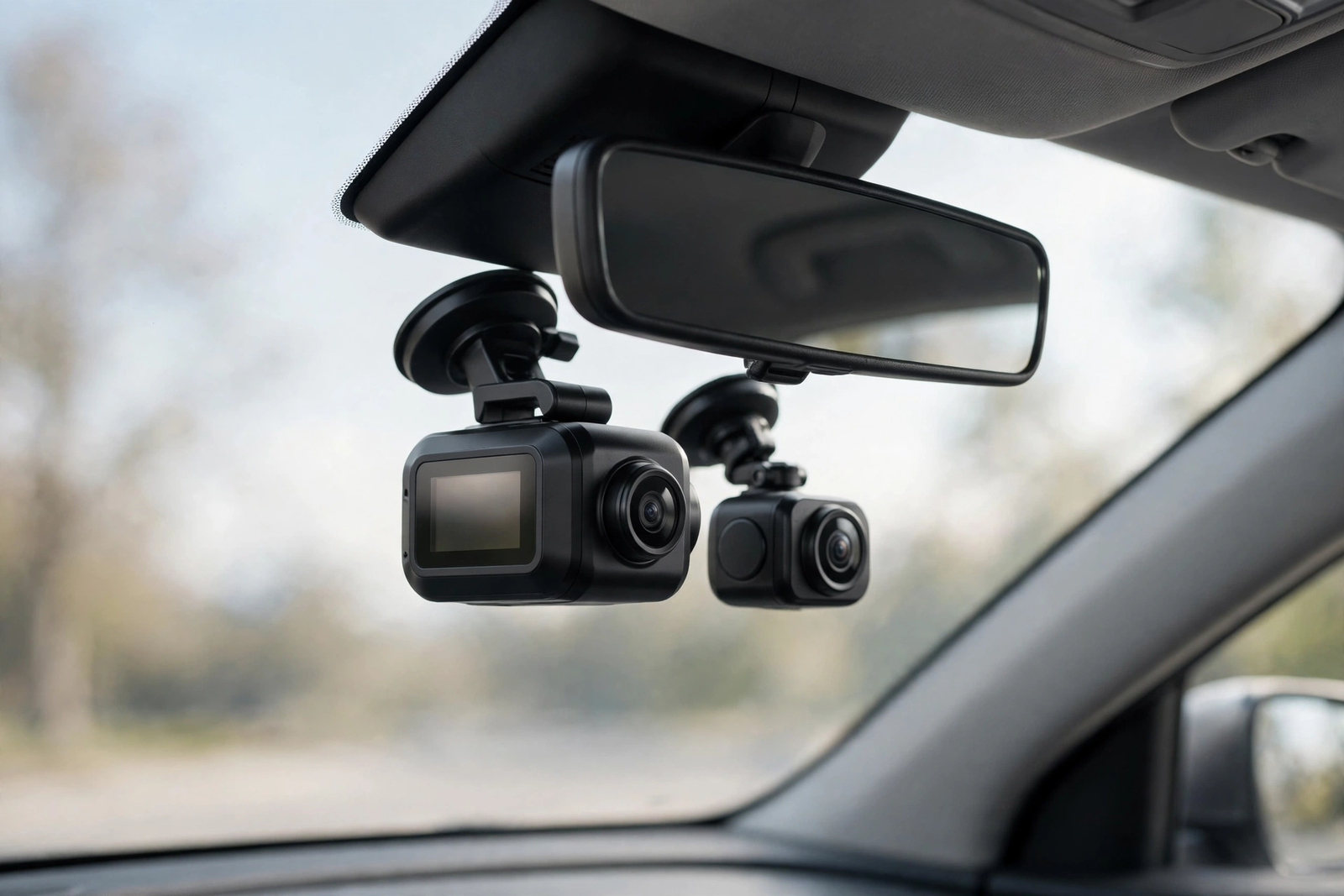
The 70mai A810 is a two-channel dash cam: a front camera on the windshield and a smaller rear camera covering the road behind you. The “-2” in A810-2 is the part that matters when you order — it means the set includes the RC12 rear camera. The front-only A810 is a different listing, so check you are buying the A810-2 set (ASIN B0C9TBZF8X) before you order. The front unit has a 3-inch IPS screen for framing shots, changing settings and playing clips back without your phone.
In the box, the listing shows the front camera, the RC12 rear camera, a car charger, a mount, power cords for both cameras, user manuals, a wiring trim tool and electrostatic stickers for the windshield. The mount sticks to the glass with an electrostatic sticker rather than a suction cup, keeping the unit tight against the windshield. Route the rear camera cable along the headliner and the A-pillar so nothing dangles into your field of view.
One thing to check before you order is the memory card. Listings for this ASIN disagree: one storefront’s specification table shows a 128GB card included, while other A810 listings say no card is included. Do not assume either way — read the box contents on the listing you are buying from, and budget for a card if it is not there. The camera takes U3 microSD cards from 32GB to 256GB, and a high-endurance card is the right call for a device that records every time you drive.
Video Quality: True 4K Front, 1080p Rear
The headline spec is true 4K up front: 3840×2160 at 30 frames per second from the Sony STARVIS 2 IMX678 sensor. True matters here, because the budget rival in this review upscales its 4K from a native 2.5K sensor. The A810’s front sensor captures a genuine 4K image, so there is more real detail to crop into when you need to read a number plate in good light. 70mai’s MaiColor Vivid+ processing tunes exposure balance and colour accuracy, which shows up most in mixed light — driving out of a tunnel into bright sun, or under patchy shade.
One frame-rate footnote: 60 frames per second is only available at 1080p. At 4K the camera records at 30fps, the standard for this class and fine for evidence footage. Most buyers should stay at 4K, where the plate detail lives.
The rear camera records at 1080p with HDR, and that second HDR channel is the A810’s quiet advantage. Most dual-channel dash cams at this level give HDR to the front camera only, so the rear footage blows out under headlights or goes dark in shadow. Here both channels get HDR, which matters most in a rear-end collision — the moment you want the car behind you on record, with its plate readable. The rear camera is still the weaker half by design: 1080p will not read a distant plate as cleanly as the 4K front camera, but it is enough to show what happened behind you.
Night Vision and Dual HDR
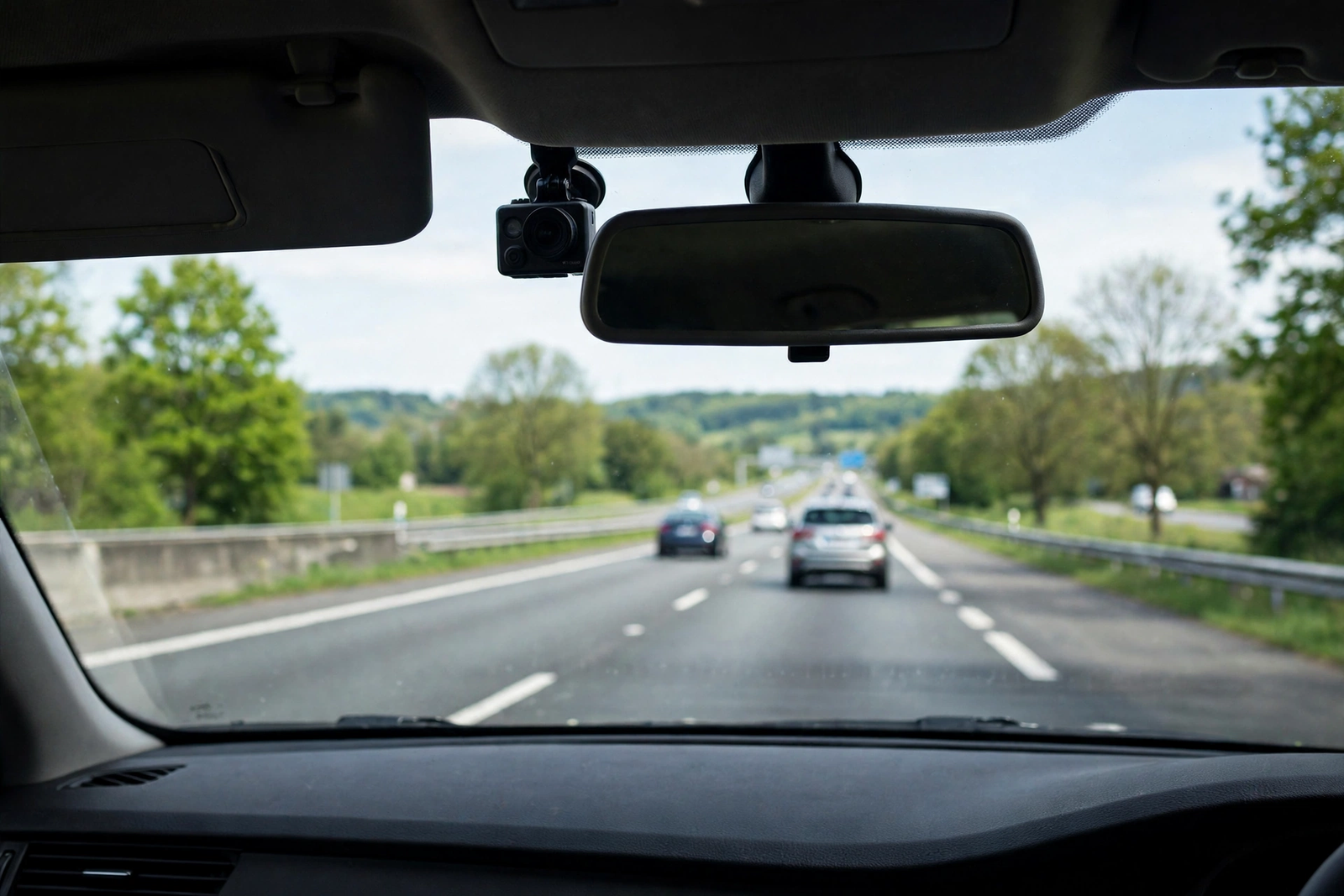
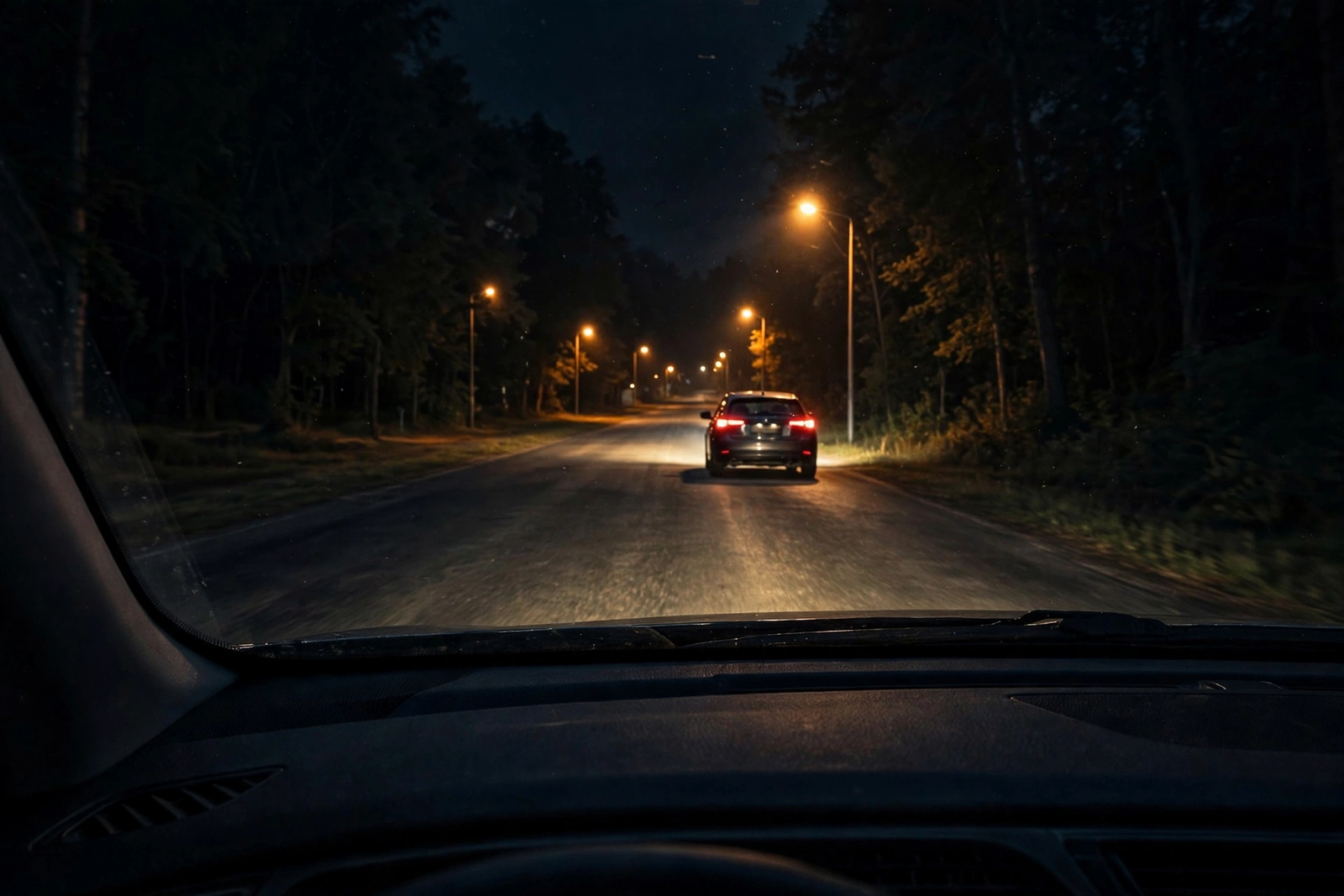
Night driving is where a dash cam earns its keep, and it is where the STARVIS 2 sensor does its best work. The Sony IMX678 is a back-illuminated sensor designed for low light, and 70mai pairs it with Night Owl Vision processing, built to hold colour and detail in very dark scenes rather than dropping to a grainy grey image. Night footage stays in colour longer, with less of the washed-out look that makes cheap night recordings useless as evidence.
HDR matters at night for a different reason: headlights. A bright headlight in a dark frame is the classic dash-cam failure — the light blows out and the plate behind it disappears. HDR blends multiple exposures, holding the bright areas back while the shadows stay visible. Because the A810 has HDR on the rear channel too, the car behind you at night gets the same treatment as the road ahead. It will not work miracles on a fast-moving plate, but it gives the A810 a better chance of keeping both halves of a night scene readable.
The rear camera is the weaker night performer, as you would expect from a 1080p sensor. It still records a usable picture of the car behind you under streetlights, but its night footage is for showing what happened, not for reading fine detail.
GPS, Wi-Fi, ADAS, and the App
GPS is built in, and it does more than stamp your speed on the video. It records your location and route alongside the footage, so a clip carries a record of where and how fast you were travelling — the kind of detail that matters if footage ever supports an insurance claim. The 70mai app plays clips back with that route data attached.
Clips come off the camera over built-in Wi-Fi to the 70mai app on your phone, without pulling the memory card — a short clip on your phone in seconds, which is what you want at the roadside after an incident. The app also handles settings and firmware updates, and the 3-inch screen covers the everyday settings if you would rather not use your phone. Voice control is also listed, so you can lock an emergency recording without taking your hands off the wheel.
ADAS is the feature that sets the A810 apart from the plainer cameras at this level. The Advanced Driver Assistance System gives real-time alerts for lane departure and for the vehicle ahead moving off, plus warnings for potential hazards ahead. These are driver alerts, not self-driving — they warn you, they do not steer or brake — but on a long commute they are a genuine extra layer of attention. Take them as a bonus on top of a recording camera, not the reason to buy one.
Parking Mode and the Hardwire Kit
Parking mode is the A810’s most misunderstood feature. The camera supports 24-hour parking surveillance with AI-based motion detection: the algorithm watches for people and vehicles near the parked car and triggers recording when it spots suspicious activity, and the built-in G-sensor locks footage on impact. Both cameras record during parking surveillance, and a time-lapse mode is also available. But none of it works out of the box — it needs a hardwire kit, sold separately, that connects to the fuse box so the camera can draw power with the ignition off.
Without the kit, the camera starts when the car starts and stops when it stops, like most dual-channel dash cams. So the real cost of parking mode is the kit plus installation — budget for it from day one if a parked-car hit-and-run is your main worry. 70mai’s UP03 kit powers parking surveillance, and the UP04 kit adds 4G for remote viewing, notifications and cloud storage. Remote viewing is optional, not built in.
70mai A810 vs the Alternatives: ROVE R2-4K Dual and VIOFO A229 Pro
Among dash cameras for cars at this level, the A810 spends its money on the front sensor and the second HDR channel. Below are the two cameras most buyers shortlist next to it. For the wider field, see our dash cam dashboard camera roundup.
The ROVE R2-4K Dual is the Best Budget pick, and the step down is clear: its front 4K is upscaled from a native 2.5K Sony IMX675 STARVIS 2 sensor, where the A810 captures true 4K from the IMX678. What the ROVE gives you instead is the most complete box of the three — a 128GB card included, a supercapacitor for hot windshields, dual-band 5.8GHz Wi-Fi and a 3-inch touchscreen. If your budget is fixed and you want front and rear coverage with nothing extra to buy, the ROVE is the honest answer — see our ROVE R2-4K Dual review.
The VIOFO A229 Pro is the Premium Pick and the step up: a native 4K front camera on the same Sony STARVIS 2 IMX678 sensor, but with a 2K rear camera on the STARVIS 2 IMX675 where the A810’s rear is 1080p. The VIOFO also runs on a supercapacitor, has 5GHz Wi-Fi and voice control with 12 voice commands. Its box is the least complete of the three — no memory card and no hardwire kit — and it has no ADAS and no optional 4G. The A229 Pro beats the A810 where it counts for evidence, a sharper rear camera, while the A810 wins on the second HDR channel, the driver alerts and the lower outlay. See our VIOFO A229 Pro review.
Who Should Buy It — and Who Should Skip It
Buy the A810 if you want true 4K up front and HDR on both channels without paying the premium price for them. It suits commuters who drive at night, drivers who park on the street and will fit the hardwire kit, and anyone who likes ADAS alerts as a bonus on top of a recording camera. It also suits buyers who like a screen on the camera — and shoppers comparing the best dashcams on value, who want the native-4K sensor rather than an upscaled one.
Skip it if you want the sharpest rear footage you can buy: the VIOFO A229 Pro’s 2K rear camera reads plates behind you better than the A810’s 1080p rear. Skip it too if you want a complete box with a card included — the ROVE R2-4K Dual includes a 128GB card, while the A810’s card situation varies by listing. And skip parking mode unless you will buy and fit the hardwire kit — without it, this is a driving recorder only.

Verdict
The 70mai A810 is the best dash cam front and rear value pick in this programme’s dual-channel range: a true 4K front camera on the Sony STARVIS 2 IMX678, a 1080p HDR rear camera with its own HDR channel, GPS, Wi-Fi, ADAS alerts and a 3-inch screen, all at a budget price. Its limits are equally clear: the rear camera is 1080p, the memory card situation varies by listing, and parking mode costs extra. Accept those three facts and this is a strong buy.
Frequently Asked Questions
Is the 70mai A810 really native 4K?
Yes. The front camera records at 3840×2160 at 30fps from the Sony STARVIS 2 IMX678 sensor, which captures a genuine 4K image. That is different from cameras like the ROVE R2-4K Dual, whose 4K output is upscaled from a native 2.5K sensor. Note that 60fps is only available when the resolution is set to 1080p.
Does the A810-2 set include the rear camera?
Yes. The “-2” in A810-2 means the set includes the RC12 rear camera alongside the front camera. The front-only A810 is a different listing, so check the listing you are buying is the A810-2 set (ASIN B0C9TBZF8X) before you order.
Does the 70mai A810 come with a memory card?
It depends on the listing. One storefront’s specification table for this ASIN shows a 128GB card included in the box, while other A810 listings say no card is included. Read the box contents on the listing you are buying from before you order. The camera takes U3 microSD cards from 32GB to 256GB.
Does parking mode work out of the box?
No. The A810 supports 24-hour parking surveillance with AI motion detection, collision detection and time-lapse recording, but it needs a hardwire kit that is sold separately and connects to the car’s fuse box. Without the kit, the camera starts when the car starts and stops when the car stops. The UP04 kit adds optional 4G remote viewing.
Do I need GPS or the app to use this dash cam?
No. The camera records normally without GPS, and the 3-inch screen covers the everyday settings. GPS adds speed, location and route stamps to the footage, and the 70mai app moves clips to your phone over Wi-Fi and handles firmware updates. They are worth having if footage might ever support an insurance claim, but neither is required for recording.
Should I buy the 70mai A810 or the VIOFO A229 Pro?
On the spec sheet they share a sensor: both use the Sony STARVIS 2 IMX678 up front for true 4K. The VIOFO’s rear camera is 2K where the A810’s is 1080p, so the VIOFO reads plates behind you better — but its box has no memory card and no hardwire kit, and it has no ADAS and no optional 4G. If the sharper rear camera matters most, choose the VIOFO; if true 4K, dual HDR, driver alerts and the lower outlay matter most, choose the A810.