A dash camera that records in 4K up front and 1080p behind sounds like a simple buy — until you read the fine print. The ROVE R2-4K Dual Dash Cam is exactly that kind of product: a two-channel setup with a 4K front camera and a 1080p rear camera, a Sony STARVIS 2 sensor, built-in GPS and a 128GB memory card in the box. It is also a camera whose headline number needs a footnote, because the front 4K is upscaled from a native 2.5K sensor. That does not make it a bad camera. It does make it a camera worth understanding before you buy it.
In this review of the ROVE R2-4K dash cam, we cover what the two cameras actually record, how the night vision holds up, what the GPS and Wi-Fi add, and what parking mode really costs you — because the hardwire kit is sold separately. We also compare it with the tiny Garmin Dash Cam Mini 3 and the REDTIGER F7NP, the two rivals most buyers shortlist next to it. If you want the short version first, the Quick Pick table below has it.
As an Amazon Associate I earn from qualifying purchases.
| Pick | Product | Why it stands out | Check Price |
|---|---|---|---|
| Overall Winner | ROVE R2-4K Dual Dash Cam | 4K front (upscaled) + 1080p rear, STARVIS 2 sensor, GPS and a 128GB card included | |
| Best Budget | Garmin Dash Cam Mini 3 | Smallest, simplest single-channel camera — no rear camera, no screen, no fuss | |
| Premium Pick | REDTIGER F7NP | 4K front / 1080p rear, STARVIS sensor, supercapacitor, 32GB included |
Table of Contents
What the ROVE R2-4K Dash Cam Is — and What It Is Not
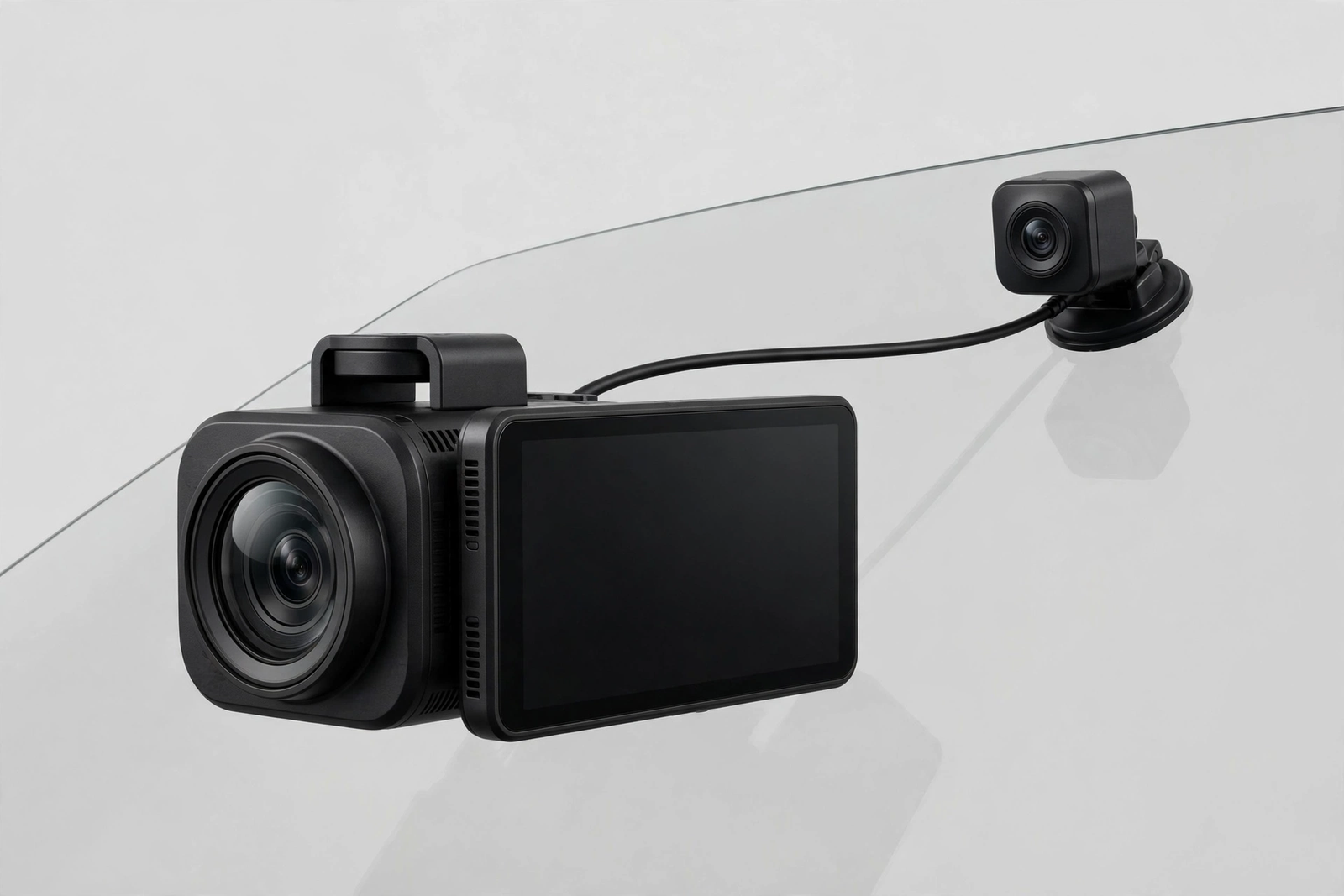
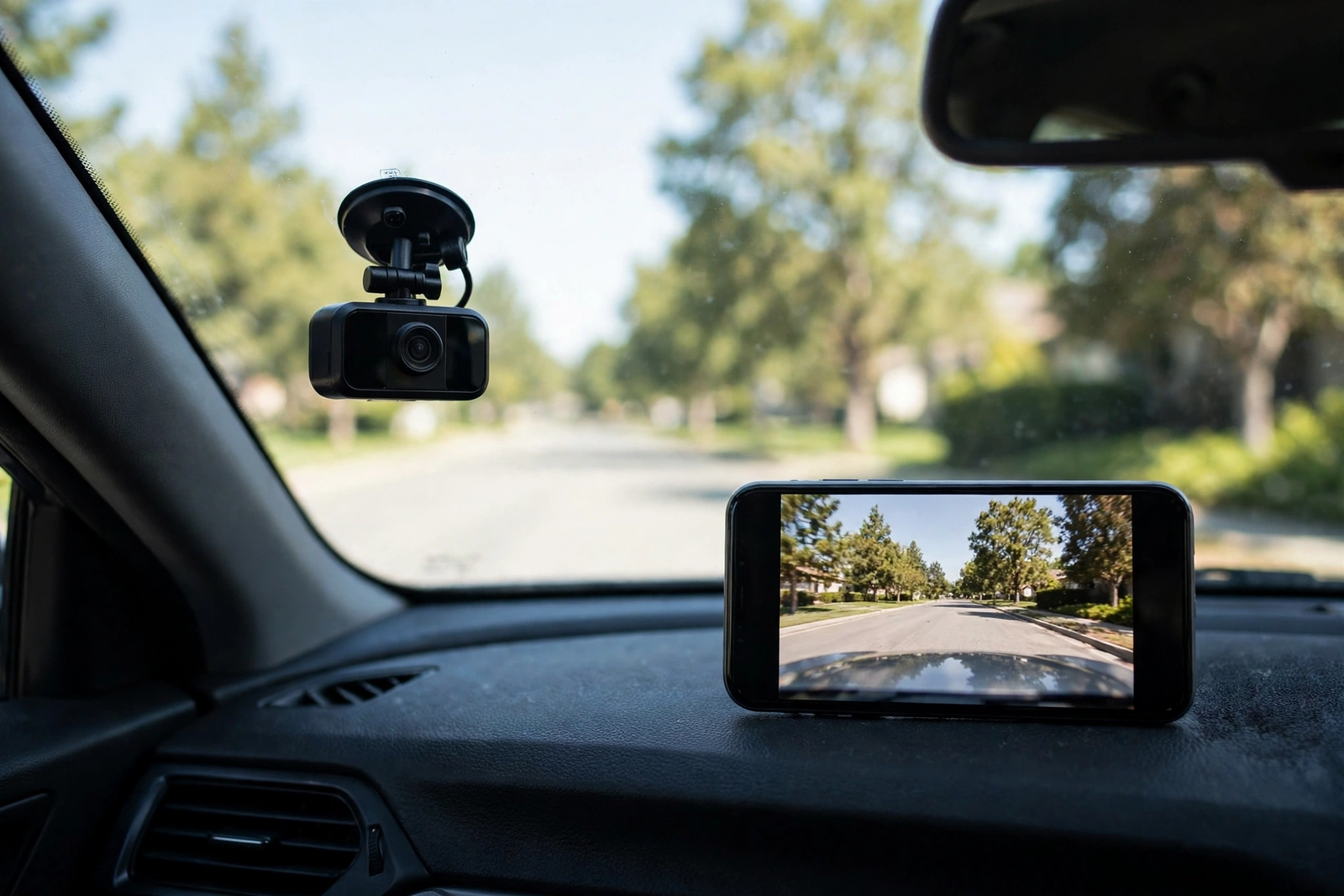
The R2-4K Dual is a two-channel dash cam: a front camera on the windshield and a smaller rear camera covering the road behind you. The front unit has a 3-inch IPS touchscreen for framing shots, changing settings and playing clips back without your phone. A 128GB ROVE PRO microSD card is included, and the camera supports cards up to 1TB, so most buyers will not need extra storage.
The ROVE dash cam is built around the Sony IMX675 STARVIS 2 sensor, a 5MP sensor, with an F1.5 aperture up front and F1.8 at the rear. Instead of a lithium battery it uses a supercapacitor, which tolerates a hot parked cabin far better than a battery — a real advantage for a device that lives on a sun-baked windshield. Firmware updates arrive over the air through the ROVE app.
It has a large buyer base behind it: FinForum reported in October 2026 that the listing had over 13,600 reviews and a 4.5-star average. Treat that as a reported figure, not a live check — review counts move daily. The ROVE also appears as the Premium Pick in our dash cam dashboard camera roundup.
Just as important is what the R2-4K Dual is not. It is not a native 4K camera — the front 4K image is upscaled from a native 2.5K sensor, as the next section explains. It is not a parking-mode camera out of the box: 24-hour parking mode needs a hardwire kit sold separately. And it is not a battery camera, so it stops when the car is off unless that kit is fitted.
Video Quality: Upscaled 4K Front, 1080p Rear
The headline spec is 4K up front: 3840×2160 at 30 frames per second. The honest version is that the front image is upscaled from the sensor’s native 2.5K resolution. Upscaling stretches what the 5MP Sony IMX675 actually captures into a 4K frame. The result looks sharper than 1080p, with more room to crop into a number plate in good light — but it cannot add detail the sensor never captured. If you are comparing this camera with a true native-4K model, that is the gap to keep in mind.
As a front and rear dash camera, the R2-4K Dual records both directions at once: 4K (upscaled) at 30fps from the front and 1080p at 30fps from the rear. The rear camera is the weaker half, and ROVE does not hide that — 1080p is enough to show what happened behind you in a rear-end shunt, but it will not read a distant plate as cleanly as the front camera. That split is normal at this level: the front gets the resolution, the rear gets the coverage.
The front lens is a fast F1.5, the rear F1.8, and the viewing angles are wide — 150° up front, 140° at the rear — so the front camera catches adjacent lanes as well as the road ahead. HDR is built in, which helps in the high-contrast moments that matter most: driving out of a tunnel into bright sun, or facing oncoming headlights at night. Wide angles bend straight lines at the frame edges, but that is the trade-off every wide dash cam makes.
Night Vision and the STARVIS 2 Sensor
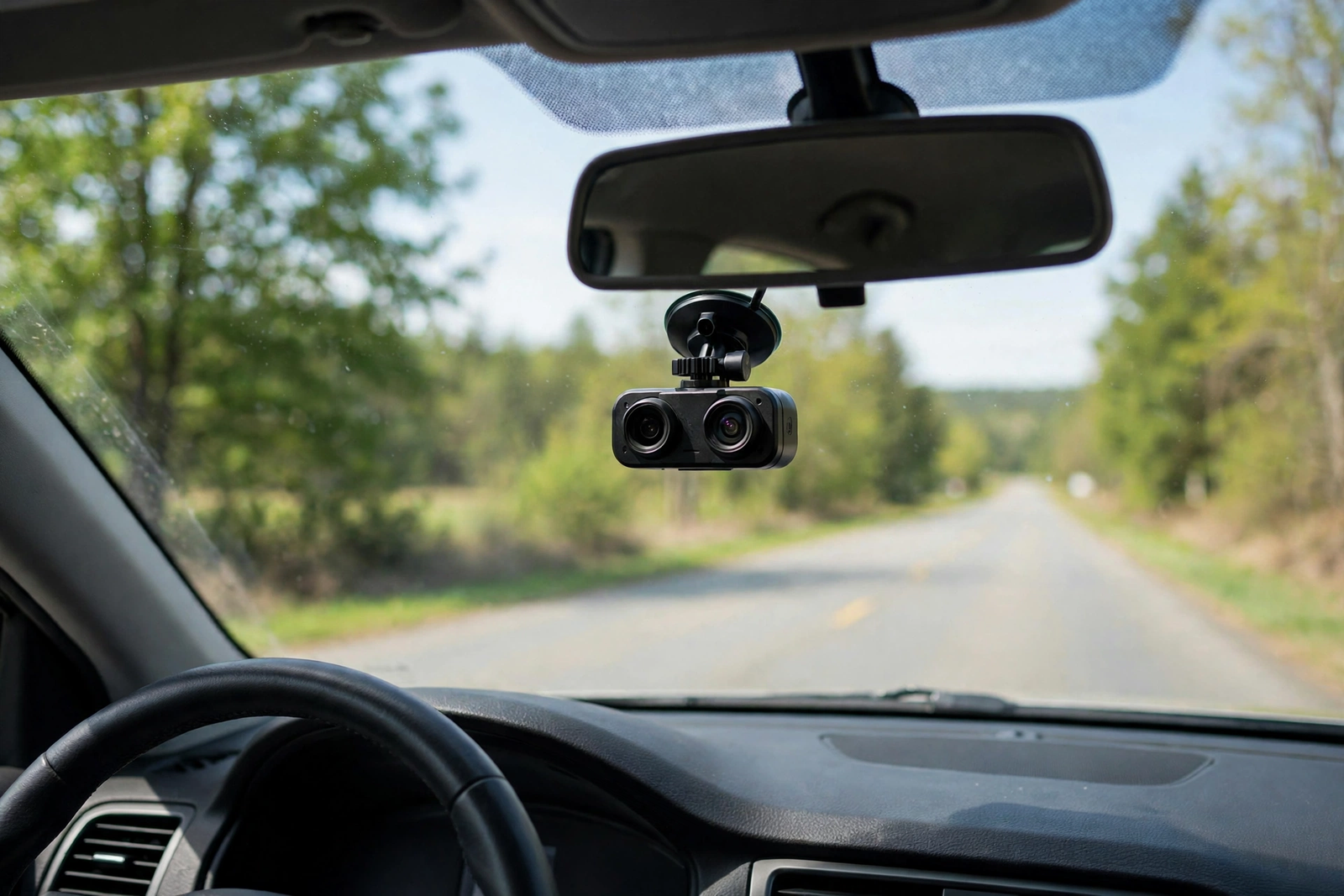
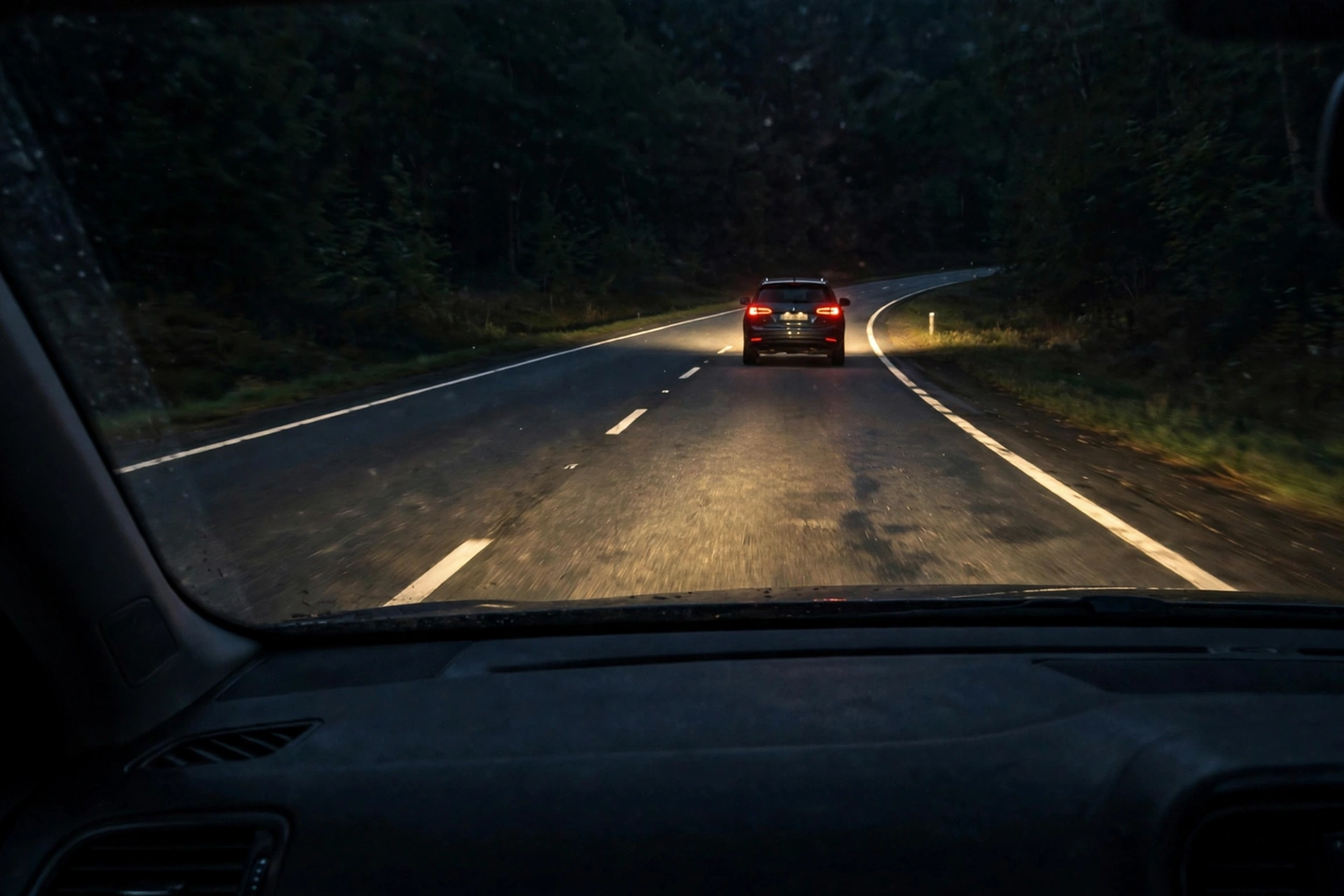
Night driving is where a dash cam earns its keep, and it is where the STARVIS 2 sensor does its best work. The Sony IMX675 is a back-illuminated sensor designed for low light, and paired with the F1.5 front aperture it gathers far more light than the small sensors in budget cameras. Night footage stays in colour longer, with less of the grainy, washed-out look that makes cheap night recordings useless as evidence.
HDR matters at night for a different reason: headlights. A bright headlight in a dark frame is the classic dash-cam failure — the light blows out and the plate behind it disappears. HDR blends multiple exposures, holding the bright areas back while the shadows stay visible. It will not work miracles on a fast-moving plate under a streetlight, but it gives the R2-4K dash cam a better chance of keeping both halves of a night scene readable.
The rear camera is the weaker night performer, as you would expect from a 1080p sensor behind an F1.8 lens. It still records a usable picture of the car behind you, especially under streetlights, but its night footage is for showing what happened, not for reading fine detail.
GPS, WiFi, and the App
GPS is built in, and it does more than stamp your speed on the video. It records your location alongside the footage, so a clip carries a record of where and how fast you were travelling — the kind of detail that matters if footage ever supports an insurance claim. ROVE provides a free GPS Player for PC and Mac that plays the video with a map and your speed on screen.
Clips come off the camera over dual-band Wi-Fi — 5.8GHz and 2.4GHz — with downloads to the ROVE app at up to 20MB/s. The 5.8GHz band is the fast one for pulling a clip to your phone at the roadside; 2.4GHz is the longer-reach fallback. At that speed a short incident clip lands on your phone in seconds, which is exactly when you want it. The app also handles over-the-air firmware updates.
You do not need GPS or the app for the camera to do its basic job. It records to the card with or without a phone nearby, and the touchscreen covers everyday settings. The connected features are for the moments that matter: proving where you were and pulling a clip quickly.
Parking Mode and the Hardwire Kit
Parking mode is the R2-4K Dual’s most misunderstood feature. The camera supports 24-hour parking mode, which watches the car while parked and records on impact or movement. But it does not work out of the box — it needs a hardwire kit, sold separately, that connects to the fuse box so the camera can draw a small amount of power with the ignition off.
Without the kit, the camera behaves like most car dash cameras: it starts when the car starts and stops when it stops. The supercapacitor is not a substitute — it replaces a lithium battery because it handles cabin heat better, but it does not keep the camera recording once the car is off. So the real cost of parking mode is the kit plus installation. If a parked-car hit-and-run is your main worry, budget for the kit from day one.
ROVE vs the Alternatives (Garmin Mini 3, REDTIGER F7NP)
The Garmin Dash Cam Mini 3 is the opposite idea to the ROVE. It is the smallest, simplest camera of the three: a single-channel front camera with no screen and no rear camera. It hides behind the mirror, it just records, and there is almost nothing to set up. If you only want a front camera and value discretion above all else, the Garmin wins on simplicity. But it cannot do what the ROVE does — no rear coverage, no touchscreen, and no included memory card to match the ROVE’s 128GB.
The REDTIGER F7NP is the closest rival on paper. Like the ROVE it records 4K up front and 1080p at the rear and runs on a supercapacitor. The differences are in the details: the F7NP’s front sensor is the STARVIS IMX335, where the ROVE uses the newer STARVIS 2, and the F7NP includes a 32GB card against the ROVE’s 128GB. Between the two, the choice comes down to details: the ROVE’s dual-band 5.8GHz Wi-Fi and 3-inch touchscreen against the F7NP. We state no warranty for either camera in this review, because we could not verify one for the ROVE and our REDTIGER F7NP review states none.
One more name belongs here for tighter budgets: the VIOFO A119 Mini 2 dash cam. It is a single-channel camera, so like the Garmin it gives you a front view only — the budget route to strong front-facing video if you decide you do not need a rear camera. The ROVE’s case is that the rear channel, the GPS and the included card are worth the step up.
Who Should Buy It — and Who Should Skip It
Buy the R2-4K Dual if you want front and rear coverage in one purchase, with nothing extra to buy on day one. The 128GB card, built-in GPS and heat-tolerant supercapacitor suit drivers who park in the sun, commuters who want incident evidence from both directions, and anyone who wants to fit the camera once and forget it. It also suits buyers who like a screen on the camera rather than doing everything through a phone.
Skip it if you want true native 4K — the upscaled front image is good, but it is not the same as a sensor that captures 4K natively. Skip it too if you only need a front camera: the Garmin Mini 3 or the VIOFO A119 Mini 2 cover that job for less. And skip parking mode unless you will buy and fit the hardwire kit — without it, this is a driving recorder only.
Verdict
The ROVE R2-4K dash cam is an honest dual-channel camera with one headline that needs reading carefully. The upscaled 4K front image, 1080p rear camera, STARVIS 2 sensor, GPS, dual-band Wi-Fi and the 128GB card in the box add up to a complete package — and the supercapacitor is the right engineering choice for a windshield camera. Its limits are equally clear: the 4K is not native, the rear camera is 1080p, and parking mode costs extra. Accept those three facts and this is a strong buy; if any of them is a deal-breaker, the alternatives above are the honest next step.
Frequently Asked Questions
Is the 4K on the ROVE R2-4K Dual really native 4K?
No. The front camera records at 3840×2160 at 30fps, but that 4K image is upscaled from the sensor’s native 2.5K resolution. The sensor is the 5MP Sony IMX675 STARVIS 2, and upscaling stretches what it captures to a 4K frame. The footage is sharper than 1080p, but it is not native 4K, and this review does not describe it as native 4K anywhere.
How good is the rear camera?
The rear camera records at 1080p at 30fps with an F1.8 aperture and a 140-degree viewing angle. It is good enough to show what happened behind you and to identify the car involved in most conditions, but it will not read a distant number plate as cleanly as the front camera. It is the weaker half of the pair by design, as it is on most dual-channel cameras at this level.
Does parking mode work out of the box?
No. The R2-4K Dual supports 24-hour parking mode, but it needs a hardwire kit that is sold separately and connects to the car’s fuse box. Without the kit, the camera starts when the car starts and stops when the car stops. The supercapacitor does not keep the camera recording once the car is off, so budget for the kit if parking mode matters to you.
What size memory card does the ROVE R2-4K Dual take?
A 128GB ROVE PRO microSD card is included in the box, and the camera supports cards up to 1TB. Most buyers will not need to buy a card separately, but a larger card holds more driving history before the camera starts overwriting the oldest footage.
Do I need the GPS to use this dash cam?
No. The camera records normally without GPS, and the 3-inch touchscreen covers the everyday settings. GPS adds speed and location stamps to the footage, and the free GPS Player for PC and Mac plays the video back with a map and your speed on screen. It is worth having if footage might ever support an insurance claim, but it is not required for recording.
Should I buy the ROVE R2-4K Dual or the REDTIGER F7NP?
On the spec sheet they are close: both record 4K up front and 1080p at the rear, both run on a supercapacitor, and both include a memory card — 128GB with the ROVE, 32GB with the F7NP. The ROVE uses the newer STARVIS 2 sensor; the F7NP uses the STARVIS IMX335. The ROVE counters with dual-band 5.8GHz Wi-Fi and a 3-inch touchscreen. If the larger card, newer sensor, Wi-Fi and screen matter most, choose the ROVE; if you want the simpler of the two, choose the F7NP.