Most portable fridges are built for families, and their size shows it. The Alpicool C9 portable fridge goes the other way: a 10-quart (9-litre) mini freezer for one person, a single compartment that holds a day of drinks and food, cools down to -4°F, and weighs just 14.8 pounds. It plugs into a car’s 12-volt outlet or a household wall socket, and it fits where bigger coolers cannot — on a passenger footwell, behind a seat, or in a small trunk with room to spare.
In this review of the Alpicool C9 portable fridge, we cover what 10 quarts actually holds, how cold the compressor really gets, what it draws in ECO and MAX modes, and how the three-level battery protection works. We also compare it with the BougeRV CR22 and the Setpower RF25, the two larger coolers most buyers shortlist next to it. The Quick Pick table below has the short version.
As an Amazon Associate I earn from qualifying purchases.
| Pick | Product | Why it stands out | Check Price |
|---|---|---|---|
| Overall Winner | Alpicool C9 Portable Mini Freezer, 10 Quart | Smallest real compressor cooler here — 10 quarts, 14.8 lb, cools to -4°F, fits a footwell | |
| Best Budget | BougeRV CR22 12V Refrigerator, 23 Quart | 23 quarts for two people — the mid-size step-up, with a colder -8°F floor | |
| Premium Pick | Setpower RF25 12V Refrigerator, 27 Quart | 27 quarts with a built-in ice pack for backup cooling and automatic defrost |
Table of Contents
What the Alpicool C9 Portable Fridge Is — and What It Is Not
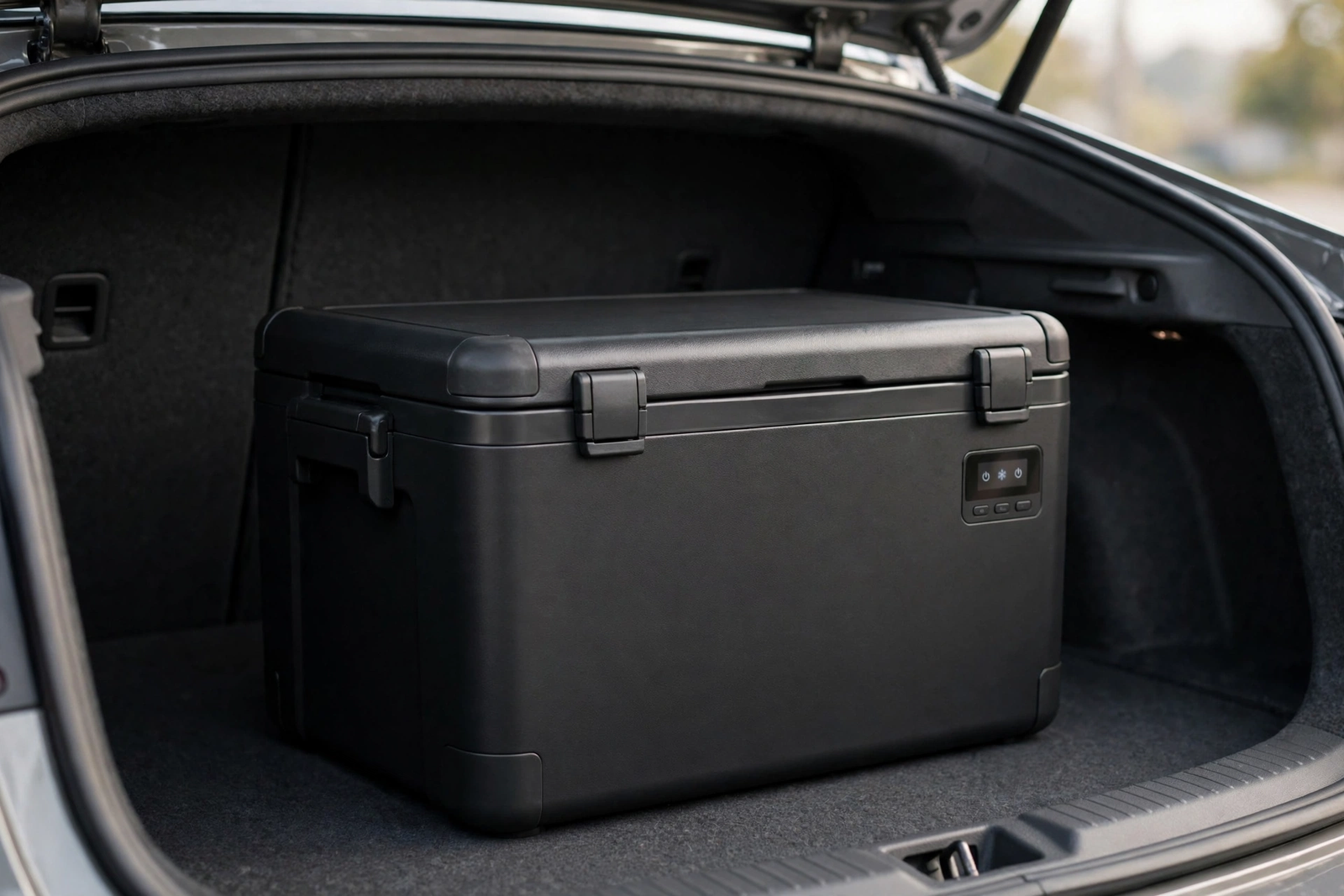
The Alpicool C9 is a chest-style compressor cooler in black and grey, sold as a portable electric cooler but built like a small refrigerator: a compressor, a sealed lid, foam insulation and an LED display with buttons for temperature and mode. It is a single compartment, so everything inside sits at one temperature — fridge or freezer, your choice, not both at once. The box holds the cooler, a 12/24V DC cord, a 100–240V AC adapter and the manual. There is no battery inside, so it only runs while plugged into a car outlet, a wall socket or a power station.
That compressor is the whole point of this portable fridge. A thermoelectric cooler only chills a few degrees below the cabin temperature and can never freeze, which makes it useless on a hot day. The C9’s compressor works like a home refrigerator and holds an exact temperature whatever the weather outside, down to -4°F. It is also why the C9 is smaller than everything in our road-trip cooler roundup, which starts at 19 quarts: at 10 quarts, this is the cooler for one person, not a family.
Just as important is what the C9 is not. It is not a dual-zone cooler, so you cannot keep drinks chilled and frozen food frozen at the same time. It is not app-controlled — the manual describes panel control only, and no phone app is listed for this model. And it is not a cooler for a family shop: if you regularly pack for three or four people, the 10-quart box will be full before you finish. What it is, honestly, is the smallest real compressor cooler in this line-up.
Capacity and Size: What 10 Quarts Actually Holds
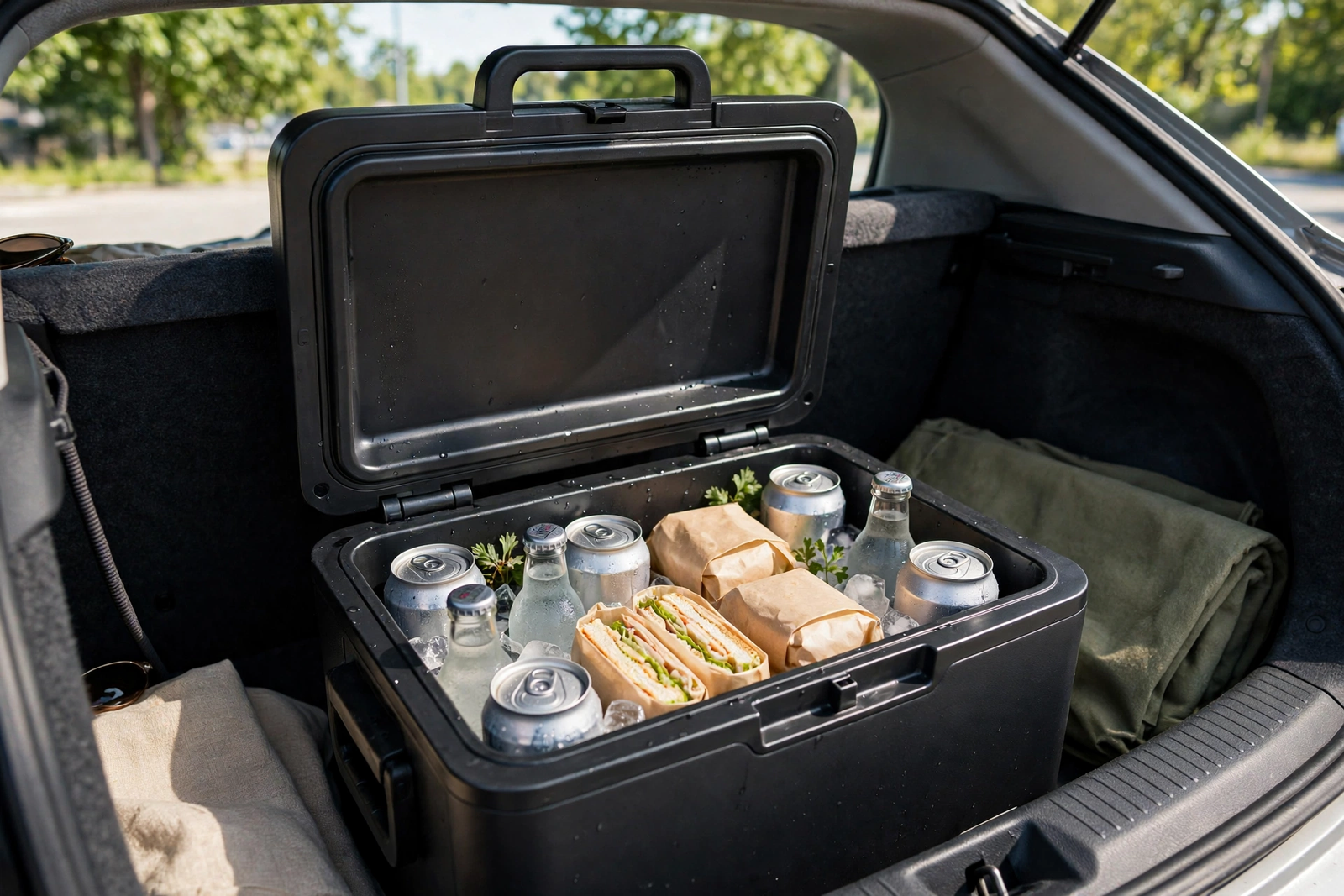
Ten quarts is 9.09 litres, and the manual puts a practical number on it: about 8 bottles of 18oz water or 12 cans of 12oz cola. That is a day of cold drinks for one person, plus room for a sandwich or two — a lunchbox with a compressor, not a mobile pantry. The outside measures 16.75 by 12.56 by 9.88 inches, low and long rather than tall, and at 14.8 pounds it is a one-hand carry from the car to a picnic table. A drain plug makes cleaning easy.
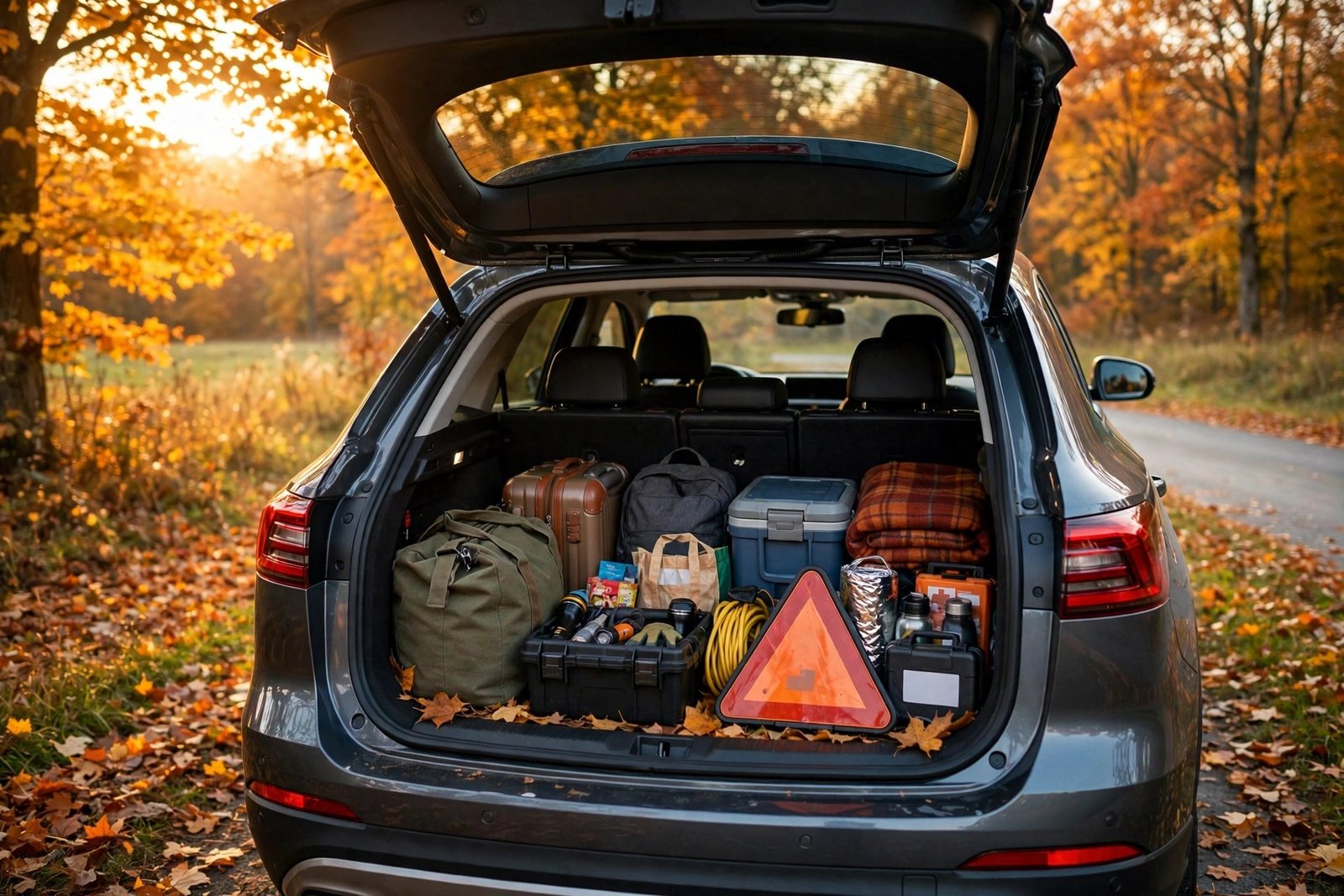
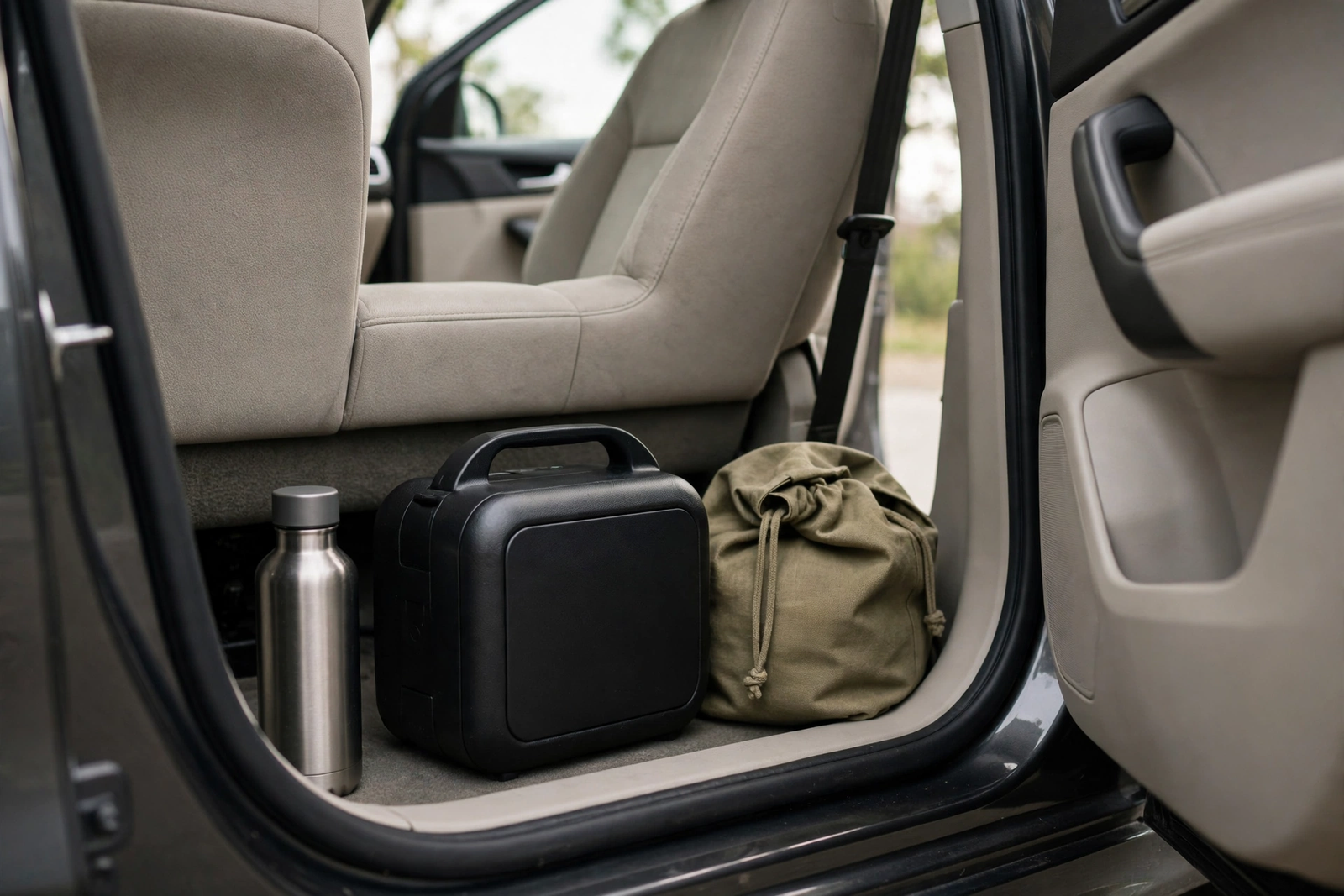
The size is the buying decision, so measure before you commit. The C9 fits on a passenger footwell, behind a front seat, or in a small trunk with luggage around it — places where a 23-quart cooler simply does not go. That is its advantage: it travels inside the car, within reach, instead of buried in the trunk. The trade-off is absolute. There is no second compartment, no basket listed in the box, and no way to stretch 10 quarts into a weekend shop for two. For solo drives, commutes and day outings the size is exactly right; for family holidays it is not.
Cooling Performance: Compressor Cold Down to -4°F
The C9’s temperature range is -4°F to 68°F (-20°C to 20°C), set from the LED panel. The manual splits that range into two jobs: fridge mode from 32°F to 68°F for drinks and food, and freezer mode from -4°F to 32°F for frozen goods. Set it to 37°F for a day of cold drinks, or drop it below freezing to keep frozen food solid on the drive home. Temperature memory returns to your last setting when you plug it back in, rather than resetting to a default.
One honest gap: the manual gives no cool-down time, so this review states none. No such figure is listed for the C9, and inventing one would be guessing. The practical habit matters more: pre-cool the box at home on AC power the night before, load it with already-cold drinks, and it holds temperature from the first mile. The compressor cycles to hold the set temperature, the foam insulation and sealing gasket do the rest, and the manual lists automatic defrost, so there is no manual defrost chore.
Power Draw, ECO vs MAX, and Battery Protection
A compressor car cooler drawing 45 watts at most is a light load on a car’s 12-volt outlet, and the C9 gives you two ways to use it. MAX mode cools fast for a quick temperature drop, and ECO mode sips power for sustained running once the box is cold. The listing gives 45 watts, but there is a conflict worth stating: the manual for the closely related C9P model lists 60 watts in MAX mode and 45 watts in ECO mode, while the C9PT listing this article links to gives 45 watts. This review uses the listing’s 45 watts and flags the 60-watt figure as the alternative.
Battery protection is the feature that decides whether a cooler is safe to leave plugged in. The C9 has a three-level system — Low (H1), Medium (H2) and High (H3) — that shuts the cooler down before it can drain your starter battery. On a 12-volt system the cut-out voltages are 8.5V on Low, 10.1V on Medium and 11.1V on High, with cut-in voltages of 10.9V, 11.1V and 12.4V. Use High if you park with the cooler running and want the car to start afterwards; use Low only with a healthy battery and short stops. The manual agrees: a low-voltage error means adjusting the protection level.
Power at Home and on the Road: DC, AC, and Power Stations
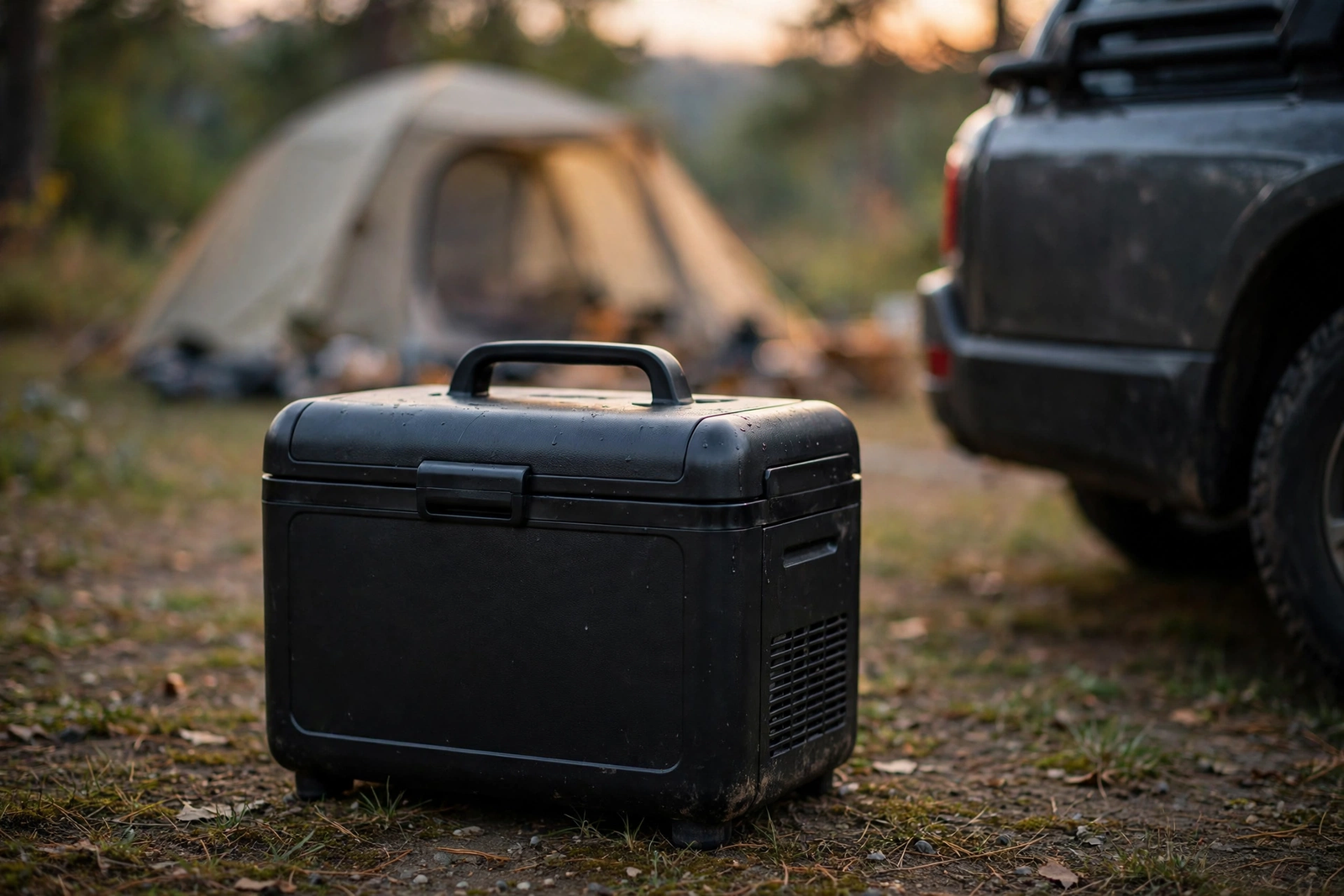
The C9 runs on 12/24V DC from a vehicle’s cigarette-lighter socket and on 100–240V AC through the included adapter, so it works in a car, a truck, an RV and at home. That dual power is what makes a 10-quart cooler useful beyond the car: pre-cool it in the kitchen the night before a trip, carry it out already cold, and plug it into the car for the drive. At a campsite it can also run from a compatible power station or solar panel setup using the DC connection, per the manual.
Because there is no battery inside, the C9 stops cooling the moment it is unplugged, and the insulation only buys you time after that. Plan around it: keep it plugged in while driving, use ECO mode for long parked stretches with protection set to High, and for overnight stops move it to a power station or accept that it warms up. Keep the ventilation grilles clear and do not leave the cooler in direct sunlight, which the manual warns against.
Alpicool C9 vs the Alternatives (BougeRV CR22, Setpower RF25)
The BougeRV CR22 is the next size up and the obvious step for a second person. At 23 quarts it holds roughly a 12-pack of cans plus a few days of sandwich fixings, cools colder — down to -8°F against the C9’s -4°F — and draws 36 watts in ECO mode and 45 watts in MAX mode, the same ceiling as the C9. At 22.3 pounds and 22.68 by 12.6 by 12.97 inches, it lives in the trunk rather than the footwell, and its defrost is manual rather than automatic. BougeRV backs it with two years of technical support. For two people and a weekend, the CR22 is the capacity to buy; for solo and short trips, the C9’s size and weight win.
The Setpower RF25 is the premium step: 27 quarts (26.4 quarts / 25 litres per its manual), 24.3 by 13.1 by 14.3 inches and 23.4 pounds, with the same -4°F to 68°F range as the C9. It draws 28 watts in ECO mode and 40 watts at maximum, per portable-fridge coverage, and it adds two things neither rival has — a built-in ice pack that keeps contents cool for up to 50 hours during a power outage, and automatic defrost. The RF25 is the pick for longer trips and for anyone who wants a backup when the power cuts out; the C9 is the pick for the lightest possible load.
The honest summary is a ladder, not a ranking. The C9 is the one-person cooler: smallest, lightest, and the only one of the three that fits a footwell. The CR22 is the two-person cooler: more than double the capacity with a colder floor. The RF25 is the trip cooler: the largest box with backup cooling for outages. Buy the smallest cooler that covers your real trips, because every extra quart is weight you carry on every drive.
Who Should Buy It — and Who Should Skip It
Buy the C9 if you drive alone most of the time: solo commuters who want cold drinks without stopping, car campers travelling light, truckers who need a small cooler in the cab, and anyone with a compact car where a 23-quart box would eat the whole trunk. As an rv fridge for a solo camper or a van lifer travelling alone, it is the right size — it runs off the vehicle’s 12-volt outlet while driving and off a power station at camp, and it is light enough to carry in one hand. It also works as a second cooler: the big family cooler stays at camp and the C9 rides in the car for the day’s drinks.
Skip it if you pack for a family, because 10 quarts will not cover a family shop however carefully you pack — the roundup’s rule of 35 to 50 quarts for a family of four still applies. Skip it too if you need frozen and chilled food at the same time, since the single compartment holds one temperature, and if you want phone control, because this model is panel-only. In both cases the CR22 or the RF25 above is the honest next step.
Verdict
The Alpicool C9 portable fridge does one job well: it keeps one person’s food and drinks cold — or frozen — in the smallest, lightest compressor box in this line-up. Ten quarts, 14.8 pounds, a -4°F floor, 45 watts at most, three-level battery protection and dual DC/AC power add up to a cooler that fits a footwell and travels within reach. Its limits are the size itself, the single compartment and the panel-only control. Accept those three facts and this is a strong buy for solo driving; if any is a deal-breaker, the CR22 or the RF25 above is the honest next step.
Frequently Asked Questions
How many cans does the Alpicool C9 hold?
About 12 cans of 12oz cola, or about 8 bottles of 18oz water, per the manual. That is a day of cold drinks for one person with room for a sandwich or two. It is a single compartment, so everything inside sits at one temperature.
How cold does the Alpicool C9 get?
Down to -4°F (-20°C), with a full range of -4°F to 68°F. Fridge mode covers 32°F to 68°F and freezer mode covers -4°F to 32°F. Set the temperature from the LED panel, and temperature memory returns to your last setting when you plug it back in.
Will the Alpicool C9 drain my car battery?
It can if you run it for many hours with the engine off and no protection, but it has a three-level battery protection system — Low (H1), Medium (H2) and High (H3) — that shuts it down before the battery is too weak to start the car. On a 12-volt system the cut-out voltages are 8.5V, 10.1V and 11.1V. Use High for parked running and ECO mode for long stops.
Can I use the Alpicool C9 at home as well as in the car?
Yes. It runs on 12/24V DC in a vehicle and on 100–240V AC at home through the included adapter, so you can pre-cool it in the kitchen the night before a trip and it doubles as overflow cold storage. It can also run from a compatible power station or solar panel setup using the DC connection.
Does the Alpicool C9 have app control?
No app control is listed for this model. The manual describes panel control only: an LED display with buttons for temperature and mode. If phone control matters to you, look at an app-controlled cooler instead, such as the app-controlled models in our road-trip cooler roundup.
Should I buy the Alpicool C9 or the BougeRV CR22?
Buy the C9 if you drive alone: 10 quarts, 14.8 pounds and a footwell fit, with a -4°F floor. Buy the CR22 if you travel as two: 23 quarts, a colder -8°F floor, and room for a 12-pack plus sandwich fixings, at 22.3 pounds. The C9 is the one-person cooler and the CR22 is the two-person cooler — match the box to your party size.