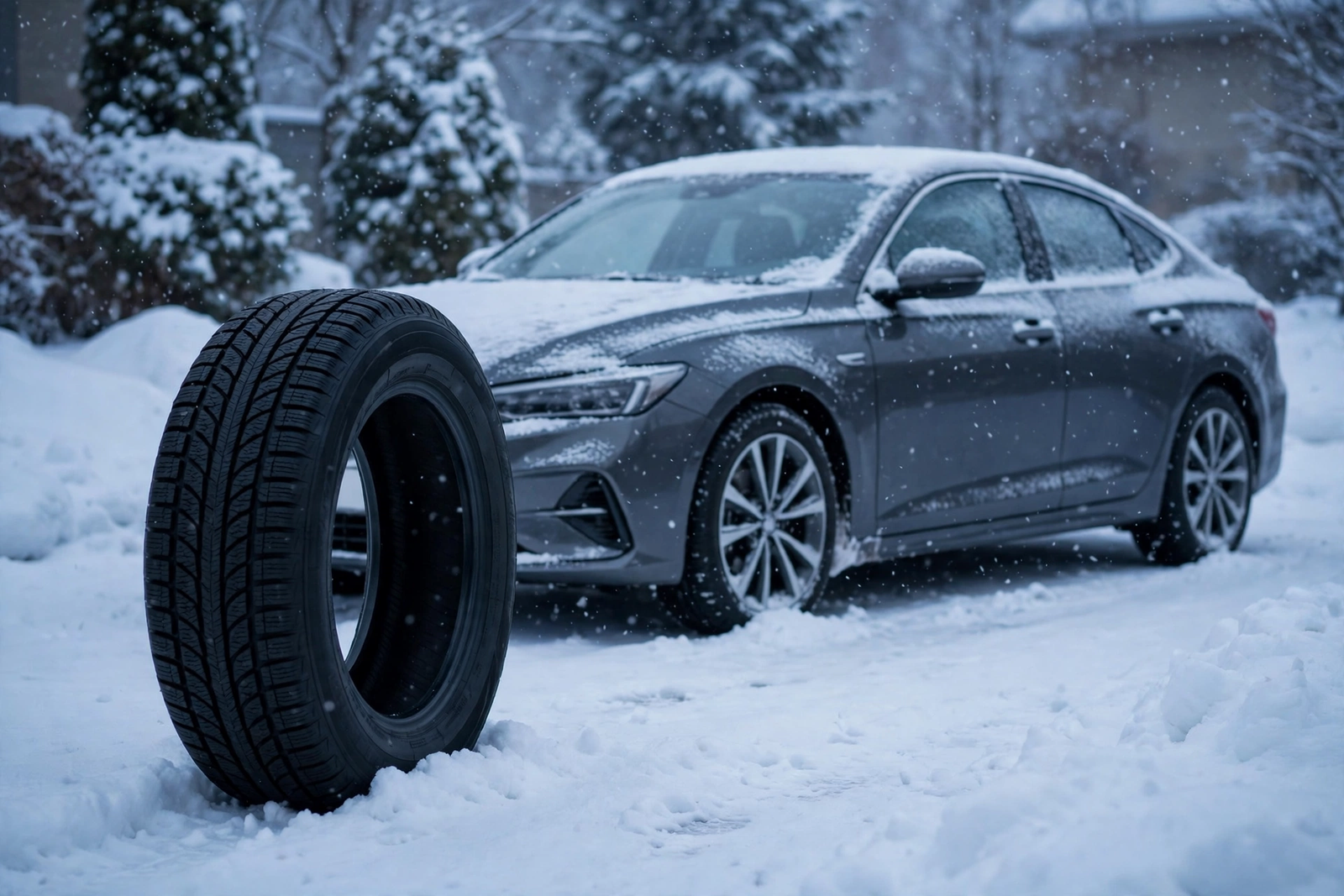
Most drivers who face real winters know the exact moment their tires give up: the first unplowed morning, the hill that was fine in October, the intersection where the car keeps sliding after the brakes bite. The Cooper Evolution Winter is built for exactly that driver. It is a dedicated studdable snow tire — one of Cooper’s winter tires — and the listing here is the 215/55R17 94H size, a common sedan and crossover fitment. Its winter compound stays flexible below 45 degrees Fahrenheit, its patented Snow-Groove tread locks snow into the tread, and it carries the three-peak mountain snowflake mark.
In this review we cover what the Snow-Groove tread and the winter compound actually do, how studs work and where the law allows them, the seasonal swap — a second set, storage, and the real cost of owning winter tires — and the practical side of buying tires on Amazon, we also compare it with the Continental TrueContact Tour, the year-round value pick for mild winters, and the Michelin CrossClimate2, the 3PMSF-rated premium pick.
As an Amazon Associate I earn from qualifying purchases.
| Pick | Product | Why it stands out | Check Price |
|---|---|---|---|
| Overall Winner | Cooper Evolution Winter (215/55R17 94H) | Dedicated winter tire: studdable, Snow-Groove snow-on-snow grip, 3PMSF severe-snow rating | |
| Best Budget | Continental TrueContact Tour (215/60R16 95T) | Year-round value pick for mild winters: quiet ride, 80,000-mile warranty, one set all year | |
| Premium Pick | Michelin CrossClimate2 (225/65R17 102H) | 3PMSF-rated year-round premium pick: Consumer Reports’ top all-season SUV pick, 60,000-mile warranty |
Table of Contents
What the Evolution Winter Is: Dedicated Winter Tires Explained
A dedicated winter tire is a different kind of product from a year-round tire. It is not a compromise tuned to survive all four seasons; it is a specialist built for one job — grip on snow and ice in freezing temperatures — and it is meant to come off when winter ends. The Cooper Evolution Winter is Cooper’s tire for that driver: someone whose winters bring months of snow, ice and sub-freezing mornings, and who will swap tires twice a year for it. It is a studdable winter tire for coupes, sedans, crossovers, SUVs and light trucks.
The size in this review, 215/55R17 94H, decodes simply: 215 millimetres wide, a 55-series sidewall, a 17-inch wheel, load index 94, and an H speed rating for sustained speeds up to 130 mph. Cooper’s spec sheet for this size lists a tread depth of 12/32 of an inch when new, a maximum load of 1,477 pounds, an overall diameter of 26.38 inches and a weight of 24 pounds, That deep starting tread is part of the point: a winter tire needs depth to bite and clear snow. It also carries the three-peak mountain snowflake symbol for severe snow and Cooper’s Weather-Master label.
Check the name on the listing, because Cooper sells a second winter tire that is easy to confuse with this one: the Cooper Discoverer True North, which is also sold in 215/55R17 94H. This review and its buttons are for the Evolution Winter only — check the listing name reads “Evolution Winter” with no “Discoverer True North” in it.
Snow-Groove Technology and the Winter Compound: How It Grips Snow and Ice
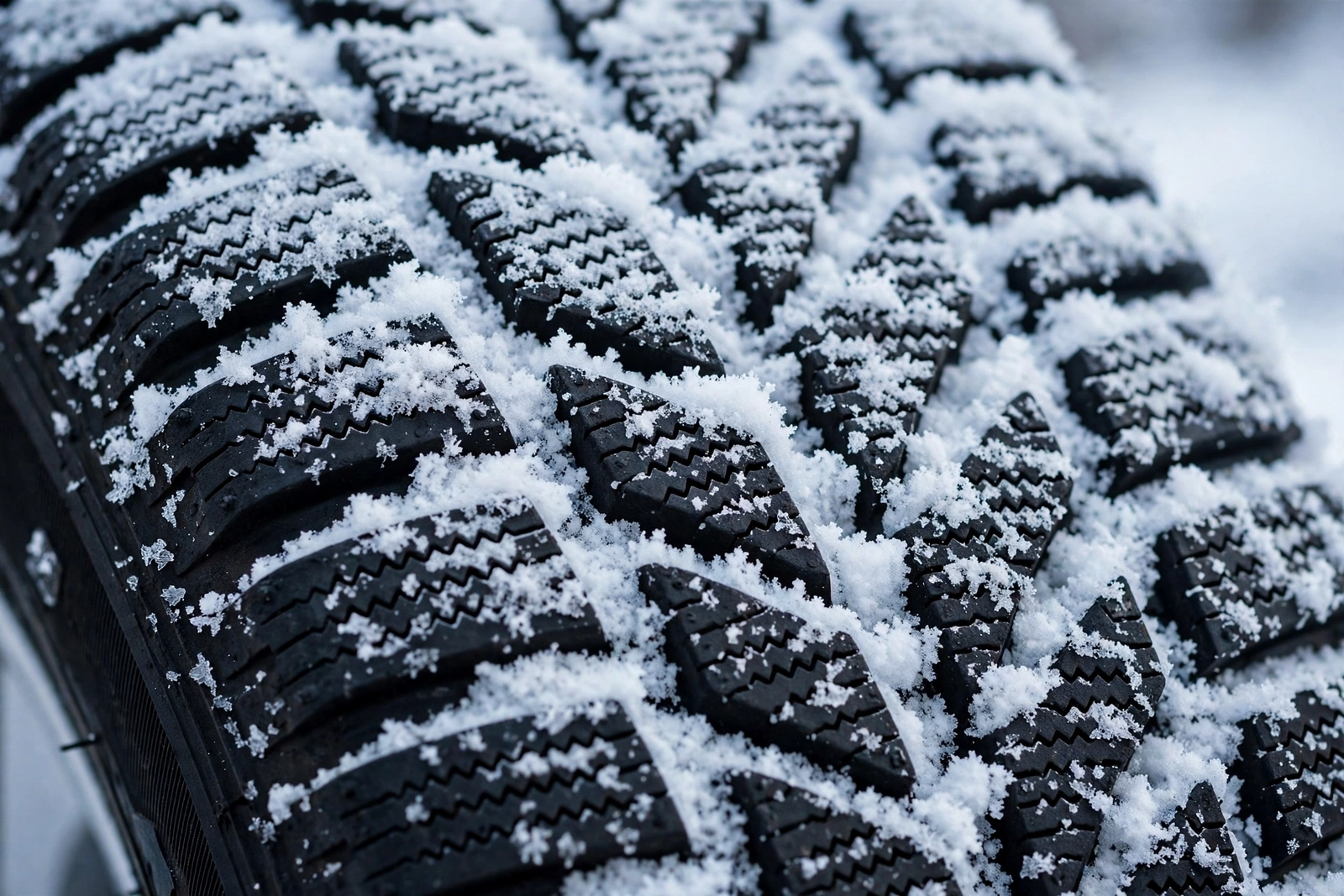
The headline technology is Cooper’s patented Snow-Groove design. The idea is counterintuitive: the tread is shaped to pack snow into itself. Cooper’s Snow Groove II design locks snow into the tread, so the tire presses snow against snow with every rotation. A sawtooth centre rib adds stability, and multi-angled sipes bite into the surface to help acceleration and braking on snow and ice.
The compound is the other half of the grip, and it is the part a year-round tire cannot match. Cooper states the Evolution Winter’s winter compound stays flexible below 45 degrees Fahrenheit but is still durable enough to provide many winter seasons of use. That flexibility keeps the tread biting when the temperature drops, while a year-round compound stiffens and loses grip. The trade-off is built in: Cooper also warns the tire should not be used when temperatures are consistently above 45 degrees Fahrenheit, because the soft compound wears fast in warmth.
Studs and the Seasonal Swap: What Owning Winter Tires Really Means
The Evolution Winter is studdable: it is built with precisely placed pinholes around the tread so metal studs can be added for extreme grip on ice. Cooper specifies TSMI number 12 studs for extra traction and braking on icy roads. Studs are not fitted by default — the tire arrives unstudded, and studding is a shop job. Check your local law first: studs are restricted or banned in some states and provinces, and allowed only in winter months in others. Where they are legal, they are the strongest answer to glare ice; where they are not, the unstudded tire is still a 3PMSF-rated winter tire.
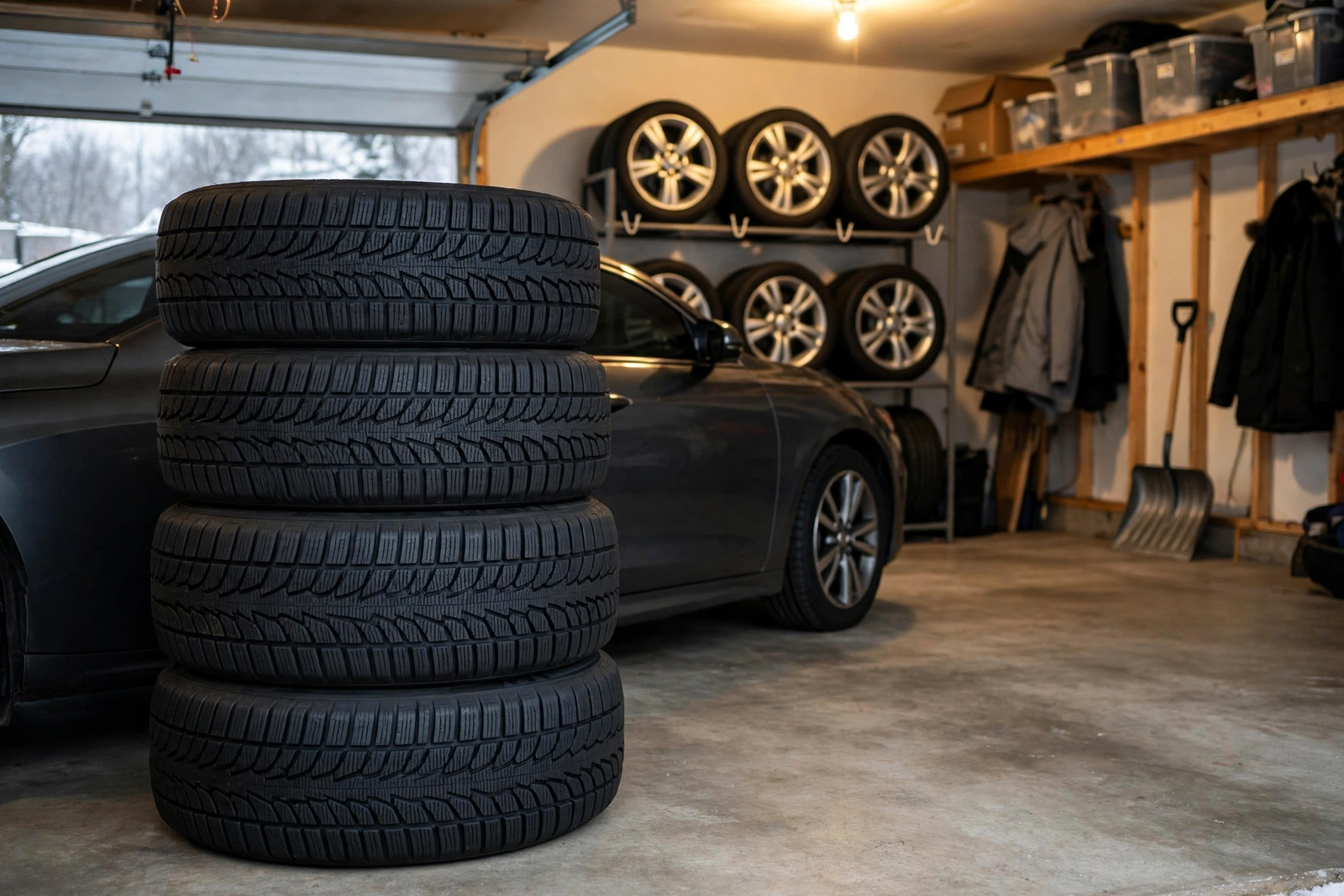
Studs or not, owning winter tires means owning two sets. The Evolution Winter goes on in late autumn and comes off in spring, which means two swaps a year at a shop — unless you mount the winter set on a second set of wheels and swap them yourself. A second set of wheels costs more up front but makes each changeover cheaper and faster. Between seasons the off-season set needs a cool, dry, dark place, out of sunlight. The cost softens because the winter set only works four or five months a year, so each set lasts more calendar years.
Deep Snow and Ice vs the Year-Round Compromise
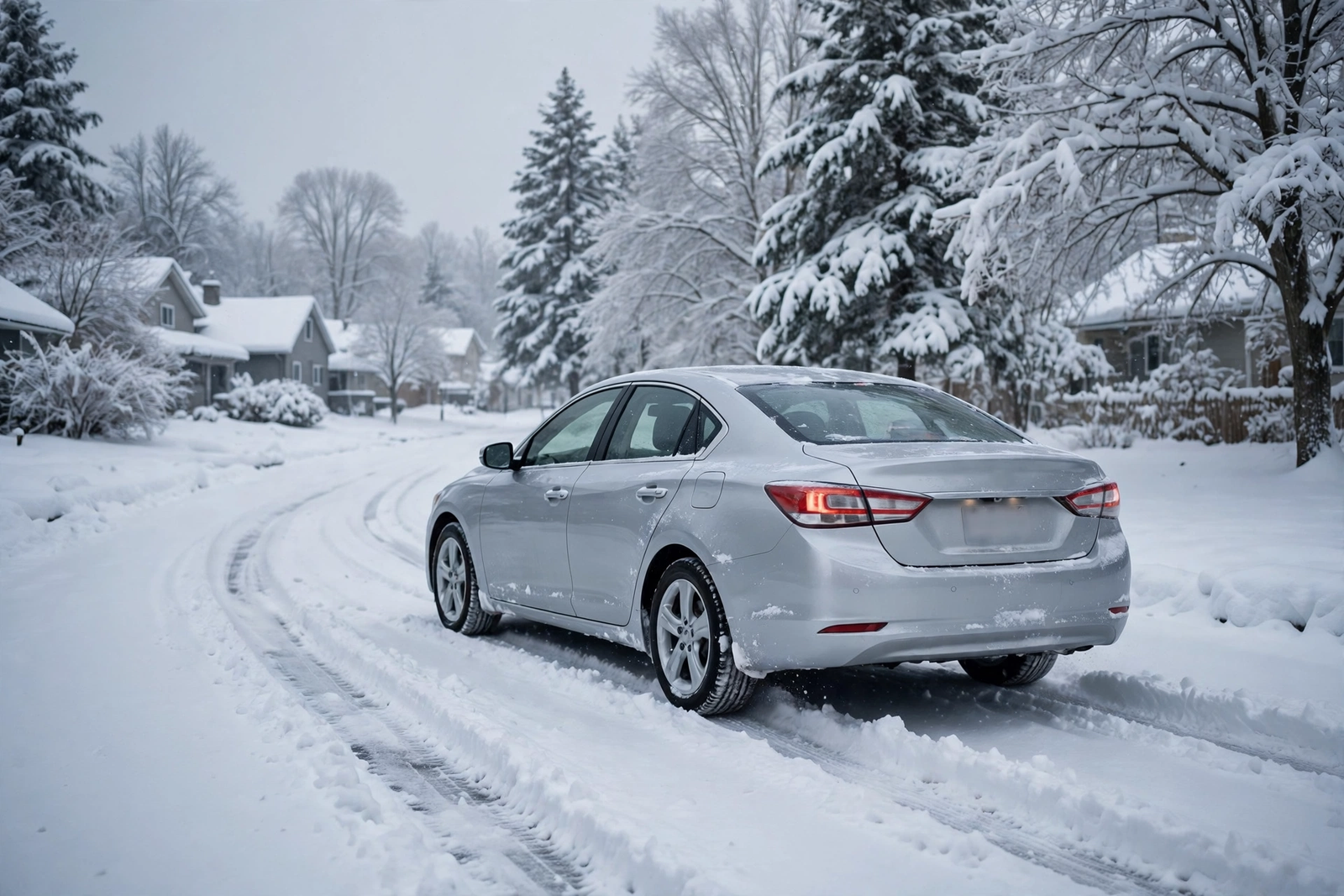
This is the decision the whole article turns on, so it deserves a straight answer. A dedicated winter tire beats even a 3PMSF-rated year-round tire in deep snow and on ice, because it wins on both halves of the grip equation at once: a compound that stays flexible in real cold, and a tread built only for snow — deep grooves, dense sipes, snow packed into the tread. A 3PMSF-rated year-round tire is a genuine winter-capable tire, but it still has to work in July as well as January. That compromise shows up where winter is hardest: unplowed roads, packed snow, ice well below freezing.
The year-round side has real advantages: no swaps, no second set, no storage — one set you fit and forget. Our Michelin Defender2 review covers the strongest version of that case: Consumer Reports’ best all-season tire for 2026, with an estimated tread life of around 100,000 miles and an 80,000-mile warranty. But the Defender2 is not rated 3PMSF for severe snow, so for a snow-belt driver it is the wrong tire for the worst months. The split is geography: mild winters mean a year-round tire is the sensible pick; months of snow, ice and sub-freezing mornings mean the dedicated set is the tire that gets you home.
No Mileage Warranty: What That Actually Means
Here is the fact that surprises most buyers, and it belongs in plain sight: the Evolution Winter is not backed by a mileage warranty. Discount Tire states it directly — as a tire designed for winter performance, it is not backed by a mileage warranty. The year-round tires in this programme carry long treadwear warranties instead: 80,000 miles on the Defender2 and the TrueContact Tour, 60,000 on the CrossClimate2.
What replaces the warranty is seasons and tread depth. The tire starts at 12/32 of an inch of tread, and winter grip fades as that depth wears down — so measure the tread each autumn before the set goes back on, and replace the set when it is too shallow to bite snow, rather than waiting for a legal minimum written for dry roads. Because the set only works for part of each year, it can still cover many winters. If a mileage warranty is a must-have, this is not your tire; the CrossClimate2 is the winter-capable pick that still carries one.
Buying on Amazon: Size, Fitment, and Installation
Before you order anything, check the size, load rating and speed rating on the sticker on your driver’s door jamb, known as the door placard, and match them exactly.
That warning matters double on Amazon, because the button in this article goes to one size listing: the 215/55R17 94H Evolution Winter. The tire is made in many sizes across 15- to 20-inch rims, on separate listings, so you must pick YOUR size on the listing before you buy. Here the name check matters too: Cooper’s Discoverer True North is also sold in 215/55R17 94H, so confirm the listing reads “Evolution Winter” before you pay. Check the DOT date code too, and prefer tires under 12 to 18 months old.
Then there is installation, which is extra. Tires arrive unmounted, and mounting, balancing and disposal of your old tires are charged on top of the tire price, so budget for installation as a separate cost — and remember a winter set means two changeovers a year, not one fitting. Confirm your shop will mount tires bought elsewhere — some refuse — and confirm the shop does studding if you plan to stud the tires.
Evolution Winter vs the Alternatives (TrueContact Tour, CrossClimate2)
The Continental TrueContact Tour is the Best Budget alternative, and it answers a different question: the year-round value pick for a driver whose winters are mild. It is a comfort-first tire with an 80,000-mile warranty for its T- and H-rated sizes, and it stays on the car all year with no swaps and no storage. Its limit is the one that matters here: it carries an M+S rating for light wintry conditions but no severe-snow rating, so it is not the tire for deep snow.
The Michelin CrossClimate2 is the Premium Pick, and the closest thing to a middle ground: a year-round tire that carries the 3PMSF severe-snow rating, named Consumer Reports’ top all-season SUV pick, with a 60,000-mile warranty behind it. For a driver who wants one set for real winter without a seasonal swap, it is the strongest single-set answer — but still a compromise next to a dedicated winter tire in deep snow and on ice. Warning: the Amazon listing for the CrossClimate2 in 225/65R17 102H showed as currently unavailable with no featured offers when we checked, so confirm it is live and in your size first.
Two more names belong here. The Michelin Defender2 is the long-life contrast: our Michelin Defender2 review covers it in full — Consumer Reports’ best all-season tire for 2026, around 100,000 miles of estimated tread life, an 80,000-mile warranty — but no severe-snow rating, so it suits maximum life and mild winters, not the snow belt. And our Hankook iON evo AS review covers the EV-tuned pick — Consumer Reports’ best EV tire, with sound-absorbing foam and a 50,000-mile warranty — but it is not a severe-snow tire either. There are no buttons for either here.
Verdict: Who Should Buy It — and Who Should Skip It
Buy the Cooper Evolution Winter if your winters are real: months of snow and ice, unplowed roads and sub-freezing mornings. Among winter tires, it is the honest specialist’s pick — a studdable 3PMSF-rated tire with a flexible cold-weather compound, Snow-Groove snow-on-snow grip, and a deep 12/32-inch starting tread. Get the size and the name right, and it is the set that gets you through the worst months.
Skip it if your winters are mild — the TrueContact Tour is the quieter, simpler, one-set answer. Skip it if you want one set that handles real winter without a swap, and look at the CrossClimate2 instead, with its 3PMSF rating and 60,000-mile warranty. The Evolution Winter answers one question — which tire grips hardest when winter is at its worst — and for the driver who actually faces that winter, it is the right answer.
Frequently Asked Questions
Are Cooper Evolution Winter tires good in snow?
Yes. The Evolution Winter is a dedicated winter tire with the three-peak mountain snowflake rating for severe snow, a winter compound that stays flexible below 45 degrees Fahrenheit, and Cooper’s patented Snow-Groove tread, which locks snow into the tread for snow-on-snow grip. It is also studdable with TSMI number 12 studs where the law allows, for extra grip on ice.
Can you use Evolution Winter tires all year?
No. Cooper states the tire should not be used when temperatures are consistently above 45 degrees Fahrenheit, because the soft winter compound wears fast in warmth. Fit the winter set in late autumn, swap back to your year-round set in spring, and store the off-season set in a cool, dry, dark place.
What size Evolution Winter should I buy?
Buy the size, load rating and speed rating shown on your driver’s door jamb placard, and match them exactly. The button in this article goes to one size listing, the 215/55R17 94H, and other sizes exist on separate listings, so always pick your own size on the product page before ordering. Also check the listing name reads “Evolution Winter” — Cooper’s Discoverer True North is a different winter tire sold in this same size.
Are Evolution Winter tires studdable?
Yes. The tire is built with precisely placed pinholes for TSMI number 12 studs, which a shop can fit for extra traction and braking on icy roads. Studs are not fitted by default, and they are restricted or banned in some states and provinces, so check your local law before ordering them — and confirm your installer does studding.
Do Evolution Winter tires have a mileage warranty?
No. Discount Tire states the Evolution Winter is not backed by a mileage warranty, so there is no mileage figure to plan around and no treadwear warranty claim to make. Plan by seasons and tread depth instead: the tire starts at 12/32 of an inch of tread, and Cooper describes the compound as durable enough to provide many winter seasons of use.
Evolution Winter vs TrueContact Tour — which should I choose?
Choose the Evolution Winter if your winters bring months of snow, ice and sub-freezing temperatures: it is a dedicated 3PMSF-rated winter tire with a flexible cold-weather compound and Snow-Groove grip, built for exactly those conditions. Choose the TrueContact Tour if your winters are mild: it is a comfort-first year-round tire with an 80,000-mile warranty that stays on the car all year, with no swaps and no storage — but no severe-snow rating.