Shopping for a front and rear dash cam usually starts with one question: does the camera record enough detail to settle what actually happened? The VIOFO A229 Pro is the two-channel kit this review covers — a 4K front camera and a 2K rear camera, both on Sony STARVIS 2 sensors, with GPS, 5GHz Wi-Fi, voice control, and a supercapacitor instead of a battery. It is the camera to look at when the budget picks’ upscaled 4K and 1080p rear footage fall short. This review covers what each camera records, how the night vision holds up, what parking mode costs, and how it compares with the two rivals most buyers shortlist.
The listing linked in this review is the two-channel kit, model A229 Pro 2CH (ASIN B0CKYFSKNN), first listed on Amazon in October 2023. A three-channel version adds an interior camera for rideshare and fleet drivers — but the 2CH is the kit most drivers buy. No memory card is included in the box, so budget for a card alongside the camera.
As an Amazon Associate I earn from qualifying purchases.
| Pick | Product | Why it stands out | Check Price |
|---|---|---|---|
| Overall Winner | VIOFO A229 Pro 4K HDR Dash Cam (2CH) — 4K front + 2K rear, dual STARVIS 2 sensors, GPS, 5GHz Wi-Fi, supercapacitor; no card included | Native 4K front and a 2K rear on Sony STARVIS 2 sensors — the sharpest two-channel evidence in this class | |
| Best Budget | REDTIGER F7NP Dash Cam — 4K front (interpolated) + 1080p rear, STARVIS sensor, supercapacitor, 32GB card included | The value pick: front-and-rear coverage with a card in the box and nothing extra to buy | |
| Premium Pick | ROVE R2-4K Dual Dash Cam — 4K front (upscaled) + 1080p rear, STARVIS 2 sensor, dual-band 5.8GHz Wi-Fi, 3-inch touchscreen, 128GB card included | The complete package: touchscreen, fast Wi-Fi, and the biggest bundled card of the three |
Table of Contents
What the VIOFO A229 Pro Is
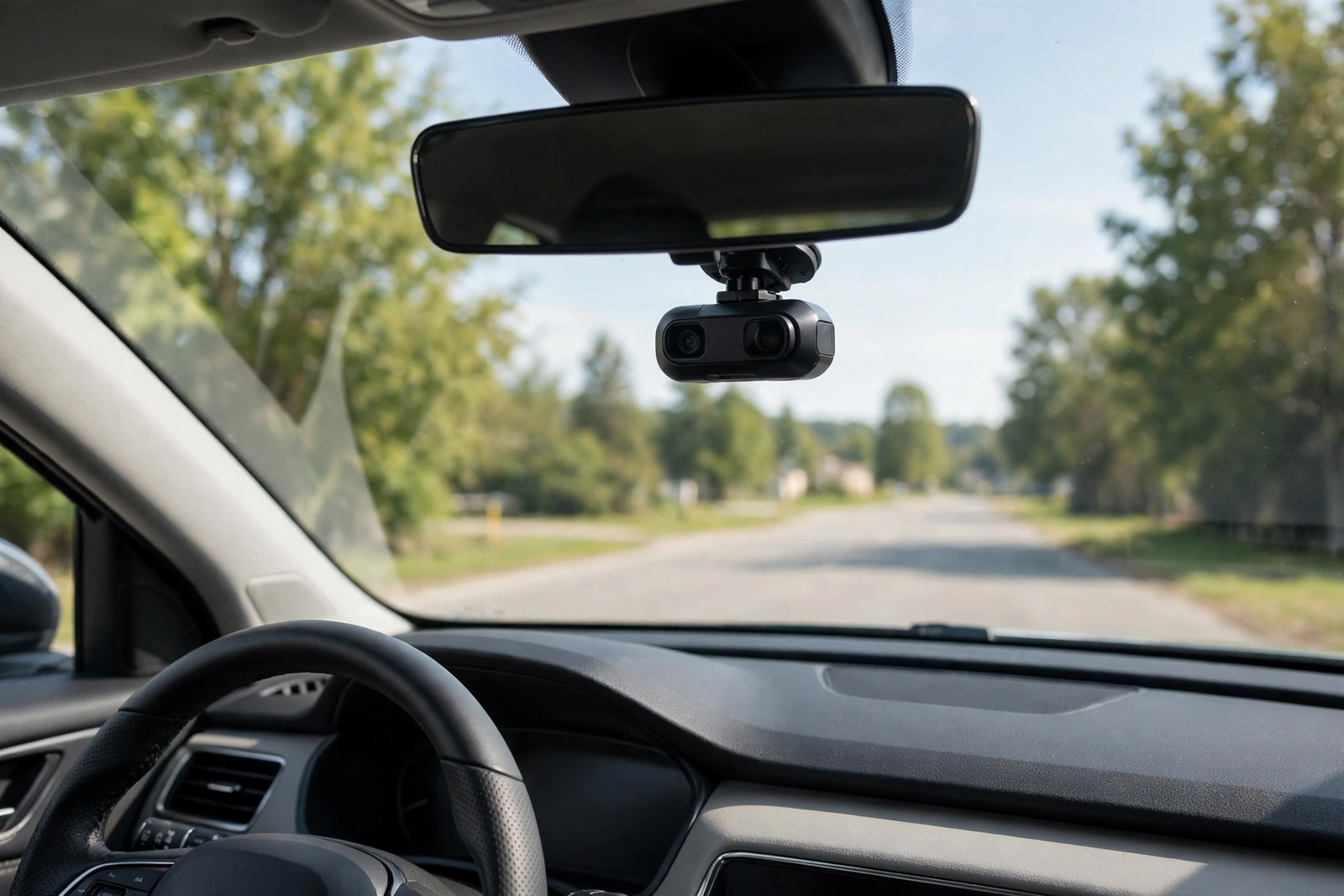
The A229 Pro 2CH is a two-channel dash cam: a front unit behind the rearview mirror and a smaller rear unit on the rear glass, joined by a cable along the headliner. The front camera records in 4K (3840×2160) at 30 frames per second; the rear in 2K (2560×1440) at the same rate. Both have HDR, and both use Sony STARVIS 2 sensors — an IMX678 up front, an IMX675 at the rear.
In the box: the front camera, the rear camera, a 6-metre rear cable, and a CPL filter for the front lens, which cuts reflections off the windshield. There is no memory card and no hardwire kit — both are separate purchases, as the storage and parking sections explain.
The camera runs on a supercapacitor rather than a lithium battery, which tolerates cabin heat far better. A three-channel version, the A229 Pro 3CH, adds a 1080p infrared interior camera for rideshare and fleet drivers.
The Front Camera: Native 4K with the Sony STARVIS 2 IMX678
The front camera is the reason to buy this camera. It records in native 4K — 3840×2160 at 30 frames per second — from an 8MP Sony STARVIS 2 IMX678 sensor, a 1/1.8-inch sensor that captures a genuine 4K image rather than stretching a smaller one. Reviewers call it true 4K: native 4K preserves more real detail — signs and number plates — than upscaling a 2.5K image.
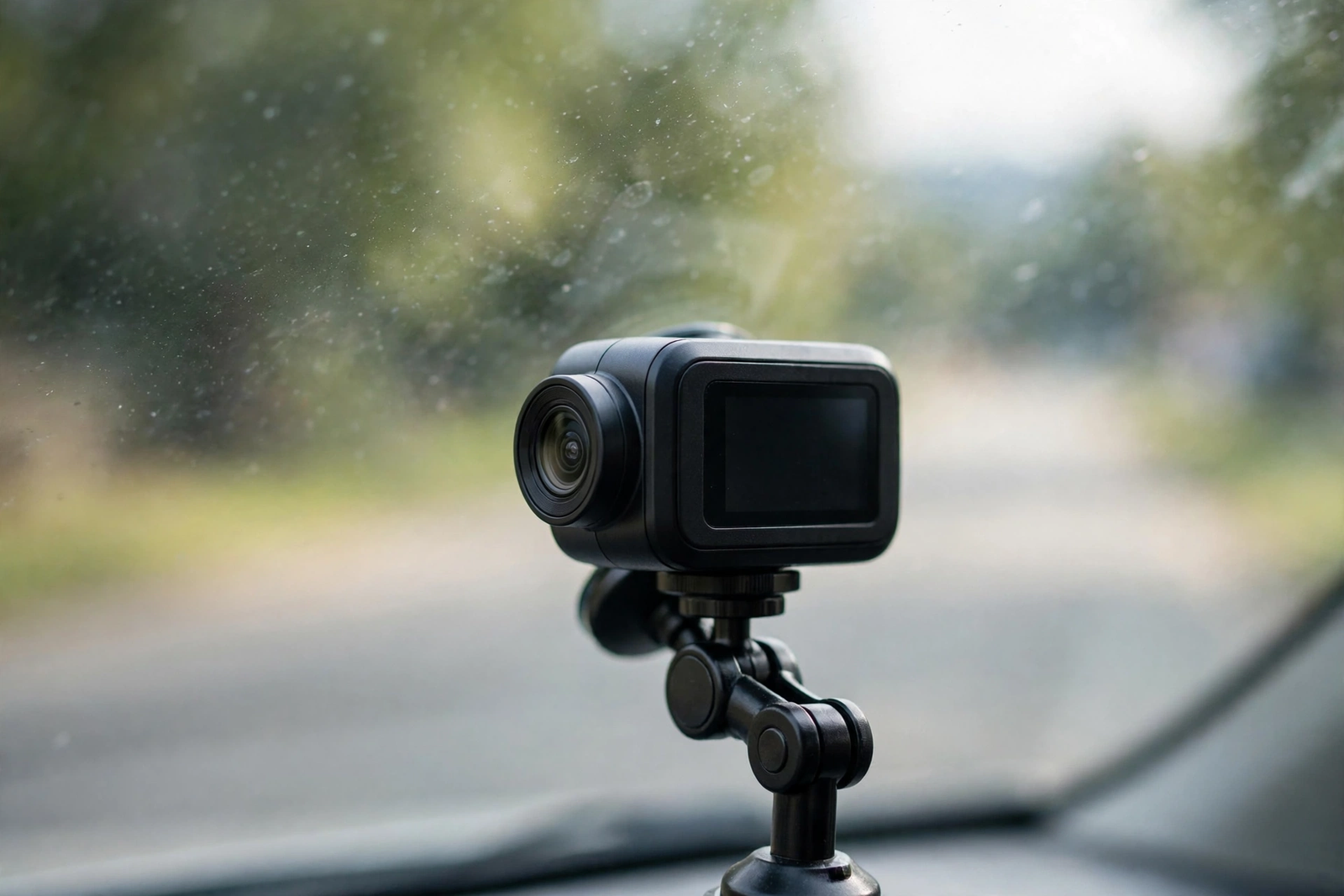
That is exactly what the two most-shopped rivals do: our REDTIGER F7NP review documents a front 4K output interpolated from a native 2.5K Sony STARVIS IMX335 sensor, and our ROVE R2-4K Dual review documents the same upscaling from a native 2.5K IMX675. Both look sharp in daylight, but the gap shows when you crop into a plate.
Two honest limits: at 30 frames per second, fast-moving plates can blur, and no dash cam guarantees plate readability.
The Rear Camera: 2K, Not 4K
The rear camera is a 2K camera — it is not 4K, and it is worth saying plainly. It records at 2560×1440 at 30 frames per second from a 5MP Sony STARVIS 2 IMX675 sensor, a 1/2.8-inch sensor smaller than the front sensor but the same STARVIS 2 generation, with HDR too.
That 2K rear is the A229 Pro’s clearest advantage over its rivals: both the REDTIGER F7NP and the ROVE R2-4K Dual pair their 4K-class front cameras with 1080p rear cameras — enough to show what happened behind you, but not to read a plate as cleanly as 2K. In a rear-end collision the car that hit you is usually close, and 2K gives you a better chance of reading its plate.
The rear camera is still the weaker half by design: its smaller sensor gathers less light, so its night footage is softer. That is normal — the front is your plate-reading camera, and the rear is your what-happened camera.
Night Vision and HDR
Night driving is where a dash cam earns its keep, and it is where the STARVIS 2 sensors do their best work: both are back-illuminated designs built for low light, paired with HDR on both channels and VIOFO’s Night Vision 2.0 processing.
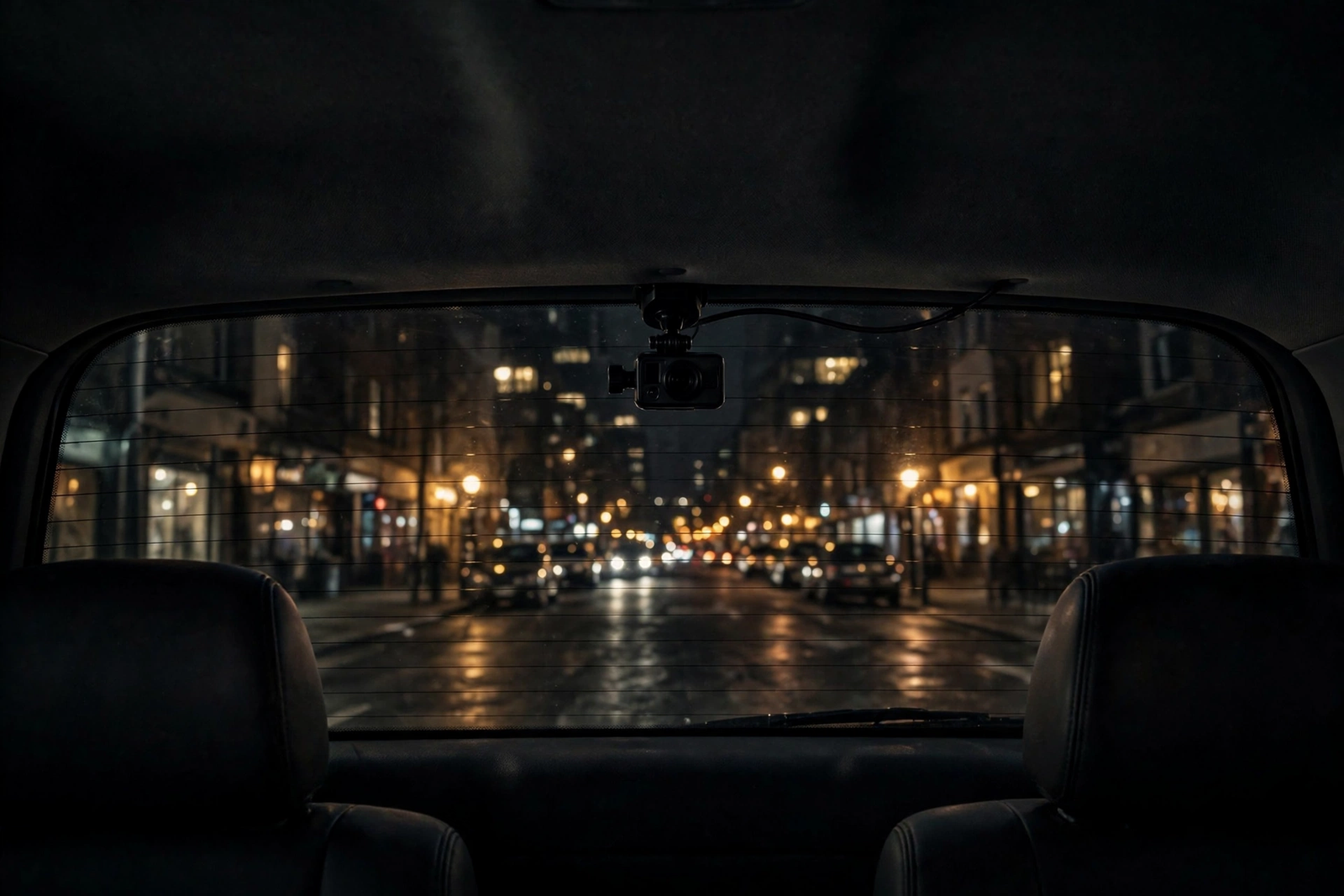
HDR matters at night because of headlights: a bright headlight in a dark frame is the classic dash-cam failure — the light blows out and the plate behind it disappears. HDR blends multiple exposures, holding the bright areas back while the shadows stay visible. It will not work miracles on a fast-moving plate, but it keeps both halves of a night scene readable.
The front camera is the stronger night performer, because its larger 1/1.8-inch sensor gathers more light than the rear’s 1/2.8-inch sensor. The rear 2K camera still records a usable picture of the car behind you under streetlights — but its night footage is for showing what happened, not reading fine detail.
Wi-Fi, GPS and the App
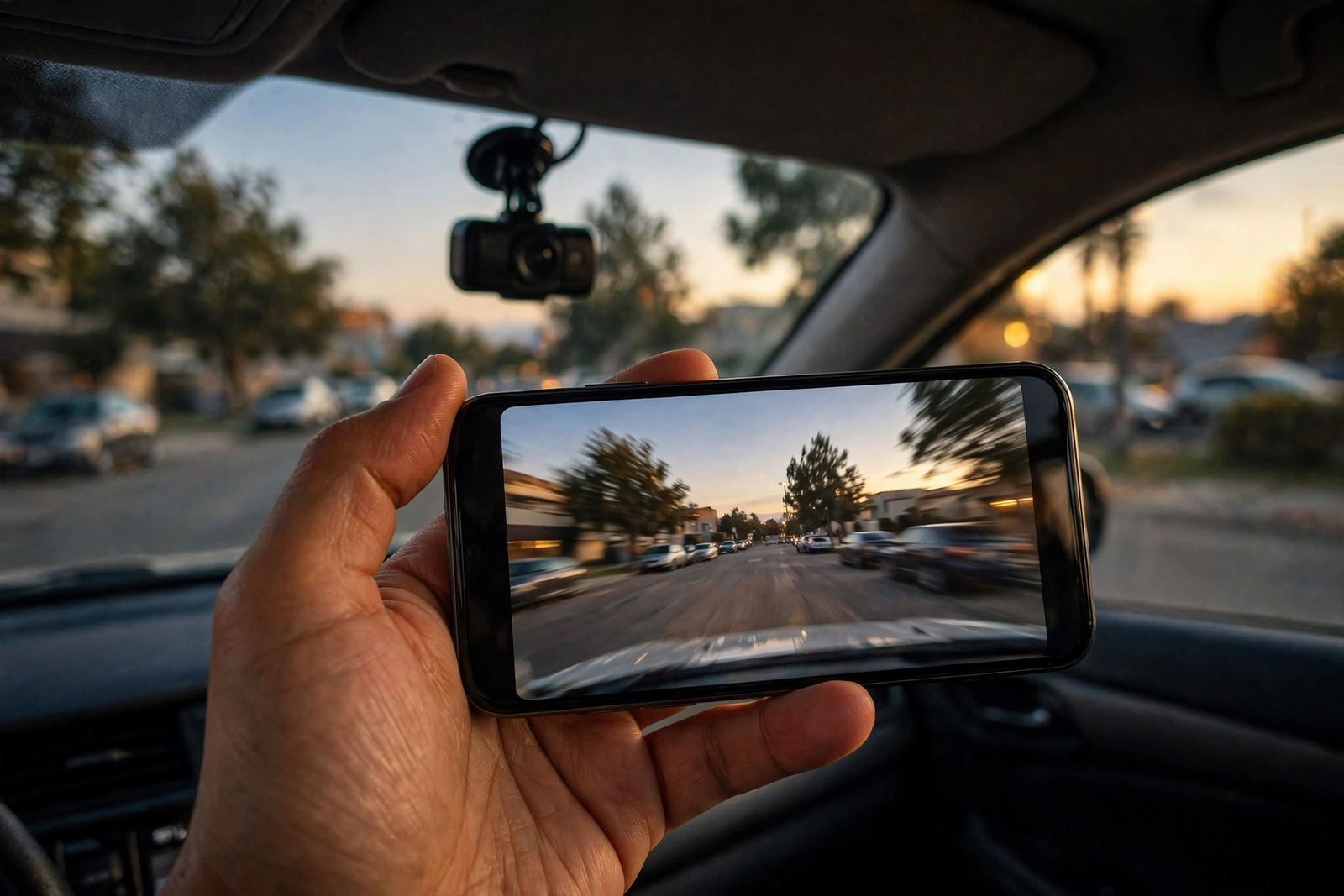
Built-in 5GHz Wi-Fi connects the camera to the VIOFO app on iOS or Android, and that is how you will use it day to day: clips move to your phone without pulling the memory card, which is what you want at the roadside after an incident. The range is short — inside or next to the car only — and there is no built-in LTE, so footage comes off over Wi-Fi or by removing the card.
GPS is built in — a quad-mode module (GPS, BEIDOU, GALILEO, and GLONASS) that records your route, speed, and location with the footage. That stamp matters if footage ever supports an insurance claim.
Voice control is the hands-free layer: the listing describes 12 voice commands, including taking a photo, locking a video, and turning Wi-Fi and audio on and off. Locking a clip by voice the moment something happens beats fumbling with buttons later.
Parking Mode and the Hardwire Kit
The A229 Pro advertises 24-hour parking mode with three options: Auto Event Detection, Low Bitrate, and Time Lapse. Auto Event Detection is the one most buyers want — the camera watches while parked and records when it detects a moving object, saving footage from 15 seconds before the event and 30 seconds after it. Low Bitrate records continuously, and Time Lapse takes frames at intervals.
But parking mode needs power the box does not provide: the HK4 hardwire kit, which wires the camera to the fuse box so it can draw power with the ignition off, is sold separately. Without it, the camera starts when the car starts and stops when it stops — so budget for the kit, and the installation, if parked-car protection is why you are buying.
The supercapacitor is not a substitute for the kit: it handles cabin heat better than a battery, but it does not keep the camera recording once the car is off.
Storage: No Card in the Box
There is no memory card in the box. The camera supports microSD cards up to 512GB, and the listing recommends a Class 10, U3 card — the speed class matters, because 4K front plus 2K rear video is a heavy write load and a slow card will drop frames. A high-endurance card is the right call, since standard cards wear out faster.
A larger card holds more driving history before the camera starts overwriting the oldest footage, and the camera records in a loop, so the card never fills up. Buy the card with the camera, format it in the camera before first use, and check it every few months — a worn card is the most common reason a dash cam stops saving footage.
Front and Rear Dash Cam Compared: VIOFO A229 Pro vs the Alternatives
Among car dash cameras at this level, the A229 Pro is the one that spends its money on the sensors. Below are the two cameras most buyers shortlist next to it, plus the single-channel option for drivers who need no rear camera. For the wider field, see our five-pick dash cam roundup.
The REDTIGER F7NP is the Best Budget pick, and the step down is clear: its front 4K is interpolated from a native 2.5K Sony STARVIS IMX335 sensor — the older STARVIS generation, not STARVIS 2 — and its rear camera is 1080p. What it gives you instead is a complete box: a 32GB card, a supercapacitor, GPS and Wi-Fi, and a 3.16-inch screen. If your budget is fixed and you want front-and-rear coverage with nothing extra to buy, the F7NP is the honest answer — see our REDTIGER F7NP review.
The ROVE R2-4K Dual is the Premium Pick and the closest rival on paper: the newer STARVIS 2 sensor, a 3-inch touchscreen, dual-band 5.8GHz Wi-Fi, and a 128GB card — the biggest bundled card of the three. Its limits match the F7NP’s: the front 4K is upscaled from a native 2.5K sensor and the rear camera is 1080p. The A229 Pro beats it where it counts for evidence — a native 4K front sensor and a 2K rear — while the ROVE wins on the screen, Wi-Fi speed, and the card in the box. See our ROVE R2-4K Dual review.
One more name for tighter budgets: the viofo a119 mini 2 dash cam — a single-channel camera that gives you a front view only. It is the budget route to strong front-facing video if you do not need a rear camera. The A229 Pro’s case is that the rear channel, the GPS, and the dual STARVIS 2 sensors are worth the step up.
Who Should Buy It — and Who Should Skip It
Buy the A229 Pro if you want the sharpest two-channel evidence in this class — a native 4K front camera and a 2K rear camera, both on STARVIS 2 sensors — and you drive enough at night for the sensors to matter. Buy it too if you park in the sun: the supercapacitor will outlast a battery through hot summers. Rideshare and fleet drivers should look at the three-channel version with its infrared interior camera.
Skip it if you only need a front camera: the A119 Mini 2 above covers that job for less. Skip it if you want the lowest outlay and a card in the box — the F7NP is the better buy. Skip it too if you want remote cloud monitoring: this camera has no built-in LTE. And skip parking mode unless you will buy the hardwire kit — without it, this is a driving recorder only.
Verdict
The VIOFO A229 Pro is the most convincing version of the front and rear dash cam idea at this level: a native 4K front camera on the Sony STARVIS 2 IMX678, a 2K rear camera on the STARVIS 2 IMX675, HDR on both channels, GPS, 5GHz Wi-Fi, voice control, and a supercapacitor for hot windshields. It is not a complete box — the memory card and the hardwire kit are separate purchases — and its rear camera is 2K, not 4K. But if you want the sharpest two-channel evidence you can buy, this is the camera. Buy the card with it, and hardwire it for parking protection.
Frequently Asked Questions
Is the VIOFO A229 Pro a true native 4K dash cam?
Yes. The front camera records at 3840×2160 at 30 frames per second from an 8MP Sony STARVIS 2 IMX678 sensor, which captures a genuine 4K image. That is different from cameras like the REDTIGER F7NP and the ROVE R2-4K Dual, whose 4K output is upscaled from a native 2.5K sensor.
Is the rear camera 4K too?
No. The rear camera records at 2K (2560×1440) at 30 frames per second from a 5MP Sony STARVIS 2 IMX675 sensor. It is a step up from the 1080p rear cameras on the F7NP and the ROVE R2-4K Dual, but it is not 4K, and this review does not describe it as 4K anywhere.
Does the VIOFO A229 Pro come with a memory card?
No. There is no memory card in the box. The camera supports microSD cards up to 512GB, and the listing recommends a Class 10, U3 card. A high-endurance card lasts longest under constant recording, so buy the card with the camera.
Does parking mode work out of the box?
No. The A229 Pro supports 24-hour parking mode with three options — Auto Event Detection, Low Bitrate, and Time Lapse — but it needs the HK4 hardwire kit, sold separately, wired to the fuse box. Without the kit, the camera starts when the car starts and stops when the car stops.
Do I need the three-channel version?
Only if you need a cabin camera. The A229 Pro 3CH adds a 1080p infrared interior camera to the same 4K front and 2K rear setup, which is the right tool for rideshare, taxi, and fleet drivers. For normal driving, the two-channel kit in this review covers accidents, rear-end collisions, and parking bumps.
How do I get footage off the camera?
Over 5GHz Wi-Fi to the VIOFO app on iOS or Android, without pulling the memory card, or by removing the card. The Wi-Fi range is short — for use inside or next to the car — and the camera has no built-in LTE cloud monitoring, so remote connection from elsewhere is not supported.