OBD1 Code Reader: 3 Readers for Pre-1996 Cars
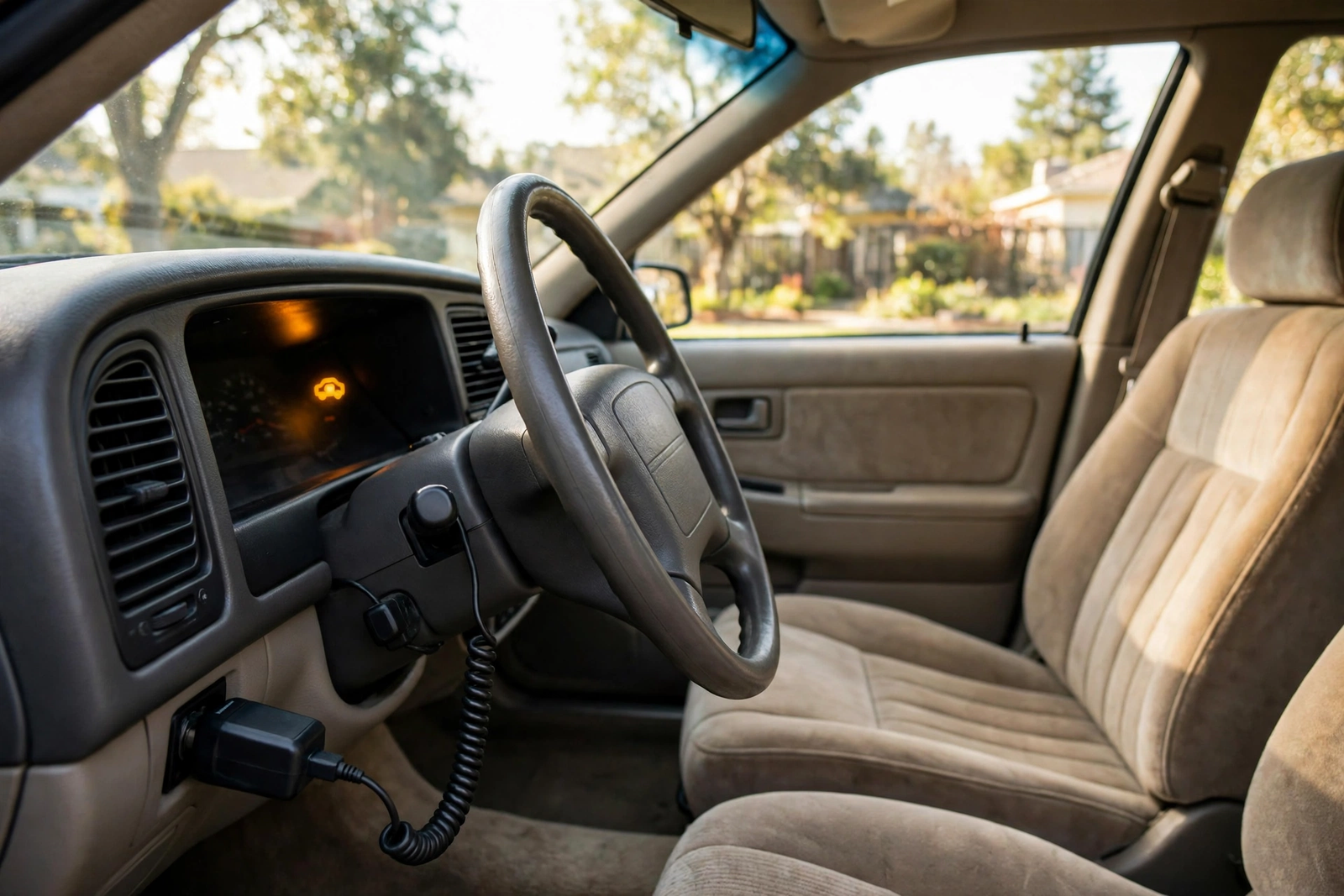
If your car was built before 1996 and the check engine light is on, a modern scanner will not help you. The plug does not fit, and the car does not speak the same language. Cars built before 1996 use OBD1, a set of manufacturer-specific diagnostic systems with different connectors and different protocols for each car maker. An OBD1 code reader is the tool that talks to those systems: it plugs into the older diagnostic connector, pulls the stored trouble codes from the car’s computer, and tells you why the light is on.
The short answer: the best OBD1 code reader for most owners of pre-1996 cars is a dedicated reader matched to the car’s make — the Innova 3123 for GM cars, the Innova 3145 for Ford, Lincoln and Mercury cars, or the Innova 3120 combo tool if you also work on 1996-and-newer cars. All three readers in this article work on pre-1996 cars; only the Innova 3120 also works on 1996-and-newer cars. If your car is a 1996 model or newer and you own no older car, it uses OBD2 and needs a different scanner altogether.
As an Amazon Associate I earn from qualifying purchases.
Quick Pick: The Best OBD1 Code Reader for Pre-1996 Cars
| Pick | Product | Best For | Check Price |
|---|---|---|---|
| Overall Winner | INNOVA 3123 GM OBD1 Code Reader | A dedicated OBD1 code reader for GM cars and trucks from 1982 to 1995, reading engine and ABS codes | Check Price on Amazon |
| Best for Ford | INNOVA 3145 Ford Digital OBD1 Code Reader | A digital OBD1 code reader for Ford, Lincoln and Mercury cars and trucks from 1982 to 1995, with self-tests | Check Price on Amazon |
| Premium Pick | INNOVA 3120 Diagnostic Scan Tool/Code Reader for OBD1 and OBD2 Vehicles | An OBD1 code reader that also works on 1996-and-newer OBD2 cars, for owners with both old and new cars | Check Price on Amazon |
The Quick Pick labels describe the readers, not checked prices: the Innova 3123 is the dedicated GM reader, the Innova 3145 is the Ford reader with self-tests, and the Innova 3120 is the combination tool that also works on OBD2 cars. Check the live listings for current prices before you buy.
Table of Contents
Innova 3123 GM OBD1 Code Reader: The Best OBD1 Code Reader for GM Owners
The Innova 3123 is a dedicated OBD1 code reader for GM owners, and the overall winner here. It is built for one job: reading codes on most General Motors cars and trucks from 1982 to 1995. It reads engine and electronic transmission codes from the car’s computer, and it reads ABS codes too — the two systems this reader is built to cover. It needs no battery of its own: it draws its power from the car, and it plugs into the car’s test connector, usually found under the left side of the dashboard.
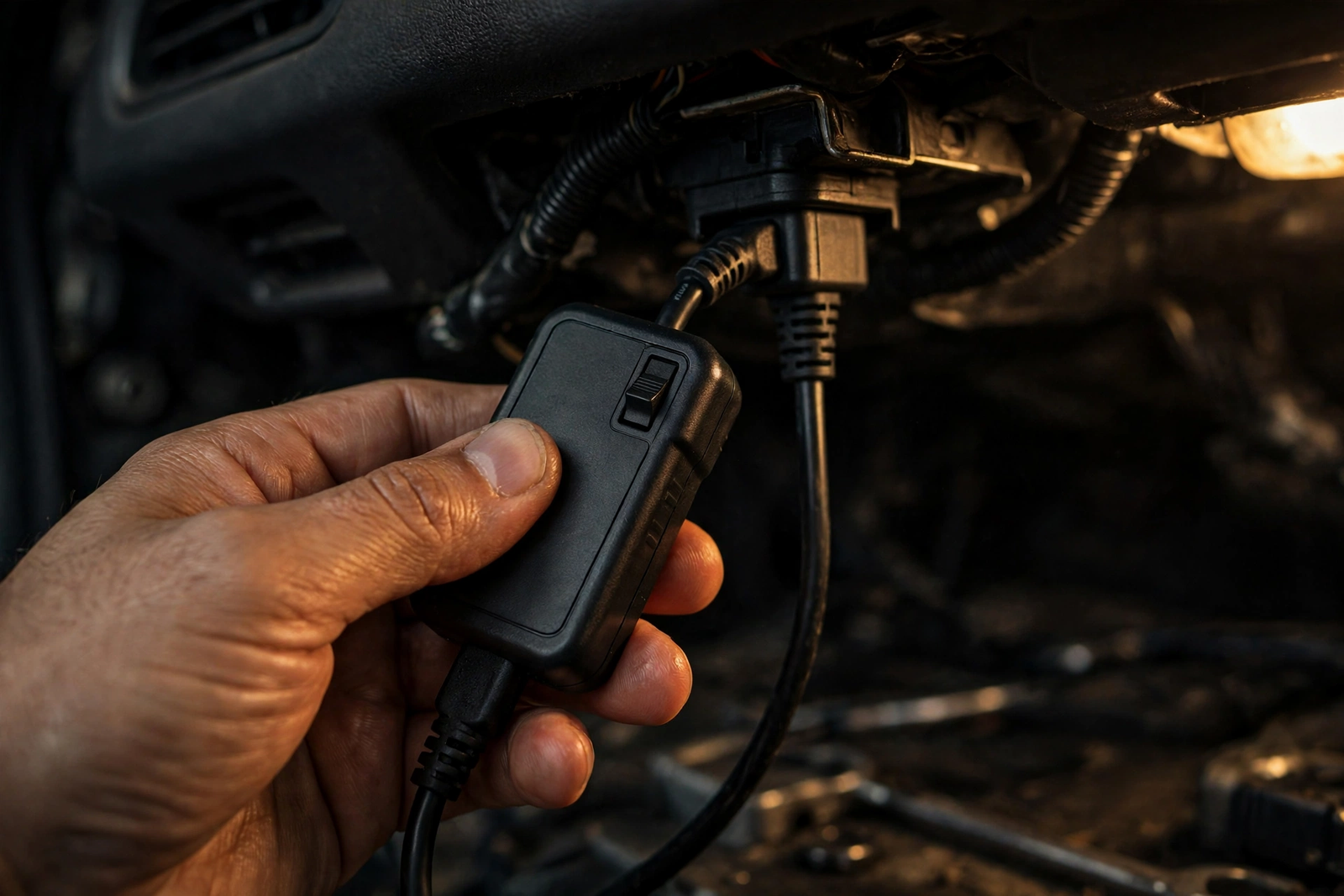
What makes the 3123 the winner is its simplicity. A selector switch chooses between the engine codes and the ABS codes, and the codes are read from the flashing check engine light on the dashboard, following the steps in the reader’s manual. There is no screen to learn, no app to install and no update to download — plug it in, turn the ignition on without starting the engine, and read the flashes. The trade-off is its narrow fitment: it works on GM cars only, and the manual excludes Cadillac models and states plainly that it is not compatible with 1996 and later model year vehicles. If your pre-1996 car is a GM, this is the reader to buy; if it is a Ford, it will not fit your car at all.
INNOVA 3123 GM OBD1 Code Reader on Amazon: GM OBD1 code reader, model 3123, UPC 042173031238, for GM cars and trucks from 1982 to 1995, reading engine and ABS codes.
Buy the Innova 3123 if: you own a pre-1996 GM car or truck and want the simplest reader for it — a dedicated GM reader that needs no battery and reads engine and ABS codes.
Innova 3145 Ford Digital OBD1 Code Reader: The Best OBD1 Code Reader for Ford Owners
The Innova 3145 is the Ford twin of the 3123: a digital OBD1 code reader made for most Ford, Lincoln and Mercury cars and trucks from 1982 to 1995. Unlike the GM reader, which reads its codes from the flashing dashboard light, the 3145 has a digital display that shows the codes directly, so there is no counting flashes. It reads engine codes and performs the Ford self-test functions, running the key-on-engine-off test and then the key-on-engine-running test, and it communicates with both EEC-IV and MCU computer systems, which covers the Ford OBD1 cars of the era.
That display and those self-tests are why it is the pick for Ford owners. A Ford of this age stores its codes in the engine computer, and the 3145 walks through the car’s own self-test routine and shows the result as a number on its screen. The limits are the same kind as the GM reader’s: it works on Ford, Lincoln and Mercury only, it reads engine and transmission codes, and it does not diagnose ABS or other systems. So check whether your Ford’s test connector is easy to reach before you buy. If your pre-1996 car is a Ford, Lincoln or Mercury, this is the reader for your garage.
INNOVA 3145 Ford Digital OBD1 Code Reader on Amazon: Ford digital OBD1 code reader, model 3145, for Ford, Lincoln and Mercury cars and trucks from 1982 to 1995, with key-on-engine-off and key-on-engine-running self-tests.
Buy the Innova 3145 if: you own a pre-1996 Ford, Lincoln or Mercury and want a reader with a digital display and the Ford self-tests, instead of counting flashes on the dashboard.
Innova 3120 CanOBD 2&1: The Best OBD1 Code Reader That Also Works on Newer Cars
The Innova 3120 CanOBD 2&1 is the premium pick because it is two tools in one: an OBD1 code reader for older cars and an OBD2 scanner for newer ones. Its manual states that it is designed to work on most Chrysler, Ford, GM and Toyota OBD1 systems as well as all OBD2 compliant vehicles, and that it retrieves enhanced trouble codes from most Chrysler and Jeep, General Motors, Ford, Mazda and Isuzu vehicles. If your garage holds both a pre-1996 classic and a 1996-or-newer daily driver, this is the one tool that covers both — the dedicated GM and Ford readers above cannot touch a 1996-or-newer car at all.
There is one thing to check before you buy it: which OBD1 cables are in the box. Innova’s own coverage notes state that most of its combination tools do not come with the OBD1 cable and adapters, which need to be bought separately, while the adapter-kit models in its range do include them — so read the listing for the 3120 carefully and confirm the cables for your car’s make are included, or budget for the adapter. That check is the whole difference between a tool that works on your older car on arrival and one that waits for a cable. Our Innova CarScan OBD2 scanner review covers Innova’s modern OBD2-only scanners if your cars are all 1996 or newer.
INNOVA 3120 Diagnostic Scan Tool/Code Reader for OBD1 and OBD2 Vehicles on Amazon: OBD1 and OBD2 code reader, model 3120, for most Chrysler, Ford, GM and Toyota OBD1 systems and all OBD2 compliant vehicles, with enhanced trouble codes.
Buy the Innova 3120 if: you work on both a pre-1996 car and a 1996-or-newer car and want one tool that covers both — and you have checked that the OBD1 cables for your car’s make are in the box.
OBD1 Code Reader Compared: Three Readers Side by Side
| Reader | Best For | OBD1 Coverage | Display | Also Works on OBD2 Cars |
|---|---|---|---|---|
| Innova 3123 | GM owners | GM cars and trucks, 1982–1995; engine and ABS codes | Codes read from the flashing check engine light | No |
| Innova 3145 | Ford, Lincoln and Mercury owners | Ford, Lincoln and Mercury cars and trucks, 1982–1995; engine and transmission codes | Digital display with Ford self-tests | No |
| Innova 3120 | Owners with old and new cars | Most Chrysler, Ford, GM and Toyota OBD1 systems; enhanced codes | Digital display | Yes — all OBD2 compliant vehicles |
The choice comes down to one question: what cars do you own? If you own one pre-1996 GM, the 3123 is the simplest reader of the three, and its ABS coverage is something the Ford reader does not offer. If you own one pre-1996 Ford, Lincoln or Mercury, the 3145 is the equivalent tool, and its digital display and self-tests make the job easier than counting flashes. And if you own a pre-1996 car and a newer one, the 3120 is the only one of the three that works on both — provided the OBD1 cables for your older car’s make are in the box or bought with it. None of the three is a live-data scan tool in the modern sense: these are code readers for older cars, built to pull stored codes and run the self-tests of their era, not to stream sensor graphs.
OBD1 vs OBD2: What OBD1 Is and Why 1996-and-Newer Cars Need a Different Scanner
OBD1 is not one system. It is the name for the diagnostic systems car makers fitted before the OBD2 standard arrived, and each maker did it differently: GM used its ALDL connector, Ford used its EEC test connector, and Chrysler and Toyota used their own connectors and codes. There was no standard plug, no standard protocol and no standard code list, which is why an OBD1 code reader is almost always built for one make or a small group of makes — and why a reader for a GM will not plug into a Ford.
In the United States, OBD2 became mandatory for cars and light trucks from model year 1996, with one standard 16-pin connector under the dashboard and one standard set of codes. That is the line this article uses: in the United States, 1995 and older is generally OBD1 and 1996 and newer is OBD2, and the two systems do not mix — a few cars on either side of the line are exceptions, so check your exact car. If your car is a 1996 model or newer, do not buy any OBD1 code reader on this page — read our guide on how to use an OBD2 scanner and pick a scanner made for the standard port instead. The one exception is a combination tool like the Innova 3120 above, which carries both the OBD1 cables and the OBD2 plug.
How to Use an OBD1 Code Reader
Start by finding the diagnostic connector. On most GM cars of the era it is the ALDL connector, usually a black plug under the left side of the dashboard; on Ford cars it is the EEC test connector, usually under the hood or under the dashboard. Your car’s manual or the reader’s manual will show the exact spot — connector locations vary by model and year, so do not guess. Plug the reader into the connector with the ignition off, then turn the ignition on without starting the engine.
Then follow the reader’s own procedure. On the Innova 3123, set the selector switch to the engine codes, turn the ignition on, and read the codes from the flashing check engine light; the manual includes the code list and the steps for deleting the codes once the repair is done. On the Innova 3145, switch the reader on, press and hold the test button to start the key-on-engine-off test, and read the codes from its display; the key-on-engine-running test follows the same pattern with the engine running. Write the codes down before you clear anything, look each code up in the reader’s manual, and fix the fault before you delete the code — clearing the code does not fix the car, and the light will come straight back if the fault is still there.
OBD1 Fitment: Cables, Adapters and the Limits to Check First
OBD1 fitment is the part buyers get wrong most often, so check it before you buy, not after. OBD1 coverage varies by make and year: the Innova 3123 covers most GM cars and trucks from 1982 to 1995 but excludes Cadillac models and does not cover 1996 and later vehicles; the Innova 3145 covers most Ford, Lincoln and Mercury cars and trucks from 1982 to 1995 and no other make; and the Innova 3120 covers most Chrysler, Ford, GM and Toyota OBD1 systems, which still leaves some makes and models out. Check your exact year, make and model against the reader’s coverage before ordering, and treat any listing that promises every pre-1996 car as a warning sign.
Cables and adapters are the second check. A dedicated reader like the 3123 or the 3145 plugs straight into its make’s connector, but combination tools are different: Innova’s own notes state that most of its combination tools do not come with the OBD1 cable and adapters, which need to be bought separately, and that only its adapter-kit models include them. Confirm in the listing which cables are in the box for the tool you are buying. One more warning: the once-popular Actron CP9690, a combination OBD1 and OBD2 scanner, has been discontinued, and Actron no longer provides software updates for it — do not pay a premium for a discontinued tool when a current reader covers the same cars.
Mistakes to Avoid With an OBD1 Code Reader
The most common mistake is buying an OBD2-only scanner for a pre-1996 car. The 16-pin OBD2 plug will not fit an OBD1 connector, and an OBD2 scanner cannot speak the older make-specific protocols — the tool will simply not connect. The second mistake is buying the right era but the wrong make: a GM reader on a Ford, or a Ford reader on a GM, is a paperweight, because the connectors and the code systems are different. Match the reader to the badge on the car first, and to the year second.
The third mistake is expecting a modern scan tool. A reader pulls stored trouble codes and runs the self-tests of its era; it is not a live-data graphing tool, and the dedicated readers here do not stream sensor data the way a modern OBD2 scanner does. The fourth is clearing the codes and calling the job done: the light comes back if the fault is still there, so fix first and clear second. And the fifth is skipping the cable check on a combination tool — a reader that arrives without the cable for your car’s make is a tool you cannot use until the adapter arrives.
Who Should Buy an OBD1 Code Reader — and Who Should Not
Buy an OBD1 code reader if: you own a pre-1996 car and want to know why its check engine light is on without paying a shop for every code read. It suits the owner of a classic GM or Ford who does their own maintenance, the buyer of an older car who wants to check it before handing over money, and the home mechanic whose garage already holds one older car. A dedicated reader is a small, simple tool for one car, and that is exactly what it is good at.
Do not buy one if: your car is a 1996 model or newer — it uses OBD2, and a reader made for the standard 16-pin port is the tool you need, such as the one in our FOXWELL NT301 OBD2 scanner review. And do not buy one as a professional diagnostic tool: if you need live data, graphing and coverage across many makes and model years, a modern scan tool is the right purchase, not a reader built for one make’s pre-1996 system. If your car is pre-1996 and you know its make, a dedicated reader is the right tool.
The Verdict
The best OBD1 code reader for most owners of pre-1996 cars is the one matched to the car’s make. The Innova 3123 is the overall winner for GM owners: a dedicated reader for GM cars and trucks from 1982 to 1995 that reads engine and ABS codes and needs no battery. The Innova 3145 is the equivalent pick for Ford, Lincoln and Mercury owners: a digital OBD1 code reader with the Ford self-tests and a display that shows the codes directly. And the Innova 3120 is the premium pick for the owner with both an older and a newer car: an OBD1 code reader that also works on OBD2 compliant vehicles, provided the OBD1 cables for the older car are in the box.
Whichever reader you choose, remember the hard line that runs through this whole article: OBD1 covers pre-1996 cars only, and 1996-and-newer cars use OBD2 and need a different scanner — start with our best OBD2 scanner for home mechanics roundup if your car is on the newer side of that line. Check your car’s exact year, make and model against the reader’s coverage before you buy, confirm the cables are included, and fix the fault before you clear the code.
Frequently Asked Questions
Will an OBD1 code reader work on my 1996 or newer car?
No. OBD1 covers pre-1996 cars only. Cars from model year 1996 onward use OBD2, with a standard 16-pin connector and a standard set of codes, and an OBD1 code reader will not plug into that port or speak the OBD2 protocol. The only tool in this article that works on a 1996-or-newer car is the Innova 3120 combination tool, which carries both the OBD1 cables and the OBD2 plug. For a 1996-or-newer car on its own, buy an OBD2 scanner instead.
What cars does an OBD1 code reader work on?
Pre-1996 cars, and only the makes the reader is built for. The Innova 3123 works on most GM cars and trucks from 1982 to 1995, excluding Cadillac models. The Innova 3145 works on most Ford, Lincoln and Mercury cars and trucks from 1982 to 1995. The Innova 3120 works on most Chrysler, Ford, GM and Toyota OBD1 systems. Check your exact year, make and model against the reader’s coverage before you buy, because OBD1 coverage varies by make and year.
Can I read OBD1 codes without a scanner?
On some older GM and Ford cars, yes — the car’s own check engine light can flash the codes out when the diagnostic connector is jumpered, and the Innova 3123 works on the same principle, reading the codes from the flashing light. But the jumper procedure differs by make, it is easy to misread a flash, and it gives you no code definitions. A dedicated OBD1 code reader is simpler, less error-prone, and comes with the code list in its manual.
Does the Innova 3123 work on Ford or Chrysler cars?
No. The Innova 3123 is a GM-only OBD1 code reader, built for most General Motors cars and trucks from 1982 to 1995. It will not plug into a Ford or Chrysler diagnostic connector, and it cannot read their codes. Ford, Lincoln and Mercury owners need the Innova 3145 instead, and owners of Chrysler cars need a combination tool like the Innova 3120 that lists Chrysler among its OBD1 systems.
Do I need a separate cable or adapter for OBD1?
It depends on the tool. A dedicated OBD1 code reader like the Innova 3123 or the Innova 3145 plugs straight into its make’s diagnostic connector with the cable it comes with. A combination tool is different: Innova’s own notes state that most of its combination tools do not come with the OBD1 cable and adapters, which need to be bought separately, and only its adapter-kit models include them. Check the listing for the tool you are buying and confirm the cable for your car’s make is included.
Can an OBD1 code reader clear the check engine light?
Yes, once the fault is fixed. The Innova 3123 manual includes the steps for deleting service codes after the repair, and the Ford self-tests on the Innova 3145 work the same way — read the codes, fix the fault, then clear them. Clearing the codes without fixing the fault does not fix the car: the computer will store the code again and the light will come back. Always write the codes down before you clear anything.