Best Jumper Cables: 3 Portable Jumper Cables for Cars, SUVs and Trucks
A dead battery never picks a good moment. It waits for a cold morning, a dark parking lot, or the far end of a road trip — and then the car just clicks. A set of portable jumper cables is inexpensive insurance against that moment: two thick cables, four clamps, and any passing car becomes a rescue. They fit in the trunk, and a sound set lasts for years without ever needing to be charged.
The short answer: the best portable jumper cables are 4-gauge, 20-foot booster cables — thick enough to carry the starting current a real engine needs, and long enough to reach between two cars that cannot park bumper to bumper. All three sets below are that size: a Cartman set for most drivers, an Energizer set for everyday cars, and a TOPDC set for trucks. They are cables only — no battery pack, no charging, nothing to plug in — and this roundup explains the gauge, the length, and the safe way to use them.
As an Amazon Associate I earn from qualifying purchases.
Quick Pick: Portable Jumper Cables for Cars, SUVs and Trucks
| Pick | Product | Best For | Check Price |
|---|---|---|---|
| Overall Winner | CARTMAN 4 Gauge 20 Feet Jumper Cables Automotive Booster Cables with Carry Bag for Car SUV and Pickup Trucks | A 4-gauge, 20-foot booster cable set, model BC0420K, for cars, SUVs and pickup trucks, with a carry bag | Check Price on Amazon |
| Best for Everyday Cars | Energizer Jumper Cables for Car Battery, Heavy Duty Automotive Booster Cables for Jump Starting Dead or Weak Batteries with Carrying Bag Included (20-Feet (4-Gauge)) | A 4-gauge, 20-foot booster cable set, model ENB-420U, with a carry bag, for everyday cars | Check Price on Amazon |
| Best for Trucks | TOPDC 4 Gauge 20 Feet Jumper Cables for Car, SUV and Trucks Battery, Heavy Duty Automotive Booster Cables for Jump Starting Dead or Weak Batteries with Carry Bag, (TD-P0420) | A 4-gauge, 20-foot booster cable set, model TD-P0420, for cars, SUVs and trucks, with a carry bag | Check Price on Amazon |
Table of Contents
Cartman 4 Gauge 20 Ft: The Best Portable Jumper Cables for Most Drivers
The Cartman 4 Gauge 20 Feet Jumper Cables are the cold-weather set in this roundup: a 4-gauge, 20-foot booster cable set, model BC0420K, made for cars, SUVs and pickup trucks, with a carry bag included. The cables are UL listed and built for 12-volt and 24-volt batteries, and the T-Prene jacket stays flexible down to -13 degrees Fahrenheit in the OverlandSite review, so the cables do not stiffen up on the cold mornings when dead batteries are most common.
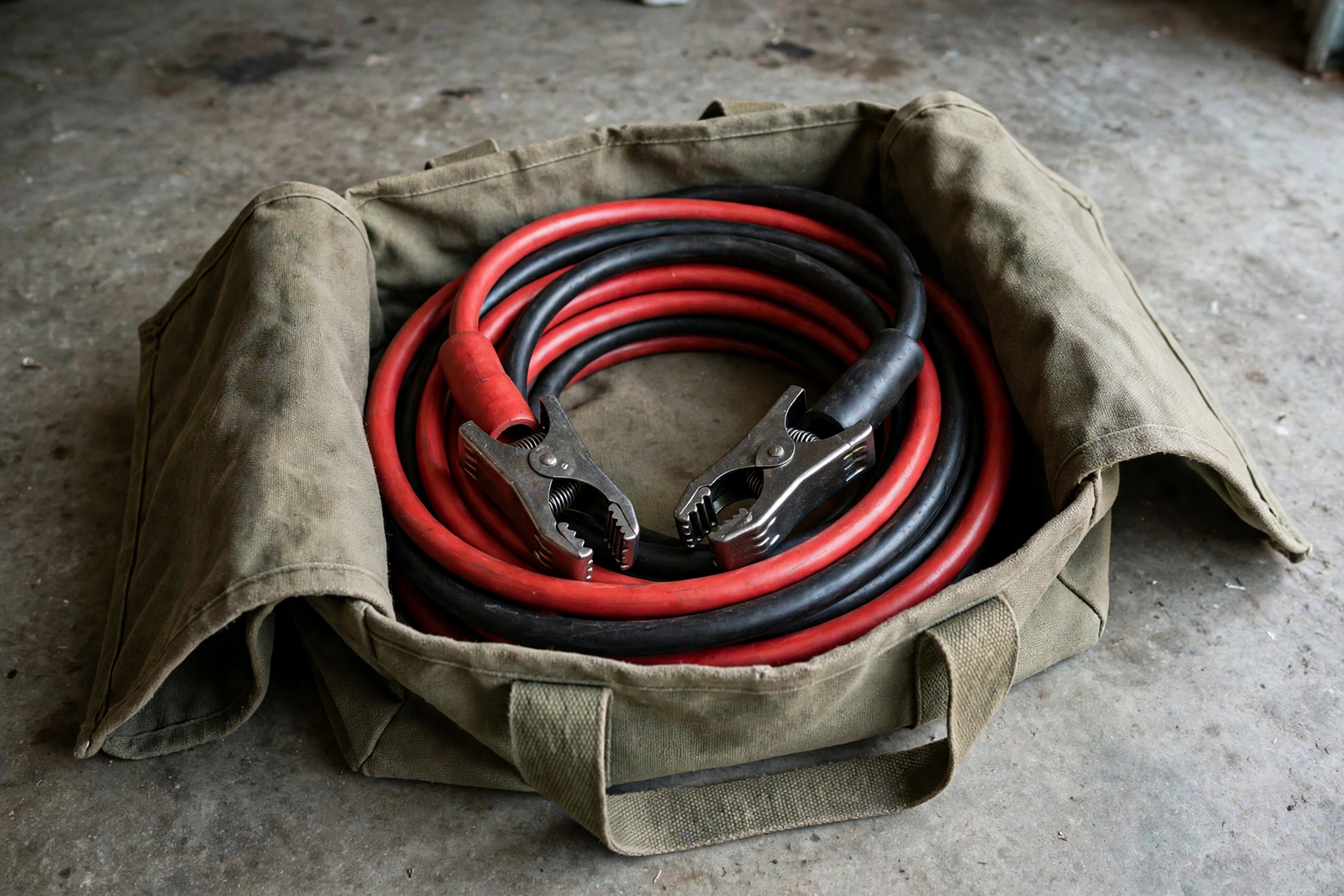
That cold-weather flexibility is what makes it the overall winner. A cable that turns stiff in winter is hard to uncoil, hard to route between two cars, and hard to clamp with gloves on. This set stays workable in the cold, it reaches 20 feet so the donor car does not have to park bumper to bumper, and the carry bag keeps the cables from tangling in the trunk. It is the set to buy if you want one pair of portable jumper cables that covers the family car, the SUV and the pickup.
CARTMAN 4 Gauge 20 Feet Jumper Cables Automotive Booster Cables with Carry Bag for Car SUV and Pickup Trucks on Amazon: 4-gauge booster cables, model BC0420K, 20 feet, UL listed, for cars, SUVs and pickup trucks.
Buy the Cartman 4 Gauge 20 Ft if: you want the best portable jumper cables for most drivers — a 4-gauge, 20-foot set that stays flexible in the cold and covers cars, SUVs and pickup trucks.
Energizer 4 Gauge 20 Ft: The Best Portable Jumper Cables for Everyday Cars
The Energizer 20-Feet 4-Gauge Jumper Cables are the everyday set in this roundup: a 4-gauge, 20-foot booster cable set, model ENB-420U, with a carrying bag included. The cables have a thick vinyl coating, a tangle-free design, and an all-weather build, so they coil up neatly in the trunk and uncoil without a fight when you need them. Energizer backs its jumper cables with a 2-year warranty, according to the product manual for the Energizer jumper-cable line — check the listing for the ENB-420U set before you buy.
That tangle-free, all-weather build is why it is the everyday pick here: it does the same core job as the Cartman set — 4-gauge wire and 20 feet of reach — in a package made to live in a daily driver’s trunk and come out only when a battery dies. It is the set for the driver who wants a familiar brand name, a simple carry bag, and portable jumper cables that are ready to use with no fuss.
Energizer Jumper Cables for Car Battery, Heavy Duty Automotive Booster Cables for Jump Starting Dead or Weak Batteries with Carrying Bag Included (20-Feet (4-Gauge)) on Amazon: 4-gauge booster cables, model ENB-420U, 20 feet, with a carrying bag.
Buy the Energizer 4 Gauge 20 Ft if: you want the best portable jumper cables for everyday cars — a 4-gauge, 20-foot set with a tangle-free, all-weather build and a carry bag.
TOPDC 4 Gauge 20 Ft: The Best Portable Jumper Cables for Trucks
The TOPDC 4 Gauge 20 Feet Jumper Cables are the heavy-duty set in this roundup: a 4-gauge, 20-foot booster cable set, model TD-P0420, made for cars, SUVs and trucks, with a carry bag included. The cables are copper clad aluminum — CCA — with premium PVC insulation, they are UL-listed, and they are rated for temperatures from -40 degrees to 140 degrees Fahrenheit, so they stay flexible in deep cold and hold up in summer heat.
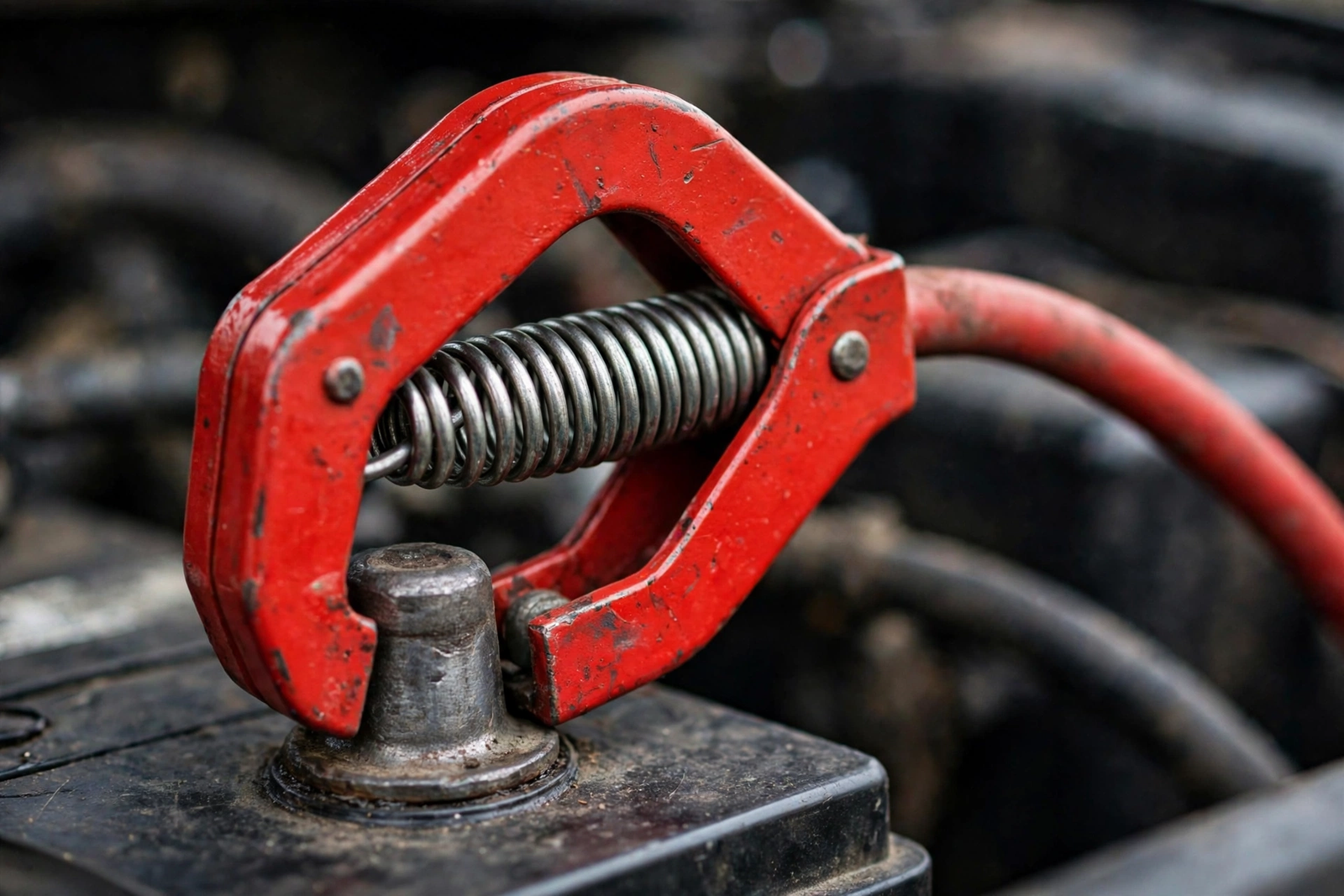
That wide temperature range and truck-sized brief is what makes it the truck pick. The listing names cars, SUVs and trucks among its uses, and the set is rated at 200 amps in the OverlandSite review, which suits the bigger batteries in pickups and large SUVs. If your household runs a truck or a full-size SUV, or winters where you live are genuinely cold, these portable jumper cables are the ones built for that job.
TOPDC 4 Gauge 20 Feet Jumper Cables for Car, SUV and Trucks Battery, Heavy Duty Automotive Booster Cables for Jump Starting Dead or Weak Batteries with Carry Bag, (TD-P0420) on Amazon: 4-gauge booster cables, model TD-P0420, 20 feet, copper clad aluminum, UL-listed, for cars, SUVs and trucks.
Buy the TOPDC 4 Gauge 20 Ft if: you want the best portable jumper cables for trucks — a 4-gauge, 20-foot, UL-listed set rated for cars, SUVs and trucks in deep cold and summer heat.
Jumper Cables vs Jump Starters: The Honest Difference
Jumper cables and jump starters solve the same problem in opposite ways, and the difference matters more than the brand on the box. Portable jumper cables are just wire and clamps: they carry power from a second car’s good battery to your dead one. They have no battery of their own, so they never need charging and they never run flat in the trunk, and a sound set kept dry and out of the sun lasts for years. The price is that you need a second car, and a willing driver, parked close enough for the cables to reach.
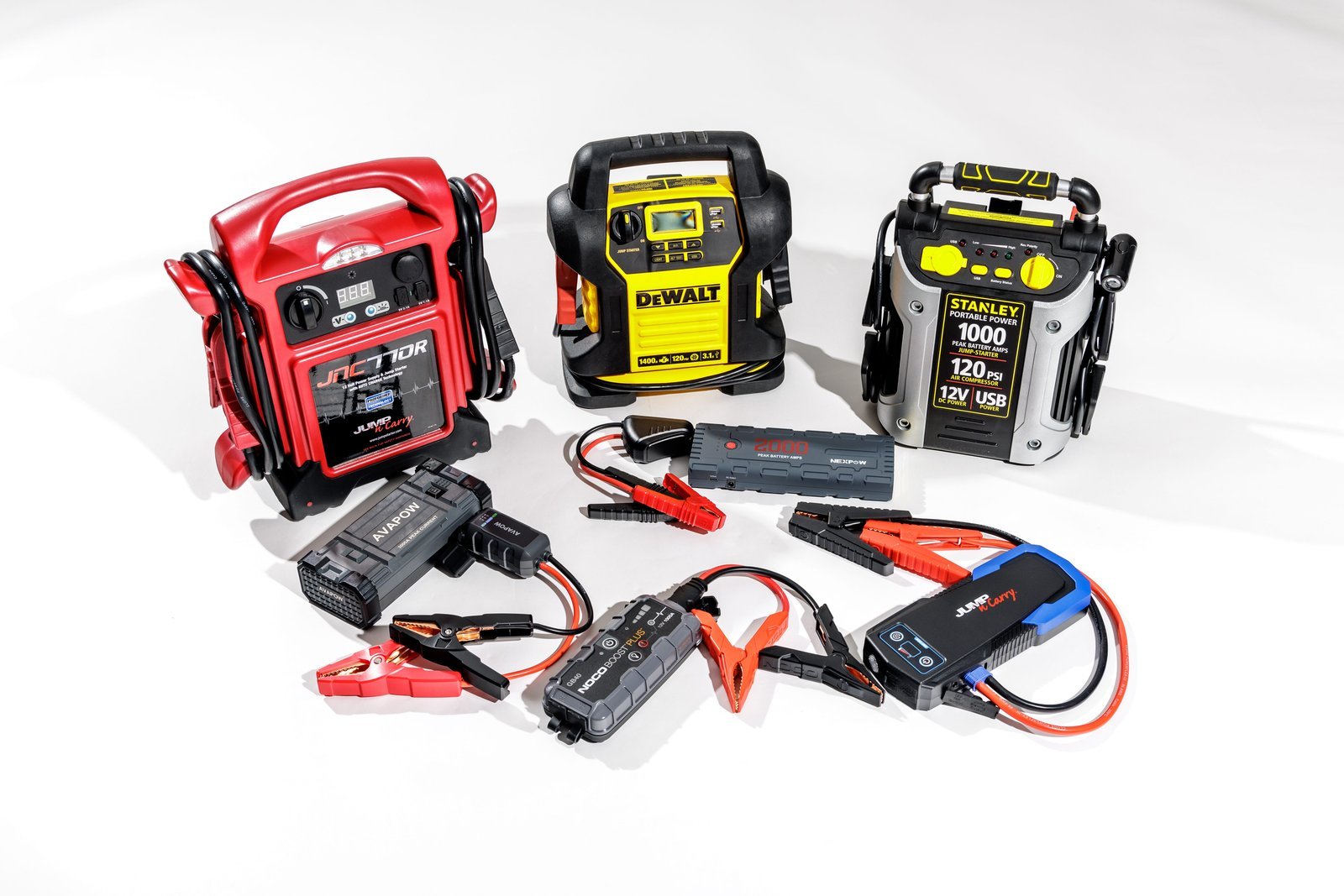
A jump starter is the opposite: a lithium battery pack with clamps built in, so it works alone with no second car — a real advantage on an empty road at night. But it is a battery, so it must be kept charged, it loses capacity over the years, and it can be flat exactly when you need it. Our best portable car jump starter roundup covers the pack side of this choice. Many drivers keep both: cables in the trunk because they never go flat, and a jump starter in the glove box because it works alone.
What Gauge and Length of Jumper Cables Do You Need?
Gauge is the thickness of the wire, and the numbers run backwards: a lower gauge number means thicker wire, and thicker wire carries more current with less resistance. A 4-gauge cable is thicker than a 6-gauge cable, which is thicker than an 8-gauge cable. For most cars, SUVs and light trucks, 4 gauge is the right answer — thick enough to carry the starting current a real engine needs, even in cold weather when a battery is at its weakest.
Length is the reach, and 16 to 20 feet is the practical sweet spot. A 20-foot set reaches nose-to-nose or side-by-side, and it still works when the cars cannot park close together — in a tight lot or on a narrow street. Shorter cables only work when the two cars can park bumper to bumper, which is not always possible. Longer cables, 25 feet and up, need a thicker gauge to make up for the extra resistance, so do not buy a long, thin set: a 25-foot, 10-gauge cable is nearly useless, while a 25-foot, 1-gauge cable is a serious tool. All three sets here are 4-gauge and 20 feet — the combination most drivers should buy.
How to Use Portable Jumper Cables Safely
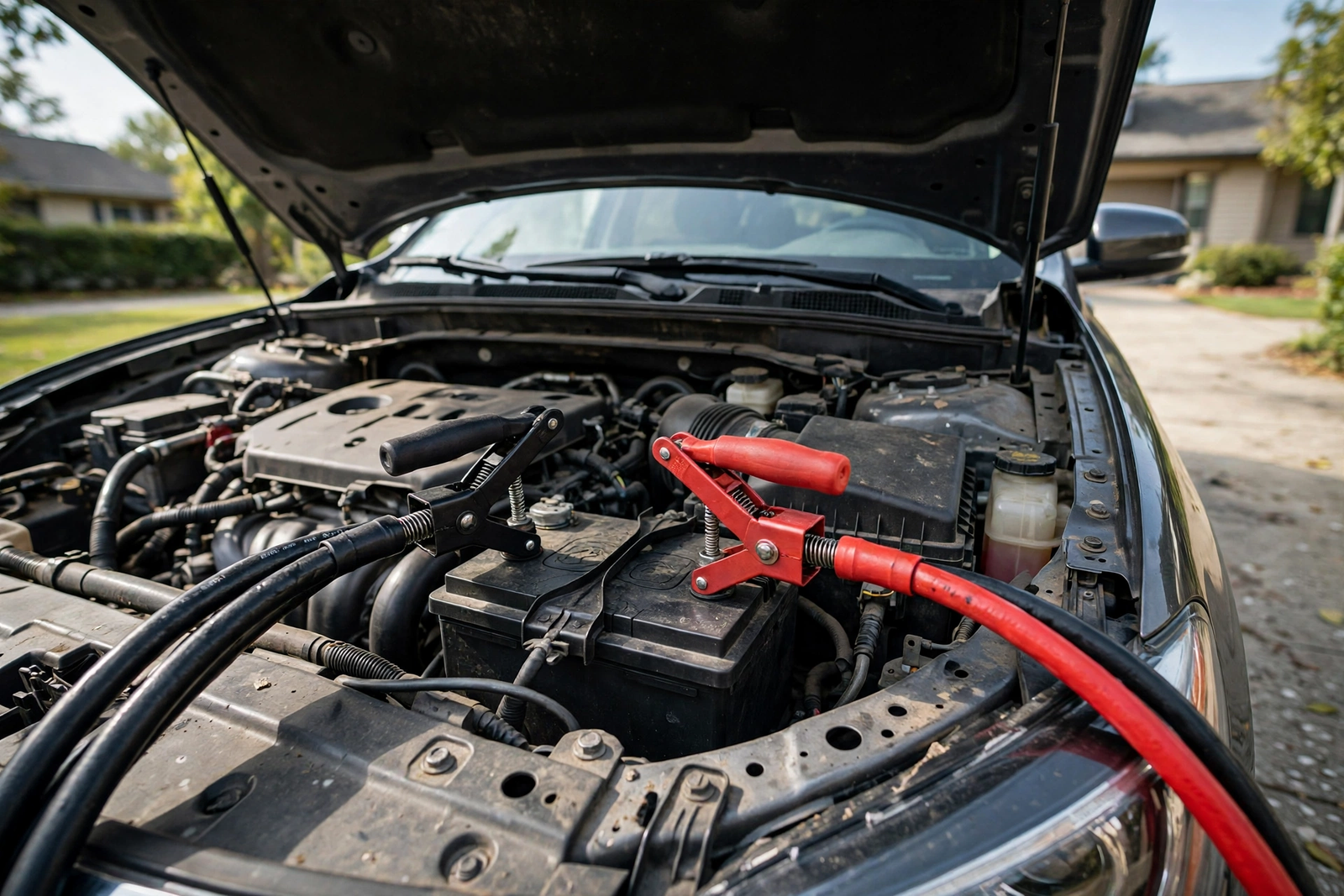
Connecting portable jumper cables in the wrong order can spark, damage a battery, or hurt you, so the order matters. Park the donor car close enough for the cables to reach and turn both cars off. Then connect in this order: red clamp to the dead battery’s positive terminal, red clamp to the donor battery’s positive terminal, black clamp to the donor battery’s negative terminal, and black clamp to a bare metal part of the dead car’s engine — a bolt or bracket, away from the battery. Never let the red and black clamps touch each other.
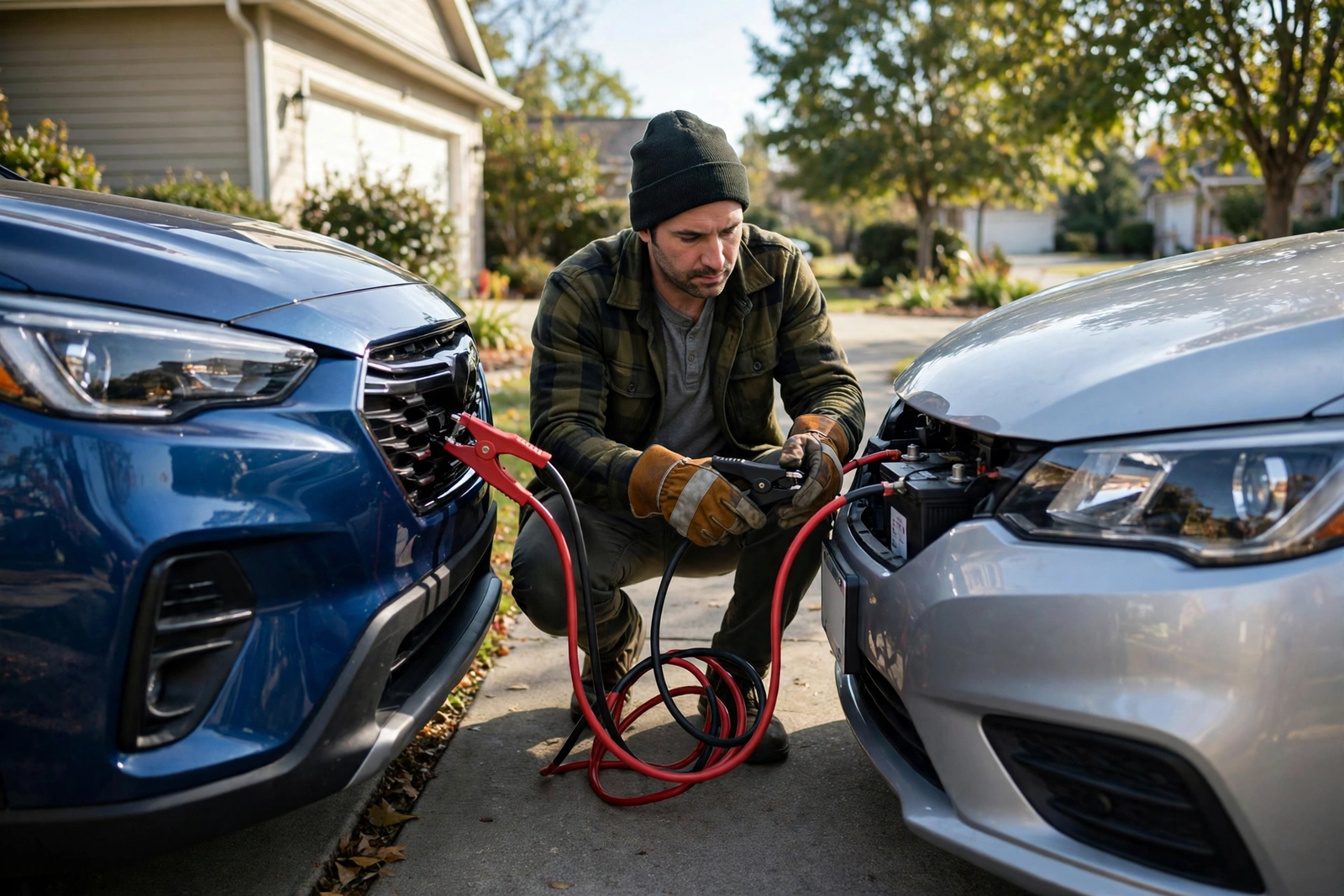
Start the donor car, let it run for a few minutes, then try the dead car. If it starts, leave both cars running and remove the clamps in the exact reverse order: black from the dead car’s engine, black from the donor battery, red from the donor battery, red from the dead battery — keeping the clamps apart as you remove them. Our how to jump start a car with cables guide walks through the same steps in full.
What to Do After the Jump
A jump start is a rescue, not a repair. Once the car is running, drive it for at least 20 to 30 minutes so the alternator puts some charge back into the battery — and do not switch the car off again until you are somewhere safe, because a weak battery may not start the car a second time. If the battery dies again the next morning, it is not holding a charge, and the jump only bought you one more start.
That is when you find out what actually failed. A battery that will not hold a charge needs charging or replacing: our how to charge a car battery guide covers charging it properly, and a best smart battery charger will keep it topped up if the car sits for weeks at a time. If charging does not fix it, check the car battery replacement cost guide — a battery that dies twice is usually at the end of its life, not a cable problem.
Jumper Cable Mistakes to Avoid
The most common mistake is buying cables that are too thin. A cheap 10-gauge or 8-gauge set looks like a bargain until it has to start a cold SUV — then it cannot carry enough current, the car clicks, the cables get warm, and nothing happens. Buy 4-gauge for a normal car or a light truck, and thicker cable for a heavy truck or diesel.
The second mistake is connecting the clamps in the wrong order, or to the wrong terminals. Red goes to positive, black goes to negative, and the last black clamp goes to bare metal on the dead car, not to its battery — that keeps any spark away from the battery. The third mistake is letting the clamps touch each other while they are connected, which shorts the donor battery. And the fourth is leaving a dead battery connected and walking away: check the clamps are firm, the cables are clear of belts and fans, and stay with the cars until the dead one is running.
Who Should Buy Portable Jumper Cables — and Who Should Not
Buy portable jumper cables if: you drive a car with a 12-volt battery and you ever park where help is not guaranteed. They suit the daily driver, the winter commuter, the road-tripper, and anyone with an older battery or a car that sits for days at a time. They cost little, they weigh little, and they sit in the trunk for years doing nothing — until the one morning they save you a tow.
Do not buy cables as your only rescue plan if: you often drive alone on empty roads — cables need a second car, so a lone driver needs a jump starter pack instead. And do not buy cables expecting them to fix a dead battery: they start the car once, and if the battery will not hold a charge, it still needs charging or replacing. If other cars are usually around, cables are the right tool; if you drive alone, carry a jump starter too.
The Verdict
The best portable jumper cables are the ones that are thick enough, long enough, and in your trunk when the battery dies. The Cartman 4 Gauge 20 Ft is the overall winner: a 4-gauge, 20-foot, UL-listed set that stays flexible in the cold and covers cars, SUVs and pickup trucks. The Energizer 4 Gauge 20 Ft is the everyday pick: a 4-gauge, 20-foot set with a tangle-free, all-weather build for the daily driver. And the TOPDC 4 Gauge 20 Ft is the truck pick: a 4-gauge, 20-foot, UL-listed set rated for cars, SUVs and trucks in deep cold and summer heat.
Whichever set you choose, remember what it is and what it is not: cables borrow power from a second car, they do not store it, and they cannot fix a battery that will not hold a charge. Buy 4-gauge and 20 feet, keep the set in the trunk with its carry bag, learn the connection order before you need it, and you will never wait on a tow truck for a dead battery again.
Frequently Asked Questions
What gauge jumper cables should I buy?
For most cars, SUVs and light trucks, 4-gauge cables 20 feet long are the right buy — thick enough to carry the starting current and long enough to reach between cars. A 6-gauge set works for small cars with small engines, and large trucks and diesels need thicker 2-gauge or 1-gauge cables. Thinner cables, such as 8-gauge or 10-gauge, struggle on anything bigger than a compact car, especially in cold weather.
Are jumper cables better than a portable jump starter?
They solve the same problem in different ways. Jumper cables need a second car with a good battery, but they never need charging, have no battery of their own to wear out, and work as long as the cables and clamps are sound. A portable jump starter works alone with no second car, but it is a lithium battery pack that must be kept charged and will wear out over time. Many drivers keep both: cables in the trunk and a jump starter in the glove box.
How long should jumper cables be?
Sixteen to 20 feet is the practical sweet spot for most drivers. A 20-foot set reaches nose-to-nose or side-by-side without straining, and it still works when the cars cannot park close together. Shorter cables, 12 feet and under, only work when the two cars can park bumper to bumper. Longer cables, 25 feet and up, need a thicker gauge to make up for the extra resistance over the longer run.
Can I use jumper cables on any car?
They are made for 12-volt car batteries, which covers nearly all gasoline and diesel cars, SUVs and light trucks. Check your owner’s manual before jumping a hybrid or an electric car, because their starting systems are different and the manual may warn against it. Never jump a battery that is cracked, leaking or swollen, and never jump a battery you know is frozen — a damaged battery can be dangerous, and it needs replacing, not jumping.
Do jumper cables go bad?
A good set lasts for years if it is stored dry and out of the sun. Check the cables before each use: look for cracked or stiff insulation, frayed wire where the cable meets the clamp, and clamps that no longer bite firmly or are coated in corrosion. If the insulation is cracked through to the wire, or a clamp spring is broken, replace the set — a damaged cable can short out or fail exactly when you need it.
What do I do if the car still will not start after a jump?
First check the clamps: they must bite clean metal on both battery terminals, and the ground clamp must sit on bare metal, not paint or rust. Then let the donor car run for a few minutes with the cables connected before trying again, so the dead battery takes some charge. If the car still will not start, or it starts and dies as soon as the cables come off, the battery is likely worn out or the charging system has a fault — charge the battery fully or have it tested and replaced.