How to Clean Leather Car Seats: A Step-by-Step Guide
Leather seats look and feel great when they are new, and they age badly when they are ignored. Dirt, body oils, sunscreen and dye from dark jeans settle into the grain a little at a time, and the surface slowly turns dull, dry and cracked. The good news is that learning how to clean leather car seats is a straightforward job you can do at home in an afternoon — the trick is using a cleaner made for leather, working gently, and conditioning afterwards so the leather stays soft instead of drying out.
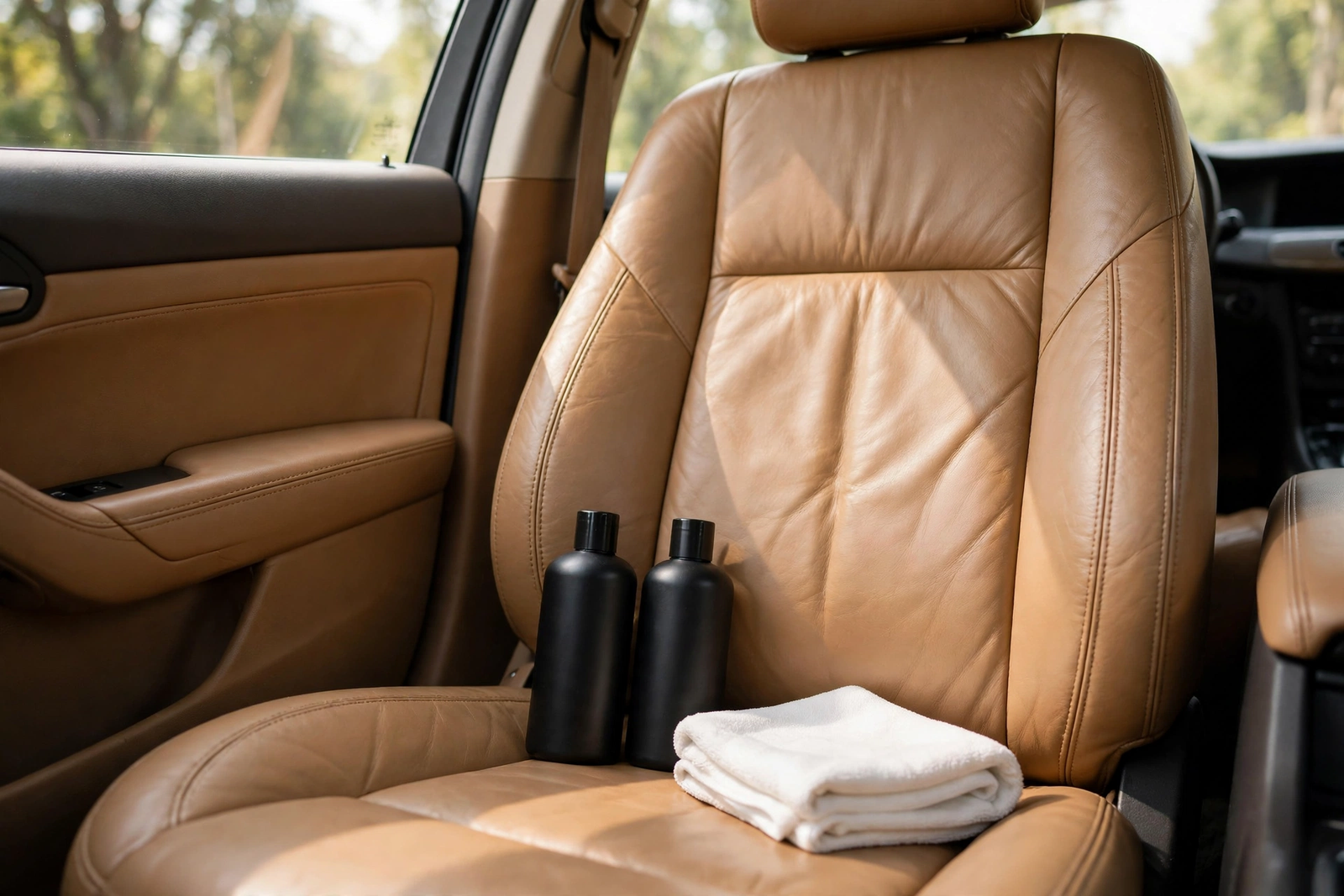
The short answer: to learn how to clean leather car seats, vacuum the seats first, spot-test your cleaner in a hidden area, work a leather cleaner into one panel at a time with a soft horsehair brush, wipe it off with a damp microfiber cloth, let the seats dry, and then condition them. The three tools below are a two-bottle cleaner-and-conditioner kit, a deep conditioner, and a horsehair brush — one for each part of the job.
As an Amazon Associate I earn from qualifying purchases.
Quick Pick: How to Clean Leather Car Seats
| Pick | Product | Best For | Check Price |
|---|---|---|---|
| Two-Bottle Clean-and-Condition Kit | Chemical Guys Leather Cleaner and Conditioner Kit – 2 Bottles (16 oz Each) | A two-bottle leather cleaner and conditioner kit, 16 oz each, for cleaning then conditioning leather | Check Price on Amazon |
| Deep Conditioner | Leather Honey Leather Conditioner, Since 1968. for All Leather Items Including Auto, Furniture, Shoes, Purses and Tack. Non-Toxic and Made in the USA / 8 Fl Oz (Pack of 1) | An 8 oz leather conditioner, non-toxic and made in the USA, for deep conditioning after cleaning | Check Price on Amazon |
| Horse Hair Brush | Chemical Guys Long Bristle Horse Hair Leather Cleaning Brush – Leather Brush to Gently Clean Car Interiors, Furniture, Sneakers, Boots, and More – Safe for Natural, Synthetic, Faux, and Pleather | A long-bristle horse hair leather cleaning brush, model ACC_S95, for working cleaner into the leather grain | Check Price on Amazon |
Table of Contents
What Kind of Leather Are Your Car Seats?
Before you put any cleaner on a seat, work out what kind of leather you are cleaning, because the right steps depend on it. Most car seats are coated leather: real leather with a thin clear top coat over dyed hide, which is why water beads on it instead of soaking in. A smaller number are uncoated or aniline leather, with no top coat — a drop of water soaks into it and darkens it for a moment. Faux leather and vinyl, sometimes called pleather, are not leather at all: the grain looks uniform and repeats, and the surface feels and smells like plastic. Suede and Alcantara are different again — a soft, napped surface that feels like peach skin, with no smooth grain to wipe.
The steps in this guide suit coated leather and genuine leather, which is what most car seats are. Faux leather and vinyl can be cleaned the same gentle way, but they do not need conditioning the way real leather does — the Leather Honey conditioner below, for example, is not made for faux leather or vinyl, so keep it off those seats. Suede and Alcantara need a cleaner made for suede and must not get leather cleaner or conditioner at all: a wet cleaner darkens the nap and a conditioner leaves it matted. If you are not sure what your seats are, check your owner’s manual, and treat them as coated leather with a spot test first. Everything below shows how to clean leather car seats made of coated or genuine leather, step by step. Our best car seat cleaner roundup covers the wider set of seat cleaners beyond the three tools in this guide.
What You Need to Clean Leather Car Seats
You need a vacuum with a soft brush attachment, a leather cleaner, a leather conditioner, a soft horsehair brush, and two microfiber cloths — one damp for wiping the cleaner off, one dry for buffing. A small bowl of clean water is handy for rinsing the wiping cloth as you go. Gloves are optional but worth wearing if you have sensitive skin. That is the whole kit for how to clean leather car seats at home: no steam cleaner, no pressure washer, and no stiff brush, all of which are too rough for a leather seat.
Just as important is what not to bring. All-purpose cleaners, household cleaners and dish soap are not made for leather and strip the oils that keep it soft. Stiff brushes and abrasive pads scratch the top coat, and soaking a seat with water or cleaner lets liquid into the seams and the foam underneath. Keep the job to leather products and soft tools, and the seats will come out clean without new damage.
Chemical Guys Leather Cleaner and Conditioner Kit: The Two-Bottle Clean-and-Condition Kit
The Chemical Guys Leather Cleaner and Conditioner Kit is the two-bottle kit in this guide: model SPI_109_16, a 16 oz bottle of Leather Cleaner and a 16 oz bottle of Leather Conditioner. The listing describes the pair as the complete solution for maintaining, restoring and protecting leather, for car interiors, furniture, shoes, boots, bags and apparel. It fits this guide because it is a two-step system — clean first, then condition — which is exactly the order the steps below follow, and because one kit covers the whole clean-and-condition job on a full set of seats.
Use the cleaner bottle for the cleaning step and the conditioner bottle for the conditioning step, and keep the two jobs separate: cleaning lifts dirt and oils off the surface, and conditioning puts moisture back into the leather afterwards. Our Chemical Guys Leather Cleaner review compares this kit with the brand’s one-step spray bottle and the travel-size kit, if you want the full product comparison before you buy.
Chemical Guys Leather Cleaner and Conditioner Kit – 2 Bottles (16 oz Each) on Amazon: two-bottle leather cleaner and conditioner kit, 16 oz each, clean-then-condition system
Buy the Chemical Guys Leather Cleaner and Conditioner Kit if: you want one kit that covers both halves of the job — cleaning and conditioning — on a full set of leather seats. Confirm the kit suits your leather type first: it is made for leather, not suede.
Leather Honey Leather Conditioner: The Deep Conditioner
Leather Honey Leather Conditioner is the deep conditioner in this guide: an 8 oz bottle, model LHHP1001, made in the USA and sold since 1968. The maker describes it as a non-toxic conditioner that penetrates deep into the leather to restore and protect it, and says one application gives up to six months of protection. Spread a thin layer with a cloth, let it soak in, and wipe off the excess rather than leaving a heavy coat sitting on the seat.
The important limit is the leather type. Leather Honey states plainly that this conditioner is not for suede, faux leather or vinyl — it is made for real leather, and on those other materials the thick formula can change the surface. On genuine and coated leather seats it is the conditioning step after cleaning, and it is the tool to reach for when seats feel dry or stiff. Our Leather Honey vs Weiman comparison covers how this conditioner differs from the other well-known leather conditioner for car seats.
Leather Honey Leather Conditioner, Since 1968. for All Leather Items Including Auto, Furniture, Shoes, Purses and Tack. Non-Toxic and Made in the USA / 8 Fl Oz (Pack of 1) on Amazon: 8 oz leather conditioner, non-toxic, made in the USA, deep conditioning for real leather
Buy Leather Honey Leather Conditioner if: your seats are real leather that feels dry or stiff after cleaning, and you want a conditioner that works in a thin layer and lasts for months. Do not buy it for suede, faux leather or vinyl seats.
Chemical Guys Horse Hair Leather Cleaning Brush: The Gentle Scrubber
The Chemical Guys Long Bristle Horse Hair Leather Cleaning Brush is the scrubbing tool in this guide: model ACC_S95, UPC 811339022843. The listing describes it as a long-bristle horse hair brush for gently cleaning car interiors, furniture, sneakers and boots, and says it is safe for natural, synthetic, faux and pleather leather. Horse hair suits this job because the bristles are stiff enough to lift dirt out of the leather grain but soft enough not to scratch the top coat.
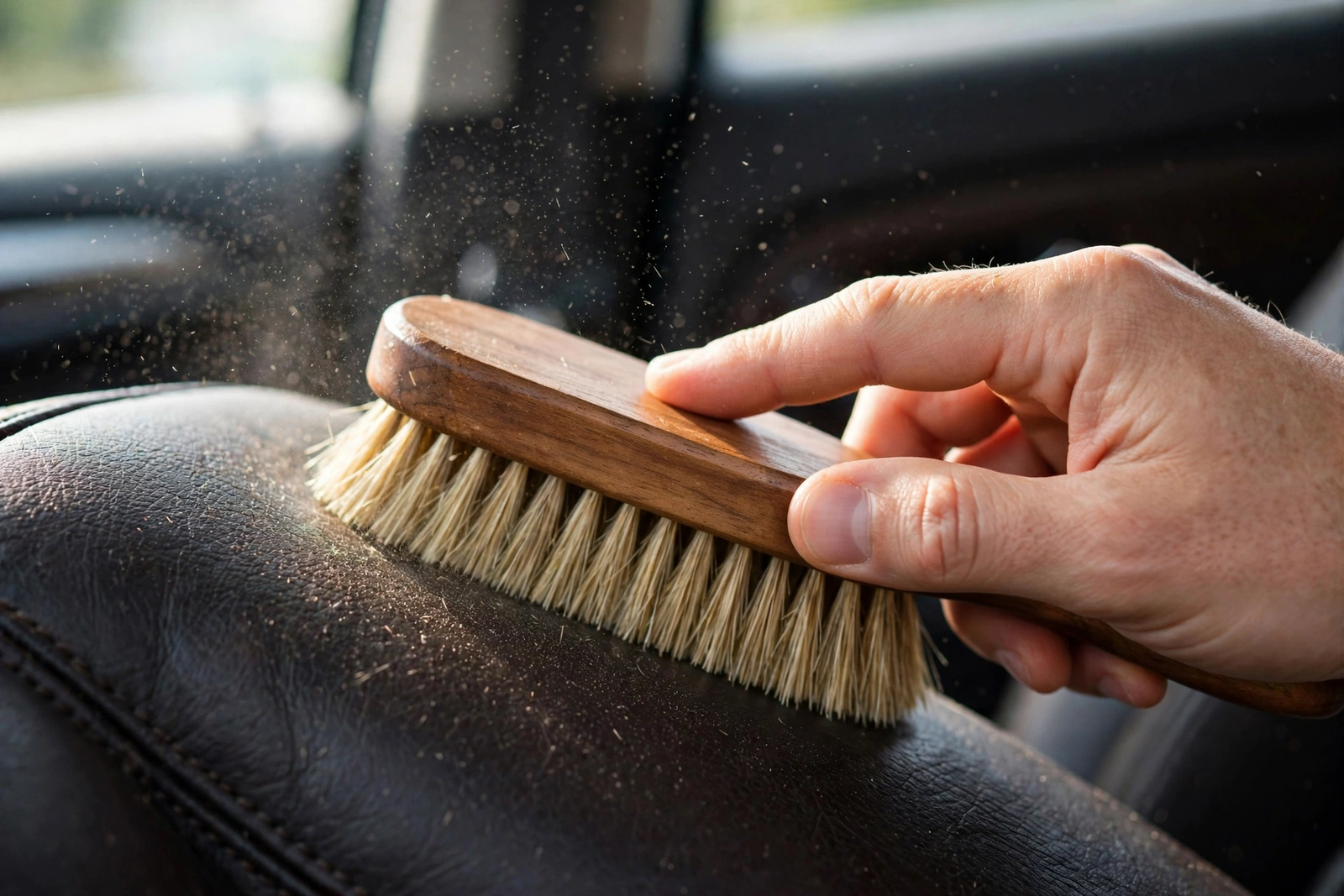
Use the brush with the cleaner, not dry: apply the cleaner to the brush, work it in light circles, and let the bristles reach into the seams and the grain where a cloth cannot. Keep the pressure light — the bristles do the work, not your arm — and rinse the brush in clean water when it picks up dirt, so you are not brushing grime back onto the next panel.
Chemical Guys Long Bristle Horse Hair Leather Cleaning Brush – Leather Brush to Gently Clean Car Interiors, Furniture, Sneakers, Boots, and More – Safe for Natural, Synthetic, Faux, and Pleather on Amazon: long-bristle horse hair leather cleaning brush, model ACC_S95, for natural, synthetic, faux and pleather leather
Buy the Chemical Guys Horse Hair Leather Cleaning Brush if: your seats have dirt ground into the grain or the seams that a cloth alone will not lift. Keep the pressure light and let the bristles do the work.
Step-by-Step: How to Clean Leather Car Seats
How to clean leather car seats, step by step, starts with the vacuum. Vacuum the seats with the soft brush attachment, getting into the seams, the stitching and the gap where the seat back meets the cushion, and slide the seat forward and back so you can reach the whole cushion. Loose dirt and grit left on the surface will scratch the leather when you start wiping, so this step matters more than it looks.
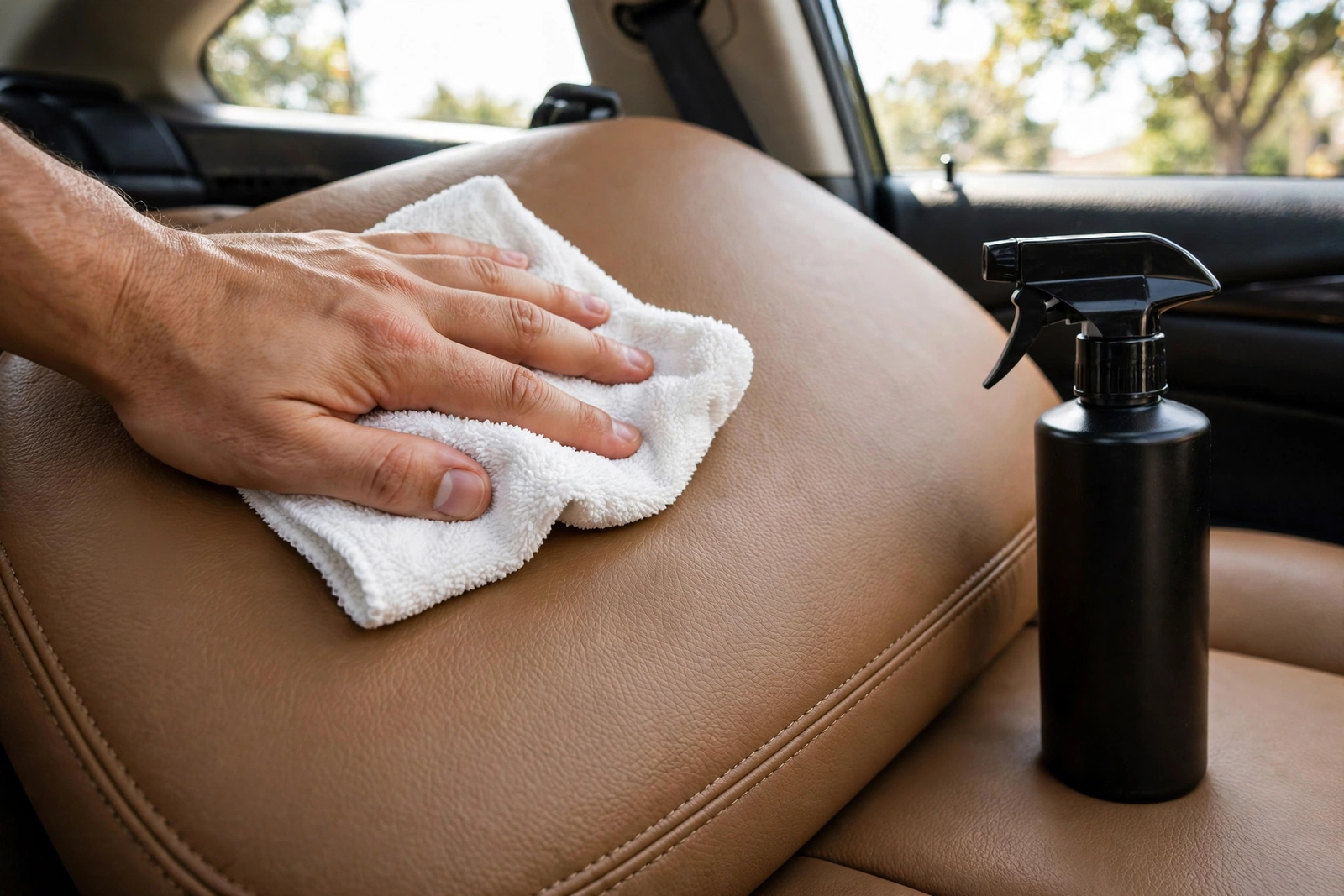
Next, spot-test. Pick a hidden area — the side of the seat base, or under the headrest — put a small amount of cleaner on it, work it in gently, wipe it off, and look at the result. If the colour changes, the leather darkens and stays dark, or the surface feels sticky, stop: the cleaner does not suit your seats. If the test area looks the same as before, carry on. Work one panel at a time — one seat cushion, one backrest — so the cleaner does not dry on the leather before you wipe it off. Apply the cleaner to the brush or the cloth rather than soaking the seat, brush it in light circles, then wipe it off with the damp microfiber cloth. Wipe a second time with a clean damp cloth to lift any residue, and dry the panel with the dry cloth. On a stubborn mark, repeat the clean-and-wipe pass rather than pressing harder: gentle repeat passes are safer for the top coat than one hard scrub.
When every seat is clean, let them air-dry before you condition — open the doors and leave the car to dry on its own rather than sitting on damp seats or pointing a heater at them. This is the leather-only version of the routine: our how to clean car seats guide covers the same job across leather, cloth, vinyl and Alcantara, if your car mixes materials.
How to Condition Leather Car Seats After Cleaning
Conditioning is the step most people skip, and it is the step that keeps leather soft. Clean the seats first and let them dry — conditioner goes onto clean, dry leather, never onto a dirty or damp seat, because it would seal the dirt in. Put a small amount of conditioner on a cloth, not straight onto the seat, and spread a thin, even layer over one panel at a time. Let it soak in, then buff off the excess with a dry cloth so the surface does not feel sticky.
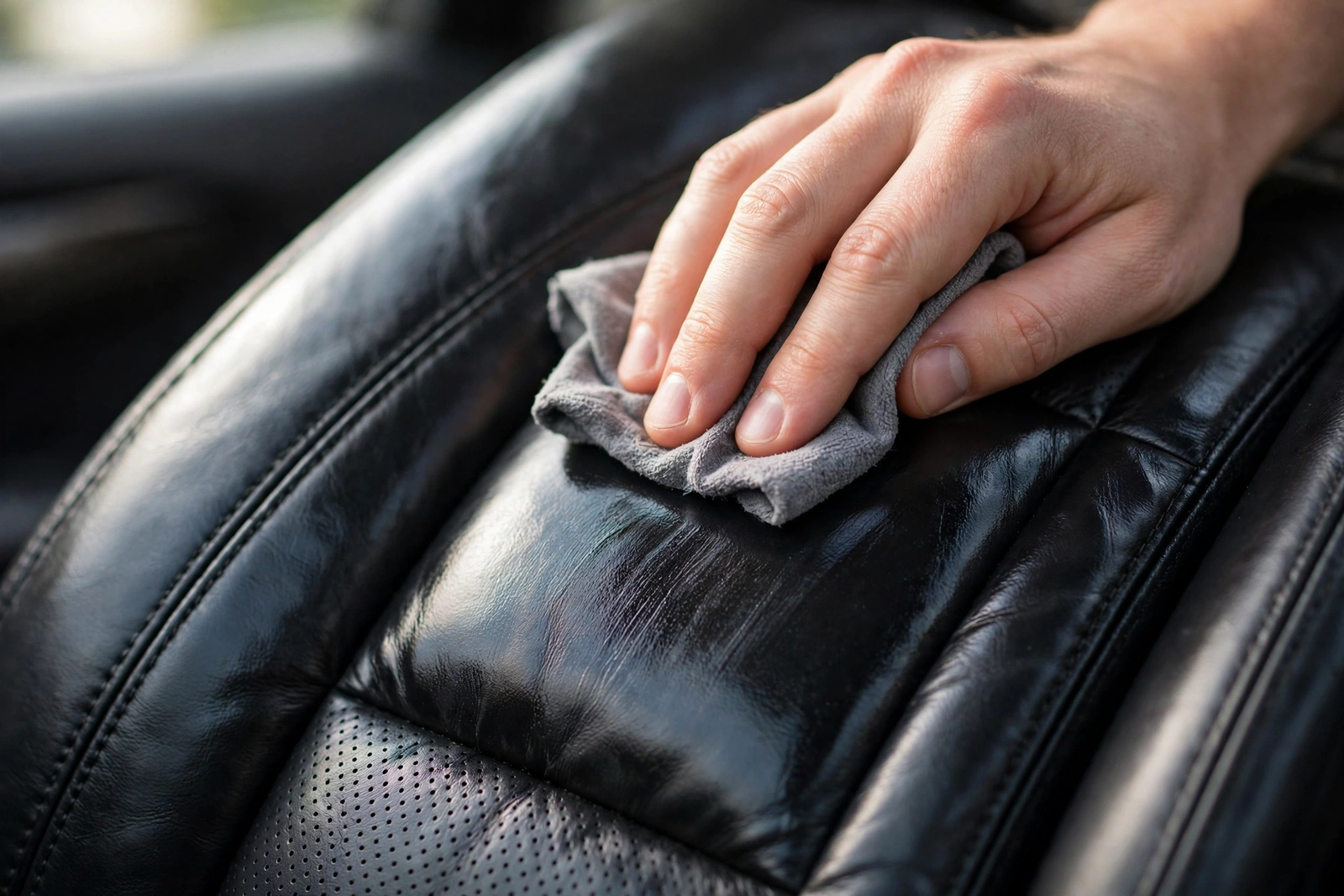
Do not over-apply. A thick coat does not condition better — it sits on the surface, feels greasy, and transfers onto clothes. A thin layer that soaks in is the whole job, and if the leather still looks dry once the first coat has soaked in, repeat with another thin coat instead of one heavy one. The Chemical Guys kit’s conditioner bottle and the Leather Honey conditioner both work this way: thin layer, soak in, buff the excess off. Conditioning is the last step in how to clean leather car seats properly, so do not skip it — and skip conditioning entirely on suede, Alcantara, faux leather and vinyl, which do not absorb conditioner the way real leather does, and the residue just sits on top.
How Often Should You Clean Leather Car Seats?
How often you clean leather car seats depends on how the car is used. A car driven daily, with kids, pets or a commute in work clothes, picks up dirt and body oils fast and needs a light clean every few months, with a full clean-and-condition when the seats start to look dull or feel dry. A garaged weekend car can go longer between cleans. The honest rule is to clean when the seats look or feel dirty rather than on a fixed calendar date — a quick wipe of the driver’s seat every few weeks keeps the grime from building up in the grain, and the full routine follows when the seats need it.
Conditioning follows the same rhythm: condition after every full clean, and more often if the leather feels stiff or dry to the touch. Leather Honey says one application gives up to six months of protection, which is a useful guide for how long a good conditioning lasts, but a seat that gets daily use and strong sun will dry out sooner than one that sits in a garage. For the rest of the interior around the seats, our auto detailing guide walks through the full wash-and-detail routine step by step.
Common Mistakes When You Clean Leather Car Seats
The most common mistake when you clean leather car seats is reaching for the wrong cleaner. All-purpose cleaners, household cleaners and dish soap strip the oils out of leather and leave it dry and stiff, and the damage shows up weeks later as cracking. The second mistake is soaking the seat: too much water or cleaner seeps into the seams and the foam underneath, where it takes a long time to dry and can leave a smell behind. Apply the cleaner to the brush or cloth, not straight onto the seat in a puddle.
The third mistake is scrubbing hard with a stiff brush or an abrasive pad, which wears through the top coat on coated leather. The fourth is skipping the spot test — the one step that would have caught a cleaner that does not suit your seats. The fifth is conditioning suede, Alcantara, faux leather or vinyl, which do not take conditioner and end up sticky. The sixth is cleaning in direct sun or on hot seats, where the cleaner dries on the surface before you can wipe it off and leaves streaks. And the seventh is forgetting the conditioner altogether: cleaning lifts oils out of the leather, so a cleaned seat that is never conditioned can dry out and stiffen over time.
The Verdict
The best way to learn how to clean leather car seats is to do it once, gently: vacuum first, spot-test in a hidden area, clean one panel at a time with a leather cleaner and a soft horsehair brush, wipe with a damp cloth, let the seats dry, and finish with a thin layer of conditioner. The Chemical Guys kit covers both halves of the job in two bottles, Leather Honey is the deep conditioner for dry real leather, and the horsehair brush is what lifts the dirt out of the grain. Clean when the seats need it, condition after every full clean, and the leather will stay soft and keep its colour far longer than seats that are only wiped down. For the rest of the cabin, our how to clean the interior of a car guide covers the full interior routine beyond the seats.
Frequently Asked Questions
Can you use a regular household cleaner on leather car seats?
No. Household cleaners, all-purpose cleaners and dish soap are not made for leather and strip the oils that keep it soft, which leads to drying and cracking over time. Use a cleaner made for leather, spot-test it in a hidden area first, and wipe it off with a damp microfiber cloth.
How do you clean leather car seats without damaging them?
Vacuum the seats first so loose grit cannot scratch the surface, then spot-test your leather cleaner in a hidden area. Work one panel at a time: apply the cleaner to a soft horsehair brush or cloth, brush gently in light circles, wipe it off with a damp microfiber cloth, and dry the panel. Let the seats air-dry, then condition them with a thin layer of leather conditioner.
How often should you condition leather car seats?
Condition after every full clean, and more often if the leather feels stiff or dry. As a general guide, a light clean every few months and a full clean-and-condition when the seats look dull or feel dry keeps most seats in good shape. Leather Honey says one application of its conditioner gives up to six months of protection, which is a useful guide for how long a good conditioning lasts.
Can you clean suede or Alcantara seats the same way?
No. Suede and Alcantara are napped materials, not smooth leather, and they need a cleaner made for suede. Do not use a leather cleaner or a leather conditioner on them: a wet cleaner darkens the nap and a conditioner leaves it matted. Check whether your seats are suede or Alcantara before you start, and keep leather products off them.
Do leather car seats need conditioner after every clean?
Yes. Cleaning lifts dirt and oils off the leather, and conditioner puts moisture back in so the leather stays soft instead of drying out. A thin, even layer on clean, dry leather is enough — spread it with a cloth, let it soak in, and buff off the excess. Skip conditioning on suede, Alcantara, faux leather and vinyl, which do not absorb conditioner.
How do you remove a stain from a leather car seat?
Blot a fresh stain first — do not rub it in — then clean the area with a leather cleaner and a soft horsehair brush, working gently and wiping with a damp microfiber cloth. Repeat the clean-and-wipe pass rather than scrubbing harder, and condition the area afterwards. A deep or old stain that does not lift after a few gentle passes may need a professional detailer.