Best Rooftop Tent: 3 Tents for Car Camping Up High
A rooftop tent turns the roof of your car into a bedroom. It is a tent that mounts on the roof rack, folds open into a sleeping platform above the car, and lifts you off the ground — off the mud, the uneven earth, the insects, and the water that pools under a ground tent in the rain. Campers use one to sleep anywhere the car can park, from a forest trailhead to a desert overlook, and to pack up in minutes in the morning and drive on.
The short answer: check your roof rack first, then pick the tent that fits it. The Thule Approach, model 901033, is the Medium tent from Thule in this roundup. The SmittyBilt Overland GEN2 Tent XL is the extra-large overland tent, weighing 170 lb. The Thule Tepui Foothill is the low-profile tent, weighing 108 lb. Every rooftop tent needs a compatible roof rack with sufficient dynamic weight capacity, and vehicle and roof-rack fitment must be checked before buying.
As an Amazon Associate I earn from qualifying purchases.
Quick Pick: Best Rooftop Tent for Car Camping
| Pick | Product | Best For | Check Price |
|---|---|---|---|
| Overall Winner | Thule Approach Rooftop Tent | The Medium Thule tent, model 901033, for car campers who want a Thule rooftop tent sized for two | Check Price on Amazon |
| Best Budget | SmittyBilt Overland GEN2 Tent XL – SB2683 | The extra-large overland tent, model 2683, for campers who want the biggest sleeping platform here | Check Price on Amazon |
| Premium Pick | Thule Tepui Foothill Low-Profile Rooftop Tent | The low-profile Thule tent, part 901250, for cars where a slim roof load matters | Check Price on Amazon |
Table of Contents
Thule Approach Rooftop Tent: The Medium Tent from Thule, Model 901033
The Thule Approach rooftop tent is the Thule pick in this roundup, named here from the listing body and its model number: the Thule Approach Rooftop Tent, Medium, model 901033. One point belongs up front, because the listing itself is not consistent — the listing title says Approach XL while the listing body says Thule Approach Rooftop Tent, Medium. This article follows the listing body and the model number, 901033, and calls it the Medium Approach, and the size variant must be confirmed against the live listing before buying. That is the honest way to handle a listing that disagrees with itself: name what the body and the model number say, and flag the disagreement rather than hiding it.
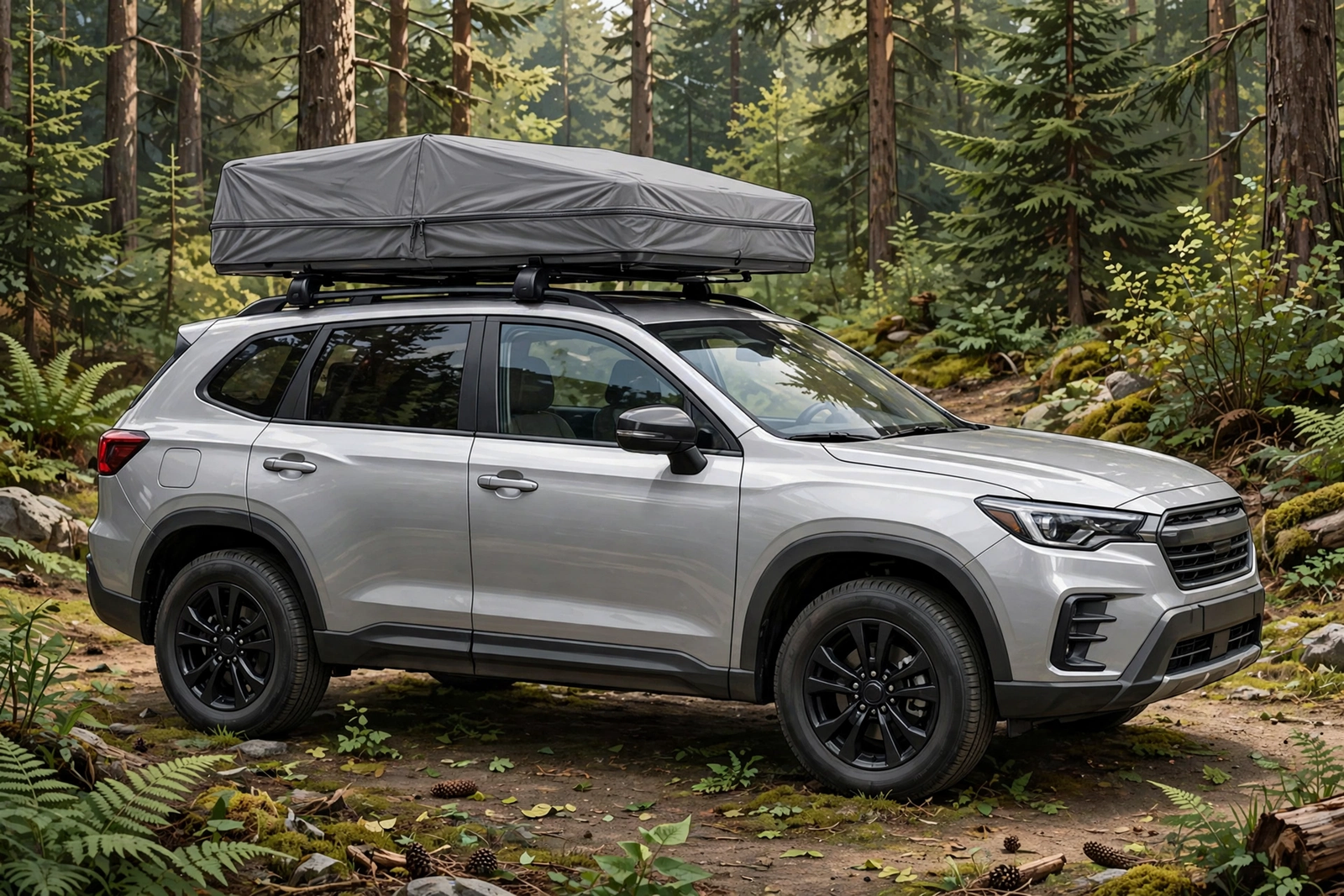
A Medium tent is the size most car campers actually need. It sleeps two adults, it fits on the roof of an SUV or a wagon without hanging over the edges, and it keeps the roof load lower than a bigger tent would. Thule is the best-known name in roof-carrying kit, and the Approach is its rooftop tent for campers who want a tent from the same maker as their roof bars — one brand across the rack and the tent, with the fitment guidance that goes with it. The tent mounts on the roof rack, folds open into a sleeping platform above the car, and packs down onto the roof when the trip is over.
This is the pick in this roundup for the car camper who wants a Thule tent in the middle size. It suits an SUV or a wagon with a compatible roof rack, and a camper who sleeps two up top and wants the tent to match the rack. Before ordering, confirm two things on the live listing: that the size variant is the Medium, model 901033 — not the XL the title mentions — and that your roof rack and your vehicle are listed as compatible. A rooftop tent needs a compatible roof rack with sufficient dynamic weight capacity, and vehicle and roof-rack fitment must be checked before buying.
Thule Approach Rooftop Tent on Amazon: Thule Approach rooftop tent, Medium, model 901033. Note: the listing title says Approach XL while the listing body says Medium — the size variant must be confirmed on the live listing before buying.
Buy the Thule Approach rooftop tent if: you want a Medium Thule tent, model 901033, for two sleepers on an SUV or wagon with a compatible roof rack — after confirming the Medium size variant on the live listing.
SmittyBilt Overland GEN2 Tent XL: The Extra-Large Overland Tent
The SmittyBilt Overland GEN2 Tent XL is the biggest tent in this roundup: an extra-large overland tent, model 2683, part number SB2683. Overland is the word for the kind of camping this tent is made for — long trips away from paved roads, where the car is the base camp and the tent has to sleep its crew night after night. The listing gives its weight as 170 lb, and the XL size is the point: more sleeping platform than the other two tents here, for campers who want room to spread out rather than a snug two-person bed.
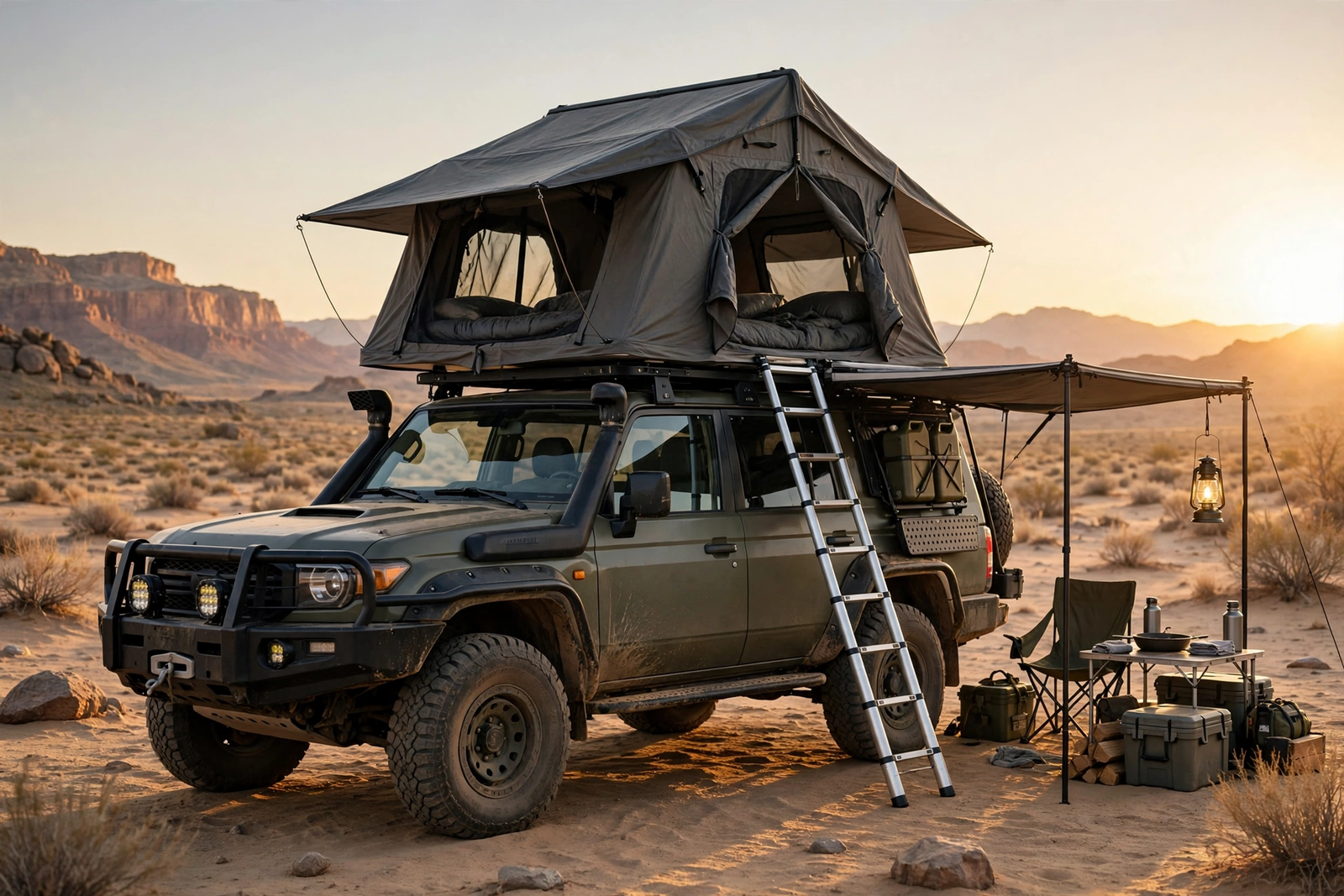
An extra-large tent suits a bigger vehicle and a bigger crew. It needs a roof rack that can carry it, and a car whose roof can take the load — an XL tent is heavier and wider than a Medium, and the rack and the car have to be rated for it. That is the trade-off of the biggest tent here: the most room to sleep in, and the most demanding fitment. SmittyBilt is an overland brand, and the GEN2 name marks this as the second generation of its overland tent — the tent for the camper whose trips go beyond the campground.
This is the pick in this roundup for the overland camper who wants the biggest sleeping platform. It suits a four-wheel-drive vehicle or a large SUV with a compatible roof rack rated for the load, and a trip where the tent stays up for days at a time. Check the listing for the exact dimensions and the 170 lb item weight, and check your vehicle’s roof and rack ratings before ordering — a rooftop tent needs a compatible roof rack with sufficient dynamic weight capacity, and an XL tent asks the most of both.
SmittyBilt Overland GEN2 Tent XL – SB2683 on Amazon: SmittyBilt Overland GEN2 Tent XL, model 2683, part SB2683, item weight 170 lb.
Buy the SmittyBilt Overland GEN2 Tent XL if: you want the biggest sleeping platform here — an extra-large overland tent — and your vehicle and roof rack are rated to carry it.
Thule Tepui Foothill: The Low-Profile Rooftop Tent
The Thule Tepui Foothill is the low-profile tent in this roundup: a low-profile rooftop tent from Thule’s Tepui line, part number 901250. Low-profile means the tent sits slim on the roof when it is packed down — less height above the roof, less wind to catch on the drive, and a car that still fits under the same garage door and low branches it always did. The listing gives its weight as 108 lb, and the listing gives its size as 84 inches long, 47 inches wide and 40 inches high.
That slim profile is the reason to pick this rooftop tent. A tall packed tent changes the car: it catches the wind on the highway, it adds height to every car park barrier, and it makes the car look and feel top-heavy. A low-profile tent keeps the car closer to the way it drives without a tent, while still opening into a real sleeping platform at camp. The Foothill is the tent for the camper whose car is also the daily driver — the tent goes on for the weekend and the car goes back to normal on Monday, without the roof load dominating the drive.
This is the pick in this roundup for the daily driver that camps on weekends. It suits a car where a slim roof load matters, and a camper who wants a Thule Tepui tent without the height of a bigger packed tent. Check the listing for the exact fitment and the 108 lb item weight, and check your roof rack before ordering — a low-profile tent still needs a compatible roof rack with sufficient dynamic weight capacity, and the fitment check comes before the order, not after delivery.
Thule Tepui Foothill Low-Profile Rooftop Tent on Amazon: Thule Tepui Foothill low-profile rooftop tent, part 901250, item weight 108 lb, size 84 inches long by 47 inches wide by 40 inches high.
Buy the Thule Tepui Foothill rooftop tent if: you want the slimmest tent here — a low-profile Thule Tepui tent — for a daily driver that camps on weekends, with a compatible roof rack.
How to Choose a Rooftop Tent
Choosing a rooftop tent starts with the roof, not the tent. Check your vehicle’s roof rating and your roof rack’s rating — the dynamic weight capacity, which is the weight the rack can carry while the car is moving — and compare them with the tent’s weight. The weight of the people sleeping in it counts once the car is parked, against the tent’s own load rating. Then check the size: a Medium sleeps two, a Large sleeps two with room, and an XL, like the SmittyBilt here, sleeps a bigger crew. Then check the packed height, because a tall packed tent changes how the car drives and where it fits.
Then think about how you camp. A low-profile tent, like the Foothill, suits a daily driver that camps on weekends; a Medium Thule, like the Approach, suits a car camper who wants a tent from the same maker as the rack; an XL overland tent, like the SmittyBilt, suits long trips away from paved roads. A rooftop tent is not a small purchase, and it is not a small piece of kit — but the right one, fitted to your car and your roof rack, turns anywhere the car can park into a bedroom.
Roof Rack and Weight: What Your Car Must Carry
The roof rack is the part of this purchase that most buyers get wrong. A rooftop tent mounts on the roof rack, and the rack has to be compatible with the tent and rated for the load — the weight of the tent while the car is moving. That rating is the dynamic weight capacity: the weight the rack can carry while the car is moving. The weight of the people sleeping in it counts once the car is parked, against the tent’s own load rating, not against the dynamic rating. It is lower than the weight the roof can hold while the car is parked, and it is the number that matters on the drive to camp. A rooftop tent needs a compatible roof rack with sufficient dynamic weight capacity, and vehicle and roof-rack fitment must be checked before buying — the tent, the rack and the car have to agree with each other.
Check your vehicle’s manual for its roof rating, check the rack maker’s rating for the rack itself, and use the lower of the two — the tent can only be as heavy as the weakest part of the chain. Our best roof bars covers roof bars for cars with roof rails, and our Thule roof bars for roof rails covers the Thule bars that pair with the Thule tents in this roundup. If your car has no roof rack at all, the rack comes first — a rooftop tent cannot mount on a bare roof.
Setting Up a Rooftop Tent
Setting one up is a job you learn once and then repeat. Park on ground as level as you can find — a slope makes the sleeping platform slope too. Unfold the tent, extend the ladder, and climb up to check the platform is flat and the fabric is taut. The first setup takes longer than the tenth, so practise it at home before the first trip: open it in the driveway, sleep in it one night if you can, and learn where everything goes while the light is good and the stakes are low.
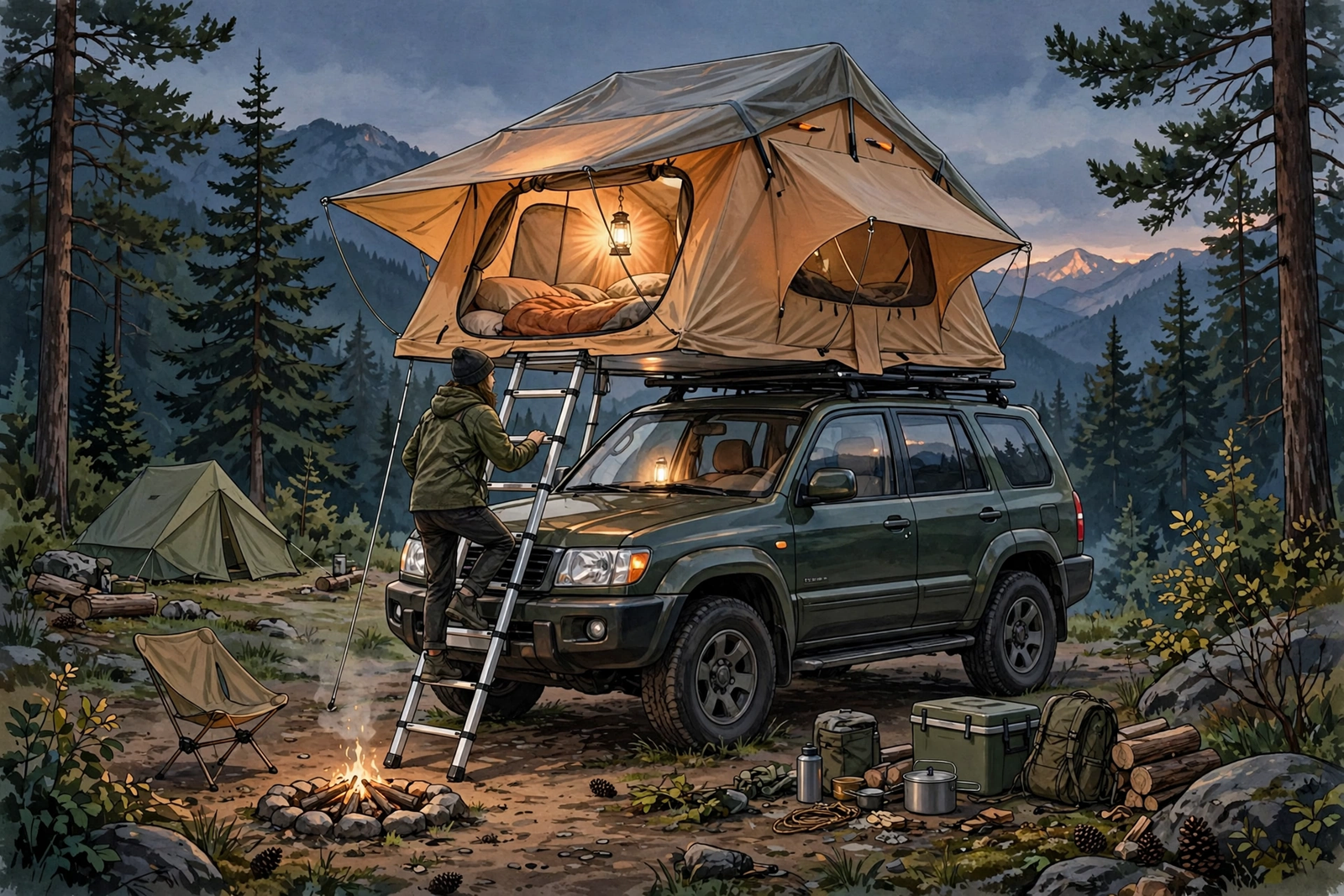
Then check the small things before dark. The ladder must be firm on the ground and locked at the right angle. The tent’s openings should face the view, not the wind, if you have the choice. And everything you need in the night — water, a light, your keys — should go up with you, because climbing down a ladder in the dark is the part nobody enjoys. A rooftop tent packs up in the morning the same way it opened: fold it down, strap it shut, and check the straps before you drive — a loose strap flapping on the highway is the sound of a tent that was not closed properly.
Rooftop Tent Sizes: Medium, Large and Extra-Large
Rooftop tent sizes run Medium, Large and Extra-Large, and the size is the sleeping platform, not the packed tent. A Medium, like the Thule Approach in this roundup, sleeps two adults. A Large sleeps two with room to spread out. An XL, like the SmittyBilt Overland GEN2 Tent XL here, sleeps a bigger crew or two adults who want space. The Foothill shows how size is listed: 84 inches long, 47 inches wide and 40 inches high — length for the sleepers, width for the crew, height of the tent when open.
Pick the size by the crew, not by the car. Two adults fit a Medium; two adults and a child, or two adults who move in their sleep, want a Large or an XL. But a bigger tent is a heavier tent, and it asks more of the roof rack — so the size has to fit the rack as well as the sleepers. If you camp with a ground tent as well, our best car tents covers the tent side of the same trip, for nights when the roof is not the bedroom.
Rooftop Tent Mistakes to Avoid
The most common mistake with one of these tents is buying it before checking the roof rack. A tent that does not fit the rack cannot be mounted, and a rack that cannot carry the tent’s weight is not safe to drive with — a rooftop tent needs a compatible roof rack with sufficient dynamic weight capacity, and that check comes before the order, not after the delivery. The second mistake is trusting a listing title over the listing body: the Thule Approach listing in this roundup says XL in its title and Medium in its body, and the size variant must be confirmed on the live listing before buying.
The third mistake is never practising the setup. A rooftop tent opened for the first time at a dark campsite, in the rain, is a miserable job — open it at home first, learn the ladder and the straps, and sleep in it once before the trip. The fourth is packing the tent away wet: a tent folded wet and left closed will smell, and the fabric will suffer for it, so dry it out at home after a wet trip. And the fifth is forgetting the height — a car with a rooftop tent is taller than it was, and low branches, car park barriers and garage doors do not forgive the extra inches.
Who Should Buy a Rooftop Tent — and Who Should Not
Buy a rooftop tent if: you camp often, you camp where the ground is wet, uneven or crawling with insects, and your car already has — or can take — a compatible roof rack. A rooftop tent also suits overland trips, where the car is the base camp and the tent has to go up and come down every day, and anyone who wants to sleep anywhere the car can park. It is the tent for the camper whose car is the campsite.
Buy one with care if: your car is small, your roof rack is light, or your car is also the daily driver that has to fit under low barriers every day. Check the dynamic weight capacity of the rack, check the packed height of the tent, and remember that a low-profile tent, like the Foothill, keeps the car closer to normal than a tall one. And if your car has no roof rack, budget for the rack first — the tent cannot mount without it.
Do not buy a rooftop tent if: you camp once a year. A rooftop tent is a big piece of kit that lives on the roof, adds weight and height to every drive, and only earns its place when it is used often. A ground tent is cheaper, lighter, and easier to store — and for a once-a-year trip, it is the better buy. Do not buy a rooftop tent as a fashion piece either: it is camping kit, and it belongs on a car that camps.
The Verdict
The best rooftop tent is the one that fits your car, your roof rack, and the way you camp. The Thule Approach, model 901033, is the pick for the car camper who wants a Medium Thule tent for two sleepers — after confirming the Medium size variant on the live listing, where the title and the body disagree. The SmittyBilt Overland GEN2 Tent XL is the pick for the overland camper who wants the biggest sleeping platform here, weighing 170 lb. And the Thule Tepui Foothill is the pick for the daily driver that camps on weekends — a low-profile tent, part 901250, weighing 108 lb.
Whichever tent you choose, the rule is the same: check your vehicle’s roof rating, check your roof rack’s dynamic weight capacity, confirm the tent’s size variant and fitment on the live listing, and confirm the listing still shows a live offer before you buy. A rooftop tent needs a compatible roof rack with sufficient dynamic weight capacity, and it rewards the buyer who checks the fit first. For the wider picture, our car camping guide covers the rest of the kit — the sleeping gear, the cooking gear, and everything else a night up high needs.
Frequently Asked Questions
What is a rooftop tent?
A rooftop tent is a tent that mounts on the roof rack of a car and folds open into a sleeping platform above the roof. You climb up a ladder to sleep in it, and it packs down onto the roof when the trip is over. It lifts you off the ground — off the mud, the uneven earth, the insects, and the water that pools under a ground tent in the rain — and it turns anywhere the car can park into a campsite.
Do I need a roof rack for a rooftop tent?
Yes. A rooftop tent mounts on the roof rack, and it cannot mount on a bare roof. The rack must be compatible with the tent and rated for the load — the weight of the tent — while the car is moving. The weight of the people sleeping in it counts once the car is parked. That rating is the dynamic weight capacity, and it is lower than the weight the roof can hold while the car is parked. Check your vehicle’s manual and the rack maker’s rating before buying, and if your car has no roof rack, the rack comes first.
How long does it take to set up a rooftop tent?
It varies by model and by practice. The first setup takes longer than the tenth, because you are learning where the ladder goes, how the fabric unfolds, and how the straps close. Most rooftop tents open faster than a ground tent once you have done it a few times — but the honest answer is to practise at home before the first trip, in daylight, so the first real setup is not happening at a dark campsite in the rain.
Can any car carry a rooftop tent?
No. A car needs a compatible roof rack with sufficient dynamic weight capacity, and the vehicle itself has a roof rating in its manual. A small car with a light rack cannot carry a big tent, and a car with no roof rack cannot carry one at all. Check the vehicle’s roof rating, the rack maker’s rating, and the tent’s weight and size before buying — the tent, the rack and the car have to agree with each other.
Are rooftop tents comfortable in bad weather?
They have one real advantage in bad weather: you are off the ground, so rain pooling under the tent and mud are not your problem. The tent fabric keeps the rain off, and sleeping above the car puts distance between you and the insects. But a rooftop tent still catches the wind — it sits high on the car — so pitch it with the openings away from the wind where you can, and check the listing for the tent’s own weather guidance before buying. No tent makes a storm comfortable; a rooftop tent makes a wet night drier.
How do you store a rooftop tent when not using it?
Fold it down, strap it shut, and check the straps before you drive. After a wet trip, open it at home and let it dry fully before closing it for storage — a tent folded wet and left closed will smell, and the fabric will suffer for it. Some owners leave the tent mounted on the roof between trips, and some take it off and store it in a garage; either way, keep it dry, keep the straps tight, and check the mounting bolts now and then, because a tent that lives on the roof lives in the weather.