Best Car Tents: 3 SUV Tents for Camping Trips
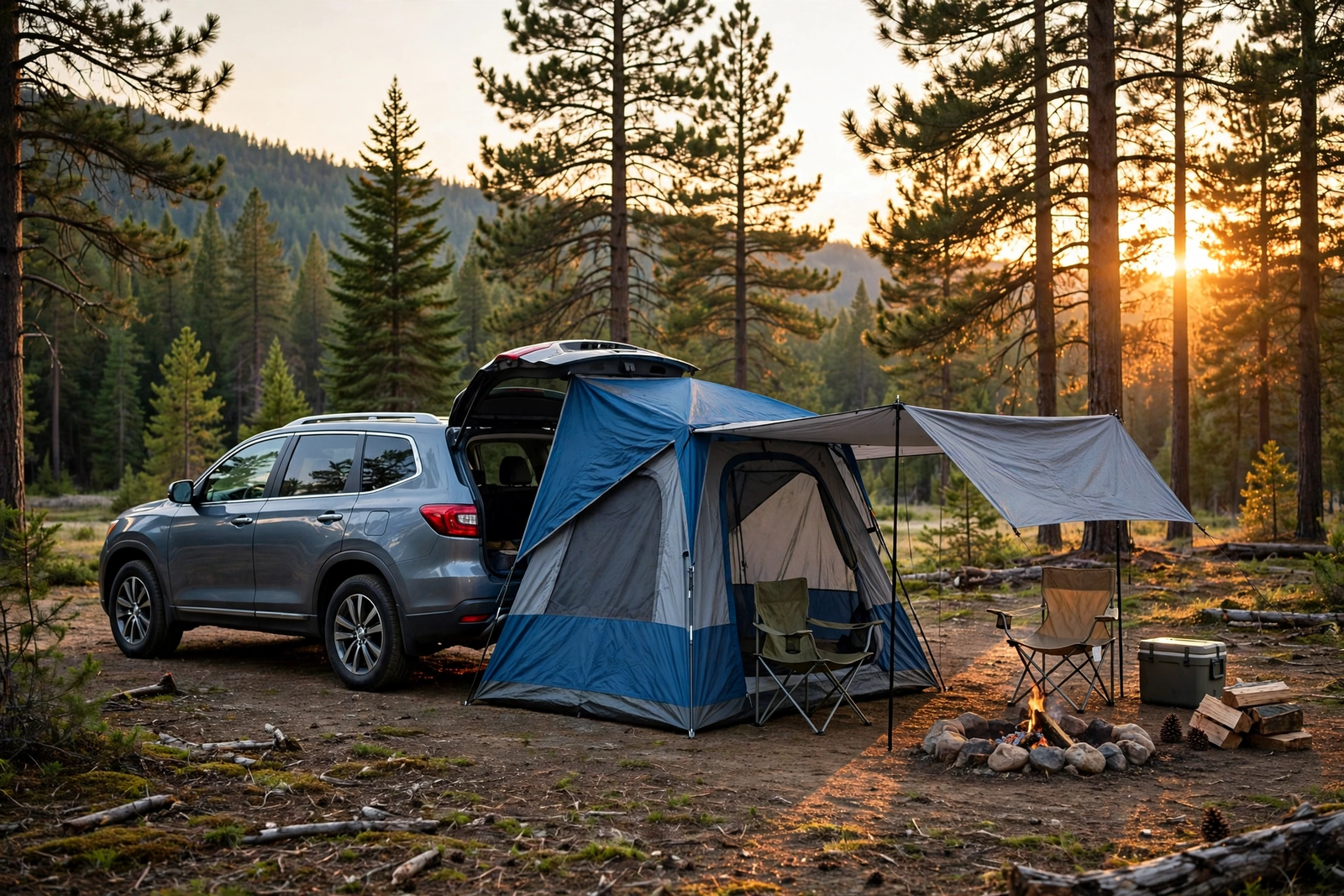
A car tent is the cheapest way to turn a car you already own into a camper. It attaches to the open tailgate of an SUV, a minivan or a wagon, so the cargo area becomes part of the sleeping space and the tent adds a room to the back of the car. You sleep off the ground, out of the wind, with your gear beside you, and the tent packs into a bag in the trunk when the trip is over. The three car tents below cover the three jobs that matter: a big family tent, a six-person tent, and a light tailgate awning for shade and bug-free evenings.
The short answer: if you camp as a family, start with the Napier 9-by-9 car tent — it sleeps five and has a full rainfly. If you need room for six, the Rightline car tent is the bigger box. And if you mostly want shade and a bug-free place to sit, the Hasika awning is the light, quick option. All three attach to the back of the car and pack small enough to live in the trunk between trips.
As an Amazon Associate I earn from qualifying purchases.
Quick Pick: Car Tents for SUV Camping
| Pick | Product | Best For | Check Price |
|---|---|---|---|
| Five-Person SUV Tent | Napier Sportz SUV Tent, 9×9, Model 82000 | A full 9-by-9-foot car tent that sleeps five, with a rainfly and an awning | Check Price on Amazon |
| Six-Person Family Tent | Rightline Gear SUV Tent, 8×8, Model 110907 | A 6-person car tent that fits SUVs, minivans and wagons, with a rainfly | Check Price on Amazon |
| Screened Tailgate Awning | Hasika SUV Tailgate Tent, Large, Model 002b | A tailgate car tent awning with mesh screens for shade and bug-free sitting | Check Price on Amazon |
Table of Contents
Napier Sportz SUV Tent: The Big 9×9 Car Tent
The Napier Sportz SUV Tent is the big car tent in this roundup. It measures 9 feet by 9 feet, with over 7 feet of headroom inside, and the listing says it sleeps five adults. A full rainfly covers the roof and an awning shades the door, and a fabric sleeve connects the tent to the open cargo area of the car, so the tent and the car become one sleeping space. The model number is 82000, and the listing fits it to all CUVs, SUVs and minivans. It is a three-season tent, built for spring, summer and autumn camping rather than winter.
The sleeve is what makes this car tent different from a ground tent pitched next to the car. You open the tailgate, pull the sleeve over the cargo opening, and the back of the car becomes the back wall of the tent — your sleeping bags can go in the car or in the tent, and your gear stays under cover either way. The tent walls stand close to vertical, which is why a 9-by-9-foot tent with over 7 feet of headroom feels bigger inside than its footprint suggests. Five people sleep across the tent floor and the cargo area together, so count the car as part of the bed, not as extra storage.
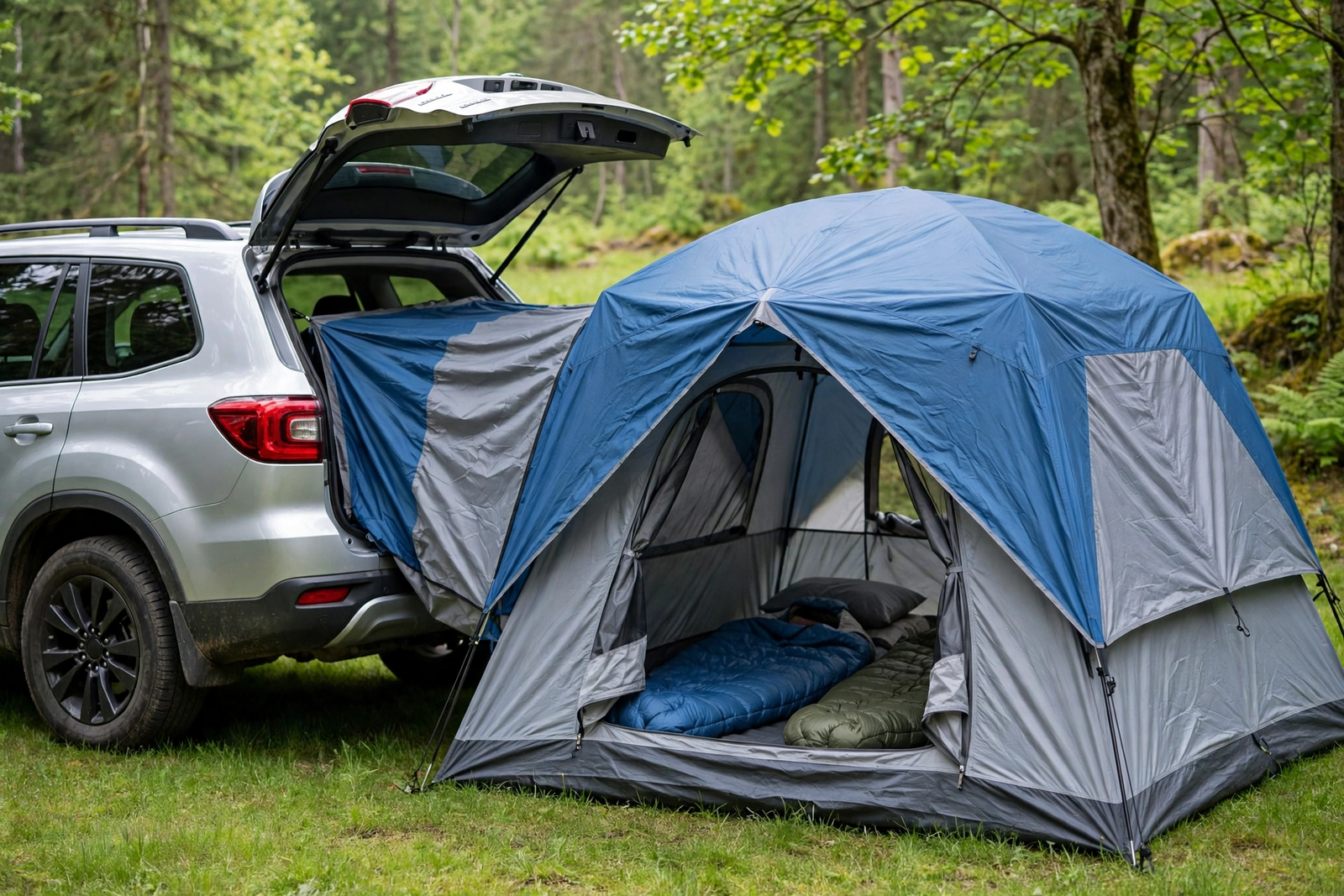
Set this car tent up in the garden before the first trip. The poles, the sleeve and the rainfly go on in a set order, and the first time always takes longer than the listing suggests — the second time is when you learn whether the sleeve fits your tailgate neatly or needs adjusting. Check the hatch opening on your own car first: the sleeve wraps around the cargo opening, and a very small hatch or a hatch with a spoiler can leave a gap. Stake the tent down even on a calm night, because a tent tied to a car still catches the wind like a sail.
Napier Sportz SUV Tent on Amazon: 9-by-9-foot tent, over 7 feet of headroom, sleeps five, full rainfly and awning, vehicle sleeve, model 82000.
Buy the Napier car tent if: you camp as a family and want the biggest sleeping space in this roundup, with the car itself as part of the bed. It is the pick for a mid-size SUV or a minivan, for trips where five people need to sleep under one roof — or rather, under one rainfly.
Rightline Gear SUV Tent: The 6-Person Car Tent
The Rightline Gear SUV Tent is the six-person car tent in this roundup. It measures 8 feet by 8 feet by 7.2 feet high, and the listing says it sleeps up to six people across the tent and the vehicle cargo area. It is water-resistant, it comes with a rainfly, and the model number is 110907. The fit is broad: the listing fits it to SUVs, minivans, wagons and pickup trucks with a cap, which covers most family cars with a lift-up tailgate. The orange fabric is easy to spot at a busy campsite after dark.
Six people is a big claim for an 8-by-8-foot car tent, and it only works because the car counts as part of the tent. Two people sleep in the cargo area and four in the tent, or the other way around — either way, this is a tent for a group that already shares a car, not for six strangers. The tent attaches to the back of the vehicle the same way the Napier does, with a sleeve over the cargo opening, so the tent and the car share one dry space. The rainfly covers the roof, and the water-resistant fabric keeps a light shower out — but this is a car tent, not a storm tent, and heavy rain will find any gap the sleeve leaves around the hatch.
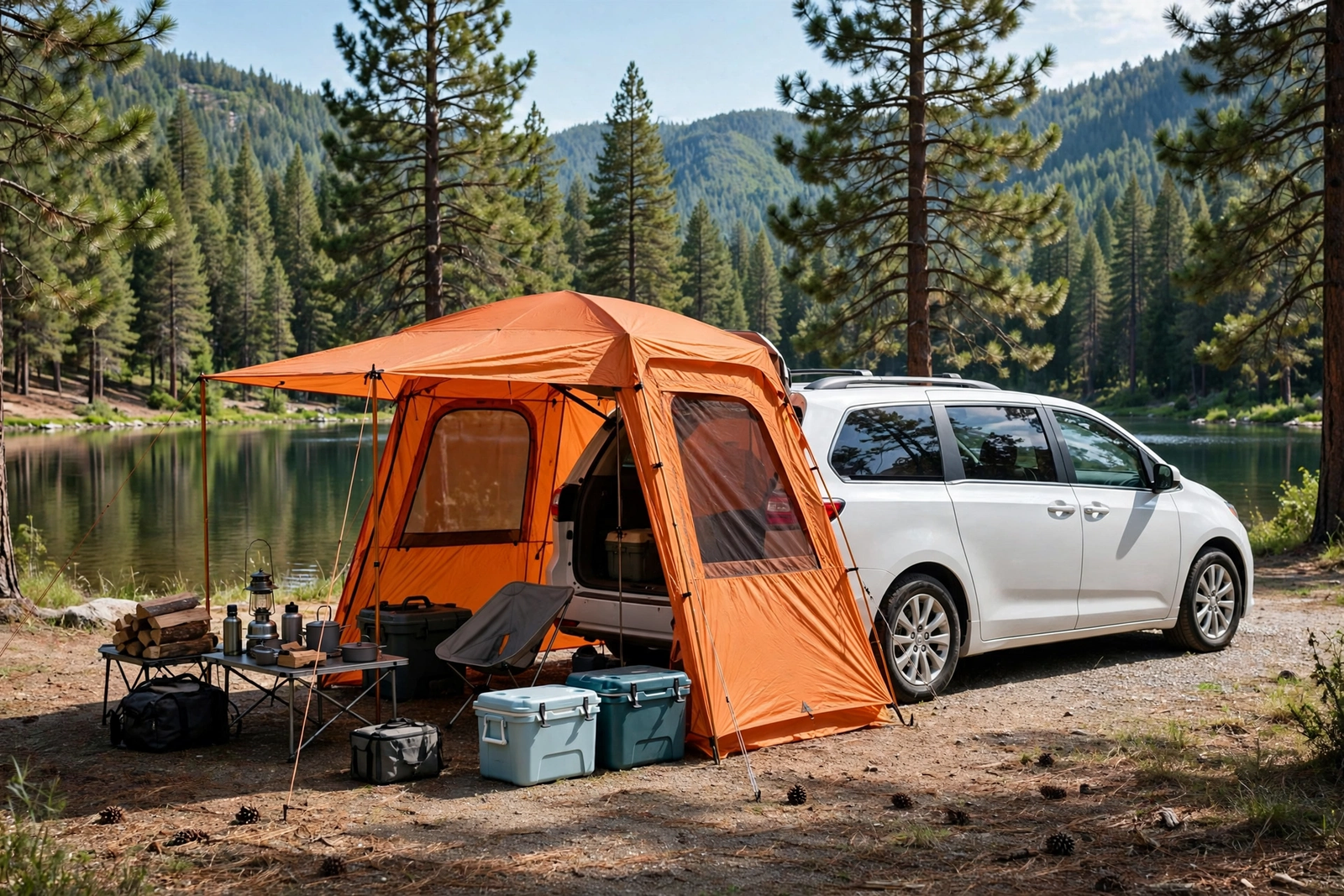
Measure your tailgate before you order this car tent. The sleeve needs a lift-up hatch to wrap around, and it needs enough height to seal — a low hatch on a small wagon can leave the sleeve hanging loose. Check the width too: an 8-foot tent is wide, and a narrow campsite pitch can leave one wall hard against a tree or a fence. Pack the tent last when you load the car, so it is the first thing out when you arrive — a car tent that sits under the luggage is a car tent that gets set up in the dark.
Rightline Gear SUV Tent on Amazon: 8-by-8-foot tent, 7.2 feet high, sleeps six, water-resistant with a rainfly, model 110907.
Buy the Rightline car tent if: you camp with a group of up to six and drive an SUV, a minivan, a wagon or a capped pickup. It is the pick for the biggest group in this roundup, and for campers who want the tent and the car to work as one dry space.
Hasika Tailgate Tent: The Screened Car Tent Awning
The Hasika SUV Tailgate Tent is the lightest car tent in this roundup — and it is not really a sleeping tent at all. It is a tailgate awning: a shaded, screened room that hangs off the open hatch of an SUV or a van, for sitting, cooking and keeping the bugs out. The Large size in this roundup gives a 7-by-7-foot shaded area, with zippered mesh screens on the sides, and the listing says it shelters up to six people. The fabric is 190T silver-coated polyester, rated 3000mm waterproof, with UPF 50+ sun protection, and the model is 002b, manufacturer part number AUS002. It fits mid-size to full-size SUVs and vans.
A tailgate awning does a different job from a full car tent, and it does it with far less weight and far less setup. There are no poles to thread through sleeves and no floor to peg out — the awning hangs from the hatch, the mesh sides zip shut against mosquitoes, and the shaded space underneath is a sitting room, not a bedroom. That is the right tool for a road trip where you sleep in the car or in a motel and want a shady, bug-free place to eat and sit at the end of the day. The 3000mm waterproof rating is the listing’s claim, and the UPF 50+ rating is the listing’s claim too — both are about the fabric, and neither turns an open-sided awning into a storm shelter.
The mesh screens are the reason to choose this car tent over a plain tarp. A tarp gives shade; a screened awning gives shade plus air without the bugs, which is what makes an evening at a lakeside campsite bearable in mosquito season. Check the listing before you buy for what is in the box — the awning, the screens and the fixings are the kit, and anything else you need for your setup is yours to add. And check your hatch: the awning needs a tailgate that lifts up, not one that swings to the side.
Hasika SUV Tailgate Tent on Amazon: Large tailgate awning, 7-by-7-foot shaded area, zippered mesh screens, 3000mm waterproof rating, UPF 50+, model 002b.
Buy the Hasika car tent if: you want shade and a bug-free sitting space at the tailgate, not a second bedroom. It is the pick for couples and road trippers who sleep in the car and live outside it during the day.
Car Tent Types: SUV Tent vs Tailgate Awning
A car tent is not one product — it is three different kinds of shelter that all attach to a car. A full SUV tent, like the Napier and the Rightline in this roundup, is a room with a floor, walls and a rainfly that sleeps people in the tent and in the cargo area together. A tailgate awning, like the Hasika, is a roof and a set of mesh walls with no floor — a sitting room, not a bedroom. And a truck-bed tent pitches inside the bed of a pickup, which is a different fit entirely: if you drive a pickup, a tent that clips to an SUV tailgate will not help you — a truck-bed tent is the tent for that job, and our best truck bed covers roundup covers tonneau covers that keep that bed protected between trips.
Choose by what you do at camp. If you sleep in the tent, you need a full SUV tent with a floor, a rainfly and a sleeve that seals to the car. If you sleep in the car and live outside it, a tailgate awning gives you shade and bug protection for a fraction of the weight and setup time. If you only camp once or twice a year, the awning is the easier buy — it packs small, sets up fast, and does not need a practice run in the garden. If you camp every other weekend with the family, the full tent earns its setup time by giving everyone a dry place to sleep.
Car Tent Size and Sleeping Space
Sleeping claims on car tent listings count the car as part of the tent, so read them that way. The Napier sleeps five across a 9-by-9-foot tent and the cargo area; the Rightline sleeps six across an 8-by-8-foot tent and the cargo area; the Hasika shelters up to six people under a 7-by-7-foot awning, but that is sitting space, not sleeping space. A good rule is to take one person off the listing’s number if you want room for gear as well as people — a five-person tent sleeps four people and their bags comfortably, and a six-person tent sleeps five.
Headroom matters as much as floor space. The Napier gives over 7 feet of headroom and the Rightline gives 7.2 feet, which means an adult can stand up inside to get dressed — a small thing on the first night and a big thing on the third morning of a rainy trip. The Hasika awning has no standing height to quote because it is a shade, not a room, and its height is set by your tailgate. Before you buy any car tent, measure the hatch opening on your car and compare it with the tent’s sleeve: the sleeve has to wrap the opening, and a hatch that is much smaller or much bigger than the sleeve was made for will leave a gap that rain and bugs get through.
Car Tent Weather Protection: Rain and Sun
Rain protection on a car tent comes from three things: the fabric, the rainfly and the seal where the tent meets the car. The Napier and the Rightline both come with a rainfly over the roof, which is the part that matters most — a rainfly keeps the rain off the tent fabric itself, so the tent stays dry even if the fabric gets wet. The Hasika awning’s fabric carries a 3000mm waterproof rating, which is the listing’s claim for how much water pressure the fabric holds back, and the mesh sides keep bugs out while letting air through. Water-resistant, which is how the Rightline describes itself, is a weaker claim than a waterproof rating — it means the fabric sheds light rain, not that it holds back a downpour.
Sun protection is the other half of the job, and it is where an awning earns its keep. The Hasika’s UPF 50+ rating is the listing’s claim for how much ultraviolet light the fabric blocks, and a shaded sitting space under a tailgate awning is cooler than a tent in full sun by a wide margin. Between trips, keep the car itself protected too: our best car covers roundup covers keeping the paint and the roof clean while the tent lives in the trunk, and our best hail car covers roundup covers the nights when the weather turns harder than a tent can handle. A car tent is a fair-weather shelter with a rainfly — it is not a garage, and it is not a storm shelter.
How to Set Up a Car Tent
Setting up a car tent is a two-part job: pitch the tent, then join it to the car. Park on flat ground with the tailgate facing away from the wind, and leave enough room behind the car for the tent plus its guy lines. Lay the tent out, thread the poles, and raise it the way the instructions show — then open the tailgate, pull the sleeve over the cargo opening, and fasten it so the fabric sits flat against the car with no sagging pocket where rain can collect. Stake the corners and peg the guy lines last, and check the sleeve seal once more after the tent is tensioned, because a tent that looks sealed when it is slack can pull open when it is staked tight.
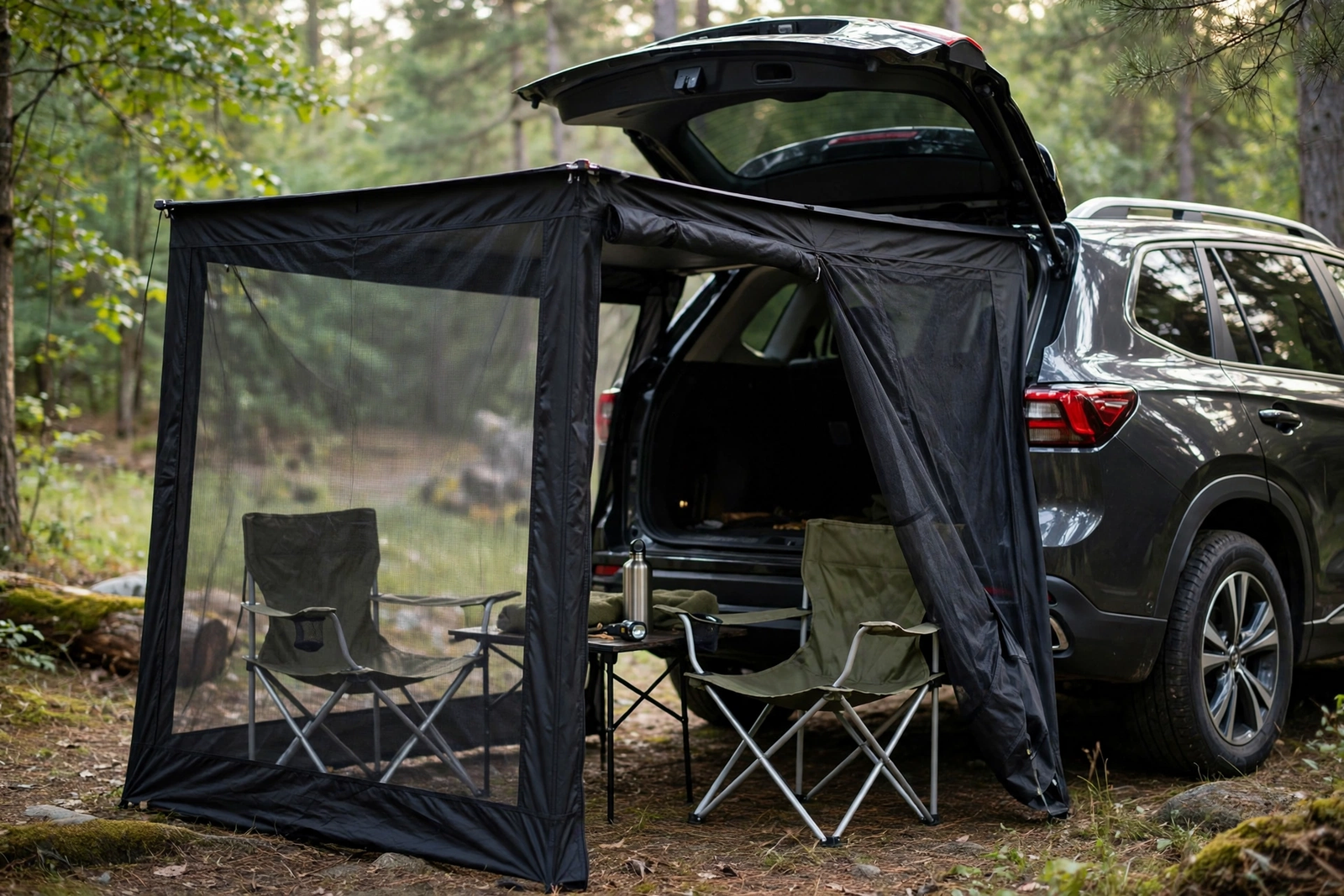
A tailgate awning is the quick version of the same job: hang it from the hatch, zip the mesh sides, and stake the corners. Either way, do the first setup at home, in daylight, with the instructions in hand — a campsite at dusk is the worst place to learn how a sleeve fastens. Pack the tent dry whenever you can: a tent put away wet grows mould, and a mouldy car tent is a tent you will not want to sleep in. If you have to pack it wet, open it out to dry the next day, and wipe the cargo area clean before the next trip — our best car cleaning kit roundup covers the kit for exactly that job.
Car Tent Mistakes to Avoid
The most common car tent mistake is buying a tent for a tailgate that does not lift up. A side-swinging tailgate, a split tailgate or a hatch with a fixed spoiler will not take a sleeve, and no amount of straps will make it seal — check the hatch type before you order, not after the box arrives. The second mistake is trusting the sleeping number on the listing: a tent that sleeps six on paper sleeps four people and their gear in comfort, and a tent that sleeps five sleeps a family of four. The third is skipping the stakes: a car tent tied to a car still catches the wind, and an unstaked tent flaps all night and pulls the sleeve open.
The fourth mistake is running the engine with the tailgate open and the tent attached. Exhaust gas collects under a tent, and a car tent is not ventilated for it — switch the engine off, and never sleep in a car tent with the engine running. The fifth is leaving food in the tent overnight, which brings animals to the camp. And the sixth is packing the tent away wet and leaving it in the trunk for a month: open it out to dry the day after the trip, or the next trip starts with a smell you cannot wash out.
Who Should Buy a Car Tent — and Who Should Not
Buy a car tent if: you camp in an SUV, a minivan or a wagon with a lift-up tailgate, and you want to sleep off the ground without buying a camper or a roof tent. A full SUV tent suits a family that camps often; a tailgate awning suits a couple or a road tripper who sleeps in the car and wants shade and bug-free evenings outside it.
Buy one with care if: you camp once or twice a year, or your car has a side-swinging or split tailgate. A tailgate awning is the low-commitment buy — it packs small and sets up fast — while a full tent is a bigger purchase that earns its keep only if you use it. Measure your hatch before you order either one.
Do not buy a car tent if: you drive a sedan with a boot instead of a tailgate, or your tailgate swings to the side. A car tent needs a lift-up hatch to attach to, and without one there is nothing for the sleeve to seal around. A ground tent pitched next to the car is the better buy for a sedan — and a roof tent is the better buy if you want to sleep above the car rather than behind it.
The Verdict
The best car tent is the one that fits your car and your camping. The Napier 9-by-9 car tent is the pick for a family: the biggest tent in this roundup, with a full rainfly and room for five. The Rightline car tent is the pick for the biggest group: six people across the tent and the cargo area, in a tent that fits most family cars. And the Hasika tailgate awning is the pick for shade and bug-free evenings: the lightest option here, and the quickest to set up.
Whichever car tent you choose, check three things before you order: the tailgate type on your car, the sleeping space with one person taken off the listing’s number, and whether the listing still shows a live offer — check the listing before you buy, as offers change. Set the tent up at home first, stake it down even on a calm night, and never sleep in it with the engine running. A car tent will not make a bad campsite good, but on a good one it turns the car you already own into a bedroom with a view.
Frequently Asked Questions
What is a car tent?
A car tent is a tent that attaches to the back of a car, usually to the open tailgate of an SUV, a minivan or a wagon. A fabric sleeve joins the tent to the cargo opening, so the tent and the car become one space — you can sleep in the tent, in the car, or across both. A tailgate awning is the lighter version: a shaded, screened room that hangs off the hatch for sitting and cooking, rather than a sleeping tent.
Will a car tent fit my SUV?
Most full-size car tents fit most SUVs, minivans and wagons, but the fit depends on your tailgate, not just your car. The tent needs a lift-up tailgate to attach to — a side-swinging or split tailgate will not take a sleeve. Measure the hatch opening on your car and compare it with the tent’s sleeve before you order, and check the listing for the vehicle types it names. The Napier tent lists CUVs, SUVs and minivans, and the Rightline tent adds wagons and capped pickups; the Hasika awning lists mid-size to full-size SUVs and vans.
Can you sleep in a car tent in the rain?
Yes, in light to moderate rain, if the rainfly is on and the sleeve is sealed to the car. The rainfly keeps rain off the tent roof, and the sleeve keeps it out of the join between the tent and the car. Check the sleeve seal after staking the tent, because a tent that looks sealed when slack can pull open when tensioned. In heavy rain or a storm, a car tent is not the right shelter — pack up and wait it out in the car or under a solid roof.
How long does it take to set up a car tent?
A full SUV tent takes most people around half an hour the first time, and much less once they have done it before — do the first setup at home, in daylight, with the instructions in hand. A tailgate awning is quicker: hang it from the hatch, zip the mesh sides and stake the corners, and it is up in a few minutes. Either way, pack the tent last when you load the car, so it is the first thing out when you arrive and you are not setting it up in the dark.
Do car tents work on cars without a lift-up tailgate?
No — a car tent needs a lift-up tailgate to attach to. The sleeve wraps around the cargo opening with the hatch raised, and a side-swinging tailgate, a split tailgate or a sedan boot gives the sleeve nothing to seal around. If your car has no lift-up hatch, a ground tent pitched next to the car is the better buy, and a roof tent is the option if you want to sleep above the car rather than behind it.
Can I leave a car tent attached overnight?
Yes — a car tent is made to stay attached overnight, and that is the point of it: you sleep in the tent and the car together. Lock the car doors from the inside if you sleep in the cargo area, and keep the tent doors zipped so the sleeve stays sealed. Never sleep in a car tent with the engine running, because exhaust gas collects under the tent. In the morning, check the sleeve and the stakes before you drive off, and pack the tent dry whenever you can.