Top Roof Bars: 3 Crossbar Systems Compared
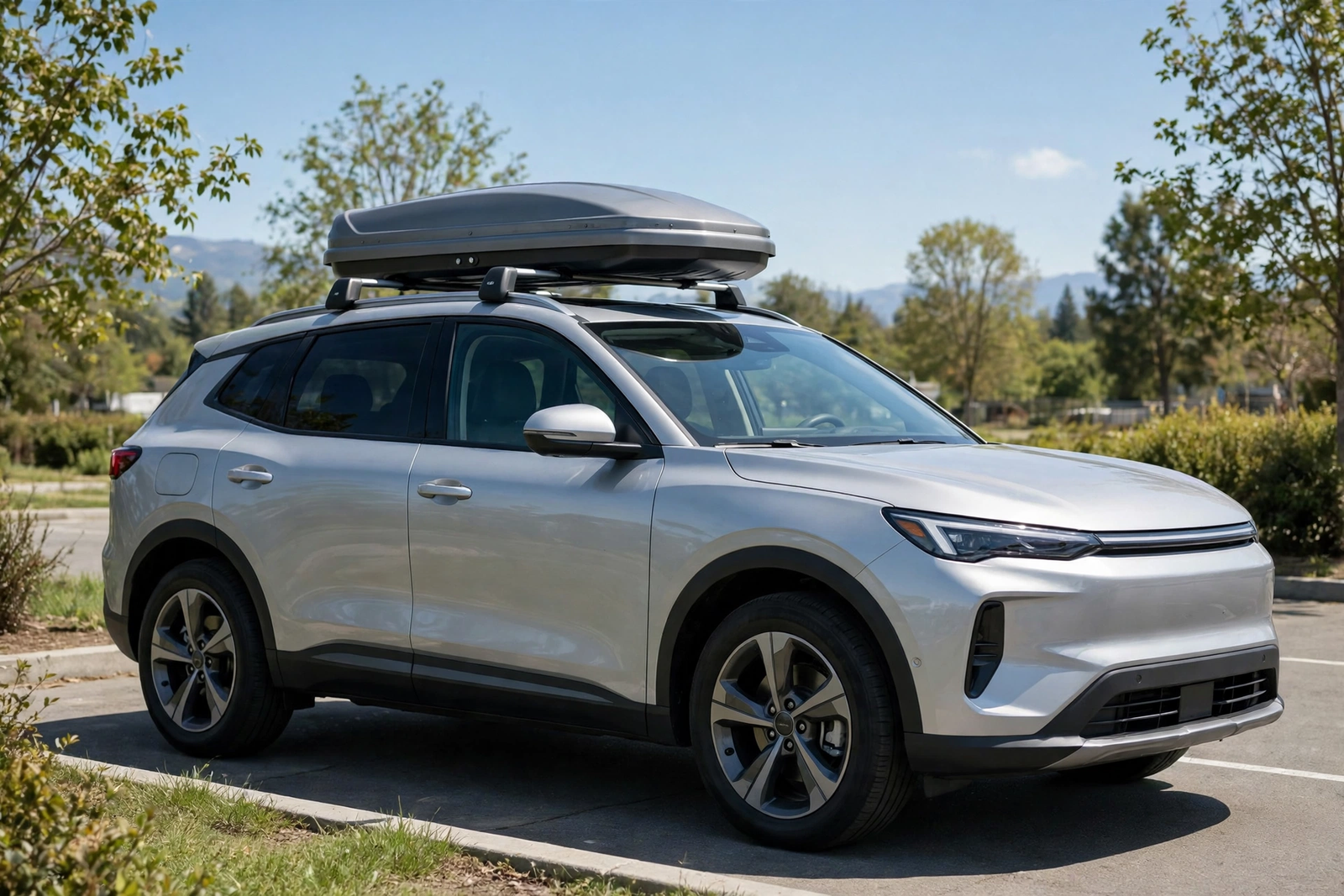
A roof box, a kayak or a pair of bikes needs somewhere to sit, and that somewhere is a pair of crossbars on your roof. Top roof bars are those crossbars: two aerodynamic bars that span the roof and give every carrier, box and bike mount something solid to clamp onto. Buy the right pair and the load rides quietly and safely; buy the wrong pair and nothing fits, the bars whistle at highway speed, or the load limit of the bars is lower than the load you planned to carry.
The short answer: Top roof bars start with your roof, not the bars. Cars with raised rails need a bar that clamps around the rail, cars with flush rails need a bar that grips the rail from above, and cars with fixed points need a bar that bolts into the threaded points under the roof covers. The three systems below cover all three roof types, one per brand, and each one is sold as bars only, so the foot pack and the vehicle fit kit are separate parts of the same job.
As an Amazon Associate I earn from qualifying purchases.
Quick Pick: Top Roof Bars for Every Rail Type
| Pick | Product | Best For | Check Price |
|---|---|---|---|
| Quiet Aerodynamic Bar | Thule WingBar Evo 150 (60″), Aluminium | An aerodynamic aluminium bar with a low-noise profile, for drivers who want the quietest design in this roundup | Check Price on Amazon |
| StreamLine Modular Bar | Yakima JetStream 50 Inch, Black | A modular aerodynamic bar for the StreamLine system, for drivers building a rack piece by piece | Check Price on Amazon |
| Cut-to-Length Single Bar | Rhino-Rack Vortex Bar VA150B, One Black 59″ Bar | A single aerodynamic bar that can be cut to length, for a custom-width setup built around Rhino-Rack legs | Check Price on Amazon |
Table of Contents
Thule WingBar Evo: The Quiet Aerodynamic Top Roof Bar
The Thule WingBar Evo is the low-noise design in this roundup. It is a 150 centimetre aluminium bar, sold as a two-pack of bars, model 711500, and the listing gives the load capacity as 220 pounds. The bar is 80 millimetres wide and 32 millimetres high, with a T-track channel along the top that takes Thule accessories, and the rubber strip in the track carries the WindDiffuser ridges that break up the airflow. The trailing edge is shaped to cut drag, which is why this bar is the low-noise design pick for drivers who find wind noise bothersome. Our Thule roof bars for roof rails article covers the Thule single in more depth, including the foot pack and fit kit that go with it — this roundup compares the bar itself against the other two brands.
The important thing to understand about the WingBar Evo is that the bars are only one part of the system. The bars alone do not attach to a car: you also need an Evo foot pack and a vehicle-specific fit kit, which are sold separately and chosen for your exact car. That is how the Evo system works — the same bars fit many cars, and the feet and kit make them fit yours. Check the fit guide for your car before you order, because the wrong foot pack leaves you with bars that have nowhere to sit. Once fitted, the bars take Thule roof boxes, bike carriers and kayak carriers through the T-track, and the rubber strip keeps the track quiet when nothing is mounted.
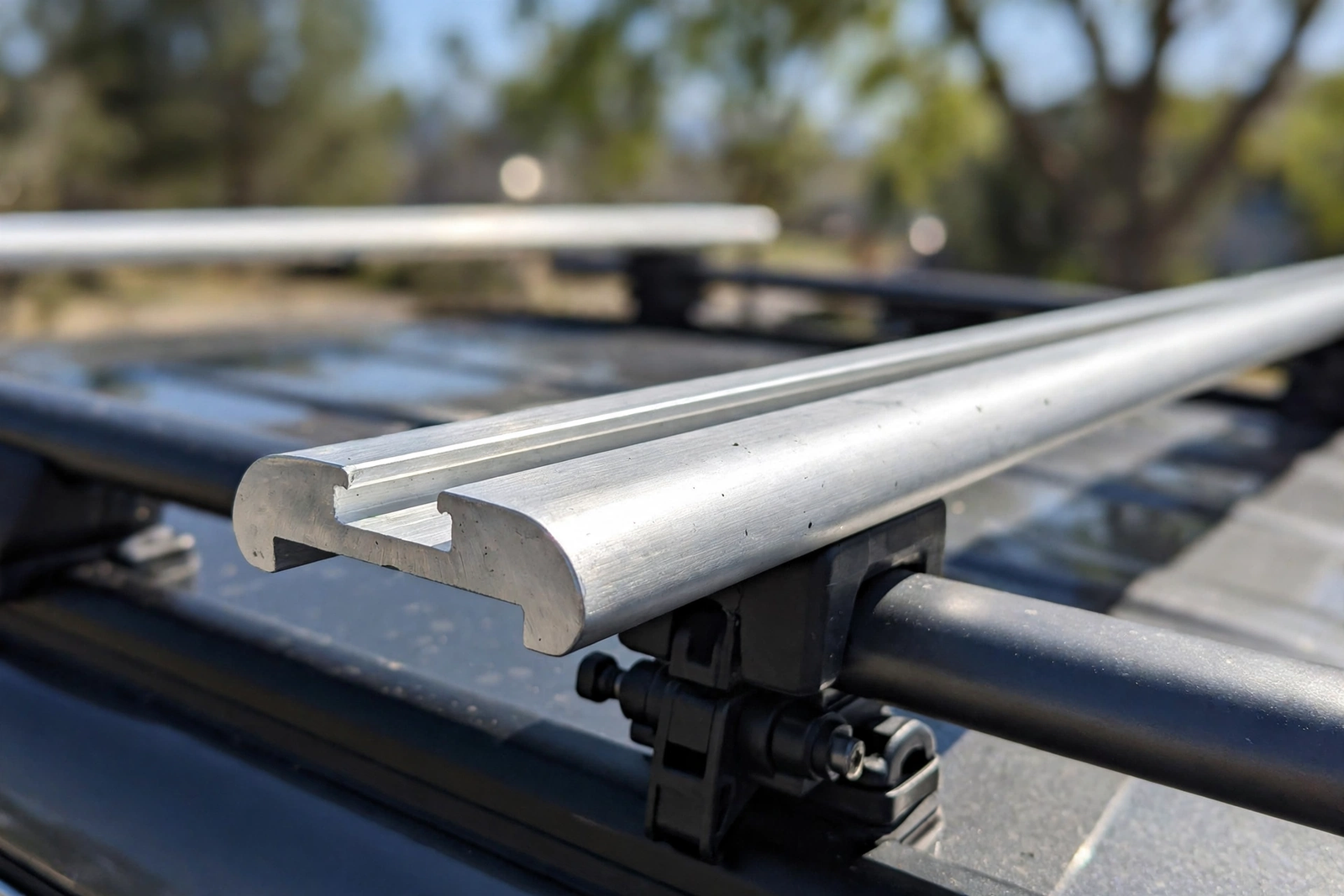
The WingBar Evo is the pick in this roundup for the driver who wants the quietest bars and is happy to buy into the Thule system — bars, feet and kit as three parts of one job. It is also the most clearly specified bar here: the model number, the dimensions and the load figure are all stated on the listing, so there is no guessing about what you are buying.
Thule WingBar Evo 150 (60″), Aluminium on Amazon: aluminium bars, model 711500, 150 centimetres, 80 millimetres wide, T-track with WindDiffuser rubber strip, load capacity 220 pounds per the listing, bars only — foot pack and fit kit sold separately.
Buy the Thule WingBar Evo if: you want the quietest aerodynamic bar in this roundup and you are happy to buy the Evo foot pack and fit kit for your car as well. Check the fit guide for your exact car first.
Yakima JetStream: The StreamLine Top Roof Bar
The Yakima JetStream is the modular bar in this roundup. It is a 50 inch black aluminium bar, sold as a set of two, model 8000425, and the listing gives the load capacity as 165 pounds. The bar uses a teardrop cross-section that Yakima calls JetFlow, shaped in a wind tunnel to cut noise, and the inside of the bar is braced with an internal structure Yakima calls JetTruss, which is what gives a hollow aluminium bar its strength. The bars have a T-slot along the top for accessories, and they are made to work with the Yakima StreamLine towers.
Like the Thule, the JetStream bars are sold as bars only — the towers are a separate purchase, and they are what connect the bars to your car. StreamLine towers come in different types for different roofs: raised rails, flush rails, fixed points and bare roofs each take their own tower, so the bars stay the same and the towers change with the car. That modularity is the point of the system, and it is also the reason to check the tower fit for your car before you order the bars. Buy the bars and the wrong towers and you have a pair of bars with no way onto the roof.
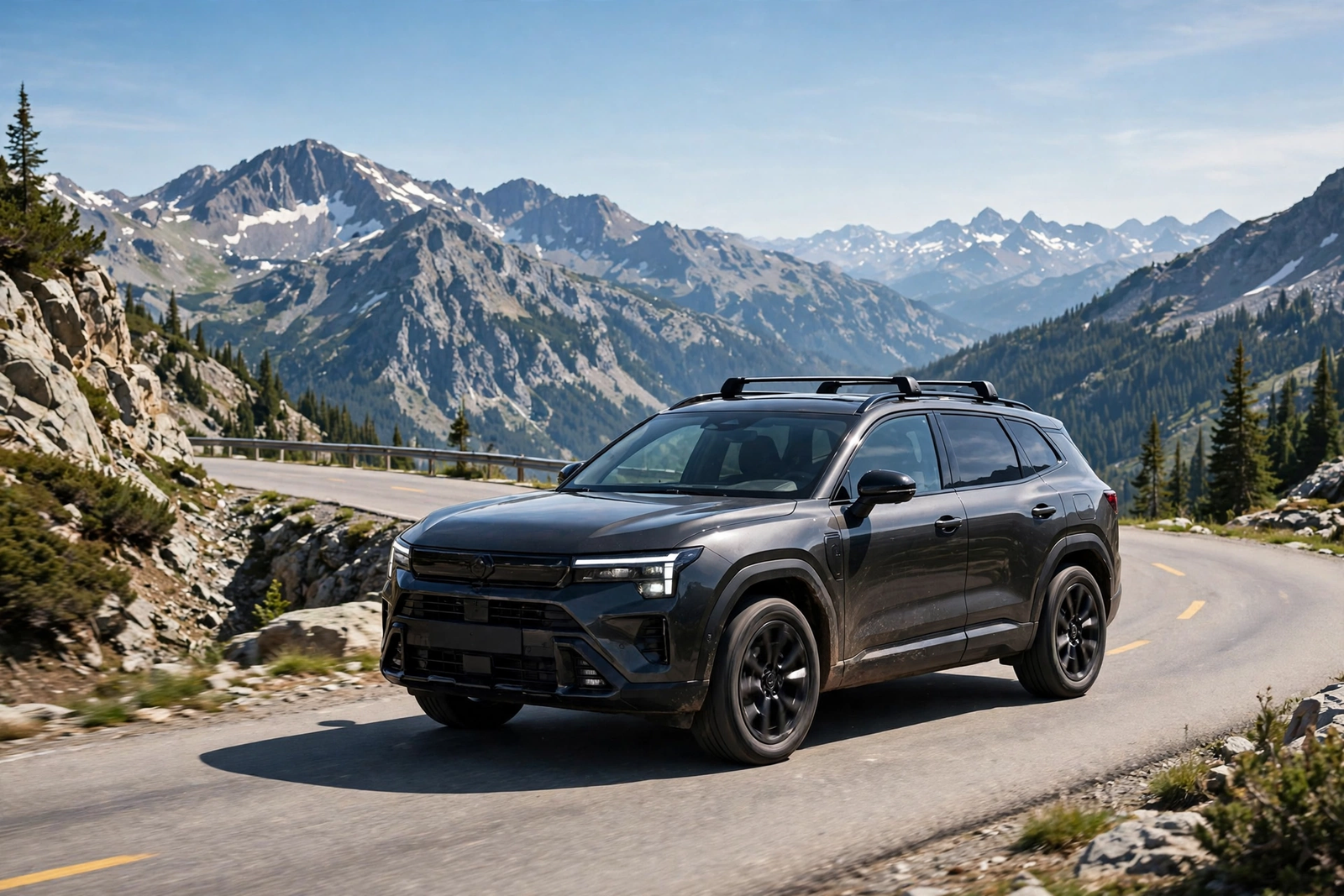
The JetStream is the pick in this roundup for the driver who wants to build a rack piece by piece, or who already owns Yakima StreamLine towers and needs a second pair of bars. It is the shortest bar of the three here at 50 inches, which suits narrower cars and smaller SUVs, and the 165 pound load figure on the listing is the number to plan around, alongside your own car’s roof limit.
Yakima JetStream 50 Inch, Black on Amazon: aluminium bars, model 8000425, 50 inches, JetFlow teardrop shape, JetTruss internal bracing, T-slot, load capacity 165 pounds per the listing, bars only — StreamLine towers sold separately.
Buy the Yakima JetStream if: you are building a StreamLine rack and want a modular aerodynamic bar, or you already own StreamLine towers. Check which tower type your roof needs before you order.
Rhino-Rack Vortex: The Cut-to-Length Top Roof Bar
The Rhino-Rack Vortex is the odd one out in this roundup, and that is its strength. The listing here is for a single bar — one black Vortex bar, 59 inches long, model VA150B — not a pair. The bar is aerodynamic, with the Vortex generating strip, a rubber strip that sits in the top channel and breaks up the airflow to cut wind noise. The Vortex bar is also the only bar here that can be cut to length: Rhino-Rack’s own fitting instructions say to measure from the centre and cut the bar to the length your vehicle needs, so a 59 inch bar can become the exact width your roof calls for.
Because the listing is a single bar, the arithmetic matters. A roof needs two bars, so you need two of these listings for a pair, and you still need the leg kit and the vehicle fit kit on top — the bar alone attaches to nothing. That makes the Vortex the most hands-on choice here: you are buying a component and building a rack, not buying a finished pair. The reward is flexibility. Vortex bars work with a range of Rhino-Rack legs, from raised-rail clamps to fixed-point feet — check the leg kit for your car before ordering.
The Vortex is the pick in this roundup for the driver who wants a custom-width setup, or who is replacing a single damaged bar rather than buying a whole pair. It is also the pick for the driver who already owns Rhino-Rack legs and needs a longer or shorter bar than the one that came with the kit. Count the bars before you order — one listing is one bar, and a roof needs two.
Rhino-Rack Vortex Bar VA150B, One Black 59″ Bar on Amazon: single aerodynamic bar, model VA150B, 59 inches, black, Vortex generating strip, can be cut to length per Rhino-Rack instructions, one bar only — a pair needs two listings plus a leg kit and fit kit.
Buy the Rhino-Rack Vortex if: you want a single bar cut to your width, you already own Rhino-Rack legs, or you are replacing one damaged bar. Order two listings for a pair, and check the leg kit for your roof type.
Raised Rails vs Flush Rails vs Fixed Points: Which Top Roof Bars Fit Your Car
Every roof bar decision starts with the roof, and the three roof types covered in this roundup are these. Raised rails are the metal rails that stand proud of the roof on two feet, with a gap underneath you can slide a hand through — common on SUVs and estates. Flush rails sit flat against the roof with no gap underneath, which looks tidier but gives a clamp less to hold onto. Fixed points are threaded holes hidden under small covers in the roof, with no rail at all — common on cars that were designed to take a rack only when needed.
Each roof type takes its own fitting. Raised rails take a clamp that wraps around the rail, which is the simplest and most forgiving fit. Flush rails take a clamp that grips the rail from above and below, and the clamp has to match the rail’s shape. Fixed points take a foot that bolts into the threaded hole, and the foot has to match the spacing of the points on your car. No single bar fits all three roofs on its own — the bars are the same, but the feet and the fit kit change. That is why every product in this roundup is sold as bars only, and why the fit guide for your exact car matters more than the bar you pick.
Top Roof Bar Sizes: Choosing the Right Bar Length
Bar length is the second decision, and it is a simple one: the bar has to span the roof with a little overhang on each side for accessories to clamp onto, but not so much overhang that it sticks out past the car. The Thule WingBar Evo here is 150 centimetres, the Yakima JetStream is 50 inches, and the Rhino-Rack Vortex is 59 inches — three different lengths for three different widths of car. A wider car needs a longer bar; a narrower car needs a shorter one, and a bar that is too long looks wrong and catches the wind.
Measure the distance between your rails, or between your fixed points, before you order, and check it against the bar length on the listing. If the bar is only just long enough, there may be no room for a bike carrier clamp beside the foot; if it is far too long, the ends stick out and the bar whistles. The Vortex is the exception to the measuring rule, because it can be cut to length — measure, mark from the centre, and cut it to the width your car needs, following the fitting instructions. The other two bars are not made to be cut, so the length you buy is the length you live with.
How to Fit Top Roof Bars
Fitting top roof bars takes patience more than strength, and the order matters. Start with the fit guide for your car and lay out the parts: bars, feet, fit kit and the measuring tool. Fit the feet to the bars first, set the bar spacing to the distance between your rails or fixed points, and then offer the bars up to the roof. Tighten the clamps or bolts a little at a time, alternating sides, so the bars sit level and the feet grip evenly. Check the torque on every bolt if the instructions give a figure — a foot that is only finger-tight will work loose on the road.
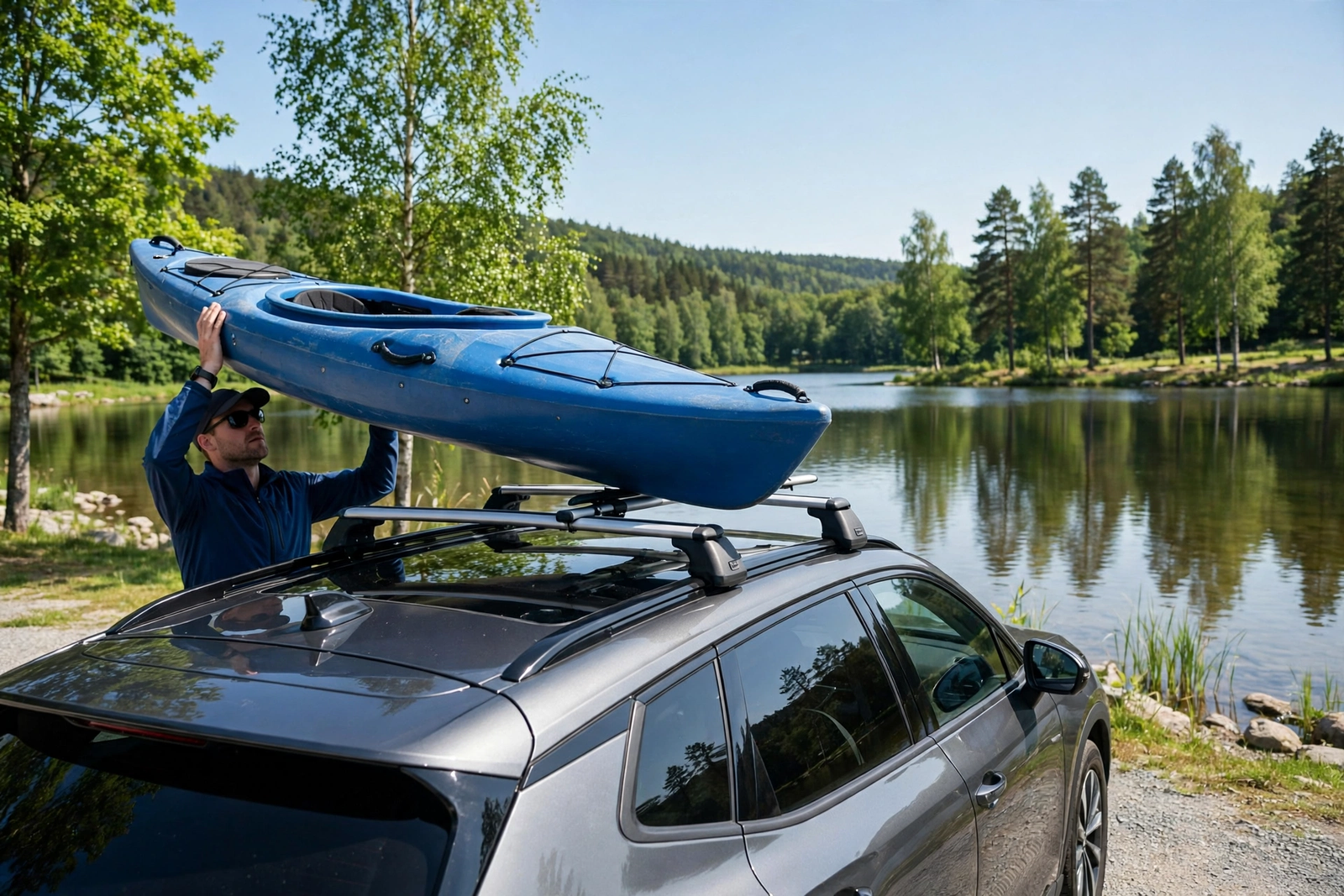
Test the fit before you load anything. Push each bar firmly from the side and from above — it should not move. Load the carrier or box, strap the load down, and drive a short distance, then stop and check every clamp again. Bars settle after the first few miles, and a clamp that was tight at home can be loose after the first drive. Check the bars again after the first long trip, and check them every time you load up after a period with the bars off the car.
What Top Roof Bars Can Carry — and the Load Limit Rule
Top roof bars carry almost anything that clamps to a bar: a roof box, a bike carrier, a kayak carrier, a ski carrier, a roof basket or a rooftop tent. The limit is not what fits, but how much it weighs. Two of the bars in this roundup carry a load figure on their listings — 220 pounds for the Thule, 165 pounds for the Yakima — and that figure is the bar’s own limit. No comparable load figure is given for the Rhino-Rack listing used here, so for that bar plan around your car’s own roof limit. Your car has a separate roof load limit, usually stated in the handbook, and the real limit is the lower of the two. A bar rated for 220 pounds on a car rated for 165 pounds carries 165 pounds, not 220.
The load limit covers everything on the roof: the bars, the carrier and the load together. A roof box weighs something before you put anything in it, and a bike carrier weighs something before the bike goes on. Add the carrier to the load, not just the load itself. If you camp with the car, our best car tents article covers the tents that sit beside the car, and the roof box that sits above it — the two jobs need different kit, and the roof load limit applies to both.
Top Roof Bar Mistakes to Avoid
The most common top roof bar mistake is buying bars before checking the roof type. Raised rails, flush rails and fixed points each need their own feet, and bars bought for one roof will not fit another. The second mistake is buying a single bar when the roof needs a pair — the Rhino-Rack Vortex listing here is one bar, and a roof needs two. The third is forgetting the foot pack: all three bars in this roundup are sold as bars only, and the bars alone attach to nothing.
The fourth mistake is overloading. The bar’s load figure and the car’s roof limit are both real, and the lower one wins — and the carrier counts towards the load, not just the cargo. The fifth is leaving the bars on all year when they are not needed: bars add wind noise and drag, and a bar that is never used is a bar that should come off. And the sixth is never checking the clamps again after the first drive — bars settle, clamps loosen, and a bar that was tight at home can be loose after the first drive.
Who Should Buy Top Roof Bars — and Who Should Not
Buy top roof bars if: you regularly carry something that does not fit inside the car — a roof box for holidays, bikes for weekends, kayaks for the lake, or skis for the winter. Bars turn the roof into usable space, and a good pair lasts for years. If you haul gear in the back as well, our best truck bed covers article covers the other end of the car for pickup drivers.
Buy with care if: your car has fixed points or flush rails, because the fitting is more specific and the wrong foot pack will not fit at all. Check the fit guide for your exact year and model, not just the make, and check the bar length against the width of your roof.
Do not buy top roof bars if: you never carry anything on the roof, or your car has no rails and no fixed points. Bars with nowhere to clamp are decoration, and a roof box that lives in the garage does not need bars at all. If the load fits inside the car, it belongs inside the car.
The Verdict
The best top roof bars are the ones that fit your roof, your car and the load you actually carry. The Thule WingBar Evo is the pick for the driver who wants the low-noise design: an aerodynamic aluminium bar with a shaped trailing edge and a diffuser strip, designed to cut wind noise — though noise still varies by car and fit, so expect some sound at speed. The Yakima JetStream is the pick for the modular builder: a StreamLine bar that pairs with towers for any roof type, for drivers who want to build the rack piece by piece. And the Rhino-Rack Vortex is the pick for the custom job: a single bar that can be cut to length, for drivers who already own Rhino-Rack legs or need an exact width.
Whichever bar you choose, check three things before you order: the roof type on your car, the foot pack and fit kit that go with the bars, and whether the listing still shows a live offer — listings change, and a listing that showed an offer when this roundup was researched may not show one now. Measure the roof, read the fit guide, and count the bars — one Vortex listing is one bar, and a roof needs two. For the rest of the kit that keeps the load dry and the car clean, our best car covers article covers what happens when the car is parked and the bars come off.
Frequently Asked Questions
Do top roof bars fit any car?
No — top roof bars fit your car only with the right foot pack and fit kit for your roof type. Cars with raised rails, flush rails and fixed points each need different feet, and the bars in this roundup are all sold as bars only. Check the fit guide for your exact year and model before you order, because the bars alone attach to nothing and the wrong feet will not fit your roof at all.
What is the difference between raised rails, flush rails and fixed points?
Raised rails stand proud of the roof on two feet, with a gap underneath you can slide a hand through, and they take a clamp that wraps around the rail. Flush rails sit flat against the roof with no gap, and they take a clamp that grips the rail from above and below. Fixed points are threaded holes hidden under small covers in the roof, with no rail at all, and they take a foot that bolts into the hole. Each type needs its own feet and fit kit — no single fitting covers all three.
How much weight can top roof bars carry?
It depends on the bars and on your car. The Thule WingBar Evo listing gives a load capacity of 220 pounds and the Yakima JetStream listing gives 165 pounds, but your car has its own roof load limit in the handbook, and the real limit is the lower of the two. The limit covers everything on the roof — the bars, the carrier and the load together — so add the carrier’s weight to the cargo, not just the cargo itself.
Are top roof bars noisy at highway speed?
They can be, but aerodynamic bars are shaped to cut the noise. The Thule WingBar Evo has a diffuser strip and a shaped trailing edge, the Yakima JetStream has a teardrop cross-section, and the Rhino-Rack Vortex has a generating strip in the top channel — all three are designed to break up the airflow that causes whistling. Bars with nothing mounted are usually quieter than bars with an empty carrier, and a bar that is too long for the car will whistle more than one that fits.
Do I need to buy foot packs separately?
Yes — all three bars in this roundup are sold as bars only. The Thule WingBar Evo needs an Evo foot pack and a vehicle fit kit, the Yakima JetStream needs StreamLine towers, and the Rhino-Rack Vortex needs a leg kit and a fit kit. The bars, the feet and the kit are three parts of one job, and the feet and kit are chosen for your exact car, so check the fit guide before you order anything.
Can I leave top roof bars on my car all year?
You can, but there is little reason to. Bars add wind noise and drag even with nothing mounted, and they make the car harder to wash and harder to park in a low garage. If you use the roof every week, leave them on and check the clamps regularly. If you use them a few times a year, take them off between trips and refit them when you need them — it is quicker once you know the fit.