Car Camping Guide: Sleep, Power and Shelter in Your Car
Car camping is the simplest way into camping: your car is the tent platform, the storage, and the ride home, all in one. You do not need a rooftop tent or a camper van — a car, an air mattress, a way to charge your phone, and a place to sleep dry are enough for a first trip. This car camping guide covers the whole setup: sleeping in the car, power at camp, shelter beside the car, and the safety rules that keep a night in the car comfortable instead of miserable.
The short answer: car camping works when you plan the sleep first. Measure your back seat or cargo area, pick an air mattress that fits it, bring a portable power station for phones and lights, and add an SUV tent if you want room to stand and cook beside the car. Never run the engine in an enclosed space, and never sleep with the engine idling — carbon monoxide is colorless and odorless, and a car is not a ventilated room. The three pieces of gear below, and the setup steps after them, are the whole first trip.
As an Amazon Associate I earn from qualifying purchases.
Quick Pick: Car Camping Gear for Sleeping, Power and Shelter
| Pick | Product | Best For | Check Price |
|---|---|---|---|
| Back-Seat Sleeping | Umbrauto Inflatable Car Mattress Bed, SUV Camping Air Bed for Truck Backseat with Pump and Pillows | An inflatable back-seat air mattress with pump and pillows, for sleeping in the car itself | Check Price on Amazon |
| Off-Grid Power | Jackery Explorer 300 Portable Power Station, 292Wh LiFePO4 Battery, 300W AC Outlet | A compact portable power station for phones, lights and laptops, for power away from any outlet | Check Price on Amazon |
| SUV Tent Shelter | Napier Backroadz SUV Tent, 10 x 10 ft, Sleeps 5 Adults | A ground tent that sleeves onto the back of an SUV, for standing room and shelter beside the car | Check Price on Amazon |
Table of Contents
Sleeping in the Car: The Umbrauto Air Mattress
The Umbrauto air mattress is the sleeping piece of this car camping setup: an inflatable car mattress bed, model AIR-2CAR75-N, made for the back seat of a car, SUV, or truck, and for the rear seat of a van. It is a 5-piece set with an electric pump and pillows included, so there is nothing else to buy before your first night. The top is flocked, which keeps a sleeping bag from sliding around, and the mattress is aimed squarely at car campers — the listing names car campers, SUV campers, and truck campers as its audience. Our Umbrauto SUV air mattress review covers the wider Umbrauto range — this guide is about the back-seat mattress as the sleeping piece of a car camping setup.
Measure before you order. The mattress is made to fit most back seats, but most is not all: measure your back seat across the width and along the length, and check the mattress size against your own car before you buy. An independent comparison of SUV air mattresses notes the honest trade-off on budget beds like this one: the flocked PVC shell is less durable than a pricier mattress, and the included pump is the part most likely to fail first — so treat it as a low-cost way to try sleeping in your car, and carry a backup way to inflate it. Inflate it at home once before your first trip, and sleep on it for a night in the driveway: a leak found at home is a nuisance, and a leak found at a campsite is a ruined night.
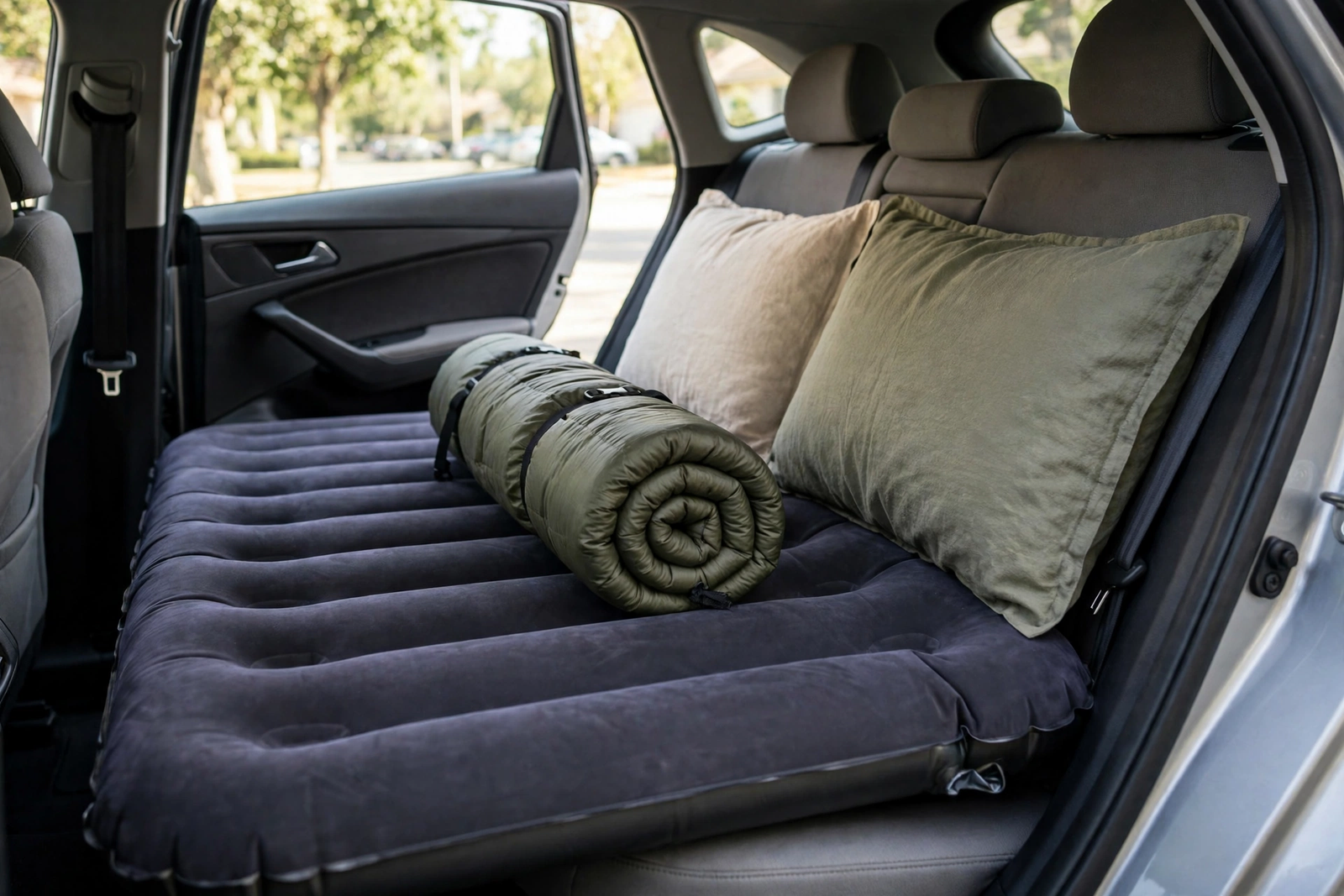
The Umbrauto mattress is the pick in this guide for the first-time car camper who wants to sleep in the car itself — a back-seat bed with a pump and pillows in the box, a budget way to try sleeping in the car. It fits most back seats, but measure yours first, and test it at home before you trust it in the woods.
Umbrauto Inflatable Car Mattress Bed for Truck Backseat on Amazon: inflatable car mattress bed, model AIR-2CAR75-N, 5-piece set with pump and pillows, for car, SUV, truck back seat and van rear seat
Buy the Umbrauto air mattress if: you plan to sleep in the car’s back seat and want a mattress with a pump and pillows in the box. Measure your back seat first, and inflate it at home before your first trip.
Power at Camp: The Jackery Explorer 300
The Jackery Explorer 300 is the power piece of this car camping setup: a portable power station with a 292Wh battery per the Amazon listing, a 300W AC outlet, two AC outlets in total, a 100W USB-C port, two USB-A ports, and a 120W car port, in a 7.5 lb body with a carry handle. The Amazon listing describes the battery as LiFePO4, rated for 4,000 charge cycles before it reaches 70 percent capacity — though Jackery’s own site lists the same model at 293Wh, so treat the exact capacity figure as the listing’s, and check the listing for the figure that matters to you. The model number is JE-300E, and it charges from a wall outlet, a car charger, or a solar panel.
A 292Wh station is for small electronics, not for household appliances: it will charge phones, run lights, and charge a laptop, and it will not run a space heater or a microwave. Work out your power budget before you leave — add up what your phone, your lights, and your laptop need, and check that the total fits inside the station’s capacity with room to spare. Charge the station fully at home, and bring the car charger cable so you can top it up on the drive. A power station is also the safe way to run a light inside a tent or a car: it makes no fumes and no noise, unlike a generator, and it works inside a vehicle where an engine never should.
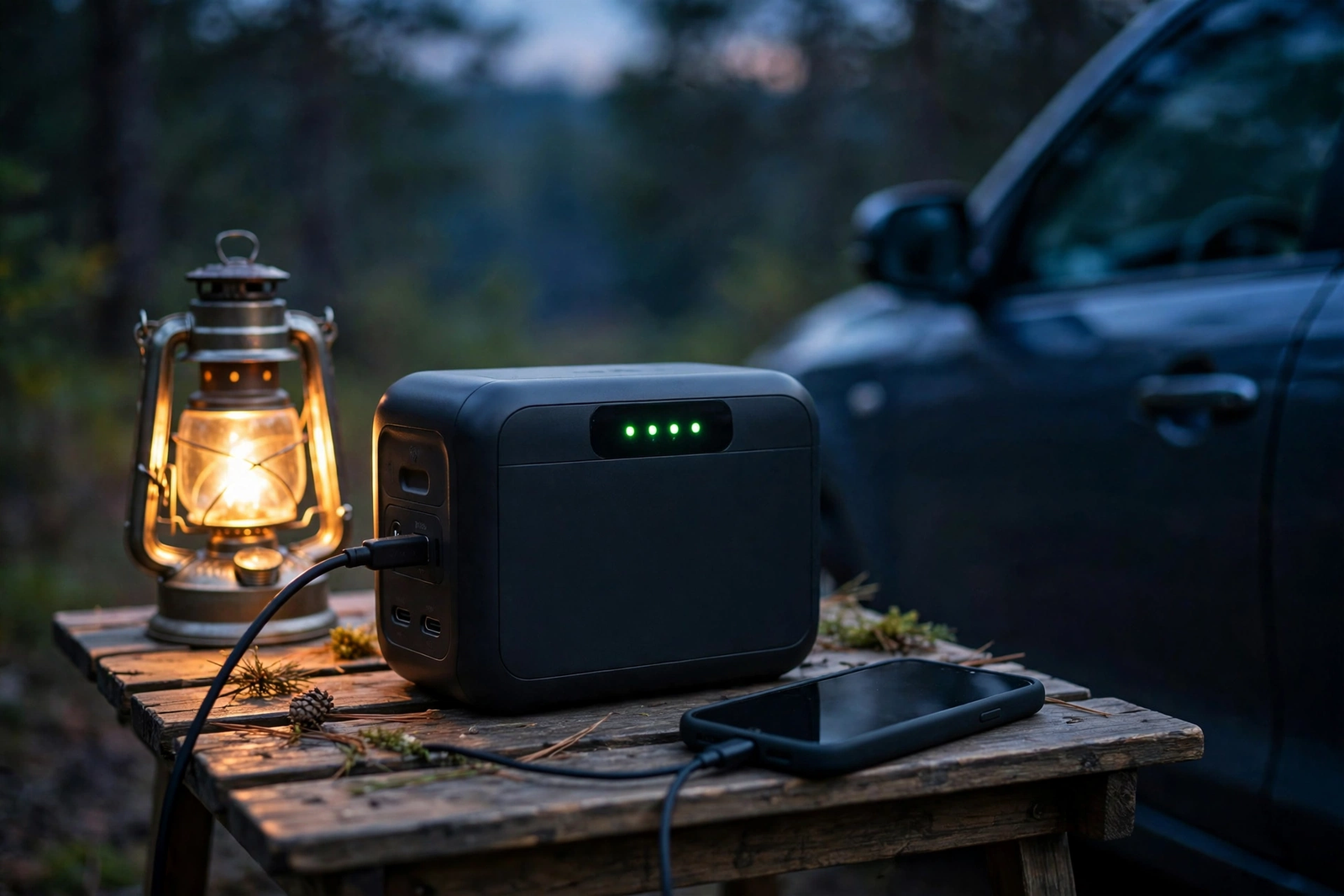
The Jackery Explorer 300 is the pick in this guide for the car camper who needs power for phones, lights, and a laptop — a compact station that fits in the footwell and charges everything a weekend trip needs. It will not run big appliances, so check your power budget first.
Jackery Explorer 300 Portable Power Station on Amazon: 292Wh LiFePO4 battery per the Amazon listing, 300W AC output, two AC outlets, 100W USB-C port, 7.5 lb, model JE-300E
Buy the Jackery Explorer 300 if: you need power for phones, lights, and a laptop on a car camping trip, and you want a compact station you can carry with one hand. Check your power budget first — it is for small electronics, not big appliances.
Shelter at Camp: The Napier Backroadz SUV Tent
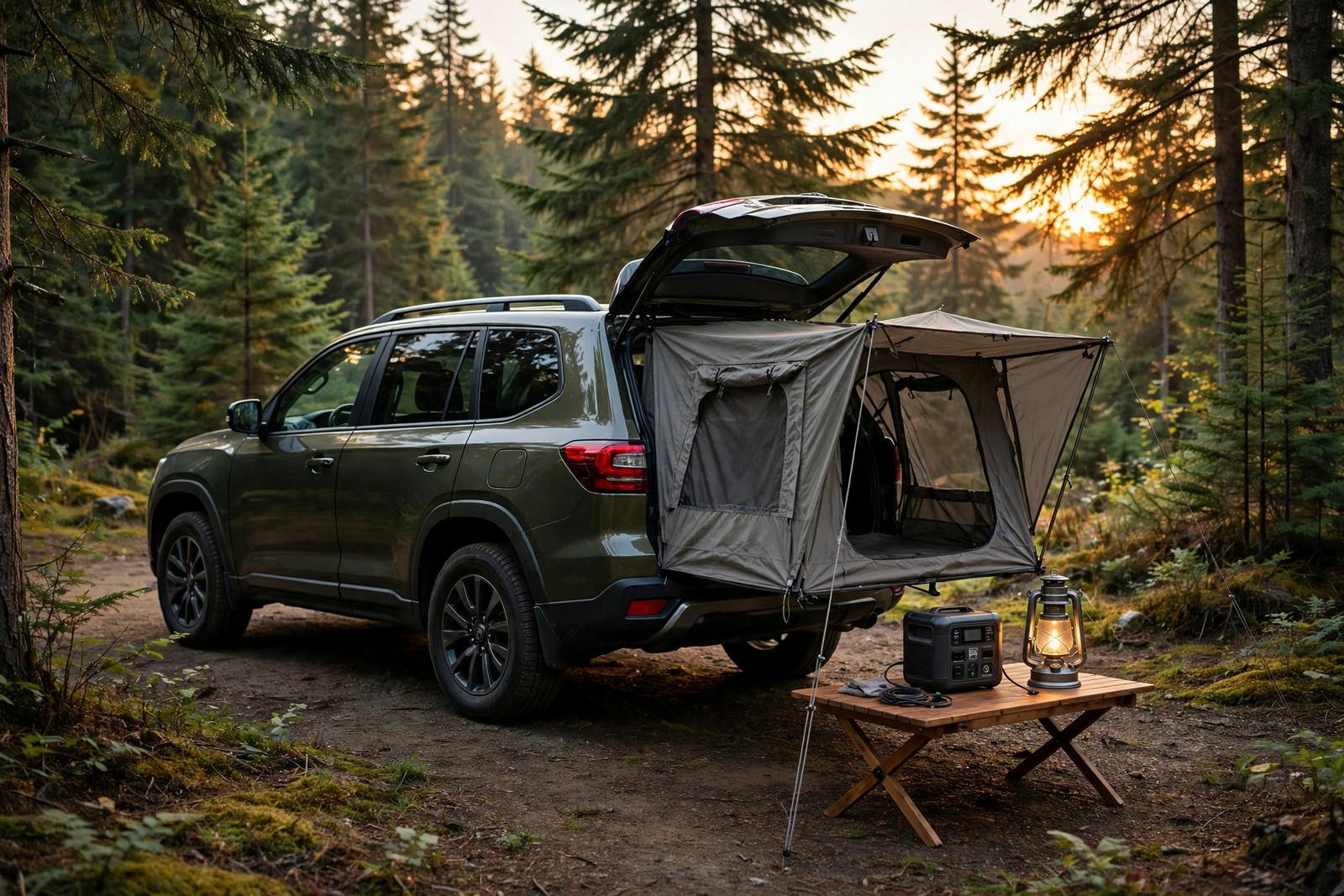
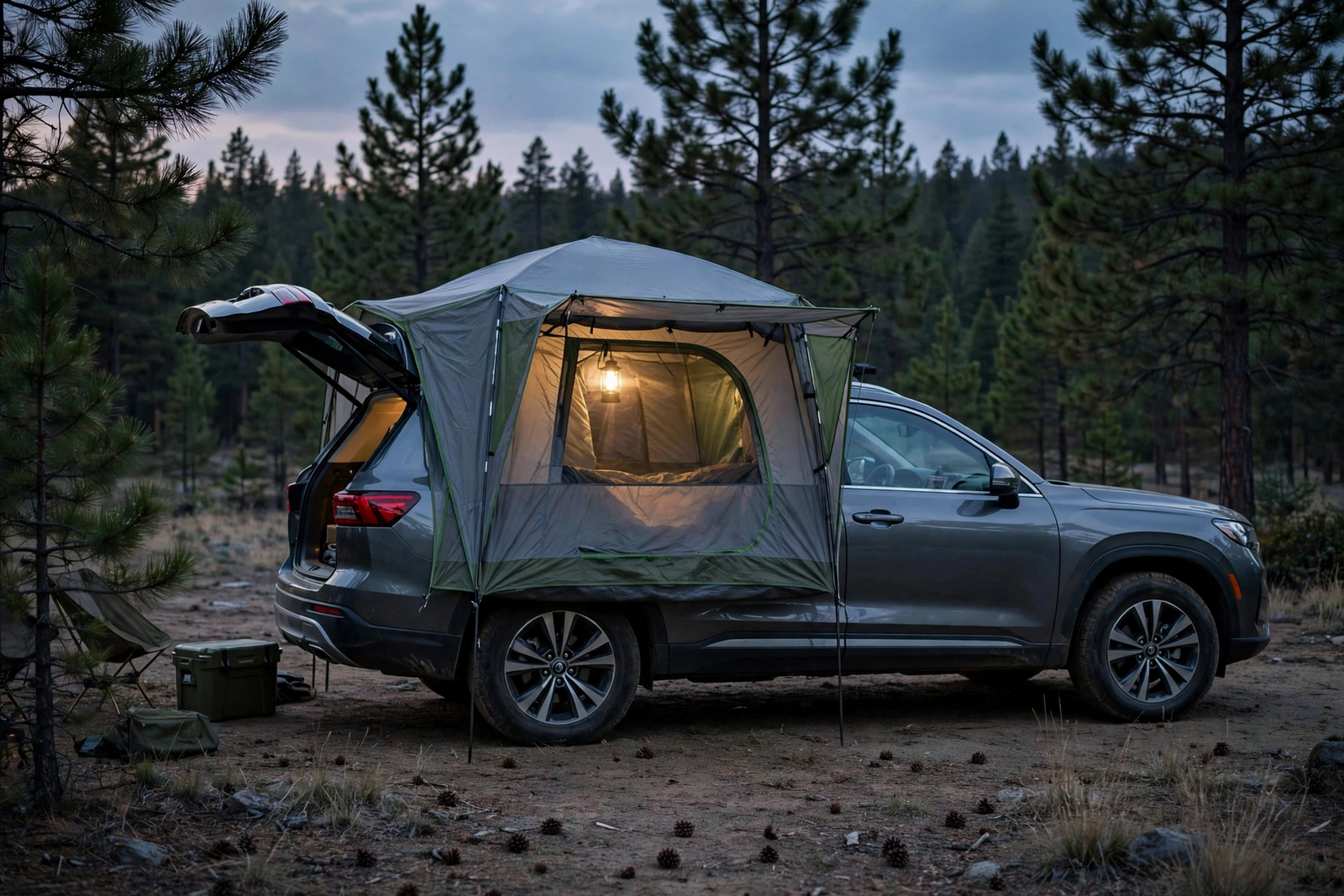
The Napier Backroadz SUV Tent is the shelter piece of this car camping setup: a ground tent, model 13100, that sleeves onto the back of a CUV, SUV, or minivan, giving you a 10 ft by 10 ft tent with over 7 ft of headroom that sleeps 5 adults, plus weather-resistant access to your cargo area from inside the tent. The sleeve is universal, made to fit all CUVs, SUVs, and minivans on the market, and the tent works as a stand-alone ground tent too, with a rainfly for water protection. Our best car tents article covers the wider set of car tents — this guide is about the SUV tent as one piece of a car camping setup, not a tent roundup, and it does not repeat that article’s tent coverage.
The SUV tent changes what a car camping trip feels like: it gives you room to stand, dress, and cook out of the rain, with your gear in the tent and your car as the bedroom. Set it up at home once before your first trip — the sleeve, the poles, and the rainfly all take longer the first time, and a campsite at dusk is the wrong place to learn. Check the sleeve against your own vehicle: the universal sleeve fits most SUVs, but a vehicle with barn doors or an unusual tailgate shape may not suit it, so read the listing for your vehicle before you order.
The Napier Backroadz SUV Tent is the pick in this guide for the car camper who wants room to stand and shelter beside the car — a 10 by 10 tent that turns the back of an SUV into a base camp. It fits most CUVs, SUVs, and minivans, but check your tailgate shape first, and practice the setup at home.
Napier Backroadz SUV Tent on Amazon: SUV tent, model 13100, 10 x 10 ft ground tent with over 7 ft of headroom, sleeps 5 adults, universal vehicle sleeve, rainfly included
Buy the Napier Backroadz SUV Tent if: you camp from an SUV, CUV, or minivan and want standing room and shelter beside the car. Check your tailgate shape against the listing first, and practice the setup at home.
Plan Your First Car Camping Trip
A first car camping trip should be short, close, and easy: one night, a campsite within an hour of home, and a site you have booked in advance. Pick a site that allows car camping — not every campground does, and some only allow it in marked pitches — and read the site’s rules on fires, quiet hours, and check-in times before you leave. Pack the night before, and load the car in the order you will need things: the mattress and sleeping bag last, so they come out first at the site. Our best car accessories for road trips article covers the wider set of road-trip gear if you want to build out the kit beyond this guide.
Tell someone where you are going and when you expect to be back, and check the weather for the night, not just the day: a car cools fast after dark, and a night that looks mild at noon can feel cold at 3 in the morning. Bring more water than you think you need, a headlamp, and a way to charge your phone — the Jackery station above covers the charging, and a full phone is your map, your flashlight, and your way to call for help. Arrive before dark: setting up a mattress, a tent, and a camp in daylight is far quicker than doing it in the dark.
Car Camping Sleeping Setup: Back Seat or Cargo Area
Car camping sleeping comes down to one choice: the back seat or the cargo area. The back seat suits a car or a smaller SUV: fold the front seats forward, lay the air mattress across the back seat, and sleep with your head at one door and your feet at the other. The cargo area suits an SUV or a wagon with folding rear seats: fold the seats flat, lay the mattress in the cargo area, and sleep lengthways. Whichever you choose, measure first — the mattress must fit the space you actually have, not the space you imagine, and a mattress that is too long will fold at the ends and leave you sleeping on a crease.
Sleeping in a car can be colder than sleeping in a tent, because the metal body sheds heat and the windows lose it fast. Bring a sleeping bag rated for the night’s low temperature, not the day’s high, and add a blanket underneath you as well as on top — the mattress insulates you from the seat, but a cold seat will still steal heat from below. Crack a window a finger’s width on each side for ventilation, and keep a small towel handy for condensation: a car full of breath fogs its windows overnight, and wiping them in the morning is part of the routine.
Car Camping Power Setup: Phones, Lights and the Fridge Question
Power at camp is a budget, not a wish list. Add up what you need: a phone charge, a camp light, and a laptop charge will fit inside the Jackery Explorer 300’s battery — 292Wh per the Amazon listing — with room to spare, and a small fan will too. What will not fit is anything that heats: a kettle, a heater, or a hair dryer will drain the station in minutes or trip its limit, so leave those at home. Charge the station fully before you leave, and top it up from the car on the drive — the car charger cable is the cheapest way to top it up on the drive.
The fridge question comes up on every first trip, and the honest answer is that a portable fridge is a second purchase, not a first. A cool box with ice does the same job for a weekend, and it costs nothing to run. If you do move to a powered fridge later, read our best RV refrigerators article first — a fridge is the one piece of gear that can drain a power station overnight, and the article covers the sizes and the power draw. For a first trip, the station is for phones, lights, and a laptop, and the cool box is for food.
Car Camping Cooking and Storage Setup
Cooking on a car camping trip should be simple: a single-burner stove, one pot, and food that cooks in that pot. Cook outside the car, never inside it — a stove inside a car is a fire risk and a carbon monoxide risk, and a tent is no better. Set the stove on flat ground away from the car and the tent, keep the fuel canister upright, and never leave a lit stove unattended. Wash up away from the sleeping area, and store food in the car overnight, not in the tent: food in a tent invites animals, and food in a locked car is far less likely to.
Storage is the other half of the setup. Pack in stackable boxes rather than loose bags: one box for cooking, one for sleeping, one for clothes, and one for the odds and ends. Label the lids, and load the boxes in the order you will need them — cooking box on top at dinner, sleeping box on top at bedtime. Keep the driver’s seat clear and the keys in the same place every night, so you can drive away in the dark if you need to. A tidy car is a safe car: loose gear becomes a projectile if you have to brake hard on the way home.
Car Camping Safety: Ventilation, Carbon Monoxide and Where You Park
The safety rules for car camping are short, and they are not negotiable. Never run the engine in an enclosed space, and never sleep with the engine idling: carbon monoxide is colorless and odorless, and it can build up inside a car faster than you would expect. A car is not a ventilated room, and an idling engine is not a heater — if you are cold, add a blanket, not exhaust. The same rule covers heaters and stoves: never run a fuel-burning heater or stove inside a car or a tent, and never cook inside either.
Park where you are allowed to park. Camp only on sites that allow car camping, or on land where you have permission — never on a roadside, a parking lot, or a roadside pull-off unless it is marked for overnight stays, and never on private land without asking. Lock the doors when you sleep, keep the keys within reach, and keep a window cracked a finger’s width for fresh air. Check the weather before you sleep and again in the morning: a car is a poor shelter in a storm, and if the forecast turns, drive to a building rather than riding it out in a car.
Car Camping Mistakes to Avoid
The most common car camping mistake is not measuring: a mattress that does not fit your back seat, a tent sleeve that does not fit your tailgate, and a sleeping bag rated for a warmer night than the one you get. The second mistake is arriving after dark — setting up a mattress, a tent, and a camp in the dark takes much longer and goes wrong far more often. The third is cooking or heating inside the car or the tent, which is a fire risk and a carbon monoxide risk, and the fourth is sleeping with the engine idling for warmth, which is the same risk in a different form.
The fifth mistake is overpacking power: bringing a heater, a kettle, or a hair dryer for a 292Wh station (per the Amazon listing), and draining it before the first night is over. The sixth is underpacking water — a car camping trip needs more water than you think, for drinking, cooking, and washing, and a campsite tap is not always nearby. And the seventh is not testing the gear at home: inflate the mattress, pitch the tent, and charge the station before your first trip, because a campsite at dusk is the wrong place to learn how any of them works.
The Verdict
Car camping is one of the cheapest ways to spend a night outdoors, and the setup is three pieces of gear and a short list of rules. The Umbrauto air mattress is the sleeping piece: a back-seat bed with a pump and pillows in the box, for sleeping in the car itself. The Jackery Explorer 300 is the power piece: a compact station for phones, lights, and a laptop, for power away from any outlet. And the Napier Backroadz SUV Tent is the shelter piece: a 10 by 10 tent that sleeves onto the back of an SUV, for standing room and shelter beside the car.
Whichever pieces you buy, measure first, test at home, arrive before dark, and never run an engine, a heater, or a stove inside a car or a tent. For the wider set of car tents beyond the Napier, our best car tents article covers the full roundup.
Frequently Asked Questions
Can I sleep in my car while car camping?
Yes — that is what car camping is. Fold the rear seats or use the back seat, lay an air mattress like the Umbrauto across it, and sleep with a sleeping bag rated for the night’s low temperature. Crack a window a finger’s width on each side for ventilation, lock the doors, and keep the keys within reach. Measure your back seat or cargo area before you buy a mattress, and test the setup at home before your first trip.
Is it safe to run the car engine while sleeping in the car?
No — never sleep with the engine idling, and never run the engine in an enclosed space. Carbon monoxide is colorless and odorless, and it can build up inside a car faster than you would expect. A car is not a ventilated room, and an idling engine is not a heater — if you are cold, add a blanket. The same rule covers fuel-burning heaters and stoves: never run one inside a car or a tent.
What power station do I need for car camping?
A compact station like the Jackery Explorer 300, with a 292Wh battery per the Amazon listing, a 300W AC output, and a 100W USB-C port, covers phones, lights, and a laptop for a weekend trip. Add up what your gear needs before you leave, and check that the total fits inside the station’s capacity with room to spare. Anything that heats — a kettle, a heater, or a hair dryer — will drain a compact station fast, so leave those at home.
Do I need a tent for car camping?
Not for sleeping — you sleep in the car. A tent like the Napier Backroadz SUV Tent adds standing room, shelter from rain, and a place to cook and dress beside the car, and it sleeves onto the back of most CUVs, SUVs, and minivans. If you camp from a small car, skip the tent and sleep in the car; if you camp from an SUV and want room to stand, the tent is worth it. Practice the setup at home before your first trip.
Where am I allowed to go car camping?
Camp only on sites that allow car camping, or on land where you have permission. Not every campground allows it, and some only allow it in marked pitches, so read the site’s rules before you book. Never camp on a roadside, a parking lot, or a roadside pull-off unless it is marked for overnight stays, and never camp on private land without asking. Tell someone where you are going and when you expect to be back.
What should I pack for my first car camping trip?
An air mattress that fits your back seat or cargo area, a sleeping bag rated for the night’s low temperature, a portable power station for phones and lights, water, a headlamp, food that cooks in one pot, and a single-burner stove for cooking outside the car. Pack in stackable boxes — one for cooking, one for sleeping, one for clothes — and load them in the order you will need them. Test the mattress, the tent, and the station at home before you leave.