Thule Roof Bars for Roof Rails: WingBar Evo Guide
If you are shopping for thule roof bars for roof rails, the first thing to know is that the best-known Thule bars are only half the purchase. The Thule WingBar Evo is a pair of aerodynamic aluminum load bars, and it is the part most people picture when they think of roof bars. But on its own it cannot attach to your car at all. It needs feet that grip your rails and a fit kit made for your exact vehicle, and buying the bars first without those parts is the most common and most expensive mistake in this category.
This guide explains the whole system honestly: what the WingBar Evo is, what else you must buy, how to tell raised rails from flush rails, how to pick the right bar length, and what you can actually carry once it is all fitted. Every specification below comes from Thule’s listings or retailer spec sheets for the exact part numbers named.
Table of Contents
As an Amazon Associate I earn from qualifying purchases.
Quick Picks: Thule WingBar Evo Roof Bars
| Pick | Product | Best For | Check Price |
|---|---|---|---|
| Overall Winner | Thule WingBar Evo 150 (60-inch), Aluminum — 2-Pack | Most SUVs and wagons with raised rails; widest bars, most accessory room | Check Price on Amazon |
| Best Budget | Thule WingBar Evo 135 (53-inch), Black — 2-Pack | Mid-size cars and crossovers; the shorter bar most buyers actually need | Check Price on Amazon |
| Premium Pick | Thule WingBar Evo 150 (60-inch), Black — 2-Pack | Full-width bars in a stealth black finish to match dark rails and trim | Check Price on Amazon |
Remember: none of these is a complete roof rack — each is the bars only. You still need the foot pack and the fit kit.
Thule Roof Bars for Roof Rails: What You Actually Get in the Box
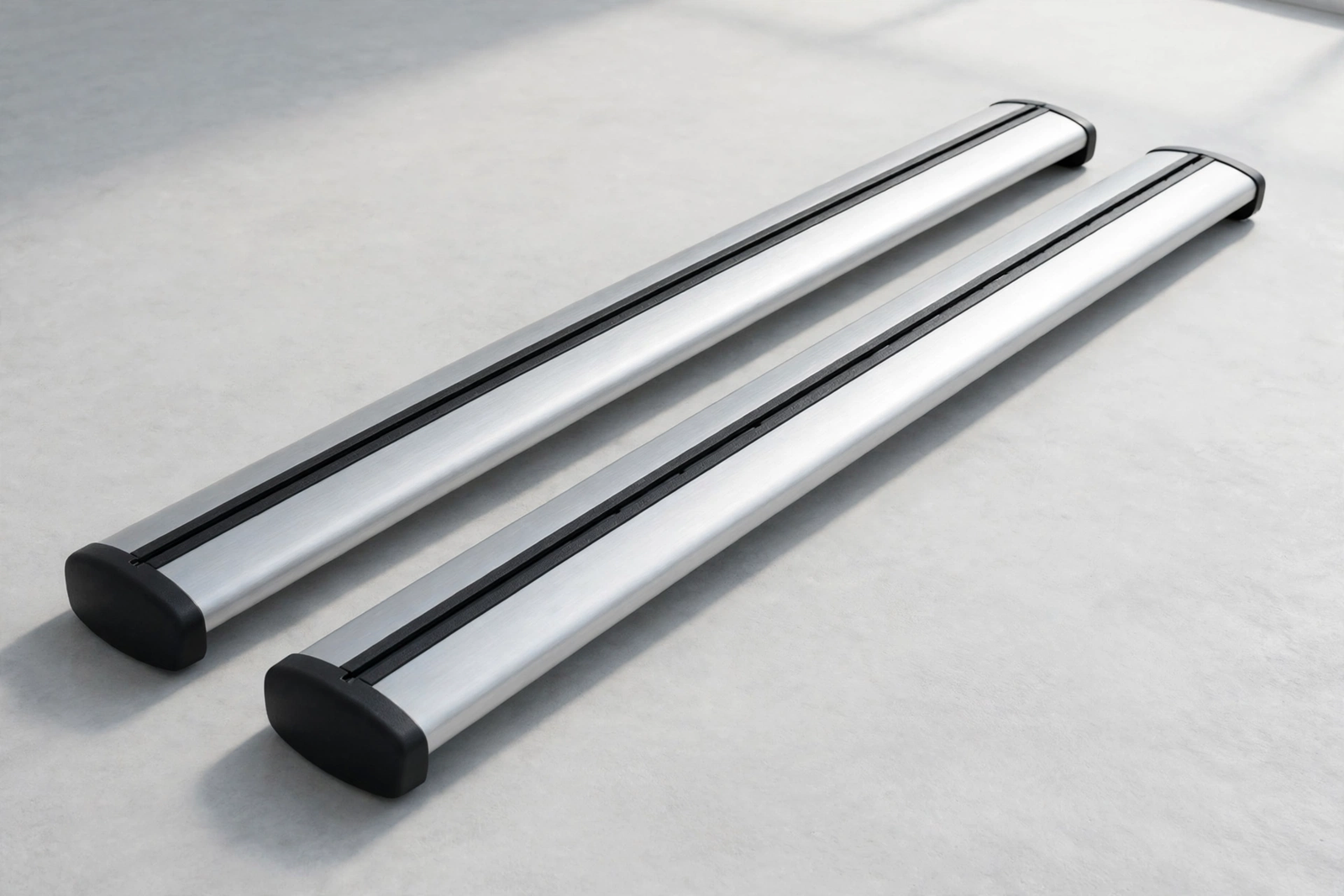
Here is the honest point this whole article turns on. Thule roof bars for roof rails are sold as load bars, not as a roof rack. The WingBar Evo box holds two aluminum load bars with a T-track channel, rubber strip, and SwingBlade end caps — and nothing that connects the bars to your car.
A complete system has three parts, sold separately so the same bars can fit many vehicles. First, the load bars. Second, a foot pack: for raised roof rails, the Thule Evo Raised Rail foot pack, part number 710410 — four feet with rubber lining that protects the rails, plus the Thule One-Key locks that secure the rack. Third, a vehicle-specific fit kit of adapters and pads matched to your exact year, make, and model. Check Thule’s Buyer’s Guide for which foot pack and kit your vehicle needs. Confirm the part number on the listing (711500 for the 150 cm aluminum bars, 711520 for the 150 cm black bars, 711420 for the 135 cm black bars) and that it is the 2-pack.
Thule Evo Raised Rail Foot Pack (710410) on Amazon: the four feet that connect WingBar Evo bars to raised roof rails, with One-Key locks.
Raised Rails vs Flush Rails vs Fixed Points
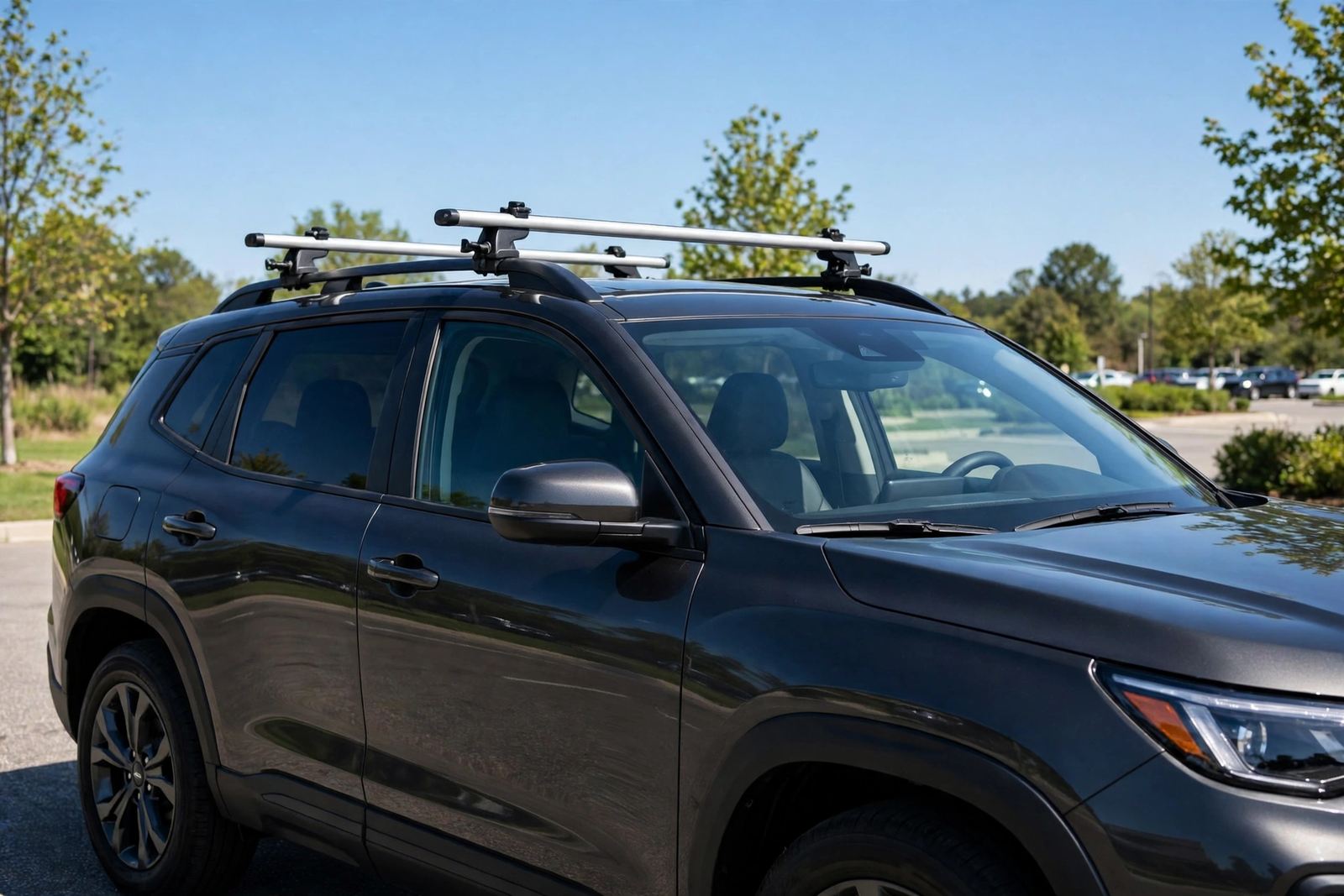
Your roof decides which foot pack you need, so identify it before you shop. Raised rails are the classic type: two metal rails running front to back with a gap underneath, so you can slide your fingers between the rail and the roof. The Evo Raised Rail foot pack (710410) is made for them: its feet wrap around the rail and clamp down, with rubber lining to protect the finish.
Flush rails sit tight against the roof with no gap underneath, like a slim metal strip molded into the roofline. You cannot wrap a clamp around them, so they need Thule’s Evo Flush Rail foot pack instead — raised-rail feet cannot grip flush rails, and the rack would not be secure. Fixed points are small covered mounting points in the roof with no rails at all; they use the Evo Fixpoint foot pack, while a bare roof uses the Evo Clamp foot pack, which grips the door frame.
The ten-second test: try to pass a finger under the rail — if it goes under, you have raised rails.
How to Measure and Pick the Right Bar Length
WingBar Evo bars come in five lengths: 108 cm (43 in), 118 cm (47 in), 127 cm (50 in), 135 cm (53 in), and 150 cm (60 in). The length you need is set by your car, not by how much you want to carry. Too short and the feet cannot sit securely; too long and the bars stick out, catch wind, and look wrong.
Measure between the outside edges of your two roof rails, plus the overhang the feet need on each side. Thule’s Buyer’s Guide gives a recommended bar length for each vehicle, and that recommendation is worth following over a tape-measure guess. As a rough guide, 150 cm suits wide SUVs and wagons, 135 cm suits mid-size crossovers, and 127 cm and shorter suit compact cars. A longer bar gives more T-track room, so a roof box and a bike carrier can sit side by side. Buy the length your vehicle calls for, not the longest bar in the range.
What the WingBar Evo Is Made Of
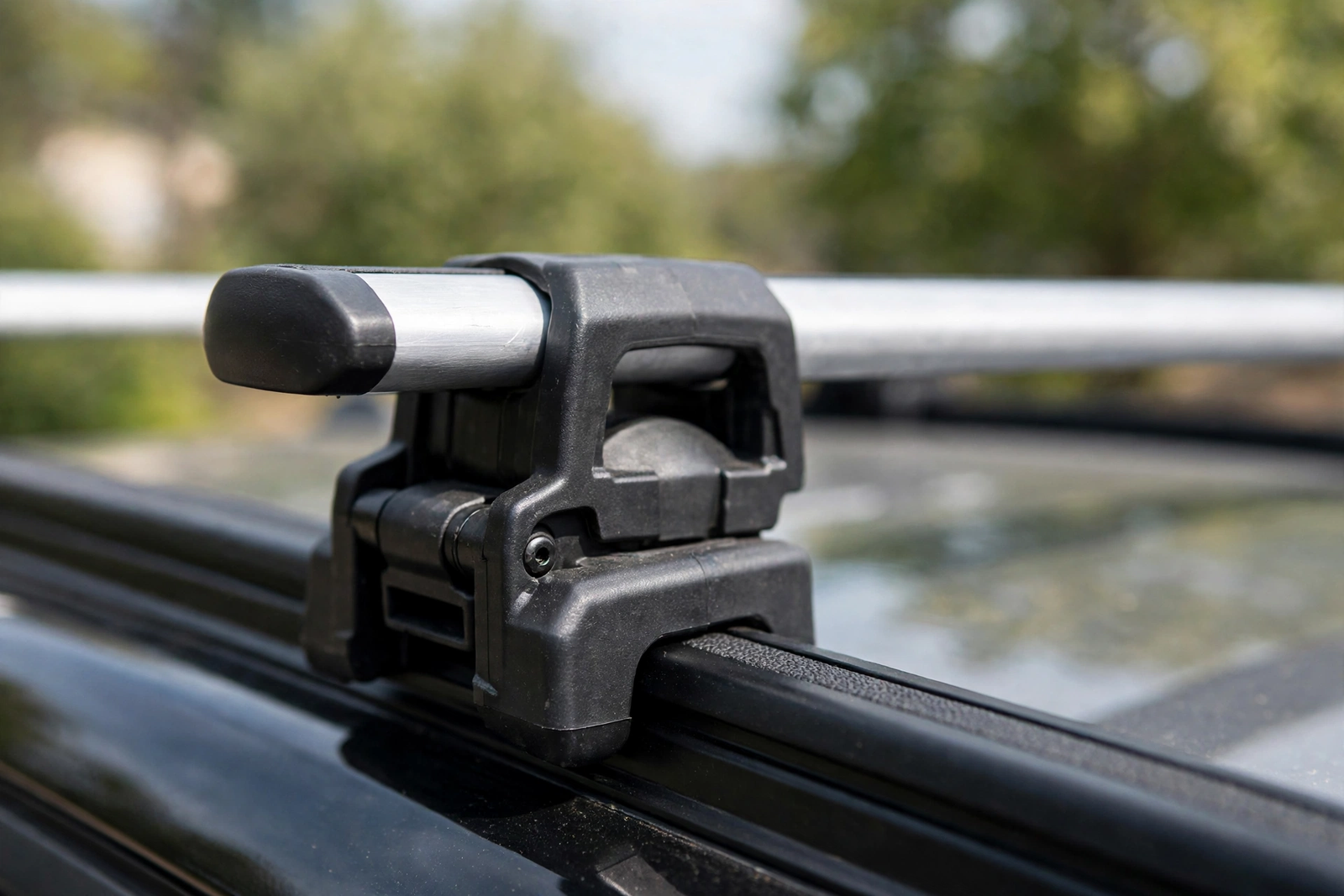
The WingBar Evo is an aluminum bar with a wing-shaped cross-section: the profile lets air flow over the bar, which is why Thule calls it a premium aerodynamic load bar for an exceptionally quiet ride. Inside is Thule’s BoxBeam structure, reinforcement that carries the rated load without the weight of a solid bar.
Two details matter in daily use. WindDiffuser technology, a textured strip that disturbs airflow, reduces noise and drag. Keep the T-track rubber strip seated and the end caps closed — a missing strip makes the bars whistle. The T-track itself is the channel along the top of each bar; accessories slide into it and lock down without clamps around the bar, leaving the full length usable. The bars are rated for a maximum load of 100 kg (220 lb) — but that is the bars’ rating, not your car’s. Your vehicle’s lower roof limit governs, and it covers bars, feet, carriers, box, and cargo together.
Installation Basics
Installation is a driveway job, but not a no-tools, no-reading one. The foot pack includes a torque limiter key that clicks when the feet are tightened to the correct torque — use it, and follow the torque instruction in the manual rather than tightening by feel. Overtightened feet can damage rails; undertightened feet can shift.
The usual sequence is: slide the feet onto the bars, set the bar spacing to match your rails, place the assembly on the roof, then tighten the feet and fit the vehicle-specific kit parts. Measure the spacing twice before tightening — the bars must sit square, with equal overhang on both sides. After the first short drive, check every foot again: racks settle under vibration, and a foot that felt tight in the driveway can need a small re-tightening after the first miles. If Thule’s Buyer’s Guide lists no kit for your vehicle, that is a real answer, not a gap to work around.
Noise, Fuel Economy, and Everyday Driving
Roof bars add wind noise and drag — every roof rack does — and the honest question is how much. The WingBar Evo’s wing profile and WindDiffuser strip are designed to keep both low, and Thule describes the result as an exceptionally quiet ride with a reduced impact on fuel economy compared with square bars. No decibel figure is published, so the claim is aerodynamic, not measured.
Three things decide how loud your bars are: the T-track strip (a missing strip whistles), what is mounted on them (an empty bar is quiet; a box or bike carrier adds its own noise), and speed, since noise grows quickly above highway speed. The simplest way to keep the cost down is to take them off when you are not using them — removal takes about ten minutes once you have done it. Measure garage clearance with the rack fitted: bars add roughly three inches, a box or carrier far more.
What Fits on the Bars
Most Thule carriers and many third-party ones mount via the T-track or by clamping around the bar — check each accessory’s WingBar Evo compatibility first, since a carrier made for square bars may need an adapter.
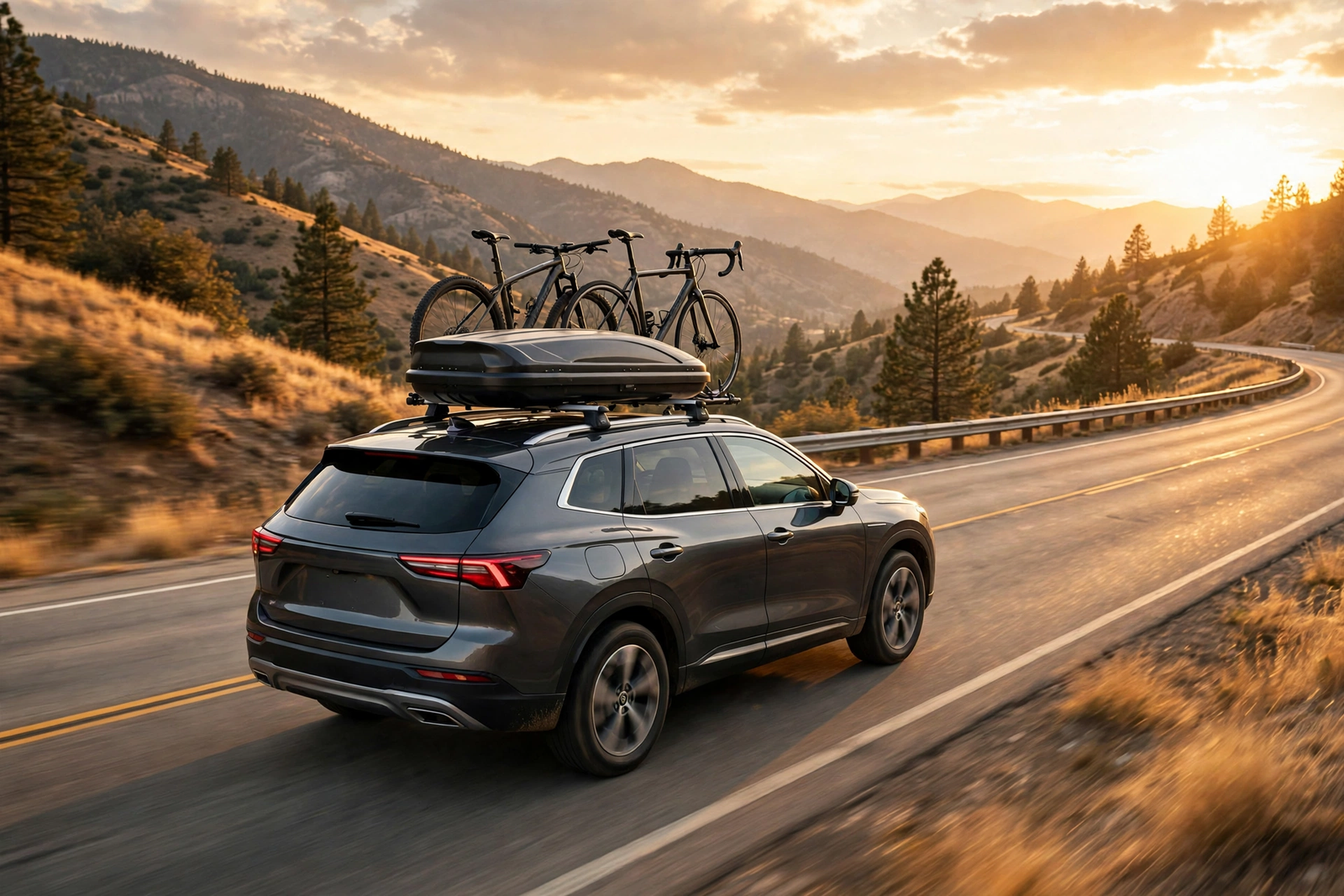
Bike carriers are the most common load: upright carriers hold the bike by the frame or fork, one or two per bar pair depending on bar length and bike width. Check the combined weight against your roof limit. Roof boxes clamp or bolt to both bars and are the best answer for luggage and camping gear that must stay dry; a box’s weight counts against the limit, and its length must fit between the bars. Kayak carriers hold kayaks on cradles or J-shaped arms, with bow and stern tie-downs as standard practice. The same rule covers cargo baskets and ski carriers: accessory weight plus cargo must stay under the vehicle’s roof limit, and the load must be tied down so nothing shifts at highway speed.
Thule WingBar Evo: Pros and Cons
Pros: aerodynamic wing profile with WindDiffuser for a quieter ride than square bars; strong BoxBeam aluminum construction rated to 100 kg (220 lb); T-track the full length of the bar, so accessories mount without clamps and use all the available space; five lengths and two finishes, so the same bar family fits compact cars to wide SUVs; the bars can move to another vehicle later with a new foot pack and fit kit.
Cons: the bars alone are not a roof rack — the foot pack and fit kit are separate purchases that add substantially to the total cost; the modular system confuses first-time buyers, and ordering the wrong foot pack is easy; the T-track whistles if the rubber strip is missing or lifted; the 100 kg rating is higher than most vehicles’ roof limits, so the headline number rarely governs; and there is no published noise figure, so quietness is a design claim rather than a measured one.
The Verdict
Thule roof bars for roof rails are a three-part purchase, and the WingBar Evo bars are only the first part. Buy the 150 cm aluminum bars for a wide SUV or wagon with raised rails. Buy the 135 cm black bars for a mid-size crossover, where the shorter bar covers the rails without sticking out. Buy the 150 cm black bars for full width in a finish that disappears against dark trim. Whichever you choose, order the Evo Raised Rail foot pack (710410) and your vehicle’s fit kit in the same order, and confirm the system against Thule’s Buyer’s Guide before fitting. The bars are excellent. The system around them is what makes them work — and what makes them safe.
For the rest of the kit, see our road trip accessories roundup, our car maintenance checklist, and our SUV trunk organizer guide.
Thule WingBar Evo 150 Aluminum on Amazon: 150 cm (60-inch) 2-pack, part number 711500, maximum load 100 kg (220 lb).
Thule WingBar Evo 135 Black on Amazon: 135 cm (53-inch) 2-pack, part number 711420.
Thule WingBar Evo 150 Black on Amazon: 150 cm (60-inch) 2-pack, part number 711520.
Frequently Asked Questions
Do Thule roof bars attach directly to roof rails?
No. WingBar Evo bars are load bars only and cannot attach to a car by themselves. A complete system needs the bars, a foot pack such as the Thule Evo Raised Rail foot pack (710410) for raised rails, and a vehicle-specific fit kit. Buy all three parts, and confirm them against Thule’s Buyer’s Guide for your exact year, make, and model.
What size Thule roof bars do I need?
WingBar Evo bars come in 108, 118, 127, 135, and 150 cm lengths. The right length is set by the distance between your roof rails and the overhang the feet need. Use Thule’s Buyer’s Guide for your vehicle rather than guessing: as a rough guide, 150 cm suits wide SUVs and wagons, 135 cm suits mid-size crossovers, and 127 cm and shorter suit compact cars.
Will WingBar Evo bars fit my car?
They fit if Thule lists a foot pack and fit kit for your exact vehicle. Check Thule’s Buyer’s Guide with your year, make, and model before ordering. Raised rails use the Evo Raised Rail foot pack (710410); flush rails need the Evo Flush Rail foot pack; fixed points need the Evo Fixpoint foot pack; and a bare roof needs the Evo Clamp foot pack.
How much weight can Thule roof bars carry?
The WingBar Evo bars are rated for a maximum load of 100 kg (220 lb). Your vehicle’s own roof load limit is usually lower and always governs — check your owner’s manual. The limit includes everything on the roof: bars, feet, fit kit, carriers, box, and cargo together.
Are Thule WingBar Evo bars noisy?
They are designed to be quiet, with a wing-shaped profile and WindDiffuser technology that disturbs airflow to reduce noise and drag. No decibel figure is published, so quietness is a design claim, not a measured result. Keep the T-track rubber strip seated and the end caps closed — a missing strip makes the bars whistle — and expect some noise at highway speed, as with any roof rack.
Can I leave the bars on my car all the time?
Yes, but taking them off when you are not using them saves fuel and noise, and removal takes about ten minutes once you have done it. If the bars stay on, keep the T-track strips seated, the end caps closed, and the locks locked, and check the feet for tightness after the first drive and whenever you load the rack after it has sat empty.