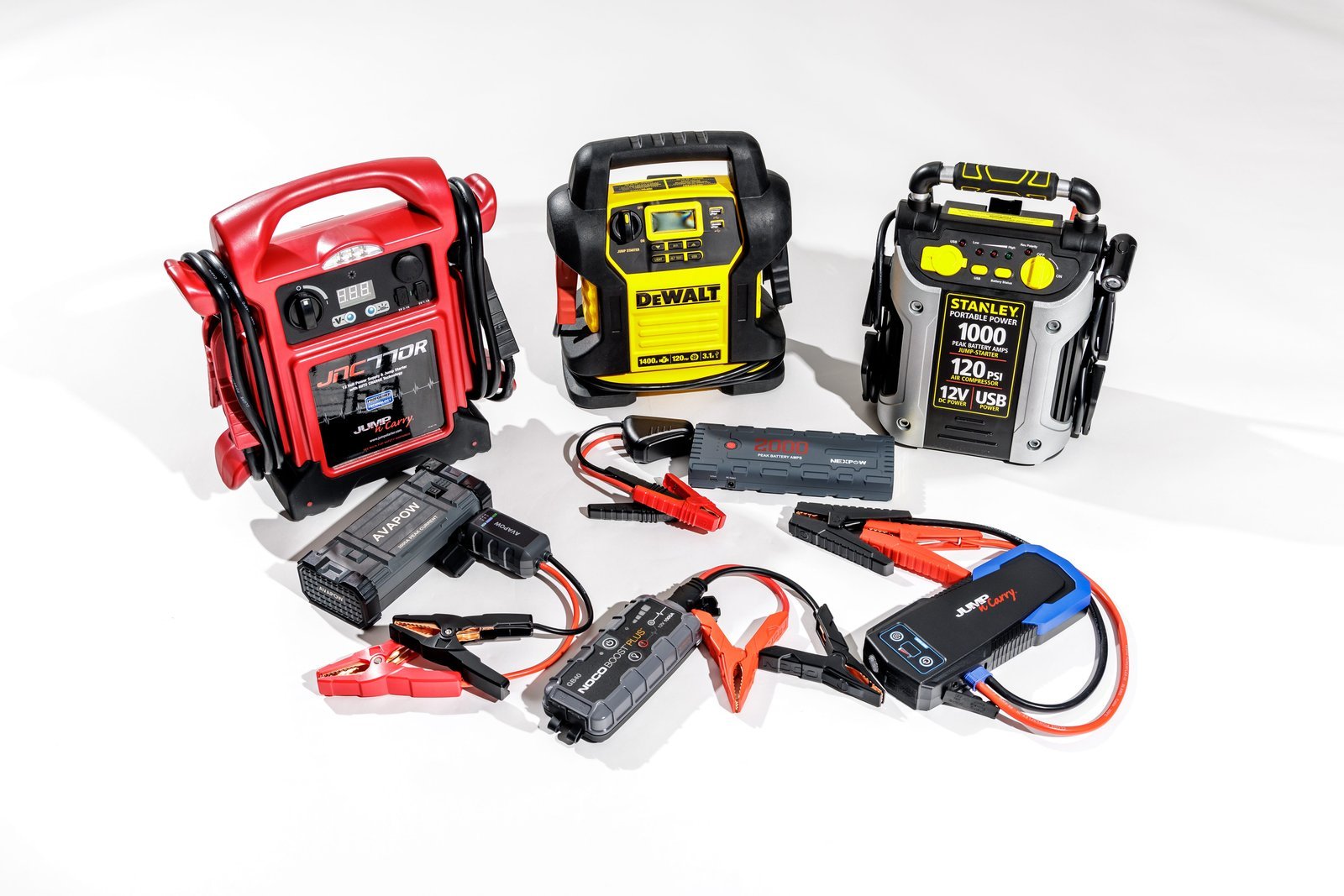
A good lithium jump starter delivers 1,000 to 2,000 peak amps for most gas cars and light diesels. The best portable car jump starter for daily driving is a compact lithium unit rated around 1,500 peak amps. This guide covers the real specs that matter, safe connection steps, and the limits you’ll read on your own battery’s label.
What a jump starter actually does
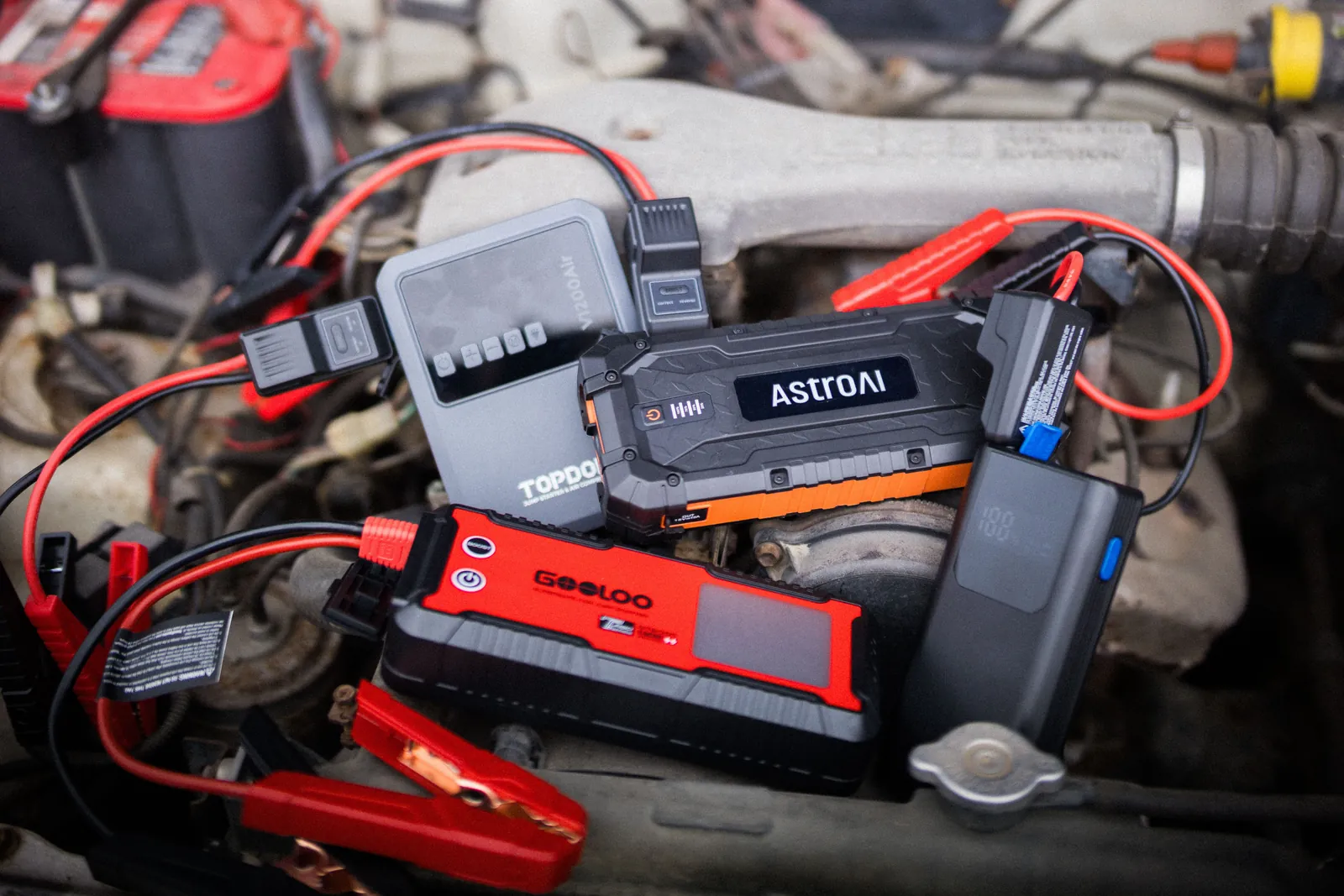
A portable jump starter is a small battery pack with heavy cables. It sends a short burst of power to a dead car battery so the engine can turn over. You don’t need another car or long jumper cables to use one.
How to jump start a car safely
Follow these steps in order every time. Reversing them can damage your car’s electronics.
- Turn off the ignition and all lights, radios, and chargers.
- Place the jump starter on a flat surface away from the battery.
- Connect the red clamp to the positive terminal marked with a plus sign.
- Connect the black clamp to an unpainted metal part of the engine block.
- Turn on the jump starter if it has a power switch.
- Try starting the engine for no more than 3 seconds.
- If it doesn’t start, wait 60 seconds before trying again.
- Once running, remove the black clamp first, then the red one.
If the engine cranks but won’t catch after three tries, stop. Pushing it further can overheat the starter motor.
Jump starter numbers you need
These figures apply to 12-volt systems in standard passenger vehicles.
| Situation | What to use | How long | What to watch for |
|---|---|---|---|
| Small gas car (under 3.0L) | 600–1,000 peak amps | 1–3 second crank | Clamps getting warm |
| Large gas SUV (up to 6.0L) | 1,000–1,500 peak amps | 2–4 second crank | Unit shutting off early |
| Light diesel truck (up to 4.0L) | 1,500–2,000 peak amps | 3–5 second crank | Slow cranking speed |
| Cold weather (below 32°F) | Add 30% more amps | Same crank time | Sluggish engine turnover |
| Completely dead battery (0V) | Any rated unit | May take 2 tries | No dashboard lights at all |
Match the unit’s rating to your engine size.
Getting reliable starts every time
The clamps do more work than the battery inside the case.
Temperature directly affects lithium battery output. A unit rated at 1,000 amps in summer might only deliver 700 amps in freezing weather. Storing it where it stays warmer means it’s ready when you actually need it.
Check the charge level every three months. Leaving it empty for too long damages the cells permanently.
Troubleshooting jump start problems
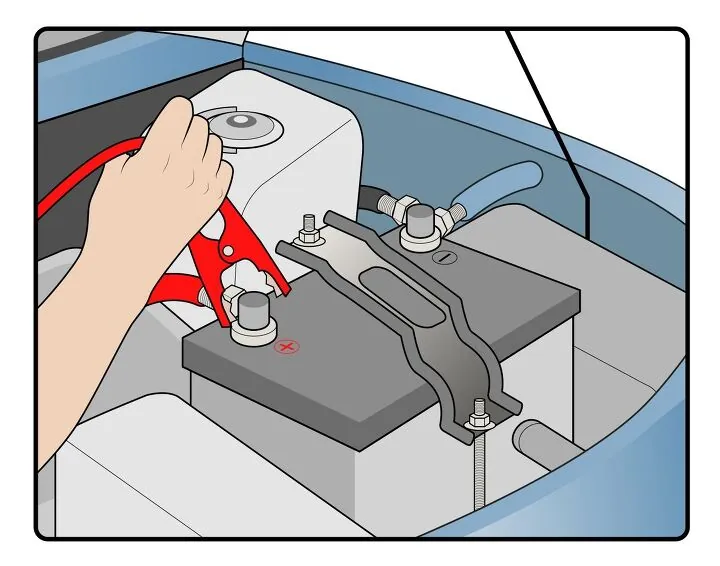
When things go wrong, the cause is usually simple.
| What you notice | What it usually means | What to do first |
|---|---|---|
| Clicking sound, no crank | Not enough power reaching starter | Tighten clamps on terminals |
| Unit beeps when connected | Reverse polarity detected | Swap red and black clamps |
| Engine turns slowly | Battery deeply drained or cold | Wait 60 seconds, try again |
| Jump starter gets hot | Internal resistance is too high | Stop immediately, let it cool |
| Nothing happens at all | Unit is out of charge | Plug into wall charger |
If tightening the clamps doesn’t stop the clicking, the battery might have a dead cell.
Safety rules for lithium packs
Lithium-ion batteries store a lot of energy in a small space. Never use a jump starter if the plastic case is cracked or swollen.
Don’t leave the unit plugged into your car’s 12-volt outlet while driving.
Keeping the battery pack ready
Charge the unit fully when you first buy it.
If the indicator lights show less than half charge, plug it in. Check your specific model’s manual for its recommended storage intervals.
When a jump starter won’t work
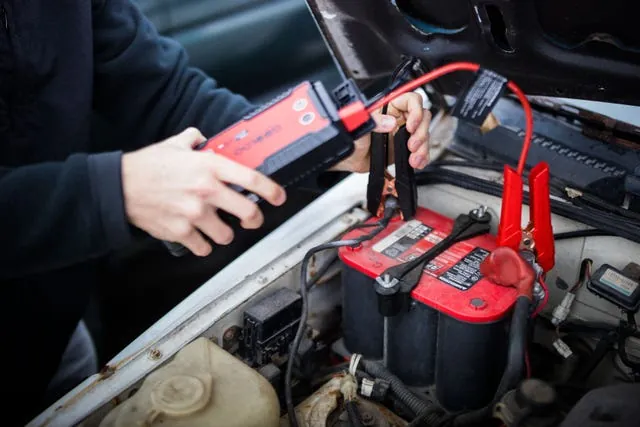
If your car makes a grinding noise when you turn the key, the starter motor is likely broken.
For vehicles with 24-volt systems, like heavy commercial trucks, standard 12-volt packs are useless.
If the battery leaks acid or smells like rotten eggs, don’t connect anything.
Frequently asked questions
How many peak amps do I need to jump start my car?
You need 600 to 1,000 peak amps for most four-cylinder or V6 gas engines. For V8 engines or light diesels, aim for 1,500 to 2,000 peak amps. Check your engine size first.
Can I jump start a car in the rain?
Yes, you can use it in light rain because the clamps are insulated. Don’t submerge the battery pack in water or use it during heavy flooding. Keep the connections as dry as possible.
How long does a portable jump starter last?
A lithium jump starter has a limited lifespan before the cells degrade. The exact lifespan depends on how often you use it and how well you store it. Heat shortens this time.
Is it safe to leave it in my car all year?
It’s fine in mild weather, but extreme heat damages lithium batteries quickly. Don’t leave it in a closed car during summer when temperatures pass 100°F. Bring it inside during heat waves.
Why does my jump starter beep when I connect it?
A continuous beep usually means the clamps are on the wrong terminals. Disconnect them immediately. Swap the red clamp to positive and the black clamp to negative ground.
What happens if I connect the clamps backwards?
Modern units have reverse polarity protection and will simply beep without sending power. Older or cheaper models might spark, blow a fuse, or damage your car’s computer. Always double-check the symbols.
Can I use it to charge my phone too?
Yes, almost all modern units have USB ports for charging phones or tablets. Doing this drains the battery slightly. Make sure you still have enough charge left to start your car.
Conclusion
Keep the unit charged, store it out of extreme heat, and match the amp rating to your engine size. A small pack handles daily commuting fine, but larger engines demand higher output. Read the labels on both your car battery and the jump starter before you ever need them in an emergency.