A usb c fast car charger is only worth buying if it can keep up with the devices you actually carry, and most of them cannot. A typical two-port charger tops out at 20 or 30 watts: fine for one phone, useless for a laptop, a tablet, and a passenger’s phone at the same time. The Anker 167.5W Max 3-Port USB-C Car Charger is built for the harder job. It plugs into the car’s 12V socket and delivers up to 167.5 watts across three ports — a 100-watt USB-C port strong enough for a laptop, a 45-watt USB-C port for a phone or tablet, and a 22.5-watt USB-A port for everything older. This review covers the wattage split, what it can charge, and how it compares with the cheaper Anker most drivers know.
Anker sells this charger as the Nano Car Charger (167.5W, 3 Ports), model A2737; the Amazon listing linked here carries model number B2737, the same charger. Either way: 167.5 watts total, two USB-C ports plus one USB-A port, and a 3.3-foot USB-C to USB-C cable in the box. The deciding number is the 100-watt port. If your daily load is a laptop plus a phone, this charger covers both; if it is one phone, it is more charger than you need, and the alternatives section below points you at the cheaper answer.
As an Amazon Associate I earn from qualifying purchases.
| Pick | Product | Why it stands out | Check Price |
|---|---|---|---|
| Overall Winner | Anker 167.5W Max 3-Port USB-C Car Charger (A2737 / B2737) — 100W USB-C port for laptops, 45W USB-C port, 22.5W USB-A port, cable included | Three devices at once, including a laptop, from one 12V socket | |
| Best Budget | Anker PowerDrive III Duo 40W USB-C Car Charger (A2724) | Twin 20W PowerIQ 3.0 ports; the trusted-brand pick for two phones | |
| Premium Pick | LISEN 15W MagSafe Wireless Car Mount Charger | Dock and charge in one motion; magnetic mount plus 15W wireless charging for iPhones |
Table of Contents
What the Anker 167.5W Charger Is
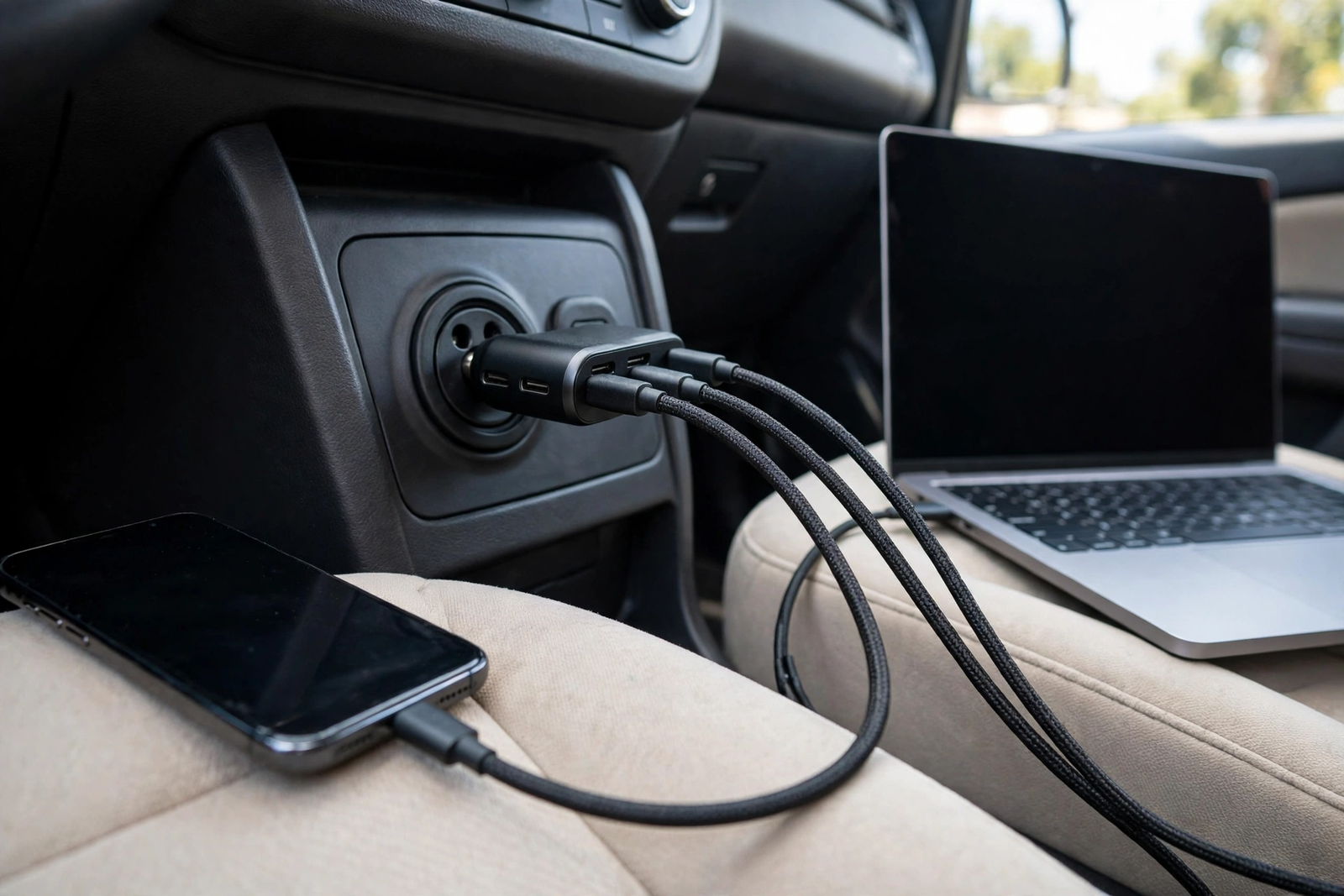
The Anker 167.5W is a three-port charger that plugs into the car’s 12V socket and turns one outlet into a charging station for a laptop, a phone, and a third device at the same time. Two USB-C ports and one USB-A port sit on its end face, and Anker calls it ultra-compact. The listing dimensions put it at about 1.4 inches square and just over 3 inches long, weighing under 2 ounces, so it sits in the socket without dominating the centre console. There is nothing to set up: plug it in and each port negotiates the fastest safe speed with the device attached.
The box includes the charger, a 3.3-foot USB-C to USB-C cable, a welcome guide, and an 18-month warranty — and the cable is the practical detail, because the 100-watt port needs a cable rated for the wattage it carries. The naming is the one shopping trap: Anker’s own store calls it the Nano Car Charger (167.5W, 3 Ports) under model A2737, while the Amazon listing shows model number B2737. Reviewers report they are the same charger, with the B2737 listing the one that includes the cable. The listing linked here is the B2737 listing (ASIN B0CZ7BL16W). Check the model number and the 167.5W figure before you buy.
Power Output and the Port Split
The port split is the whole story, and it is simple. USB-C1 delivers up to 100 watts, USB-C2 up to 45 watts, and the USB-A port up to 22.5 watts. Add them — 100 plus 45 plus 22.5 — and you get exactly 167.5 watts, the total in the product name. That arithmetic matters: the split is fixed per port rather than shared from a smaller pool, so all three ports can run at their maximums at once. A laptop on the 100-watt port keeps its full feed while a phone charges at 45 watts and a third device draws from USB-A.
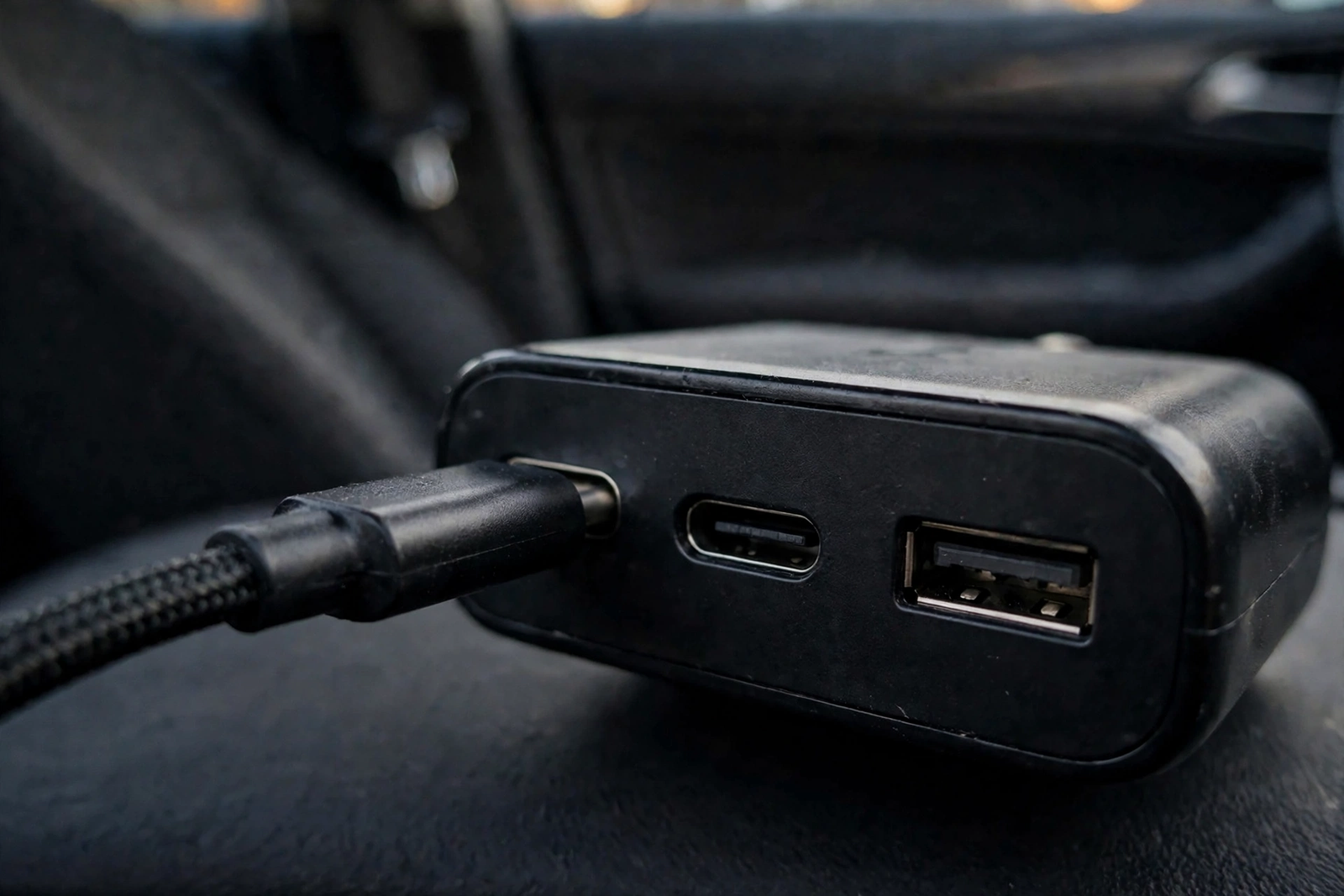
The ports are ranked for you: the 100-watt port for the hungriest device, usually a laptop; the 45-watt port for a phone or tablet; the 22.5-watt USB-A port for an older device, an earbuds case, or a passenger’s phone. One limit in the listing’s own notes catches Samsung owners by surprise: the charger supports Samsung Super Fast Charging 2.0 at 45 watts, but not Super Fast Charging 3.0 at 65 watts on the Galaxy S26 Ultra. A phone that tops out at 45 watts gets full speed; a 65-watt phone charges, just not at its fastest rate.
What It Can Charge
The laptop is the headline device. Anker says the 100-watt USB-C1 port takes a 16-inch MacBook Pro from empty to 50 percent in 47 minutes — Anker’s figure. A MacBook Pro or Air, a Windows laptop that charges over USB-C, or a larger tablet all belong on USB-C1, and the port negotiates down for laptops that draw less.
Phones are the second device. The listing quotes an iPhone 15 Pro Max reaching half charge in about 27 minutes and a Samsung Galaxy S24 Ultra in about 24 minutes, both from the 45-watt port. iPhones from the 13 through the 17 series, Samsung’s S22 through S26 series, and the iPad Pro line are named as compatible on the listing, and any phone that fast-charges at 45 watts or below gets its full speed here. If you are shopping for a fast charging car charger usb c that can feed a laptop and a phone together on one drive, this is the combination the port split was designed for. The USB-A port covers the third device — an older phone, an earbuds case, a dash cam, or a passenger’s phone. It does not do wireless charging, and a device needing more than 100 watts from one port will charge slowly or not at all.
Size and Fit in the 12V Socket
A charger this powerful has to fit the socket, and the Anker 167.5W is built to sit low in the 12V outlet rather than sticking out like a tower. At about 1.4 inches square and just over 3 inches long, it leaves the gear lever and cup holders clear. The ports sit on the end face, so all three cables leave in the same direction, and two small nubs on the plug help it stay secure on rough roads.
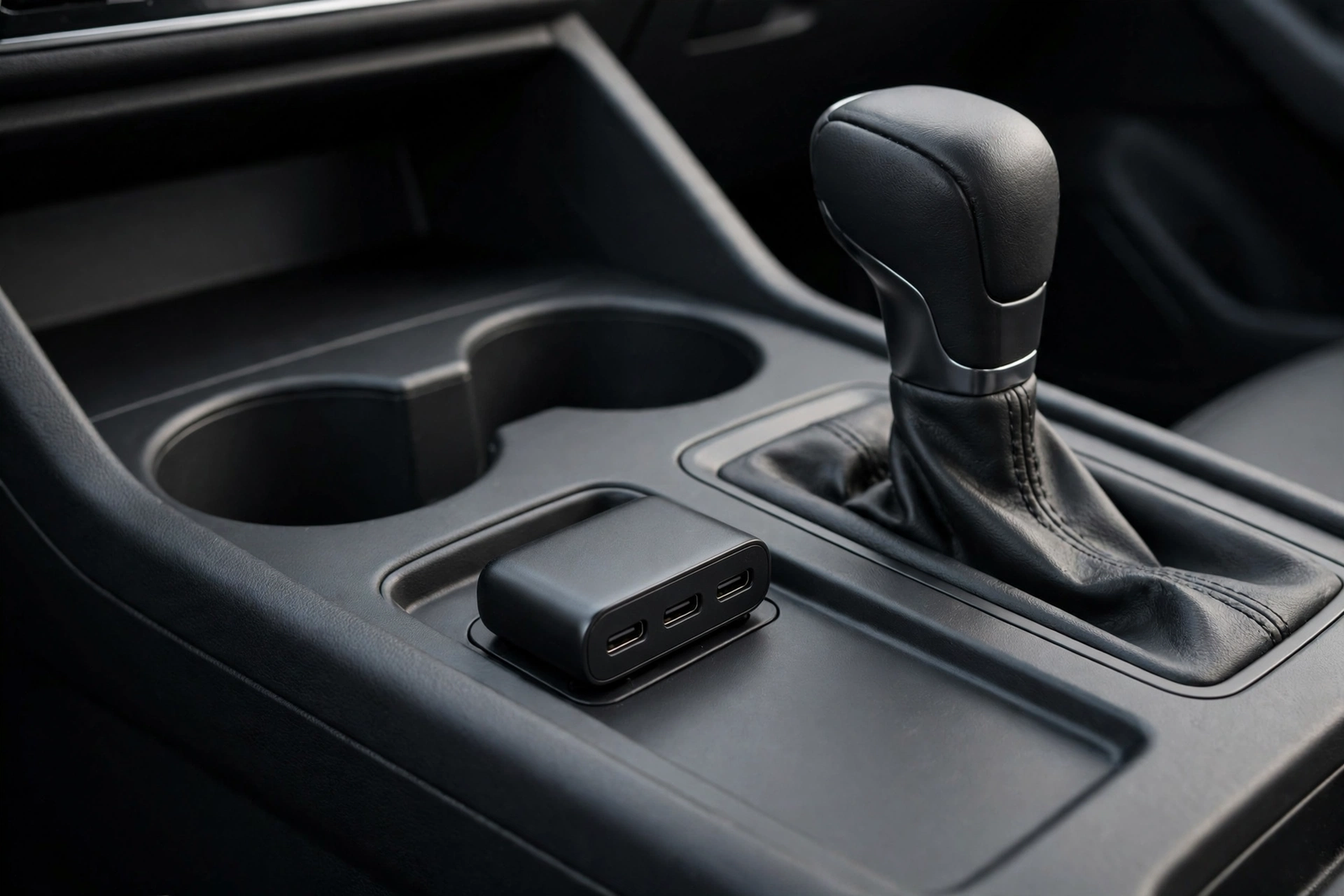
Check where your car’s 12V socket is before ordering, because that decides how the cables run. In most cars it is in the centre console or under the dashboard, within reach of the driver’s phone mount and the passenger seat, where a laptop usually sits while charging. If your socket is at the back of the console, the included 3.3-foot cable may be short for a laptop up front. The socket this charger uses is separate from your car’s built-in USB ports: if one of those carries wired CarPlay, our CarlinKit Mini Ultra 3 review covers the adapter that turns it wireless. One fitment check matters: the listing specifies a 12-volt input, and Anker does not list 24-volt support for this charger the way it does for the PowerDrive III Duo. If you drive a 24-volt truck, check the listing before ordering.
Safety and Heat
Pushing 167.5 watts through a plug this size raises the obvious question: what stops it overheating? Anker lists overvoltage, undervoltage, and over-temperature protection — the three protections that matter in a car’s 12V system, where voltage spikes when the engine starts and sags when the battery is tired. Our USB-C car charger roundup calls these protections non-negotiable, and cheap no-name chargers skip them.
Heat is still something to manage. A charger feeding 100 watts gets warm, and a phone baking in sun charges slowly no matter what feeds it, because phones throttle when hot. Keep it out of direct sun, do not bury it under a jacket at full power, and use a cable rated for the wattage you expect — a thin or damaged cable throttles speed before the charger gets a say. About the battery: while driving, the alternator powers the 12V system, so charging on the move costs the battery nothing. With the engine off, any 12V accessory drains it over time, so unplug the charger if the car sits for days.
USB C Fast Car Charger Compared: Anker 167.5W vs the Alternatives
The closest alternative inside Anker’s own range is the PowerDrive III Duo. Our Anker PowerDrive III Duo review covers it in full: model A2724, 40 watts total across twin USB-C ports at 20 watts each through PowerIQ 3.0, in a body that disappears into the socket. It is the charger for people who charge phones, not laptops — two phones at once each get their full 20 watts, the fast-charging rate iPhones are built around — and it accepts 12 or 24 volts, so it works in trucks too. No device ever gets more than 20 watts, and no cable comes in the box.
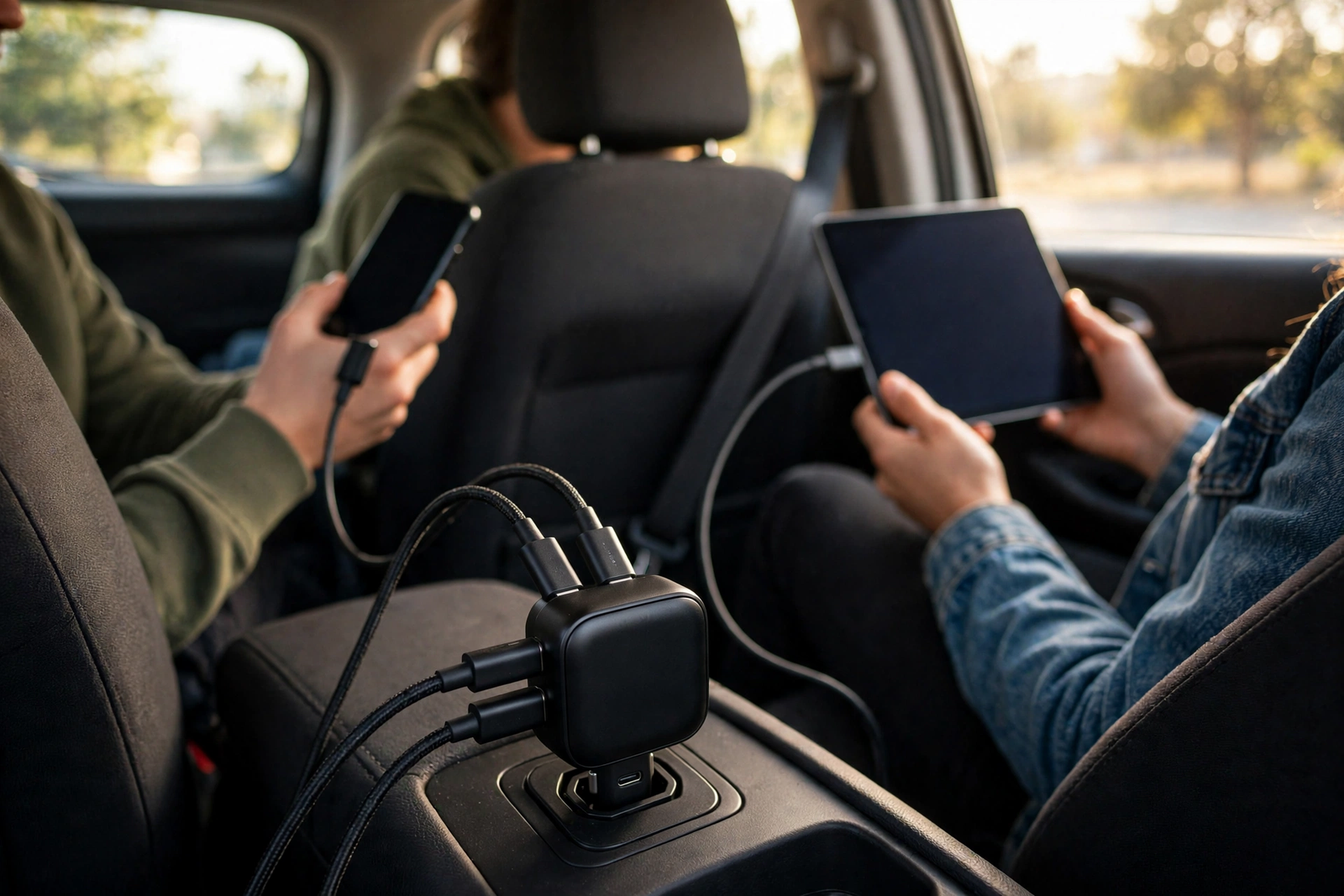
Put the two side by side and the choice writes itself. If your load is one or two phones, the III Duo gives each its full speed for less money. If your load includes a laptop, a tablet, and a phone — or a phone that fast-charges above 20 watts, like a Samsung on its 45-watt standard — the III Duo cannot do the job, and the 167.5W is the only Anker of the two that can. Our USB-C car charger roundup compares five chargers from a 69-watt two-pack to a wireless MagSafe mount. The LISEN 15W MagSafe mount in the Quick Pick above is the convenience play: it docks and charges an iPhone in one motion at 15 watts wirelessly, slower than any wired charger here, for drivers who hate plugging in every trip. Among the best usb c car charger options, the 167.5W is the laptop-class pick and the III Duo the phone-only pick. As the best dual usb c car charger for a laptop-plus-phone load, the 167.5W wins on the port split alone: two USB-C ports at 100 and 45 watts.
Who Should Buy It — and Who Should Skip It
Buy the Anker 167.5W if you charge a laptop in the car, even occasionally, because the 100-watt port is the only thing in this class that does it properly. Buy it if you regularly charge three devices at once, if your phone fast-charges at 45 watts and your current charger caps it at 20, or if you drive for work or long family trips. The included cable and the fixed per-port split make it a buy-once charger rather than a stopgap.
Skip it if your load is one or two phones and nothing else — the PowerDrive III Duo above charges two phones at full speed for less money, and the extra 127.5 watts would sit unused. Skip it if you drive a 24-volt truck, since the III Duo accepts 24 volts. Skip it if you want wireless charging — this is wired only, and the LISEN MagSafe mount above is the dock-and-charge answer. And skip it if your phone’s fastest standard is Samsung Super Fast Charging 3.0 at 65 watts, which this charger will not deliver.
Verdict
A usb c fast car charger earns its place when it removes the daily negotiation over which device gets the fast port, and the Anker 167.5W does exactly that: 100 watts for the laptop, 45 watts for the phone, 22.5 watts for the third device, all at once from one 12V socket. It is more charger than a phone-only driver needs. But for anyone who charges a laptop in the car, or three devices at once, it is the charger to buy — no cheaper Anker matches that split.
Frequently Asked Questions
Can the Anker 167.5W charger really charge a laptop in the car?
Yes. The first USB-C port delivers up to 100 watts, which is enough for a 16-inch MacBook Pro and most USB-C laptops. Anker says the 100-watt port takes a 16-inch MacBook Pro from empty to 50 percent in 47 minutes. Use the included 3.3-foot USB-C to USB-C cable on that port, and keep the laptop on USB-C1 rather than the 45-watt second port.
What wattage does each port deliver?
The first USB-C port delivers up to 100 watts, the second USB-C port delivers up to 45 watts, and the USB-A port delivers up to 22.5 watts, for 167.5 watts in total. The split is fixed per port, so all three ports can run at their maximums at the same time and plugging in a second or third device does not throttle the first one.
Does the Anker 167.5W charger come with a cable?
Yes. The listing linked in this review (ASIN B0CZ7BL16W, model B2737) includes a 3.3-foot USB-C to USB-C cable in the box, along with the charger, a welcome guide, and an 18-month warranty. The second USB-C port and the USB-A port need their own cables, which most drivers already own.
Will it fast-charge my Samsung phone?
It depends on your Samsung phone’s charging standard. The charger supports Samsung Super Fast Charging 2.0 at 45 watts, so a phone that tops out at 45 watts gets its full fast-charging speed from the second USB-C port. It does not support Samsung Super Fast Charging 3.0 at 65 watts on the Galaxy S26 Ultra, so that phone will charge, just not at its fastest rate.
Will the Anker 167.5W work in my car?
It plugs into a standard 12V socket, which nearly all cars have, so it fits most vehicles. The listing specifies a 12-volt input, and Anker does not list 24-volt support for this charger, so if you drive a truck or commercial vehicle with a 24-volt system, check the listing’s input specification before ordering.
What is the difference between the Anker 167.5W and the PowerDrive III Duo?
The Anker 167.5W is the laptop-class charger: 167.5 watts total across three ports, with a 100-watt USB-C port, a 45-watt USB-C port, and a 22.5-watt USB-A port, plus a cable in the box. The PowerDrive III Duo, model A2724, is the phone-only charger: 40 watts total across twin USB-C ports at 20 watts each, with no cable in the box. Buy the 167.5W for a laptop or three devices, and the III Duo for one or two phones.