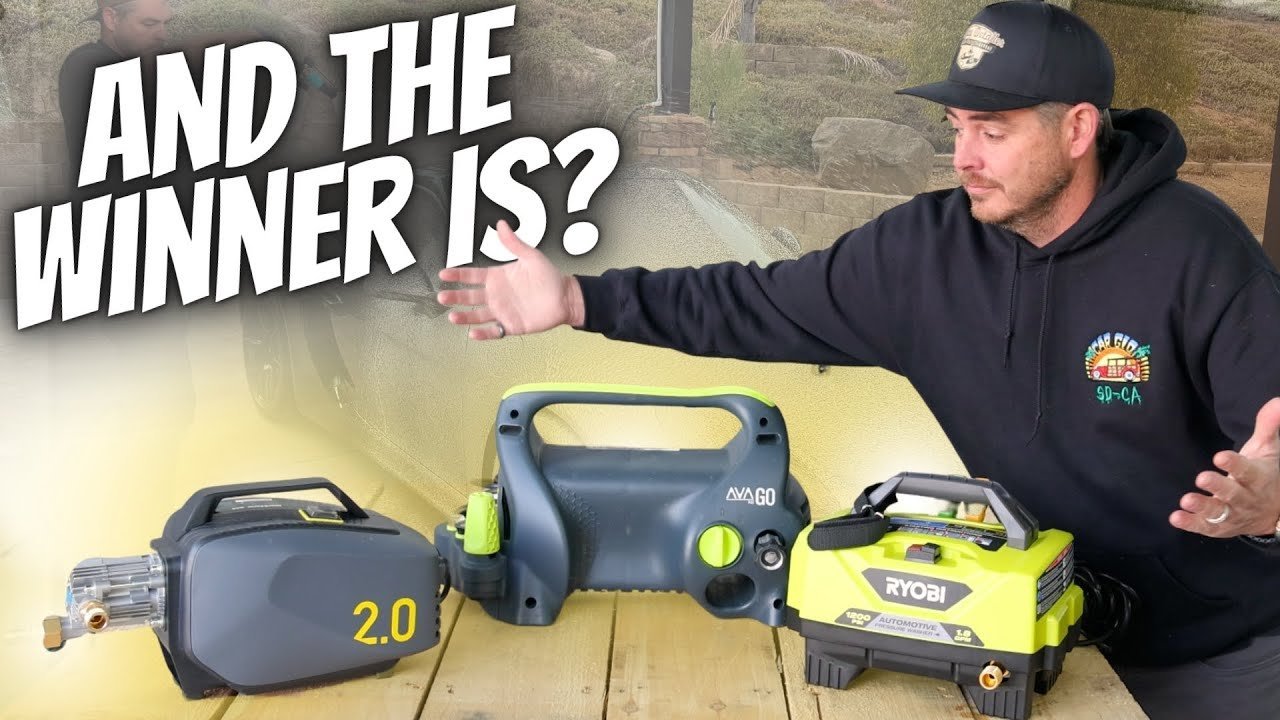
Electric, gas and battery pressure washers are the machines used to clean cars. The best pressure washer for car detailing is an electric model running between 1,200 and 1,900 PSI.
Pressure washer types for car detailing
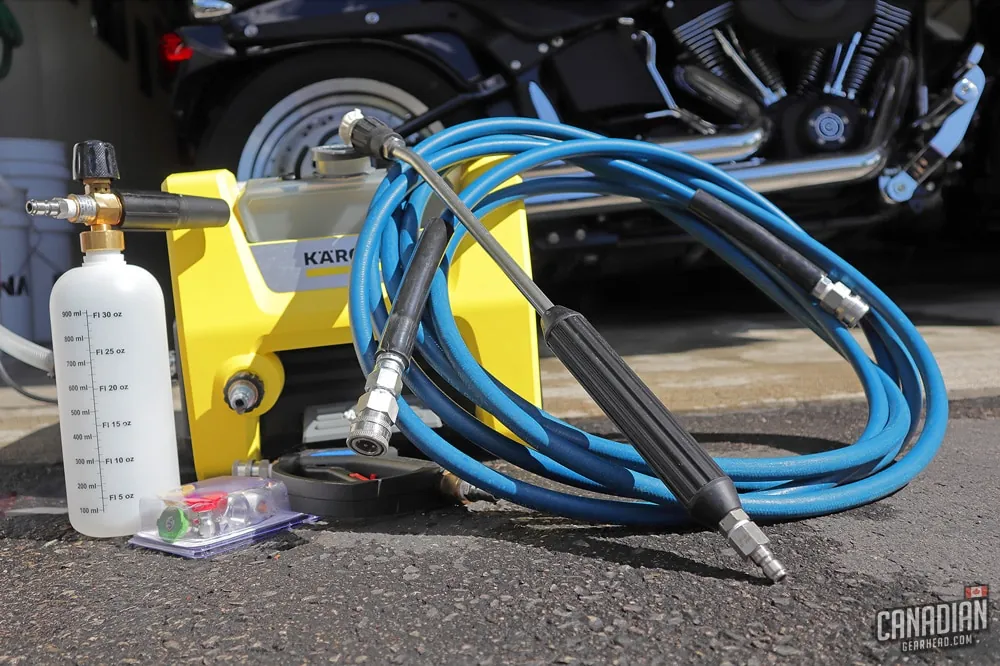
Here’s a quick look at every machine you’ll see in a detail bay. Each one fits a different job, so check what you actually need before picking one.
| Type | Best for | Example |
|---|---|---|
| Electric | Daily car washing | Karcher K3 |
| Gas | Heavy mud removal | Simpson MegaShot |
| Battery | Apartments without outlets | Ryobi 18V |
| Wall-mounted | Fixed garage bays | Kranzle 1122 TST |
| Hot water | Grease and oil spills | Hotsy commercial unit |
Electric pressure washers
An electric pressure washer plugs into a wall outlet and uses a motor to drive its pump. It suits anyone washing cars at home or in a small shop. You don’t deal with exhaust fumes, which matters inside a closed garage.
- Strips road salt off lower panels without burning clear coat.
- Pushes foam cannon soap evenly across a hood.
- Rinses wheel wells clean using under 1.5 gallons per minute.
If your space has a standard 120-volt outlet, buy electric; if you’re working on a farm field with no power nearby, skip this type entirely. Run a Sun Joe SPX3000 at 1,450 PSI with a foam cannon to cover a sedan in suds.
Gas pressure washers
A gas pressure washer burns fuel to spin its pump, delivering far more force than a plug-in unit. It suits mobile detailers who wash heavy trucks or work where outlets don’t exist. That extra power comes with noise and exhaust, so it isn’t meant for a closed room.
- Blasts caked clay out of pickup truck beds.
- Cleans trailer frames covered in winter grime.
- Runs anywhere outdoors without needing an extension cord.
The trade-off is weight and upkeep: you carry 50 pounds instead of 20, and you must change engine oil periodically. Use a Simpson MegaShot at 3,200 PSI on heavy steel, keeping the wand two feet from paint.
Wall-mounted pressure washers
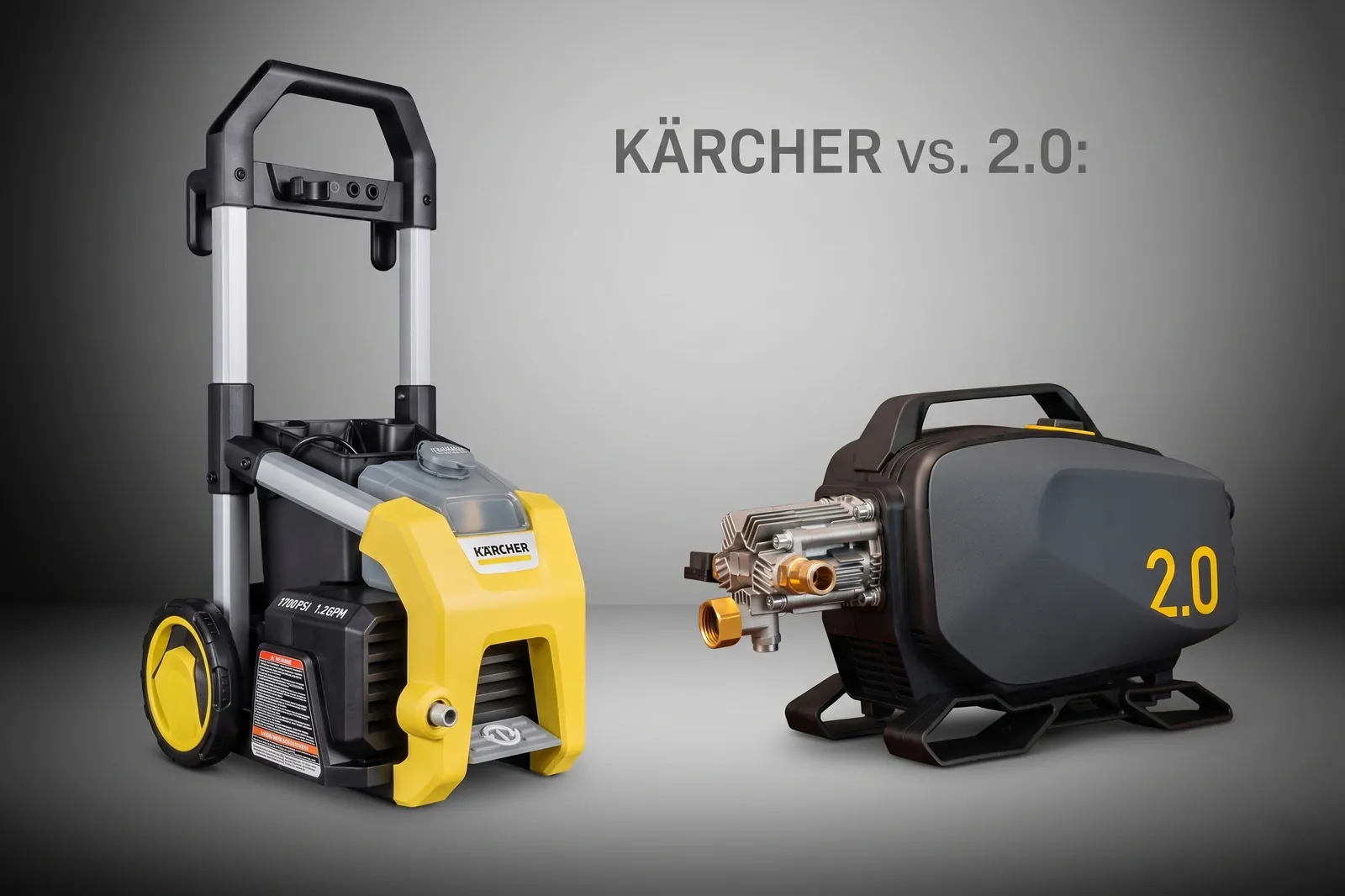
A wall-mounted pressure washer bolts directly to your garage wall and stays hooked up to a water line. It suits dedicated detailing bays where the machine never moves. You won’t drag hoses across the floor each time you wash a car.
- Saves floor space in tight shops.
- Starts instantly with a switch instead of pulling a cord.
- Keeps hoses organized on built-in reels.
This type requires permanent plumbing and electrical wiring installed by a licensed professional.
Battery pressure washers
A battery pressure washer runs on rechargeable cells instead of a wall plug or fuel tank. It suits apartment dwellers who lack outdoor outlets but still want to rinse their cars. The trade-off is weak flow compared to corded units.
- Rinses light dust off a parked vehicle quickly.
- Fits inside a small trunk for travel.
- Operates silently in neighborhoods with noise rules.
Don’t expect it to strip baked-on bugs from a highway commute. Attach a 5.0Ah battery to a Ryobi 18V unit to rinse a small hatchback in ten minutes.
Other pressure washers for detailing
- Hot water pressure washers melt heavy grease on engine blocks, meant for shops handling commercial fleets rather than daily drivers.
- Skid-mounted pressure washers serve large commercial lots where multiple bays share one massive pump bolted to a concrete pad.
- Belt-drive pressure washers last longer under constant use because the belt absorbs vibration, fitting busy shops running machines all day.
Picking the right pressure washer
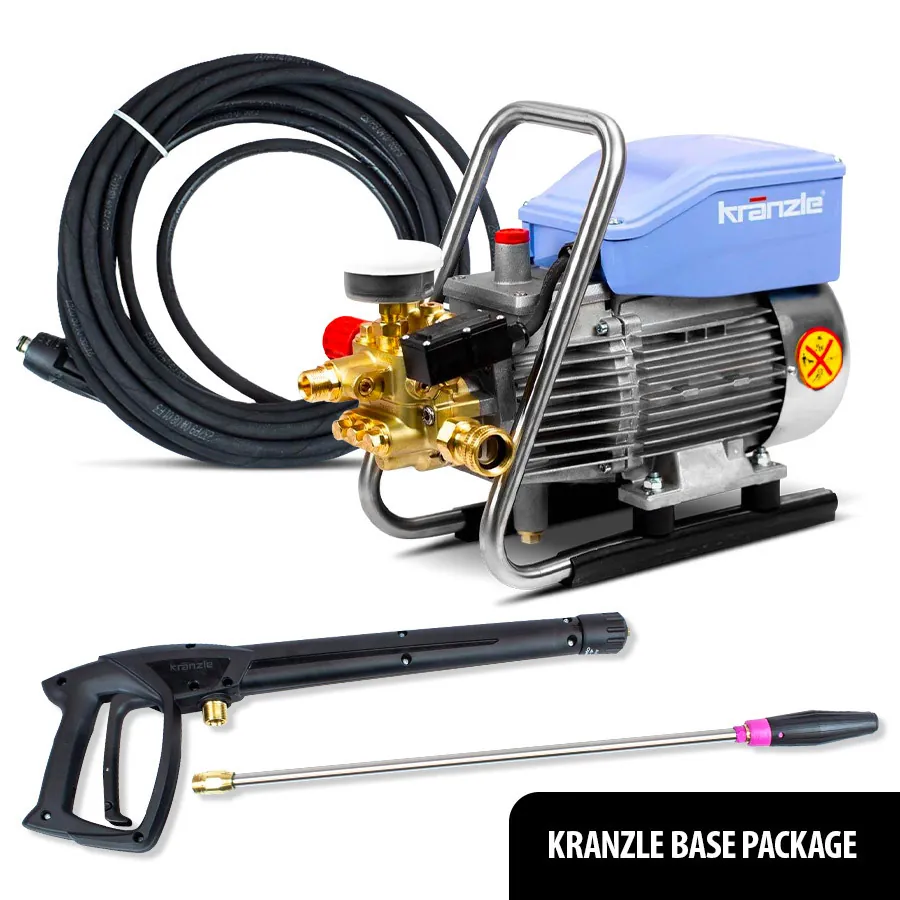
Your location settles the first choice.
Next, look at what you clean. Daily sedans need 1,200 to 1,900 PSI. Lifted trucks covered in trail mud demand over 2,500 PSI. Matching the wrong power to delicate paint strips the clear coat, leaving a dull spot that costs hundreds to repaint.
You can combine a foam cannon with any type, but don’t mix gas exhaust with indoor electric setups.
Related guides
Frequently asked questions
Can a pressure washer damage car paint?
Yes, anything over 1,900 PSI can strip clear coat if held too close. Keep the nozzle 12 inches away and use a wide 40-degree fan tip to spread the force safely.
How many PSI do I need to wash a car?
You need 1,200 to 1,900 PSI for standard automotive paint. This range assumes you’re using a 25-degree or wider nozzle tip during the rinse cycle.
Is it safe to use gas pressure washers indoors?
No, gas engines produce carbon monoxide that builds up fast in enclosed spaces. Only run gas-powered machines outside where fresh air circulates freely around the exhaust.
Why does my foam cannon stop making thick suds?
Low water flow causes thin foam. Check your inlet filter for debris, ensure your hose delivers at least 1.2 gallons per minute, and verify the soap isn’t diluted past the bottle’s ratio.
How long does a battery pressure washer run?
A 5.0Ah battery typically lasts 15 to 20 minutes of continuous spraying. Check the amp-hour rating stamped on your specific battery pack to calculate your exact runtime.
Does water temperature matter for detailing?
Cold water works fine for normal dirt and dust. Hot water is only necessary when melting thick grease or heavy oil deposits off engine components.
What happens if I use a zero-degree nozzle?
A zero-degree nozzle concentrates all pressure into a single tiny point. It cuts through paint instantly, so never point one at a vehicle’s body panels.
Do I need a special pump for snow foam?
Any electric pressure washer pushing over 1.2 gallons per minute works. The foam cannon itself mixes the air and soap, not the machine’s internal pump.
Starting your first detail wash
Hook up your electric pressure washer, attach a 40-degree nozzle, and spray the car from top to bottom to knock off loose grit. You’ll know it’s working when dirty water sheets off cleanly without scratching the surface. Stop immediately and call a technician if the pump makes a loud grinding noise or leaks oil.