
Disclosure: This post contains affiliate links. If you make a purchase through these links, we may earn a commission from Amazon at no extra cost to you. As an Amazon Associate I earn from qualifying purchases.
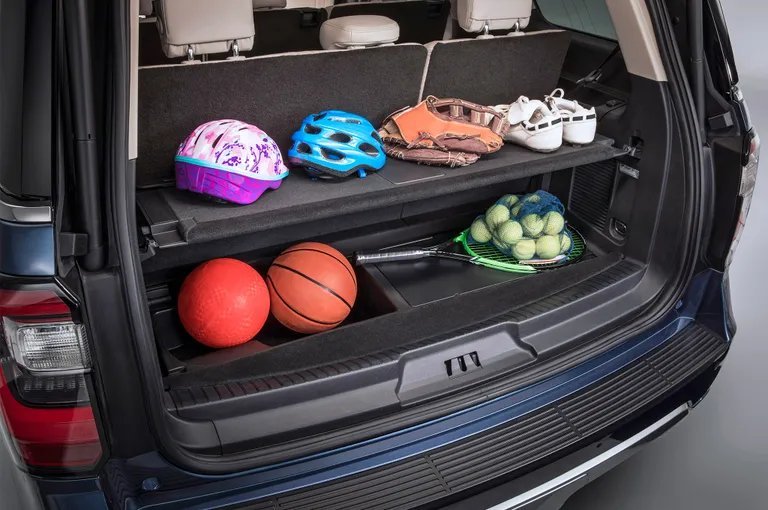
The best car trunk organizer for SUV owners is the one matched to your cargo, not the one with the most compartments. Cargo boxes, folding bins, rigid crates and soft bags all share one job — keeping gear from sliding around in a large cargo area — but they split on two questions: how much weight must it hold, and must it fold flat when empty? Answer those and the right type picks itself, whether your SUV hauls groceries on weekdays or camping gear on weekends.
Quick verdict
- Best for most SUV owners: a folding fabric bin like the AmazonBasics trunk organizer — structured when you need it, flat in ten seconds when you don’t.
- Best for heavy tools and fluids: a rigid plastic crate like the HDX 27-gallon tote — 100+ pounds, hose-clean, stackable.
- Best for valuables and privacy: a cargo box with a hard lid (WeatherTech Cargo Carrier in our table) — out of sight, dust out, stackable top.
- Best for light essentials: a soft hanging bag like the Drive Auto Products trunk bag — floor stays free, small items at arm’s reach.
- Best for road-trip food: an insulated cooler insert (YETI Hopper BackFlip in our table) — about four hours of cold without a hard cooler’s bulk.
SUV trunk organizers compared
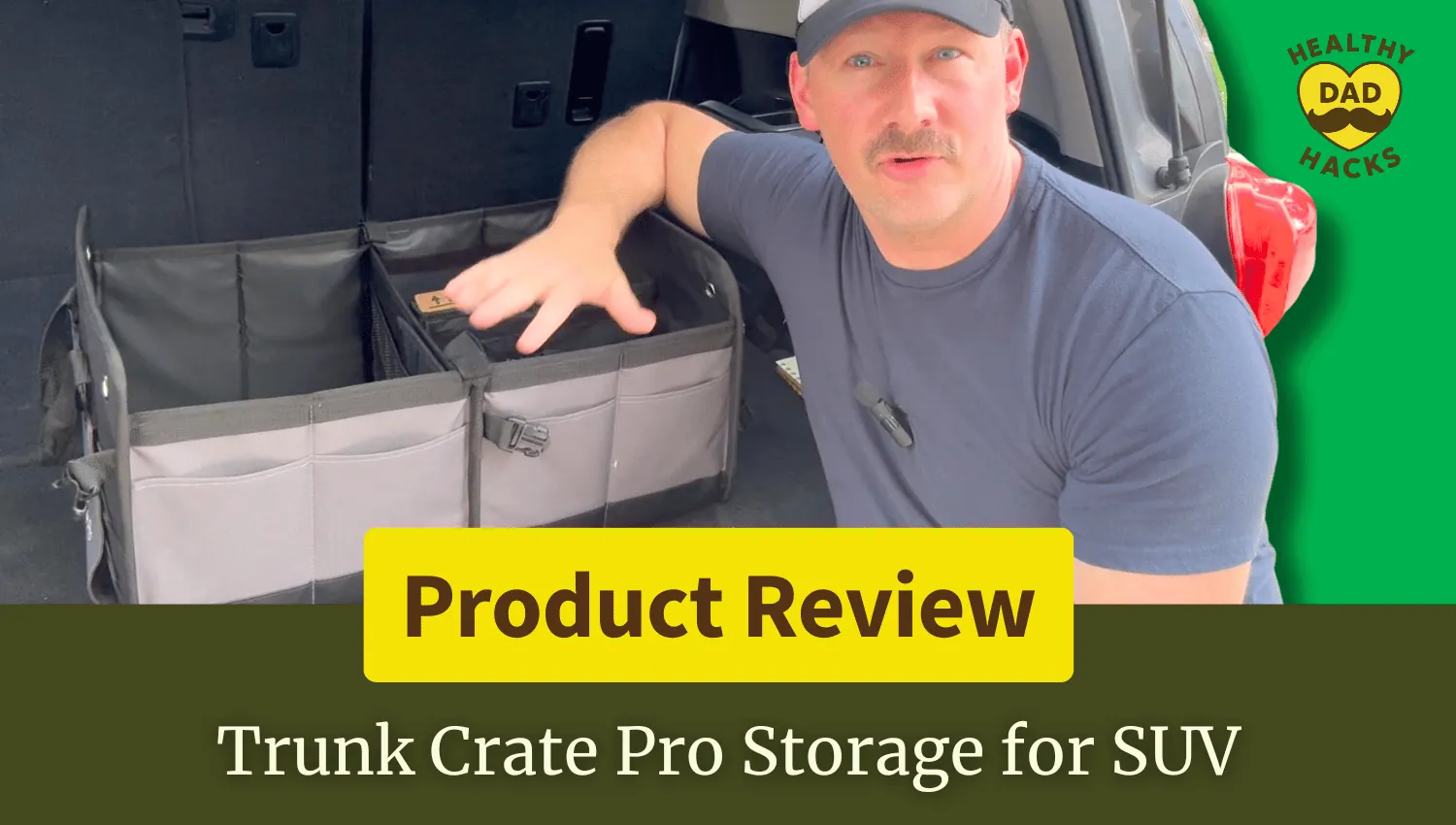
Here’s a quick look at the five main options before we go deeper into each one.
| Organizer type | Best used for | Real example |
|---|---|---|
| Folding fabric bin | Weekly grocery runs | AmazonBasics trunk organizer |
| Rigid plastic crate | Heavy tools or liquids | HDX 27-gallon tote |
| Cargo box with lid | Hidden storage out of sight | WeatherTech Cargo Carrier |
| Soft hanging bag | Light items behind seats | Drive Auto Products trunk bag |
| Cooler bag insert | Cold drinks on road trips | YETI Hopper BackFlip |
How we choose a trunk organizer for an SUV
We judge cargo organizers on load honesty (does the base sag or the stitching strain at real-world weights?), security (can it be anchored so it stays silent in a sharp turn?), fit (SUV cargo floors are interrupted by wheel wells and tailgate latches that punish guesses), and flexibility — what the organizer costs you when it’s empty. A bin that folds flat gives your cargo area back; a crate that can’t is a permanent tenant. Neither is wrong. They’re just different contracts.
Folding fabric bin — the flexible default
A folding fabric bin is a collapsible container made of heavy-duty polyester that holds its shape with stiff panels inside the walls. It suits drivers who carry groceries, sports gear, or cleaning supplies but don’t want a permanent fixture taking up space. You’ll get the most out of it if your cargo changes size from week to week.
- Keeps bottles upright during sharp turns so nothing spills across the floor
- Folds completely flat in about ten seconds when you need the full cargo space back
- Fits standard SUV widths between 36 and 40 inches without blocking the tailgate latch
- Wipes clean easily if milk or oil leaks inside the compartments
The AmazonBasics trunk organizer in our table is the reference design. Respect its limit, though: if your cargo weighs more than 50 pounds, the bottom panel will sag — switch to a rigid crate instead. A typical use is loading three reusable grocery bags into a two-compartment bin, which sits flush against the rear seats of a Toyota RAV4. Check the manufacturer’s tag for the exact weight limit, since it varies by brand and fabric thickness.
Pros: versatile, cheap, disappears when empty. Cons: a real weight ceiling, and the stiffener panels must be seated or it slumps (see the FAQ).
Rigid plastic crate — the heavy-duty answer
A rigid plastic crate holds heavy, awkward loads that would tear through fabric walls. It fits someone who hauls tools, car fluids, or dense camping equipment on a regular basis. Unlike the folding bin, it won’t collapse under pressure — but it trades that strength for constant bulk, because you can’t flatten it when it’s empty.
- Supports over 100 pounds of gear without bending the base or cracking the sides
- Stacks safely two high if you buy matching sizes from the same brand
- Resists oil, water, and mud, making it easy to hose down outside
- Locks into place with bungee cords threaded through the built-in handles
The HDX 27-gallon tote in our table is the hardware-store benchmark. The trade-off is clear: you gain load capacity but lose flexibility — an empty crate still takes up the same 24-by-16-inch footprint in your cargo area. A common setup involves storing jumper cables, a quart of motor oil, and a tire inflator inside a single crate secured behind the wheel well of a Honda CR-V.
Pros: the strongest, simplest, easiest-to-clean option here. Cons: permanent footprint, and hard plastic is noisy if you don’t secure it.
Cargo box with lid — the privacy pick
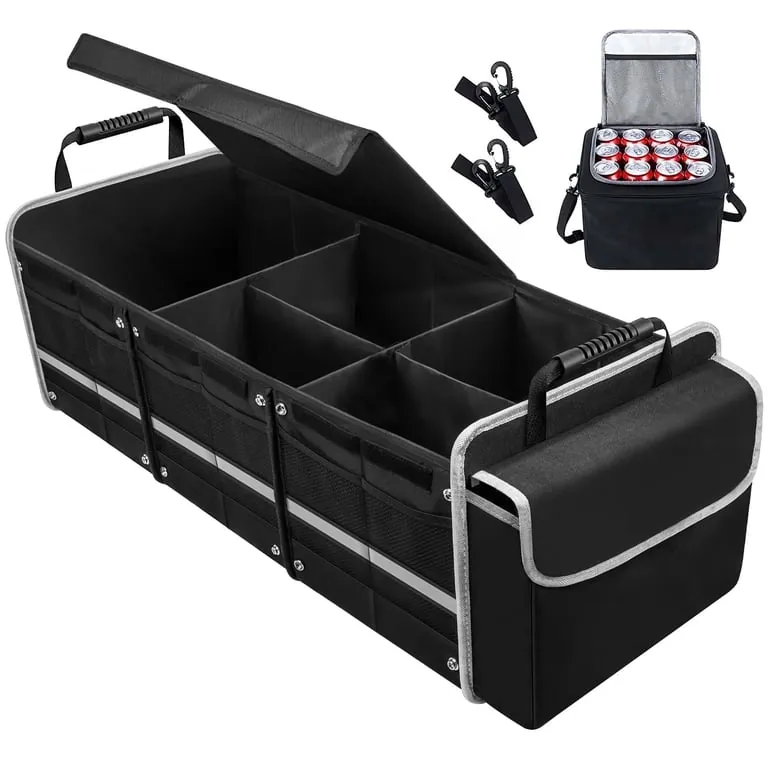
A cargo box with a hard lid hides your belongings from view while protecting them from rain and dust. It works best for daily commuters who leave emergency kits, laptops, or valuables parked in public lots — the WeatherTech Cargo Carrier in our table represents the type. This option costs more than open bins and adds noticeable weight to your vehicle.
- Blocks line-of-sight from outside, reducing the chance of broken windows for theft
- Keeps dust out of electronics stored in the back for weeks at a time
- Provides a flat top surface you can stack lighter soft bags onto safely
You’ll need to measure your cargo floor depth carefully: a box taller than 12 inches might stop the tailgate from closing fully on compact SUVs. If you only carry items once a month, the extra cost and weight aren’t worth it. Picture storing a first-aid kit, flashlight, and spare charging cables inside a sealed black box tucked under the tonneau cover of a Ford Explorer.
Pros: security and cleanliness nothing open-topped can match. Cons: the priciest route, and its height must be measured, not guessed.
Soft hanging bag — the floor-saver
A soft hanging bag attaches to the back of your rear seats using straps, keeping lightweight items off the floor entirely. It’s meant for parents carrying wipes, snacks, and small toys, or delivery drivers organizing parcels — the Drive Auto Products trunk bag in our table is the example. Don’t rely on this for anything heavier than a few pounds per pocket, as the stitching will pull away from the seatback fabric.
- Frees up the entire floor space for larger items like strollers or luggage
- Puts small essentials right at arm’s reach for passengers in the second row
- Installs in under a minute using adjustable buckles that fit most headrest posts
Loading it with canned goods or glass bottles stretches the seams until they rip — and that failure usually happens silently, dropping everything onto the floor during a turn. A real scenario is hanging a three-pocket organizer behind the driver’s seat of a Subaru Outback, holding sunscreen, paper towels, and a tablet.
Pros: zero floor space used; one-minute install. Cons: a strict ~10-pound total ceiling before you damage your own upholstery.
More SUV cargo storage options
These choices fill specific gaps that the main four don’t cover perfectly.
- Trunk cooler bag: insulated soft containers that keep food cold for about four hours — the YETI Hopper style in our table — ideal for tailgating or long summer drives where a hard cooler takes up too much room.
- Cargo net: elastic mesh stretched across anchor points to stop loose items like sleeping bags or jackets from shifting; best for drivers who rarely carry fragile things.
- Drawer system: heavy sliding trays bolted to the cargo floor for overlanding setups, suited only for those willing to drill into their vehicle and permanently lose rear seating.
Picking the right trunk organizer
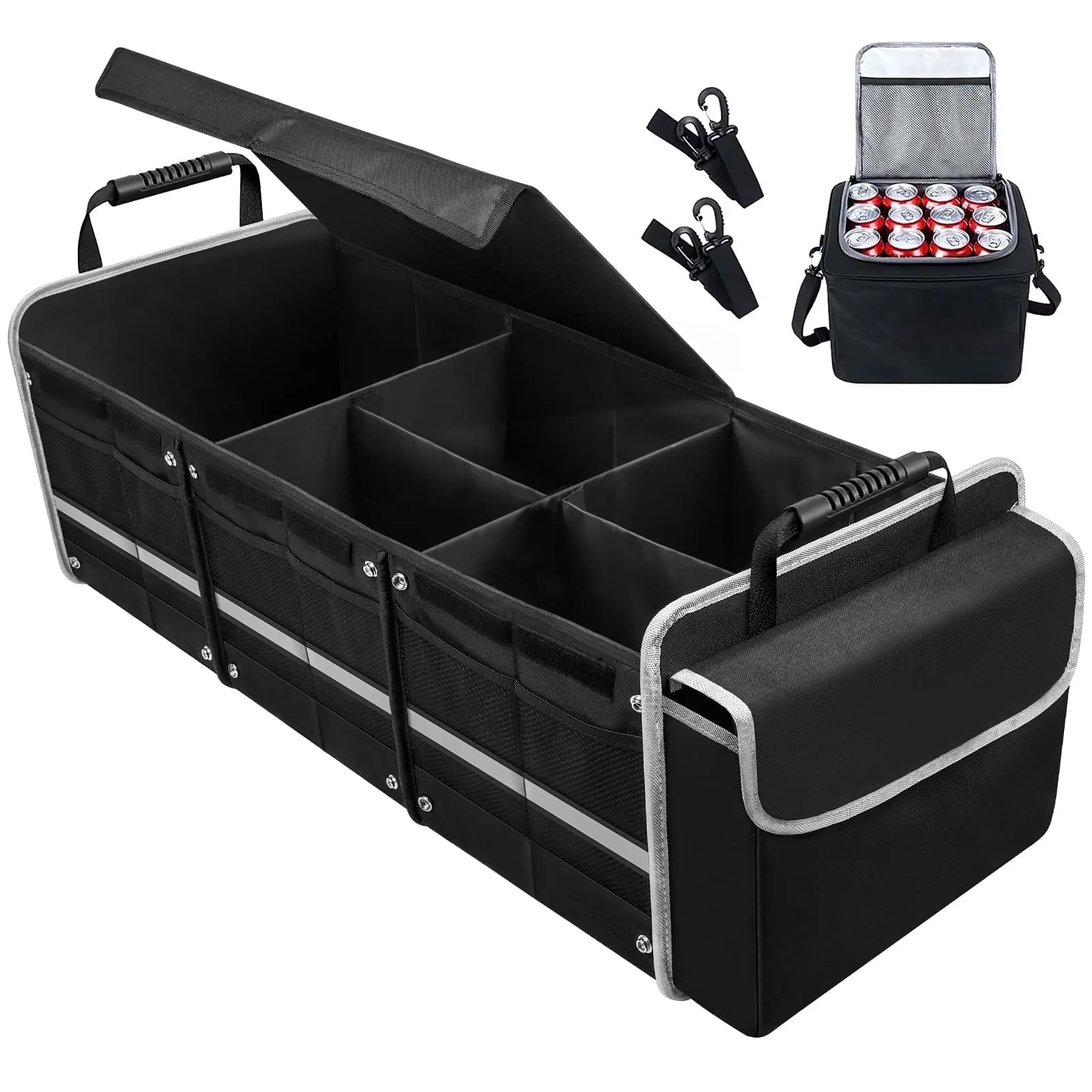
Your choice comes down to three things: what you carry, how often you need the floor clear, and your budget. If you haul heavy tools or liquids every weekend, pick the rigid plastic crate — it won’t collapse under weight, though you’ll have to live with its permanent footprint.
If your cargo changes constantly between groceries, gym bags, and nothing at all, the folding fabric bin is yours. It gives you structure when you need it and disappears when you don’t. For those leaving valuables parked in public spaces, the cargo box with a lid offers security that open bins never will.
Drivers needing quick access to light items from the back seat should grab the soft hanging bag — just remember it won’t hold heavy objects without tearing. You can combine a hanging bag for small items with a folding bin on the floor below it. But if you install a bolted drawer system, you’re committing the entire cargo area to that one setup, leaving no room for the others.
Setting up your cargo space
- Measure the flat space between your SUV’s wheel wells, and the depth from the rear seats to the closed tailgate. Write both numbers down.
- Buy the organizer that fits those numbers — at least two inches shorter than the wall-to-latch gap.
- Seat any stiffener panels fully in their sleeves (fabric bins), and load the heaviest items lowest and closest to the rear seats.
- Secure the organizer against the rear seats or side walls: Velcro strips on carpeted floors, or a bungee cord through the handles to the factory cargo hooks.
- Test it: take a sharp turn. You’ll know it’s working when you hear nothing moving in the back. If the base cracks, the fabric rips, or the unit shifts despite being tied down, stop using it and replace it with a heavier-duty option.
Mistakes that wreck organizers (and cargo)
- Guessing the size. An organizer wider than the wheel-well gap never sits flat, and one that touches the latch can let the tailgate fly open.
- Overloading fabric. Past ~50 pounds a folding bin sags; past ~10 a hanging bag tears its own stitching out of your seat.
- Stacking heavy on top. Heaviest unit on the floor, never more than two high — unsecured stacks are projectiles in a sudden stop.
- Leaving the organizer loose “just for this trip”. That is the trip it slides.
- Buying compartments instead of capacity. Two compartments handle most daily tasks; a dozen pockets mostly hide things.
Frequently asked questions
Can a trunk organizer slide around while driving?
Yes, unless you secure it. Place the organizer flush against the rear seats or side walls. Use Velcro strips on the bottom if your SUV has carpeted floors, or loop a bungee cord through the handles and attach it to the factory cargo hooks.
Why does my fabric bin keep collapsing?
It collapses because the internal stiffeners are missing or the load exceeds the bin’s rating. Check that all cardboard or plastic inserts are fully seated in their sleeves. If the bin sags under less than 30 pounds, the material is too thin for your needs.
How long do plastic crates last in a hot car?
A thick polyethylene crate lasts years even in summer heat, but thin recycled plastics warp above 140°F. Look for the recycling number 2 (HDPE) or 5 (PP) stamped on the bottom; both are suitable for automotive use, though PP generally tolerates higher temperatures than HDPE.
Is it safe to stack organizers in an SUV?
Stacking is safe only if the bottom unit is rated for the combined weight. Never stack higher than two units, and always put the heaviest crate on the floor. Unsecured stacks become dangerous projectiles during sudden stops.
What happens if I overload a hanging bag?
Overloading tears the strap stitching away from the seat fabric. Once the thread breaks, the repair requires sewing directly into your upholstery. Keep the total weight inside a hanging bag under 10 pounds to prevent this damage.
Does it matter if the organizer blocks the tailgate latch?
It matters immediately. If any part of the organizer prevents the latch from clicking shut, the tailgate can fly open while driving. Measure the distance from your cargo wall to the latch mechanism, and buy an organizer at least two inches shorter than that gap.
How many compartments do I actually need?
Two compartments handle most daily tasks without wasting space. Three or more are useful only if you sort items by category every time you load the car. Too many small pockets just make finding things harder.
Do I need to measure my cargo area first?
Yes. Measure the width between the wheel wells and the depth from the rear seats to the closed tailgate. Write those numbers down before shopping. An organizer wider than your wheel-well gap simply won’t sit flat on the floor.
Conclusion
The best car trunk organizer for SUV drivers is a measurement and a weight limit, not a brand: folding fabric (AmazonBasics) for changing everyday cargo, a rigid crate (HDX) when the load gets serious, a lidded box when privacy matters, and a hanging bag (Drive Auto) when the floor must stay free. Measure first, secure it properly, respect the limits — and your cargo area goes quiet.
Related guides: Best Car Seat Organizer for Families, Best Car Accessories for Road Trips, Best Portable Tire Inflator for Cars

7 thoughts on “best car trunk organizer for SUV”