
Dog Seat Belt: 3 Tethers for Safe Car Rides
A loose dog in a car is a distraction and a danger — to the dog, the driver and everyone else. A sudden stop throws a loose dog forward, and a dog climbing into the front seat takes the driver’s eyes off the road. A dog seat belt fixes both problems with a short tether: one end clips to your dog’s harness, the other clips into the seat belt buckle or loops over a headrest, and your dog stays on the seat — able to sit, stand or lie down, but not able to wander.
The short answer: if your car has a standard seat belt buckle, start with a buckle-clip tether — it clicks into the buckle and adjusts to fit. If your buckle does not fit a clip, a headrest restraint loops over the headrest post instead. And if you drive at night, a reflective tether adds visibility in the dark. The three below cover all three jobs — three different kinds, not three versions of the same clip. One rule runs through all of them: always clip a dog seat belt to a harness, never to a collar.
As an Amazon Associate I earn from qualifying purchases.
Quick Pick: Dog Seat Belts for Safe Car Rides
| Pick | Product | Best For | Check Price |
|---|---|---|---|
| Classic Buckle-Clip Tether | Vastar 2 Packs Adjustable Pet Dog Cat Car Seat Belt Safety Leads, Nylon Fabric | A buckle-clip tether that clicks into the seat belt receptacle, for dogs that ride in the back seat | Check Price on Amazon |
| Two-Pack Headrest Restraint | BWOGUE 2 Packs Dog Cat Safety Seat Belt Strap, Car Headrest Restraint, Adjustable Nylon Fabric | A headrest-loop restraint in a two-pack, for cars where the buckle clip does not fit or a second car needs one | Check Price on Amazon |
| Reflective Night-Drive Tether | Blueberry Pet 3M Reflective Stripe Adjustable Dog Seat Belt Tether, Olive and Blue-Gray | A reflective tether that clicks into the seat belt slot, for night drives and low light, with a harness | Check Price on Amazon |
Table of Contents
Vastar Buckle-Clip Tether: The Classic Dog Seat Belt
The Vastar tether is the classic kind of dog seat belt: a short strap that clicks into your car’s seat belt receptacle at one end and clips to your dog’s harness at the other. The model is VDB2-ALX-1, and it comes as a two-pack. The strap is made from nylon fabric, with a solid zinc alloy swivel snap and metal buckles, and it adjusts from 16 to 27 inches long so it fits dogs of different sizes. The listing gives the strap an 18-month warranty. The swivel snap matters more than it sounds: it turns as your dog moves, so the strap does not twist and tangle on a long drive.
The one thing to check before you order is the buckle tab. The tab on the Vastar clip is 2 centimetres wide, and the listing says to check your buckle’s size and compatibility before you buy — the listing names models it does not fit, including the 2013 and 2014 Honda Pilot, the 2016 Honda CR-V, the 2015 Acura RDX, the 2012 Kia Forte, the 1989 Ford Ranger and the Ford F150, and it notes that some models fit the rear seat but not the front, or the front but not the rear. That list is the listing’s own compatibility note, and it is worth reading in full on the listing before you buy, because a tab that does not match your buckle will not click in at all. If the tab fits, the rest is simple: clip the tether to the harness, snap the tab into the receptacle, and adjust the length so your dog can sit, stand or lie down without reaching the front seat.

Two tethers in the pack means a spare for a second car, or a replacement when the first one wears out. The Vastar tether is the pick in this roundup for the standard case: a dog that rides in the back seat of a car with a matching buckle, clipped to a harness, on a tether that adjusts to the right length.
Vastar 2 Packs Adjustable Pet Dog Cat Car Seat Belt Safety Leads on Amazon: nylon fabric tether, zinc alloy swivel snap, adjustable 16 to 27 inches, 2-centimetre buckle tab, model VDB2-ALX-1, two-pack, 18-month warranty.
Buy the Vastar buckle-clip tether if: your car’s seat belt buckle takes a 2-centimetre tab, and you want the classic dog seat belt — a tether that clicks into the buckle and clips to a harness. Check the listing’s compatibility note for your car model first.
BWOGUE Headrest Restraint: The Two-Pack Dog Seat Belt
The BWOGUE restraint works differently from the Vastar tether: instead of clicking into the seat belt buckle, it loops over the car’s headrest post. The model is C0044, and it comes as a two-pack. The strap is made from nylon fabric with solid zinc alloy snaps, and it adjusts from 18 to 30 inches long, so it fits dogs of different sizes and lets your dog sit, stand or lie down on the seat. A headrest restraint is the answer when the buckle clip does not fit your car — there is no tab to match, because nothing clicks into the buckle at all.
The headrest loop is simple to fit: slide the loop over the headrest post, tighten it, and clip the other end to your dog’s harness. The listing describes the strap as adjustable with a lockable buckle, and the zinc alloy snap turns a full circle so the strap does not twist as your dog moves. Two straps in the pack means one for each car, or a spare — and because the restraint does not depend on the buckle, the same strap works in almost any car with a headrest post. The trade-off is the anchor: a headrest post is a sturdy point, but it is not the seat belt system, so the restraint keeps your dog on the seat and out of the front rather than holding the dog the way a buckled belt does. That is a fair trade for a car where the buckle clip does not fit, and it is the reason this restraint exists.
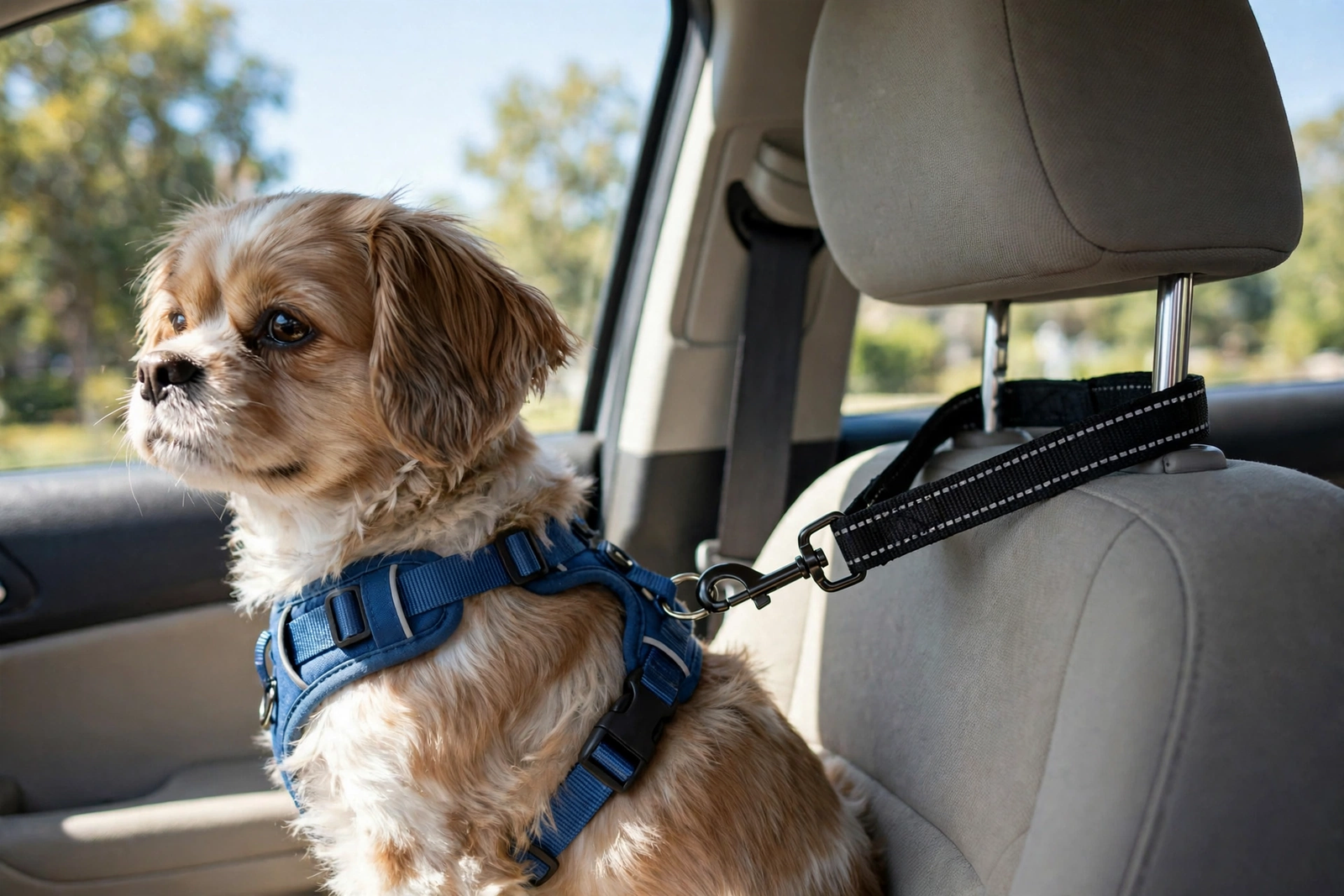
The BWOGUE restraint is the pick in this roundup for the car the buckle clip does not fit, and for the household with two cars. It is also the simplest of the three to move between cars: loop it over the headrest, clip it to the harness, and drive.
BWOGUE 2 Packs Dog Cat Safety Seat Belt Strap on Amazon: nylon fabric headrest restraint, zinc alloy snaps, adjustable 18 to 30 inches, model C0044, two-pack.
Buy the BWOGUE headrest restraint if: your car’s buckle does not take a clip-in tether, or you want a two-pack that moves easily between cars. Loop it over the headrest post and clip it to a harness — never to a collar.
Blueberry Pet Reflective Tether: The Dog Seat Belt for Night Drives
The Blueberry Pet tether is the night-drive pick in this roundup: a dog seat belt tether with 3M reflective threads stitched into the polyester webbing, so the strap catches the light in the dark. The colour in this roundup is olive and blue-gray, the model is BBPDSTBP00124OL00, and it adjusts from 16.5 to 25.5 inches long and one inch wide. It clicks into the female slot of your vehicle’s seat belt — the buckle receptacle — and clips to your dog’s harness at the other end. The listing says it fits most vehicles on the market, with one exception stated plainly: it is not compatible with Volvo cars.
Reflective stitching is a small feature with a real job. Most of a dog seat belt’s work happens inside the car, where nobody sees it, but the tether is also the strap you handle at night — clipping it on in a dark car park, walking your dog from the car to the door — and a strap that catches the light is easier to see and harder to trip over. The listing’s directions are worth following exactly: use the tether with a harness, never attach the clip directly to a dog collar, attach the tether to the female slot of the vehicle’s seat belt, and adjust it to fit your dog’s harness. The tether adjusts from 16.5 to 25.5 inches long — measure the length with your dog on the seat, harness on, before you order.
The Blueberry Pet tether is the pick in this roundup for drivers who travel with their dog after dark, and for anyone who wants a tether with a little more visibility built in. It is a single tether, not a two-pack, and it is the most clearly specified of the three: the listing states the Volvo exception and the harness-only rule in its own words, and this article repeats both rather than softening them.
Blueberry Pet 3M Reflective Stripe Adjustable Dog Seat Belt Tether on Amazon: polyester webbing with 3M reflective threads, adjustable 16.5 to 25.5 inches, one inch wide, model BBPDSTBP00124OL00, olive and blue-gray, not compatible with Volvo cars.
Buy the Blueberry Pet reflective tether if: you drive with your dog at night or in low light, and you want a tether with reflective stitching that clicks into the seat belt slot. Use it with a harness, and check the Volvo exception before you buy.
Buckle-Clip vs Headrest: Which Dog Seat Belt Attachment Fits Your Car
The three tethers in this roundup attach in two ways, and the right way depends on your car. A buckle-clip tether — the Vastar and the Blueberry Pet — clicks into the seat belt receptacle, the same slot the seat belt tongue goes into. It uses the car’s own belt system as the anchor, which is the sturdiest point in the seat. A headrest restraint — the BWOGUE — loops over the headrest post instead, which needs no matching buckle at all. The buckle clip is the stronger anchor when it fits; the headrest loop is the answer when it does not.
The check is simple and it comes before you buy. For a buckle-clip tether, the tab width is the number that matters: the Vastar tab is 2 centimetres wide, and the listing names the models it does not fit, so check your car against that list. For the Blueberry Pet tether, check the Volvo exception and the 16.5 to 25.5 inch length range. For a headrest restraint, check that your car has a headrest post the loop can slide over — most cars do, but a fixed headrest with no post will not take one. A dog car seat is a different kind of restraint again: our dog car seat review covers the K and H bucket booster for small dogs, which lifts a small dog up to window height rather than tethering it flat on the seat. A booster and a tether solve different problems, and a small dog may need both.
Dog Seat Belt Sizes: Measuring the Right Length
A dog seat belt is sized by length, and the right length is the one that lets your dog sit, stand and lie down on the seat without reaching the front. The Vastar tether adjusts from 16 to 27 inches, the BWOGUE restraint from 18 to 30 inches, and the Blueberry Pet tether from 16.5 to 25.5 inches — all three cover the same middle ground, and the differences are at the edges: the BWOGUE reaches longest, which suits a larger dog or a wider back seat, while the Blueberry Pet tether adjusts from 16.5 to 25.5 inches, so check that length against your dog on the seat.
Measure before you order, not after. Clip the tether to the harness, sit your dog on the seat, and check the length with the dog lying down — that is the longest position, and the tether should still hold the dog on the seat. Too short, and your dog cannot lie down comfortably; too long, and your dog can climb into the front seat or get tangled. A two-pack helps here: with the Vastar or the BWOGUE you can keep the second tether adjusted for a different dog, or for the same dog in a different car, without re-adjusting every trip.
How to Fit a Dog Seat Belt
Fitting a dog seat belt takes a minute, and the order matters. Put the harness on your dog first, and check that it fits snugly — two fingers under the straps is the usual check. Then clip the tether to the harness, never to the collar. Then anchor the other end: snap the buckle-clip tab into the seat belt receptacle until it clicks, or loop the headrest restraint over the headrest post and tighten it. Then adjust the length so your dog can sit, stand and lie down, but cannot reach the front seat. Set the shortest length your dog is comfortable with — a shorter tether gives the dog less room to travel in a sudden stop. Test it before you drive: let your dog settle, then brake gently in a car park and watch what happens — your dog should stay on the seat.

The first few trips are the training. Some dogs settle straight away; others pull against the tether until they learn the length. Keep the first trips short, keep a window cracked for air, and never leave a dog tethered in a parked car — a tether is a driving restraint, not a way to leave a dog in the car. And check the tether itself now and then: look at the stitching where the strap meets the clip, and at the clip for wear. A tether is a safety item, and a frayed strap or a worn clip should be replaced, not trusted for one more trip.
Harness or Collar: The Rule Every Dog Seat Belt Follows
Every tether in this roundup follows the same rule, and the listings state it in their own words: clip a dog seat belt to a harness, never to a collar. The reason is plain. A sudden stop throws a dog forward, and a tether clipped to a collar puts all of that force on the dog’s neck. A harness spreads the same force across the chest and shoulders, where the dog can take it. The Vastar listing, the BWOGUE listing and the Blueberry Pet listing all say the same thing — use the tether with a harness — and the Blueberry Pet directions add it as a numbered step.
If your dog does not have a harness yet, buy the harness first and the tether second. A harness that fits well — snug, with two fingers under the straps, and with a back clip the tether can attach to — is the other half of the dog seat belt. A collar is for tags and for a lead on a walk; it is not a car restraint. This is the one rule in this article with no exceptions, and it is the first thing to check before any of the three tethers here goes into a car.
Dog Seat Belt Mistakes to Avoid
The most common dog seat belt mistake is clipping the tether to a collar instead of a harness, which puts all the force of a sudden stop on the dog’s neck. The second is buying the wrong attachment for the car: a buckle-clip tab that does not match the receptacle will not click in, and a headrest loop will not fit a fixed headrest with no post. The third is the wrong length — too short and the dog cannot lie down, too long and the dog can reach the front seat or get tangled in the strap.
The fourth mistake is treating a tether as a crash-tested restraint. No tether in this roundup carries a crash-test claim in its listing, and this article makes none: a dog seat belt keeps your dog on the seat and out of the driver’s way, which is a real safety job, but it is not a crash-tested car seat. The fifth is leaving a dog tethered in a parked car — a tether is a driving restraint, and a parked car is a different problem. And the sixth is confusing a tether with a seat cover: a cover protects the seat, a tether restrains the dog, and the two jobs need two different products. Our pet carrier seat cover review covers the cover side — a seat that carries your pet — while this article covers the restraint side.
Who Should Buy a Dog Seat Belt — and Who Should Not
Buy a dog seat belt if: your dog rides in the car with you, whether that is a daily school run or a long road trip. A tether keeps your dog on the seat, out of the front, and safe from a sudden stop — and it keeps the driver’s eyes on the road. If you travel far with your dog, our best dog car accessories for road trips covers the rest of the kit worth packing.
Buy one with care if: your dog is very large, very small, or a keen chewer. Check the length range against your dog and your car, check the buckle compatibility list for your model, and check the strap for chew damage after every trip — a chewed tether is a failed tether, and nylon is not chew-proof.
Do not buy a dog seat belt if: your dog never rides in the car, or you are not willing to buy a harness too. A tether without a harness is not a safe setup, and a tether bought for a dog that stays home is a drawer filler. If your dog rides in a crate or a carrier instead, the tether is the wrong tool — the crate is the restraint, and the tether stays in the drawer.
The Verdict
The best dog seat belt is the one that fits your car, your dog and your harness. The Vastar buckle-clip tether is the pick for the standard case: a two-pack that clicks into the seat belt receptacle and adjusts to the right length, with the compatibility list to check first. The BWOGUE headrest restraint is the pick for the car the buckle clip does not fit: a two-pack that loops over the headrest and moves easily between cars. And the Blueberry Pet reflective tether is the pick for night drives: a single tether with reflective stitching that clicks into the seat belt slot, with the harness-only rule and the Volvo exception stated plainly.
Whichever tether you choose, check three things before you order: the buckle compatibility or the headrest post, the length range against your dog, and whether the listing still shows a live offer — the records behind this roundup are months old, and a listing that showed an offer then may not show one now. Fit the harness first, clip the tether to the harness, and test the length before you drive. A dog seat belt is a small piece of kit, but it is one that keeps your dog safe and your eyes on the road — and for the wider picture, our best car accessories for road trips covers the rest of the road-trip kit.
Frequently Asked Questions
Is a dog seat belt safe?
A dog seat belt is safe when it is used the right way: clipped to a harness, never to a collar, anchored to the seat belt receptacle or a headrest post, and adjusted so your dog can sit, stand and lie down without reaching the front seat. It keeps your dog on the seat and out of the driver’s way, and it keeps the dog from being thrown forward in a sudden stop. No tether in this roundup carries a crash-test claim in its listing, and this article makes none — a tether is a restraint that keeps your dog in place, not a crash-tested car seat.
Should a dog seat belt attach to a harness or a collar?
Always to a harness, never to a collar. A sudden stop throws a dog forward, and a tether clipped to a collar puts all of that force on the dog’s neck. A harness spreads the same force across the chest and shoulders, where the dog can take it. Every tether in this roundup follows the same rule, and the listings state it in their own words — the Blueberry Pet directions list it as a numbered step. If your dog does not have a harness yet, buy the harness first and the tether second.
Will a dog seat belt fit my car?
It depends on the attachment. A buckle-clip tether needs a receptacle that takes its tab — the Vastar tab is 2 centimetres wide, and the listing names the models it does not fit, so check your car against that list before you buy. The Blueberry Pet tether clicks into the seat belt slot of most vehicles, with one stated exception: it is not compatible with Volvo cars. A headrest restraint needs a headrest post the loop can slide over — most cars have one, but a fixed headrest with no post will not take one. Check the attachment against your car before you order, not after.
What length dog seat belt does my dog need?
The right length lets your dog sit, stand and lie down on the seat without reaching the front. The Vastar tether adjusts from 16 to 27 inches, the BWOGUE restraint from 18 to 30 inches, and the Blueberry Pet tether from 16.5 to 25.5 inches. Measure with your dog lying down — that is the longest position — and check the length with the harness on. Too short, and your dog cannot lie down comfortably; too long, and your dog can climb into the front seat or get tangled. A two-pack helps: keep the second tether adjusted for a different dog or a different car.
Can my dog wear a dog seat belt on a long road trip?
Yes — a tether is made for exactly that, as long as the length lets your dog sit, stand and lie down, and you stop regularly for water, air and a walk. Keep the first trips short so your dog learns the length, keep a window cracked for air, and check the tether for chew damage after every trip. Never leave a dog tethered in a parked car — a tether is a driving restraint, not a way to leave a dog in the car. On a long trip, the tether is one part of the kit: water, a lead, and regular stops matter just as much.
Do I need a dog seat belt if my dog rides in a crate?
No — if your dog rides in a crate or a carrier, the crate is the restraint, and a tether is the wrong tool. A dog seat belt is for a dog that rides loose on the seat, clipped to a harness, where the tether is what keeps the dog in place. If your dog rides in a crate, make sure the crate itself is secured so it cannot slide in a sudden stop, and leave the tether in the drawer. The two setups solve the same problem in different ways, and mixing them — tethering a dog inside a crate — can tangle the dog rather than protect it.