How to Clean the Interior of a Car: A 6-Step Guide That Works
Learning how to clean the interior of a car properly means working in the right order, not buying the most products. A car interior collects dust on the dashboard, crumbs between the seats, stains on the carpets, a film on the inside of the glass, and smells in the fabric — and each of those needs a different step. Clean in the wrong order and the dirt from the top lands on the parts you already finished. This guide runs six steps in order — vacuum, dashboard and vents, seats, carpets and mats, glass, headliner and odour — so the whole cabin comes out clean in one pass.
The short answer: to clean the interior of a car, empty it completely, vacuum everything, wipe the dashboard and vents with an interior cleaner, clean the seats by their material, wash the carpets and mats, clean the glass inside and out, and finish with the headliner and the smell. Do the steps in that order and a full interior clean takes an afternoon, not a weekend.
As an Amazon Associate I earn from qualifying purchases.
Quick Pick: Cleaning Supplies for the Whole Interior
| Step | Product | What It Does | Check Price |
|---|---|---|---|
| Step 2: Dashboard, Vents and Trim | Chemical Guys Total Interior Cleaner and Protectant, 16 oz | All-surface spray for leather, vinyl, plastic, glass and cloth, with UV blockers, per the listing | Check Price on Amazon |
| Step 4: Carpets and Floor Mats | Meguiar’s Carpet and Upholstery Cleaner, G9719, 19 oz | Fast-acting foam that penetrates and dissolves stains, per the listing | Check Price on Amazon |
| Spot Clean-Ups Anywhere | Armor All Carpet and Upholstery Cleaner Spray, 22 oz | Foaming spray that lifts dirt from upholstery, per the listing | Check Price on Amazon |
Table of Contents
Before You Start to Clean the Interior of a Car
Empty the car completely before you clean anything. Take out every bag, every item from the door pockets, the glovebox, the seat-back pockets and the boot, and check under both front seats and under the rear bench — that is where food, coins and forgotten items end up, and car interior cleaning goes faster when nothing is in the way. Park in the shade if you can: cleaner dries too fast on a hot dashboard and leaves streaks, and a cool cabin is easier to work in. Open all the doors while you work so the dust and the smell have somewhere to go.
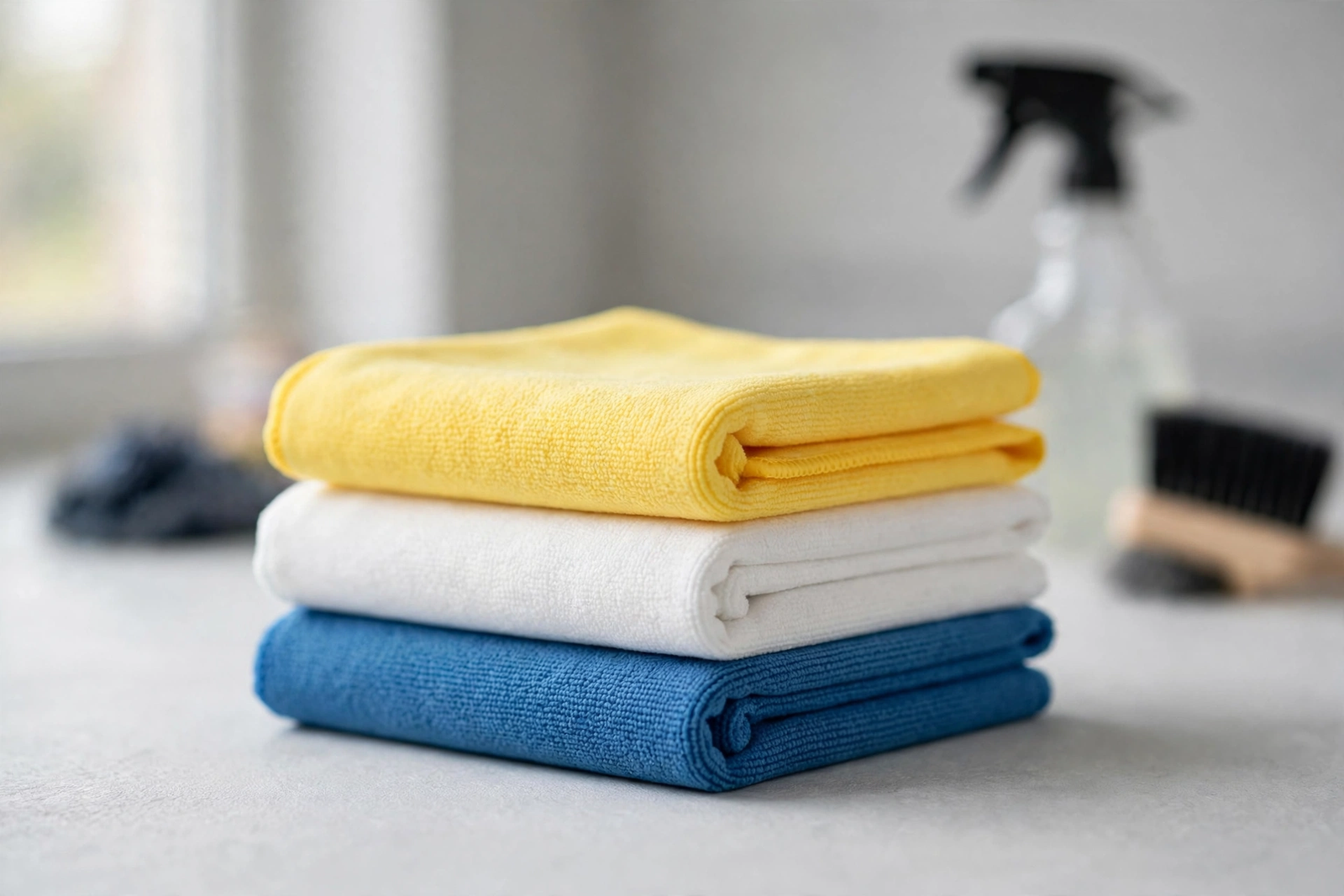
Gather the supplies before the first step so you are not hunting for a cloth with foam on your hands: a vacuum with a crevice tool, a few clean microfiber cloths, a soft brush, an interior cleaner, a carpet foam, and a bin bag. Test any cleaner on a hidden spot first — under a seat or on the edge of a mat — and wait a few minutes to check for discolouring before you use it on a visible surface. If the outside needs work at the same time, our best car cleaning kit roundup covers the wash soap, wheel cleaner and tools for the outside of the car.
Step 1: Vacuum the Carpets, Mats and Seats
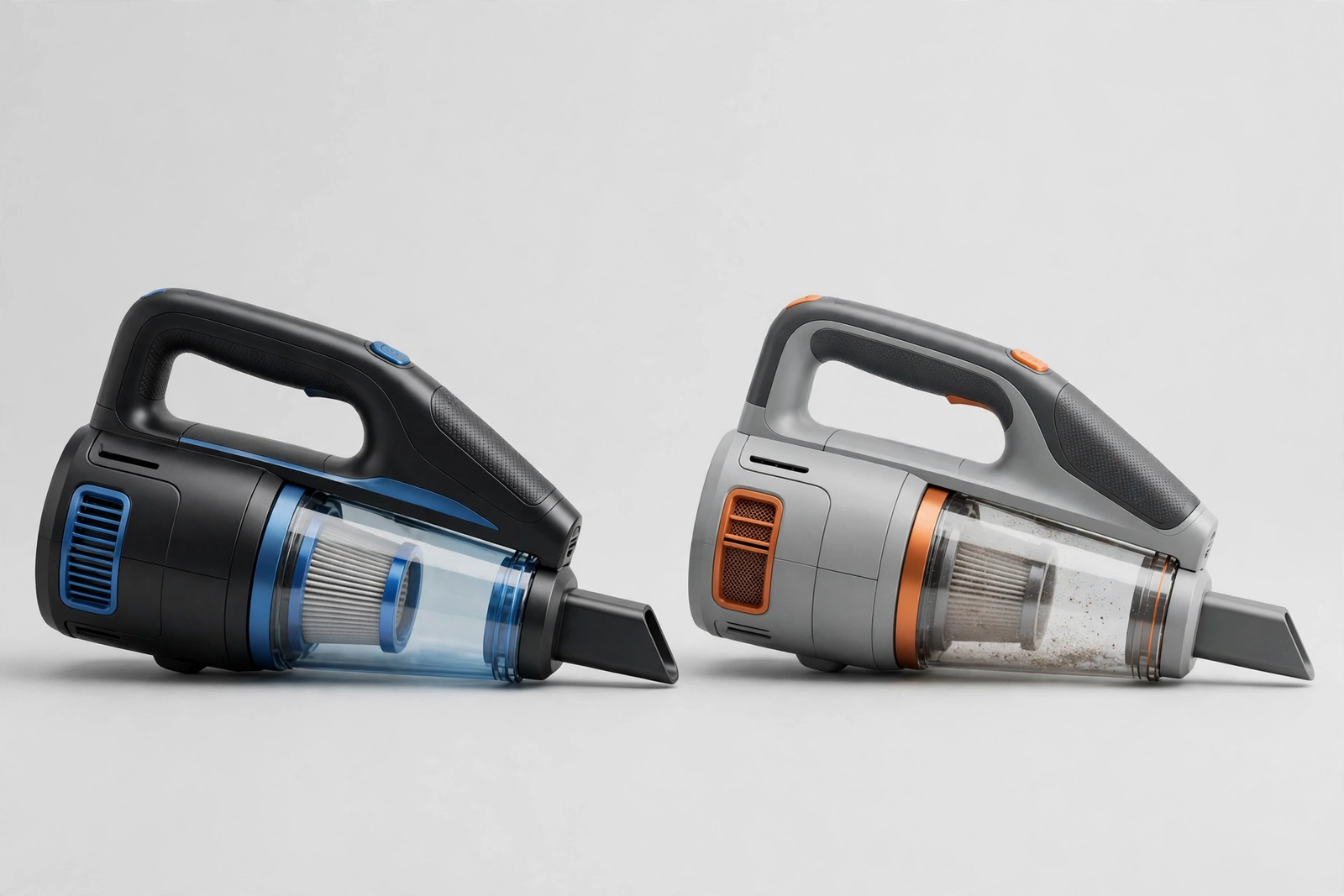
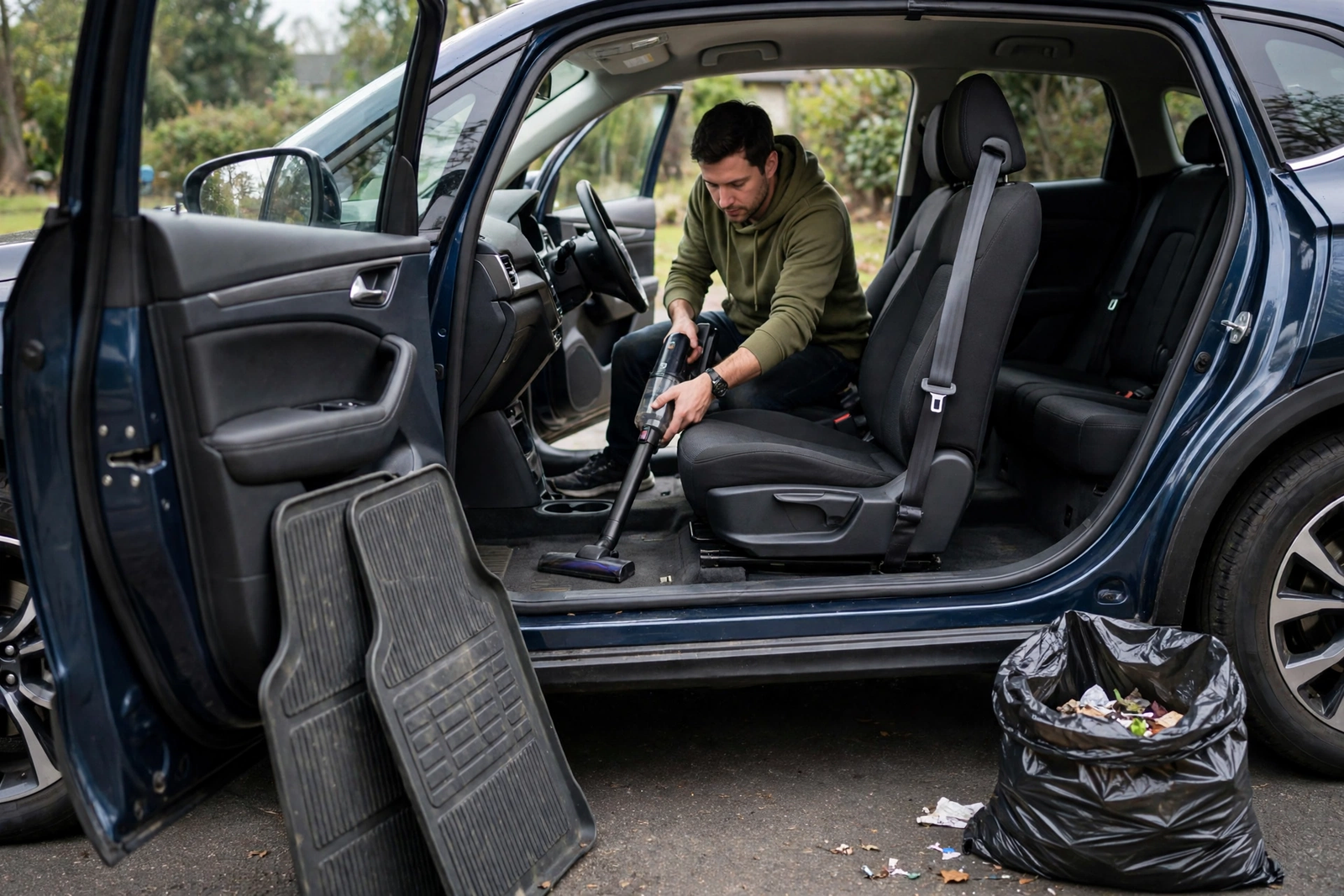
Vacuum first, because dust and crumbs hold smell and get in the way of every later step. Take the floor mats out of the car and shake them outside, then vacuum the carpets, the seats, under the seats, and the boot, using the crevice tool for the gaps between the seats and the centre console — that is where crumbs and dust collect, and where smells hide. Vacuum the mats on both sides before they go back in, and vacuum the seat fabric itself: a seat that looks clean still holds dust in the weave.
Deal with what the vacuum finds. A stain you can see now is a stain to treat in Step 4, not a stain to vacuum over and forget — mark it in your head and move on. If a mat is wet, leave it out of the car to dry in the sun while you work on the rest of the interior; a damp mat left in a closed car goes musty fast.
Step 2: Clean the Dashboard, Vents and Trim
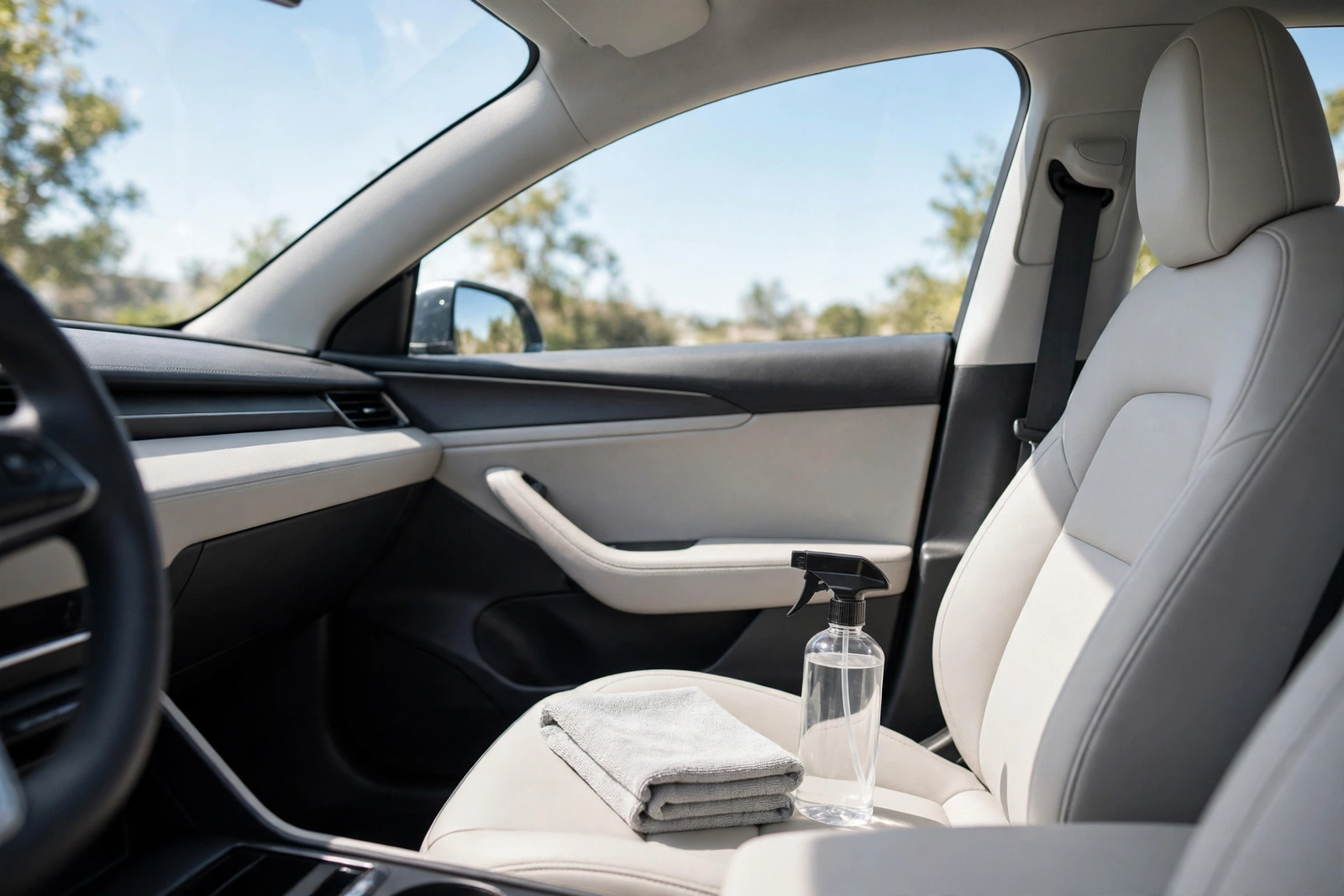
Dust the hard surfaces before you wipe them, or you will grind the dust into the trim. Run a dry microfiber cloth over the dashboard, the door panels, the steering wheel and the centre console, then wipe with a damp cloth and a car interior cleaner. Work top to bottom so the dust falls onto surfaces you have not wiped yet, and use a soft brush or a cloth wrapped over a thin tool for the air vents — dust sits in the slats and blows out every time the fan runs, so the vents are worth the extra minute.
The cleaner for this step is the Chemical Guys Total Interior Cleaner and Protectant, 16 oz. The listing describes it as a cleaner and protectant for leather, vinyl, plastic, rubber, glass, metal, cloth, carpet and wood dashboard trim, with UV blockers and a streak-free finish with no greasy residue. Mist it onto a towel first, never straight onto a screen or an electronic control — a wet screen is the one mistake that turns a clean into a repair bill. One honest note: older copies of this listing showed no featured offers, while a price tracker showed a current price on 2026-11-08 — check the live listing has an offer before you buy.
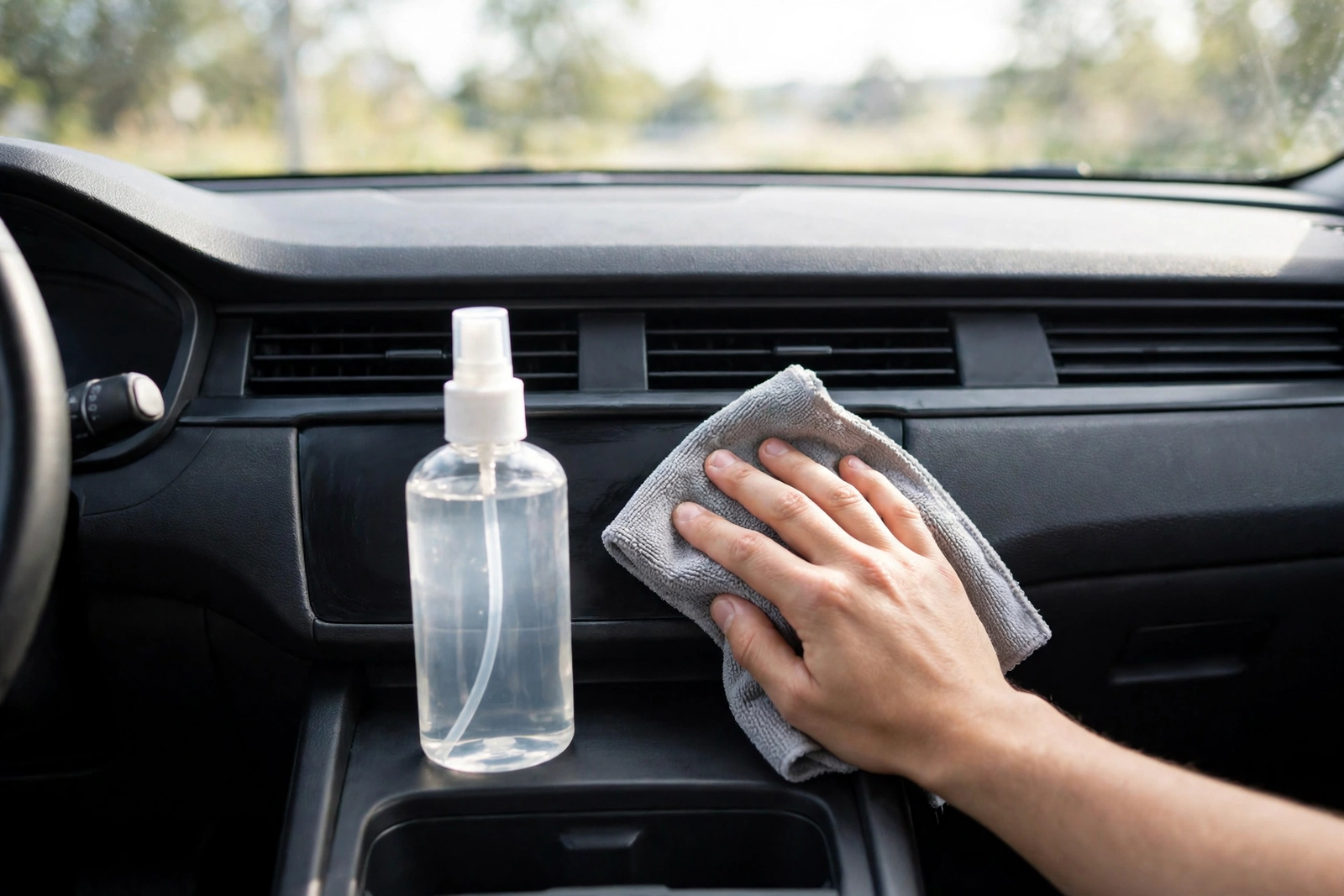
Chemical Guys Total Interior Cleaner and Protectant, 16 oz on Amazon: cleaner and protectant for leather, vinyl, plastic, glass and cloth, with UV blockers, streak-free with no greasy residue per the listing.
Step 3: Clean the Seats by Material — the Short Version
Seats are the one part of the interior that needs its own method, because the right cleaner depends on the material — and this guide does not repeat the full method here. Our how to clean car seats guide covers it step by step for leather, cloth, vinyl and Alcantara, including how to identify the material before you touch it with a cleaner. The short version: identify the material, vacuum the seat, wash it with the cleaner that fits that material, and let it dry fully before anyone sits on it.
For the product side, our best car seat cleaner roundup compares four seat cleaners head to head by surface. Two rules from that roundup carry over here: only the Chemical Guys spray lists leather among its surfaces, and the foams are fabric cleaners — Meguiar’s lists carpet and upholstery fabric only, and Armor All states outright that its spray is not recommended for suede or leather. Leather also needs a conditioner after cleaning, which is general detailing guidance, not a step to skip.
Step 4: Clean the Carpets and Floor Mats
Carpets and mats take the worst of the dirt, so they take the strongest cleaner in this guide. Spray the foam onto the stain or the dirty patch, work it in with a brush, let it sit for a few minutes, and blot it out with a clean towel — pressing down, not rubbing, so the dirt comes up instead of spreading. Rubber mats are simpler: take them out, wash them with water, scrub the grooves, and let them dry in the sun before they go back in. Carpet mats need the foam treatment, and a mat that is still damp when it goes back in will smell musty within days.
The foam for this step is Meguiar’s Carpet and Upholstery Cleaner, G9719, 19 oz. The listing describes it as a fast-acting foam that penetrates and dissolves stains, with a fresh scent. For a quick spot clean-up between deep cleans, the Armor All Carpet and Upholstery Cleaner Spray is the faster option — a foaming spray that lifts dirt from upholstery, per the listing — but it is a fabric cleaner, not a leather cleaner, so keep it off leather and suede. If the dirt is ground in deep enough that foam and a brush do not shift it, the machine route is an extractor: our car carpet cleaner review covers the portable extractor that handles that job.
Meguiar’s Carpet and Upholstery Cleaner, G9719, 19 oz on Amazon: fast-acting foam that penetrates and dissolves stains, fresh scent per the listing.
Armor All Carpet and Upholstery Cleaner Spray, 22 oz on Amazon: foaming spray that lifts dirt from upholstery, per the listing; not recommended for suede or leather.
Step 5: Clean the Glass Inside and Out
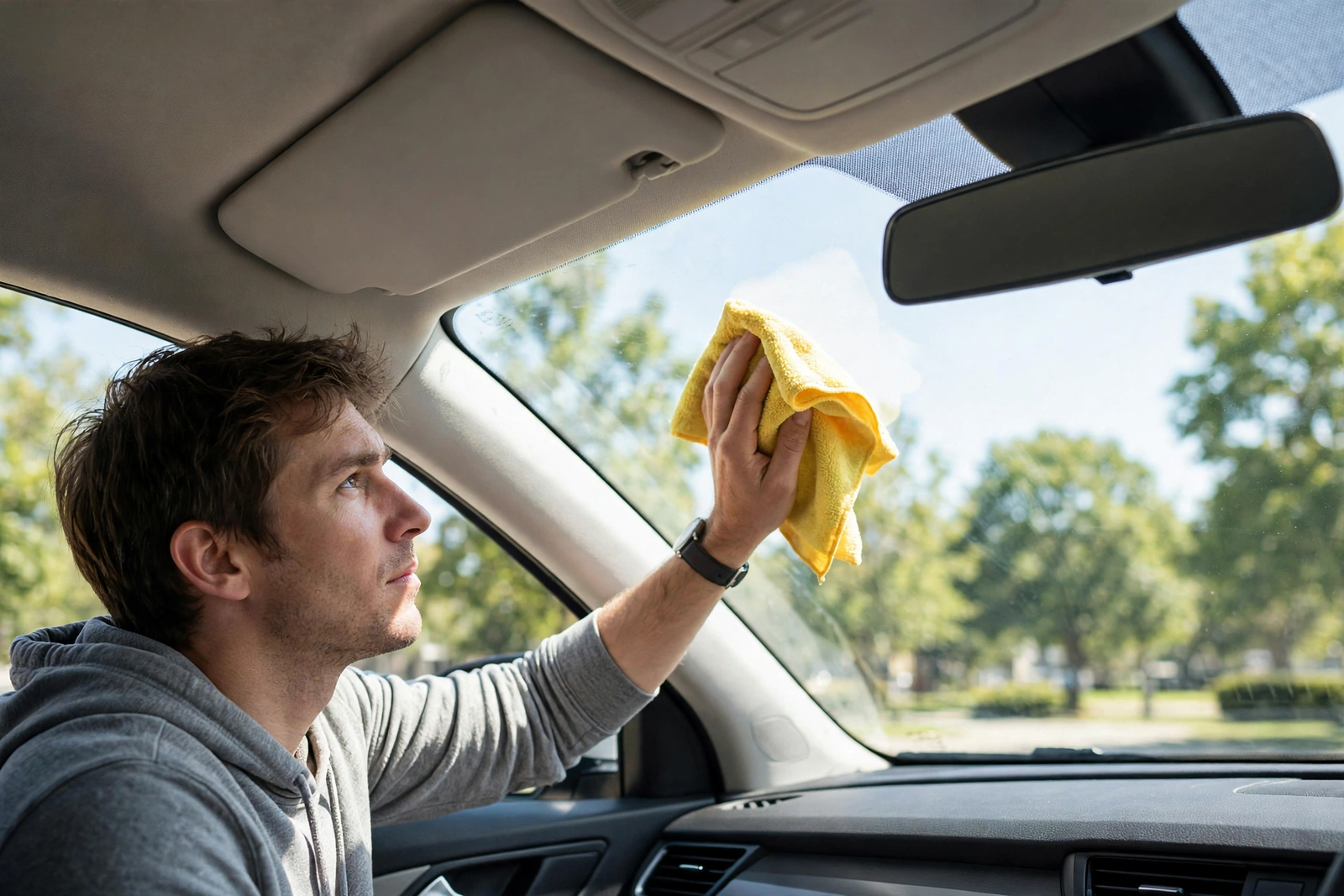
The inside of the glass films over with a haze from the dashboard plastics and from breath, and it is the haze that glares at night — so the inside matters more than the outside. Clean the inside of the windscreen, the side windows and the rear window with a dedicated glass cleaner and a clean microfiber cloth, wiping in one direction on the inside and the other direction on the outside, so a streak tells you which side it is on. Do the mirrors at the same time, and keep the cleaner off the dashboard: spray it onto the cloth, not onto the glass above the electronics.
Work the glass last among the hard surfaces, because dust from the dashboard and the headliner settles on it while you clean. If the haze comes back within days, the cause is usually a dirty cabin filter or a dashboard dressing that is still gassing off, not a bad cloth — change the filter before you buy another glass cleaner.
Step 6: Clean the Headliner and Deal With Odour
The headliner is the most delicate surface in the car, so it gets the lightest touch in this guide. Vacuum it gently with a brush attachment to take the dust off, and if there is a mark, dab it with a barely damp cloth and a little interior cleaner — never soak it and never scrub it, because the fabric is glued to the board behind it and a soaked headliner sags. Smoke and stale smells live in the headliner and the seat fabric, not just on the surfaces you can see, which is why a car can look clean and still smell stale.
Odour is fixed by removing the source, not by adding scent. Take out the trash, dry the wet mats, clean the seats and the headliner, and air the car out with the doors open. A smell that stays after a full clean usually lives in the cabin filter, so change the filter before you spend anything on a freshener — the filter sits behind the glovebox in most cars and holds years of dust and moisture when it has never been changed.
How Often to Clean the Interior of a Car
A full job to clean the interior of a car is worth doing every month or two for a daily driver, and more often if the car carries kids, dogs or food. Between full cleans, vacuum weekly and wipe the dashboard and vents every couple of weeks — a ten-minute wipe-down keeps the dust from building into the film that takes an afternoon to remove. Floor mats are the weekly job that matters most: shake them out every week and they never get bad enough to need the foam.
Let the car tell you when it is time. When the air smells stale with the vents off, when the glass hazes within days of cleaning, or when the mats look dirty from the driver’s seat, the interior is due — and a car that carries one commuter and nothing else can go longer between full cleans than a car that carries a family.
Mistakes That Damage a Car Interior
Most damage from trying to clean the interior of a car comes down to one of the five mistakes below.
Spraying cleaner directly onto screens and electronics: liquid runs into the edges and behind the buttons. Mist the cleaner onto a cloth first, and wipe the screen with the cloth.
Soaking the headliner: a wet headliner sags because the fabric is glued to the board behind it. Vacuum it gently and dab marks with a barely damp cloth, never scrub it wet.
Using a fabric foam on leather or suede: foams are made for carpet and upholstery fabric, and Armor All states outright that its spray is not recommended for suede or leather. Match the cleaner to the material, and test a hidden spot first.
Skipping the hidden-spot test: a cleaner that discolours a seat is a small problem under the seat and a big problem in the middle of it. Test first, every time, even with a cleaner you have used before.
Putting wet mats back in the car: a damp mat in a closed car goes musty within days and undoes the whole clean. Dry mats in the sun, and leave them out until they are fully dry.
The Verdict
To clean the interior of a car well, order matters more than products. Empty the car, vacuum everything, wipe the dashboard and vents, clean the seats by their material, wash the carpets and mats, clean the glass, and finish with the headliner and the smell — top to bottom, dry before wet, and a hidden-spot test before any new cleaner. The three supplies in this guide — the Chemical Guys interior spray, the Meguiar’s carpet foam and the Armor All spot spray — cover those steps between them, and they are the same supplies the next clean will need too.
Start by emptying the car. If you find the source of the smell in the first five minutes, the rest of the job is already half done.
Chemical Guys Total Interior Cleaner and Protectant, 16 oz on Amazon: cleaner and protectant for leather, vinyl, plastic, glass and cloth, with UV blockers, streak-free with no greasy residue per the listing.
Frequently Asked Questions
How do you clean the interior of a car fast?
To clean the interior of a car fast, empty it, vacuum the seats and carpets, wipe the dashboard and vents with an interior cleaner, and clean the glass — that covers the visible dirt in under an hour. A deep clean of the seats, mats and headliner takes longer, so save those for a full clean.
What is the best thing to clean a car interior with?
An all-surface interior cleaner such as the Chemical Guys Total Interior Cleaner, which the listing covers for leather, vinyl, plastic, glass and cloth, plus a carpet foam such as Meguiar’s for the mats — one spray for the hard surfaces and one foam for the fabric covers the whole cabin.
Can I use household cleaners on my car interior?
No — household cleaners can be too harsh for car trim, leather and screens, and some leave a film on glass. Use a cleaner made for car interiors, test it on a hidden spot first, and never spray cleaner directly onto screens or electronics.
How do I clean car seats without damaging them?
Clean seats by their material: cloth takes an upholstery foam worked in and blotted out, leather takes a leather cleaner followed by conditioner, and vinyl takes a damp wipe with an interior cleaner. Our how to clean car seats guide covers each material step by step.
How do I get rid of a bad smell in my car?
Remove the source first — trash, spills and wet mats — then clean the seats, carpets and headliner, and air the car out. A smell that stays after a full clean usually lives in the cabin filter, so change the filter before buying another scent product.
How often should I clean the interior of my car?
Vacuum weekly and wipe the dashboard and vents every couple of weeks; a full job to clean the interior of a car is worth doing every month or two for a daily driver, and more often if the car carries kids, dogs or food.