PSR Scratch Remover Review: The Quixx Paint Scratch Kit
A psr scratch remover is the small two-tube kit that promises to erase a light scratch from your car’s paint without a body shop visit. PSR stands for Paint Scratch Remover, and the kit behind the name is the Quixx Paint Scratch Remover — a German-made system built around a repair polish, a finish polish, and a few strips of fine sandpaper. This psr scratch remover review looks at what the Quixx kit is, how its two-step process works, which scratches it can fix and where it stops, then compares it with the two alternatives most buyers consider.
The short answer: buy the Quixx PSR kit if your scratch lives in the clear coat only — the kind your fingernail glides over without catching — and you want a hand-applied fix with no power tools. Buy Meguiar’s Ultimate Compound instead if you also want to tackle swirls across a whole panel, and the Mothers scratch remover if you want the simplest single-bottle rub. Skip every one of them if your nail catches in the scratch: that damage usually goes through the clear coat, and a psr scratch remover is unlikely to fill it.
As an Amazon Associate I earn from qualifying purchases.
Quick Pick: PSR Scratch Remover
| Pick | Product | Best For | Check Price |
|---|---|---|---|
| Overall Winner | Quixx 00070-US Paint Scratch Remover Kit | Isolated clear-coat scratches: a two-step kit built for one scratch at a time, by hand | Check Price on Amazon |
| Best for Larger Areas | Meguiar’s Ultimate Compound, 15.2 oz | Swirls and light scratches across a whole panel, by hand or machine | Check Price on Amazon |
| Simplest Hand Option | Mothers California Gold Scratch Remover, 8 oz | One bottle, one step: light scratches, scuffs, and paint transfer rubbed by hand | Check Price on Amazon |
Table of Contents
What the PSR Scratch Remover Kit Is
The letters PSR stand for Paint Scratch Remover — the Quixx kit’s own name for its product, as its instructions call it the Quixx PSR. Quixx is a German repair brand, made by E.V.I. GmbH of Germany, with more than 25 years and products in over 50 countries. The company pioneered the first headlight restoration kit, and its psr scratch remover is built on the same do-it-yourself idea: a small, cheap kit for one job in the driveway.
The psr scratch remover is a two-component system: tube No. 1 is a repair polish that levels the clear coat around the scratch, and tube No. 2 is a finish polish that restores the gloss. Quixx describes the process as Plastic Deformation — the polish reshapes the clear coat surface rather than filling the scratch with wax or paint, so the repair does not wash out the way a wax-based filler does. The brand’s distributor also states that it is the only scratch remover with TÜV approval for its efficiency — the distributor’s claim, not an independent test result.
Quixx says the kit works on most paint finishes — not ceramic-coated or matte/satin finishes — clear coats, metallics, and non-metallic paints — and on any painted surface, motorcycles and boats included. One limit is stated in its own instructions: on nano-paints, removal is limited to minor scratches. The psr scratch remover is sold at Walmart, AutoZone, Pep Boys, ACE Hardware, and Amazon — a shelf product you can buy and use the same afternoon.
What Is in the Box
The Quixx 00070-US kit is small enough to fit in a glove box. Inside are two tubes — No. 1 Repair Polish and No. 2 Finish — a few strips of fine sandpaper, and two soft polishing cloths. Each tube holds under an ounce of polish, enough for several isolated scratches but not a whole panel; this psr scratch remover is a spot-repair kit, and the tube size says so.
One detail to be honest about: sources disagree on the sandpaper. A current review roundup lists four pads of 2500-grit sandpaper, an older magazine test describes four pieces of 3000-grit, and the kit instructions mention six strips. The grit and count have evidently changed across production runs, so this review states only what every source agrees on — a few strips of fine sandpaper — and you should check the grit printed on your own strips before use.
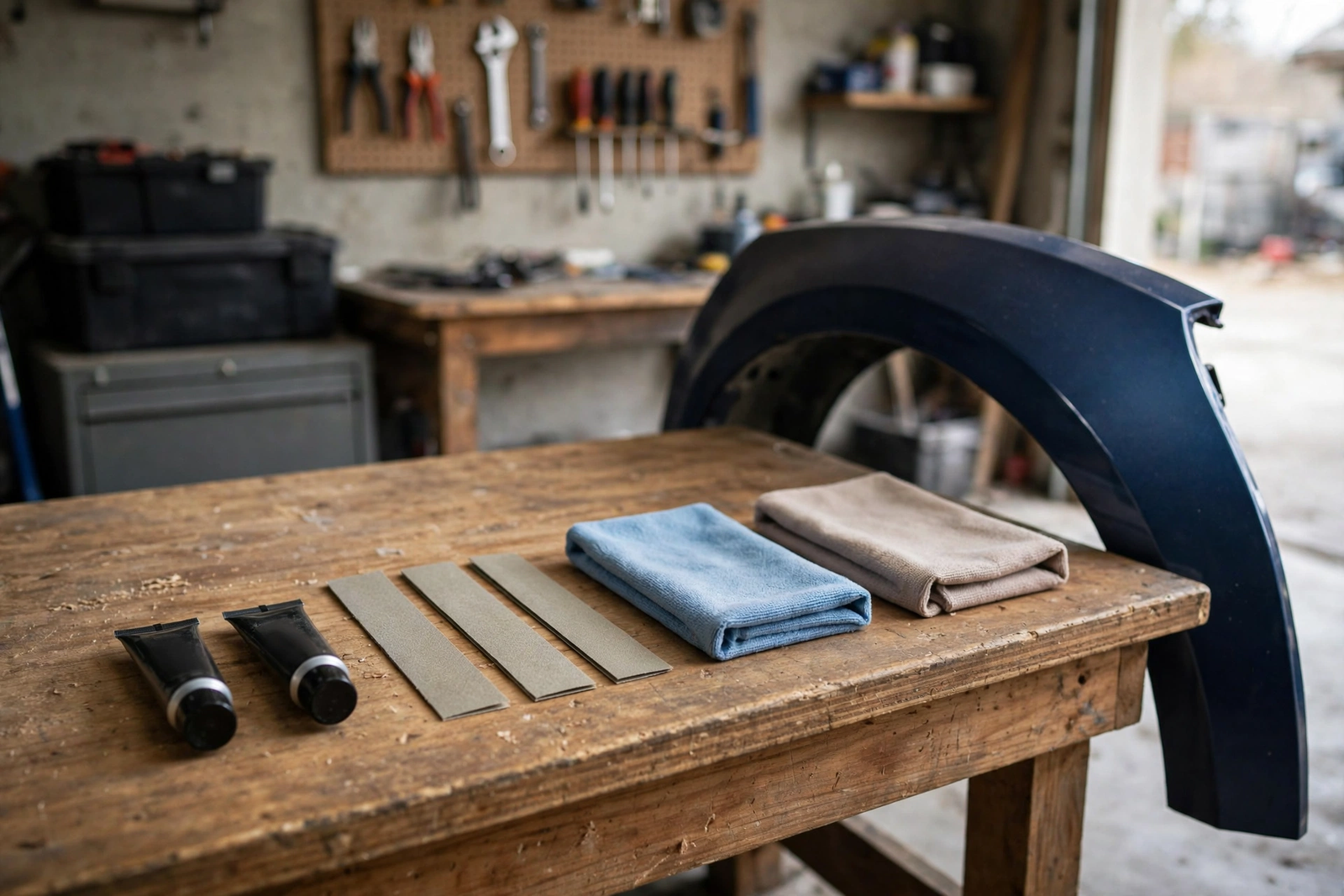
Quixx 00070-US Paint Scratch Remover Kit on Amazon: two-step repair polish and finish polish with sandpaper strips and polishing cloths.
How to Use the PSR Scratch Remover
Start by washing and drying the scratched area: dirt left under the polish becomes a new scratch, so the wash is part of the repair. Work in the shade on cool paint — polish dries too fast on a hot panel — one scratch at a time.
For a deeper clear-coat scratch, the kit’s instructions have you wet-sand first: wet the strip and the paint, then sand lightly with short, even strokes until the scratch edges feel level. This is the step that makes beginners nervous, and it should — sandpaper removes clear coat, and the point is to remove as little as possible. If the scratch is only a surface scuff, skip the sanding entirely and go straight to the polish. One owner testing the kit on a forum reported that the No. 2 finish polish alone removed a scuff without much effort, and only used the No. 1 polish and sandpaper on a deeper key scratch — so start with the gentlest step and escalate only if the mark remains.
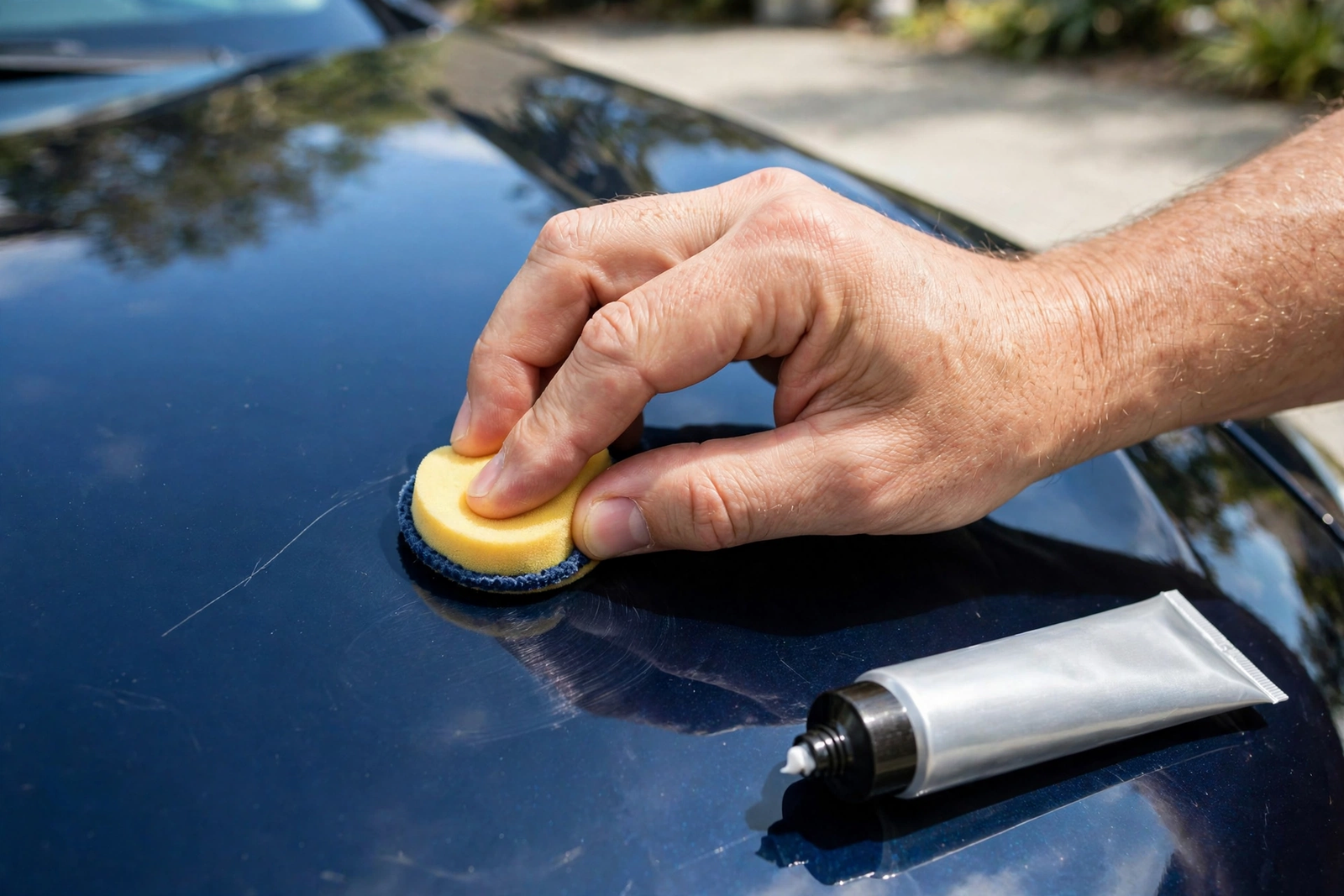
Next, put a small amount of No. 1 Repair Polish on a polishing cloth and rub it into the scratch with small, overlapping circular passes, keeping the pressure even. Wipe the area clean and look at it from several angles — a scratch still visible in direct light needs another pass, not harder pressure. Then finish with No. 2 Finish Polish the same way, and buff with a clean cloth until the gloss matches the paint. Wash the car before judging the result: polish residue can hide a scratch that is still there.
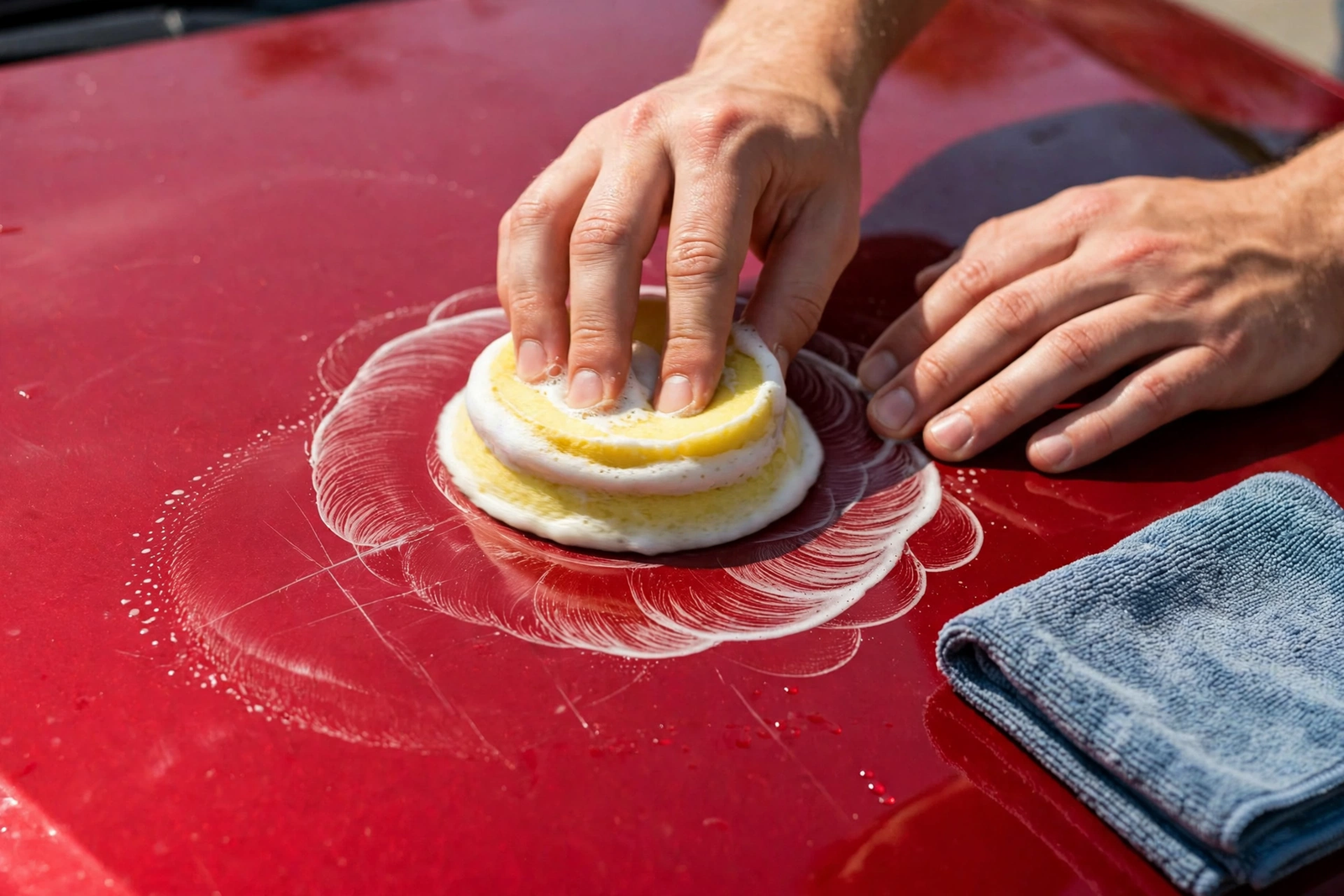
The Fingernail Test: Will It Fix Your Scratch?
Before you buy any psr scratch remover, run the fingernail test: drag your thumbnail slowly across the scratch. If your nail glides over it without catching, the scratch lives in the clear coat only, and a kit like the Quixx PSR can level it out. If your nail catches in the groove, the scratch has likely broken through to the colour coat or primer, and a scratch remover is unlikely to fix it — Consumer Reports found Quixx improved even a scratch a fingernail could catch, but that is the exception, not the rule. That damage usually needs touch-up paint or professional work.
The test also sorts out the easy wins. Paint transfer — the coloured mark left when another car’s bumper or a shopping cart rubs your paint — sits on top of the clear coat and usually comes off with polish alone, as does a scuff from a branch or a key that only grazed the surface. Our step-by-step guide to removing scratches from car paint walks through the full diagnosis in order, from the fingernail test to compounding and polishing.
Be realistic about what “fixed” looks like. A clear-coat scratch levelled with a psr scratch remover can become invisible from a normal distance, but a deep mark may leave a faint ghost line where the paint heights differ slightly — one owner testing the Quixx kit reported exactly that on a key scratch: undetectable at a glance, slight ghosting on close inspection — a good result for a hand-applied kit.
PSR vs Meguiar’s Ultimate Compound vs Mothers
The Quixx psr scratch remover is not the only way to remove a light scratch by hand, and the two alternatives below cover the jobs this psr scratch remover does not. Meguiar’s Ultimate Compound is the benchmark compound here — a single bottle that cuts and finishes in one step, by hand or by machine — and the product our scratch-removal guide picks for clear-coat scratches and swirls. The Mothers California Gold Scratch Remover is the simplest of the three: one 8 oz bottle, model 08408, rubbed by hand.
| Feature | Quixx PSR (B000UVUAFO) | Meguiar’s Ultimate Compound (B001O7PNNM) | Mothers 08408 (B0002U1TZS) |
|---|---|---|---|
| System | Two-step kit: repair polish + finish polish, plus sandpaper and cloths | Single compound, 15.2 oz bottle | Single bottle, 8 oz |
| Best for | One isolated scratch at a time | Swirls and scratches across a whole panel | Quick hand rub on a light scuff |
| Power tools | No — hand application only | Optional — works by hand or machine | No — hand application only |
| Sandpaper step | Yes, included for deeper clear-coat marks | No | No |
| Deep scratches | No — clear coat only | No — clear coat only | No — clear coat only |
| What it cannot fix | Through-clear-coat damage, chips, rust | Through-clear-coat damage, chips, rust | Through-clear-coat damage, chips, rust |
The PSR scratch remover is a spot-repair kit: two small tubes, aimed at one scratch, with a sandpaper step for deeper clear-coat marks. Ultimate Compound is the broader tool — one bottle for swirls, oxidation, and light scratches over a larger area, and the only one that works with a machine polisher. The Mothers bottle is the lightest touch: no kit, no sandpaper, just a hand rub for a fresh scuff. None of the three fixes a scratch your nail catches in. One independent test went the other way: Car and Driver’s scratch-remover test picked the Meguiar’s Scratch Eraser Kit over Quixx, calling Quixx “overpriced… underwhelming” — that is a different Meguiar’s product (the drill-mounted Scratch Eraser Kit), not the Ultimate Compound in this roundup.
One more system is worth naming even though it is not linked here: the 3M Scratch Removal System, part number 39071, is a three-step drill-based kit that a well-known independent test channel ranked first among those it tested. No verified US Amazon listing for it was found at draft time, so it carries no button here; if you want a drill-powered kit, search for part number 39071.
Meguiar’s Ultimate Compound on Amazon: 15.2 oz, pro-grade compound that removes swirls and light scratches while restoring gloss.
Mothers California Gold Scratch Remover on Amazon: 8 oz bottle, model 08408, for light scratches, scuffs, and paint transfer.
What the PSR Scratch Remover Cannot Fix
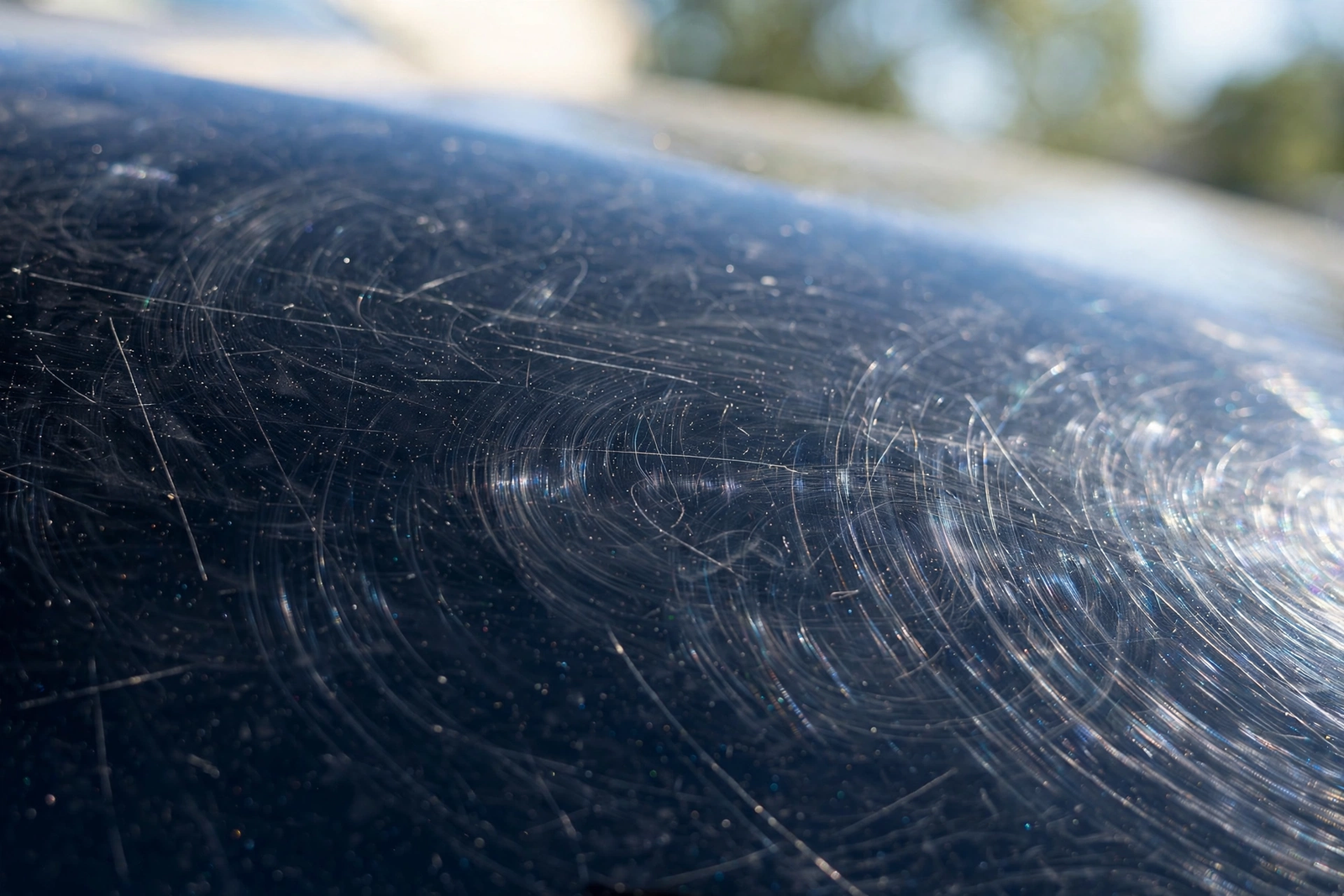
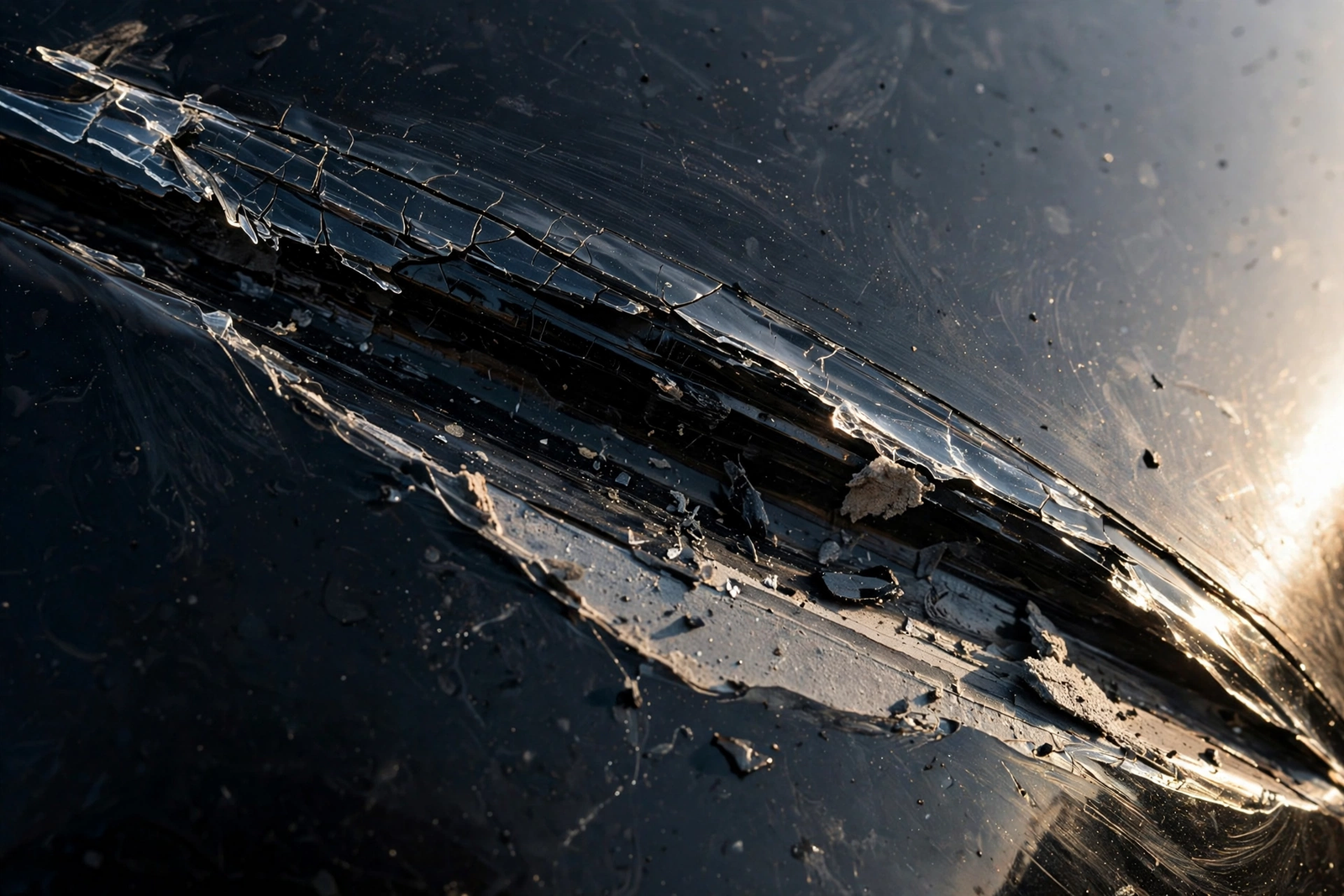
Every scratch remover has the same hard limit, and this psr scratch remover is no exception: it can only level the clear coat. A scratch that reaches the colour coat, the primer, or bare metal needs paint, not polish — which is why the fingernail test comes first.
Stone chips are paint jobs too. A chip is missing paint, not scratched paint, and rubbing polish over it only shines the metal underneath. Our guide to repairing chipped paint covers the touch-up-pen method, including thin layers sealed with clear coat. Rust is further still: once rust has started under a chip, no polish stops it.
Two more limits. First, peeling or failing clear coat cannot be polished back — the clear coat itself is coming off, and levelling what remains only makes the edge more obvious. Second, swirls across a whole panel are the wrong job for a spot kit; the two small tubes will run out before the hood is done. Our paint correction guide explains that job in order — wash, decontaminate, compound, polish, protect.
Who Should Buy It — and Who Should Not
Buy the Quixx psr scratch remover if: you have one or two light scratches that pass the fingernail test, you want a hand-applied fix with no power tools, and you like a kit that includes sandpaper and cloths.
Buy Meguiar’s Ultimate Compound if: your problem is bigger than one scratch — swirls across a panel, light oxidation, or several marks at once — or you own a machine polisher and want a compound that works with it.
Buy the Mothers scratch remover if: you want the simplest possible buy — one bottle, rubbed in by hand — for a fresh scuff or paint-transfer mark.
Skip all three if: your nail catches in the scratch, the damage is a chip down to metal, rust has started, or the clear coat is peeling. In those cases the money goes to touch-up paint or a body shop, not another tube of polish.
The Verdict
The psr scratch remover — the Quixx Paint Scratch Remover kit — earns its place as the pick for one job: erasing an isolated clear-coat scratch by hand. It is a small, cheap, complete kit from a German brand with a long history in DIY repair, aimed at the scratch you noticed this morning, not at correcting a whole car. The sandpaper step gives it reach into deeper clear-coat marks that a single bottle cannot touch, as long as you use it lightly and only when the scratch needs it.
Buy it for what it does, and do not buy it for what it cannot do. Run the fingernail test first; if your nail catches, put the money toward touch-up paint instead. And if your problem is swirls across a panel rather than one scratch, the Meguiar’s compound is the better buy. For a single light scratch, though, the Quixx kit is the right tool.
Quixx 00070-US Paint Scratch Remover Kit on Amazon: two-step repair polish and finish polish with sandpaper strips and polishing cloths.
Frequently Asked Questions
What does PSR stand for in a psr scratch remover?
PSR stands for Paint Scratch Remover. It is the Quixx kit’s own name for its product — the brand’s instructions refer to it as the Quixx PSR — and the kit is a two-step system with a repair polish, a finish polish, sandpaper strips, and polishing cloths.
Will a psr scratch remover fix a deep scratch?
No. A psr scratch remover only levels the clear coat. Run the fingernail test first: if your nail glides over the scratch without catching, it lives in the clear coat and the kit can fix it. If your nail catches, the scratch usually goes through to the colour coat or primer, and it usually needs touch-up paint or professional repair, not polish.
Do I need a machine polisher to use the Quixx kit?
No. The Quixx PSR kit is designed for hand application — polish on a cloth, rubbed in small overlapping circles. The sandpaper step is for deeper clear-coat marks only; a light scuff needs the polish alone. If you want a machine option, Meguiar’s Ultimate Compound works by hand or with a machine polisher.
Can I use a psr scratch remover on any car colour?
Yes. Quixx says the kit works on most paint finishes — not ceramic-coated or matte/satin finishes, including clear coats, metallics, and non-metallic paints, and the process levels the clear coat rather than adding colour, so no colour matching is needed. Its own instructions add one limit: on nano-paints, removal is limited to minor scratches.
How is the PSR kit different from Meguiar’s Ultimate Compound?
The psr scratch remover is a two-step spot-repair system aimed at one isolated scratch, with a sandpaper step for deeper clear-coat marks and tubes sized for a few scratches. Meguiar’s Ultimate Compound is a single 15.2 oz bottle for broader correction — swirls and light scratches across a whole panel — and it works by hand or with a machine polisher.
Will the scratch come back after washing?
Quixx describes the fix as permanent, because the process levels the clear coat rather than filling the scratch the way a wax-based filler does — and a filler is what washes out. That is the brand’s description of its own process, not an independent test result, so judge the repair on a clean, dry panel after washing rather than on polish residue.