VIOFO A119 Mini 2 vs Vantrue E1 Pro: Which Mini Dash Cam Should You Buy?
Two of the most-shopped mini dash cams look almost identical on a windshield: a small black box behind the mirror, nothing that screams “camera” to a passer-by, and no big screen pulling your eyes off the road. This viofo a119 mini 2 vs vantrue e1 pro comparison puts them head to head on the things that actually decide a purchase: video quality, night vision, parking mode, and what you still have to buy after the camera. The VIOFO records 2K at 60 frames per second from a Sony STARVIS 2 sensor; the Vantrue records 4K from a bigger STARVIS 2 sensor, with its PlatePix night processing and a CPL filter in the box.
The short answer: the Vantrue E1 Pro is the stronger camera on paper, and the one to buy if plate detail and night footage matter most. The VIOFO A119 Mini 2 is the simpler front-only camera, and its 60fps recording is a genuine advantage for fast-moving plates. Neither camera records a rear view, and neither gives you parking mode without a hardwire kit. The rest of this comparison shows where each one earns its place.
As an Amazon Associate I earn from qualifying purchases.
| Pick | Product | Why it stands out | Check Price |
|---|---|---|---|
| Overall Winner | Vantrue E1 Pro 4K Mini Dash Cam — 4K front, Sony STARVIS 2 IMX678, PlatePix HDR night vision, 1.54-inch IPS screen, GPS, 5GHz Wi-Fi, CPL filter included | The sharpest footage of the two: native 4K detail and the better night setup | |
| Best Budget | VIOFO A119 Mini 2 Dash Cam — 2K 60fps / HDR 30fps, Sony STARVIS 2 IMX675, GPS, 5GHz Wi-Fi, voice control, supercapacitor; no card included | The value route: smooth 2K 60fps front-only video with no rear channel to pay for | |
| Premium Pick | Vantrue E1 Pro + Hardwire Kit Bundle — the E1 Pro camera plus the Vantrue hardwire kit for parking mode in one purchase | The complete parking-ready package: 4K camera plus the hardwire kit, no separate accessory hunt |
Table of Contents
VIOFO A119 Mini 2 vs Vantrue E1 Pro: Side-by-Side Specs
All figures below come from the two cameras’ Amazon listings and user manuals, checked the same day this article was written. Where a figure could not be verified, the table says so instead of guessing. The viofo a119 mini 2 dash cam is the standalone listing (ASIN B0C5MVB7NX); the vantrue e1 pro dash cam is the standalone listing (ASIN B0DSKXJV3H).
| Spec | VIOFO A119 Mini 2 | Vantrue E1 Pro |
|---|---|---|
| Front resolution | 2K 2560×1440 @ 60fps; max 2.7K 2592×1944 @ 30fps | 4K 3840×2160 @ 30fps |
| Sensor | Sony STARVIS 2 IMX675, 5MP, 1/2.8-inch | Sony STARVIS 2 IMX678, 8MP, 1/1.8-inch |
| HDR | Yes, DOL-HDR (30fps) | Yes, PlatePix HDR |
| Field of view | 140° | 158° |
| Aperture | F1.6 | F1.8 |
| Screen | 1.5-inch LCD (per the listing) | 1.54-inch IPS |
| Wi-Fi | 5GHz + 2.4GHz dual band | 5GHz |
| GPS | Yes, built-in logger | Yes, built-in |
| Voice control | Yes, 10 commands | Yes |
| Parking mode | 3 modes; HK4 hardwire kit required | Buffered mode; hardwire kit required |
| Max card size | 512GB | 1TB |
| Card included | No | Not listed in the standalone box contents checked |
| CPL filter | Sold separately | Included |
| Power | Supercapacitor | Not verified in the sources checked |
| Warranty | Not verified | 18 months, per the user manual |
Video Quality: 2K 60fps vs 4K 30fps
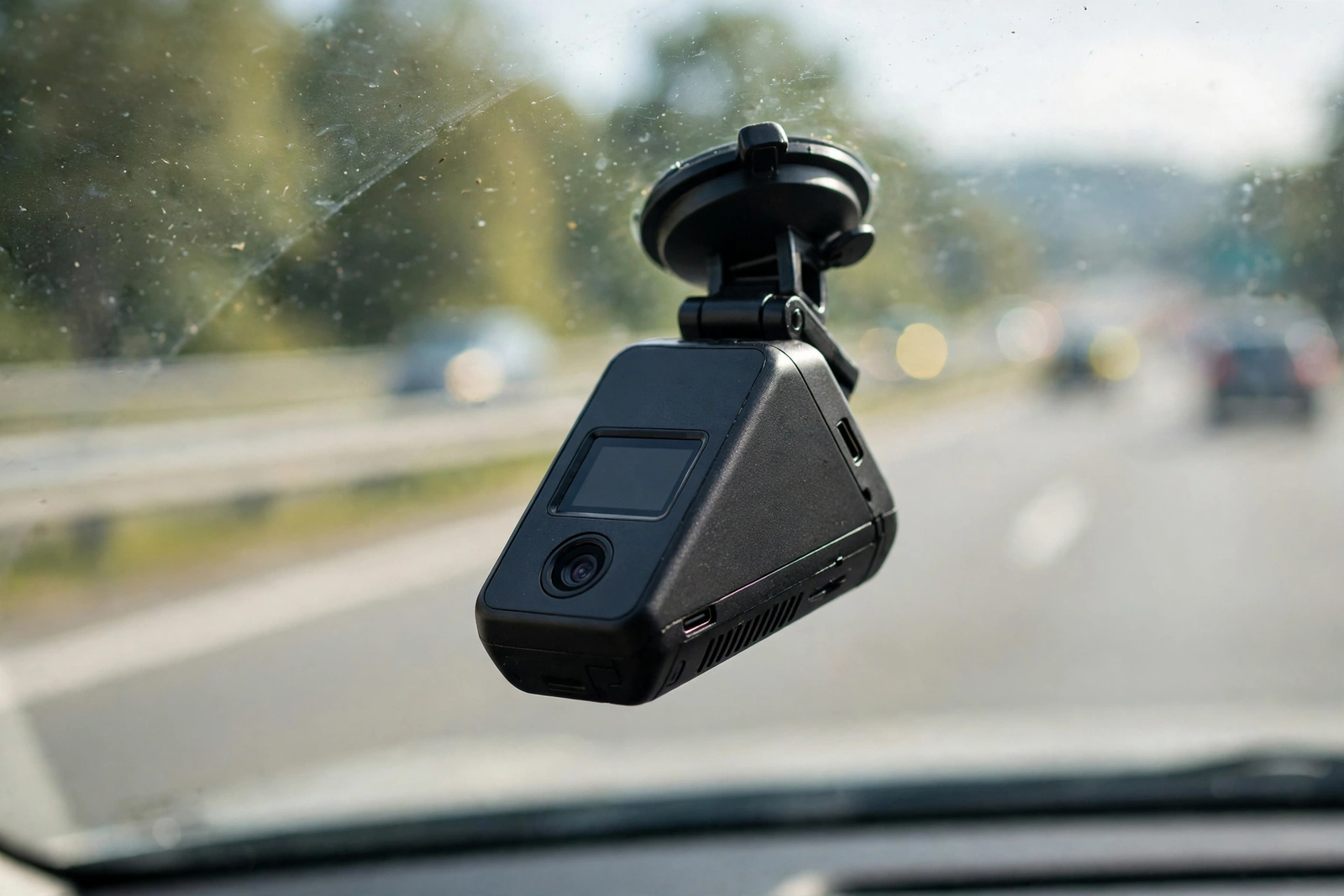
The headline difference is resolution: the Vantrue E1 Pro records 4K (3840×2160) at 30 frames per second from an 8MP Sony STARVIS 2 IMX678 sensor, while the VIOFO A119 Mini 2 records 2K (2560×1440) at 60 frames per second from a 5MP Sony STARVIS 2 IMX675 sensor, with a maximum 2.7K mode at 30 frames per second.
Here is the honest part: 4K is not automatically better. The E1 Pro’s larger 1/1.8-inch sensor gathers more light than the VIOFO’s 1/2.8-inch sensor, and its 4K frame holds more detail when you zoom into a plate. That is a real advantage for evidence — a plate you can read is worth more than one you can almost read.
But the VIOFO fights back with frame rate. At 60 frames per second, each frame captures half the motion blur of a 30fps recording, which helps with fast-moving plates — a car passing in the next lane, or a vehicle crossing at a junction. For a parked or slow-moving scene, the E1 Pro’s 4K wins; for a fast pass at speed, the VIOFO’s 60fps closes much of the gap. There is also a practical cost to 4K: bigger files fill a card roughly twice as fast, which is why the E1 Pro supports cards up to 1TB while the VIOFO tops out at 512GB.
Night Vision: STARVIS 2 on Both, PlatePix on One
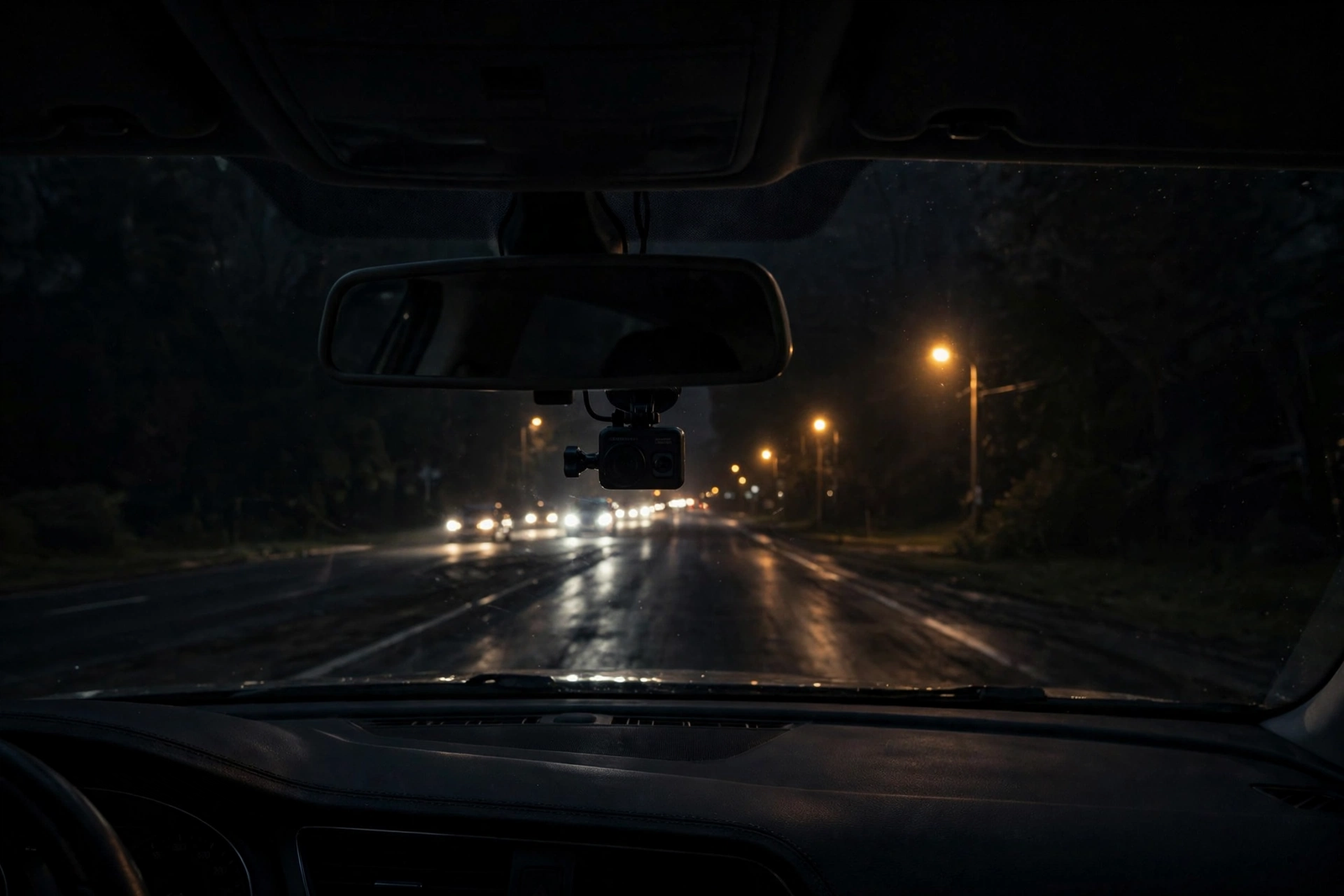
Night driving is where a dash cam earns its keep, and both cameras start from the same strong base: Sony STARVIS 2 sensors, back-illuminated designs built for low light. The VIOFO adds DOL-HDR and Night Vision 2.0 processing, plus a wider F1.6 aperture — but the E1 Pro’s larger sensor gathers more light overall, so the two advantages roughly cancel out.
What separates them is PlatePix. Vantrue’s PlatePix HDR is processing tuned to keep number plates readable at night, when a bright headlight in a dark frame is the classic dash-cam failure: the light blows out and the plate behind it disappears. HDR blends multiple exposures to hold the bright areas back, and PlatePix aims that processing at plates. The VIOFO’s DOL-HDR does the same general job — it just is not tuned to plates by name. No dash cam guarantees plate readability on a fast-moving car at night. But if most of your driving is after dark, the E1 Pro’s plate-focused processing is the tiebreaker. The CPL filter also helps the Vantrue at night: it comes in the box, cutting dashboard glare, while the VIOFO’s CPL filter is a separate purchase.
Size and Stealth: Two Cameras That Hide Behind the Mirror
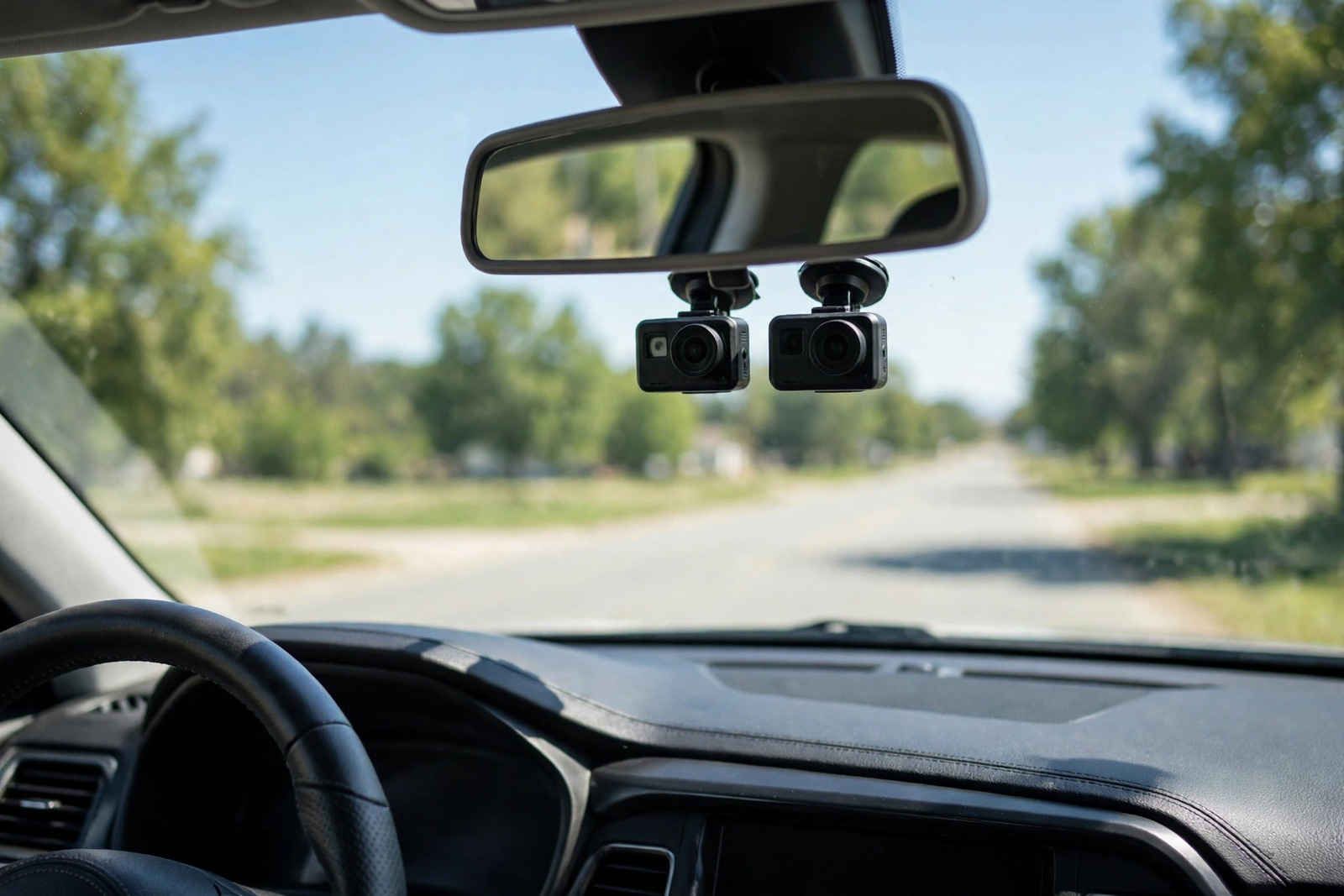
Both cameras are built to disappear. The VIOFO A119 Mini 2 is a slim wedge on a GPS adhesive mount, and the Vantrue E1 Pro is a small cube that one reviewer described as no bigger than a ring box, on a magnetic adhesive mount. Either one tucks behind the rearview mirror and stays out of your eyeline — the whole point of a mini dash cam.
The screens will not decide this for you. The VIOFO has a small 1.5-inch screen (per its listing) and the Vantrue has a 1.54-inch IPS screen — near-identical, both just big enough to frame a shot and change a setting without your phone. Day to day, both cameras are used through their apps, not their screens. The real difference is shape: the VIOFO’s wedge sits flatter against the glass, which suits a steep windshield, while the E1 Pro’s cube has the smaller footprint, which suits a crowded windshield. Measure your mirror area before you buy, and put the camera where it cannot block the driver’s view.
Parking Mode and the Hardwire Kit
Both cameras advertise parking mode, and both need a hardwire kit to use it — neither works as a parked-car guard out of the box. The camera in the box records while you drive; parked protection costs extra, plus installation. A supercapacitor, which the VIOFO has, handles cabin heat far better than a battery, but it does not keep the camera recording once the car is off.
The VIOFO offers three parking modes — Auto Event Detection with buffering, Time Lapse, and Low Bitrate recording — and needs the VIOFO HK4 hardwire kit (ASIN B09MRVP2PX), wired to the fuse box. Auto Event Detection is the mode most buyers want: the camera watches while parked and records when it detects a moving object, saving footage from 15 seconds before the event and 30 seconds after it. The HK4 cuts power before it drains the car battery, but the base kit does not include fuse taps, which you need for the installation.
The Vantrue E1 Pro offers buffered motion detection with the same 15-seconds-before and 30-seconds-after recording, plus Collision Detection, Low Bitrate, and Low Frame Rate modes. It needs Vantrue’s hardwire kit (the VP03) wired to the fuse box, sold separately. The simplest way to buy it is the bundle: the E1 Pro plus the hardwire kit in one listing (ASIN B0DXV5MFHB).
App, Wi-Fi, and Voice Control
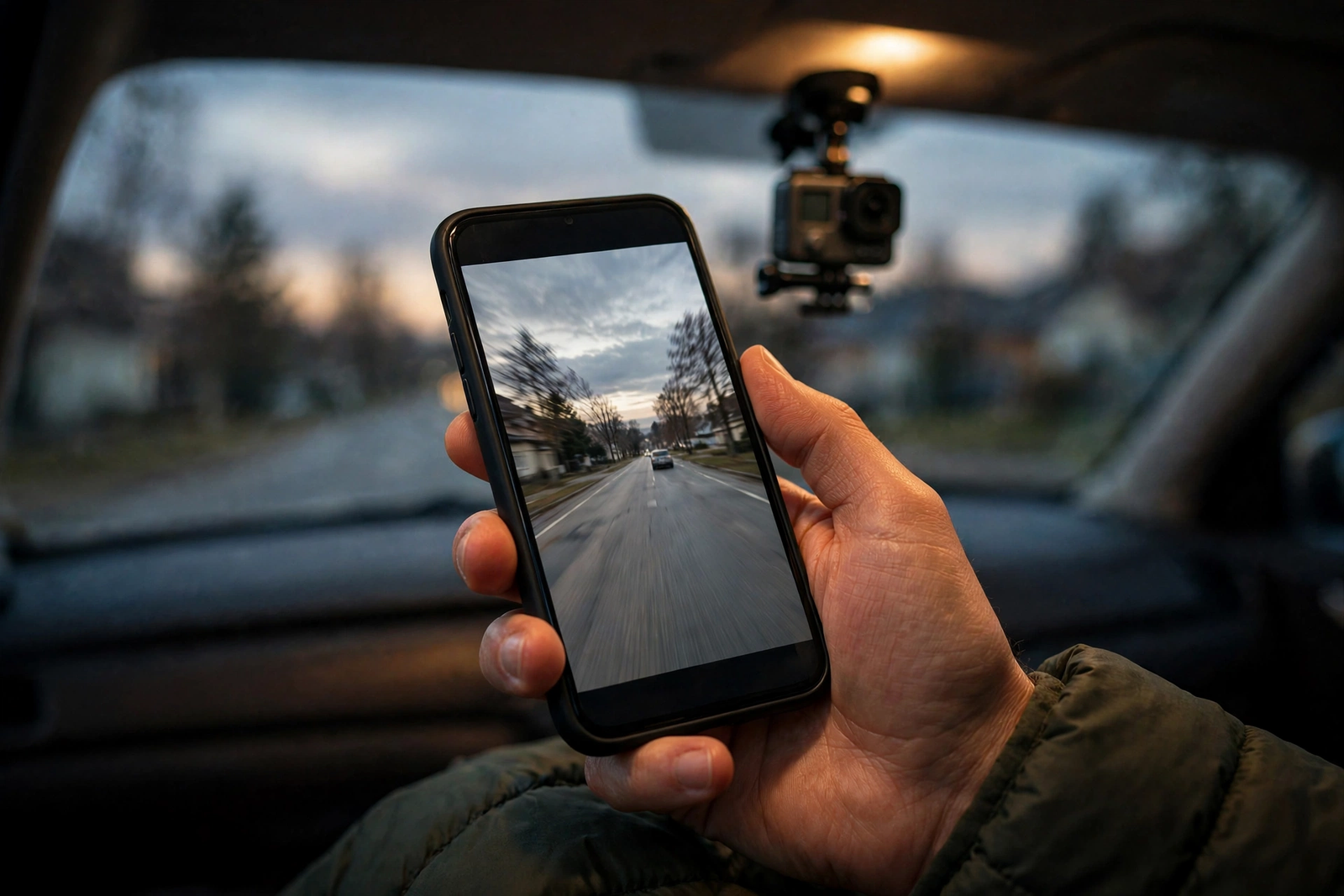
Both cameras move footage to your phone over Wi-Fi, which is how you will use them day to day: pull a clip at the roadside after an incident without removing the memory card. The VIOFO uses dual-band 5GHz and 2.4GHz Wi-Fi with the VIOFO app; the Vantrue uses 5GHz Wi-Fi with the Vantrue app, and its listing also offers live viewing through the app. The Wi-Fi range is short on both — inside or next to the car only. The Vantrue has an optional LTE module (the LT01); it is an accessory, not a built-in feature.
GPS is built into both cameras: it records your route and location with the footage, which matters if a clip ever supports an insurance claim. Voice control is hands-free on both — the VIOFO lists 10 voice commands, including locking a video and taking a photo, so you can lock a clip the moment something happens. The Vantrue covers the same hands-free basics, such as locking a recording without taking your hands off the wheel.
Storage: Cards, Capacity, and What Is in the Box
Neither camera is a complete box. The VIOFO A119 Mini 2 ships with no memory card — its listing title says so — and supports cards up to 512GB; the listing recommends a Class 10 or UHS-I card, and a high-endurance card is the right call. The vantrue e1 pro dash cam supports cards up to 1TB, and the standalone box contents we checked do not list a card, so budget for one there too. Buy the card with the camera, format it in the camera before first use, and check it every few months — a worn card is the most common reason a dash cam stops saving footage.
What is in the box beyond the camera also differs. The VIOFO includes the GPS mount, a charging cable, a data cable, and the manual — and no hardwire kit. The Vantrue includes the GPS adhesive mount, a car charger with a built-in cable, a data cable, and the CPL filter — and no hardwire kit in the standalone box.
Who Should Buy Which
Buy the Vantrue E1 Pro if: you want the sharpest footage from a mini dash cam — native 4K detail, PlatePix night processing, and the larger STARVIS 2 sensor — and you drive enough at night for that to matter. Buy it too if you want the CPL filter in the box and a single bundle that covers parking mode.
Buy the VIOFO A119 Mini 2 if: you want a simpler front-only camera and you value smooth 60fps footage for fast-moving traffic, or you want the supercapacitor build for hot summers. You give up 4K detail and the plate-tuned night processing, and you gain a camera with fewer things to buy.
Either works if: you just want a discreet front camera that records reliably and hides behind the mirror. Both use the same STARVIS 2 sensor family, both have GPS and voice control, and both need a card and a hardwire kit for the full setup.
If you need more than a front view, neither camera is the answer. Our VIOFO A229 Pro review covers a two-channel kit with a native 4K front camera and a 2K rear camera, and our Vantrue N4 Pro S review covers a three-channel kit that adds a cabin camera for rideshare drivers.
Verdict
The viofo a119 mini 2 vs vantrue e1 pro decision comes down to what you want the footage for. The Vantrue E1 Pro is the stronger camera: native 4K from the bigger STARVIS 2 IMX678 sensor, PlatePix night processing aimed at plates, a CPL filter in the box, and support for cards up to 1TB. Its limits are honest — 30fps only, no card in the standalone box, and parking mode needs the hardwire kit. The VIOFO A119 Mini 2 is the simpler camera: 2K at a smooth 60fps from the STARVIS 2 IMX675, a supercapacitor built for heat, and a wedge that sits flatter on the glass. Its limits are honest too — 2K detail, no CPL filter in the box, no card, and parking mode needs the HK4 kit.
If plate detail and night footage matter most, buy the Vantrue E1 Pro. If smooth 60fps video, heat tolerance, and simplicity matter most, buy the VIOFO A119 Mini 2. Whichever you choose, buy the memory card with it — and hardwire it if you want parking protection.
Frequently Asked Questions
Is the Vantrue E1 Pro a true 4K dash cam?
Yes, up front. The Vantrue E1 Pro records at 4K (3840×2160) at 30 frames per second from an 8MP Sony STARVIS 2 IMX678 sensor, which captures a genuine 4K image rather than stretching a smaller one. It is a single-channel camera, so only the front view is 4K — there is no rear camera.
Is 4K always better than 2K in a dash cam?
No. Resolution is one ingredient: the sensor behind it, the HDR processing, and the frame rate matter just as much. The E1 Pro’s 4K holds more detail when you zoom into a plate, but the VIOFO A119 Mini 2 records at 60 frames per second, which captures fast-moving plates with less motion blur than 30fps. For slow or parked scenes 4K wins; for fast traffic, 60fps closes much of the gap.
Does the VIOFO A119 Mini 2 record the rear view?
No. The VIOFO A119 Mini 2 is a single-channel front dash cam only. It has no rear camera and does not support adding one. If you need rear coverage, the VIOFO A229 Pro two-channel kit or the Vantrue N4 Pro S three-channel kit are the step up — both are reviewed on this site.
Does parking mode work out of the box on either camera?
No. Both cameras need a hardwire kit wired to the fuse box before parking mode works. The VIOFO A119 Mini 2 needs the HK4 hardwire kit (ASIN B09MRVP2PX), and the Vantrue E1 Pro needs Vantrue’s hardwire kit (the VP03) — or the E1 Pro plus hardwire kit bundle (ASIN B0DXV5MFHB), which covers it in one purchase. Without the kit, either camera starts when the car starts and stops when the car stops.
Do either of these dash cams come with a memory card?
The VIOFO A119 Mini 2 does not — its listing states the card is not included, and it supports cards up to 512GB. The Vantrue E1 Pro supports cards up to 1TB, and the standalone box contents we checked do not list a card, so budget for one there too. Buy a high-endurance card with either camera, since standard cards wear out faster under constant recording.
Which should I buy, the A119 Mini 2 or the E1 Pro?
Buy the Vantrue E1 Pro if plate detail and night footage matter most: native 4K, the bigger STARVIS 2 sensor, and PlatePix night processing. Buy the VIOFO A119 Mini 2 if smooth 60fps video, heat tolerance, and simplicity matter most. If you only need a discreet front camera and neither of those decides it for you, both record reliably — let night driving point you to the Vantrue and fast traffic point you to the VIOFO.