Strobe Lights Review: Emergency Warning Lights for a Stopped Car
Strobe lights are the small flashing lights that make a stopped car visible long before another driver reaches it. A breakdown at night, on a wet road, or around a blind bend leaves your hazard lights as the only warning. This strobe lights review covers the 4-pack wireless set most buyers start with, what is actually in the box, how to set the lights out at a breakdown, and the two road-flare kits worth comparing before you buy. They are compact and light, and live in the trunk until the night you need them — and on that night, being seen early is the difference between a wait and a collision.
The short answer: if you want a cheap, rechargeable warning you can keep in the trunk and set out quickly, the 4-pack wireless strobe lights are the right buy. They flash in several colours, run from a remote, and give you four points of light instead of one.
As an Amazon Associate I earn from qualifying purchases.
Quick Pick: Strobe Lights for Emergencies
| Pick | Product | Best For | Check Price |
|---|---|---|---|
| Overall Winner | Elegananccy 4PCS Wireless LED Strobe Lights with Remote Control, 8 Colours | Four flashing warning lights, remote control, USB rechargeable, fits in a glovebox or trunk | Check Price on Amazon |
| Rechargeable Flares | Ecoangel USB-C Rechargeable LED Road Flares, 3-Pack | Roadside beacons with magnetic bases, 9 flashing modes, rechargeable battery in each disc | Check Price on Amazon |
| Battery Flares | StonePoint LED Emergency Road Flare Kit, Set of 3 | Long-running beacons on AAA batteries, with a storage bag, for drivers who want no charging | Check Price on Amazon |
Table of Contents
What Strobe Lights Are — and What They Are Not
A strobe light is a light that flashes on and off in rapid bursts, and the flashing is the whole point: the human eye notices a changing light far sooner than a steady one. The set reviewed here is four small wireless LED pods, each with its own LEDs, controlled by one remote. These strobe lights are sold as anti-collision and emergency warning lights for cars, motorcycles, drones and bikes — a general-purpose flashing light, not a single-purpose road flare.
They are also not decorative lighting, even though the same hardware is sold for drones and bikes. And strobe lights are not a replacement for your hazard lights. Hazards stay on first — the strobe lights add to them, spreading the warning wider and higher than the car’s own lamps can.
What Is in the Box: the 4-Pack Wireless Strobe Lights
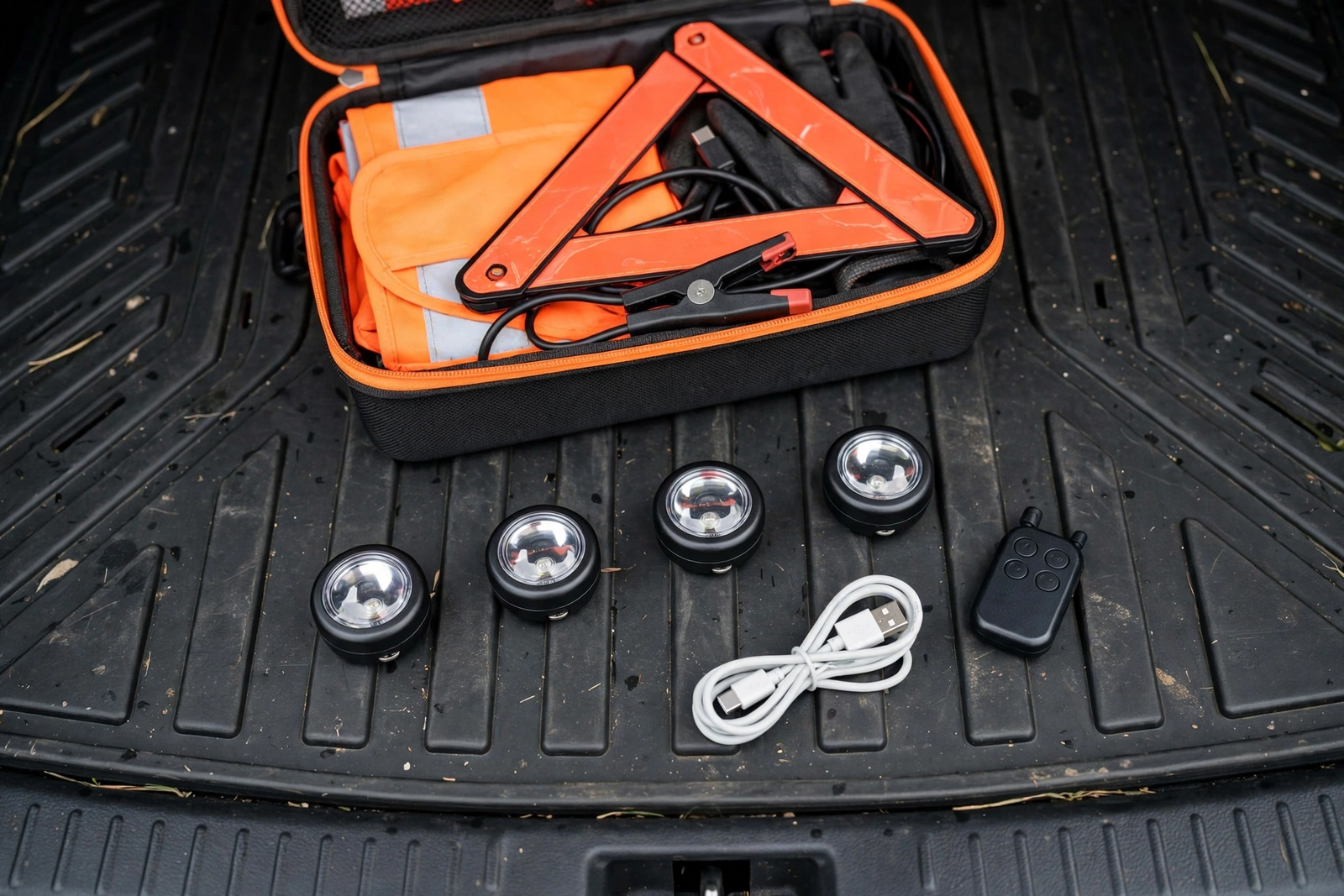
The Elegananccy 4-pack — the strobe light set at the centre of this review — comes with four LED strobe lights, one remote control, eight rubber rings, four velcro stickers, a USB cable and a user manual. The rubber rings and velcro stickers are the mounting system for the strobe lights: the rings grip the pods onto bars or tubes, and the velcro sticks them to flat surfaces inside or outside the car.
The listing describes the set as waterproof, with 8 colours and a remote that changes colour and mode from a distance. Two things the listing does not state clearly, and this review does not claim either: how many hours a pod runs on one charge, and how bright each pod is in lumens. What the box does give you is four independent lights for one buy — enough to mark the car and the road behind it at the same time.
Elegananccy 4PCS Wireless LED Strobe Lights on Amazon: 4-pack with remote control, 8 colours, USB rechargeable, waterproof per the listing; includes 4 lights, remote, 8 rubber rings, 4 velcro stickers, USB cable and manual.
How to Use Strobe Lights at a Breakdown
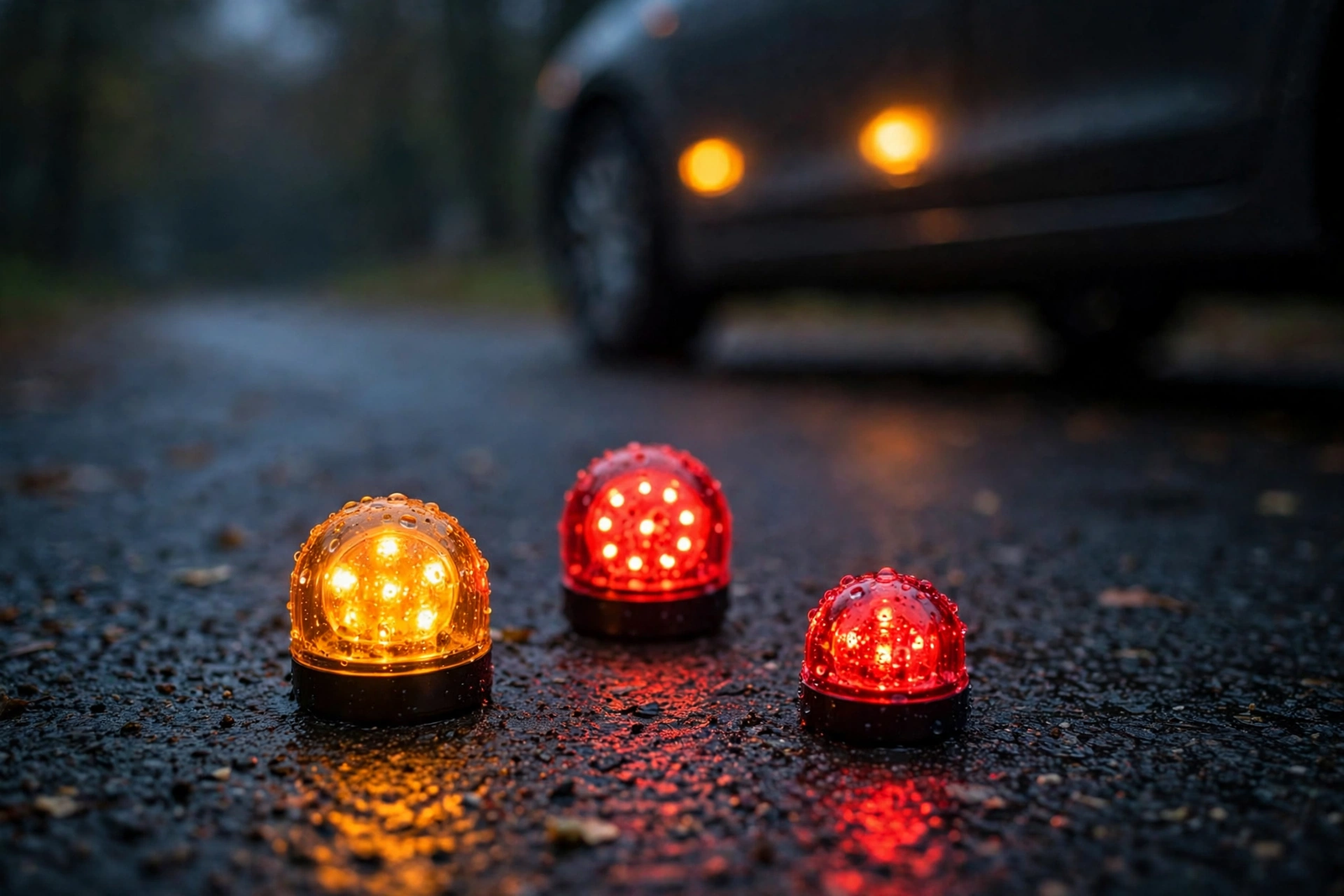
First, get the car as far off the travel lane as you can and switch the hazard lights on — the strobe lights are an addition to the hazards, never a substitute. Then take the pods out, switch them on, and set the colour and mode on the remote before you walk anywhere near traffic. Red or amber flashing is the roadside choice: red reads as danger, amber reads as caution, and both are colours drivers already associate with a warning on the road.
Place the strobe lights in a line that leads drivers away from your car, not in a cluster around it. One of the strobe lights on the roof or rear of the car marks the vehicle itself; the others go on the road behind it, spaced out so an approaching driver sees a sequence of flashes and steers wide early. If the pods have velcro, stick one high — on the roof or the tailgate — because a light at eye level is seen over the crest of a hill or through spray where a ground-level light is hidden. Face oncoming traffic while you place them, keep off the travel lane, and wear a reflective vest if you have one.
Strobe Lights vs LED Road Flares: Which to Buy
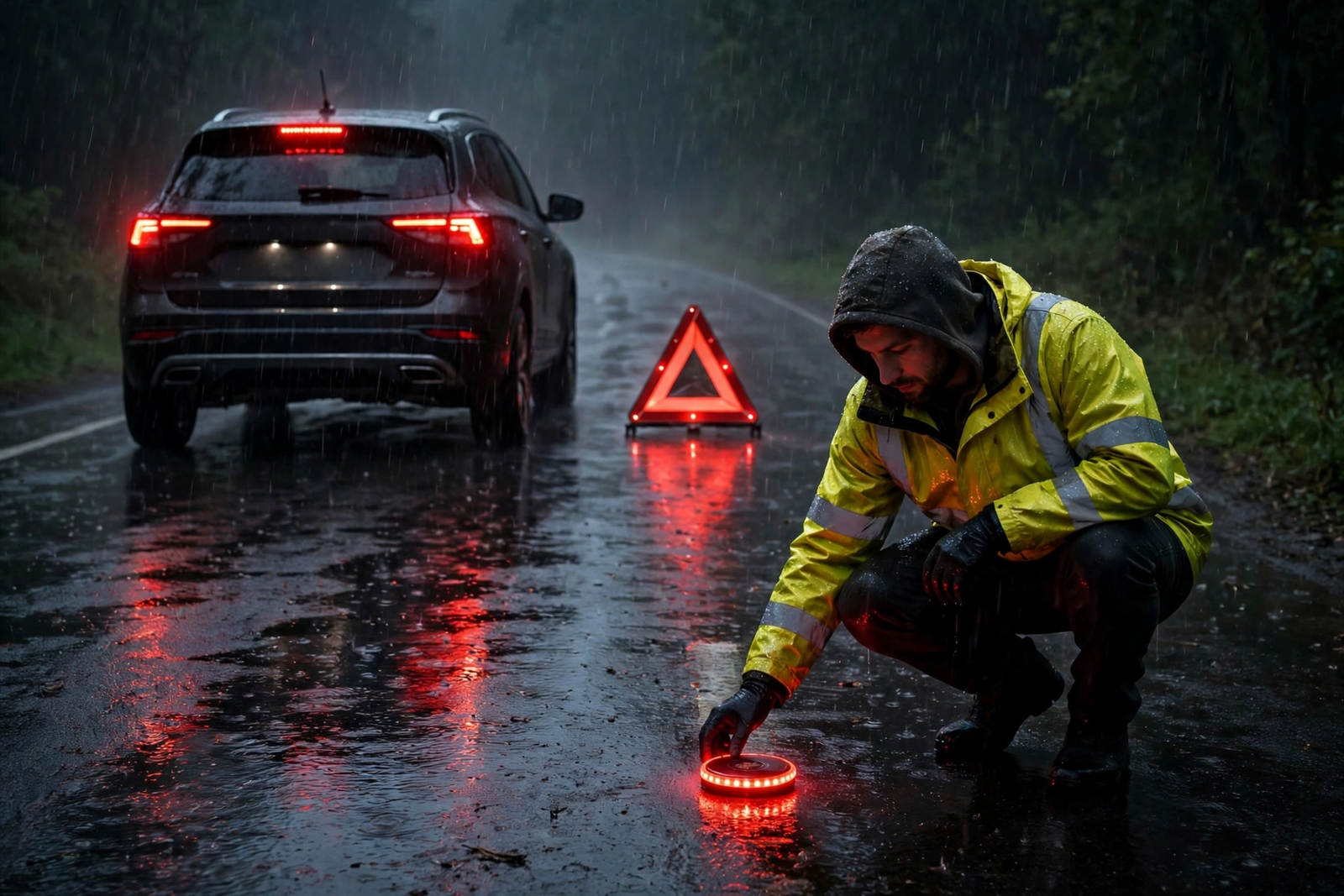
The honest difference is size and job. The 4-pack strobe lights are small, light, and multi-purpose: four pods you can stick on a bike, a drone, a motorcycle or a car, with a remote and a choice of colours. LED road flares are bigger discs built for one job — sitting on the road, or stuck to the car with a magnet, flashing a warning that approaching drivers cannot miss. A flare disc is heavier and easier to see from a distance; a strobe pod is smaller and more flexible about where it goes.
Buy the strobes if you want a compact kit that lives in the glovebox and covers more than breakdowns — cycling, camping, and marking a trailer at night are all real uses for the same pods. Buy road flares if the breakdown is the only job and you want the biggest, simplest warning: a disc you switch on and set down, with a magnet and a hook, no remote to lose and no colour to choose under stress. The comparison table below sets out the three kits in this review side by side.
| Spec | Elegananccy 4-Pack Strobe Lights (B0D3PK59H7) | Ecoangel Road Flares 3-Pack (B0CKXZSTH7) | StonePoint Flare Kit, 3 (B000LQ78YY) |
|---|---|---|---|
| Kit type | 4 wireless LED strobe pods + remote | 3 LED road-flare discs | 3 LED road-flare beacons + storage bag |
| Power | Rechargeable battery per pod, USB cable included | 650mAh rechargeable lithium battery per disc, USB-C | 3 AAA batteries per beacon (not included) |
| Flash modes | 8 colours, remote-controlled modes | 9 flashing modes including SOS | Flashing or steady red |
| Mounting | Rubber rings + velcro stickers | Magnetic base + hook | Magnetic base + hook |
| Water protection | Waterproof per the listing | Water-resistant per the listing; do not submerge | Not stated as waterproof — keep out of standing water |
| Listed run time | Not stated for this listing | Standby over a year per the listing; run time varies by mode | 20 hours steady, 60 hours flash per the listing |
| Best for | Compact multi-use warning kit | Rechargeable roadside beacons | Long-running beacons with no charging |
The Rechargeable Flare Alternative: Ecoangel 3-Pack
The Ecoangel set is the road-flare version of the same idea: three LED discs, each with a 650mAh rechargeable lithium battery charged over USB-C, a magnetic base and a hook, and 9 flashing modes including SOS. The listing describes them as shockproof and water-resistant and visible for up to 1 mile, and as able to stand by for over a year once charged — a useful trait for kit that may sit in a trunk for months between uses.
Two honest notes. First, one retailer copy of the Ecoangel description says “DO NOT USE IN WATER” even though the listing calls the discs water-resistant — so treat them as rain-safe, not submersible, and do not leave them sitting in a puddle. Second, rechargeable flares are only ready if they are charged: a dead flare is dead weight, so top the discs up on the same schedule as the rest of your emergency kit. If you like the idea of never buying batteries, this is the flare kit to buy; if you would rather not think about charging at all, the StonePoint kit below is the alternative.
Ecoangel USB-C Rechargeable LED Road Flares on Amazon: 3-pack, 650mAh rechargeable battery per disc, 9 flashing modes, magnetic base and hook, visible up to 1 mile per the listing.
The Battery Flare Kit: StonePoint Set of 3
The StonePoint kit is the old-school answer: three LED beacons in a storage bag, each running on three AAA batteries (not included), with a magnetic base and a flashing or steady red light. The listing gives the run time as 20 hours in steady mode and 60 hours in flash mode, with 360-degree visibility and a 50,000-hour LED life, and the kit has been listed since July 2005 — a long run for a safety product, which says something about how little the design has needed to change.
The trade-off is the batteries. Three beacons need nine AAA batteries, and they are not in the box — so the kit is only ready if you keep fresh batteries with it and check them. Alkaline batteries also lose charge in a hot trunk over a summer, so a twice-a-year check is worth the minute it takes. Buy this kit if you want the longest listed run time in this review and a kit that works the day you open it, batteries aside; skip it if you know you will never check the batteries and would rather plug the kit in to charge.
StonePoint LED Emergency Road Flare Kit on Amazon: set of 3 beacons with storage bag, magnetic base, 20-hour steady / 60-hour flash run time per the listing; needs 3 AAA batteries per beacon, not included.
Colours and Flash Modes: What to Use When
At a roadside stop, red and amber are the right colours. Red is the universal danger signal; amber is the caution colour used on tow trucks and road works. Both are colours other drivers already read as a warning without thinking, which is exactly what you want when they have seconds to react. White is useful as a work light — lighting the wheel you are changing — but a white strobe reads as a headlight, not a warning, so it is the wrong choice for marking the car.
Blue and green need care. In many US states, blue flashing lights are reserved for police and emergency vehicles, and red flashing lights on a moving vehicle can be mistaken for an emergency vehicle too — the rules vary by state and by whether the car is moving or parked at a breakdown. This article is not legal advice: check your own state’s rules before using red or blue strobes anywhere except a genuine roadside emergency, and never mount flashing coloured lights for everyday driving.
Mistakes That Make You Harder to See
First, leaving the kit at home: strobes left in the garage help no one, so the strobes live in the car — glovebox, door pocket, or trunk — not on a shelf. Second, clustering every light at the car: a tight group of flashes reads as one bright spot, while a spaced line of lights tells drivers where the danger starts and how far away it is.
Third, the wrong colour for the job: blue or green flashing lights can confuse other drivers or break local rules, and white reads as a headlight. Fourth, standing in the travel lane to place the lights — the most dangerous minute of a breakdown is the one spent on the road, so place lights from the safe side and face traffic. Our NOCO Boost GB70 jump starter review covers another trunk essential whose flashlight includes SOS and strobe modes, and our car battery replacement cost guide covers the dead-battery breakdown, one of the most common reasons drivers get stranded.
Who Should Buy Strobe Lights
Buy the 4-pack strobes if: you want a small, cheap, rechargeable warning kit that covers the car, a bike, and a trailer, and you are happy to charge it and choose the colour and mode yourself.
Buy the Ecoangel rechargeable flares if: you want bigger roadside beacons with magnets and hooks, 9 modes including SOS, and no batteries to buy — and you will keep them charged.
Buy the StonePoint battery flares if: you want the longest listed run time, a storage bag, and a kit with no charging and no remote — and you will keep fresh AAA batteries with it.
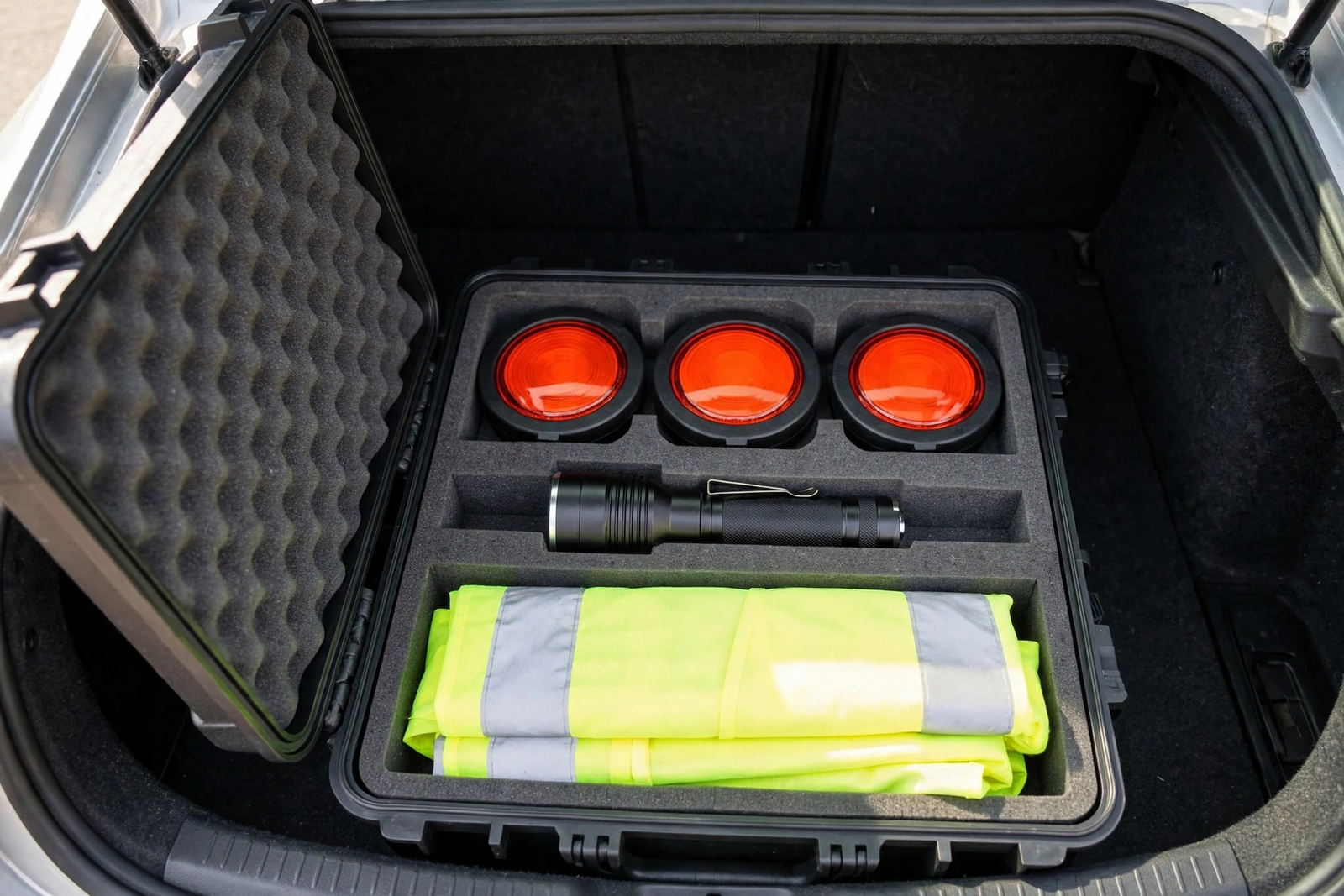
Skip all three if: you already carry a full roadside kit with flares or a warning triangle and a charged jump starter, and you drive only short daytime trips in town.
The Verdict
Strobes earn their place in the trunk because a stopped car is invisible until it is too late. The 4-pack wireless set is the one to buy first: four lights, a remote, 8 colours, and USB charging for a kit that fits in a glovebox and sets out quickly. The Ecoangel flares are the upgrade if you want bigger magnetic beacons without buying batteries, and the StonePoint kit is the pick if you want the longest listed run time and no charging at all.
Elegananccy 4PCS Wireless LED Strobe Lights on Amazon: 4-pack with remote control, 8 colours, USB rechargeable, waterproof per the listing; includes 4 lights, remote, 8 rubber rings, 4 velcro stickers, USB cable and manual.
Frequently Asked Questions
Are strobe lights legal on a car?
It depends on your state and on how you use them. Red and blue flashing lights are restricted in many US states because they are associated with emergency vehicles, and the rules are usually stricter for a moving car than for a parked car at a genuine breakdown. This article is not legal advice: check your own state’s rules, use red or amber only at a real roadside emergency, and never drive with flashing coloured lights on.
What is the difference between strobe lights and road flares?
Strobe lights are small wireless LED pods you can stick, clip or set down in several places, with a remote and a choice of colours. LED road flares are bigger discs built for one job: sitting on the road or sticking to the car with a magnet and flashing a warning. Flares are bigger and simpler per unit; strobe lights are smaller, more flexible, and cover more uses for one buy.
How long do the 4-pack wireless strobe lights last on a charge?
The listing for the Elegananccy 4-pack does not state a run time, so this review does not claim one. Run time varies by mode and colour — a fast strobe uses power differently from a steady light — so check the manual that comes with your set and recharge the pods on a regular schedule rather than trusting them to hold a charge for months.
Which colour strobe light should I use at a breakdown?
Red or amber. Red reads as danger and amber reads as caution, and both are colours other drivers already associate with a warning on the road. White works as a work light but reads as a headlight, not a warning. Avoid blue and green at the roadside unless your state’s rules clearly allow them.
Do LED road flares work in the rain?
The Ecoangel flares are described as water-resistant and the StonePoint beacons are roadside lights, but neither is a light you should leave sitting in standing water — one retailer copy of the Ecoangel description even says not to use them in water. Rain on the road is fine; a puddle is not. Dry the discs after use and store them in their bag or case.
Should I buy rechargeable or battery road flares?
Buy rechargeable flares if you will keep them charged and like never buying batteries — the Ecoangel 3-pack charges over USB-C and can stand by for over a year per the listing. Buy battery flares if you want the longest listed run time and no charging routine — the StonePoint kit lists 20 hours steady and 60 hours flash — but keep fresh AAA batteries with the kit, because the batteries are not included.