Best Backup Camera Picks for Cars, Trucks, RVs and Trailers
A backup camera is the cheapest way to stop guessing what is behind your vehicle — but the right one depends on the vehicle. A car needs a small wired camera on the plate; a truck needs a wireless system with the range to cross a long rig; an RV needs a camera that survives the highway; a trailer needs a system that travels with the trailer. This roundup covers four verified cameras, one for each job, so you can match the camera to the vehicle instead of buying the wrong type.
The short answer: for a truck or fleet vehicle, the FalconEye 2-camera wireless system is the overall pick — two cameras, a 7-inch monitor, and a 200-300-foot range claim. For an RV or trailer, the Furrion Vision S is the proven pick — most trailers are already prepped for it. For a car, the wired eRapta A43 is the simple pick: a 4.3-inch monitor, a license-plate camera, and a cable that never drops. If you want no extra screen, the Pyle mirror monitor puts the picture in the rearview mirror itself.
As an Amazon Associate I earn from qualifying purchases.
Quick Pick: Best Backup Cameras
| Pick | Product | Best For | Check Price |
|---|---|---|---|
| Overall Winner | FalconEye Electronics 2nd Generation Wireless Backup Camera, 7-Inch LCD, 2-Camera System | Trucks and fleets: two cameras, 7-inch monitor, 200-300-foot wireless range | Check Price on Amazon |
| Best for RVs and Trailers | Furrion Vision S Wireless RV Backup Camera System, 7-Inch Monitor, Rear Sharkfin | RV backup camera: fits Furrion-prepped trailers, observation mode while driving | Check Price on Amazon |
| Best Wired Pick for Cars | eRapta A43 HD 1080P Backup Camera System, 4.3-Inch Monitor, License-Plate Camera | Cars and SUVs: wired connection, 4.3-inch monitor, license-plate mount | Check Price on Amazon |
| Best Mirror Monitor Pick | Pyle PLCM4590WIR Wireless Backup Camera, 4.3-Inch Mirror Monitor, License-Plate Camera | Clean dash: the picture appears in the rearview mirror itself | Check Price on Amazon |
Table of Contents
How to Choose a Backup Camera: Wired vs Wireless, Car vs Truck vs RV
Start with the vehicle, not the camera. A car camera is a different product from a truck camera: the car kit is small, wired, and switches on in reverse, while the truck kit is a separate wireless system. A truck system in a sedan wastes money and space; a car camera on a box truck cannot cross the rig.
Next, decide wired or wireless. A wired camera runs a video cable from the camera to the monitor, and its picture never drops — the cost is the install, routing a cable the length of the vehicle. A wireless camera sends the picture by radio, so no video cable is needed — but the signal has to cross metal, cargo, and other radio traffic, and the range figure is the listing’s claim. On a short vehicle, wired is steadier and usually cheaper; on a long rig, wireless is the only practical one.
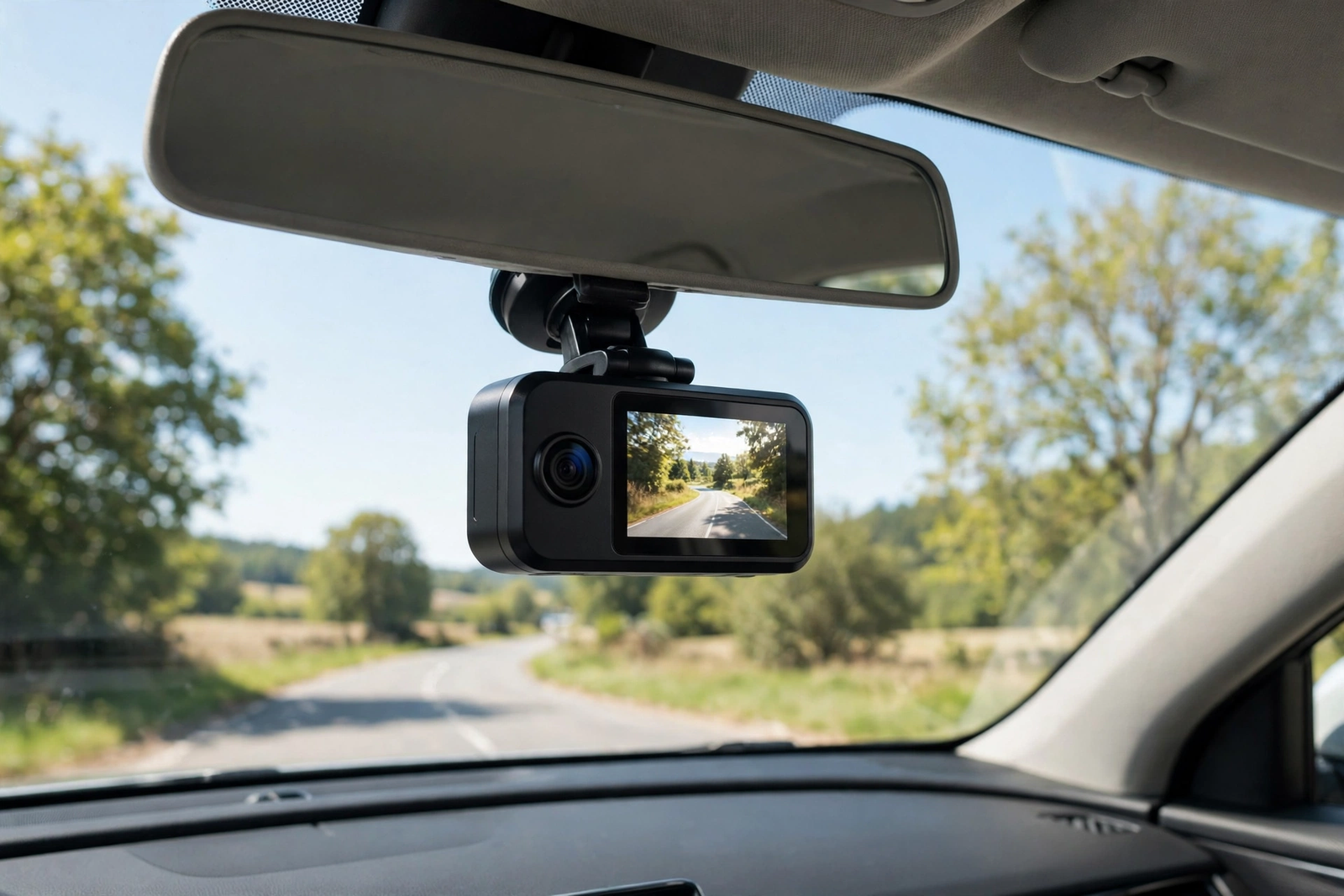
Then decide where the picture goes. A camera with a monitor gives you a separate screen on the dash — big and easy to read, but one more thing on the dash. A rearview mirror with camera puts the screen inside the mirror: nothing extra on the dash, but a smaller picture. And a wireless RV system like the Furrion is a third shape entirely: an observation system that stays on while you drive, doubling as a rear-view mirror for the trailer.
FalconEye 2-Camera Wireless System: Best Backup Camera for Trucks
The FalconEye 2-camera system is the overall winner because it solves the hardest problem here: getting a picture from the back of a long truck to the cab. It is a 2nd-generation wireless system for trucks and fleets: two bracket cameras, a 7-inch LCD monitor, and a range the listing rates at 200-300 feet. The cameras are digital wireless IP68 units in metal brackets that bolt high on the rear.
The monitor earns the pick: 7 inches with a sun shield and a built-in receiver, readable at a glance, and per the manual it can connect up to four cameras — so a fleet owner can add cameras later without a second monitor. Night vision comes from 20 infrared lights per camera, rated at 35-40 feet — enough for the area directly behind a truck in the dark. Our Furrion backup camera review covers the RV alternative; for trucks, the FalconEye bracket system is the matching pick. See our full FalconEye backup camera review for the truck deep-dive.
FalconEye 2nd Generation Wireless Backup Camera, 2-Camera System on Amazon: 7-inch LCD monitor, two IP68 heavy-duty bracket cameras, 200-300-foot wireless range, sold by FalconEye Electronics LLC.
Furrion Vision S: Best Backup Camera for RVs and Trailers
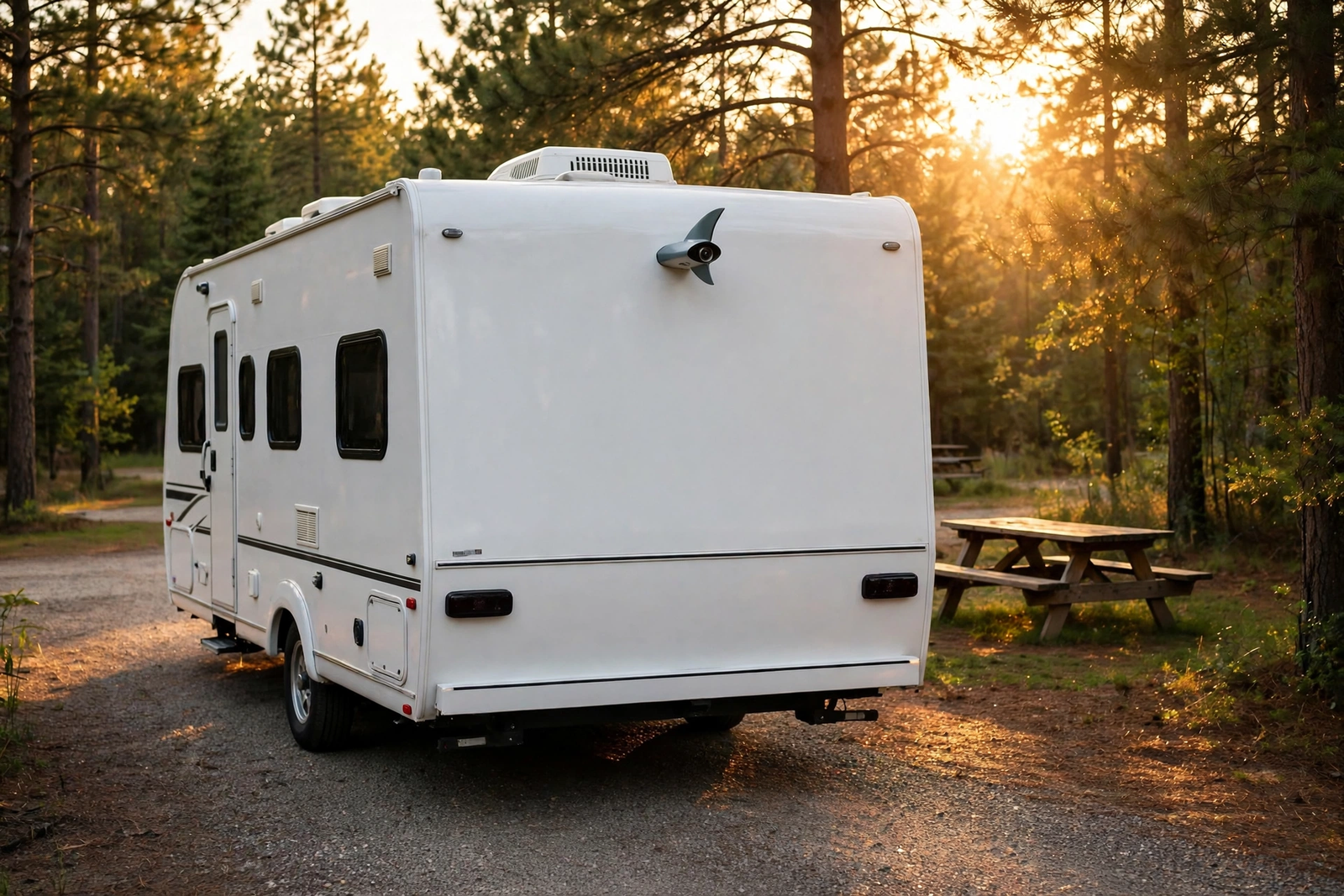
The Furrion Vision S is the trailer camera most trailers are already built to accept. Many newer travel trailers and fifth wheels leave the factory Furrion-prepped, with a sharkfin bracket and pre-wired power on the rear wall: the camera screws onto the bracket with no new holes to seal. That prep is why this system dominates the RV market — if the plate says Furrion, buy a Furrion camera.
The Vision S kit pairs a rear sharkfin camera with a 7-inch touchscreen monitor over a 2.4 GHz wireless link, rated up to 100 feet at highway speeds and 492 feet in open spaces. The camera displays at 720 x 480 with a 120-degree rear view, is rated IP65 waterproof, and has infrared night vision — it is a live-view system with no recording. It is an observation system, not a backup-only camera: it shows a live stream while you drive. The monitor can display up to four cameras, so side cameras can be added. Do not mix it with the newer Vision S+ line — the two families cannot share cameras or monitors.
Furrion Vision S Wireless RV Backup Camera System on Amazon: 7-inch touchscreen monitor, rear sharkfin camera, 120-degree view, IP65 waterproof, infrared night vision.
eRapta A43: Best Wired Backup Camera for Cars
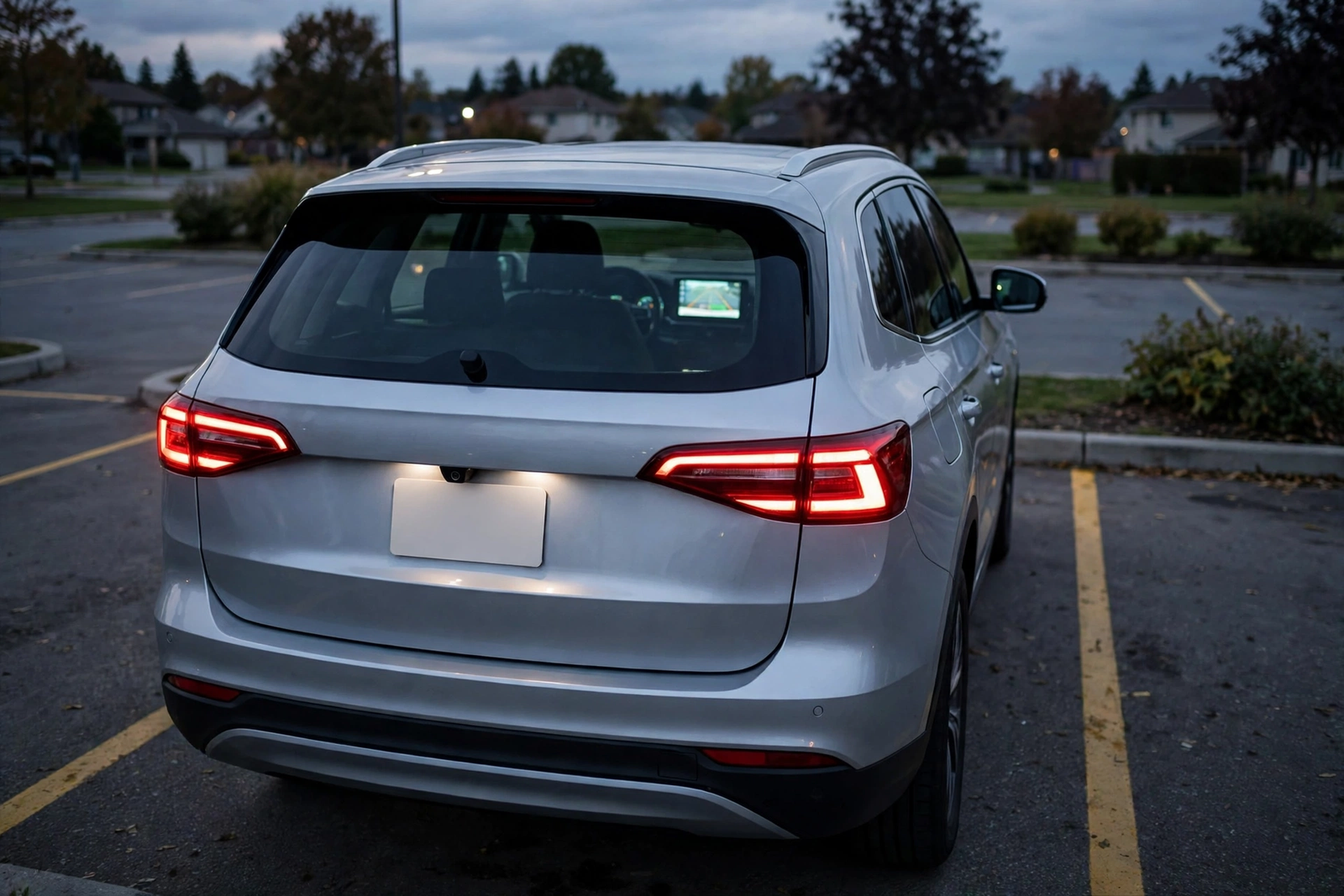
The eRapta A43 is the wired pick for cars, and its virtue is simplicity. It pairs a 4.3-inch HD 1080P monitor with a plate camera: the camera screws to the plate frame, and a 26-foot cable carries the video to the monitor. Wired means the picture never drops, and on a car the cable run is short.
The camera is rated IP69K waterproof with night vision, and the monitor shows a 1080P image. Per the manual, it offers two power methods: a car-charger plug-and-play connection, or wiring the camera to the reverse-light circuit so the picture switches on in reverse. The manual lists a two-year warranty. The honest limit is the cable: 26 feet is plenty for a car or SUV, but it will not reach the back of a long trailer.
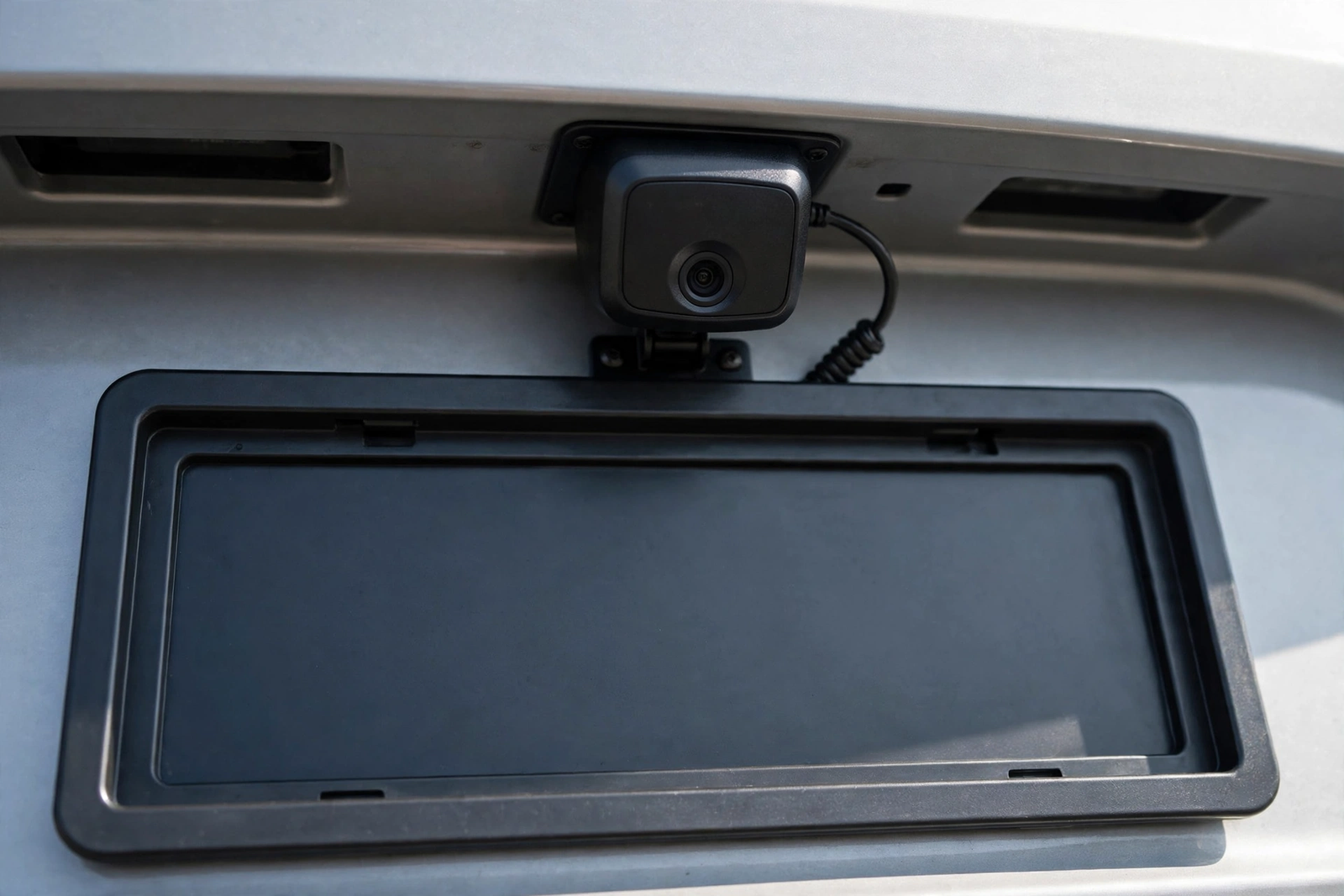
eRapta A43 HD 1080P Backup Camera System on Amazon: 4.3-inch HD monitor, license-plate camera, IP69K waterproof, night vision, 26-foot extension cable.
Pyle PLCM4590WIR: Best Backup Camera with a Mirror Monitor
The Pyle PLCM4590WIR is the pick for drivers who want no extra screen on the dash. Its monitor is a rearview mirror with camera built in: a 4.3-inch LCD screen inside the mirror, which clips over the existing one. Off reverse it works as a normal mirror; the picture appears when you select reverse. Nothing extra sits on the dash or the windshield.
The camera is a waterproof license-plate camera that sends its video over a 2.4 GHz wireless link to the mirror, so no video cable runs through the car — the trade is a 480 x 272-pixel screen, far lower resolution than the 1080P eRapta. Distance scale lines help judge how close an obstacle is, and night vision covers reversing after dark. Buy it for the clean install; buy the eRapta if sharpness matters more than the clean dash.
Pyle PLCM4590WIR Wireless Backup Camera on Amazon: 4.3-inch mirror monitor, waterproof license-plate camera, 2.4 GHz wireless video, distance scale lines, night vision.
Wired vs Wireless Backup Cameras: Which Signal to Trust
The wired vs wireless choice is the one buyers get wrong most often, because “wireless” sounds like “no wires” and it is not. On every wireless camera in this roundup, wireless describes the video link only: the camera still needs vehicle power, and the monitor still needs cab power. What wireless saves you is the long video cable — the hardest part of the install on a long vehicle.
Judge the choice by vehicle length. On a car or SUV, the video cable is a short run and the wired picture is the steadier one, which is why the eRapta A43 leads for cars. On a truck, trailer, or RV, the cable run is the whole job, and wireless is the practical answer — but read the range figure as the listing’s claim: the FalconEye claims 200-300 feet and the Furrion up to 100 feet at highway speeds and 492 feet in open spaces, both assuming a clear path. Steel walls, cargo, and other radios shorten every wireless link, so plan on the lower end and test the picture loaded.
| Spec | FalconEye 2-Camera (B0DJC24KYF) | Furrion Vision S (B07CZ268GT) | eRapta A43 (B07ZWKL6WR) | Pyle PLCM4590WIR (B07KGH7DQF) |
|---|---|---|---|---|
| Type | Wireless, 2 cameras | Wireless RV, 1 sharkfin | Wired, 1 camera | Wireless, 1 camera |
| Monitor | 7-inch LCD, sun shield | 7-inch touchscreen | 4.3-inch HD 1080P | 4.3-inch mirror LCD |
| Camera mount | Heavy-duty bracket | Sharkfin, Furrion-prep | License plate | License plate |
| Camera resolution | HD | 720 x 480 | 1080P HD | 480 x 272 screen |
| Wireless range | 200-300 feet, per listing | Up to 100 ft at speed / 492 ft open | Wired — no range limit | 2.4 GHz wireless |
| Waterproof rating | IP68 | IP65 | IP69K | Waterproof, per listing |
| Night vision | 20 IR lights, 35-40 feet | Infrared, IR cut filter | Night vision | Night vision |
| Max cameras | Up to 4 | Up to 4 | 1 | 1 |
| Best for | Backup camera for truck | Backup camera for RV | Car or SUV, wired | Clean dash, mirror display |
Installation: What Each Backup Camera Actually Needs
Installation is where the four picks diverge. The eRapta A43 is the simplest: screw the camera to the plate frame, run the 26-foot cable to the monitor, and power it from the car charger or reverse-light circuit. The Pyle mirror system is nearly as simple — clip the mirror over the existing one, mount the camera, and pair the link — but check it sits firmly, since the mirror adds weight. The FalconEye bracket bolts high on the rear, and the camera needs a 12-volt feed, usually from the rear light circuit; the Furrion is the easiest of the big systems if the trailer is prepped. With no prep, the Furrion needs a sealed mounting point and a 12-volt feed, just like the FalconEye. Whichever system you buy, pair the camera before the mount is tightened, and test the picture loaded — an empty driveway tells you nothing about the signal through a loaded trailer.
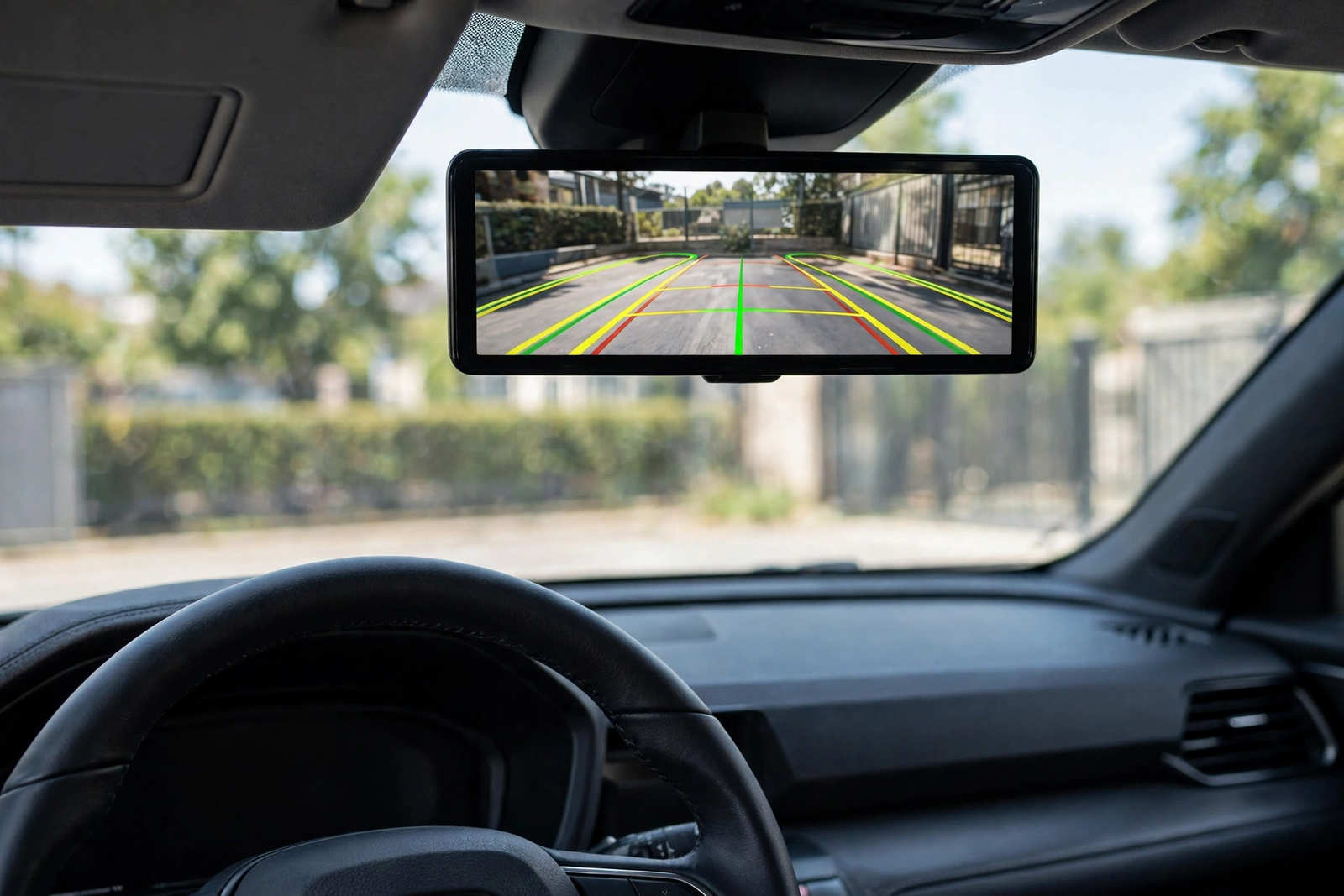
Night Vision and Weatherproofing
Every camera in this roundup claims night vision, and every one has the same limit: infrared light only reaches as far as its own LEDs throw it. The FalconEye states its figure — 20 IR lights, 35-40 feet per the manual — while the other three list night vision without a distance. Do not compare a stated distance against an unstated one. The night picture is black-and-white infrared, and an unlit yard is still harder than daylight.
Weatherproofing is where the ratings tell the story. The eRapta A43 carries the highest rating here at IP69K — dust-tight and protected against high-pressure water jets — the rating you want for a low-mounted camera that lives in road spray. The FalconEye is IP68, the Furrion IP65, and the Pyle is listed as waterproof with no stated rating. Brighter reverse lights help every camera at night, which is why our iBrightstar 3157 LED reverse bulbs review pairs with this roundup for 3157 cars.
Who Should Buy Which Backup Camera
Buy the FalconEye 2-camera system if: you drive a truck or fleet vehicle and need a rear view plus a second angle, with the range to cross a long rig.
Buy the Furrion Vision S if: you tow a travel trailer or fifth wheel — especially a Furrion-prepped one — and you want the camera on as a rear-view mirror while you drive.
Buy the eRapta A43 if: you drive a car or SUV, you want the sharpest picture here, and you are happy running one cable for a signal that never drops.
Buy the Pyle mirror monitor if: you want no extra screen on the dash and will trade sharpness for a mirror that does double duty.
Skip this roundup if: your vehicle already has a factory camera that works — a second system adds a second screen and a second thing to maintain. Fix the one you have first.
The Verdict
The best camera matches the vehicle, and this roundup has no single winner — but it has a clear overall pick. The FalconEye 2-camera wireless system takes it: two cameras and a 7-inch monitor that takes up to four cameras. The Furrion Vision S has the biggest range claim in this group at 492 ft open range. For RVs and trailers, the Furrion Vision S fits the prep most trailers already carry. For cars, the wired eRapta A43 gives the sharpest picture. And the Pyle mirror monitor is the pick for a clean dash.
Match the camera to the vehicle, check the mount before you order, and test the picture loaded — it earns its keep the first time it shows you what the mirrors could not.
FalconEye 2nd Generation Wireless Backup Camera, 2-Camera System on Amazon: 7-inch LCD monitor, two IP68 heavy-duty bracket cameras, 200-300-foot wireless range, sold by FalconEye Electronics LLC.
Frequently Asked Questions
What is the best backup camera overall?
The best backup camera depends on the vehicle. For a truck or fleet vehicle, the FalconEye 2-camera wireless system is the overall pick in this roundup: two cameras, a 7-inch monitor, and a 200-300-foot wireless range claim. For an RV or trailer, the Furrion Vision S is the better pick because most trailers are already prepped for it. For a car, the wired eRapta A43 gives the sharpest picture with a signal that never drops.
Are wireless backup cameras reliable?
A wireless camera is reliable when its range covers the vehicle with margin. The FalconEye claims 200-300 feet and the Furrion claims up to 100 feet at highway speeds and 492 feet in open spaces — both are the listing’s claims, not tested results. Steel walls, cargo, and other radio signals shorten every wireless link, so plan on the lower end for a long rig and test the picture loaded before the first trip. On a short vehicle, a wired camera is the steadier buy because its picture cannot drop.
Do I need a backup camera for my truck?
A backup camera for truck use solves a problem mirrors cannot: the blind area directly behind a box truck or a long trailer, where a person, a pallet, or a dock edge can hide. The FalconEye 2-camera system is built for that job, with a bracket camera mounted high on the rear and a 7-inch monitor in the cab. It is an aid, not a replacement — never rely on it alone when reversing; use a spotter, the mirrors, and a walk-around as well.
Can I use an RV backup camera on a car?
You can, but you should not. An RV backup camera wireless system like the Furrion Vision S is built for trailers: a sharkfin camera, a 7-inch monitor, and a wireless link rated for the length of a rig. On a car it is oversized, and the sharkfin mount has nowhere sensible to fit. A car needs a small wired camera on the license plate, like the eRapta A43, or a mirror monitor like the Pyle PLCM4590WIR. Match the camera to the vehicle.
What is the difference between a backup camera and a rearview mirror with backup camera?
A backup camera with monitor uses a separate screen on the dash or windshield, which is bigger and easier to read but adds clutter. A rearview mirror with backup camera puts the screen inside the mirror itself: when you are not reversing it works as a normal mirror, and the picture appears in the glass when you select reverse. The Pyle PLCM4590WIR in this roundup is the mirror type; the FalconEye, Furrion, and eRapta use separate monitors.
Do backup cameras work at night?
Yes, within limits. Every camera in this roundup lists night vision, and the FalconEye states its figure: 20 infrared lights rated at 35-40 feet. Infrared only reaches as far as its own LEDs throw it, and the night picture is black-and-white rather than colour. Brighter reverse lights help any camera at night, and backing into an unlit yard is still harder than backing in during the day.