How to Remove Scratches from Car: A Step-by-Step DIY Guide
Learning how to remove scratches from car paint is one of the most useful skills a car owner can pick up. A shopping cart, a branch, a careless key — most scratches arrive without warning, and left alone they do more than look bad: a scratch through the clear coat lets water and road salt reach the colour coat, and one down to bare metal starts rust. Most light scratches are a straightforward driveway repair. This guide walks through the job in order: diagnose, wash and prep, compound and polish, touch up, and know when to hand the car to a professional.
The short answer: if your fingernail glides over the scratch without catching, it lives in the clear coat, and you can learn how to remove scratches from car paint in an afternoon with a compound, a foam pad, and a polish. If your nail catches, the scratch goes through the clear coat — that is touch-up paint or professional work, not a compound job.
As an Amazon Associate I earn from qualifying purchases.
Quick Pick: Scratch-Removal Products
| Pick | Product | Best For | Check Price |
|---|---|---|---|
| Overall Winner | Meguiar’s Ultimate Compound, 15.2 oz | Clear-coat scratches and swirls: diminishing abrasives that cut and finish in one step, by hand or machine | Check Price on Amazon |
| Finish Pick | Meguiar’s Ultimate Polish, 16 oz | Refining the finish after compounding: removes fine haze and restores deep gloss before protection | Check Price on Amazon |
| Touch-Up Pick | Dupli-Color Scratch Fix All-in-1 Touch-Up Paint, Universal Black | Deeper scratches down to primer or metal on black cars: colour-matched paint and clear coat in one pen | Check Price on Amazon |
Table of Contents
How Car Paint Is Layered — and Why Depth Decides Everything
Car paint is built in layers: clear coat, colour coat, primer, then bare metal. The repair you need depends on which layer the scratch has reached, so diagnose before you buy anything.
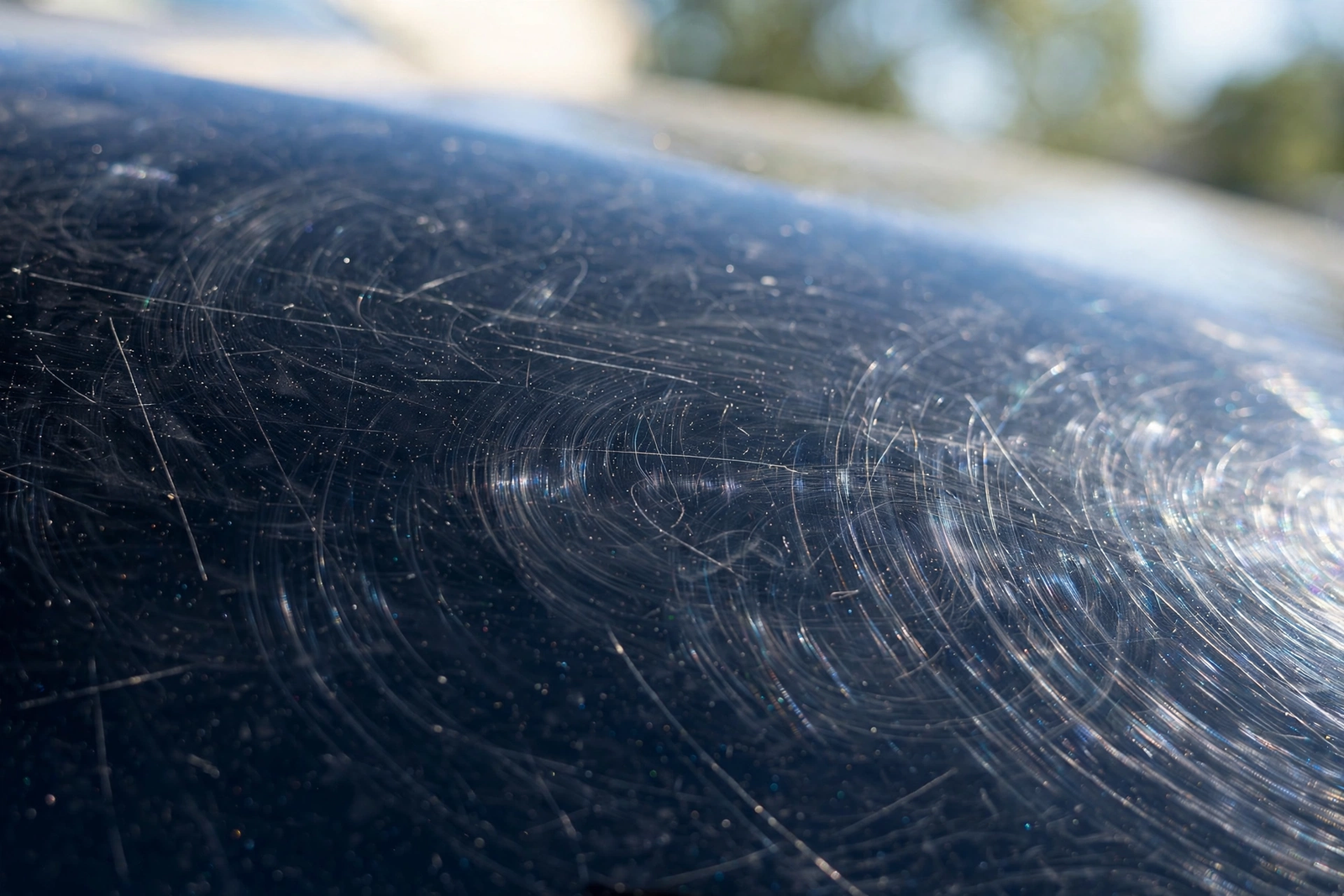
A clear-coat scratch is the shallowest kind: the colour underneath still looks right, the mark shows as a dull or whitish scuff, and your nail glides over it without catching. It needs only compounding and polishing.
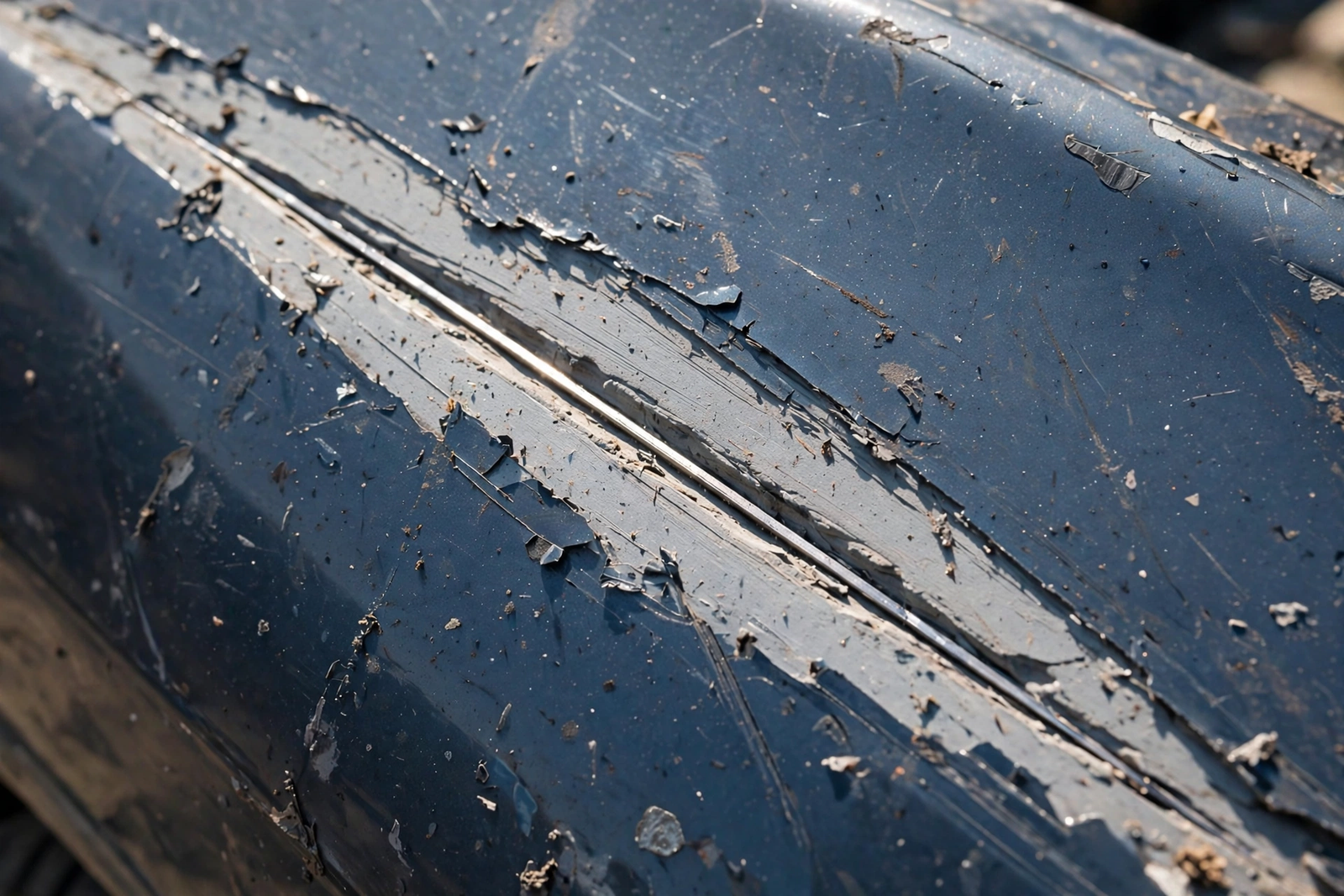
A scratch to the colour coat shows colour but no shine; one to primer shows a flat light-grey or off-white surface. Both need colour paint. A scratch to bare metal shows a bright or dark metallic surface — act on it fastest, because exposed steel rusts and rust spreads under the paint where you cannot see it. If rust has pitted the metal, stop: that is body-shop work.
Do not confuse a scratch with a chip. A scratch is a line dragged across the paint; a chip is a small crater where paint is missing — our how to repair chipped paint guide covers that job.
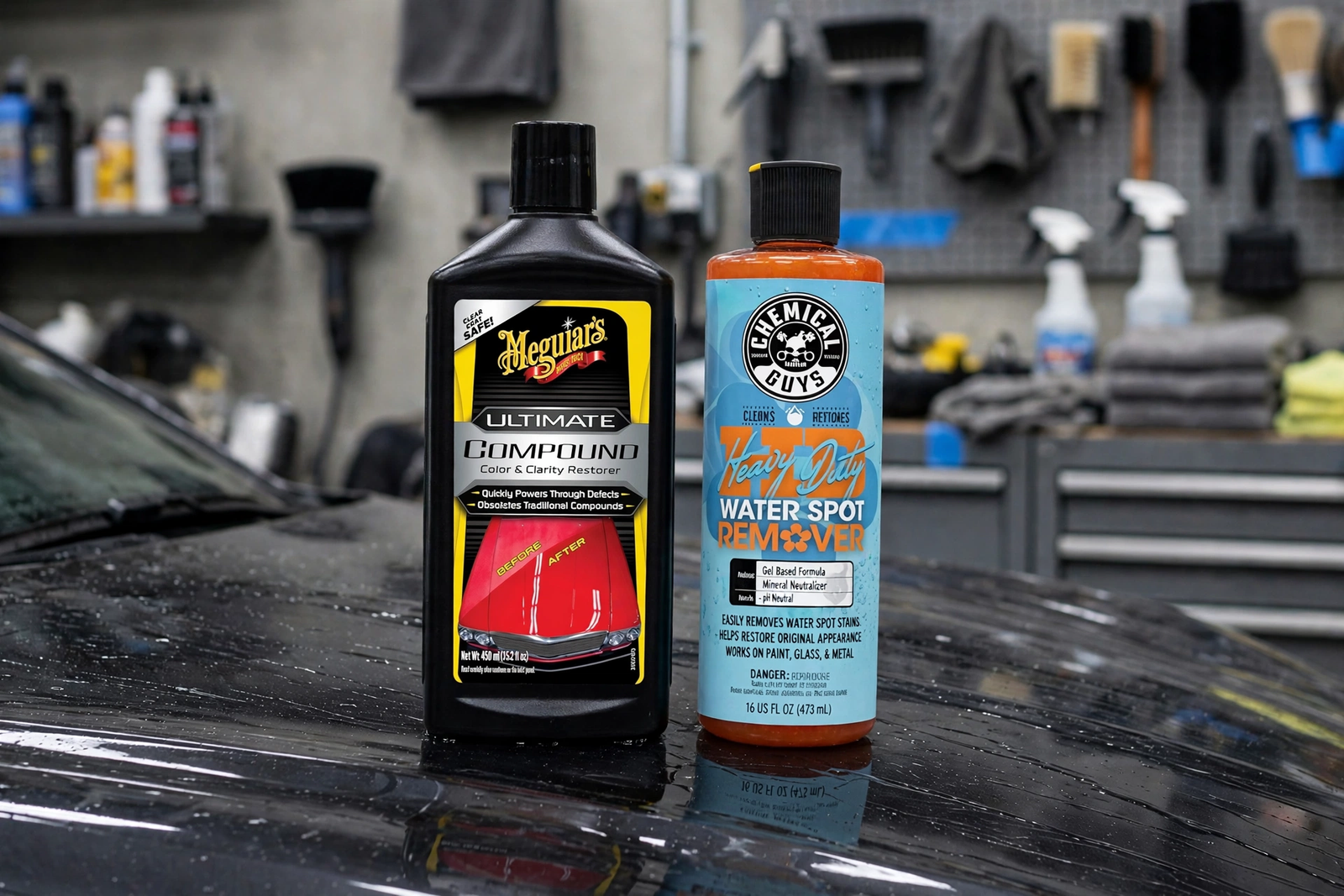
Meguiar’s Ultimate Compound on Amazon: 15.2 oz, model G17216 — the compound for clear-coat scratches and swirls.
Step 1: Assess the Depth First
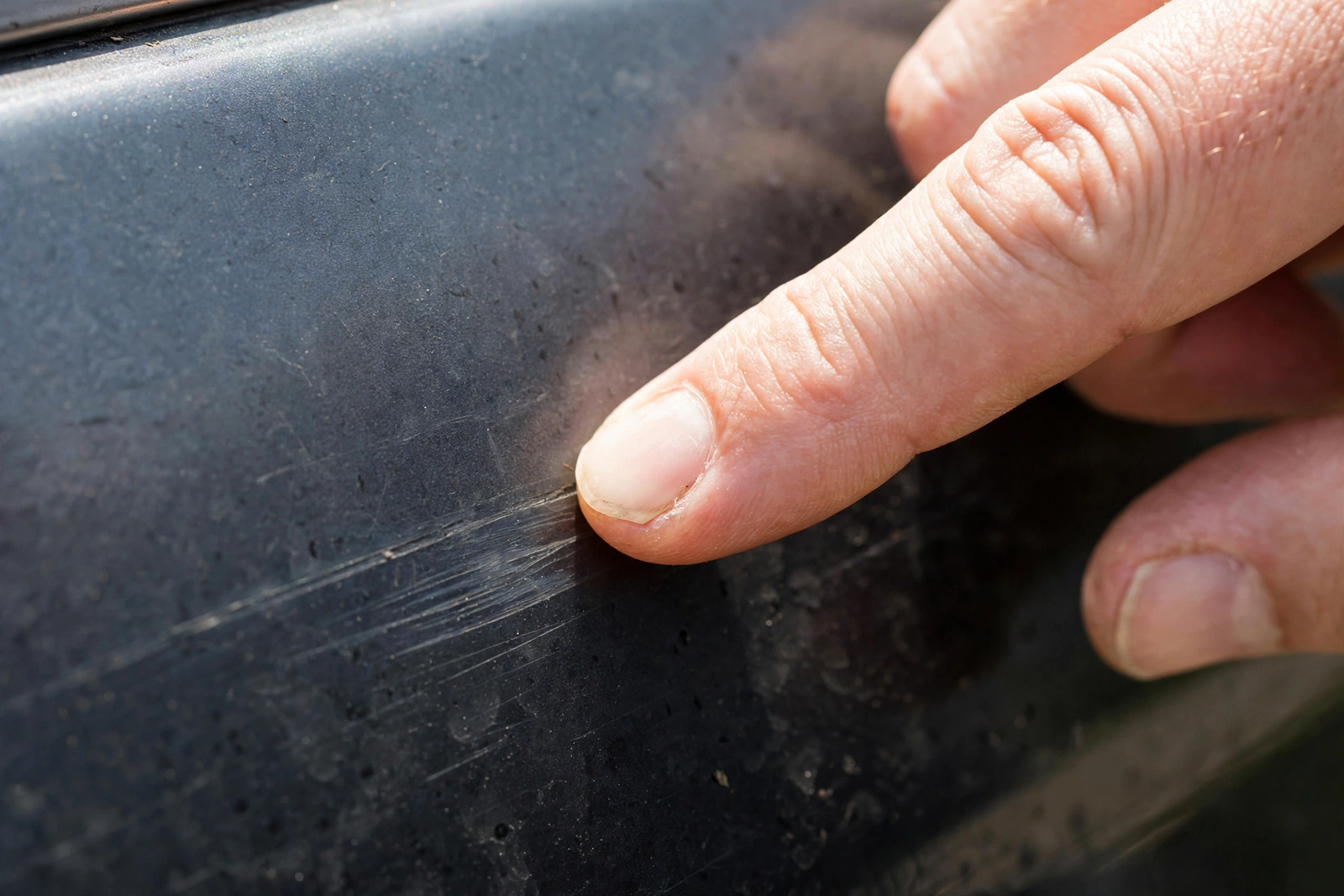
The first step in how to remove scratches from car paint is the fingernail test. Wash the area first, then look at it in bright light and run a fingernail gently across the scratch. If your nail glides over it, the defect is inside the clear coat and a compound can level it. If your nail catches, it goes through the clear coat — that is touch-up paint or professional work.
Two more checks sharpen the diagnosis. First, the water test: wet the scratch — if it disappears while wet and returns as it dries, it is shallow, because water fills the clear-coat groove the way a polish will level it. If it stays visible when wet, it is deeper.
Step 2: Wash and Prep the Panel
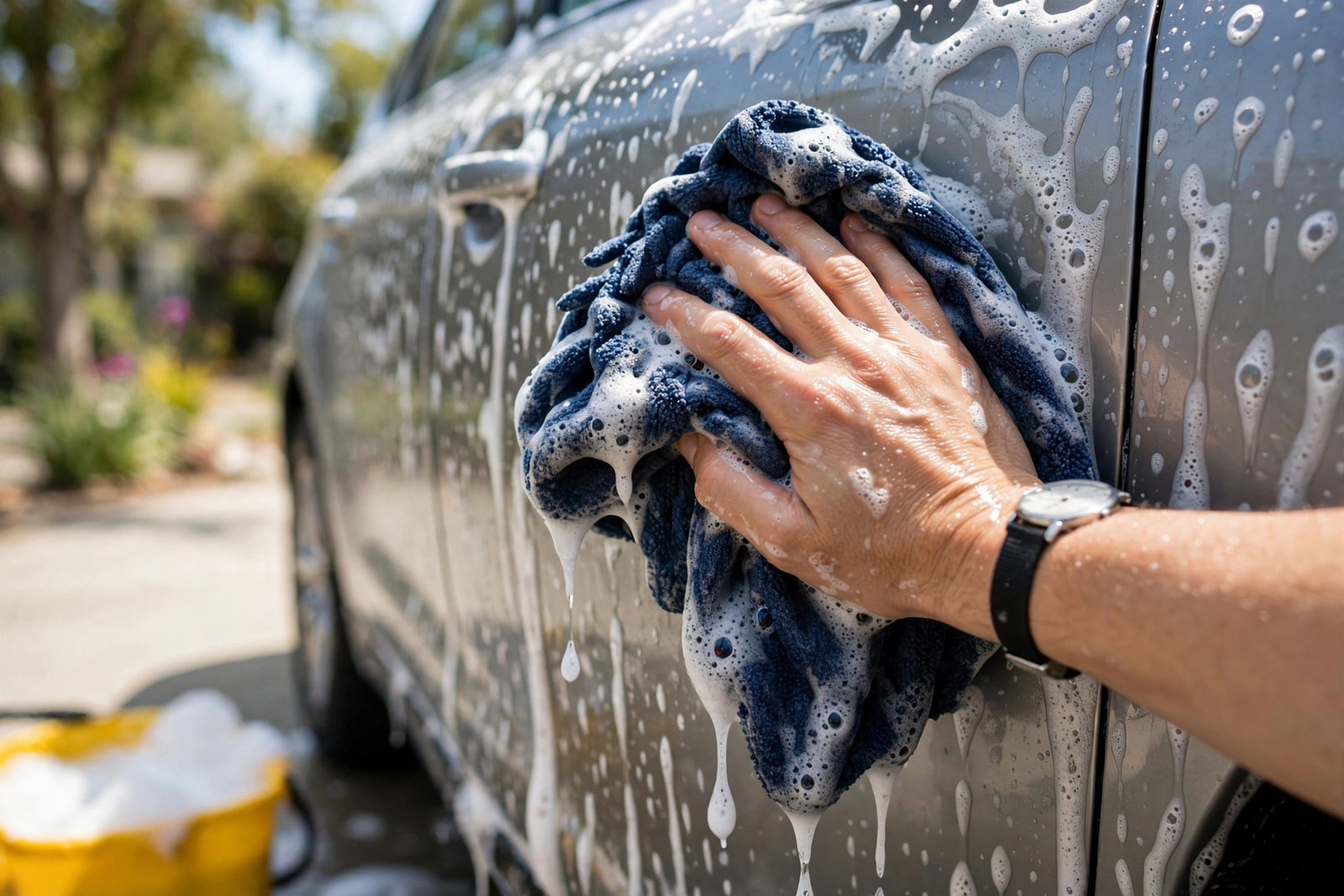
Every guide to how to remove scratches from car paint starts with a wash, because compounding a dirty panel grinds grit into the paint and makes new scratches while you fix the old one. Wash the panel with car wash soap and two buckets, then rinse and dry with clean microfiber towels. Work in the shade on cool paint.
Next, decontaminate. After washing, feel the paint with a plastic bag over your hand — roughness means bonded contaminants like road tar or tree sap that washing cannot remove. Run a clay bar over the paint with lubricant to lift them off; never compound over contamination, or you will grind it into the clear coat. Our paint correction guide walks through the full routine.
Step 3: How to Remove Scratches from Car Paint with Compound and Polish
This is the core of how to remove scratches from car paint: a compound levels the clear coat. A compound is a cream with fine abrasives that removes a very thin layer of damaged clear coat — and the swirls and light scratches sitting in it — leaving a smoother surface that reflects light cleanly. The fix is real because material is actually removed — which is also why clear coat is finite.
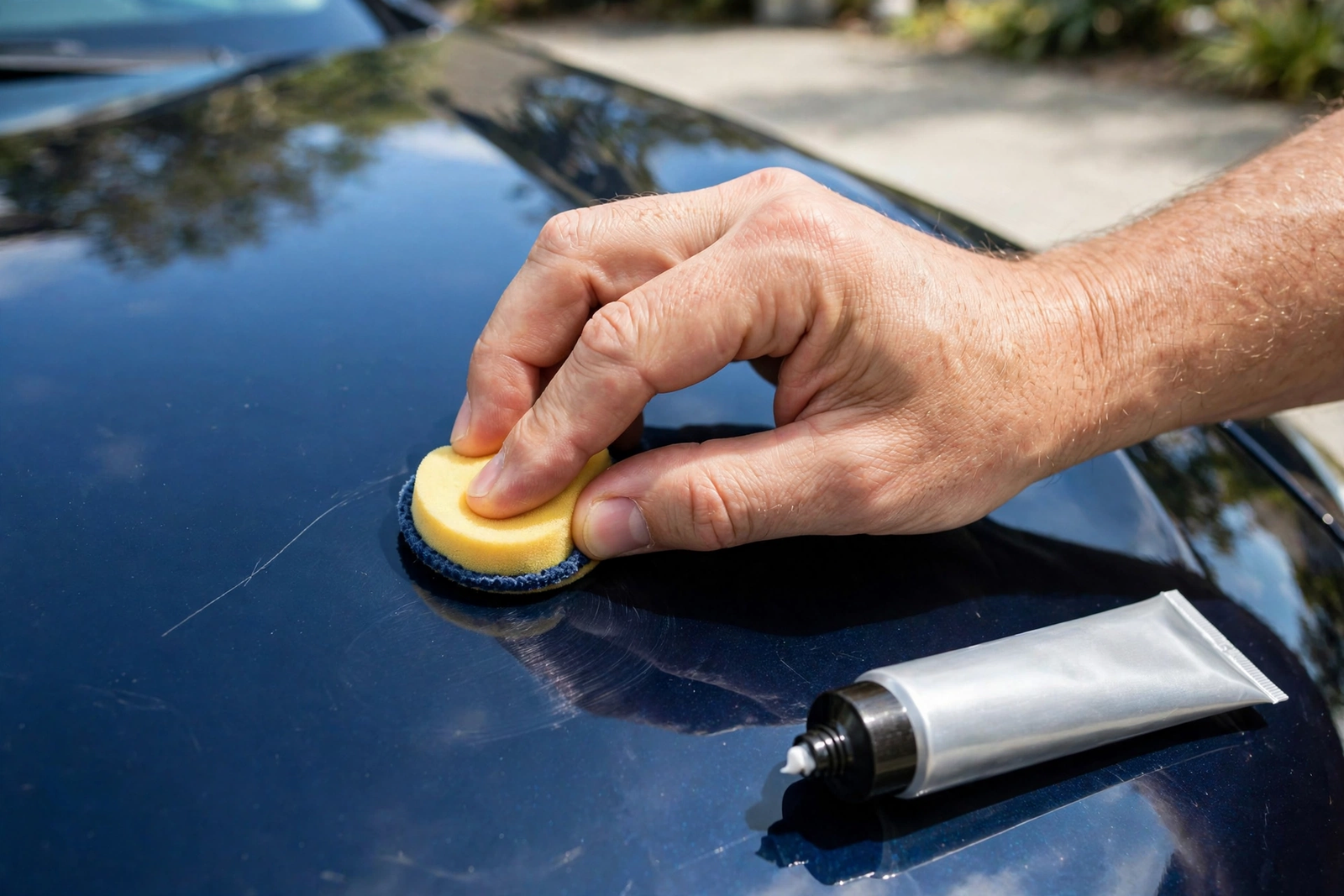
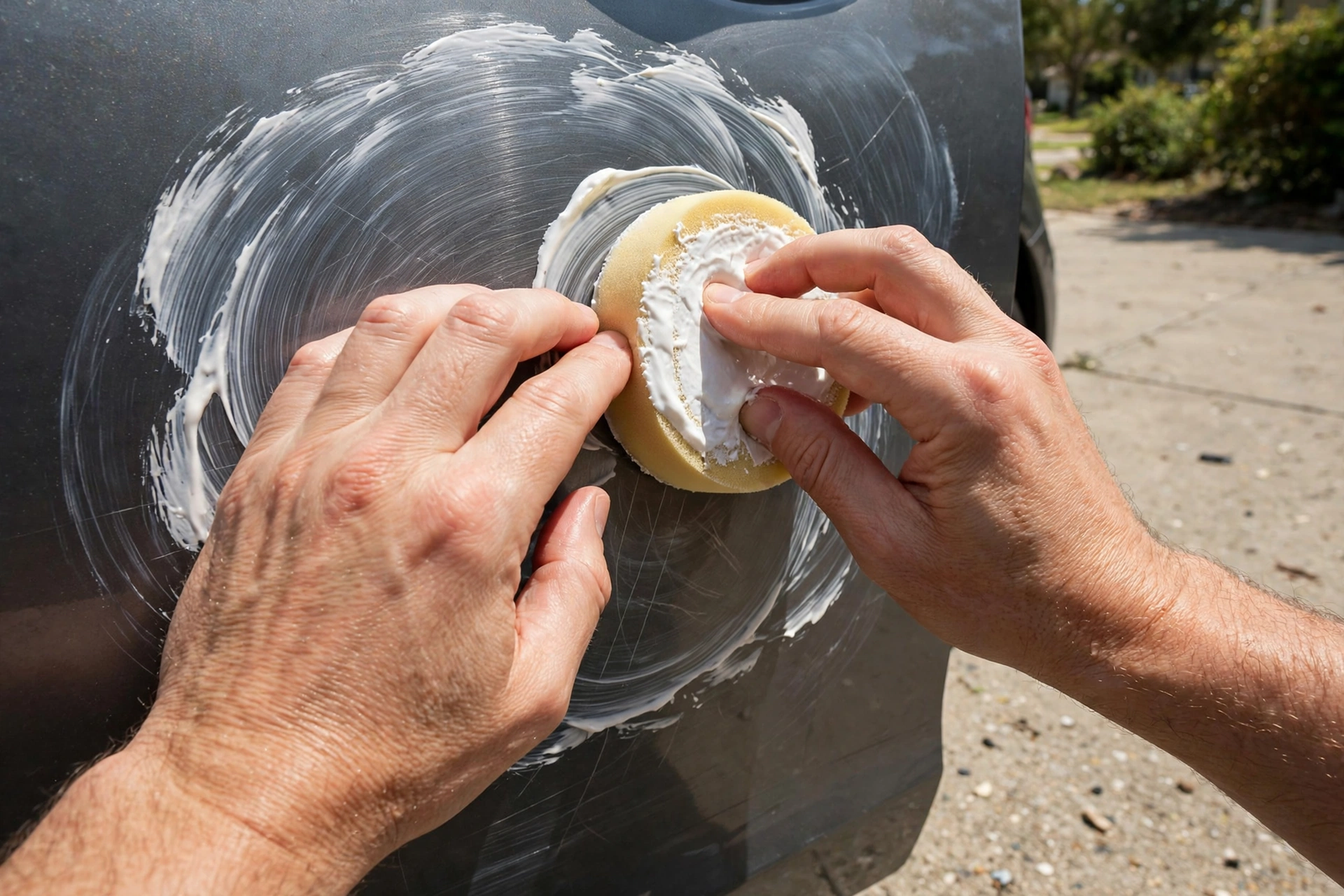
Work by hand for a single scratch. Put a small amount of Meguiar’s Ultimate Compound on a foam applicator pad and work a small section with moderate, even pressure in slow, overlapping passes, then wipe the residue off with a clean microfiber towel before it dries. The compound’s diminishing abrasives break down as you work, cutting first and finishing toward a polish in the same step, which is what makes it forgiving by hand. Our full Meguiar’s Ultimate Compound review covers how it works, and our Meguiars vs Chemical Guys head-to-head walks through the diagnosis.
A dual-action polisher is the faster route when you are learning how to remove scratches from car paint across a whole panel: more consistent, less tiring, and better at breaking the abrasives down evenly. It is beginner-safe because its oscillating motion resists burning through paint, unlike a rotary buffer. Start with the least aggressive pad, and keep it clean.
Then polish — the last correction step in how to remove scratches from car paint. Compounding can leave a faint haze, especially on dark paint, and a polish refines it away: put a small amount of Meguiar’s Ultimate Polish on a soft polishing pad and work the same area lightly. Finish with a sealant or wax.
Meguiar’s Ultimate Compound on Amazon: 15.2 oz, model G17216 — diminishing abrasives, by hand or dual-action polisher.
Meguiar’s Ultimate Polish on Amazon: 16 oz, model G19216 — pre-waxing glaze for fine swirls and gloss after compounding.
Step 4: Deeper Scratches — Touch-Up Paint
When the scratch is deeper, how to remove scratches from car paint changes completely: no compound can fill a groove through the clear coat. The fix is touch-up paint, built up in thin layers.
First, match the colour: your car’s paint code is on the door jamb sticker or under the hood, and the exact-match pen for that code is what makes the repair blend. The Dupli-Color pen linked below is the Universal Black version — the right pick if your car is black; if it is not, search the same listing family for your colour. A close-enough colour is the most common reason a repair stands out, so do not skip the code check.
Prep the scratch the same way as a chip: wash, wipe with isopropyl alcohol, and flick away loose paint with the pen’s prep tip — only what is already loose, never sound paint. If the scratch shows bare metal, the first layer should be primer — buy a separate primer, because the All-in-1 pen combines a prep tip, paint, and clear coat, not primer; prime the bare metal first, then build the colour coats on top.
Then build the colour in thin layers, letting each one dry before the next. The goal is to fill the scratch up to the level of the surrounding paint — not above it. One thick line dries raised, with a visible edge and a colour darker than the panel, because thick paint cures darker. Three or four thin coats give a far better match. Let the final colour coat dry fully — at least a full day before any sanding or polishing — then add the clear-coat step from the pen, and once cured, level the repair with 1500-grit wet sanding and a light compound pass, as our how to repair chipped paint guide describes.
Dupli-Color Scratch Fix All-in-1 Touch-Up Paint on Amazon: Universal Black, 0.25 fl oz — prep tip, colour-matched paint and clear coat in one pen; check the listing for your paint code and colour.
What NOT to Do When You Remove Scratches
The fastest way to make how to remove scratches from car paint go wrong is to skip the diagnosis and reach for the most aggressive fix. First, compounding a dirty panel: grit under the pad puts new swirls in. Second, pressing harder instead of working longer: pressure does not cut faster, it cuts hotter, and heat plus abrasives is how clear coat burns through — especially on edges, where it is thinnest.
Third, using a rotary buffer as a beginner: it concentrates heat and cut in one spot, and one careless pass can burn through to the colour coat — a dull patch no polish can fix. Fourth, reaching for toothpaste, baking soda, or nail polish remover. Toothpaste is the most-shared bad tip for how to remove scratches from car paint online, but it is a mild abrasive with no control over grit size and it hazes clear coat; nail polish remover is a solvent that can strip paint outright.
When to Stop and Get a Pro
Knowing when to stop is part of how to remove scratches from car paint. Book a body shop if the scratch is down to bare metal with pitted rust, if the paint is peeling or bubbling, if the scratch runs across a whole panel, or if the car has a tri-coat or pearl finish.
Panel and door edges are pro jobs too: edges flex and take knocks, so touch-up paint flakes off them quickly. The same applies to a dent with a scratch in it — paint does not fix dented metal — and to a lease return, where a visible DIY repair can cost more than a professional one. For a single small scratch, DIY wins easily; for a panel, get a quote — which is why knowing your limit matters as much as knowing how to remove scratches from car paint.
Who Should DIY — and Who Should Not
DIY it if: you are learning how to remove scratches from car paint for the first time: your fingernail glides over the scratch, the damage is a single scratch or a small area, and you are willing to wash and prep first. A compound, a foam pad, and a polish will fix it in an afternoon.
DIY the touch-up if: the scratch reaches primer or metal but is short, isolated, and rust-free, and you can match the colour by paint code. Thin coats, full drying time, no polishing until cured.
Skip DIY if: the scratch is long, across a whole panel, or in a pearl or tri-coat finish; if rust has pitted the metal; if the paint is peeling; or if the car is a lease return. In those cases the right move is a body shop quote.
The Verdict
That is how to remove scratches from car paint without making things worse: diagnose the depth first, wash and prep, compound the clear-coat scratches, touch up the deeper ones in thin layers, protect the result, and hand the car to a professional when the damage goes past what a bottle can fix. Glide means compound, catch means paint.
Start with the compound, not the machine, when you learn how to remove scratches from car paint. One bottle of Meguiar’s Ultimate Compound and a foam pad will fix a scratched door. Protect the result, and fix the scratch the week it happens — the cheapest scratch repair is the one you do before rust moves in.
Meguiar’s Ultimate Compound on Amazon: 15.2 oz, model G17216 — the compound to start a scratch repair with.
Frequently Asked Questions
Can I remove car scratches with toothpaste?
No. Toothpaste is a mild abrasive with no controlled grit size, so it hazes clear coat instead of levelling it cleanly, and it offers no protection after. Use a proper paint compound such as Meguiar’s Ultimate Compound, which is made for clear coats with diminishing abrasives that finish toward a polish — then protect the panel with a sealant or wax. Toothpaste has no place in a real guide to how to remove scratches from car paint.
How do I know if a scratch is too deep to fix myself?
Run your fingernail gently across the scratch. If your nail glides over it, the scratch is inside the clear coat and a compound can fix it. If your nail catches, the scratch goes through the clear coat and no compound will fix it — that is touch-up paint or professional work. That fingernail test is the first step in how to remove scratches from car paint, and it decides the whole repair.
Will compound remove scratches from a black car?
Yes — the process is the same on any colour, and dark paint often shows the most dramatic improvement because swirls and haze show worst on black. Follow the compound with a polish, because dark paint also shows compounding haze the most, and protect the panel with a sealant or wax once the correction is done.
How long does it take to remove scratches from a car?
A single light scratch takes under an hour including the wash — most of the time in how to remove scratches from car paint is prep and inspection, not the compounding itself. A whole panel takes an afternoon, and a touch-up paint repair takes longer because each thin coat must dry before the next, with at least a full day before any sanding or polishing. Do not rush the drying: polishing soft paint smears the repair and has to be redone.
Can I use a scratch remover on a matte or satin finish?
No. Compounding adds gloss, so it will leave a shiny patch on a matte or satin finish that stands out worse than the scratch did. Matte and satin paint cannot be compounded or polished the way gloss paint can — that is a professional job, and how to remove scratches from car paint with a compound simply does not apply to a matte finish.
Do scratch-removal products work on plastic bumpers?
Yes, on painted plastic. A car scratch remover works on a painted bumper the same way it works on a painted metal panel, because the clear coat on top is the same. But paint does not fix cracked plastic: a bumper with a crack or a dent needs repair or replacement, not a compound, and touch-up paint on a flexing bumper flakes off quickly.