As an Amazon Associate I earn from qualifying purchases.
Frequently Asked Questions
Will the ANCEL AD310 turn off my check engine light?
Yes — after the underlying problem is repaired, the ANCEL AD310, like any obd2 scanner for check engine light diagnosis, clears the fault codes with its “Erase Codes” function and turns the light off. Clearing without repairing only works temporarily; the code (and the light) will return. Note that erasing codes also resets emissions readiness monitors.
Does it work on my car?
It works with most 1996-and-newer US-market vehicles, 2000-and-newer European cars, and Asian cars that use the standard 16-pin OBD2 port and 12V systems. If your car has the trapezoidal port under the dash, it is almost certainly compatible.
Can it read ABS or airbag codes?
No — on most vehicles the AD310 covers engine/powertrain codes only, not ABS, SRS airbag, transmission, or body systems. Those require a full-system scanner at a higher price tier.
Does it need batteries or a phone app?
Neither. It draws power directly from the car’s OBD2 port through its cable, and all functions run on the handheld unit itself — no Bluetooth, no app, no subscription.
What is freeze frame data?
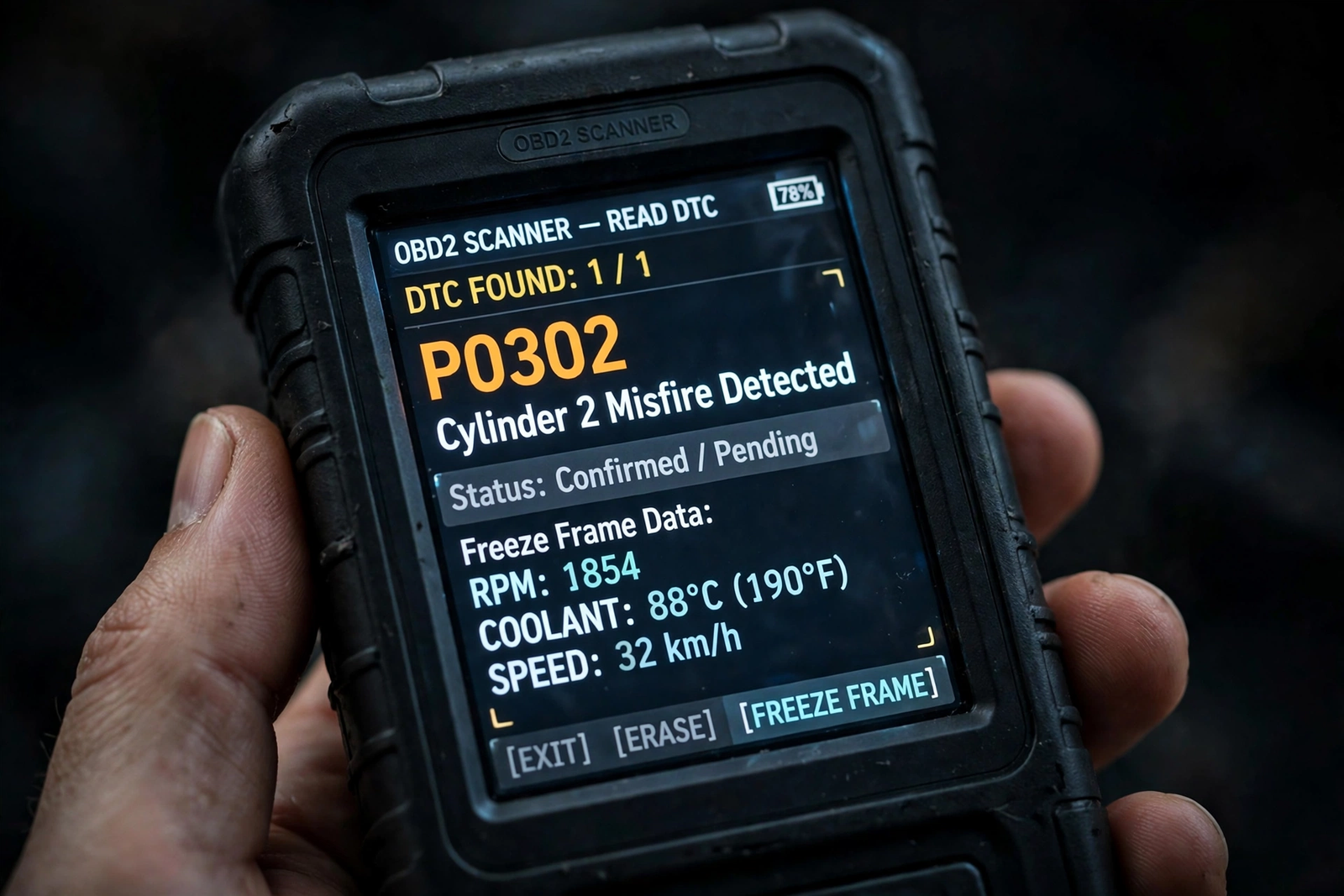
A snapshot of sensor readings (RPM, coolant temp, fuel trim, speed) captured at the exact moment the fault code was set. It helps you understand the conditions behind the failure — for example, whether a misfire code appeared at idle or under load.
Will it help me pass an emissions test?
It helps you check readiness: the I/M monitor function shows whether your car’s self-tests have completed since codes were last cleared. If monitors show “not ready,” wait and drive normally before testing — testing too soon after clearing codes is a common cause of failure.
A check engine light is the car’s least helpful warning — it tells you something is wrong and nothing about what. An OBD2 scanner for check engine light diagnosis translates that warning into an actual fault code you can look up. The ANCEL AD310 is one of the best-selling budget scanners for exactly this job: a handheld reader that plugs into your car’s diagnostic port, reads the code, shows you what it means, and clears the light once the problem is fixed.
The short answer: the ANCEL AD310 does the core job — read and clear check engine codes, show live sensor data, and check emissions readiness — with no batteries, no apps, and no subscription. It only covers engine codes (not ABS, airbag, or transmission on most vehicles), so know that limit before buying.
Table of Contents
Quick Pick: ANCEL AD310
| Pick | Product | Key Spec / Best For | Check Price |
|---|---|---|---|
| Overall Winner | ANCEL AD310 OBD2 Diagnostic Scanner | Reads/clears engine codes, live data, freeze frame, I/M readiness — no batteries needed | Check Price on Amazon |
| Best Budget | ANCEL AD310 OBD2 Diagnostic Scanner | Budget-tier pricing for full basic OBD2 functions | Check Price on Amazon |
| Premium Pick | ANCEL AD310 OBD2 Diagnostic Scanner | Best value in its class — premium features would cost multiples more | Check Price on Amazon |
What the ANCEL AD310 Actually Does
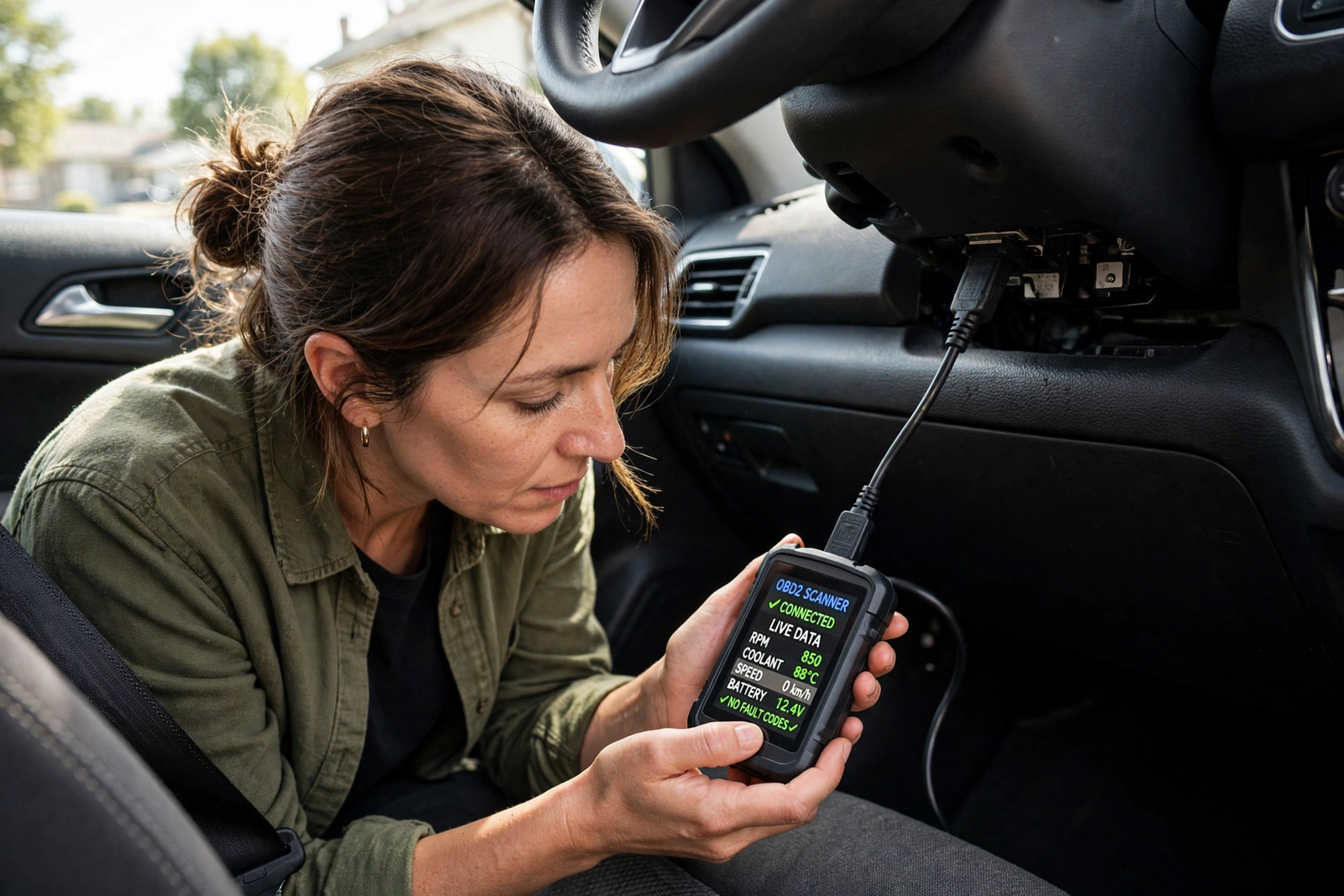
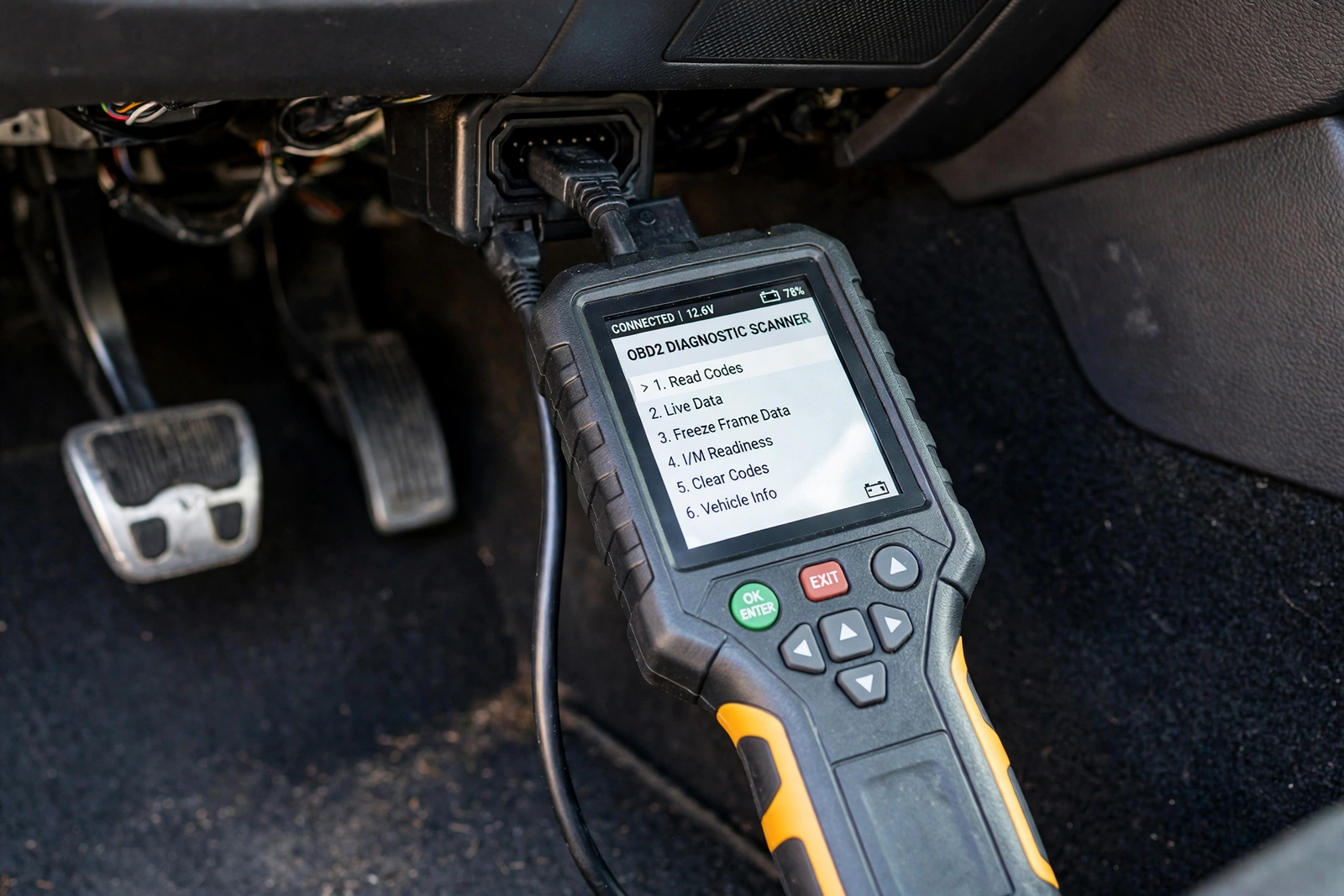
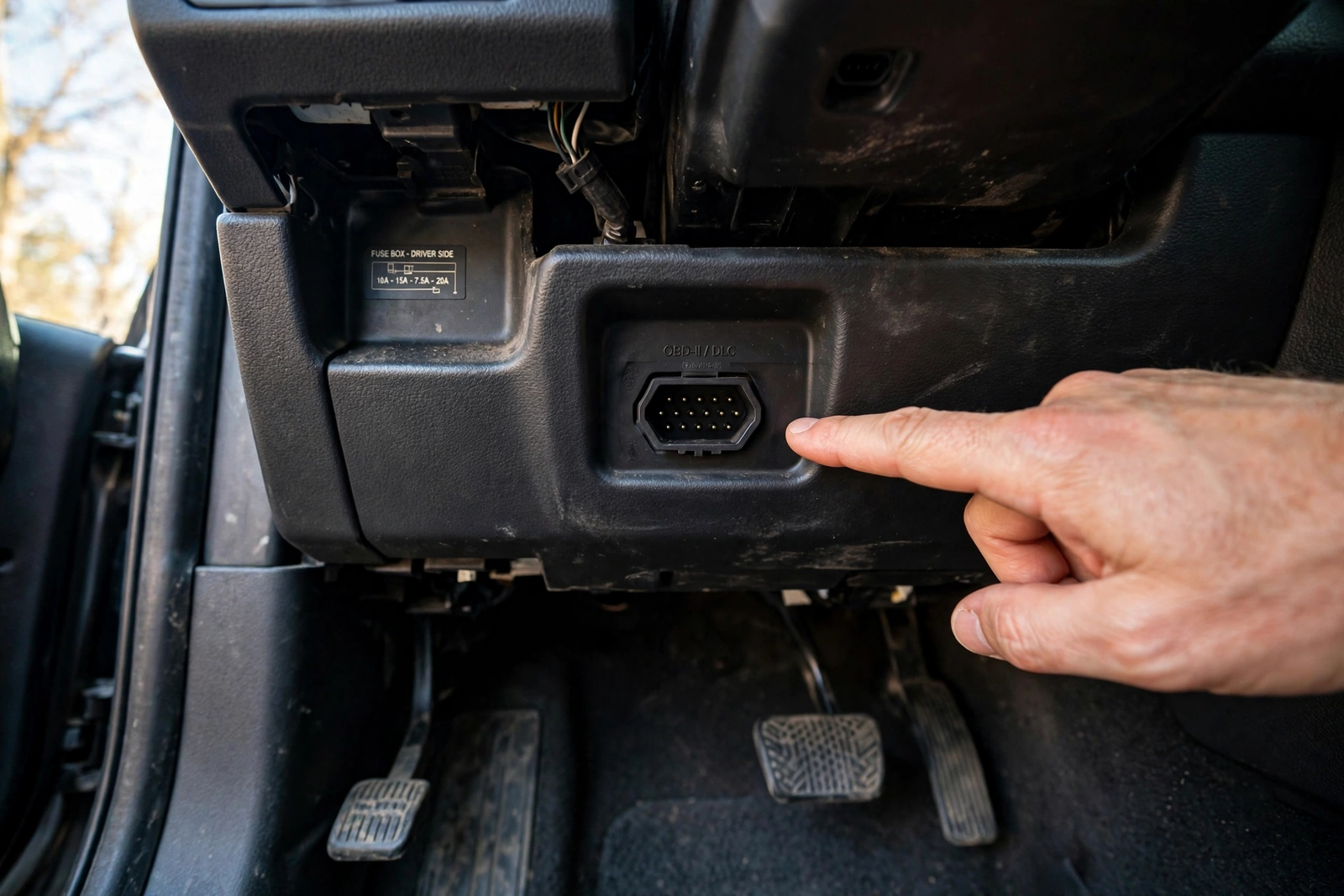
The AD310 is a dedicated obd2 scanner for check engine light diagnosis, and it covers the full basic OBD2 function set. Plug it into the 16-pin diagnostic port (usually under the dash, left of the steering column), and it powers itself from the car — no batteries, no charging, no phone pairing.
Per the manufacturer’s published specifications, it reads and erases diagnostic trouble codes (both generic and manufacturer-specific), displays the code definition on its 128×64 backlit LCD so you are not googling “P0300” on your phone, shows live sensor data streams, captures freeze-frame data (a snapshot of sensor readings when the fault occurred), checks I/M emissions readiness monitors, retrieves vehicle information (VIN, calibration IDs), and runs an EVAP system leak test. It supports all OBD2 protocols including CAN, and works with most 1996-and-newer US vehicles, 2000-and-newer European, and Asian cars.
The interface is deliberately simple: four buttons (up, down, enter, exit), a 2.5-foot cable, and menus in eight languages. There is nothing to install and nothing to update.
How to Use an OBD2 Scanner for Check Engine Light Diagnosis
Step 1: Find the port. The OBD2 port is a 16-pin trapezoidal connector, almost always under the dashboard on the driver’s side. On some vehicles it hides behind a small cover panel.
Step 2: Plug in and turn the key to ON (engine off). The AD310 boots from the car’s power and auto-detects the protocol.
Step 3: Read the codes. Select “Read Codes” — the scanner lists stored fault codes with definitions. Write them down.
Step 4: Check freeze frame. This shows what the sensors were doing when the code set — coolant temperature, RPM, fuel trim — which helps distinguish a one-time glitch from a real failure.
Step 5: Decide. A loose gas cap (the classic P0440-series cause) is a five-second fix. Anything else deserves at least a lookup of the code definition before you clear it.
Step 6: Repair, then clear. Fix the underlying problem first, then use “Erase Codes” to turn the light off. Clearing without repairing just buys time until the code returns — and erasing codes also resets the I/M readiness monitors, which can cause a failed emissions test if you test too soon after.
The Honest Limits
The AD310 is an engine-code reader — essentially an obd2 scanner for check engine light diagnosis — and that boundary matters. On most vehicles it does not read ABS, airbag (SRS), transmission, or body-system codes — those need a more advanced (and more expensive) scanner. If your dashboard shows an ABS or airbag light rather than the check engine light, this is not the tool.
It also cannot fix anything. A scanner tells you what the car thinks is wrong; the repair is still on you or your mechanic. What it does buy you is information: walking into a shop able to say “it is throwing P0420” changes the conversation completely, and for simple issues (gas cap, sensor, maintenance reminder) it can save a diagnostic fee entirely.
One more practical note: it works on 12V vehicles with standard OBD2 ports. Very old cars (pre-1996 US), some hybrids with non-standard implementations, and heavy-duty trucks may not communicate. Check your owner’s manual for the OBD2 port location to confirm compatibility.
Who Should Buy It
- Everyday drivers who want to know what a check engine light means before deciding between DIY and a shop visit. This is the core buyer.
- Used-car shoppers who want to scan a prospective purchase for hidden codes (a cleared-but-returning code is a red flag worth knowing about).
- DIY maintainers who do their own spark plugs, sensors, and maintenance and want to verify their work and clear the light themselves.
- Emissions-test worriers who want to check I/M readiness monitors at home before paying for the official test.
If you need ABS/SRS/transmission coverage, step up to a full-system scanner — our best OBD2 scanner for home mechanics roundup covers that tier.
The Bottom Line
The ANCEL AD310 earns its bestseller status as an obd2 scanner for check engine light diagnosis by doing one job completely: it tells you why your check engine light is on, in plain language, for budget-tier money, with no batteries or subscriptions involved. Its limits are clear and honest — engine codes only, no repairs included — but within those limits it is the right tool for most drivers. Keep one in the glove box and the next check engine light becomes a five-minute diagnosis instead of a week of wondering.