As an Amazon Associate I earn from qualifying purchases.
Oil leaks start small — a weep at the valve cover, a damp oil pan rail — and they never fix themselves. For DIY gasket jobs, the Permatex Ultra Black RTV Silicone Gasket Maker (82180) is the tube most home mechanics reach for: a sensor-safe, oil-resistant silicone that replaces or dresses pre-cut gaskets on valve covers, oil pans, and transmission pans. This Permatex Ultra Black RTV review breaks down what it does, where it belongs, and where it does not, so your gasket job seals the first time.
Table of Contents
The short answer: Per this Permatex Ultra Black RTV review, the Ultra Black is a maximum-oil-resistance silicone gasket maker rated from -65°F to 500°F, safe for sensors, that stays flexible instead of hardening and cracking. It is the pick of this Permatex Ultra Black RTV review for oil-exposed gasket jobs like valve covers and oil pans. It is not an exhaust sealant and not a substitute for head gaskets — use it where the listing says it belongs.
Quick Pick: Permatex Ultra Black RTV
Each pick below is covered in this Permatex Ultra Black RTV review — choose by the job:
| Pick | Use Case | Why It Fits | Check Price |
|---|---|---|---|
| Overall Winner | Permatex Ultra Black RTV (82180) — valve covers and oil pans | Maximum oil resistance; sensor-safe; -65°F to 500°F range | Check Price on Amazon |
| Best Budget | Permatex Ultra Black RTV (82180) — one tube, many jobs | 3 oz tube covers several gasket jobs; replaces pre-cut gaskets | Check Price on Amazon |
| Premium Pick | Permatex Ultra Black RTV (82180) — transmission and differential work | Stays flexible under vibration; resists gear lube and ATF | Check Price on Amazon |
What the Permatex Ultra Black RTV Is
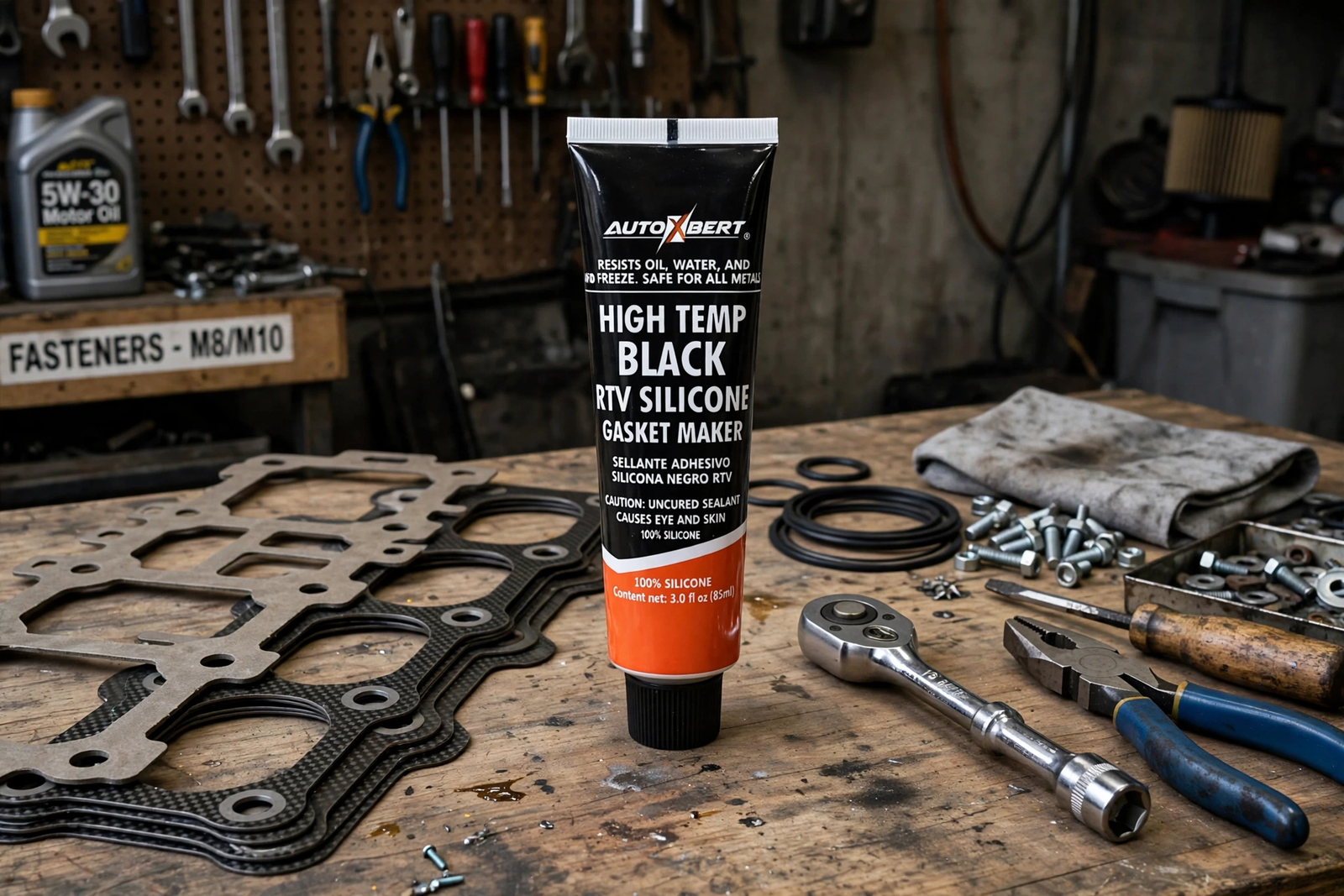
RTV stands for Room Temperature Vulcanizing — silicone that cures at room temperature into a flexible rubber seal. The Ultra Black (part number 82180), the subject of this Permatex Ultra Black RTV review, is Permatex’s oil-resistance flagship: the listing describes maximum resistance to engine oil, transmission fluid, gear lube, and coolants, with a non-corrosive, sensor-safe formula. It comes in a 3 oz tube, which the listing positions as the right size for most repair jobs.
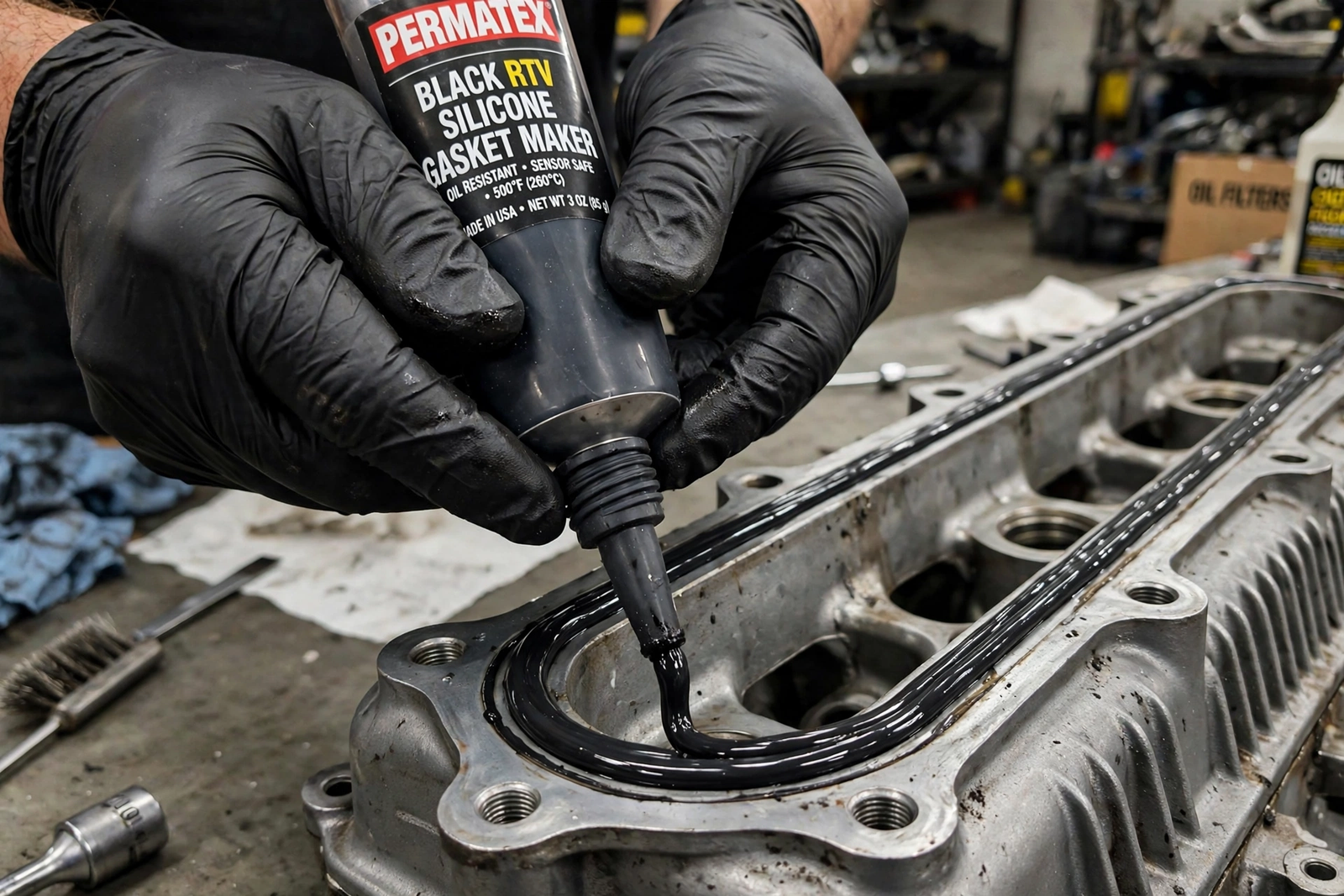
It works two ways: as a gasket maker (a bead laid directly on the flange, replacing a pre-cut gasket) or as a gasket sealant/dressing (a thin coat on a pre-cut gasket to help it seal). Both uses are standard shop practice, and the product is OEM-specified, which is why this Permatex Ultra Black RTV review notes you’ll find it in professional shops as well as home garages.
Oil Resistance: The Reason to Buy It
Standard silicones degrade with constant oil exposure — they swell, soften, and eventually leak. The Ultra Black formula is specifically built to resist that: the listing claims superior adhesion to oily surfaces and long-term durability against powertrain fluids. That is what separates it from general-purpose RTV and from the cheaper tubes on the shelf — and why oil resistance is the headline of this Permatex Ultra Black RTV review.
In practice, this matters most on valve covers and oil pans, the two jobs where the sealant lives bathed in hot engine oil. Reviewers and shop guides consistently point to those applications as the Ultra Black’s home turf — the core finding of this Permatex Ultra Black RTV review — noting seals that hold through thermal cycling without weeping.
Temperature Range and Flexibility
The listed range is -65°F to 500°F intermittent — far wider than any engine gasket will ever see, which is the point: headroom. More important than the headline number is what the listing says about aging: the cured seal resists hardening, shrinking, and cracking through thermal cycling. Engines expand and contract with every heat cycle, and a gasket maker that turns brittle is a leak waiting to happen. The Ultra Black stays flexible, which is also why this Permatex Ultra Black RTV review rates it a solid choice for high-vibration applications like differential covers.
Where to Use It (and Where Not To)
Per the listing, the right applications are valve covers, oil pans, transmission pans, intake manifold end seals, timing gear covers, and differential covers — anywhere oil meets a gasketed joint, and exactly where this Permatex Ultra Black RTV review recommends using it.
Where it does not belong: exhaust parts (temperatures exceed its range — that job needs high-temp exhaust sealant), head gaskets (never substitute RTV for a head gasket), and fuel-system internals. It is also worth knowing the family: Permatex makes Ultra Grey for high-torque/vibration applications and Ultra Copper for high heat — Ultra Black is the oil-resistance specialist, so buy it for oily jobs specifically.
Application and Cure Time: Getting the Seal Right
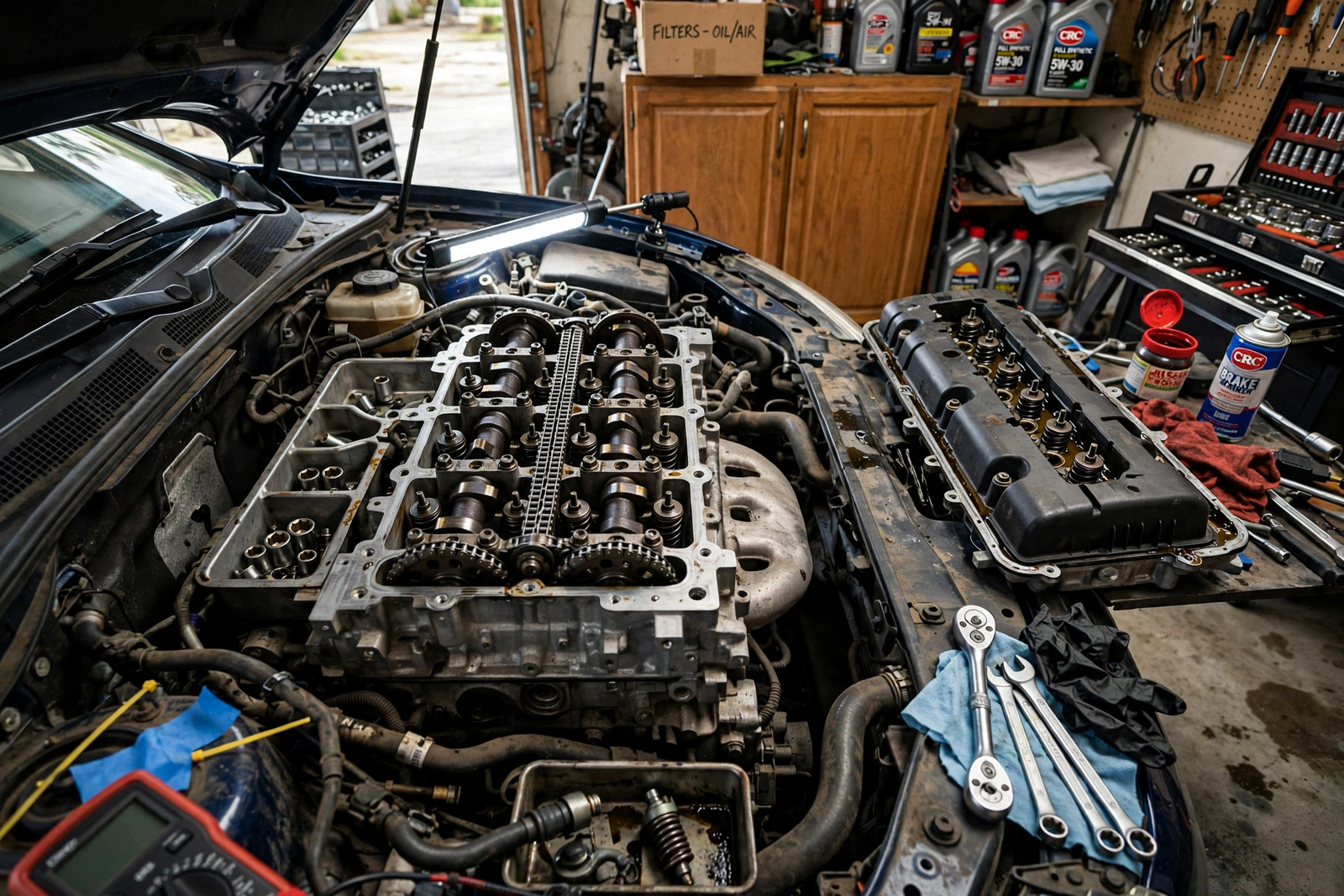
The seal is only as good as the prep. Clean both flange surfaces down to bare metal — old gasket material, oil film, and coolant residue all kill adhesion. The product applies as a smooth, even bead; the listing’s guidance is a continuous bead around the sealing surface, with a little extra at corners and joints where leaks start.
Assembly timing matters: most RTV guidance says to assemble the parts within minutes of applying the bead, then let it cure. Full cure typically takes 24 hours before the joint sees oil pressure or full heat — rushing a gasket job back into service the same evening is the classic DIY mistake this Permatex Ultra Black RTV review warns against. Torque fasteners to spec in sequence; over-tightening squeezes the bead out and starves the joint.
Who Should Buy It
Buy it if: you are doing a valve cover, oil pan, transmission pan, or differential cover job; you want one tube that handles oil-exposed gaskets; you prefer replacing a pre-cut gasket with a formed-in-place seal.
Skip it if: the job is exhaust-related (wrong temperature range); it is a head gasket (never use RTV there); you need a high-vibration specialist (look at Ultra Grey) or a high-heat specialist (look at Ultra Copper).
Pair the tube with the rest of the job — our car maintenance checklist covers the full DIY kit, and our sealant comparison — the companion piece to this Permatex Ultra Black RTV review — walks through when a different Permatex formula fits better.
The Verdict
The Permatex Ultra Black RTV earns its reputation: maximum oil resistance, a -65°F to 500°F range, sensor-safe chemistry, and a cured seal that stays flexible instead of cracking. For valve covers, oil pans, and transmission pans — the oily gasket jobs DIYers actually do — this Permatex Ultra Black RTV review calls it the right tube. Just prep the surfaces properly, respect the cure time, and keep it away from exhausts and head gaskets. That is the bottom line of this Permatex Ultra Black RTV review.
Permatex Ultra Black RTV Silicone Gasket Maker on Amazon: 82180, 3 oz, -65°F to 500°F, sensor-safe, maximum oil resistance.
The answers below round out this Permatex Ultra Black RTV review.
Frequently Asked Questions
Q: What is RTV silicone gasket maker?
A: RTV (Room Temperature Vulcanizing) silicone is a sealant that cures at room temperature into a flexible rubber gasket. This permatex ultra black rtv review covers the 82180 formula: you apply it as a bead on a flange, assemble the parts, and it cures into an oil-resistant seal — replacing a pre-cut gasket or dressing one for extra sealing.
Q: How long does Permatex Ultra Black take to cure?
A: Full cure typically takes 24 hours before the joint should see oil pressure or full operating heat. Assemble parts within minutes of applying the bead, torque to spec, then let it sit. Putting a gasket job back into service the same evening is the most common DIY mistake with RTV.
Q: Can I use Ultra Black instead of a pre-cut gasket?
A: Yes, on the applications the listing covers — valve covers, oil pans, transmission pans, and similar joints. Formed-in-place gaskets are standard practice. It is not a substitute for head gaskets, and on some applications the manufacturer specifies a pre-cut gasket plus RTV as a dressing rather than RTV alone.
Q: Is Permatex Ultra Black sensor-safe?
A: Yes. The listing describes a non-corrosive, sensor-safe formula, which matters on modern engines where oxygen sensors and other electronics sit near gasketed joints. Some older silicone formulas released corrosive byproducts during cure; sensor-safe RTV does not.
Q: What is the difference between Ultra Black and Ultra Grey?
A: Ultra Black is the oil-resistance specialist — maximum resistance to engine oil, transmission fluid, and gear lube. Ultra Grey is positioned for high-torque and high-vibration applications. For oily gasket jobs like valve covers and oil pans, Ultra Black is the pick; for joints that see heavy vibration, compare both.
Q: Can I use Ultra Black on exhaust parts?
A: No. Exhaust temperatures exceed its -65°F to 500°F intermittent rating. Exhaust joints need dedicated high-temperature exhaust sealant. Using standard RTV on an exhaust is a fast track to a burned-out, leaking seal.