Every driver knows the moment: you walk past your car in bright sunlight and a web of fine swirls suddenly appears across the hood, or a light scratch catches the light at exactly the wrong angle. Meguiar’s Ultimate Compound is the bottle most do-it-yourselfers reach for first — a 15.2 oz compound (model G17216) that sits at the top of Amazon’s Polishing & Rubbing Compounds best-seller list. It is a car scratch remover built around diminishing abrasives that cut away the damaged top layer of clear coat and finish toward a polish in the same step, by hand or with a machine.
In this review of Meguiar’s Ultimate Compound, we cover how the compound works, what it can and cannot fix, how to apply it by hand and with a dual-action polisher, and the prep and protection steps that decide whether the result lasts. We also compare it with the Chemical Guys Heavy Duty Water Spot Remover gel and the 303 Aerospace Protectant — the two products most buyers consider alongside it — and link our full Meguiars vs Chemical Guys head-to-head. The short version is in the Quick Pick table below.
As an Amazon Associate I earn from qualifying purchases.
| Pick | Product | Why it stands out | Check Price |
|---|---|---|---|
| Overall Winner | Meguiar’s Ultimate Compound, 15.2 oz | One-step cut and finish for swirls, light scratches and oxidation — by hand or machine | |
| Best Budget | Chemical Guys Heavy Duty Water Spot Remover Gel, 16 oz | The fix for etched water spots the compound cannot touch — a different job, honestly labelled | |
| Premium Pick | 303 Aerospace Protectant Spray, 32 oz (Protect Pick) | UV protectant for trim, vinyl and rubber — the protection step after correction, not a scratch fix |
Table of Contents
What Meguiar’s Ultimate Compound Is — and What It Is Not
Meguiar’s Ultimate Compound is a paint correction compound in a 15.2 oz bottle, model G17216: a cream you work into the paint to level the clear coat, removing a very thin layer of damaged clear coat — and the swirls, light scratches and oxidation in it — and leaving a smoother, glossier surface. It is made for single-stage paints and clear coats, and it is the top-selling compound in Amazon’s Polishing & Rubbing Compounds category, with a 4.4-star average across 11,000-plus reviews (a snapshot figure, not a live check).
Just as important is what it is not. It is not a wax and not a polish: it corrects paint rather than protecting it or simply adding shine. It is not a filler that hides scratches until the next wash — the fix is real because a thin layer of clear coat is actually removed, which is also why the clear coat is finite and this is not a product to use aggressively every wash. It is not a touch-up paint, so it cannot fill a chip or cover bare metal. And it is not a one-bottle detail for a neglected car: a dirty panel still needs washing and decontamination first, or the compound will grind that grit into the paint.
What makes it the default recommendation for first-timers is that it is forgiving: you can correct swirls by hand with a foam applicator and no machine at all, and it finishes down toward a polish rather than leaving a hazy cut that needs a second product.
How This Car Scratch Remover Works: SMAT Abrasives That Cut and Finish
The compound works with diminishing abrasives — the system Meguiar’s calls SMAT, Super Micro Abrasive Technology. The abrasive particles start out aggressive enough to cut, then break down as you work the panel. That breakdown lets one product do two jobs: the early passes level the defect, and the later passes refine the finish toward a polish — no separate cutting compound and finishing polish for light defects.
That matters twice over. Fewer steps mean fewer passes, and every pass removes a little clear coat — so a one-step correction is gentler than a two-stage cut-and-polish for the same light defects. And it is what makes the compound usable by hand: a traditional heavy-cut compound needs a machine to break its abrasives down, while SMAT abrasives break down under hand pressure too.
The compound is safe on clear coats when used as directed — a clean pad, moderate pressure, a small section at a time, residue wiped off before it dries. Lean on it with a dirty pad or a rotary buffer and the same abrasives that fix swirls can put new ones in.
What Scratches It Can Fix — and What It Cannot
For most car scratch repair jobs at home, the question is depth: run your fingernail across the scratch. If your nail glides over it, the defect is inside the clear coat and the compound can level it. If your nail catches, the scratch goes through the clear coat and no compound will fix it — that is touch-up paint or professional work.
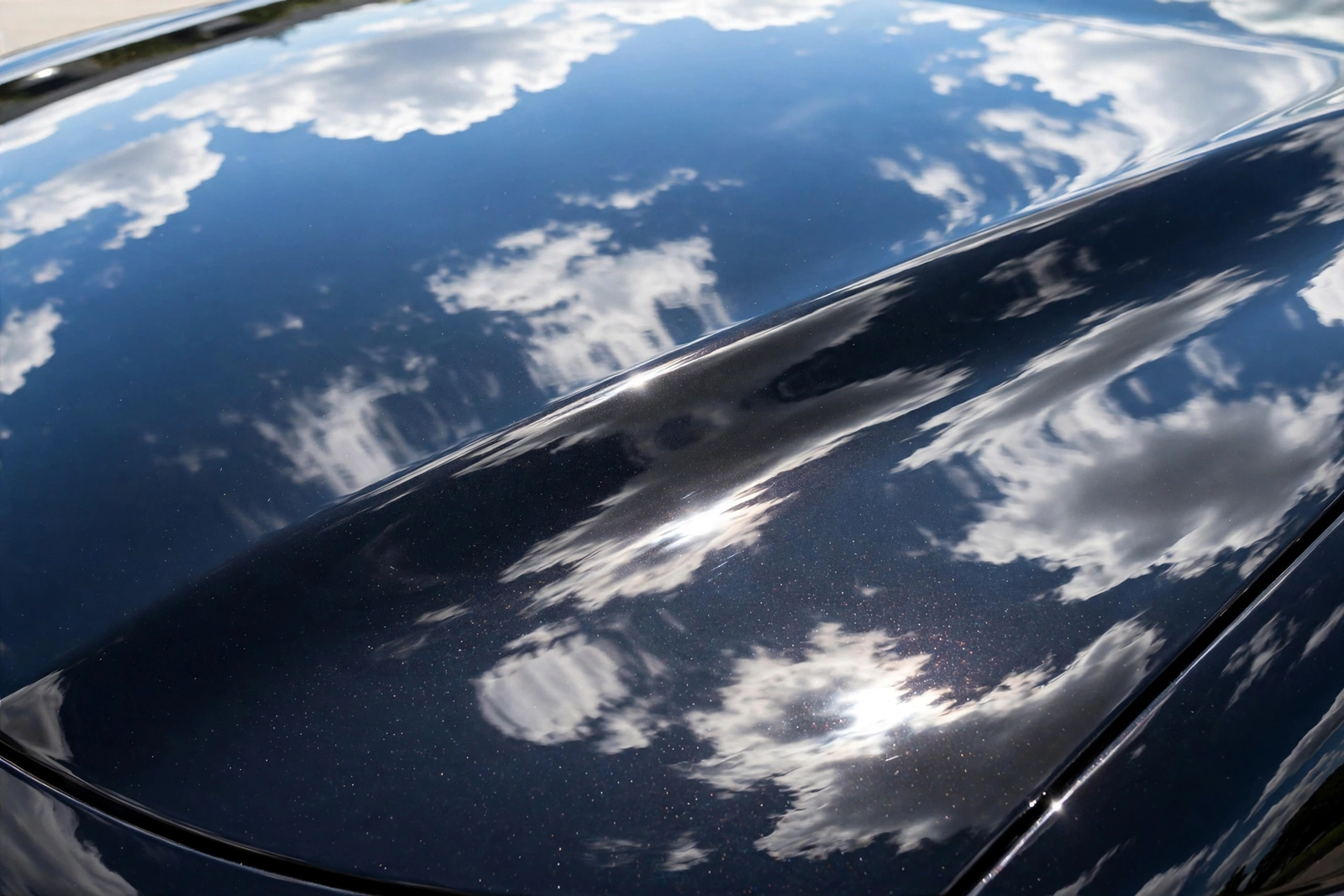
What it can fix: swirl marks from bad washing, light scratches you cannot feel, oxidation and fading, hazing, light scuffs, and water-spot haze that has not yet etched. These defects live in the top layer of clear coat, which is exactly the layer the compound works on — a dull, oxidized hood is often the most dramatic before-and-after, because the compound removes the dead top layer and exposes fresh paint underneath.
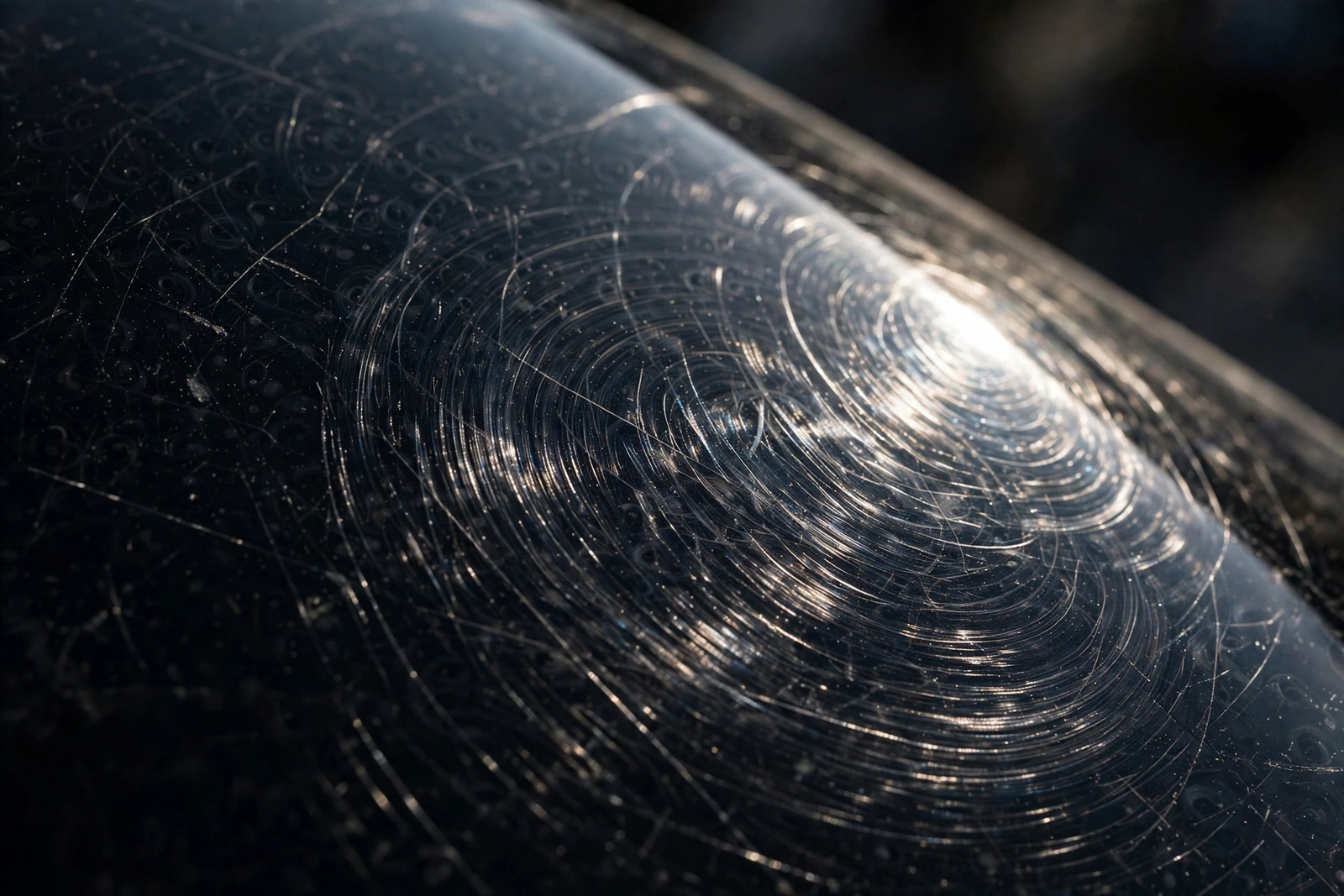
What it cannot fix: deep scratches through the clear coat, rock chips down to primer or metal, etched water spots where minerals have eaten into the paint, dents, and peeling clear coat. Etched spots deserve a special note — the compound removes light, unetched water-spot haze, but once minerals have etched, abrasives cannot dissolve them; that job belongs to a chemical water spot remover. And compounding removes clear coat, so it is a tool for occasional correction, not a weekly routine: correct once, protect the result, and fix the wash technique that caused the swirls.
Hand vs Machine: How to Apply It
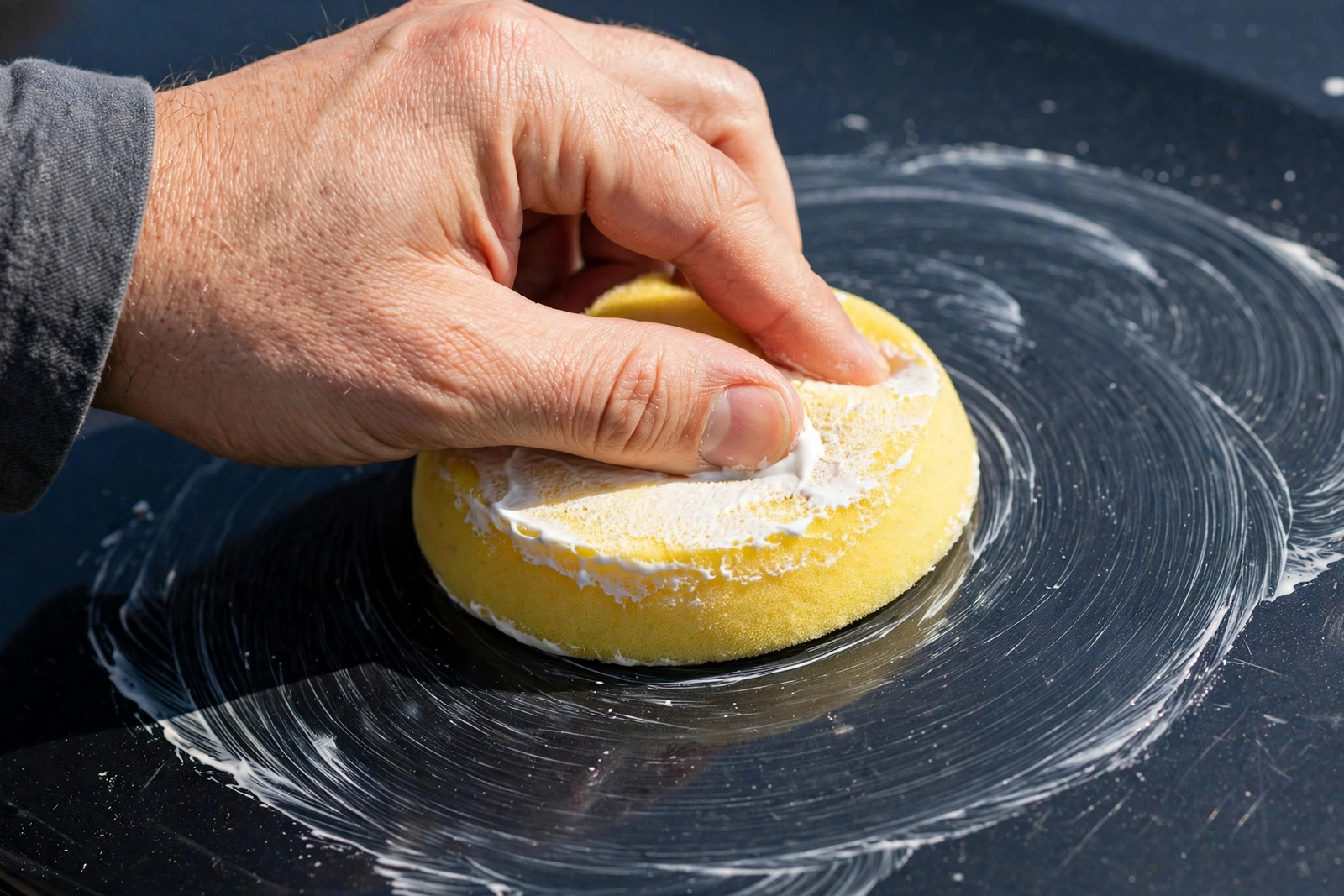
If you are learning how to remove scratches from car paint for the first time, hand application is the forgiving way to start. Put a small amount of compound on a foam applicator pad, work a 2-by-2-foot section with moderate, even pressure in overlapping passes, then wipe the residue off with a clean microfiber towel. Inspect under a bright light before you continue — swirls hide in shade, so if it looks good under a bright LED at an angle, it is good. Hand correction suits spot repairs and a single panel.
A dual-action polisher is the faster route on large panels: more consistent, less tiring, and better at breaking the abrasives down evenly. It is beginner-safe because its oscillating motion resists burning through paint, unlike a rotary buffer, which concentrates heat and cut in one spot. Start with the least aggressive pad that gets the job done — a polishing pad for light swirls, a cutting pad only if the polishing pad is not cutting it — and keep the pad clean, because a loaded pad stops cutting and starts scratching.
Whichever method you choose, the habits are the same: work in the shade on cool paint, keep the pad clean, use a small amount of product, and wipe and inspect as you go. Compound that dries on the panel is harder to remove and can leave its own haze — and never compound a panel you have not washed and decontaminated.
Prep and Follow-Up: Wash, Decontaminate, Correct, Protect
Correction is step three of four, and skipping the first two is how paint gets damaged. Step one is a proper wash: two buckets, a clean mitt, and shade, because most swirls are born in the wash. Step two is decontamination: feel the paint with a plastic bag over your hand — roughness means bonded contaminants. Run a clay bar over the paint after washing to lift them off; never compound over them, or you will grind them into the clear coat. Our beginner detailing kit guide covers the wash setup this routine starts with.
Step three is the correction itself, one panel at a time. Step four is protection, and it is not optional: freshly corrected paint is exposed paint. Apply a sealant or wax over the corrected panels to lock in the work, and treat the trim and rubber around the paint as well. Correction without protection is a short-lived victory; the next bad wash undoes it.
Meguiar’s vs the Alternatives (Chemical Guys Heavy Duty, 303 Protectant)
The honest way to compare these three is by the problem each one solves, because they are not three versions of the same product. Meguiar’s Ultimate Compound is the only one that corrects paint mechanically: it levels swirls, light scratches and oxidation, and the other two cannot do its job.
Chemical Guys Heavy Duty Water Spot Remover is a gel that dissolves mineral deposits chemically rather than abrading them away, and it works on paint and glass. It is the pick for hard-water spots and mineral etchings — the one defect the compound cannot fix. It carries a 4.0-star average across 13,000-plus reviews, and it will not fix swirls or scratches, so buying it for a swirled hood is buying the wrong tool. Our full Meguiars vs Chemical Guys head-to-head walks through the diagnosis: swirls, light scratches and oxidation call for the compound; crusty white water-spot etchings call for the gel.
303 Aerospace Protectant Spray is a different kind of product again: a protectant, not a cleaner and not a corrector. It does not remove dirt or scratches — it protects clean surfaces, with UV protection as its main job, and the 32 oz bottle covers the trim, vinyl and rubber around the paint you just corrected. It belongs here as the follow-up step, not as a rival: correct with the compound, then protect with the 303. Our Chemical Guys Total Interior Cleaner review covers the 303 as the protectant-only alternative in its own comparison.
Who Should Buy It — and Who Should Skip It
Buy it if your paint is swirled, lightly scratched or oxidized and you want to fix it yourself. It suits first-time correctors above all — the diminishing abrasives are forgiving by hand, the one-step cut and finish means no second product to buy, and one 15.2 oz bottle covers a lot of paint. It also suits anyone restoring an older car whose paint has gone dull, and buyers with a dual-action polisher who want a compound that finishes down cleanly.
Skip it if your scratches are deep enough to catch a fingernail, if the damage is rock chips down to primer, or if the clear coat is peeling — none of those are compound jobs. Skip it too if what you actually want is protection rather than correction: a sealant or wax is the right purchase for paint already in good shape. And skip the job, not just the bottle, if you will not wash and decontaminate first — compounding a dirty panel does more harm than good.
Verdict
As a car scratch remover, Meguiar’s Ultimate Compound earns its place as the default first bottle for DIY paint correction. The diminishing SMAT abrasives cut and finish in one step, it works by hand or with a dual-action polisher, it is safe on clear coats when used as directed, and the 4.4-star average across 11,000-plus reviews reflects a huge base of successful jobs. Its limits are equally clear: it fixes defects inside the clear coat and nothing deeper, it offers no protection on its own, and it removes clear coat, so it is for occasional correction, not a weekly routine. Accept those limits, prep first, protect after, and this is the compound to buy.
Frequently Asked Questions
Will Meguiar’s Ultimate Compound remove deep scratches?
No. It only fixes defects inside the clear coat — swirls, light scratches, oxidation and unetched water-spot haze. If your fingernail catches in the scratch, it goes through the clear coat and no compound will fix it; that needs touch-up paint or professional repair.
Can I use Ultimate Compound by hand, or do I need a machine?
You can use it by hand. A foam applicator pad with moderate pressure works well for spot repairs and small areas, and the diminishing abrasives break down under hand pressure. A dual-action polisher is faster and more consistent on large panels, but it is not required.
Is Ultimate Compound safe for clear coat?
Yes, when used as directed. It uses diminishing abrasives designed for clear coats and all glossy paints. Keep the pad clean, use moderate pressure, work a small section at a time, and do not lean on it — compounding removes a thin layer of clear coat, so it is a tool for occasional correction, not every wash.
Do I need to wax after using Ultimate Compound?
Yes. The compound offers no lasting protection on its own, so freshly corrected paint is exposed paint. Apply a sealant or wax over the corrected panels to lock in the work, and protect the trim and rubber around the paint as well.
How is Ultimate Compound different from a polish?
A compound cuts more than a polish: it levels defects by removing a thin layer of clear coat, while a polish mainly refines gloss. Ultimate Compound is unusual because its diminishing abrasives finish down toward a polish in the same step, so for light defects you do not need a separate polish after it.
Should I buy Ultimate Compound or the Chemical Guys water spot remover?
It depends on the diagnosis. Buy the Meguiar’s compound for swirls, light scratches and oxidation; buy the Chemical Guys Heavy Duty gel for hard-water spots and mineral etchings. They fix different problems, so the right purchase depends on what your paint shows — our Meguiars vs Chemical Guys head-to-head walks through the diagnosis in detail.