A real ceramic coating is a serious job: decontaminate, polish, apply a glass-bottle coating panel by panel, then keep the car dry while it cures. Griot’s Garage Ceramic 3-in-1 Wax promises a shortcut — a spray bottle combining a wax, a sealant and SiO2 ceramic protection in one step, with no machine and no detailer. This review looks at whether a spray-on ceramic coating for cars can actually deliver ceramic-style beading and gloss, what the 22 oz bottle (model 10978) really does, and where its limits sit.
In this review of Griot’s Ceramic 3-in-1 Wax, we cover what the three-in-one formula is, how to apply it without streaks, how long the protection honestly lasts, and how it compares with the Turtle Wax Hybrid Solutions Ceramic Spray Coating and the Chemical Guys HydroSlick — the two products most buyers shortlist next to it. The short version is in the Quick Pick table below.
As an Amazon Associate I earn from qualifying purchases.
| Pick | Product | Why it stands out | Check Price |
|---|---|---|---|
| Overall Winner | Griot’s Garage Ceramic 3-in-1 Wax, SiO2 Spray, 22 oz | Wax, sealant and SiO2 ceramic in one spray — the easiest route to ceramic-style protection | |
| Best Budget | Turtle Wax Hybrid Solutions Ceramic Spray Coating, 16 oz | The cheapest route to spray-on SiO2, with a minimum six-month claim — but it needs two coats and a 24-hour cure for its longest claim | |
| Premium Pick | Chemical Guys HydroSlick SiO2 Ceramic Coating HyperWax, 16 oz | Hand-applied SiO2 gel with the strongest single-application durability claim, up to one year |
Table of Contents
What Griot’s Ceramic 3-in-1 Wax Is: A Ceramic Coating for Cars in a Spray Bottle
Griot’s Ceramic 3-in-1 Wax is a 22 oz spray bottle, model 10978, that blends three jobs into one product: a carnauba wax for gloss, a sealant for protection, and SiO2 ceramic chemistry for water beading. It is made in the USA and has been on sale since February 2020. The idea is simple — spray it on, wipe it off, and the car carries a ceramic-style shield without a professional coating’s multi-step routine.
That promise needs honest framing. This is a consumer spray sealant, not a professional ceramic coating: it does not chemically bond to clear coat for years the way a glass-bottle coating does. What it offers instead is convenience — ceramic-style beading and a deep gloss from a bottle you can use in a driveway in under an hour. It also works as a topper: the maker describes it as a supplement to a professionally installed high-solids ceramic coating, so owners of coated cars can use it to refresh beading that has started to fade.
Just as important is what it cannot do. A ceramic layer is transparent, so it seals in whatever is underneath — swirls, water-spot etching and oxidation stay visible under it. Correct the paint first: our Meguiars vs Chemical Guys paint-fix comparison explains which product fixes which defect. It will not fix neglected paint on its own; it protects the finish you already have.
One warning before you order: the Amazon listing for this exact bottle showed “No featured offers available” in crawls, so availability is not guaranteed. Check the live listing before buying — this review does not claim the bottle is in stock. Retailer feedback is positive where it is sold: Advance Auto Parts lists a 4.65 average from 46 reviews, a snapshot figure, not a live check.
How It Works: SiO2, Carnauba Wax, and Sealant in One Spray
Each of the three ingredients does a different job. The SiO2 — silicon dioxide, the ceramic part — forms the hydrophobic layer that makes water bead and roll off instead of sitting flat on the paint. The modified carnauba wax adds the deep, wet look that makes freshly waxed paint stand out in sunlight. The sealant layer guards against surface oxidation, UV rays, stains and etching from acid rain. Together they are meant to replace a conventional wax or sealant as the car’s primary protection, not just sit on top of one.
In short, it is a ceramic coating car owners can spray on in minutes rather than a coating a detailer installs over a day. The trade-off is durability: a spray-on layer is thinner and shorter-lived than a professionally applied coating, so it needs reapplying through the year. The payoff is that reapplying takes minutes, not a weekend, and needs no machine and no curing lamps.
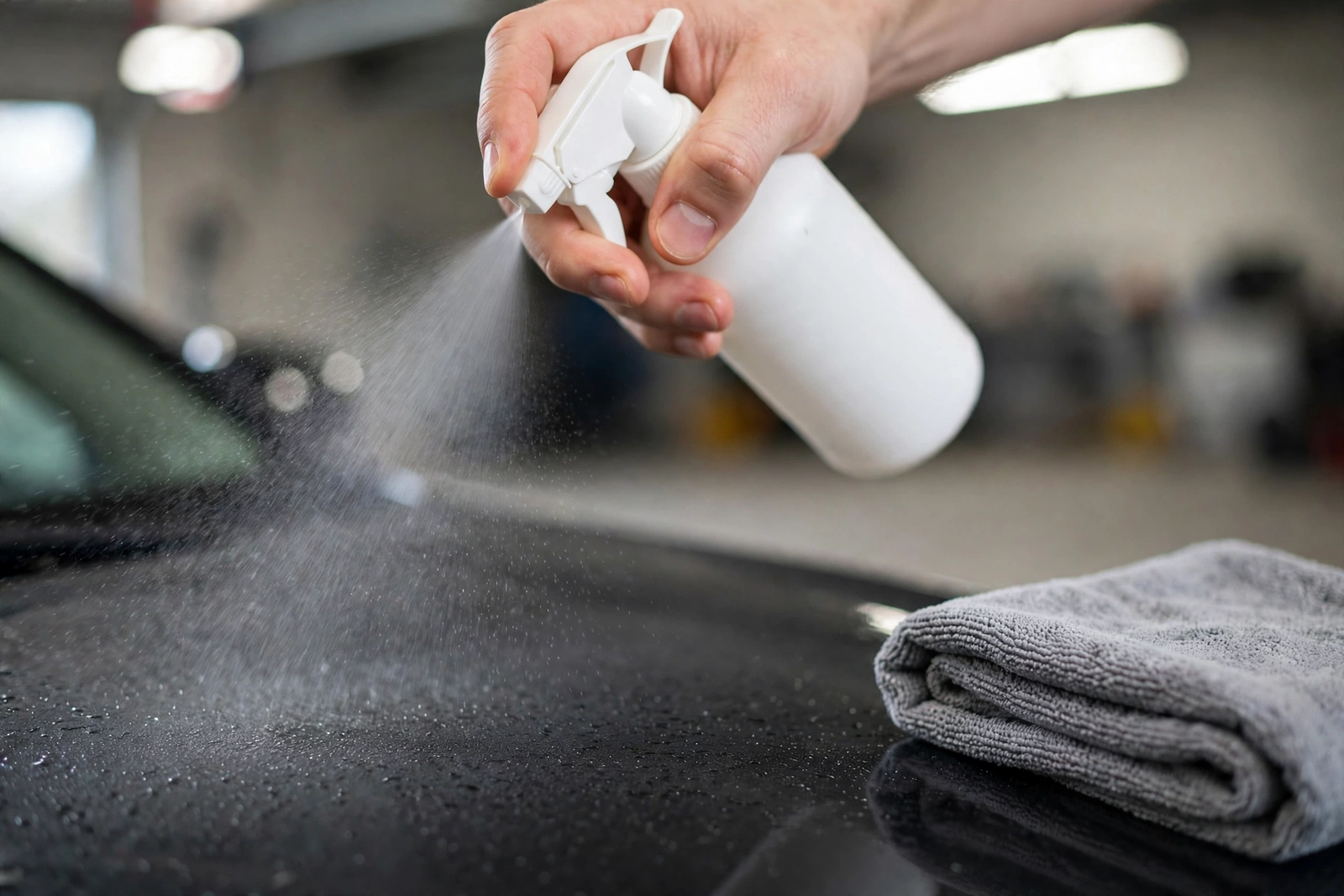
How to Apply It: Spray, Wipe, and Let It Cure
Preparation decides the result. Wash the car thoroughly first, then decontaminate the paint — if it feels rough under a plastic bag over your hand, run a clay bar over it, because bonded contamination stops the layer bonding properly. Our beginner detailing kit guide covers the wash setup this routine starts with. Work in the shade on cool panels: heat dries the product before you can wipe it, which is how hazing and streaks happen.
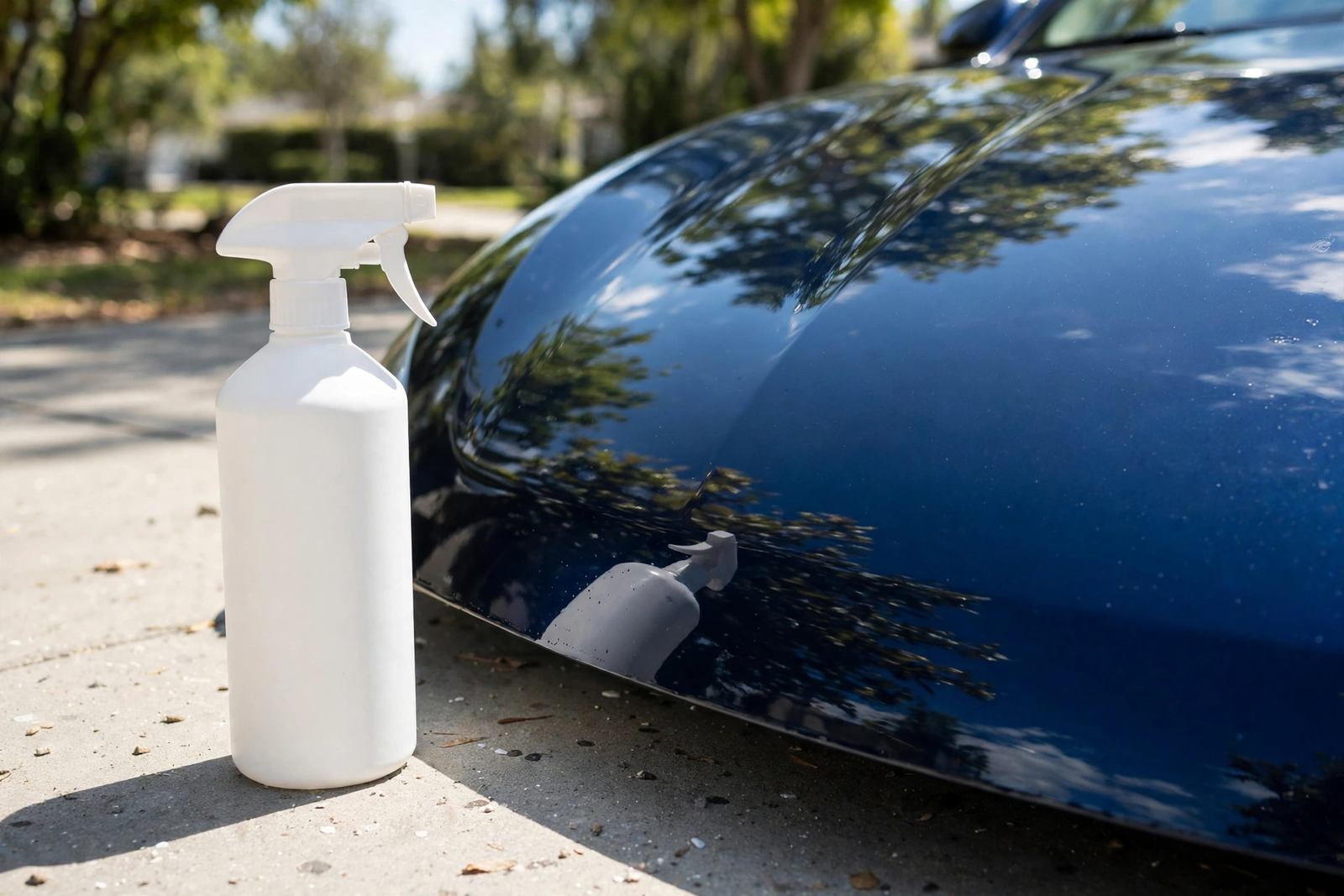
Application itself is straightforward. Spray a small amount onto a foam applicator pad or directly onto one small section at a time — about two feet by two feet — spread it in thin, even passes, and wipe off the excess immediately with a clean, dry microfiber towel. Do not let the product dry on the panel. A second dry towel for buffing is worth having: a light mist, one towel to spread and one to buff, is what keeps the finish streak-free. Less is more — thick coats do not protect better, they just smear.
Then leave it alone. The maker’s instructions call for 12 to 24 hours of cure time after application before the car gets wet or takes additional protection, and at least 12 hours between coats. Two thin coats are the practical maximum; more layers do not add durability and tend to smear. That cure window is the one planning cost this product carries — apply it on a dry evening, not an hour before rain. A little goes a long way: reviewers report using less than a quarter of the 22 oz bottle on a full car, so one bottle covers several sessions.
How Long It Lasts — and the Months Claim
The listing promises water beading and protection that lasts for months, without putting a number on it. Independent reports disagree on what that means in practice, so this review states the range honestly rather than picking one figure. One long-term reviewer stayed comfortable with the results for up to five months after a single session, putting the typical range at three to six months depending on climate, wash frequency and paint condition. Another detailing guide found beading weakening after four to six weeks on a daily driver, with six to eight weeks at best.
The honest planning figure sits between those two reports: expect strong beading for a few weeks and useful protection for a couple of months on a daily driver parked outside, longer on a garaged car washed gently. That is the real difference from a professional coating, measured in years, and from a plain spray wax, measured in weeks. If you want the beading to stay sharp, plan on reapplying every couple of months — easy enough at this effort level that the short life is a routine, not a chore. No durability figure here is a tested measurement; the numbers above are reported by the listing and by independent reviewers, stated as such.
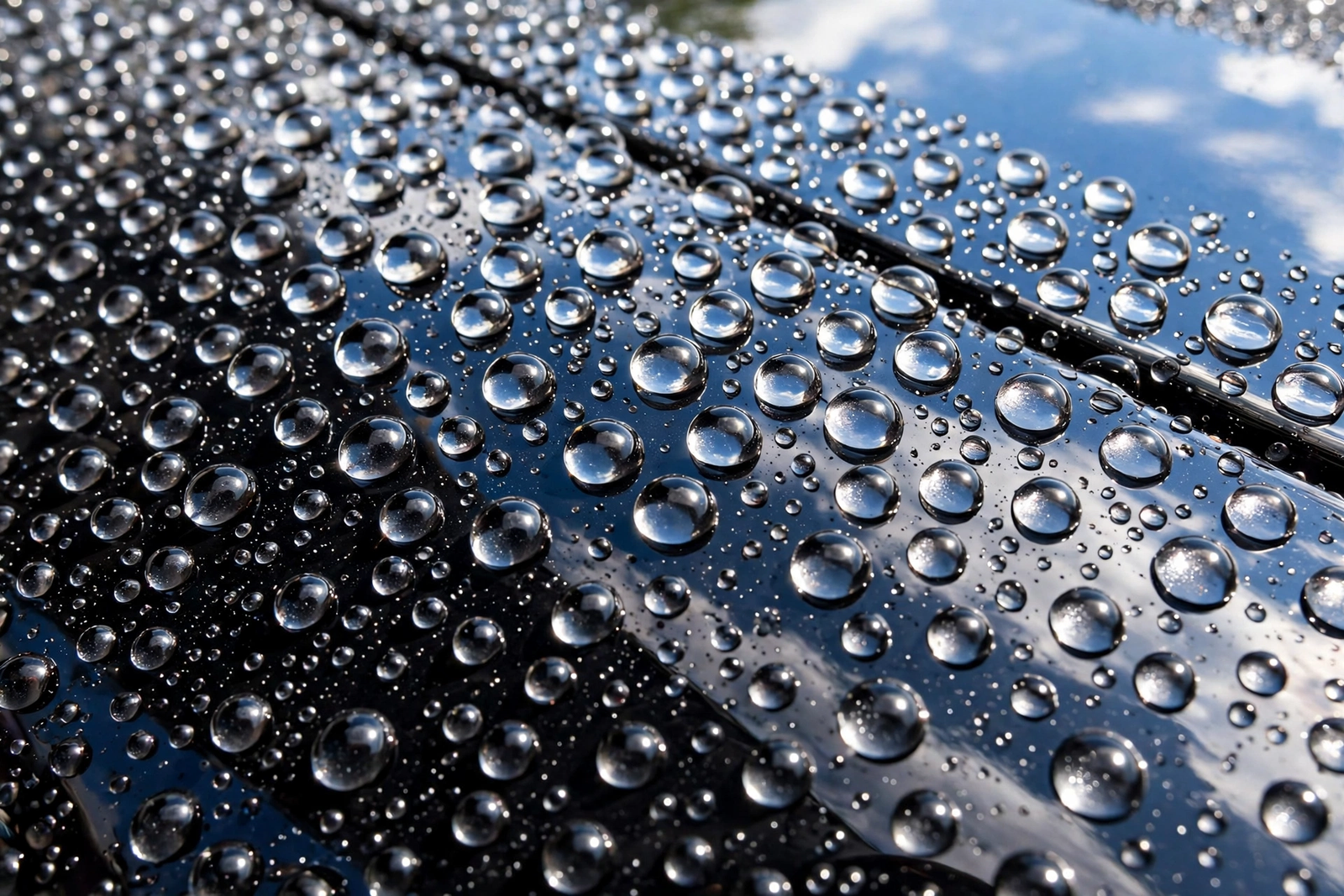
Water Beading, Shine, and Where You Can Use It
Beading is the headline effect and the easiest to judge: water gathers into tight round beads and rolls off instead of sheeting flat, which means the car dries faster and stays cleaner between washes, because dirt has less to cling to. The shine is the second half — the carnauba in the blend gives a deep, wet gloss rather than the hard, glassy look of a pure ceramic, so dark paint looks richer after application.
The safe surfaces go beyond paint. The listing says it works on paint, wheels, plastic, rubber trim and chrome, as well as cars, trucks and RVs, so the same bottle can dress the whole exterior, wheels and black trim included. It is an exterior product, though: nothing in the listing suggests using it inside the car, so dashboards and seats need a dedicated interior product. Two traps: over-application causes streaking, worst on black paint, so trust the thin-coat method; and the coating seals in whatever is underneath, so decontaminate first or the defects stay locked under the shine.
Griot’s vs the Alternatives (Turtle Wax Spray Coating, Chemical Guys HydroSlick)
The Turtle Wax Hybrid Solutions Ceramic Spray Coating, model 53409 in a 16 oz bottle, is the budget rival and the closest in spirit: another SiO2 spray that mists on and wipes off. Its listing claims a minimum of six months of protection, rising to twelve months with a second coat and a full 24-hour cure, and it is safe for glass, wheels and trim as well as paint. The trade-off is discipline — the twelve-month figure needs the second coat and the cure day, and the honest planning figure for a daily driver is closer to six months. This car ceramic coating sprays on and wipes off in minutes, which is why it takes the Overall Winner slot here: the three-in-one formula gives most buyers the best balance of effort, gloss and ease, while Turtle Wax wins on the lowest outlay per bottle.
The Chemical Guys HydroSlick Ceramic Coating HyperWax, model WAC22916 in a 16 oz bottle, is the premium step up and the most hands-on of the three. It is a gel, not a spray: you apply it by hand with an applicator pad, working it over the paint like a wax, and the listing claims up to one year of durable protection from a single application. It costs effort, though — a gel applied panel by panel takes longer than a spray-and-wipe, and independent testers report real-world beading fading well before the claimed year. The framing is simple: Turtle Wax is the budget spray, Griot’s the convenient three-in-one spray, HydroSlick the enthusiast gel for buyers who want the strongest single-application claim and do not mind the extra work.
Who Should Buy It — and Who Should Skip It
Buy Griot’s Ceramic 3-in-1 Wax if you want ceramic-style protection without a multi-step coating job. It suits drivers who detail in short sessions, owners topping up a professional coating whose beading has started to fade, and anyone who values a deep carnauba gloss as much as the beading. It also suits buyers who already own microfiber towels and a clay bar: the only extra cost is the bottle, and one bottle covers several full-car sessions.
Skip it if you want multi-year protection — that still needs a professional coating, and no spray bottle replaces it. Skip it too if you cannot give it a dry 12 to 24 hours after application: a car that lives outside in rainy weather will keep interrupting the cure. And check the listing before you order, because the availability flag in this review is real — if the bottle is not orderable, the Turtle Wax spray above is the honest next step.
Verdict
Griot’s Ceramic 3-in-1 Wax is the most convenient ceramic coating for cars in a spray bottle: wax, sealant and SiO2 in one step, a deep gloss, tight water beading, and an application that takes minutes per panel with no machine. Its limits are equally clear: the protection is measured in months, not years, the 12-to-24-hour cure needs a dry window, and the bottle’s availability on Amazon needs checking before you order. Accept those three facts and this is the easiest ceramic-style protection a DIY owner can buy; if any of them is a deal-breaker, the Turtle Wax spray or the HydroSlick gel above are the honest next steps.
Frequently Asked Questions
Is Griot’s Ceramic 3-in-1 Wax a real ceramic coating?
No. It is a hybrid: a carnauba wax base infused with SiO2 ceramic particles, combined with a sealant. It delivers ceramic-like hydrophobic beading and gloss at a fraction of the cost and prep time of a professional coating, but it does not chemically bond to clear coat for years the way a professional glass-bottle coating does. Think of it as a ceramic-enhanced wax, not a true coating.
How long does Griot’s Ceramic 3-in-1 Wax last?
The listing promises protection that lasts for months, without a number. Independent reports range from strong beading for four to six weeks on a daily driver to three to six months in gentler conditions, so plan on reapplying every couple of months on a car parked outside. A garaged car washed gently holds the protection longer. No durability figure in this review is a tested measurement.
Can I use it on top of a professional ceramic coating?
Yes. The maker describes it as a supplement to a professionally installed high-solids ceramic coating, as well as a standalone protectant in place of conventional waxes or sealants. It works as a topper to refresh beading on a coated car that has started to lose its water behaviour.
How do I apply it without streaks?
Work in the shade on cool panels, use thin coats on small sections, and wipe off the excess immediately with a clean, dry microfiber towel — do not let the product dry on the panel. A second dry towel for buffing helps, and less product is better: thick coats smear instead of protecting better. Heat and over-application are the two usual causes of streaking.
How long before it can get wet, and when can I add a second coat?
Allow 12 to 24 hours of cure time after application before the car gets wet or takes additional protection. Wait at least 12 hours between coats, and keep it to two thin coats — more layers do not add durability and tend to smear. Apply on a dry evening, not an hour before rain.
Should I buy Griot’s or Turtle Wax Hybrid Solutions Ceramic Spray Coating?
Choose Griot’s if you want wax, sealant and SiO2 ceramic in one spray with a deep carnauba gloss and the simplest routine. Choose the Turtle Wax spray if you want the lowest outlay per bottle and are willing to do two coats with a 24-hour cure for its longest durability claim. Both are spray-and-wipe SiO2 products; the difference is convenience and gloss against budget and cure discipline.