Best Clay Bars: 3 Kits for Glass-Smooth Paint
Run your hand over a freshly washed car and you may still feel grit — tiny specks of brake dust, industrial fallout, tree sap and road tar bonded to the paint. Washing does not shift them, because they are stuck to the surface, not sitting on it. A clay bar does what the wash cannot: a soft bar of detailing clay glides over lubricated paint and lifts those bonded contaminants off, leaving the surface smooth as glass and ready for wax. It is the step between washing and waxing that most weekend detailers skip, and the step that makes the biggest difference to how paint feels.
The short answer: start with a kit, not a bare bar — every clay bar needs lubricant, and a kit puts the bar and the spray in one box. A medium-duty bar suits paint with visible fallout, a mild three-bar kit suits a first-timer working on a daily driver, and a fine three-bar kit suits paint that only needs a light pass before waxing. The three kits below cover all three jobs, and each one includes the lubricant its bar needs.
As an Amazon Associate I earn from qualifying purchases.
Quick Pick: Best Clay Bars for Glass-Smooth Paint
| Pick | Product | Best For | Check Price |
|---|---|---|---|
| Medium-Duty Kit with Lubricant | Chemical Guys Clay Bar Kit, Medium Duty with Luber Synthetic Lubricant | A medium-duty clay bar with lubricant included, for paint with visible bonded fallout | Check Price on Amazon |
| Three-Bar Kit with Detailer | Meguiar’s Smooth Surface Clay Kit | A multi-bar kit (three bars per the current listing) with detailer spray and a towel, for a first-timer claying a daily driver | Check Price on Amazon |
| Fine-Clay Three-Bar Kit | Mothers California Gold 3 Clay Bar Complete Kit | A fine-clay three-bar kit with instant detailer, for a light pass before waxing | Check Price on Amazon |
Table of Contents
Chemical Guys Medium-Duty Kit: The Clay Bar with Lubricant Included
The Chemical Guys kit is the medium-duty clay bar in this roundup: a gray clay bar paired with a 16-ounce bottle of Luber synthetic lubricant, model CLY_KIT_2. Medium duty is the middle grade — stronger than a fine bar, gentler than a heavy-duty one — and it is the grade to reach for when paint feels rough all over and the fallout is visible: brake dust baked on behind the wheels, rail dust on a car that sat near a railway, overspray from a nearby paint job. The bar works on paint, glass and clear coat, and the kit’s job is to remove embedded dirt, restore a smooth surface and prepare the paint for wax and sealant.
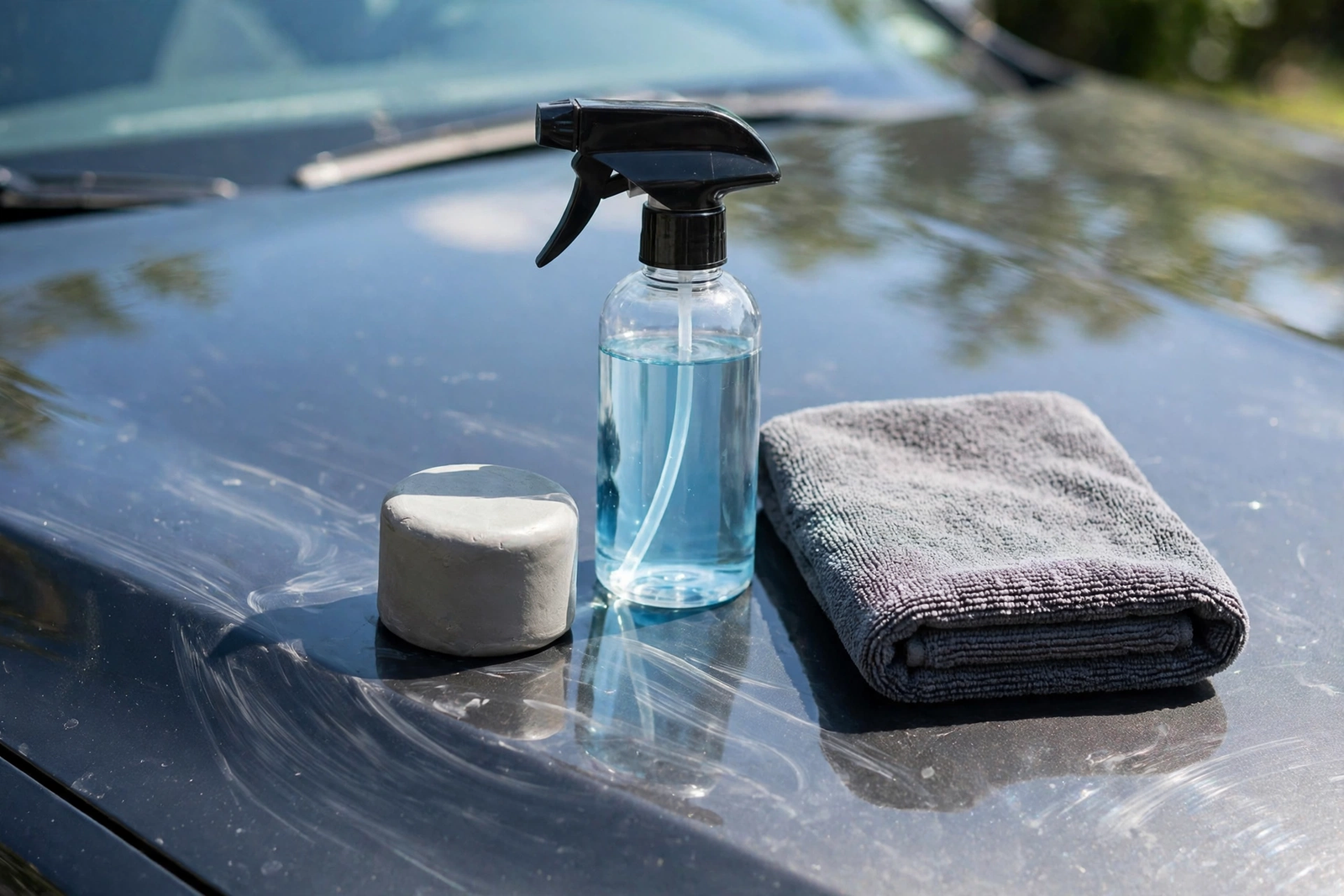
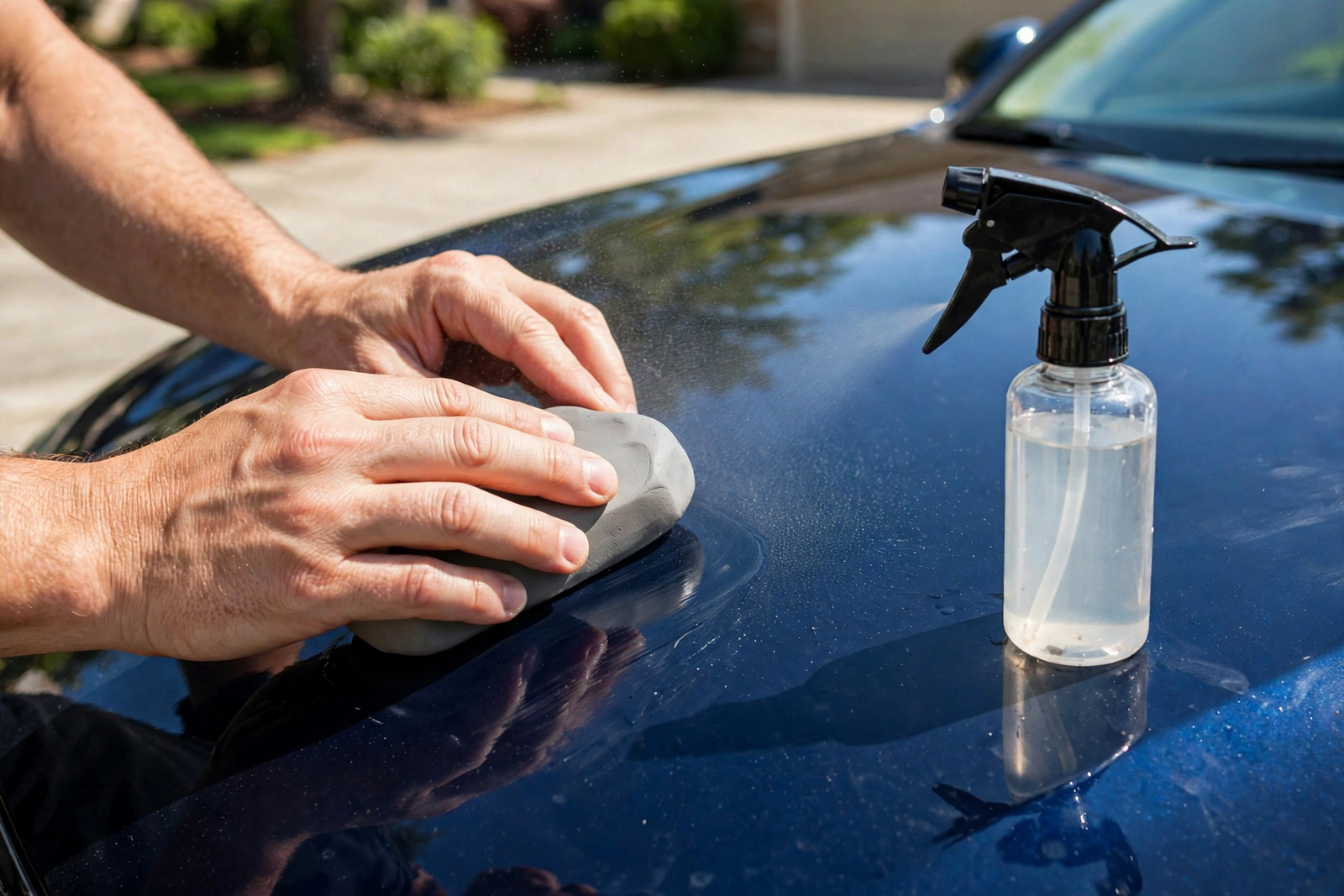
The lubricant is the point of this kit. The bar must never touch dry paint, and the Luber spray is the slick layer the bar glides on — without it, the bar drags, sticks and can mark the paint it is meant to clean. Spray a section, glide the bar back and forth with light pressure, wipe the residue away, and move on. The bar picks up the contaminants as it goes, so knead it now and then to fold the dirty surface inside and expose a clean face. When the bar stops gliding smoothly, spray more lubricant — running dry is the one mistake that turns the bar from a cleaner into a scratch-maker.
This is the pick in this roundup for paint that needs real work. A fine bar would take too long on heavy fallout; a heavy-duty bar would be too aggressive for a first claying. The medium-duty bar sits in the middle, and the included lubricant means the kit is complete on its own — no separate spray to buy.
Chemical Guys Clay Bar Kit, Medium Duty with Luber Synthetic Lubricant on Amazon: medium-duty gray clay bar, 16-ounce Luber synthetic lubricant, model CLY_KIT_2, two items, safe for paint, glass and clear coat.
Buy the Chemical Guys medium-duty kit if: your paint feels rough all over and the fallout is visible — brake dust, rail dust or overspray — and you want a medium-duty clay bar with its lubricant in the same box.
Meguiar’s Smooth Surface Clay Kit: The Three-Bar Clay Bar Kit
The Meguiar’s Smooth Surface Clay Kit, model G1016, is the three-bar clay bar kit in this roundup — and the one built for a first-timer. The kit pairs its bars with a bottle of Quik Detailer Mist and Wipe, a microfiber towel and a storage case, so everything the job needs is in the box. The clay itself is non-abrasive and mild, the gentle end of the scale: it is made to remove bonded contaminants from paint without cutting into the clear coat, which is exactly what a driver claying for the first time wants. The listing states three 80-gram bars in the kit; older Meguiar’s catalogues for the same G1016 code list two 80-gram bars with a 16-ounce Quik Detailer, so check the listing’s contents at order time — either way, the kit gives you more than one bar, and that matters, because a dropped bar is a thrown-away bar.
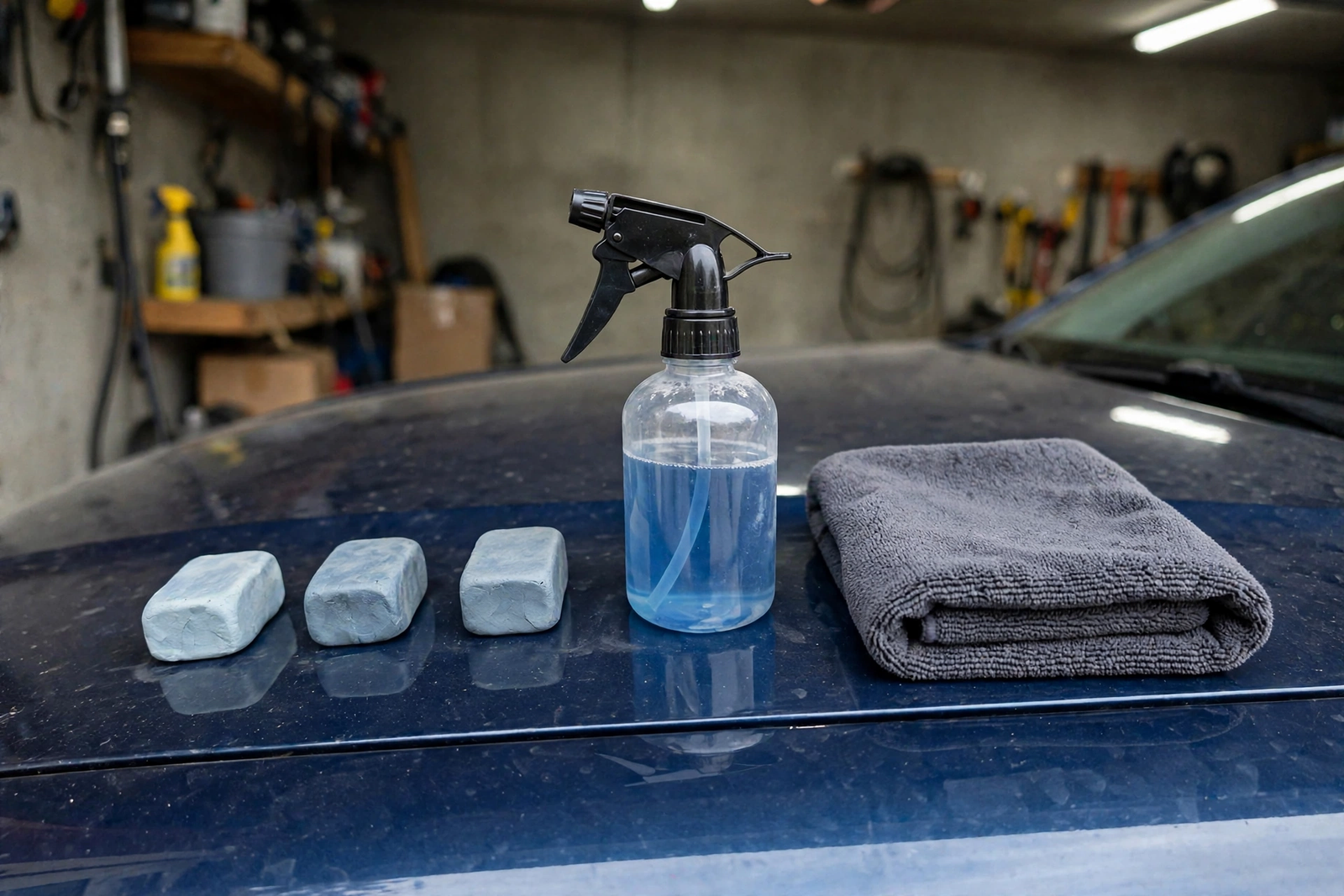
Three bars change how the job feels. With one bar you guard it like a phone screen; with three you can keep one for the roof and hood, one for the lower panels where the grit is worst, and one spare in the case. The Quik Detailer is the lubricant here — spray it on, glide the bar, wipe with the towel — and the storage case keeps the spare bars clean between jobs, which matters because a clay bar left open in a garage picks up dust and grit that will scratch the next car it touches.
This is the pick in this roundup for the driver claying a daily driver for the first time. The mild clay is forgiving, the kit is complete, and the spare bars remove the fear of ruining the only bar you own. It is also the pick for a household with more than one car: three bars go further than one.
Meguiar’s Smooth Surface Clay Kit on Amazon: three 80-gram non-abrasive clay bars per the current listing (older catalogues list two — check the contents at order time), Quik Detailer Mist and Wipe, microfiber towel and storage case, model G1016.
Buy the Meguiar’s Smooth Surface Clay Kit if: you are claying for the first time, or you have more than one car to do, and you want a mild clay bar kit with spare bars, detailer spray and a towel in the box.
Mothers California Gold Kit: The Fine Clay Bar Kit
The Mothers California Gold kit, model 07240, is the fine clay bar kit in this roundup: three 80-gram fine clay bars, a 16-ounce bottle of California Gold Instant Detailer and a microfiber towel. Fine is the gentlest grade, and it is the right grade when the paint is already in decent shape — a car that is washed regularly, garaged at night, and only needs a light decontamination before waxing. The kit works on paint, glass, chrome and smooth plastics, and it is made for the usual bonded contaminants: brake dust, tree sap, industrial fallout and paint overspray.
Fine clay trades speed for safety. It will not cut through heavy fallout as fast as the medium-duty Chemical Guys bar, but it is the least likely to mark paint, which is why it suits a car whose paint is already good and only needs the invisible grit removed. The Instant Detailer is the lubricant: spray a section, glide the bar with light pressure, wipe with the towel. Three bars in the box means one for the upper panels, one for the lower panels and one spare — and a spare matters, because the rule for a dropped bar is the same for every brand: if it hits the ground, throw it away, because the grit it picks up will scratch the paint.
This is the pick in this roundup for the careful owner — the driver whose paint is already in good shape and wants to keep it that way. It is the gentlest clay bar here, and the kit is complete: bars, lubricant and towel in one box.
Mothers California Gold 3 Clay Bar Complete Kit on Amazon: three 80-gram fine clay bars, 16-ounce California Gold Instant Detailer, microfiber towel, model 07240, for paint, glass, chrome and smooth plastics.
Buy the Mothers California Gold kit if: your paint is already in good shape and you want the gentlest clay bar in this roundup — a fine three-bar kit with its instant detailer — for a light pass before waxing.
Clay Bar Grades: Fine vs Medium — Which Clay Bar Grade Fits Your Paint
A clay bar grade is how aggressive the clay is, and the grade decides what the bar can safely clean. Fine clay is the gentlest: it lifts light bonded dirt from paint that is already in good shape, and it is the least likely to mark the surface. Medium clay — the Chemical Guys bar in this roundup — is the middle grade: it cuts through visible fallout faster than fine clay, and it is the grade for a car that has not been clayed in a while. Heavy-duty clay is the strongest grade, made for paint with severe overspray or years of fallout, and it is the grade most likely to leave light marks that need polishing out afterwards. None of the three kits in this roundup is heavy duty, and that is deliberate: for most cars, fine or medium is the right grade.
Pick the grade by the paint, not by the price. Run your hand over the paint after a wash — if it feels like fine sandpaper, the fallout is heavy and medium clay will do the job faster. If it feels almost smooth with only a few rough patches, fine clay is enough and safer. And if you have never clayed before, start fine: a fine bar may take longer, but it will not punish a heavy hand the way a stronger bar can. The grade is printed on the box or the listing — check it before you buy, because a bar bought for the wrong grade is a bar bought twice.
What a Clay Bar Removes — and What It Cannot
Clay removes what washing cannot: contaminants bonded to the paint. Brake dust from your own wheels and the cars around you, industrial fallout from factories and railways, tree sap, road tar, paint overspray and the grit that makes freshly washed paint feel rough under your hand. These are all stuck to the surface, and the clay lifts them off as it glides over the lubricated paint. After a pass, the paint feels smooth as glass — that is the test, and it is the only test you need. Run your hand over a panel before and after, and the difference is obvious.
What clay cannot do matters just as much. It cannot remove scratches. A scratch is a cut in the clear coat, below the surface, and no clay bar reaches it — removing a scratch means levelling the clear coat with a compound or polish, which is a different job with different tools. Our how to remove scratches from a car covers that job. Clay also cannot fix faded or oxidized paint, cannot fill stone chips, and cannot restore a clear coat that has already failed. And it cannot replace washing: clay on a dirty car drags the dirt across the paint. Wash first, clay second, wax last — that is the order, and skipping a step is how paint gets marked.
How to Use a Clay Bar
Claying a car usually takes around an hour, and the order matters. Wash the car first and dry it — clay on a dirty car drags grit across the paint. Then work one small section at a time, about two feet square: spray the section generously with lubricant, glide the bar back and forth with light pressure, and wipe the residue away with a microfiber towel. You will feel the bar catch on the rough spots at first, then glide smoothly as the contaminants lift off — that change in feel tells you the section is done. Fold and knead the bar often to expose a clean face, and never press hard: the bar’s own weight and a light hand do the work.
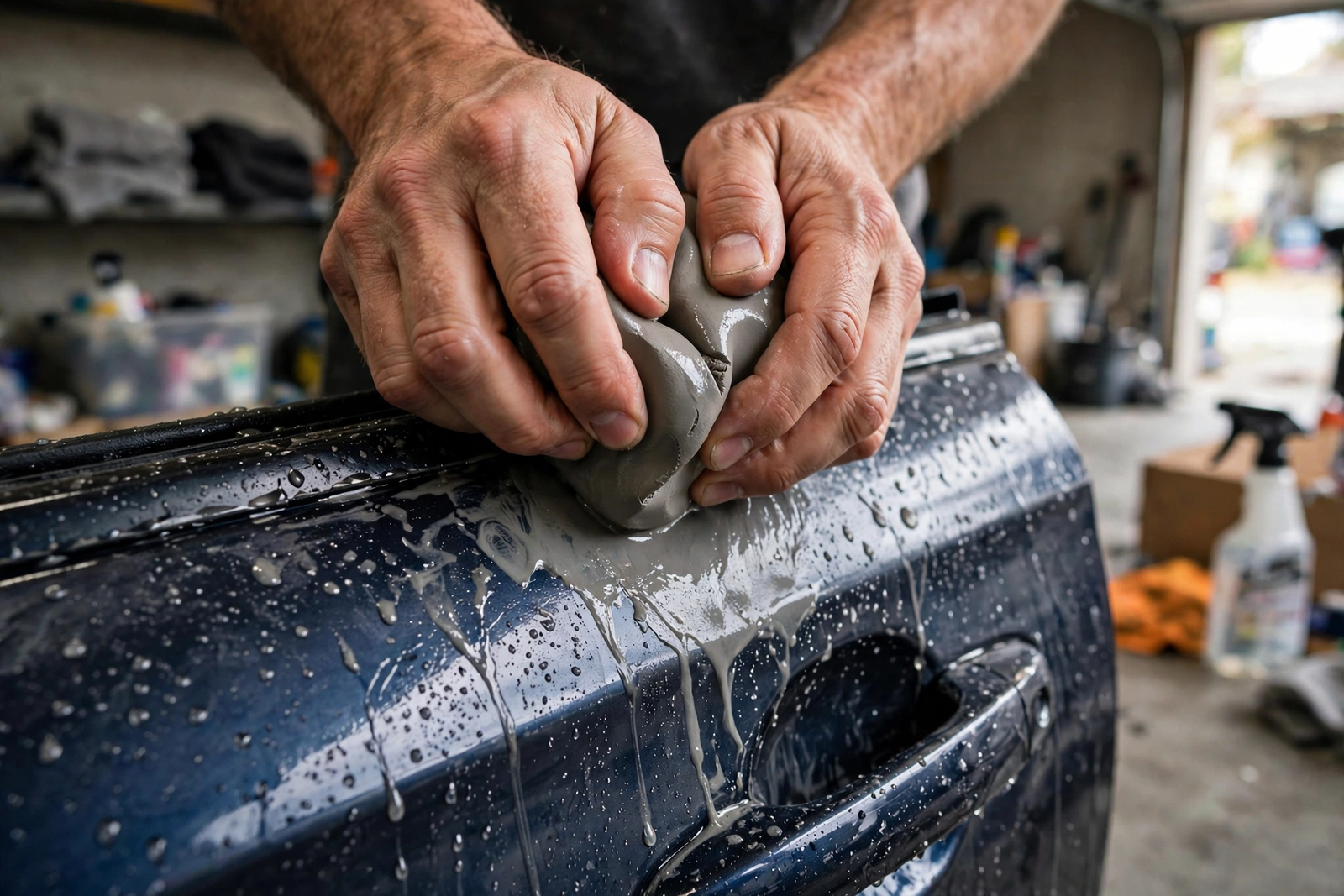
Keep the bar wet and keep it clean. Spray more lubricant whenever the bar starts to drag, and if the bar falls on the ground, throw it away — the grit it picks up will scratch the paint, and no amount of kneading makes a dropped bar safe again. That is why the three-bar kits in this roundup are useful: a spare bar in the case means a dropped bar costs you a bar, not the whole job. Our best car cleaning kit covers the wash step that comes before claying — the soap, the mitt and the drying towel that get the car clean enough to clay.
Clay Bar Lubricant: Why You Must Never Clay Dry
Every clay bar needs lubricant, and no bar works without it. The lubricant is a slick spray — a dedicated clay lubricant, a quick detailer or an instant detailer — that sits between the bar and the paint so the bar glides instead of dragging. Dry clay sticks, skips and marks: a bar pushed across dry paint will leave light scratches and dull patches that then need polishing out. All three kits in this roundup include their lubricant for exactly this reason — the Chemical Guys kit has its Luber spray, the Meguiar’s kit has its Quik Detailer, and the Mothers kit has its Instant Detailer — so there is nothing extra to buy.
Use the lubricant generously. A section that looks wet enough is usually not wet enough: spray until the panel shines, glide the bar, and spray again before the surface starts to dry. If the bar squeaks or drags, stop and spray — the sound is the bar telling you it has run dry. Plain water is not a substitute: water dries too fast and has no slickness, and soapy wash water is only a rough stand-in. The lubricant in the kit is the right tool, and it is already in the box.
Clay Bar Mistakes to Avoid
The most common clay mistake is claying dry — pushing the bar across paint with too little lubricant, or none at all. The bar drags, sticks and leaves marks, and the damage is the opposite of what the bar is for. The second mistake is pressing too hard: a bar needs light pressure, and a heavy hand pushes the contaminants it has picked up back into the paint. The third is claying a dirty car — the wash comes first, always, because clay on a dirty panel drags the dirt across the paint.
The fourth mistake is keeping a dropped bar. If a clay bar hits the ground, it is finished — the grit it picks up will scratch the paint, and kneading does not make it safe. Throw it away and take a spare from the box. The fifth is claying the wrong surfaces: clay is for exterior paint, glass, chrome and smooth plastics, not for the interior. Seats, dashboards and trim need interior products, and our how to clean car seats covers the inside of the car. And the sixth is forgetting the wax: claying strips whatever wax or sealant was on the paint, so the car needs a fresh coat afterwards, or the bare paint is left unprotected.
Who Should Buy a Clay Bar — and Who Should Not
Buy a clay bar if: your paint feels rough after a wash, even though the car looks clean. Run your hand over the hood: if it feels like fine sandpaper, bonded contaminants are the cause, and clay is the tool that removes them. Clay also belongs in the kit of anyone who waxes their own car — wax goes on more smoothly over paint that has been clayed first, because the surface is clean down to the clear coat.
Buy one with care if: your paint is already damaged — faded, oxidized or heavily scratched. Clay will not fix those problems, and on a failing clear coat it can make things worse by pulling loose material off. Fix the paint first, or have it looked at, before you clay. And if you have never detailed a car before, start with the mildest kit here — the Meguiar’s or the Mothers — and work slowly.
Do not buy a clay bar if: you only want a clean car. Washing is enough for that, and clay is a preparation step, not a cleaning step. If you never wax, never polish and never worry about how the paint feels, clay adds work without a benefit you will notice. Buy one when the paint needs preparing for wax — that is the job it exists for.
The Verdict
The best clay bar is the one that matches your paint. The Chemical Guys medium-duty kit is the pick for paint with visible fallout: a stronger bar with its lubricant in the box, for a car that has not been clayed in a while. The Meguiar’s Smooth Surface Clay Kit is the pick for a first-timer: a mild three-bar kit with detailer, towel and case, forgiving to use and with spares when a bar is dropped. And the Mothers California Gold kit is the pick for paint that is already in good shape: the gentlest fine clay here, for a light pass before waxing.
Whichever kit you choose, the rules are the same: wash first, never clay dry, use light pressure, knead the bar often, throw a dropped bar away, and wax afterwards — claying strips the old wax, so the paint needs a fresh coat. Check the listing’s contents at order time — the Meguiar’s bar count differs between the listing and the older catalogue — and confirm the listing still shows a live offer before you buy. Clay is a small piece of kit, but it is the step that makes paint feel like glass, and paint that feels like glass is paint that is ready for wax.
Frequently Asked Questions
Does a clay bar remove scratches?
No. A clay bar removes contaminants bonded to the surface of the paint — brake dust, fallout, tree sap and overspray — but a scratch is a cut in the clear coat, below the surface, and no bar reaches it. Removing a scratch means levelling the clear coat with a compound or polish, which is a different job. A clay bar makes the paint feel smooth; it does not make scratches disappear.
Can a clay bar damage paint?
It can, if it is used dry or with too much pressure. A clay bar pushed across dry paint drags and can leave light marks, and a bar pressed hard can push the contaminants it has picked up back into the paint. Used the right way — generous lubricant, light pressure, a clean bar on a washed car — a fine or medium clay bar is safe on clear coat. Never clay a dirty car, and throw away any bar that has been dropped.
Do I need lubricant with a clay bar?
Yes, always. A clay bar must glide on a slick layer of lubricant — a clay lubricant, a quick detailer or an instant detailer — and it must never touch dry paint. Without lubricant the bar sticks, skips and can mark the paint. All three kits in this roundup include their lubricant, so there is nothing extra to buy. Spray generously, and spray again whenever the bar starts to drag.
How often should I clay bar my car?
When the paint feels rough, not on a schedule. Wash the car, dry it, and run your hand over the paint: if it feels like fine sandpaper, it needs claying. For a daily driver that lives outside, that is usually once or twice a year; for a garaged car that is washed often, it may be once a year or less. Claying more often than the paint needs it only wears the bar and the wax for no benefit.
Can I reuse a clay bar?
Yes — knead it to fold the dirty surface inside and expose a clean face, and keep using it until the whole bar is dirty through. One bar covers several cars when it is kept clean and stored in its case. The one exception is a dropped bar: if it hits the ground, throw it away, because the grit it picks up will scratch the paint. That is why the three-bar kits in this roundup are useful — a spare is already in the box.
Do I need to wax after clay barring?
Yes. Claying strips whatever wax or sealant was on the paint, because it lifts everything bonded to the surface — including the old protection. A freshly clayed car has bare clear coat, and it needs a fresh coat of wax or sealant to protect it. The order is always wash, clay, wax: skip the wax and the paint is left unprotected, and the next wash will start the contamination all over again.