Best Car Polish: 3 Polishes for a Deep, Clear Shine
A car that has been washed and waxed can still look dull, because wax adds protection, not correction. A car polish is the step that fixes that: a fine abrasive liquid or paste that levels the clear coat, lifts the haze left by washing and light swirls, and leaves the paint deep and clear before wax goes on. This roundup compares three real polishes on cut, finish and ease of use.
The short answer: start with the Meguiar’s M205 if you want a finishing car polish that refines paint to a high gloss, pick the Chemical Guys V Line kit if you want a four-step system that takes paint from heavy defects to a final shine, and pick the Turtle Wax T-241A if you want a paste compound for oxidized paint and stubborn marks. All three are polishes for paint correction, none of them is a wax, and two of the three listings showed no live offer when they were checked — confirm the offer before you order.
As an Amazon Associate I earn from qualifying purchases.
Quick Pick: Car Polish Compared
| Pick | Product | Best For | Check Price |
|---|---|---|---|
| Finishing Polish for Final Gloss | Meguiar’s M205 Mirror Glaze Ultra Finishing Polish, Easy-to-Use Formula for Impeccable Shine, Multiple Ways to Apply Mirror Glaze, Removes Defects and Swirls for a High Gloss, 8 Oz Container | An 8 oz finishing car polish that refines paint to a high gloss, for drivers who want the last step before wax | Check Price on Amazon |
| 4-Step Correction System | Chemical Guys V Line Car Polish and Compound Kit – Complete Paint Correction System for Light-to-Heavy Swirls, Scratches, Safe for Cars, Trucks, SUVs, Motorcycles, RVs and More – 4 x 16 fl oz | A four-bottle kit of compounds and polishes that takes paint from heavy defects to a final shine, for drivers who want the whole system | Check Price on Amazon |
| Paste Compound for Oxidation | Turtle Wax T-241A Polishing Compound and Scratch Remover – 10.5 oz, White | A 10.5 oz white paste compound for oxidized paint, blemishes and stubborn marks, for drivers who want a classic paste | Check Price on Amazon |
Table of Contents
Meguiar’s M205: The Finishing Polish Hero
The Meguiar’s M205 is the hero of this roundup, and it is the gentlest car polish of the three. It is the Meguiar’s M205 Mirror Glaze Ultra Finishing Polish, model M20508, in an 8 oz bottle, and it is a finishing polish: the last abrasive step, used after a compound has done the heavy cutting, to remove the last light swirls and holograms and bring the paint up to a high gloss. The listing says it removes defects and swirls for a high gloss, that it has an easy-to-use formula, and that it can be applied by hand, with a dual-action polisher, or with a rotary.
One honest flag belongs here. The crawl of the M205 listing showed no featured offers available at the time it was read, which means the listing may have no live offer right now, or the offer may simply not have shown in the crawl. The polish itself is a real Meguiar’s listing with a real model number, and the link below still points at it — but check that the listing shows a live offer before you order, and do not assume it is in stock.
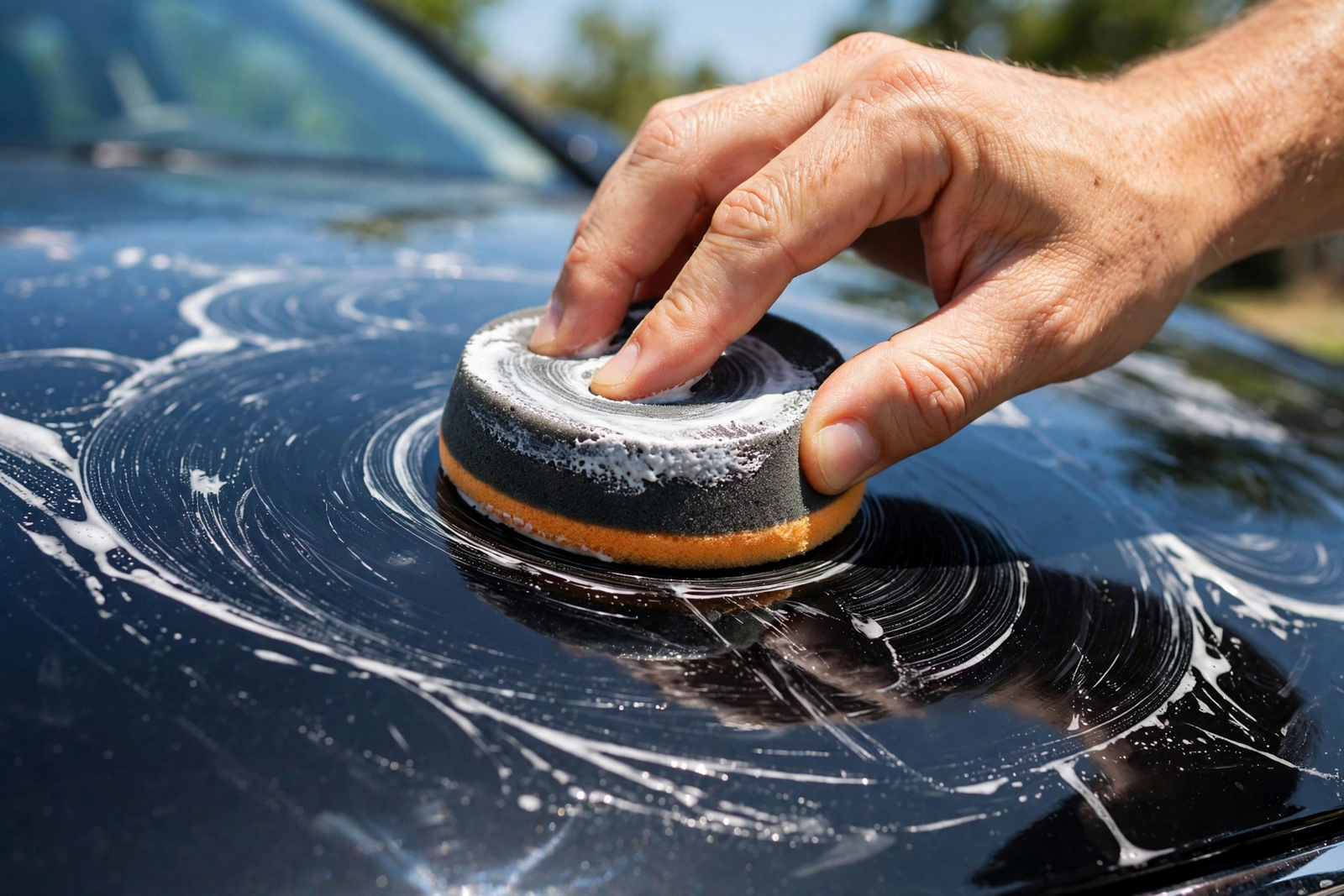
The M205 is the pick in this roundup for the driver whose paint is already in decent shape and who wants the final gloss step: a finishing car polish that refines rather than cuts hard. It suits a hand application on a small area or a dual-action polisher across a whole panel, and because it is a finishing polish it is the safest of the three to learn on — it removes light defects without the aggressive cut of a compound. The defect and swirl removal is the listing’s claim, not a measured result — no polish was tested for this review.
Meguiar’s M205 Mirror Glaze Ultra Finishing Polish, Easy-to-Use Formula for Impeccable Shine, Multiple Ways to Apply Mirror Glaze, Removes Defects and Swirls for a High Gloss, 8 Oz Container on Amazon: finishing polish, model M20508, 8 oz, removes defects and swirls for a high gloss, hand, dual-action or rotary application. No featured offers showed in the crawl — check the live offer before ordering.
Buy the M205 if: your paint is already in decent shape and you want a finishing car polish for the last gloss step before wax. Confirm the listing shows a live offer first.
Chemical Guys V Line Kit: The 4-Step Polish System
The Chemical Guys V Line kit is the system pick in this roundup: four bottles instead of one, covering the whole correction ladder in a single box. It is the Chemical Guys V Line Car Polish and Compound Kit, model GAP_VKIT_16, with four 16 oz bottles — V32 Optical Grade Extreme Compound, V34 Optical Grade Hybrid Compound, V36 Optical Grade Cutting Polish and V38 Optical Grade Final Polish. The listing says the kit handles light-to-heavy swirls and scratches and is safe for cars, trucks, SUVs, motorcycles and RVs.
The four steps run from heaviest to lightest. V32 is the extreme compound, for heavy defects and 1200- to 1500-grit sanding scratches; V34 is the hybrid compound, for moderate swirls and 1500- to 2000-grit marks; V36 is the cutting polish, for 2000- to 2500-grit marks and a swirl-free finish; and V38 is the final polish, for 2500- to 3000-grit marks and the last gloss. Chemical Guys says the range uses optical-grade micro-abrasives with no fillers, so the correction you see is the real surface, not a defect hidden under residue — that is the maker’s claim, not a tested result.
The V Line kit is the pick in this roundup for the driver who wants to correct a whole car in stages instead of guessing which single bottle to buy: start heavy where the paint needs it, step down bottle by bottle, and finish with V38. It is also the most involved pick of the three — four bottles, a pad change per step, and a long session for a whole car — so it suits a driver who already owns a dual-action polisher, or plans to get one. Our best car cleaning kit article covers Chemical Guys kits on the wash-and-clean side, while this article is about the correction side.
The same honest flag applies here as to the M205. The crawl of the V Line kit listing showed no featured offers available at the time it was read, which means the listing may have no live offer right now, or the offer may simply not have shown in the crawl. Check that the listing shows a live offer before you order.
Chemical Guys V Line Car Polish and Compound Kit – Complete Paint Correction System for Light-to-Heavy Swirls, Scratches, Safe for Cars, Trucks, SUVs, Motorcycles, RVs and More – 4 x 16 fl oz on Amazon: four-bottle kit, model GAP_VKIT_16, V32 extreme compound, V34 hybrid compound, V36 cutting polish, V38 final polish, optical-grade micro-abrasives with no fillers per the maker. No featured offers showed in the crawl — check the live offer before ordering.
Buy the V Line kit if: you want a full correction system in one box and you already own, or plan to buy, a dual-action polisher. Confirm the listing shows a live offer first.
Turtle Wax T-241A: The Paste Polishing Compound
The Turtle Wax T-241A is the old-school pick in this roundup, and the only paste. It is the Turtle Wax T-241A Polishing Compound and Scratch Remover, model T-241A, a 10.5 oz tub of white paste. The listing says it penetrates oxidized surfaces to remove blemishes, stubborn stains, swirl marks and scratches, and it can be used by hand or with a machine. A paste is thicker than a liquid polish, so start with a small amount on a foam applicator or a pad.
The T-241A is the pick in this roundup for oxidized paint and stubborn marks: the kind of dull, chalky finish that a finishing polish like the M205 cannot cut through on its own. It is a compound-strength paste, which means it cuts harder than a finishing polish like the M205 — and that cut is also its warning. A paste this strong can leave light hazing on soft paint if it is worked too hard, so the safe move is a test spot first and a follow-up pass with a finer polish like the M205. The oxidation and scratch removal is the listing’s claim, not a measured result — no paste was tested for this review.
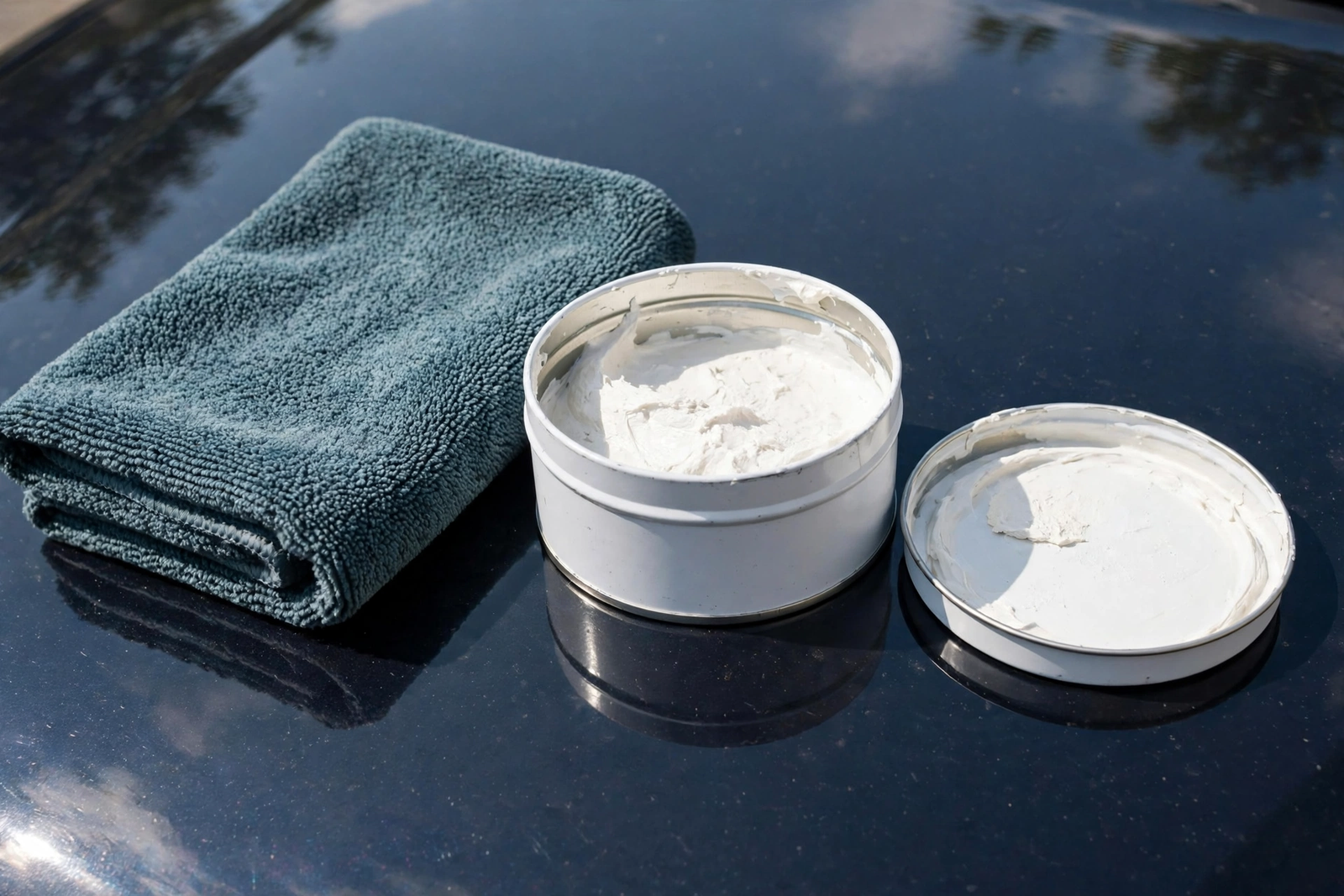
One more thing to know about the T-241A: the listing crawl for this one is 264 days old, and no live-offer evidence was found for it, so the offer status is unconfirmed rather than confirmed. The identity is verified — model T-241A, 10.5 oz white paste, on amazon.com — but confirm the listing shows a live offer before you order, the same as with the other two picks.
Turtle Wax T-241A Polishing Compound and Scratch Remover – 10.5 oz, White on Amazon: paste compound, model T-241A, 10.5 oz white paste, removes blemishes, stubborn stains, swirl marks and scratches, hand or machine application. Live offer unconfirmed — check the listing before ordering.
Buy the T-241A if: your paint is oxidized or marked and you want a classic paste compound, and you are willing to test a spot first and follow up with a finer polish. Check the live offer before ordering.
Polish vs Compound vs Wax: What Each One Does
Polish, compound and wax are three different jobs, and mixing them up is the most common car polish mistake. A compound is the coarsest of the three: a heavy abrasive that cuts the clear coat to remove deep swirls, heavy oxidation and sanding marks. A polish is finer: a light abrasive that refines the surface a compound leaves behind, removing haze and light swirls to bring up gloss. A wax is not an abrasive at all: it is a protective layer that sits on top of the paint and locks in the shine the polish created. The order is always compound first, then polish, then wax — never the other way around.
That order is why this roundup is polishes only, not a wax roundup. A wax protects paint; a car polish corrects it. The M205 is a pure finishing polish, the V Line kit spans the whole ladder from compound to final polish, and the T-241A sits at the compound end of the polish range. If you want the full correction process step by step, our paint correction guide walks through it — this article is the buying guide for the polishes themselves.
Hand vs Machine: How to Apply Car Polish
A car polish can be applied by hand or by machine, and the right choice depends on how much paint you are correcting. By hand, a foam applicator pad and a microfiber towel are enough for a small area: a door, a fender, or a single panel with light swirls. Work a small amount of polish in straight lines or small circles, let it haze, then wipe it off and inspect. Hand polishing is slow across a whole car, but it is the safest way to learn, because your arm cannot cut as fast as a machine can.
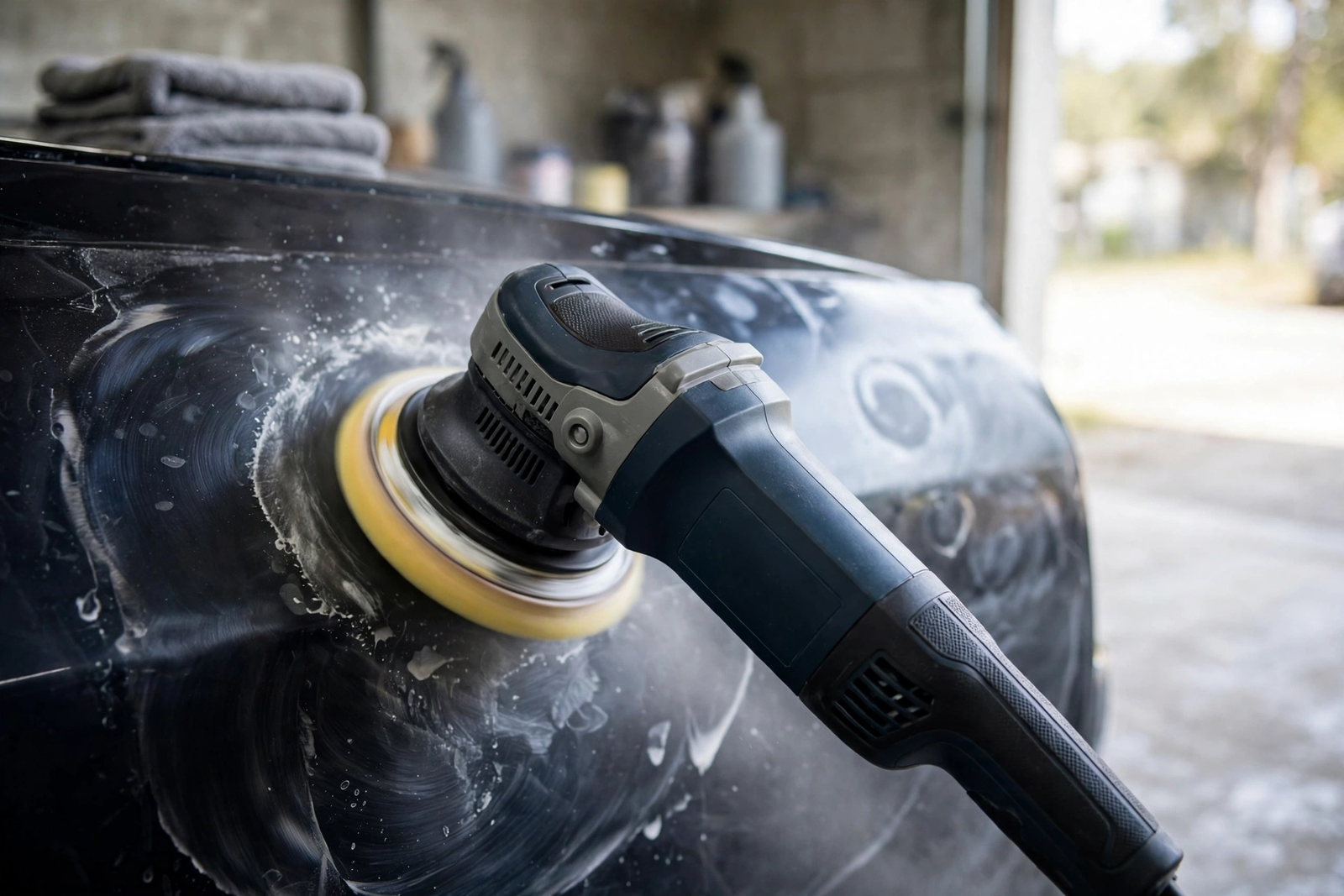
A dual-action polisher is the machine most drivers should reach for: it moves the pad in two directions at once, so it corrects faster than a hand and is far more forgiving than a rotary, which spins one way and can burn through clear coat in inexperienced hands. The M205 listing says it works by hand, dual-action or rotary; the V Line kit is built around machine work, with four bottles matched to four pad steps; and the T-241A paste works by hand or machine. Whichever method you pick, work one panel at a time and inspect under a bright light before moving on.
Wash, Clay, Then Polish: The Prep Order That Matters
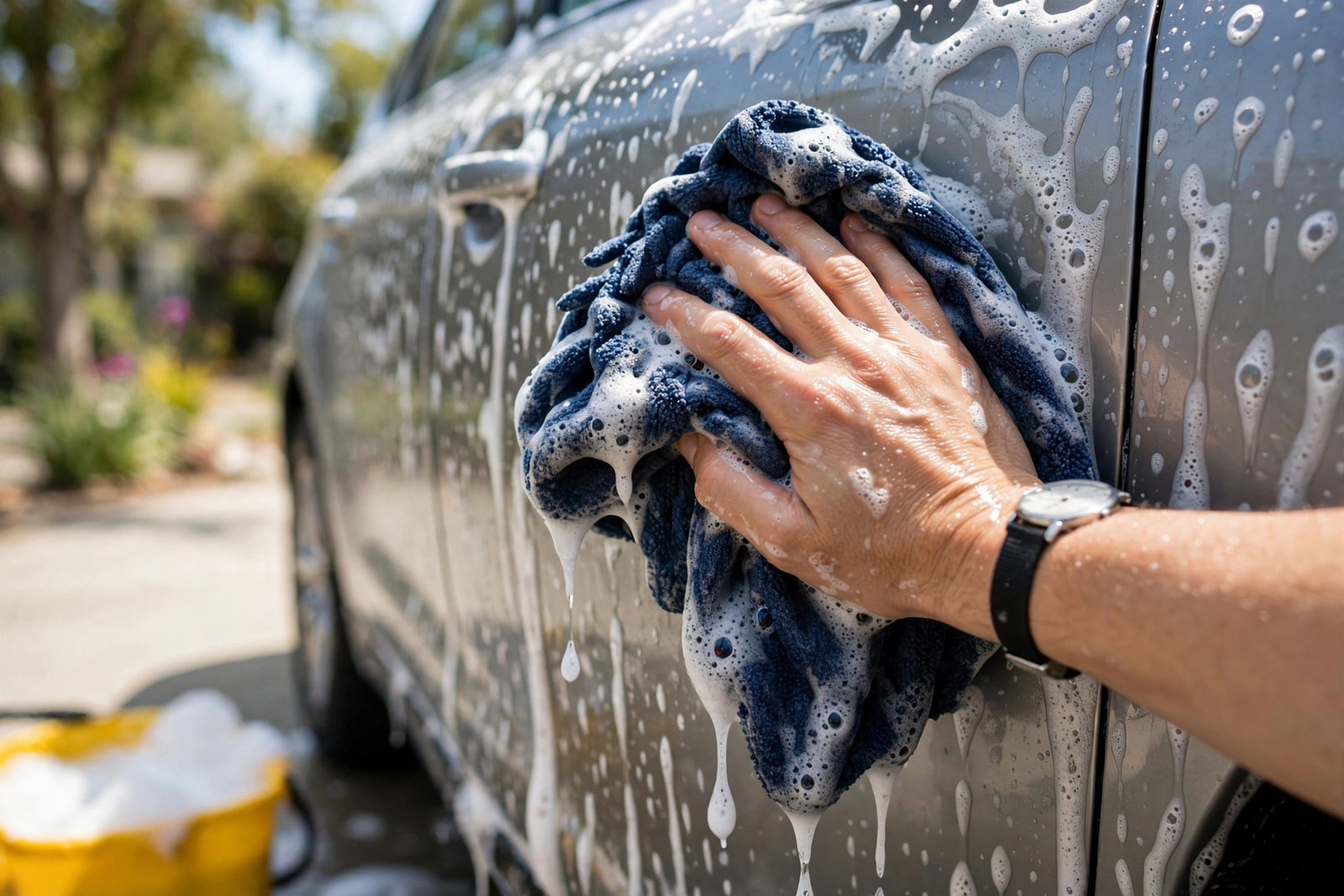
Polishing dirty paint grinds dirt into the clear coat, so the prep order matters more than the polish you pick. Wash the car first with a proper car wash soap — our best car wash soap article covers the soaps that lift road film without stripping protection — and dry it fully. Then run a clay bar over the paint: if the surface still feels rough after washing, bonded contamination is stuck in the clear coat, and a polish will drag it across the panel. Our best clay bars article covers the clay kits that pull that contamination out.
Only after washing and claying should a car polish touch the paint. The test is simple: slide your hand in a plastic bag over the paint after washing — if it feels like sandpaper, clay it first. A polish on clean, clayed paint cuts evenly and finishes clearly; a polish on dirty paint adds the very swirls you are trying to remove. Wash, clay, polish, then wax: that is the whole order, and skipping a step costs more time than doing it right.
Car Polish Mistakes to Avoid
The first car polish mistake is polishing before checking the offer: two of the three listings in this roundup showed no featured offers when they were checked, and a listing with no offer cannot be bought. The second mistake is skipping the test spot — pick a small, hidden area, work the polish there, and inspect it under a bright light before touching the hood. The third is using too much product: a few drops on the pad is enough, and a puddle of polish just smears and wastes bottle.
The fourth mistake is polishing in direct sun or on a hot panel: the polish dries too fast, wipes off hard, and leaves haze instead of gloss. Work in the shade, on a cool panel, one section at a time. The fifth is expecting a car polish to remove deep scratches: a polish refines light swirls and haze, and a scratch you can feel with a fingernail is through the clear coat — no polish fixes that, and a compound will only thin the paint around it. And the sixth is polishing matte or satin paint: polish is made for glossy clear coat, and it will shine up a matte finish in patches.
Polishing Dark Paint: Where Swirls Show Most
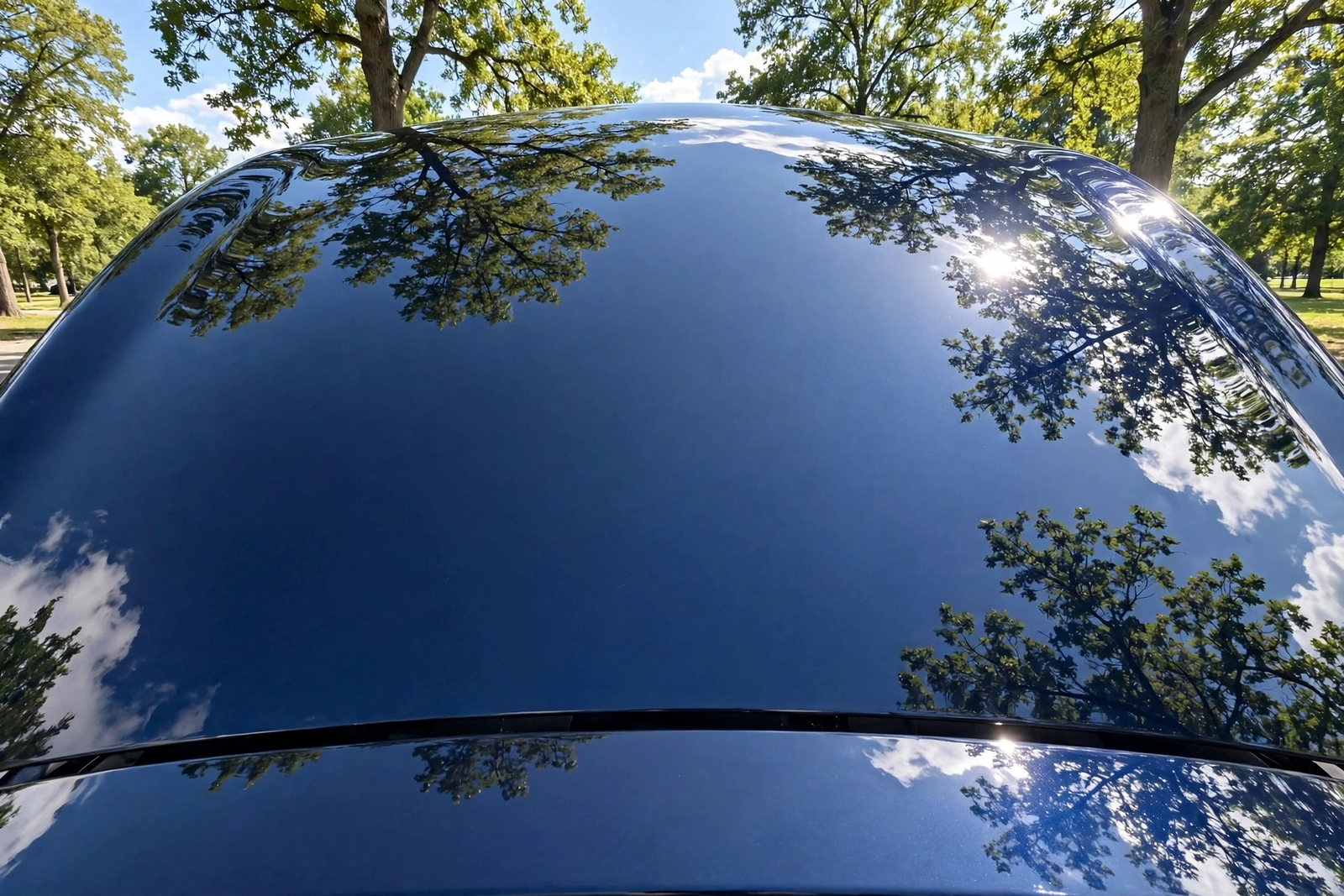
Swirls show most on dark paint, which is why a finishing car polish matters most there. Black, dark blue and dark gray paint reflects light like a mirror, so every fine scratch in the clear coat catches the sun and shows as a spiderweb of swirls. The same swirls exist on silver and white paint, but the light color hides them — dark paint hides nothing. That is why the M205 earns its place as the hero here: a finishing polish is the step that makes dark paint look deep instead of hazy.
On dark paint, inspect under a bright light after every pass, and keep the pad clean: a dirty pad drags grit across the panel and adds the swirls you are removing. Work the polish until it goes nearly clear, wipe it off with a clean microfiber towel, and look at the panel from more than one angle before moving on. If the haze is gone and the reflections are sharp, the polish has done its job — lock it in with wax, because a polished surface with no protection dulls again fast.
Who Should Buy a Car Polish — and Who Should Not
Buy a car polish if: your paint looks dull or hazy in sunlight, or you can see fine swirls on a dark car, and you want the paint corrected before wax goes on. A polish is a straightforward purchase — a bottle, a pad, a towel — and the result is visible the same afternoon.
Buy with care if: your paint has deep scratches, heavy oxidation, or chips down to the metal. A polish refines light defects; deep damage needs a compound first, or a body shop, and a polish alone will not fix it. The V Line kit covers the compound steps too, which is why it is the system pick for heavier damage.
Do not buy a car polish if: your paint is matte or satin, or you only want protection. Polish is made for glossy clear coat, and it will shine up a matte finish in patches. And if the paint already looks good and you only want it to stay that way, skip the polish and go straight to wax — polish corrects, wax protects, and a car that needs no correction needs no polish.
The Verdict
The best car polish is the one whose cut matches your paint. The Meguiar’s M205 is the pick for a finishing car polish that refines good paint to a high gloss — if the listing shows a live offer when you check it. The Chemical Guys V Line kit is the pick for a full correction system, from heavy compound to final polish, in one box. And the Turtle Wax T-241A is the pick for oxidized paint and stubborn marks, as a classic paste compound.
Whichever polish you choose, check three things before you order: whether the listing shows a live offer, whether your paint is glossy clear coat and not matte or satin, and whether the car has been washed and clayed first — polish on clean paint, test spot first, work in the shade, and finish with wax to lock the shine in.
Frequently Asked Questions
What is the difference between car polish and car wax?
A car polish is a fine abrasive that corrects paint: it levels the clear coat, removes haze and light swirls, and brings up gloss. A wax is not an abrasive at all: it is a protective layer that sits on top of the paint and locks in the shine the polish created. Polish corrects, wax protects, and the order is always polish first, then wax.
Does car polish remove scratches?
A car polish removes light scratches and swirls in the clear coat, and that is the limit of what it can do. A scratch you can feel with a fingernail is through the clear coat, and no polish fixes that — it needs a compound first, or a body shop. A polish refines the surface; it does not rebuild paint.
Can I apply car polish by hand?
Yes — a foam applicator pad and a microfiber towel are enough for a small area, and the M205 listing says it works by hand as well as by machine. Hand polishing is the safest way to learn, because your arm cannot cut as fast as a machine can. For a whole car, a dual-action polisher is faster and more even.
Do I need to wash and clay the car before polishing?
Yes. Wash the car first, then run a clay bar over the paint to pull out bonded contamination. Polishing dirty paint grinds dirt into the clear coat and adds the very swirls you are trying to remove. The order is wash, clay, polish, then wax — skipping a step costs more time than doing it right.
How long does car polish last?
A car polish does not last on its own, because it is not a protective layer — it is a correction step. Once the paint is polished, the gloss fades again unless you lock it in with wax or a sealant. Polish the paint, then wax it soon after, and the shine is protected until the wax wears off.
Can car polish damage clear coat?
Yes, if it is used wrongly — a polish is an abrasive, so working it too hard, on a dirty pad, or with a rotary in inexperienced hands can thin the clear coat or leave haze. The safe way is a test spot first, a clean pad, a small amount of product, and a finishing polish like the M205 on paint that only needs light correction. Never polish matte or satin paint.