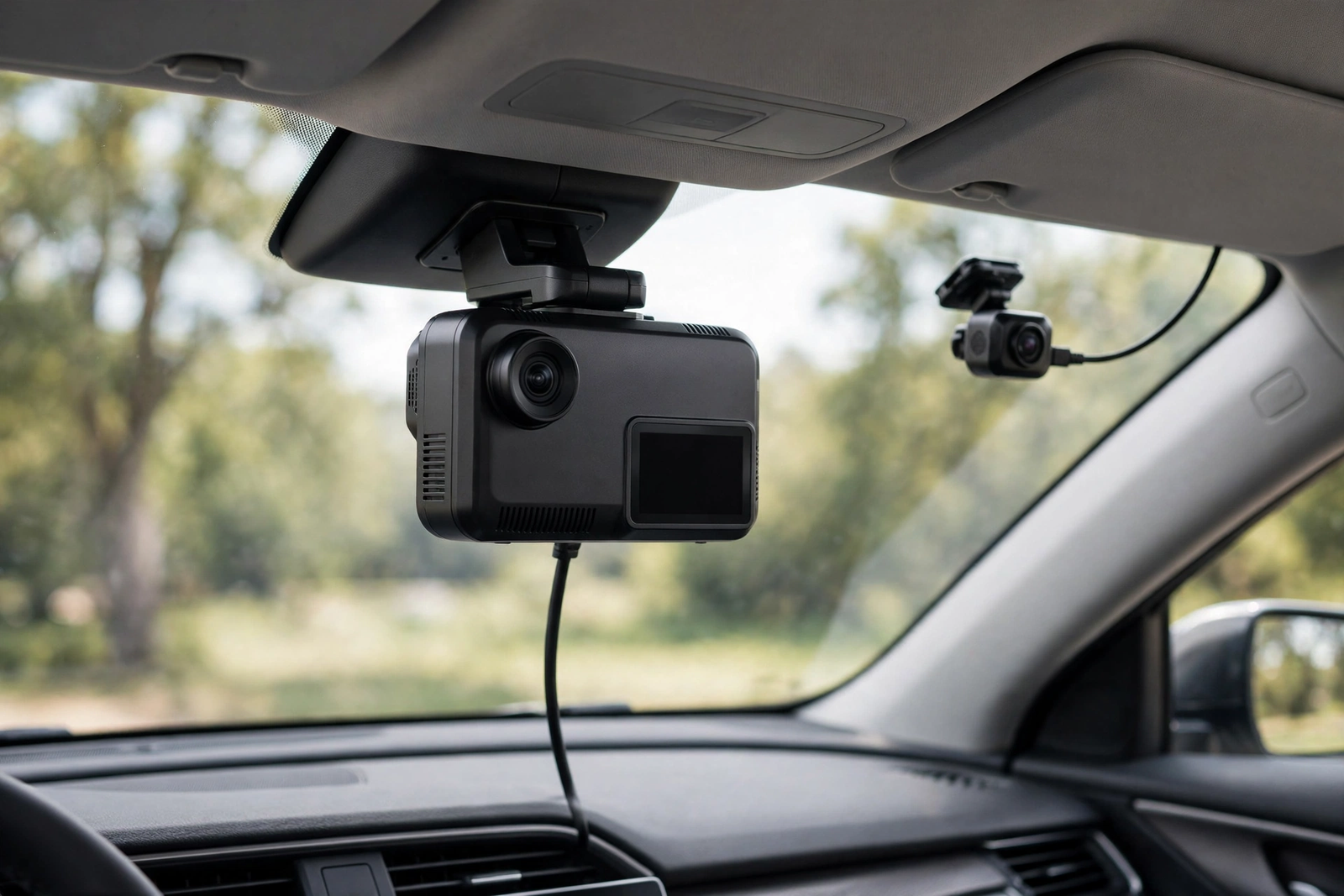
A red tiger dash cam is one of the simplest ways to protect yourself after a crash. When a fender-bender turns into a dispute about who did what, recorded video settles it in minutes. The REDTIGER F7NP is the exact model this review covers: a front and rear dash camera that records up to 4K (3840×2160) up front and 1080p behind, with built-in GPS, Wi-Fi, and a 32GB memory card in the box. It is also one of the highest-volume car dash cameras on Amazon US — a third-party Accio estimate puts it at about 12,467 units in the latest month.
Warning first: REDTIGER sells several cameras with nearly identical names. The F7NP is not the F7N Touch, and it is not the original F7N. This review names the exact model throughout, shows you how to tell the three apart, and sticks to what the listing and independent reviews actually say — including one honest catch about the 4K label. For the wider field, see our five-pick dash cam dashboard camera roundup.
As an Amazon Associate I earn from qualifying purchases.
| Pick | Product | Best For | Check Price |
|---|---|---|---|
| Overall Winner | REDTIGER F7NP Dash Cam — 4K front, 1080p rear, GPS, Wi-Fi, 32GB card included | Best all-round dual-channel value | |
| Best Budget | Garmin Dash Cam Mini 3 — tiny front-only 1080p camera | Discreet set-it-and-forget-it front camera for less | |
| Premium Pick | ROVE R2-4K Dual Dash Cam — 4K front and rear, STARVIS 2, GPS, 5GHz Wi-Fi, 128GB card included | Sharpest dual-channel image quality available |
Table of Contents
What the REDTIGER F7NP Is
The REDTIGER F7NP is a two-channel front and rear dash camera for cars, SUVs, and trucks. The front unit mounts behind the windshield and records up to 4K (3840×2160); the smaller rear unit mounts on the back glass and records in 1080p. The front lens covers 170 degrees and the rear covers 140 degrees. The listing title calls it a “4K/2.5K” camera — that wording refers to the front camera’s sensor, whose native resolution is 2.5K (2560×1440); the 4K output is produced by interpolation, as independent reviewers at DashCamTalk and DashboardCameraReviews have documented. In plain terms, the footage is sharp in daylight, but the “4K” badge is not the same as a native 4K sensor.
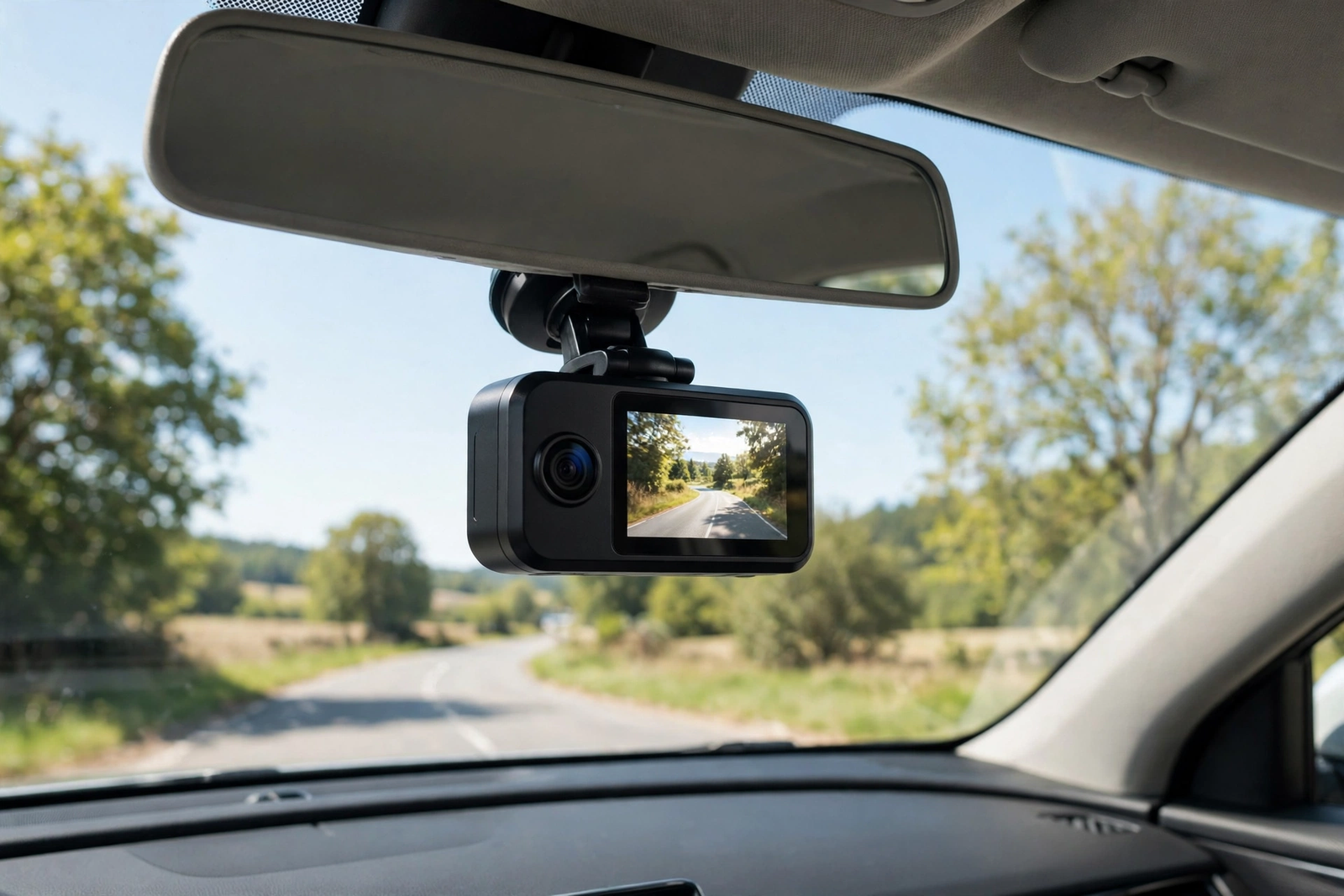
What comes in the box, according to the listing: the front camera with a 3.16-inch IPS screen, the rear camera, a suction-cup mount with built-in GPS, a 32GB memory card, and the power and rear-camera cables. The camera runs on a supercapacitor rather than a lithium battery, which matters because dash cams live in direct sun — supercapacitors tolerate cabin heat far better than batteries and tend to last longer. Built-in Wi-Fi connects the camera to the REDTIGER app on iOS or Android, and built-in GPS records your route, speed, and location with the footage.
Red Tiger Dash Cam Video Quality and Night Performance
Daytime footage is where this red tiger dash cam earns its keep. The front camera’s wide 170-degree lens and F1.5 aperture pair with a six-layer lens and HDR/WDR processing to keep road signs and plates readable in daylight. The rear 1080p camera is good enough to show who hit you from behind and in what sequence, which is what rear footage is for.
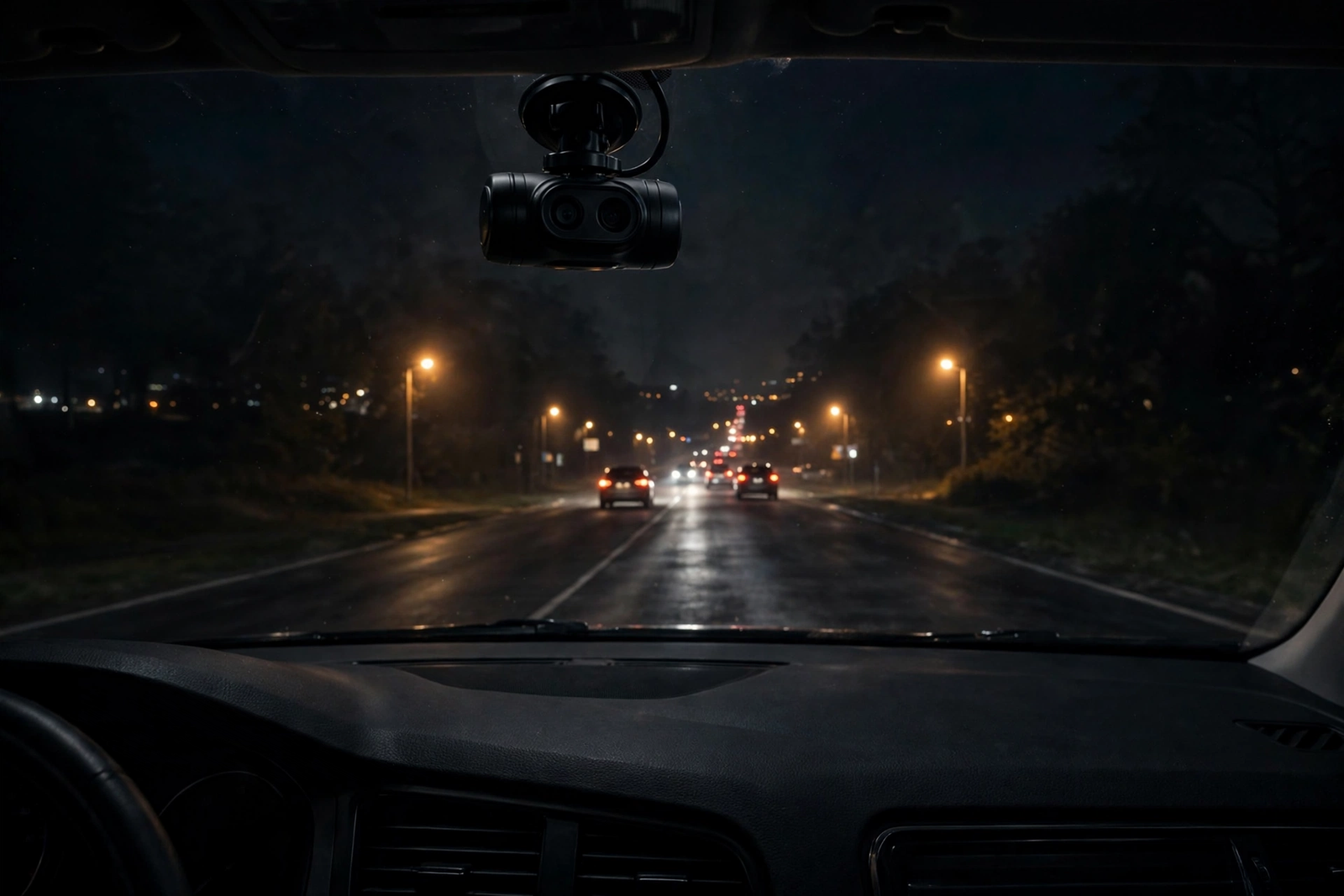
At night, keep expectations honest. The F1.5 aperture and HDR/WDR help in low light, and the listing describes a STARVIS sensor — but the rear 1080p footage gets grainy after dark, and independent reviewers note it struggles with distant plates at night. That is normal for 1080p rear cameras in this price class: the front camera is your plate-reading camera, and the rear camera is your what-happened camera. No dash cam guarantees plate readability at night. A June 2025 AutoInsurance.com survey found only 30% of drivers record their trips, so a camera like this still puts you ahead of most drivers on the road.
Installation and the App
Installation is a straightforward job for most drivers. The front camera sticks to the windshield on its suction-cup GPS mount, tucked behind the rearview mirror so it stays out of your line of sight. The power cable runs along the headliner and down the A-pillar to the 12V outlet, and the rear camera cable runs back along the headliner to the rear glass — the 21.3-foot cable is long enough for SUVs and trucks. Take your time tucking the wires; a clean install looks factory and keeps cables out of the airbag path.
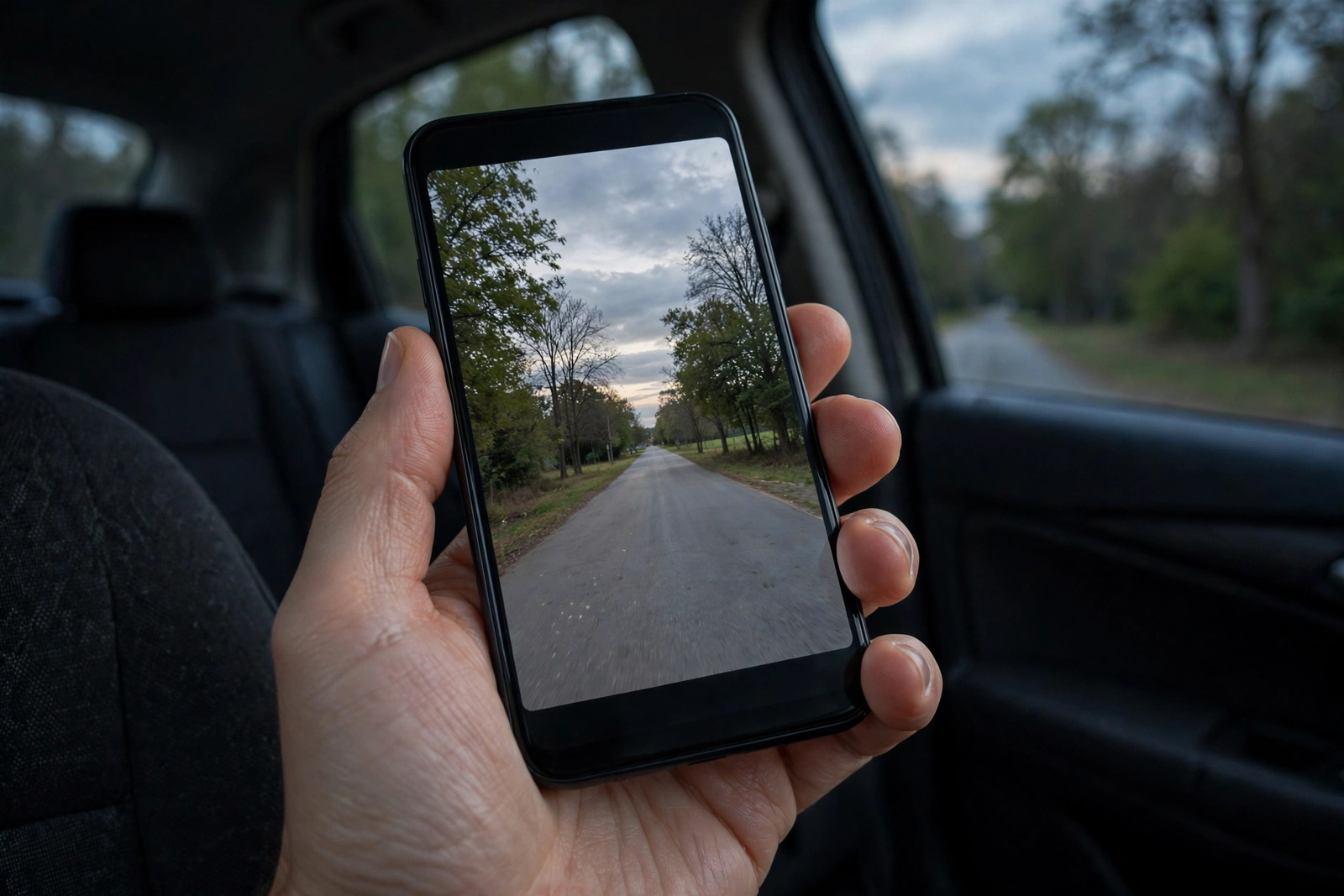
Day to day, you will mostly use the phone app, not the screen. Over built-in Wi-Fi, the REDTIGER app lets you view, play back, and manage recordings on iOS or Android without pulling the memory card. The Wi-Fi range is short — a few metres, for use inside or next to the car — and it does not support remote connection from elsewhere. GPS data can be reviewed through the app or REDTIGER’s GPS Player software for Windows and Mac.
Parking Mode and Storage
The F7NP advertises 24-hour parking monitoring with a time-lapse function, plus the two features that make parking mode useful: a G-sensor that locks the clip on impact so loop recording cannot overwrite it, and loop recording, which overwrites the oldest footage when the card fills up. But read the fine print: parking mode needs a hardwire kit wired to the fuse box, and that kit is sold separately. The included 12V adapter only powers the camera while the car is on, so budget for the kit — and the installation, if you will not wire it yourself — if parked-car protection is the reason you are buying.

A 32GB card is included, and the camera supports cards from 32GB up to 256GB. If you upgrade, the listing recommends a U3 Class 10 card; a high-endurance card is the right call for a camera that writes constantly, since standard cards wear out faster.
F7NP vs F7N Touch: How to Tell Them Apart
REDTIGER’s F7N family has three closely related models that share the same body, recording, GPS, Wi-Fi, and parking-mode features — and listings blur them together. Here is how they actually differ:
| Feature | F7NP (this review) | F7N Touch |
|---|---|---|
| Screen | 3.16-inch IPS screen, button controls | 3.18-inch touchscreen, plus voice control |
| Card in the box | 32GB | Larger bundled card (128GB per the Touch listing) |
The original F7N is the one with a waterproof rear camera that can be mounted outside — useful on trucks, but not what most car buyers need. The practical rule: if the listing title ends in “(F7NP)”, you are looking at this camera. If it says “(F7N Touch)” or mentions a touch screen and voice control, it is the Touch — a different model with a higher price, covered in our ROVE R2-4K Dual vs REDTIGER F7N Touch comparison. Do not trust the product photo alone; check the model name in the title before you buy, because the two cameras look nearly identical in thumbnails.
Who Should Buy It and Who Should Skip It
Buy the F7NP if you want front-and-rear coverage at a sensible price with a memory card already in the box. Daily commuters get the evidence that matters after a crash or a parking-lot hit. Night drivers get a wide-aperture front camera that holds up better after dark than most budget car cameras. Drivers in hot climates get a supercapacitor instead of a battery, which keeps a windshield camera alive through its second and third summers.
Skip it if you want a touchscreen and voice control — that is the F7N Touch, and it is worth the step up if you review footage on the camera itself. Skip it if you drive for Uber, Lyft, or a taxi service and need a cabin channel; the F7NP watches the road front and rear only, and a three-channel camera is the right tool for rideshare. And skip it if you want a native 4K front sensor — the ROVE R2-4K Dual in the Quick Pick above is the premium step up.
Verdict
The REDTIGER F7NP is a strong value pick in a crowded category: 4K-class front recording, a 1080p rear camera, GPS and Wi-Fi, a supercapacitor built for hot windshields, and a 32GB card in the box. Its honest limits are the interpolated 4K, the grainy rear night footage, and a parking mode that needs a separately sold hardwire kit. None of those are deal-breakers at this level. Just make sure you buy the F7NP (B098WVKF19), not the F7N Touch, and budget for the hardwire kit if you want parking protection.
Frequently Asked Questions
Is the REDTIGER F7NP a true 4K dash cam?
Not strictly. The front camera outputs 4K (3840×2160), but its Sony STARVIS IMX335 sensor is natively 2.5K (2560×1440), so the 4K is interpolated. Daylight footage is still sharp, but the camera is best described as 4K-class, not native 4K.
How do I tell the F7NP apart from the F7N Touch?
Check the model name in the title — “(F7NP)” versus “(F7N Touch)” — and the screen: the F7NP has a button-operated screen, the Touch has a touchscreen with voice control. The two look nearly identical in photos, so the title is the reliable check.
Does the F7NP record while parked?
Yes, with a catch. The F7NP offers 24-hour parking monitoring and a G-sensor that locks impact clips, but parking mode needs a hardwire kit wired to the fuse box, sold separately. The included 12V adapter only powers the camera while the car is on.
Is a memory card included with the F7NP?
Yes — a 32GB card is included. The camera supports cards from 32GB up to 256GB; the listing recommends a U3 Class 10 card if you upgrade, and a high-endurance card lasts longest under constant recording.
Does the F7NP have GPS and Wi-Fi?
Yes, both are built in. GPS comes via the suction-cup mount and records your route, speed, and location with the footage. Wi-Fi connects the camera to the REDTIGER app on iOS or Android for viewing, playback, and managing recordings — within a few metres of the car; remote connection is not supported.
Is the F7NP good at night?
The front camera performs well for its class at night thanks to its F1.5 aperture, six-layer lens, and HDR/WDR processing. The rear 1080p camera is weaker after dark and can get grainy, so distant plates behind you may not be readable. No dash cam guarantees plate readability at night.