Finding a good anker car charger usb c should be simple: two ports, enough watts for two phones, and a brand you trust. The Anker PowerDrive III Duo, model A2724, is exactly that charger — 40W total across twin USB-C ports, each delivering up to 20W through Anker’s PowerIQ 3.0, in a body small enough to disappear into the 12V socket. On sale since May 2021, it is still the charger our own roundup calls the proven budget alternative. This review covers the wattage math, what 20W means for your phone, what it will not fast-charge, and the two honest catches: no cable in the box, and no device ever gets more than 20W.
The short version: this is a charger for people who charge phones in the car, not laptops. If your daily load is one or two phones — iPhone or Android — the III Duo gives each its full fast-charging rate at the same time. If you need Samsung’s 25W Super Fast Charging, OnePlus Dash Charge, or power for a laptop, it is the wrong charger, and this review points you at the Anker models that do those jobs instead.
As an Amazon Associate I earn from qualifying purchases.
| Pick | Product | Why it stands out | Check Price |
|---|---|---|---|
| Overall Winner | Anker PowerDrive III Duo 40W USB-C Car Charger (A2724) | Twin 20W PowerIQ 3.0 ports; the trusted-brand pick at 40W total | |
| Best Budget | Anker PowerDrive+ III Duo 50W USB-C Car Charger | Step-up model with a 30W port for larger devices, at the lower cost of the two upgrades | |
| Premium Pick | Anker Nano Car Charger 167.5W 3-Port USB-C Car Charger | Laptop-class 100W port plus 45W and 22.5W ports; charges three devices and includes a cable |
Table of Contents
What the PowerDrive III Duo Is
The PowerDrive III Duo is Anker’s model A2724: a 12V car charger with two USB-C ports and nothing else — no display, no app, no USB-A port, no extra features to configure. It plugs into the car’s 12V socket, takes 12V or 24V input at 5A, and delivers up to 40W total through PowerIQ 3.0, Anker’s charging technology that negotiates the fastest safe speed with each connected device. Each port can deliver up to 20W, at 5V and 3A or 9V and 2.22A, according to Anker’s official specifications. Anker backs it with an 18-month warranty.
It is a known quantity, not a new launch: first listed in May 2021, it has stayed in Anker’s range ever since — a long run for a car accessory. There is one naming trap to avoid while shopping: this is the PowerDrive III Duo, 40W, model A2724. The older PowerDrive II Duo is a 36W charger, and the PowerDrive+ III Duo is a different, more powerful model. Check the model number and the 40W figure on the listing before you buy, because the names differ by a single character and the chargers do not.
How the 40W Is Shared Between Two Ports
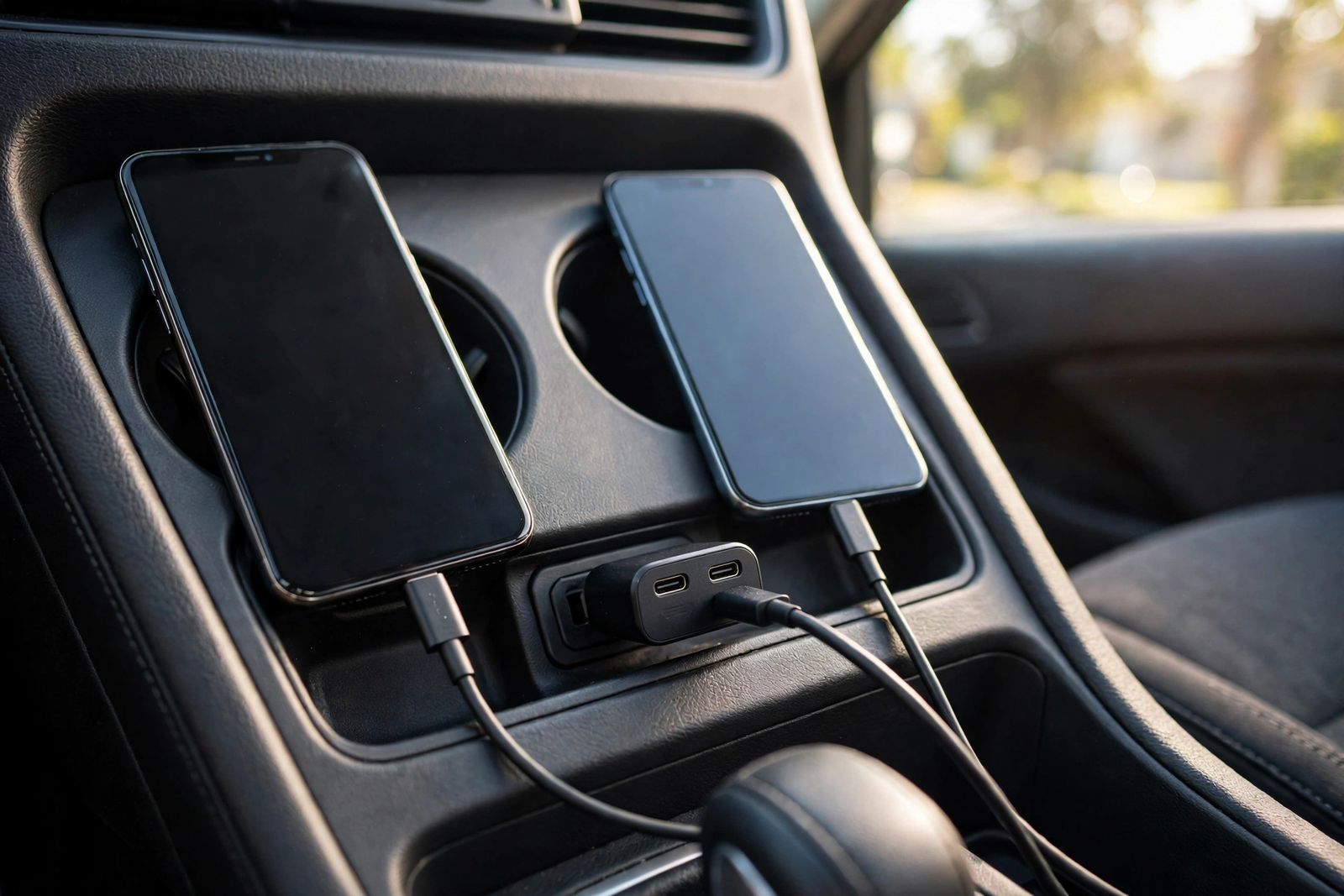
The 40W figure is a total, not a per-port figure, and the split is the simplest possible: the two ports are identical, each capped at 20W. Plug in one phone and it gets up to 20W. Plug in a second phone and it gets up to 20W too, while the first phone keeps its 20W — 20 plus 20 is the full 40W, with nothing held back. There is no fast port and slow port to remember, and no priority system that starves the second device.
The limit is the other side of the same coin: one device alone never gets more than 20W. The charger cannot combine both ports into a single 40W feed, so a device that could accept 25W or 30W tops out at 20W here. That is a fair trade for a two-phone charger — but if your phone’s fast charging starts above 20W, this charger will charge it, just not at its fastest rate.
Charging Speed: What This Anker Car Charger USB C Delivers
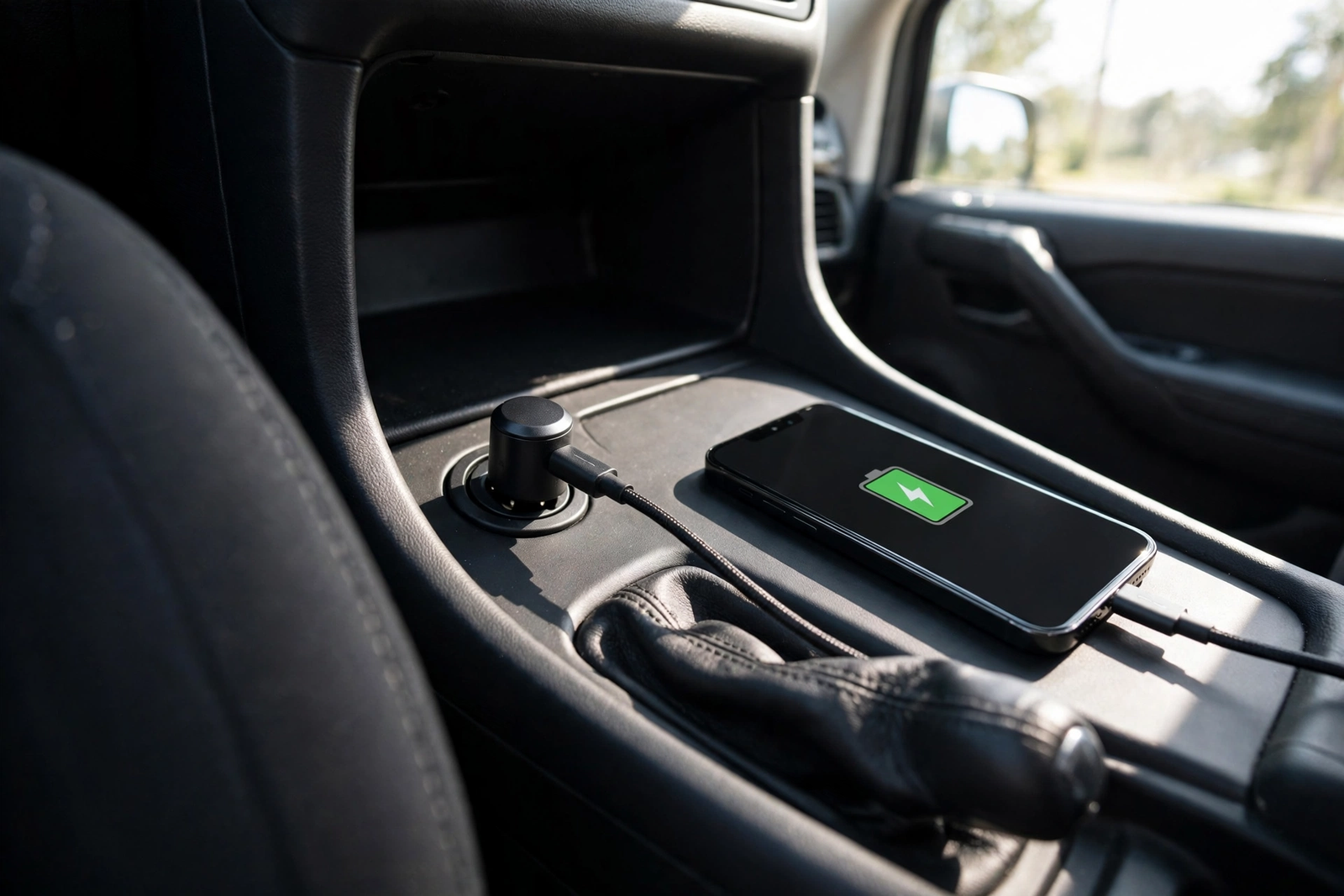
For most current phones, 20W is the fast-charging rate they are built around. iPhones fast-charge at 20W, so an iPhone plugged into one port with a USB-C to USB-C cable (iPhone 15 and newer) or a USB-C to Lightning cable (iPhone 14 and earlier) charges at its full fast-charging speed. Most Android flagships that top out at 18W or 20W get their full speed too. This is a type c car charger in the strictest sense — both ports are USB-C, and the speed comes from USB Power Delivery negotiation, not from a proprietary trick.
Tablets charge well at 20W, though more slowly than they would from a 30W or higher charger — fine for a road trip top-up, less ideal if you need a dead iPad back to full during a short drive. The same 20W ceiling applies to everything else with a USB-C port: earbuds, handheld consoles, and small accessories simply draw what they need, and the charger negotiates down to suit them.
Two things slow charging down, and neither is the charger’s fault. The first is the cable: a thin, worn, or low-rated USB-C cable throttles speed before the charger gets a say, so use one rated for the wattage you expect. The second is heat: phones reduce charging speed when hot, so a phone baking in sun on the dashboard charges slowly no matter which charger feeds it.
Compatibility: What It Fast-Charges and What It Does Not
The compatibility list is short and honest. It fast-charges iPhones at their 20W rate, Android phones whose fast charging tops out at 20W or below, iPads and other USB-C tablets, and any USB-C accessory that negotiates a standard Power Delivery charge. It works in cars and trucks alike, because the 12V or 24V input covers both 12V cars and 24V commercial vehicles.
What it does not do is just as clear, and Anker states these limits on its own product page. It does not support OnePlus Dash Charge. Samsung Galaxy Note 10 and Note 10+ do not get 25W fast charging from it, and the same 20W per-port ceiling means no Samsung 25W Super Fast Charging either — Samsung phones will still charge, but at up to 20W rather than their fastest rate. And because both ports are USB-C, there is no USB-A port for older cables or devices; if your cable ends in USB-A, you need a different charger or a USB-C cable for that device.
Size, Build, and the Missing Cable
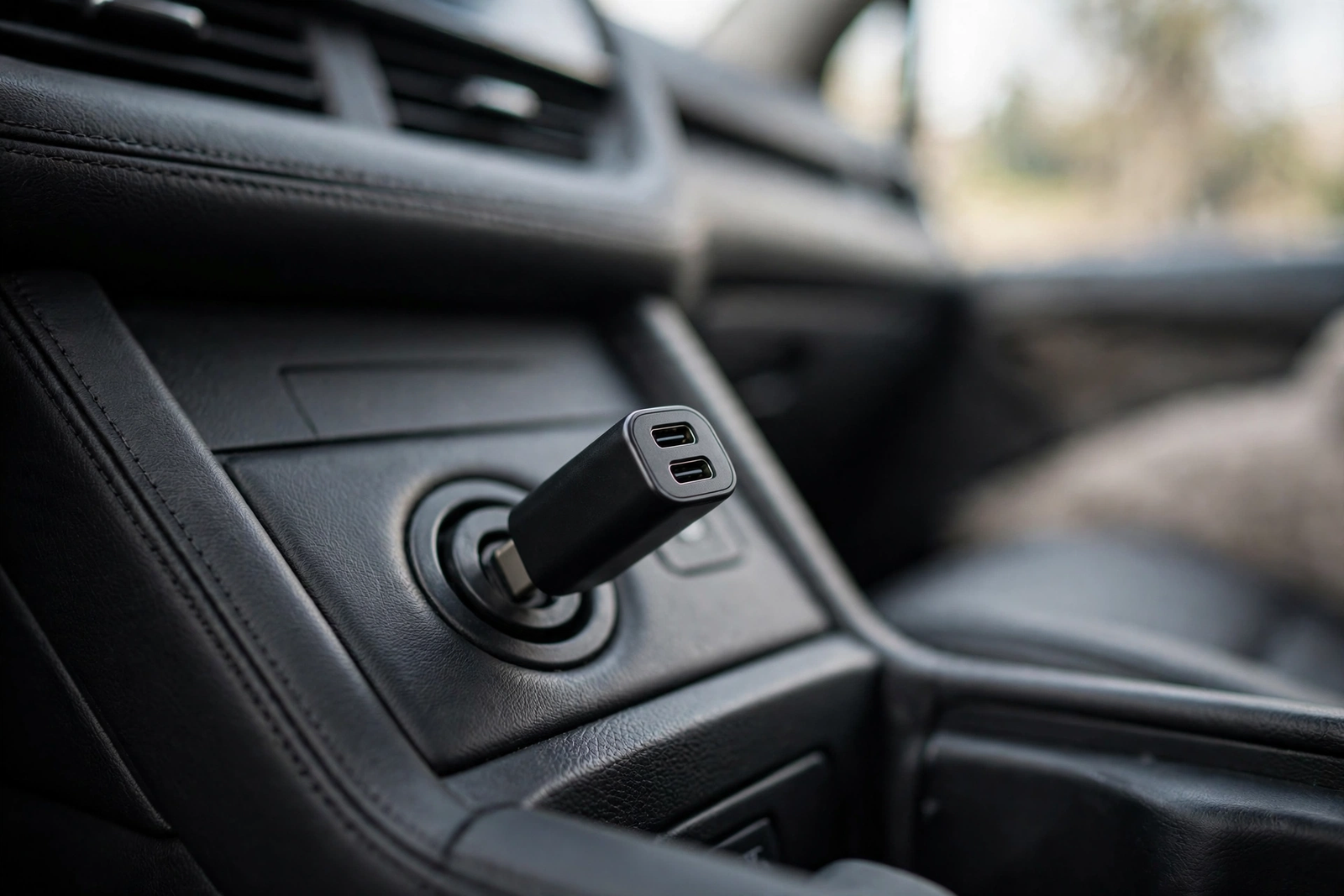
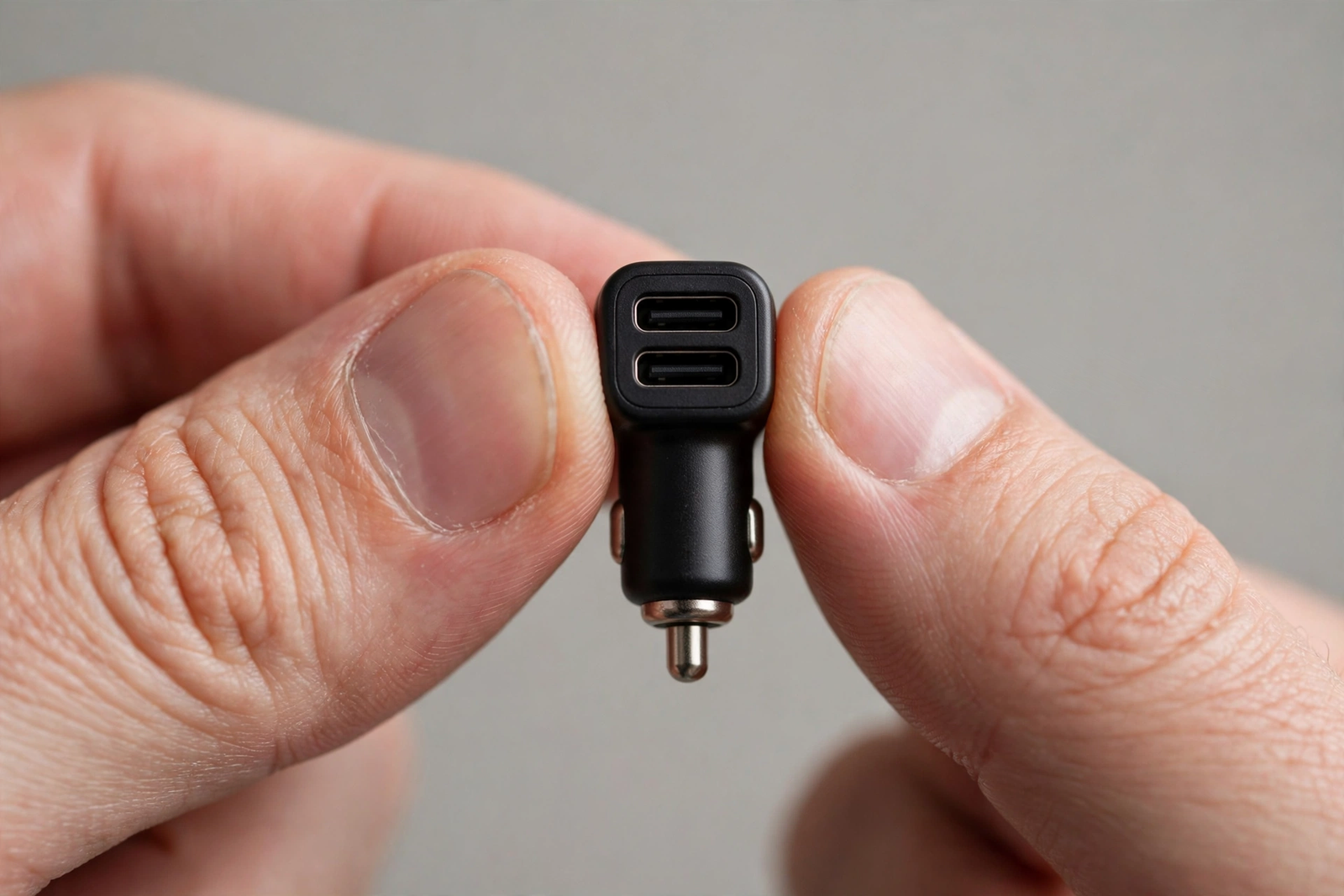
The III Duo measures 2.7 by 1.41 by 1.41 inches, according to Anker — a compact black body that sits low in the 12V socket with just the twin USB-C ports showing. It is small enough to leave plugged in permanently without crowding the gear lever or the cup holders. The two ports sit side by side on the end face, so both cables leave in the same direction and stay out of the way.
The one thing missing is the cable. The charger is sold without one — the box holds the charger, a welcome guide, and the 18-month warranty — so you need your own USB-C cable, or you buy one separately. That is worth knowing before the charger arrives, not after: a charger with no cable charges nothing. Match the cable to your phone — USB-C to USB-C for newer iPhones and most Android phones, USB-C to Lightning for older iPhones — and make sure it is rated for the wattage you want from it.
One more practical note: the 12V socket this charger uses is separate from your car’s USB ports. If one of those USB ports carries wired CarPlay, our CarlinKit Mini Ultra 3 review covers the adapter that turns it wireless — a different job from charging, but one that uses the port this charger leaves alone.
PowerDrive III Duo vs the Alternatives
The step up inside Anker’s own range is the PowerDrive+ III Duo, the 50W model. Amazon lists it at 50W total, with a 30W port for larger devices such as USB-C notebooks and a 20W port for phones and tablets — the same 18-month warranty, but asymmetric ports instead of the III Duo’s matched pair. It is the pick if one of your devices genuinely needs more than 20W: the 30W port feeds a small laptop or a tablet at full speed while the 20W port handles a phone. If both of your devices are phones, the extra port power buys you nothing.
The bigger jump is the Anker Nano Car Charger at 167.5W, with three ports: a 100W USB-C port, a 45W USB-C port, and a 22.5W USB-A port. Anker says the 100W port charges a 16-inch MacBook Pro from empty to 50 percent in 47 minutes, and unlike the III Duo it includes a 3.3-foot USB-C to USB-C cable in the box. That is the charger for a laptop plus a phone plus a tablet, all at once — a different job from the III Duo’s two phones, and the reason it sits as the premium pick here rather than the default recommendation.
For the wider field beyond Anker, our USB-C car charger roundup compares five chargers, from a 69W two-pack to a wireless MagSafe mount — and it names this 40W car charger as the proven budget alternative in that group. The III Duo wins on trust and simplicity; the alternatives win when the job outgrows two phones at 20W each.
Who Should Buy It — and Who Should Skip It
Buy this 40W car charger if you charge one or two phones in the car and want a trusted brand doing it. It suits drivers who already own USB-C cables, drive a 12V car or a 24V truck, and want a charger that stays plugged in and out of the way. For most drivers, this is the usb charger for car use that makes sense: two phones, full speed, nothing to configure, and an 18-month warranty behind it.
Skip it if your phone’s fast charging starts above 20W — Samsung’s 25W Super Fast Charging and OnePlus Dash Charge are the two cases Anker itself rules out — or if you need to charge a laptop, where the 167.5W Nano is the right tool. Skip it too if you have no USB-C cable and do not want to buy one, or if you still need a USB-A port for older devices. For everyone else, the III Duo is the simple answer to a simple problem: two phones, charged properly, every drive.
Verdict
The Anker PowerDrive III Duo is the anker car charger usb c to buy when the job is two phones and nothing more: 40W total, twin 20W PowerIQ 3.0 ports, a compact body that vanishes into the 12V socket, and an 18-month warranty from a brand with a long record in charging. Its limits are printed on the spec sheet, not hidden — no cable in the box, no port above 20W, no Samsung 25W or Dash Charge — and for the drivers it fits, none of them matter. Buy it, add a good USB-C cable if you do not already own one, and stop thinking about charging in the car.
Frequently Asked Questions
Does the Anker PowerDrive III Duo come with a cable?
No. The charger is sold without a cable, so you need your own USB-C cable or you buy one separately. Use a USB-C to USB-C cable for newer iPhones and most Android phones, or a USB-C to Lightning cable for iPhone 14 and earlier, and make sure the cable is rated for the wattage you want from it.
Will it fast-charge my Samsung phone at 25W?
No. Each port delivers a maximum of 20W, so the charger cannot deliver Samsung 25W Super Fast Charging, and Anker states that Galaxy Note 10 and Note 10+ do not get 25W fast charging from it either. Samsung phones will still charge from it, just at up to 20W rather than their fastest rate.
Does it support OnePlus Dash Charge?
No. Anker states that the PowerDrive III Duo does not support OnePlus Dash Charge. OnePlus phones will charge from it at standard USB Power Delivery speeds instead.
Can it charge two phones at the same time?
Yes. The two USB-C ports are identical, each delivering up to 20W, for 40W total. Two phones plugged in at once each get up to 20W, so neither phone slows the other down.
Will it work in a truck or a 24V vehicle?
Yes. The charger accepts 12V or 24V input at 5A, according to Anker’s official specifications, so it works in 12V cars and 24V commercial vehicles alike.
What is the difference between the PowerDrive III Duo and the PowerDrive+ III Duo?
The PowerDrive III Duo, model A2724, is the 40W charger in this review, with twin 20W USB-C ports. The PowerDrive+ III Duo is a different, more powerful model: Amazon lists it at 50W total, with a 30W port for larger devices and a 20W port for phones and tablets. Check the model name and the wattage on the listing before buying, because the names differ by a single character.