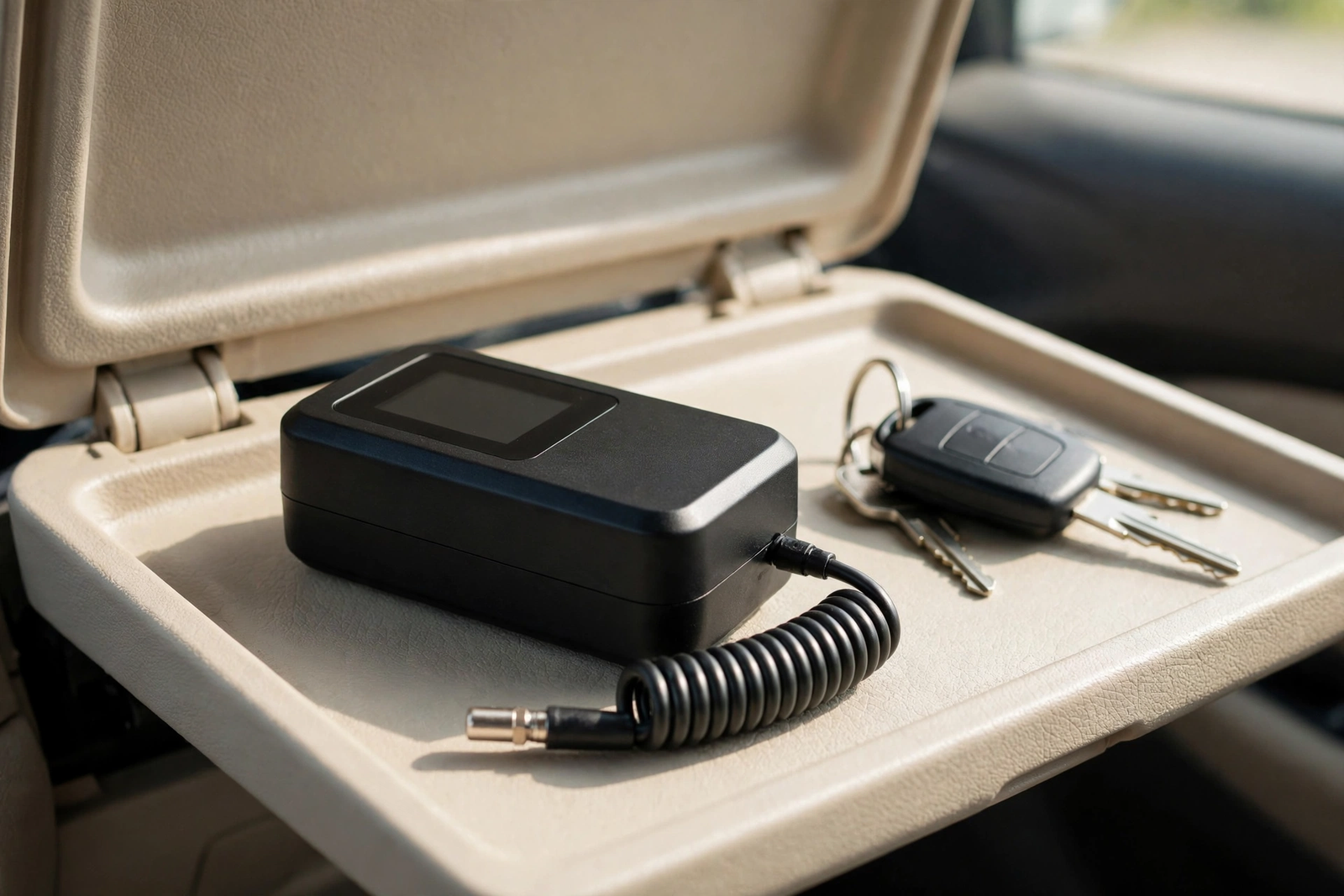
A low tire rarely announces itself at a convenient moment. It shows up as a warning light on the way to work, or as a soft tire spotted in a dark car park. The Airmoto Portable Tire Inflator (model BP198) is built for exactly that moment: a pocket-size cordless air compressor that tops up a car tire without a power outlet, a 12-volt socket, or a drive to the petrol station. It reads the pressure on a digital gauge, stops itself at the pressure you set, and then goes back in the glove box until the next time you need it.
This review covers the standalone Airmoto unit — not a bundle — and sticks to what the listing, the manual sources, and independent reviews actually say. Where the listing and an independent test disagree on speed, we show both numbers and explain why. The short version: a genuinely handy top-up tool with a small battery and modest airflow — brilliant for keeping tires at the right pressure, and slow at anything bigger.
As an Amazon Associate I earn from qualifying purchases.
| Pick | Product | Why it stands out | Check Price |
|---|---|---|---|
| Overall Winner | Airmoto Portable Tire Inflator (BP198) | Pocket-size, auto shut-off, tops up 4 standard car tires on one charge (per the listing) | |
| Best Budget | AstroAI L7 Cordless Tire Inflator | Bigger battery and a 12V DC backup mode if the battery runs out | |
| Premium Pick | Fanttik X9 Pro | The premium pick in this roundup — the step up from the Airmoto |
Table of Contents
What the Airmoto Is — and What It Is Not
The Airmoto is a battery-powered tire inflator about the size of a small power bank. It runs off a rechargeable 2000mAh lithium-ion battery, charges over USB-C, and can push air up to a maximum of 120 PSI — far above the 30–35 PSI a normal car tire needs. Airflow is rated at 20 litres per minute, the air hose stores inside the unit, and the whole thing weighs 1.25 lbs (0.57 kg).
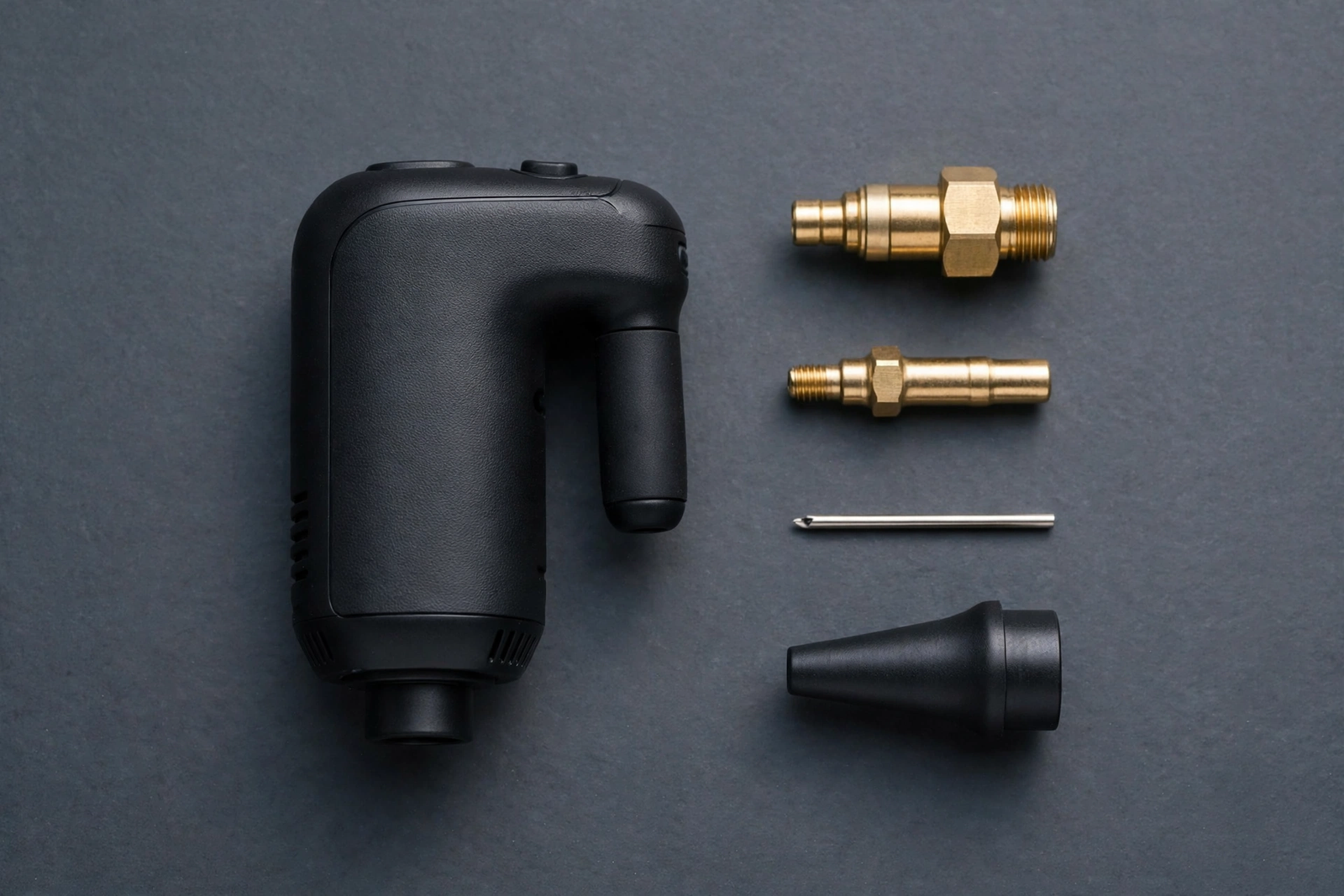
It is built around one idea: topping up tires that have lost a few PSI. The digital gauge shows the current pressure, you set the pressure you want, and the Airmoto inflator stops by itself when it gets there. Preset modes cover car, motorcycle, and bicycle, with 35 PSI given as the car reference. Four attachments come with it — Schrader, Presta, ball needle, and general nozzle — plus a deflate button for letting air back out if you overshoot, and an LED flashlight for night-time use.
What it is not matters just as much. The listing says it is not designed for large-volume uses such as air mattresses and paddle boards, or for heavy-load tires. If your regular job is truck tires, or running a compressor for long stretches, a heavy duty air compressor with a 12-volt connection is the right tool — not this one. The Airmoto is a top-up tool for standard car, motorcycle, and bicycle tires, and judging it on anything bigger misses the point of it.
How This Cordless Air Compressor Works: Set It, Start It, Walk Away
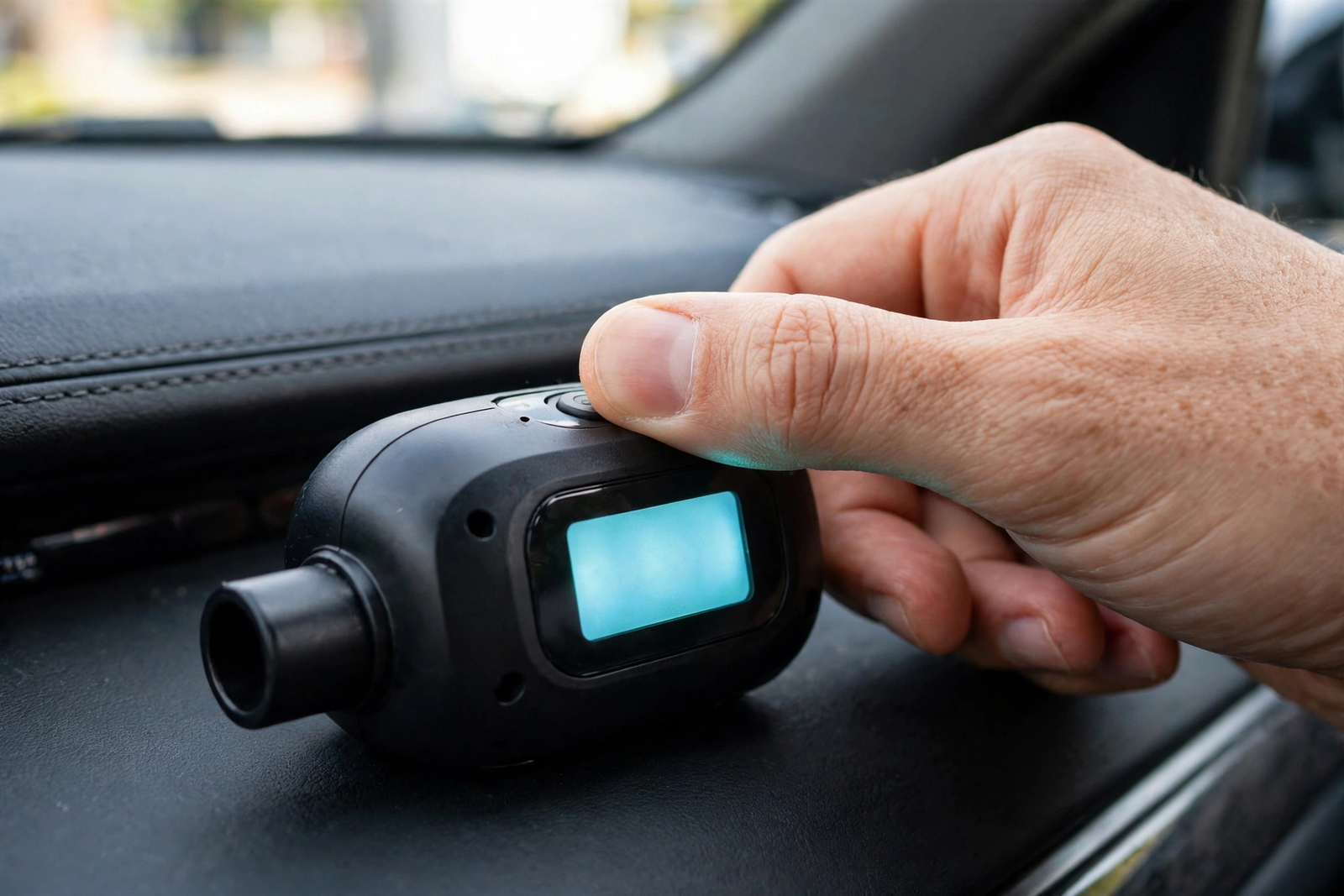
Using it takes about a minute to learn. Pull the hose out of the unit, screw the connector onto the tire valve, and the display shows the tire’s current pressure. Pick a preset mode or set your own target pressure with the buttons, press start, and the Airmoto does the rest — it pumps until it reaches the pressure you set, then shuts off by itself. There is no need to stand there watching the gauge, and no risk of absent-mindedly over-inflating the tire while you look away.
The details are what make it usable in the real world. The gauge is accurate to ±1 PSI and reads in half-PSI increments, so you can see small changes as the tire fills. One quirk worth knowing: the gauge can read slightly low, so the practical tip from independent reviews is to set the target 0.5–1 PSI above the pressure you actually want. The deflate button covers the opposite mistake — if a tire ends up a touch high, you can bleed a little air out without fetching another tool.
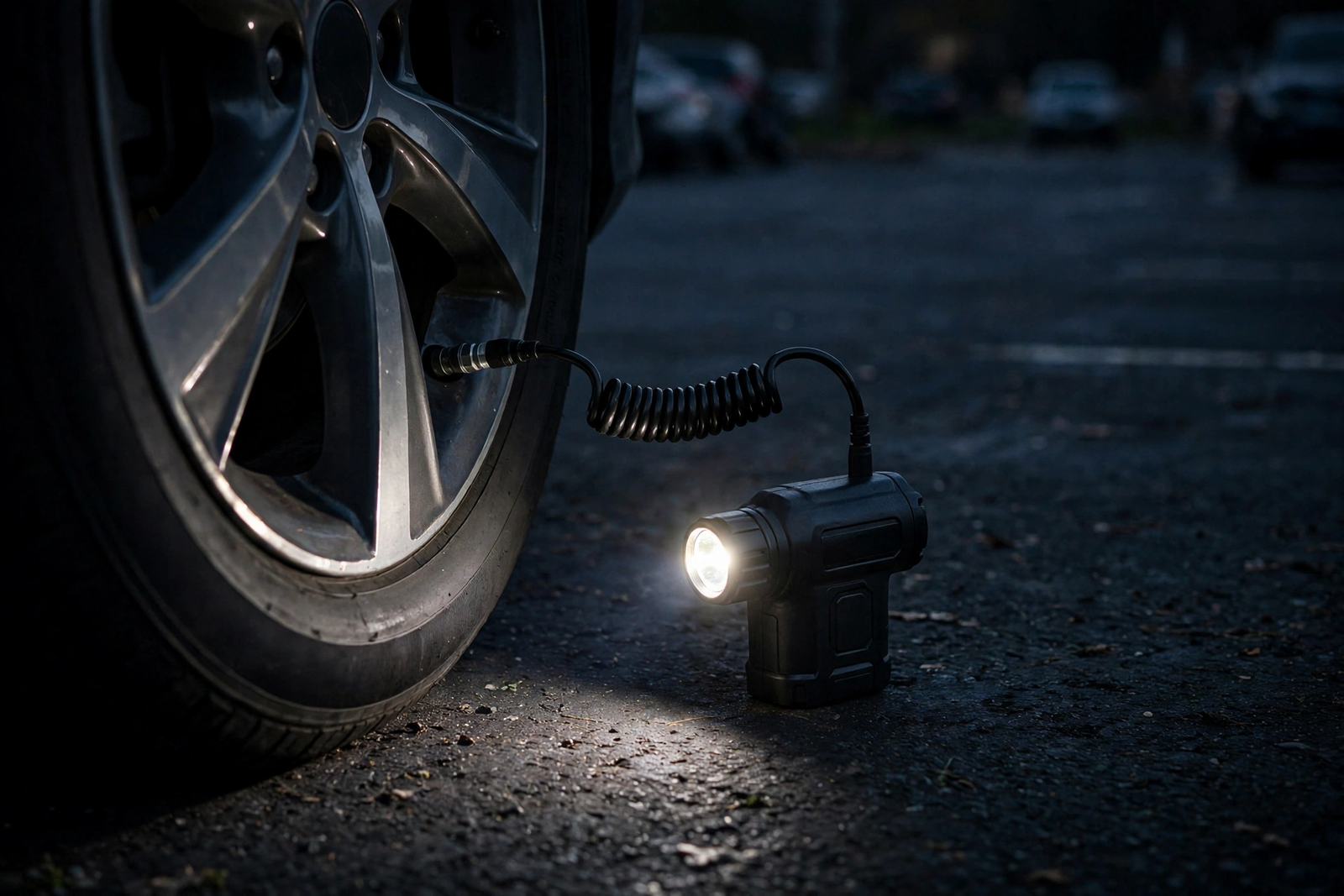
For bikes, the included Presta adapter means a road bike is a quick job rather than a reason to dig out a floor pump, and the ball needle covers the occasional sports ball. The LED flashlight is genuinely useful rather than a gimmick: a low tire found at night is much easier to deal with when you can see the valve stem.
Speed and Battery: The Honest Numbers
Speed is where you need honest numbers, because the listing and an independent test do not agree — and both can be true. According to the Amazon listing, the Airmoto tops up four standard car tires from 28 to 35 PSI on one charge, at 3–5 minutes per standard tire top-up. One independent test, however, measured around 7–8 minutes for a 25 to 35 PSI top-up on a sedan tire. The difference is the size of the top-up: adding 10 PSI takes noticeably longer than adding 7 PSI, and a bigger tire takes longer than a smaller one.
The battery is the other half of the equation. The 2000mAh lithium-ion battery recharges over USB-C, and reviews report up to 40 minutes of continuous runtime. That is enough for the listing’s claim of four standard tires topped up from 28 to 35 PSI on a single charge, with some charge to spare. Like any battery air compressor, though, its real limit is the charge it is holding when you need it — a dead battery in the glove box helps nobody, so it needs to be charged after use rather than forgotten.
Noise is rated at 78 dB — noticeable in a quiet car park, but it is a small pump running for a few minutes, not a workshop compressor.
Size and Everyday Carry
This is the Airmoto’s strongest card. At 6.1 × 2.4 × 1.6 inches and 1.25 lbs, it is smaller than most portable inflators and genuinely fits in a glove box, a door pocket, or under a seat. The hose stores inside the unit, so it arrives as one tidy block rather than a device plus a loose hose, and the four attachments pack away with it. There is no 12-volt cable to unwind and no need to keep the engine running while it works.
That size changes how you use it. A bigger inflator lives in the garage or the trunk and gets fetched for a job; the Airmoto lives in the car, so it is there on the morning the warning light comes on. For a driver who checks pressures every few weeks, or who wants a safety net on a road trip, that always-with-you quality is worth more than raw speed.
Where It Struggles: Big Tires and Flat-from-Zero
The Airmoto’s limits all come from the same place: a small battery pushing a small pump. A standard car tire a few PSI low is its home ground. A large tire, a heavy-load tire, or a tire needing a big volume of air is not — the listing is clear it is not designed for those jobs, and a bigger tire takes a long time and eats a large share of the battery. The same applies to air mattresses and paddle boards, which need far more air than a tire top-up and will drain the battery before they are full.
A completely flat tire is the hardest case. Going from zero to full pressure means moving many times more air than a 28 to 35 PSI top-up, so it will take much longer and may use up the battery before the tire is full. It can still help by getting some air into a soft tire so you can drive slowly to help — but a flat tire is a job for a spare tire, a proper repair, or a bigger inflator, not this on its own.
Airmoto vs the Alternatives (AstroAI L7, Fanttik X9 Pro)
The closest rival is the AstroAI L7, covered in our AstroAI L7 review — and you can see how the wider field stacks up in our portable tire inflator roundup. On paper the L7 trades blows with the Airmoto: it reaches a higher maximum of 150 PSI against the Airmoto’s 120 PSI, but its airflow is lower at 17 litres per minute against the Airmoto’s 20. Its battery is twice the size at 4000mAh, and it adds a 12V DC backup mode, so a dead battery does not strand you — something the Airmoto cannot offer. Both charge over USB-C, both have an LED light, and the L7’s presets cover car, motorcycle, bicycle, and ball.
The choice between them comes down to size against stamina. The Airmoto is the smaller, lighter, faster-flowing cordless inflator — the one you forget is in the glove box until you need it. The AstroAI L7 is the one to pick if you want the bigger battery and the 12-volt fallback for a longer job. The third option in our Quick Pick is the Fanttik X9 Pro, the premium pick of this roundup. When buying it, make sure you are looking at the base model listing rather than the Deluxe package, which is a different variant.
Who Should Buy It — and Who Should Skip It
Buy the Airmoto if you want a tire inflator that is always in the car. It suits the driver who tops up tires every few weeks, the road-tripper who wants a safety net, and the cyclist or motorcyclist who can use the presets and the Presta adapter. It also suits anyone with no garage compressor and no interest in one — a small device that handles the most common tire job.
Skip it if your tires are large or heavy-load, if you regularly inflate high-volume items, or if you want a 12-volt backup for when the battery runs out — the AstroAI L7 covers that case. Skip it too if you expect to fill a fully flat tire from zero on a regular basis: that is a job for a spare, a repair shop, or a much bigger inflator. The Airmoto earns its place by being small and always there, not by being the most powerful pump you can buy.
Verdict
The Airmoto Portable Tire Inflator is the glove-box answer to the most common tire problem: a tire a few PSI low, a warning light, and no compressor nearby. It is small enough to live in the car and simple enough to use in the dark with the LED on — set a pressure, let it stop itself, and drive on. Its weaknesses are real but narrow: slow on big top-ups, a small battery with no 12-volt fallback, and no use for large tires or flat-from-zero rescues.
For most drivers, that trade is worth making. The Airmoto inflator covers the job you actually face most often, and it is there when you need it because it fits where a bigger inflator does not. If you need more stamina or a 12-volt backup, the AstroAI L7 is the better pick — but if you want the smallest honest tire inflator you can keep in the glove box, the Airmoto is the one to buy.
Frequently Asked Questions
How long does the Airmoto take to inflate a car tire?
For a standard top-up, the Amazon listing says 3–5 minutes per tire (28 to 35 PSI), while one independent test measured around 7–8 minutes for a larger 25 to 35 PSI top-up on a sedan tire. A small top-up of a few PSI takes a few minutes; a bigger top-up takes longer, and a bigger tire takes longer still.
Can the Airmoto inflate a completely flat tire from zero?
It is not the right tool for that job. A tire at zero needs many times more air than a 28 to 35 PSI top-up, so it will take much longer and may use up the battery before the tire is full. The Airmoto is built for top-ups; a fully flat tire is a job for a spare tire, a proper repair, or a bigger inflator.
Does the Airmoto work with Presta valves on a bicycle?
Yes. A Presta adapter is one of the four attachments included with the Airmoto, alongside the Schrader connector, the ball needle, and the general nozzle, and bicycle is one of its preset modes.
How accurate is the Airmoto’s pressure gauge?
The digital gauge is accurate to ±1 PSI and reads in half-PSI increments. It can read slightly low, so the practical tip is to set the target 0.5–1 PSI above the pressure you actually want.
How often should I charge the Airmoto?
Charge it after each use so it is ready when you need it, and top it up before a long trip. According to the listing, one charge tops up four standard car tires from 28 to 35 PSI, and reviews report up to 40 minutes of continuous runtime.
Is it safe to keep the Airmoto in the glove box in summer heat?
We could not verify a heat rating for this model from the sources supplied, so do not assume it is rated for extreme heat. Its battery is a rechargeable lithium-ion battery, and as a general precaution it is better not to leave any battery-powered device baking in a hot parked car for long periods — store it somewhere cooler when you can, such as the cabin rather than the trunk in direct sun, and check it still holds a charge before a long trip.