A dead battery in a full-size truck is a different problem from a dead battery in a small sedan. The starter motor has to crank a much bigger engine, and a jump starter built for a four-cylinder hatchback may simply not have the power to do it. If you need to jump start truck engines — big gas V8s and light-duty diesels included — the NOCO Boost GB70 is built for exactly that job. It is a 2000A lithium jump starter rated for gas engines up to 8.0L and diesel engines up to 6.0L, with enough capacity for up to 40 jump starts on a single charge.
This review looks at what the GB70 can and cannot do, how it compares with its smaller sibling the GB40, and whether it earns a permanent place in your truck. Every specification in this article comes from NOCO’s listing and manuals, or from our own live comparison of the two NOCO models. We state no prices, no star ratings, and no hands-on test results we cannot back up — just what the GB70 is rated to do, and who that rating actually suits.
As an Amazon Associate I earn from qualifying purchases.
| Pick | Product | Why it stands out | Check Price |
|---|---|---|---|
| Overall Winner | NOCO Boost GB70 2000A Jump Starter | 2000A peak — rated for gas to 8.0L and diesel to 6.0L | |
| Best Budget | NOCO Boost GB40 1000A Jump Starter | Half the peak power, enough for cars and small SUVs | |
| Premium Pick | WOLFBOX MV24A Jump Starter + Air Compressor | 4000A peak plus a built-in 160 PSI air compressor |
Table of Contents
What the GB70 Is — and What It Is Not
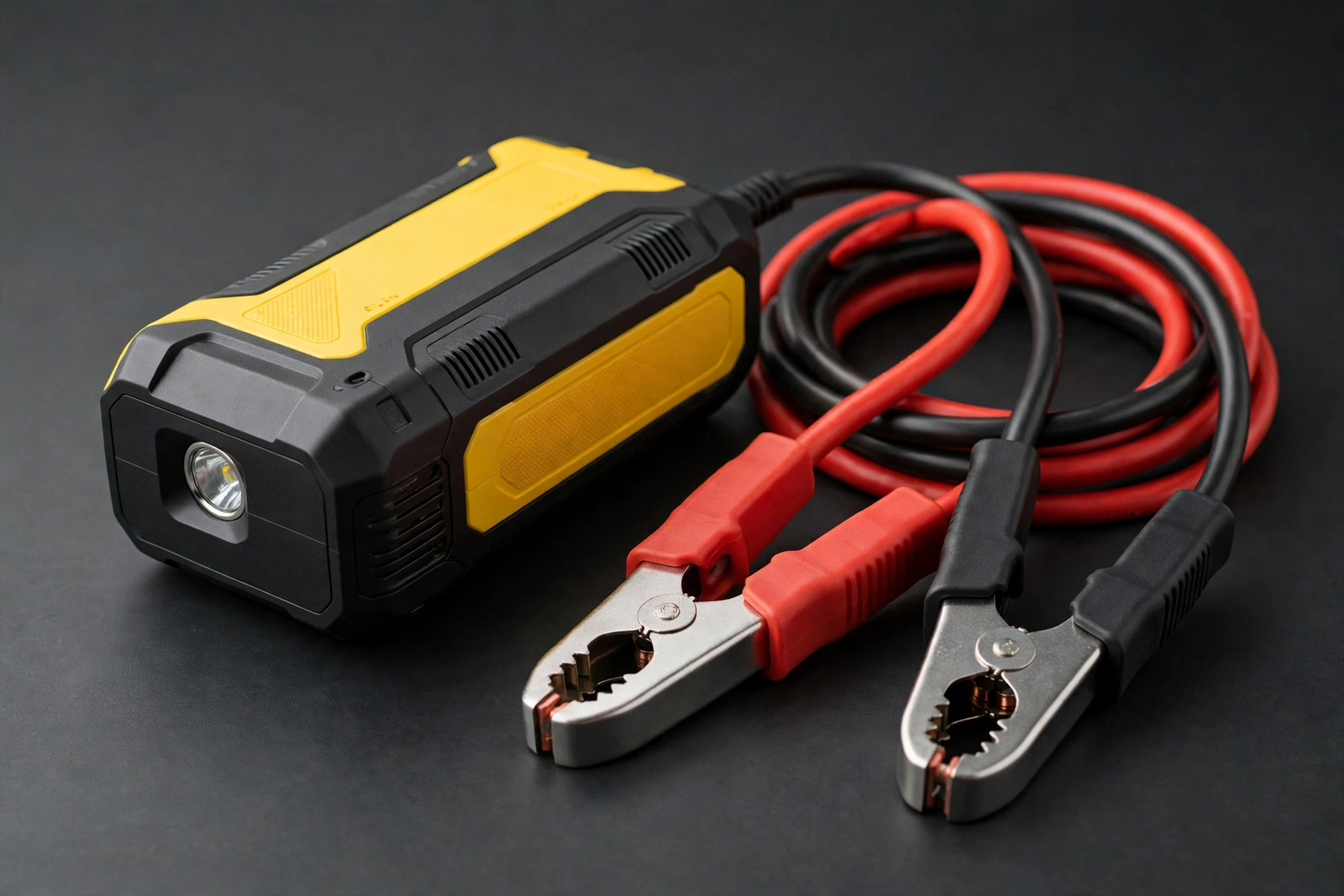
The GB70 jump starter is a self-contained unit: a 56Wh lithium-ion battery in a rugged housing, with a set of heavy-duty clamps, a 400-lumen LED flashlight, and USB and 12V outputs. You charge it up at home, carry it in the truck, and when the battery dies you connect the clamps and start the engine — no second vehicle, no waiting for roadside assistance, no asking a stranger for a jump.
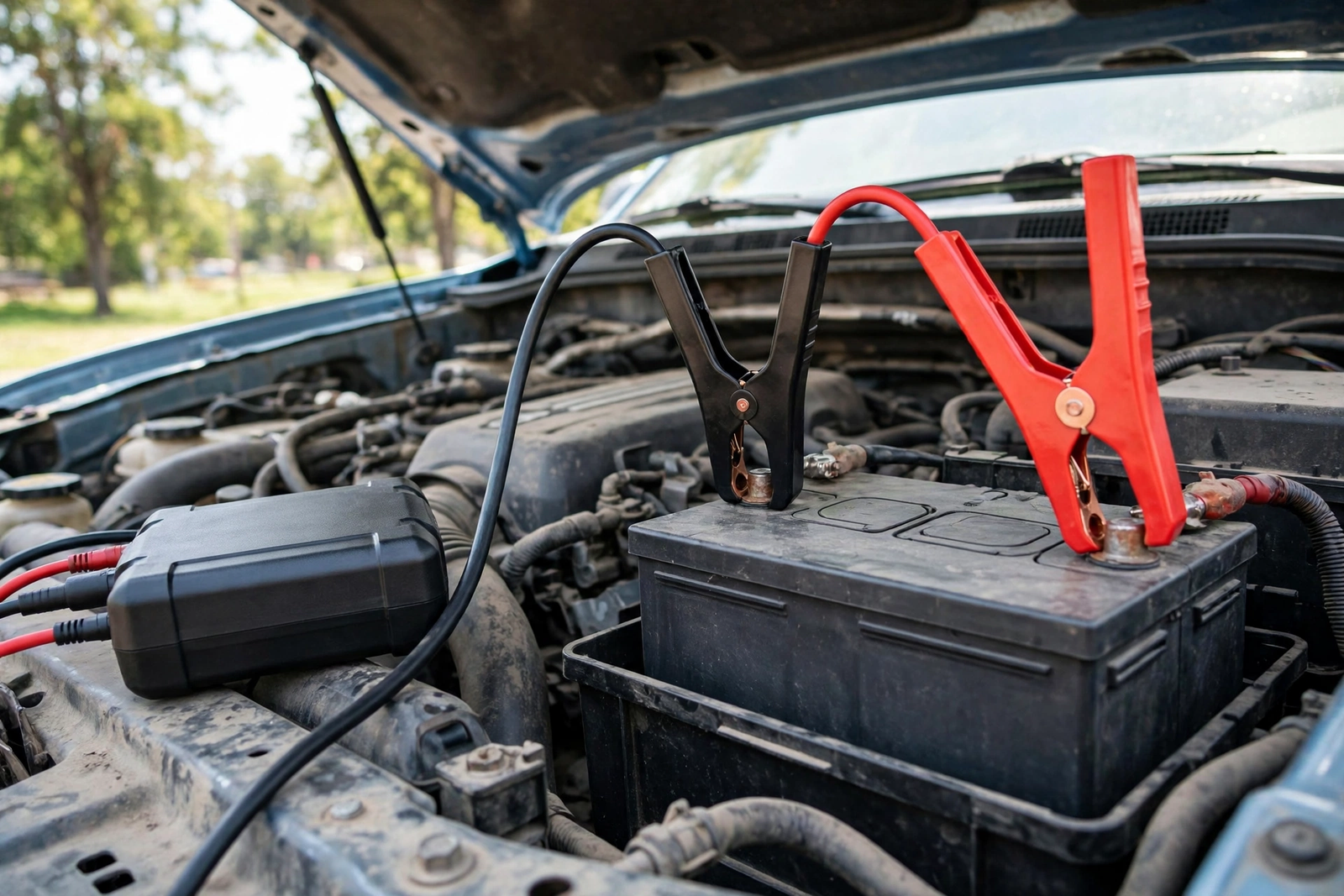
What it is not matters just as much. It is not a battery charger, and it will not fix a battery that is worn out or damaged — it gives a dead-but-healthy battery the surge it needs to turn the engine over. It is not a replacement for a proper battery test, and it is not designed for 24V or dual-battery systems: NOCO rates the GB70 for 12V single-battery systems only. And while its 12V output can run a tire inflator or a small inverter, the GB70 itself has no built-in air compressor.
Think of it as insurance you carry in the toolbox. Most of the time it sits there doing nothing; the one morning your truck will not start, it is the difference between driving to work and waiting for a tow.
Power and Engine Fit: Jump Start Truck Engines up to 8.0L Gas
Peak current is the number that decides whether a jump starter can crank your engine, and the GB70’s headline figure is 2000A. NOCO rates it for gas engines up to 8.0L and diesel engines up to 6.0L, using the US ratings. One New Zealand retailer lists a 7.0L diesel figure, but this review uses the US 6.0L rating — the figure NOCO publishes for the American market — so treat 6.0L diesel as the limit.
In practical terms, that covers most full-size pickups and SUVs on the road, including V8 gas trucks and the light-duty diesels found in half-ton pickups. It also covers the cars and smaller SUVs most households own, so one GB70 can serve the whole driveway. What it does not cover is anything above those limits: a big diesel work truck over 6.0L, or a gas engine over 8.0L, needs a bigger unit, and buying the GB70 for that truck would be buying the wrong tool.
Capacity matters too. NOCO rates the GB70 for up to 40 jump starts per charge, so a single charge covers not just your own dead morning but a season of helping neighbours and co-workers — as long as you remember to top it up afterwards.
How to Jump Start a Truck Safely
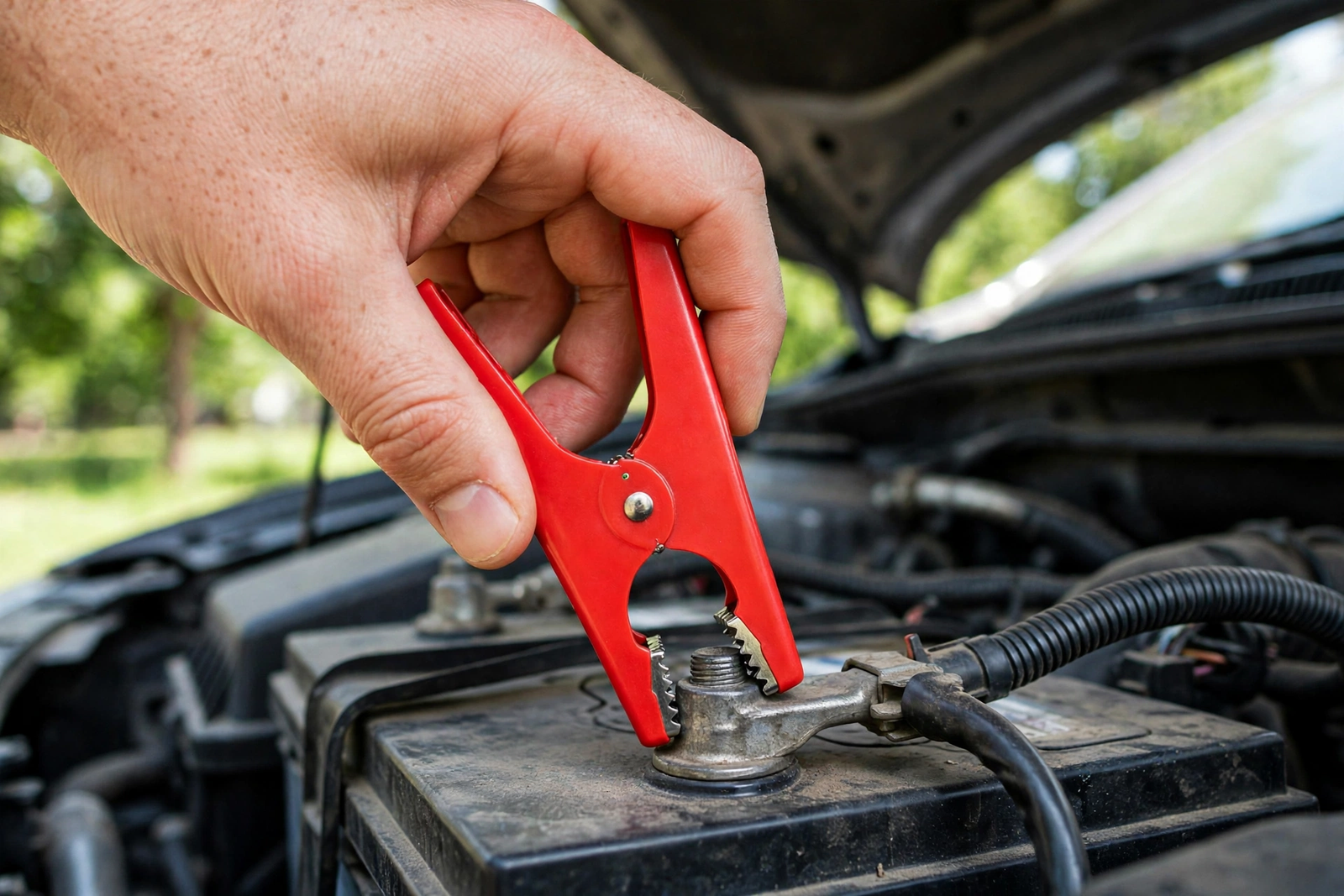
Learning how to jump start a car battery with a portable unit is straightforward, and the steps are the same whether the vehicle is a sedan or a pickup. If you already know how to jump a car with cables from another vehicle, the GB70 changes only one thing: the other vehicle is replaced by the box in your hand. The order of the steps still matters, so follow them exactly.
- Check the GB70 is charged — the unit should have enough charge before you rely on it, so keep it topped up between uses.
- Connect the red clamp to the positive (+) terminal of the dead battery.
- Connect the black clamp to a solid, unpainted metal ground on the engine block or chassis — away from the battery itself.
- Switch the GB70 on if needed, then start the truck. If it does not start within a few seconds, stop, wait a minute, and try once more.
- Disconnect promptly once the engine is running: black clamp off the ground first, then red off the positive terminal.
- Drive the truck for a good run so the alternator can recharge the vehicle’s battery.
Never try to jump a battery that is cracked, leaking, or frozen — a damaged battery can be dangerous, and no jump starter makes it safe. If the battery looks damaged or smells of sulphur, stop and get professional help.
Battery, Charging, and 12V Power
The GB70’s internal battery is a 56Wh lithium-ion pack — more than double the 24Wh pack in the smaller GB40 — and that capacity is what buys the up-to-40-starts rating. It is also what makes the GB70 useful as a power bank: the USB output can recharge a phone up to six times per NOCO, and the USB-C input is how you recharge the GB70 itself.
The 12V output is the feature truck owners tend to use most after jump starting a vehicle. It can run a 12V tire inflator or a small inverter, which turns the GB70 into a small power station for the roadside — air up a low tire after the jump, or run a small accessory without the engine running. Check the device’s power draw against what the GB70’s 12V output supports before you rely on it.
Then there is the flashlight: a 400-lumen LED with seven modes, including SOS and strobe. Four hundred lumens is genuinely bright — enough to work under a hood in the dark without holding a phone in your teeth — and the SOS mode is a real safety feature if you are stranded.
Size, Weight, and Everyday Carry
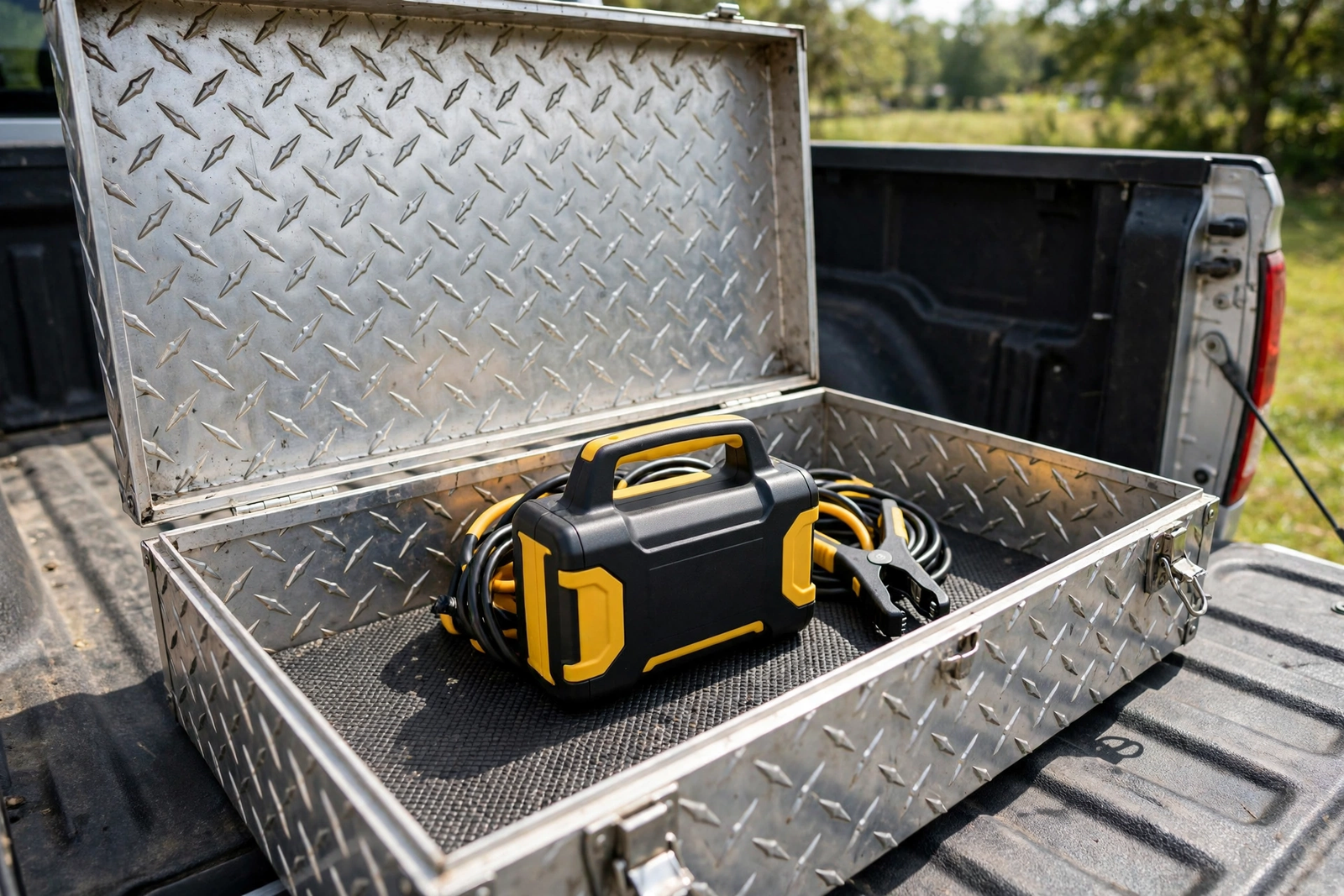
The GB70 weighs 5.0 lbs. That is heavy for a glovebox item and light for what it does — a set of traditional jumper cables weighs nearly as much and does far less. It is a toolbox or under-seat item, not a pocket item, and for a truck that is the right trade: the bed toolbox, the rear storage bin, or behind the seat is where it belongs.
It is built to live there. The housing is rated IP65 with the ports closed, so dust and rain spray are not a worry, and the UltraSafe clamps are spark-proof with reverse-polarity protection — connect the clamps the wrong way round and the unit will not let current flow, instead of sparking or damaging the electronics. That protection is what makes the GB70 safe for a driver who jumps a vehicle once a year rather than once a week.
NOCO backs it with a 1-year warranty. Keep the unit charged between uses — a lithium jump starter left flat for months is a paperweight, whatever the brand.
GB70 vs the Alternatives
The obvious comparison is the GB40, NOCO’s smaller best-seller. The GB40 delivers 1000A — half the GB70’s peak — and is rated for gas engines up to 6.0L and diesels up to 3.0L, with up to 20 starts per charge from a 24Wh battery and a 100-lumen flashlight. For a sedan or a small SUV, that is plenty. For a big gas V8 or a diesel truck, it is the wrong side of the line. Our GB40 vs GB70 head-to-head walks through the numbers side by side, and our full GB40 review covers the smaller unit on its own.
The other alternative is a different kind of product entirely: the WOLFBOX MV24A, a 4000A jump starter combined with a 160 PSI air compressor. It offers twice the GB70’s peak current and adds built-in inflation, which the GB70 can only do by powering a separate inflator through its 12V output. If you want one device that both jumps and inflates, the WOLFBOX is the more complete roadside kit.
It is the simpler buy — one job, done with more headroom than its little brother — and for many truck owners that headroom is the whole point.
Who Should Buy It — and Who Should Skip It
Buy the GB70 if you drive a full-size truck or SUV, especially a diesel within the 6.0L rating, or if you tow, work out of your truck, or regularly drive where a dead battery means a long wait for help. As a jump starter for trucks, it earns its keep where smaller units give up. It also suits households with several vehicles: one unit that can cover the truck, the SUV and the sedan is better value than a small unit that can only cover two of the three.
Skip it if your biggest engine is a four-cylinder sedan — the GB40 covers that for less money and less weight, and the extra 1000A buys you nothing. Skip it too if your engine is above the GB70’s ratings, or if your vehicle runs a 24V or dual-battery setup: the GB70 is built for 12V single-battery systems only, and no jump starter is a substitute for the right rating. And if a built-in air compressor matters more to you than NOCO’s UltraSafe protection, the WOLFBOX combo is the better fit.
Verdict
The GB70 jump starter is the right choice for the driver its ratings describe: gas engines up to 8.0L, diesels up to 6.0L, up to 40 starts per charge, and enough USB and 12V power to be useful after the engine is running. It is heavier and more capable than the GB40, and simpler and more focused than a jump-starter-plus-compressor combo.
For a truck owner, that focus is the appeal. You are not buying the most powerful jump starter on the market, and you are not buying the cheapest — you are buying the one whose ratings actually cover your engine, with safety protection that forgives a mistake at 6 a.m. in the dark. On that measure, the GB70 earns its place in the toolbox.
Frequently Asked Questions
Can the NOCO GB70 jump start a diesel truck?
Yes — if the diesel engine is 6.0L or smaller. NOCO rates the GB70 for diesel engines up to 6.0L using the US ratings, which covers most light-duty diesel pickups. You do not need a second vehicle at all: the GB70 lets you jump start without battery help from another car. If your diesel is larger than 6.0L, the GB70 is not rated for it and you need a bigger unit.
What is the difference between the NOCO GB40 and GB70?
The GB70 is the bigger, more powerful unit. It delivers 2000A peak against the GB40’s 1000A, is rated for gas engines up to 8.0L and diesels up to 6.0L (the GB40 covers 6.0L gas and 3.0L diesel), and offers up to 40 jump starts per charge from a 56Wh battery, against the GB40’s 20 starts from 24Wh. The GB70’s flashlight is also brighter at 400 lumens, against the GB40’s 100 lumens.
Can the GB70 charge a phone?
Yes. The GB70 has a USB output that can recharge a phone up to six times on a single charge, according to NOCO. It recharges itself through a USB-C input.
Will the GB70 work in cold weather?
We could not verify a specific cold-temperature rating for the GB70 from NOCO’s listing or manuals, so we do not state one. As with any lithium battery, keeping the unit charged and stored somewhere it does not sit freezing for weeks is the sensible approach — check the charge before winter and before any trip where you may need it.
How many times can the GB70 jump start a vehicle before it needs recharging?
NOCO rates the GB70 for up to 40 jump starts per charge. The real number depends on the engine size and how drained the battery is, so treat 40 as a maximum under favourable conditions, not a promise — and recharge the unit after you use it.
Can the GB70 jump start a 24V or dual-battery system?
No. The GB70 is made for 12V single-battery systems only. Do not use it on 24V systems or dual-battery setups — it is not rated for them, and using the wrong jump starter on those systems can damage the vehicle or the unit.