As an Amazon Associate I earn from qualifying purchases.
Frequently Asked Questions
Will Loctite Blue 242 damage my bolts?
No, loctite blue 242 does not damage bolts when used as directed. It is designed to break free with standard hand tools, and it protects threads from rust rather than damaging them. Damage comes from using red (high strength) where blue belonged, or from assembling on dirty threads.
How long does Blue 242 take to dry?
It sets in about 10 minutes on steel (longer on stainless or plated metals) and fully cures in 24 hours, per Henkel’s technical data sheet. Do not put load on the joint until the full cure time has passed.
Can I remove a bolt locked with Blue 242?
Yes, that is the point of blue. Standard hand tools break the bond. If a blue-locked bolt fights you, it is usually corrosion or over-torque, not the threadlocker. Red threadlocker is the one that needs heat for removal.
Is Blue 242 the same as 243?
Close but not identical. 243 is the oil-tolerant updated formula, it bonds through light oil contamination better than 242. For clean threads, they perform the same. If your threads are hard to fully degrease, 243 is the safer pick; for clean assembly, 242 is the classic.
Can I use threadlocker on plastic?
No. Blue 242 is formulated for metal fasteners (6 to 19mm). On plastic threads it can cause cracking and will not cure properly. For plastic, use a threadlocker rated for plastics or a mechanical solution like a locknut.
How much threadlocker should I apply?
A few drops on the male threads is the correct dose, enough to coat the engaged threads once assembled. More is not stronger; excess just squeezes out and makes a mess. The 6 ml tube covers dozens of small fasteners.
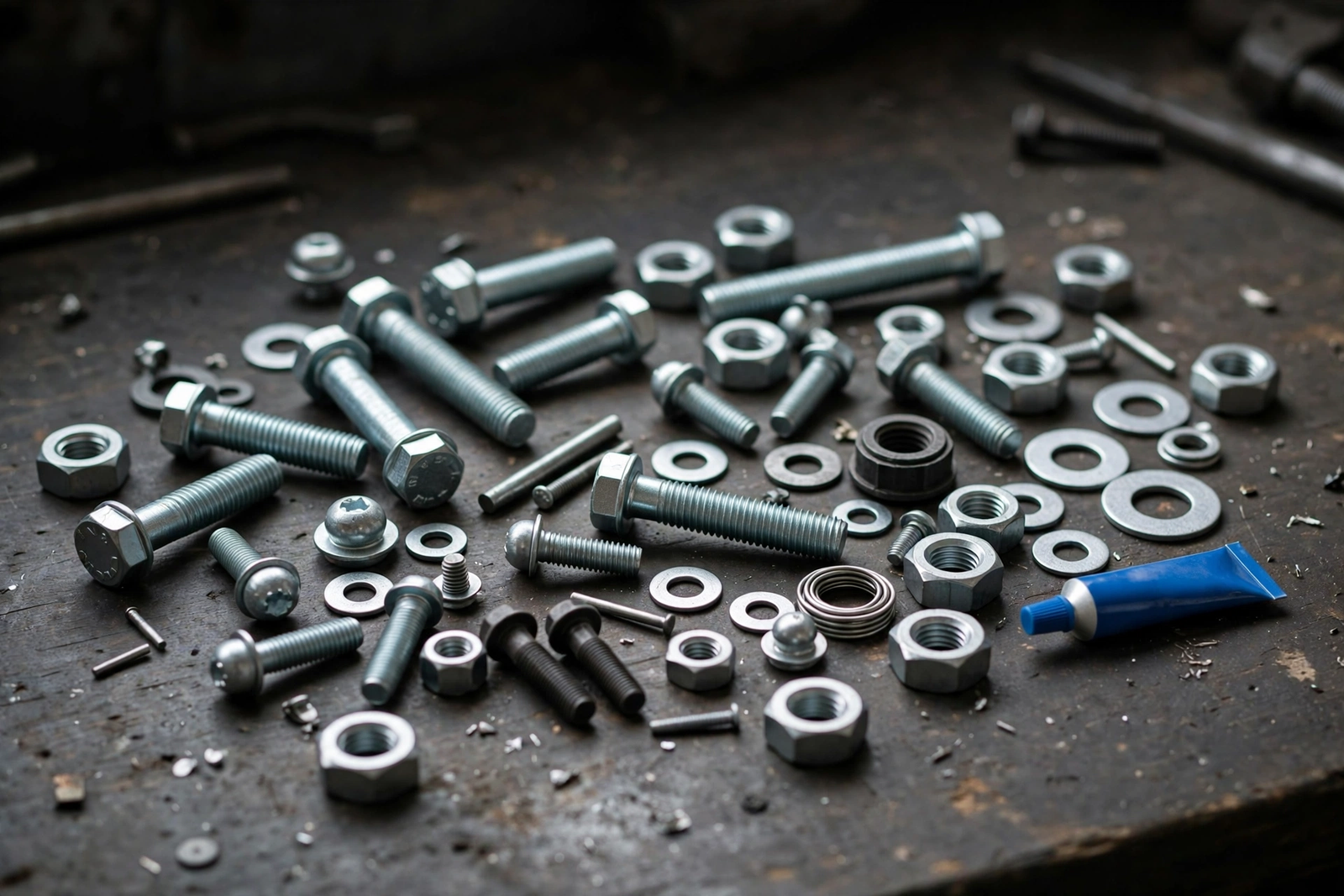
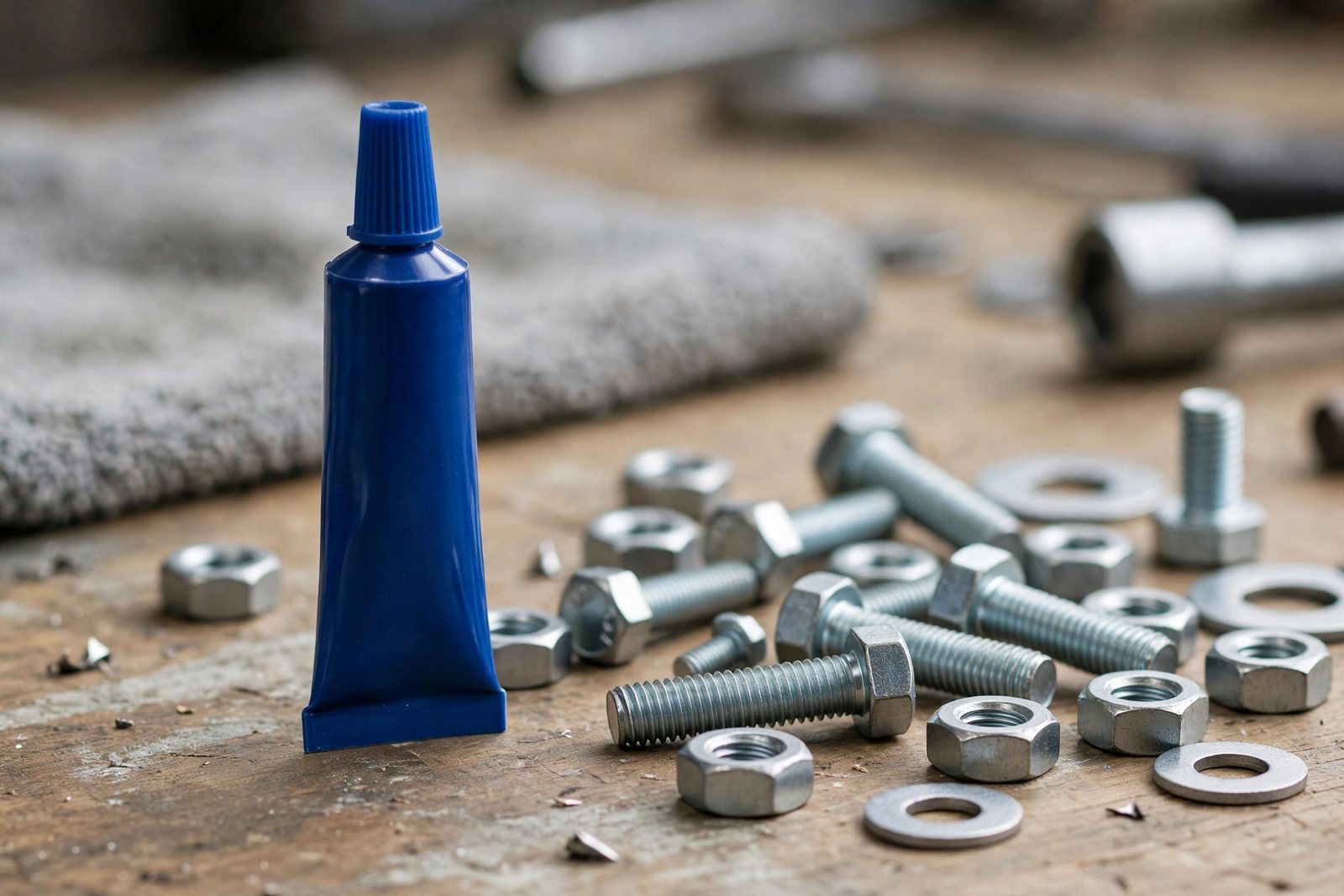
Every car has bolts that vibrate loose. License plate screws, interior trim fasteners, motorcycle mirror mounts, battery terminal bolts, accessory brackets — the parts that rattle, back out, and eventually disappear onto the highway. Loctite Blue 242 is the medium-strength threadlocker that stops that: a liquid you apply to the threads before assembly, which cures into a vibration-proof bond you can still break with hand tools when service time comes.
The short answer: Loctite Blue 242 (part 209728, 0.20 oz / 6 ml tube) is a medium-strength, removable threadlocker for 6–19mm (1/4″–3/4″) metal fasteners. It sets in about 10 minutes and fully cures in 24 hours, prevents loosening from vibration, and protects threads from rust and corrosion. For any bolt you might need to remove later, blue is the right color — red is for parts you never want to touch again.
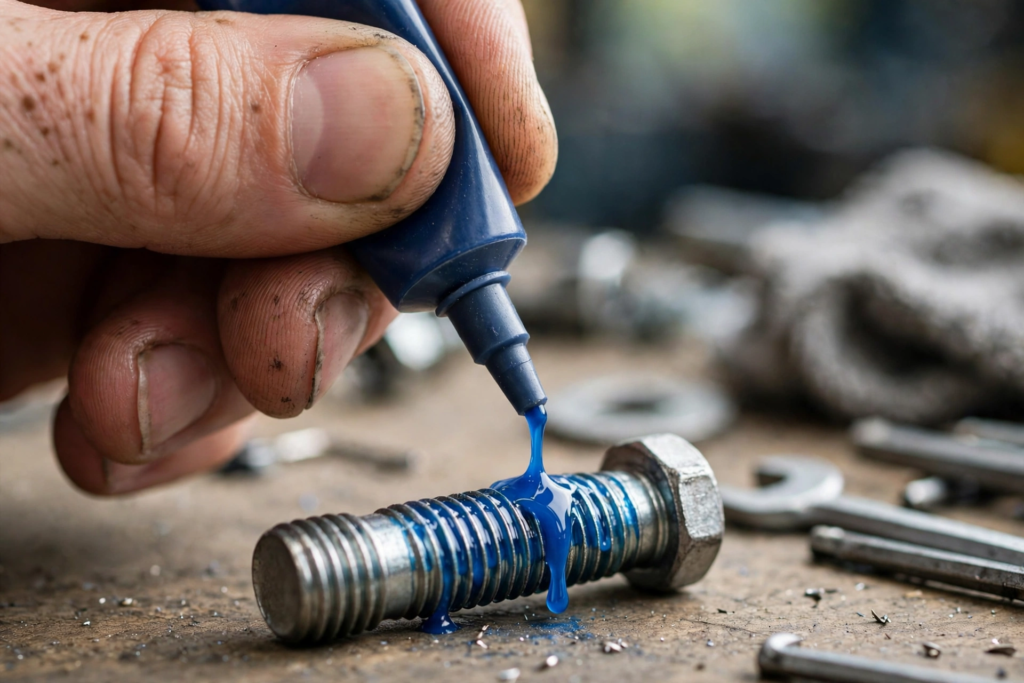
Table of Contents
Quick Pick: Loctite Blue 242
| Pick | Product | Key Spec / Best For | Check Price |
|---|---|---|---|
| Overall Winner | Loctite Blue 242 Threadlocker | Medium strength, 6–19mm fasteners, removable with hand tools | Check Price on Amazon |
| Best For Serviceable Parts | Loctite Blue 242 Threadlocker | Breaks free with standard tools — the choice for anything you maintain | Check Price on Amazon |
| Best For Small Fasteners | Loctite Blue 242 Threadlocker | 1/4″–3/4″ range covers plates, trim, mirrors, and accessory bolts | Check Price on Amazon |
What Blue 242 Actually Is
Threadlocker is an anaerobic adhesive — it stays liquid in the tube and cures when trapped between metal threads without air. Blue 242 is Henkel’s medium-strength formula (the listing and the technical data sheet both describe it as medium strength, removable with standard hand tools). You apply a few drops to the bolt threads, assemble the joint, and the adhesive locks the threads against vibration while sealing out moisture that causes rust.
The 0.20 oz (6 ml) tube in this listing is the small carded size — enough for dozens of small fasteners, which is exactly the scale of car and motorcycle work. This is not a product you buy in bulk unless you run a shop.
The Specs, Honestly Stated
- Strength: medium — holds against vibration, breaks with hand tools. Per Henkel’s technical data sheet, it is designed for fasteners that require normal disassembly.
- Fastener range: 1/4″ to 3/4″ (6mm to 19mm) metal fasteners. Below that range it is overkill; above it, step up to a higher-strength formula.
- Set time: about 10 minutes on active metals like steel (longer on stainless or plated surfaces, per the data sheet).
- Full cure: 24 hours. Do not stress the joint before then.
- Corrosion protection: seals threads against moisture, preventing rust — a real bonus for underbody and engine-bay fasteners.
- Application temperature: apply above 50°F (10°C).
How to Use It (Without Ruining the Bolt)
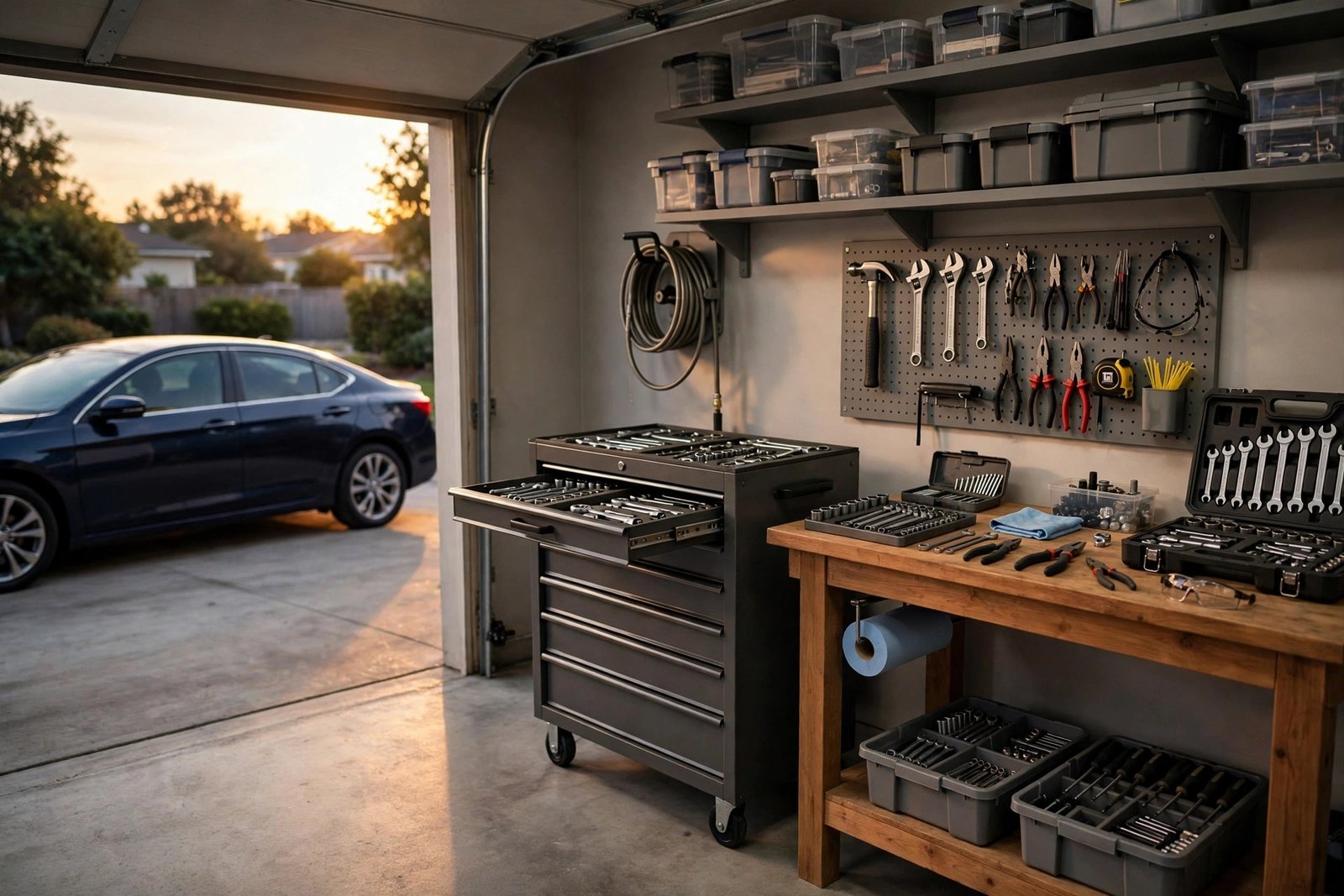
Clean the threads first — oil and old threadlocker residue weaken the bond. Apply a few drops to the male threads (the bolt, not the hole), assemble, and torque to spec. That is the whole process. The two mistakes that cause all the complaints: using it on dirty or oily threads, and loading the joint before the 24-hour cure. A threadlocked bolt assembled correctly will outlast the part around it; one assembled sloppy will still back out. For the rest of your kit, our car tools for DIY guide covers the essentials.
Blue vs Red: The Decision That Matters
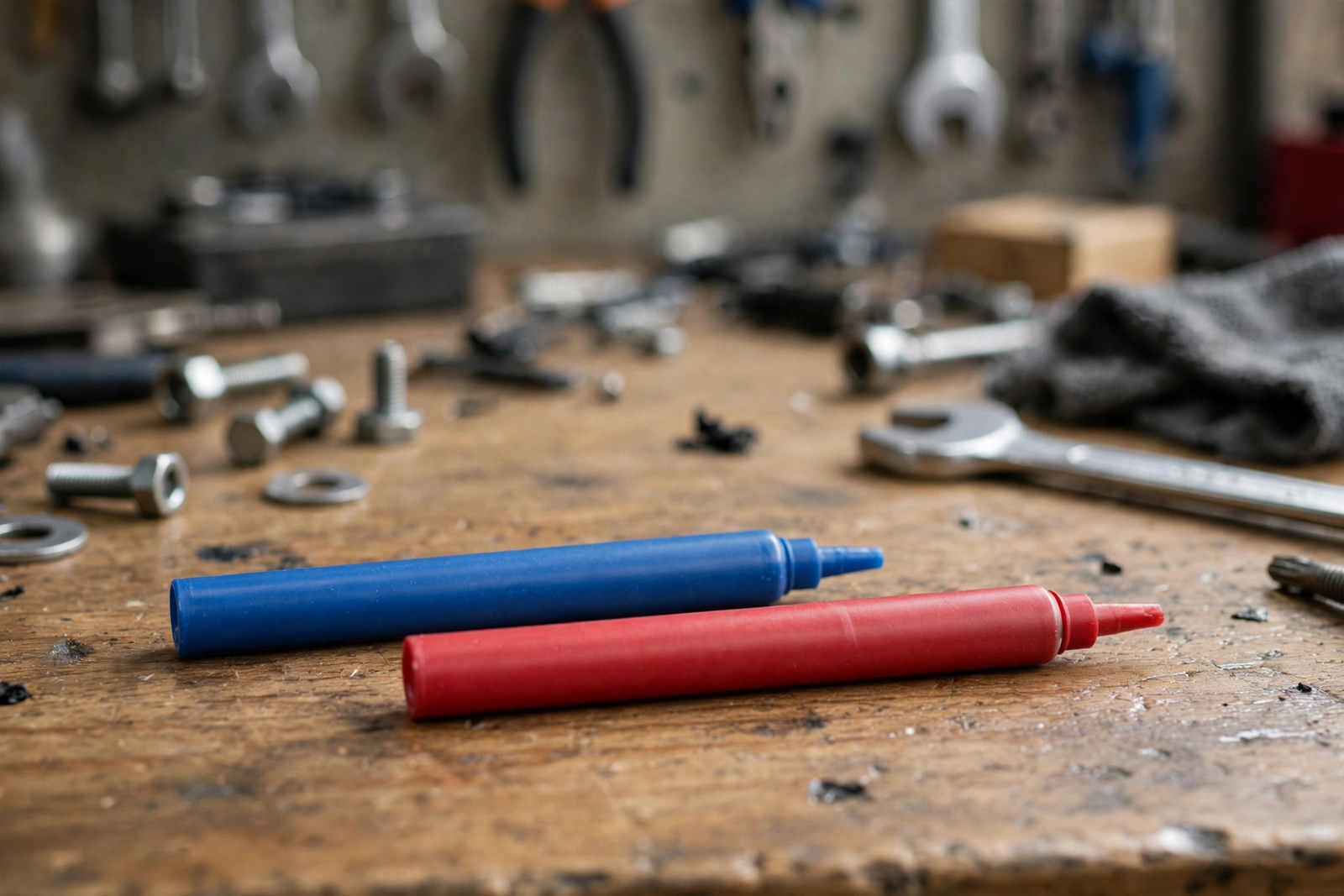
This is the question behind every threadlocker search, so here is the straight answer. Blue (242/243) is medium strength and removable — you break it with normal hand tools. Red (271/272) is high strength and effectively permanent — removal needs heat, often a torch, and risks damaging the part.
For car work, blue is the right answer probably 90% of the time: license plate frames, trim screws, mirror mounts, accessory brackets, battery hold-downs, interior panels — all parts you or a mechanic will eventually remove. Red belongs on things like studs and press-fit-adjacent joints that should never come apart in service. When in doubt, choose blue. You can always step up to red later; you cannot easily step down from a red-locked bolt you needed to remove. For a related head-to-head between threadlocker and gasket maker, see our loctite vs permatex comparison.
Car Uses Worth Knowing
Blue 242 is a general-purpose threadlocker, not a car-specific product — but cars are full of its ideal use cases:
- License plate screws — the classic. They vibrate loose and vanish; a drop of blue ends it.
- Interior trim and panel screws — stops the dashboard rattle that drives you insane on the highway.
- Motorcycle mirror and lever mounts — high-vibration parts that back out constantly.
- Accessory brackets — light bars, phone mounts, dash cams bolted to the car.
- Battery terminal bolts and hold-downs — vibration plus corrosion is the exact combination threadlocker defeats.
- Small engine and mower fasteners — the listing’s stated use case, and the same physics as car parts.
What it is NOT for: structural or safety-critical fasteners (suspension, brakes, steering) — those get proper torque specs and often manufacturer-specified compounds, not a DIY tube. And never use it on plastic threads; it is formulated for metal.
Mistakes to Avoid
- Using red when you meant blue. The most expensive mistake in threadlocking. If the part might ever need removal, it is blue, full stop.
- Skipping the cleaning step. Oily threads are the number one cause of threadlocker failure. A quick wipe with brake cleaner or alcohol takes seconds.
- Over-applying. A few drops is the dose. Flooding the threads does not make it stronger — it makes a mess and can seize parts you wanted serviceable.
- Stressing it early. The 24-hour full cure is real. Assemble it, then leave it alone until tomorrow.