How to Change a Car Wiper: A Step-by-Step Guide
Streaks across the glass, a blade that skips and chatters, split rubber — a worn wiper does not fail all at once, it just gets worse day by day until one rainy drive shows how little you can see. The fix is one of the easiest jobs on a car: learning how to change a car wiper takes a few minutes per blade, no tools on most cars — the only part you need is the blade itself. If you can lift a wiper arm and press a small tab, you can do this.
The short answer: to learn how to change a car wiper, lift the arm away from the glass, press the release tab, slide the old blade off the hook, slide the new blade on until it clicks, and lower the arm back gently. Change both front blades together — they are the same age and wear together. The three blades below are a 26-inch beam blade for the driver side, a 22-inch water-repellent beam blade, and a 22-inch beam blade for the passenger side — check your own lengths first, because the two sides are often different.
As an Amazon Associate I earn from qualifying purchases.
Quick Pick: How to Change a Car Wiper
| Pick | Product | Best For | Check Price |
|---|---|---|---|
| Beam Blade Driver Length | BOSCH 26A ICON Premium Beam Wiper Blade; 26″ – Single | A 26-inch beam blade with a tension spring design, for cars that take a 26-inch driver-side blade | Check Price on Amazon |
| Water-Repellent Beam | Rain-X 5079279-2 Latitude 2-In-1 Water Repellent Wiper Blades, 22 Inch | A 22-inch beam blade that applies water repellent to the glass as it wipes | Check Price on Amazon |
| Beam Blade Passenger Length | BOSCH 22A ICON Premium Beam Wiper Blade; 22″ – Single | A 22-inch beam blade from the same ICON line, for the passenger side | Check Price on Amazon |
Table of Contents
What You Need Before You Start
You need very little for this job. Two new blades, one for each side of the windshield, a clean towel or rag, and a bottle of glass cleaner are the whole kit. A tape measure helps if you are sizing blades by hand, and your owner’s manual helps if your car hides the wipers under the hood edge when they park — on some cars you put the wipers in a service position before the arms will lift, and the manual shows how. Our car maintenance checklist covers the other small jobs worth doing in the same driveway session, so the wiper swap is rarely a job you do on its own.
The one thing to check before you order is your arm type. Most cars use a J-hook arm — a metal hook at the end of the arm that the blade clips onto — and the blades below are made for that hook. Some cars use a pin, a bayonet, or a push-button connector instead, and a blade made for a J-hook will not fit those arms. Look at the end of your wiper arm before you buy, and check the listing’s adapter and fitment notes for your car: the listing is the check that catches the wrong connector.
How to Find Your Wiper Blade Size
Blade length is measured in inches, tip to tip, and the driver and passenger blades on the same car are often different lengths — a longer blade on the driver side and a shorter one on the passenger side is the usual pattern, which is why the three blades in this guide are a 26-inch and two 22-inch blades. The fastest way to find your sizes is to measure the old blades: lift the arm, lay the blade flat, and measure from one end of the rubber to the other. Write both numbers down, driver and passenger separately.
The second way is your owner’s manual, which lists the blade sizes for your exact car, and the third is the listing’s vehicle selector on Amazon, which asks for your year, make and model and shows the sizes that fit. Use at least two of the three — a measurement and the manual, or a measurement and the selector — because a blade that is one size too long can hit the A-pillar or the other blade, and one that is too short leaves an unwiped strip at the edge of the glass. Never guess the length from another car: two cars that look alike can take different blades.
Bosch ICON 26A: The Beam Blade for the Driver Side
The Bosch ICON 26A is the driver-side pick in this guide: a 26-inch premium beam blade, manufacturer part number 26A, UPC 077212152186. It is a beam blade, which means it has no exposed metal frame — a tension spring inside the blade presses the rubber evenly against the curved glass, instead of a frame pressing at a few points. Bosch calls the rubber ClearMax 365 and the spring design DynamicFit tension spring arcing, and the blade carries an asymmetric spoiler that holds it against the glass at speed. The rubber is a dual-rubber design that Bosch describes as heat resistant, so the edge stays flexible longer in hot weather. Our Bosch ICON wiper blades review covers the wider ICON line — this guide is about the swap itself, and the 26A is the blade to fit on the driver side.
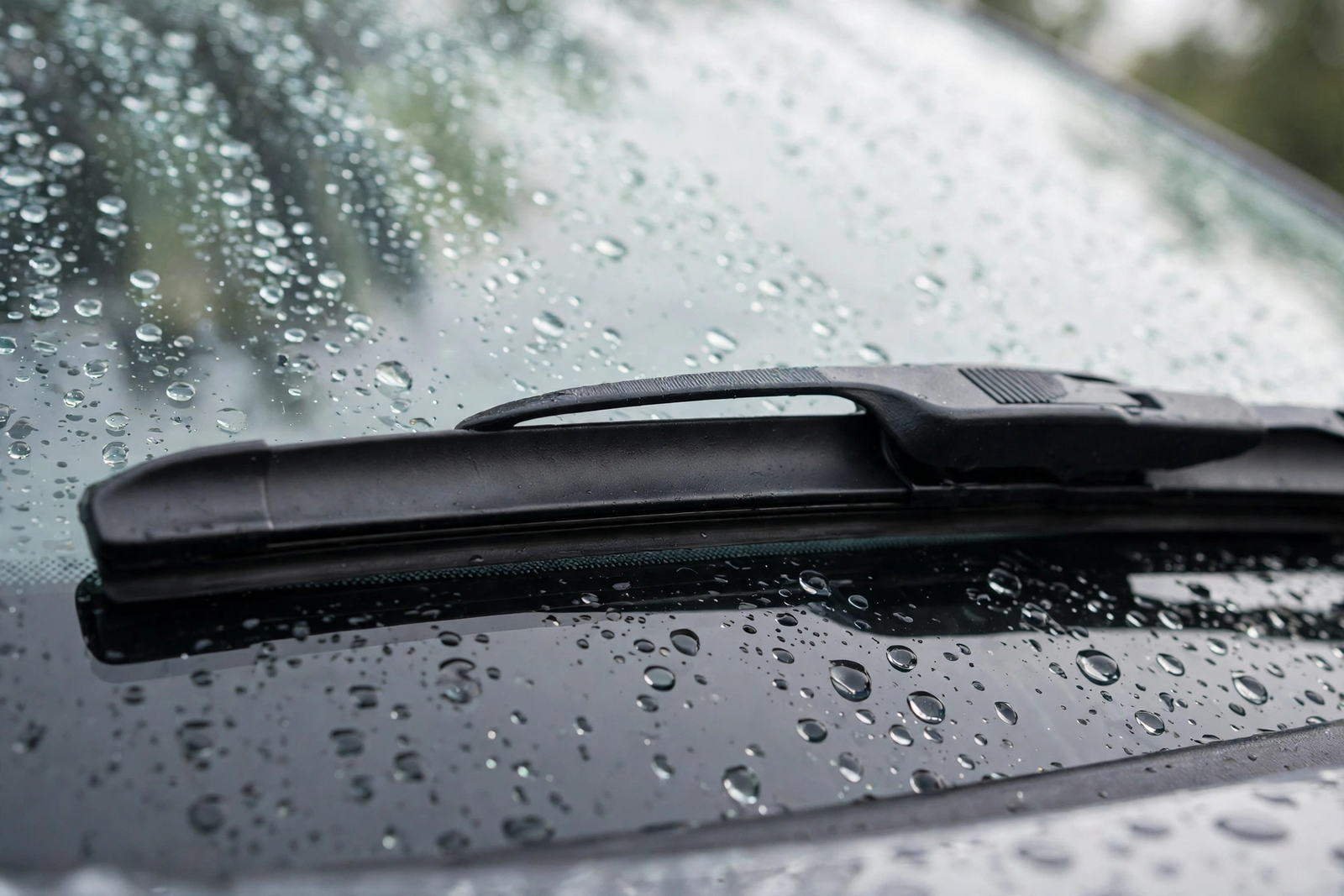
The 26A fits the common J-hook arm, and it is sold as a single blade — order one per side, in the length your car takes, and do not assume both sides take the same one. A 26-inch blade fits the driver side only on cars that take that length — it is a length, not a fitment promise: check the listing’s vehicle selector for your year, make and model before ordering, because a 26-inch blade that is too long for your glass will strike the pillar or overlap the passenger blade.
BOSCH 26A ICON Premium Beam Wiper Blade; 26″ – Single on Amazon: beam blade, 26 inches, part number 26A, ClearMax 365 rubber with DynamicFit tension spring arcing, asymmetric spoiler, J-hook arm
Buy the Bosch ICON 26A if: your driver side takes a 26-inch blade with a J-hook arm and you want a beam blade with even pressure across the glass. Confirm the 26-inch length and the J-hook fitment against the listing first.
Rain-X Latitude 22-Inch: The Water-Repellent Beam Blade
The Rain-X Latitude 22-inch is the water-repellent pick: model 5079279-2, UPC 079118100810, a single 22-inch beam blade from the Latitude 2-in-1 line, first available in October 2015. It is made from synthetic rubber with no exposed metal parts, which the listing says stops ice building up inside the blade in winter, and it applies Rain-X water repellent to the windshield as it wipes, so rain beads and rolls off the glass instead of sheeting across it. That is the blade’s whole idea: it wipes and it treats the glass in the same pass. Our Rain-X Latitude wiper blades review covers the wider Latitude line — this guide uses the 22-inch single as the water-repellent option for the swap.
The 22-inch length fits the passenger side only on cars that take that length, and it is also a driver-side length on some smaller cars — measure your own blades rather than assuming. The Latitude is a beam blade like the ICON, so the same even-pressure shape applies, and the same J-hook check applies too: confirm the arm type and the length on the listing’s vehicle selector before you order — the Latitude ships with a pre-installed J-hook and extra adapters for other arm types. The water-repellent coating needs a few minutes of wiping to build up, so do not judge it on the first pass.
Rain-X 5079279-2 Latitude 2-In-1 Water Repellent Wiper Blades, 22 Inch on Amazon: beam blade, 22 inches, model 5079279-2, synthetic rubber with no exposed metal parts, applies water repellent to the glass
Buy the Rain-X Latitude 22-inch if: you want a beam blade that also leaves water repellent on the glass, and your car takes a 22-inch blade on a J-hook arm. Confirm the length and the arm type against the listing first.
Bosch ICON 22A: The Beam Blade for the Passenger Side
The Bosch ICON 22A is the passenger-side pick: a 22-inch premium beam blade, manufacturer part number 22A, UPC 077212151790, from the same ICON line as the 26A. It carries the same beam design, the same ClearMax 365 rubber, the same DynamicFit tension spring arcing and the same asymmetric spoiler — the only difference is the length. That is exactly the point of this slot: on most cars the passenger blade is shorter than the driver blade, so a matched pair is usually two different part numbers from the same line, not two of the same blade.
Order the 22A only if your passenger side takes a 22-inch blade — measure it, do not assume it from the driver side. Like the 26A it is sold as a single blade for a J-hook arm, so check the listing’s vehicle selector for your car and confirm the arm type before you buy. If your car takes the same length on both sides, order two of the length it takes; if it takes different lengths, the 26A and the 22A together are the matched ICON pair.
BOSCH 22A ICON Premium Beam Wiper Blade; 22″ – Single on Amazon: beam blade, 22 inches, part number 22A, ClearMax 365 rubber with DynamicFit tension spring arcing, asymmetric spoiler, J-hook arm
Buy the Bosch ICON 22A if: your passenger side takes a 22-inch blade with a J-hook arm and you want the same ICON beam blade as the driver side. Confirm the 22-inch length against your own measurement first.
Step-by-Step: How to Change a Car Wiper
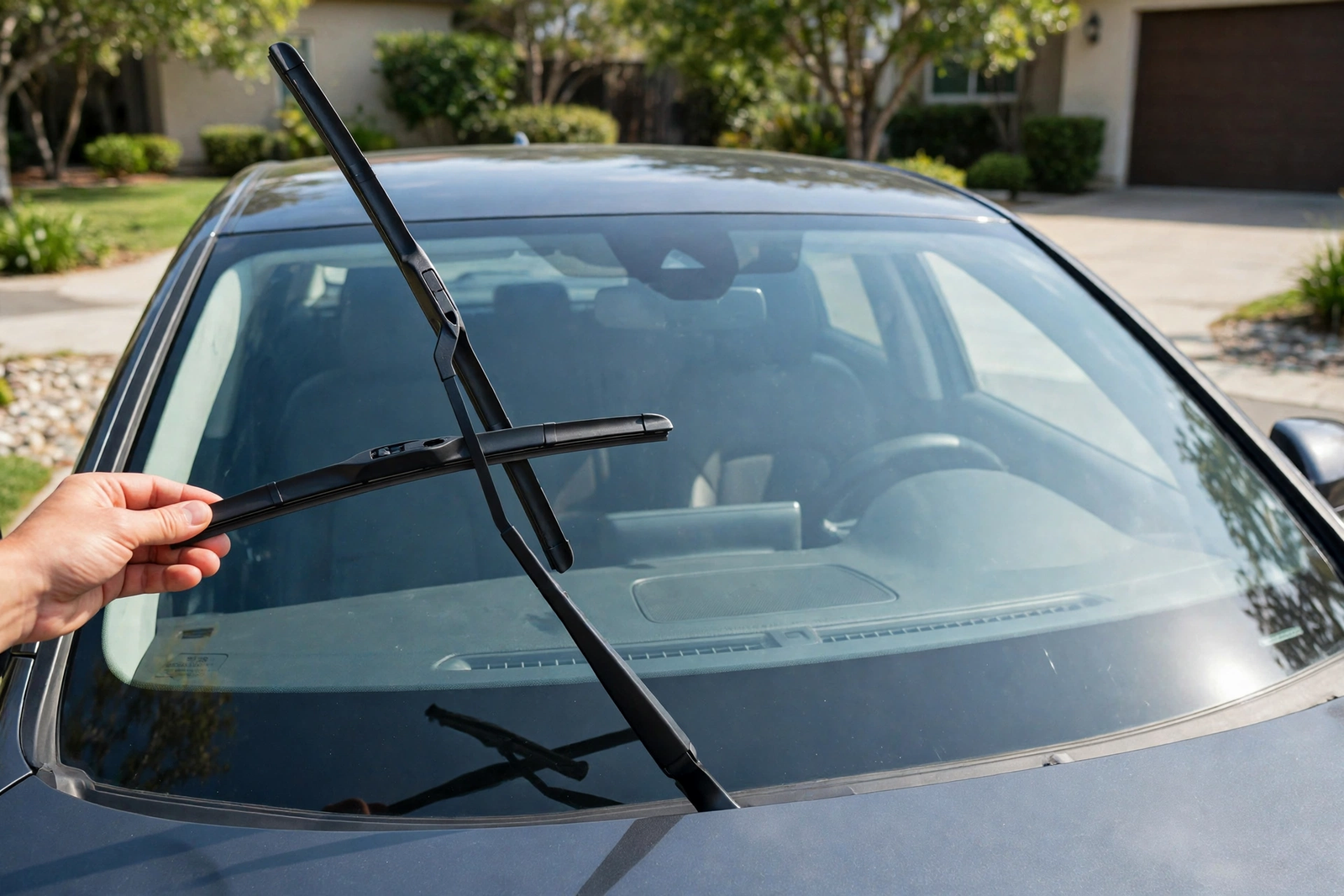
How to change a car wiper, step by step, takes a few minutes per blade once you know the release — allow fifteen minutes for both sides the first time as a rough guide, not a timed result. First, switch the wipers off and lift the driver-side arm away from the glass until it stands on its own. On some cars the wipers park under the hood edge and the arm will not lift until you put them in service position — check your owner’s manual. Lay a folded towel on the glass under the arm: if the bare arm slips and snaps back, the towel is what stops the metal hook cracking the windshield.
Second, look at where the blade meets the arm. On a J-hook arm there is a small release tab on the underside of the blade connector — press it with your thumb while you slide the blade down and off the hook. Do not pull the blade straight out or twist it; the tab is the release, and force is how tabs break. Third, take the new blade out of its packaging and check for any plastic guard over the rubber edge — remove it if your blade shipped with one. Slide the new blade onto the hook the same way the old one came off, until you hear or feel the click that says the tab has locked. Tug it gently: if it moves, it is not seated — push it on further until it clicks.
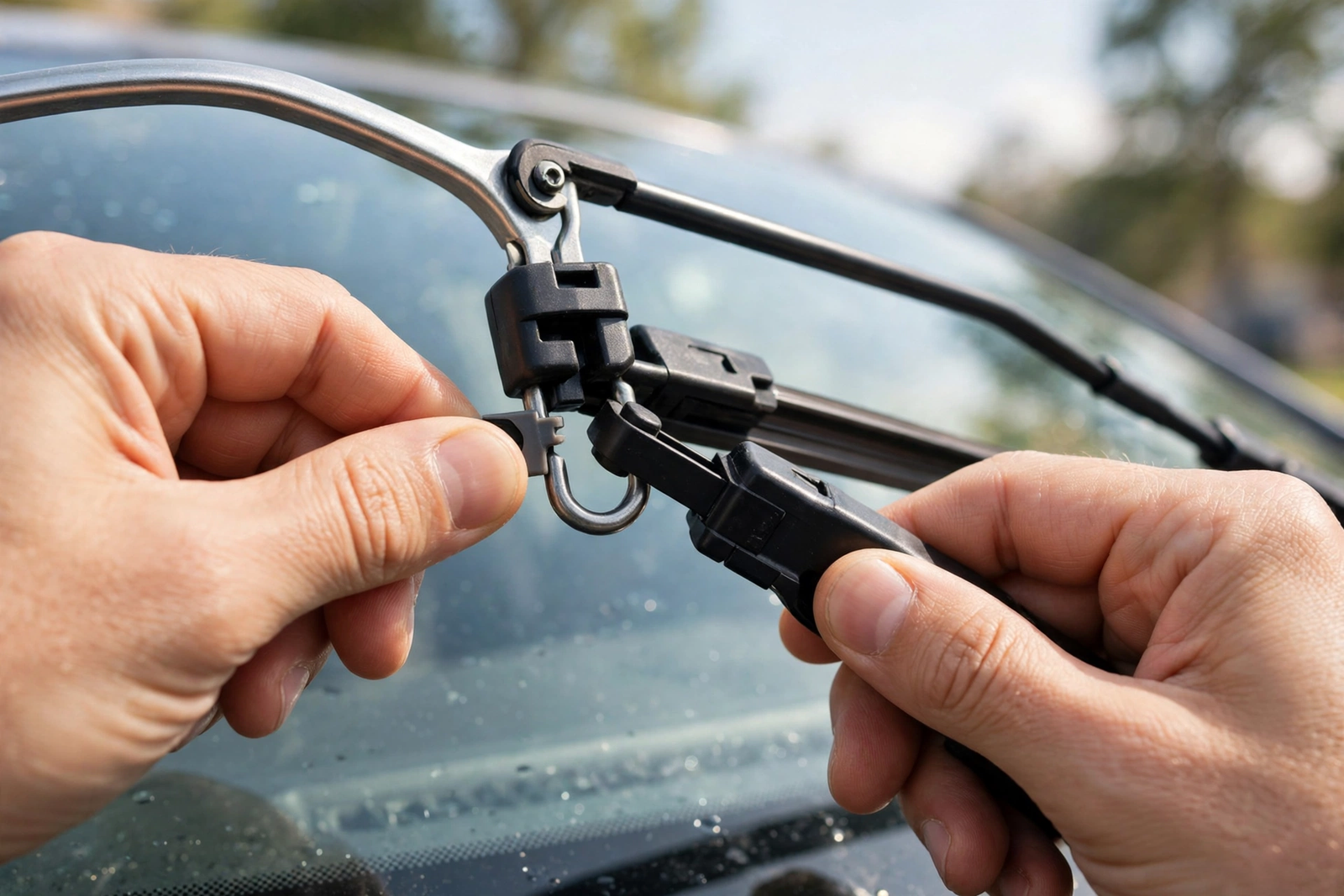
Fourth, lower the arm back onto the glass slowly, by hand, guiding it all the way down — never let it snap back on its own. Repeat the same steps on the passenger side. Fifth, test both blades before you drive: spray the windshield washer and run the wipers once, then look for a clean, streak-free sweep. A faint haze on the first wipe can happen while a new blade beds in; a solid streak that stays in the same place means the blade is not seated, the glass is dirty, or the length is wrong. Fix it now, in the driveway, not on the road in the rain.
How to Change a Car Wiper on the Rear Window
How to change a car wiper on the rear window follows the same idea with a smaller blade and often a different connector. Rear blades are usually much shorter than front blades — measure the old one separately, because the front lengths tell you nothing about the rear — and the arm is often a rocker or push-on type rather than a J-hook, so the release tab sits in a different place or the blade pulls straight off a small post. Check your owner’s manual for the rear size and the connector before you order, and do not force anything: support the arm while you work and never bend it.
The rear blade wears differently too. It gets used less, so it often looks fine while the rubber has hardened from sun and age — run the rear washer and watch for streaks, and change the blade when it skips or leaves lines. If your car has no rear wiper, this section does not apply: only hatchbacks, SUVs and wagons with a rear window wiper need it. The blades in this guide are front blades, sized 26 and 22 inches — do not fit one of them to the rear window.
How to Tell If Your Wipers Need Replacing
A wiper blade tells you it is done in four ways. Streaks that stay in the same place after a wash, a blade that skips or chatters across the glass instead of gliding, a rubber edge that is split, cracked or torn when you run a finger along it, and a squeak that was not there before — any one of those means the blade is finished. The glass matters too: a dirty windshield can look like a bad blade, so clean the glass first and test again before you blame the rubber.
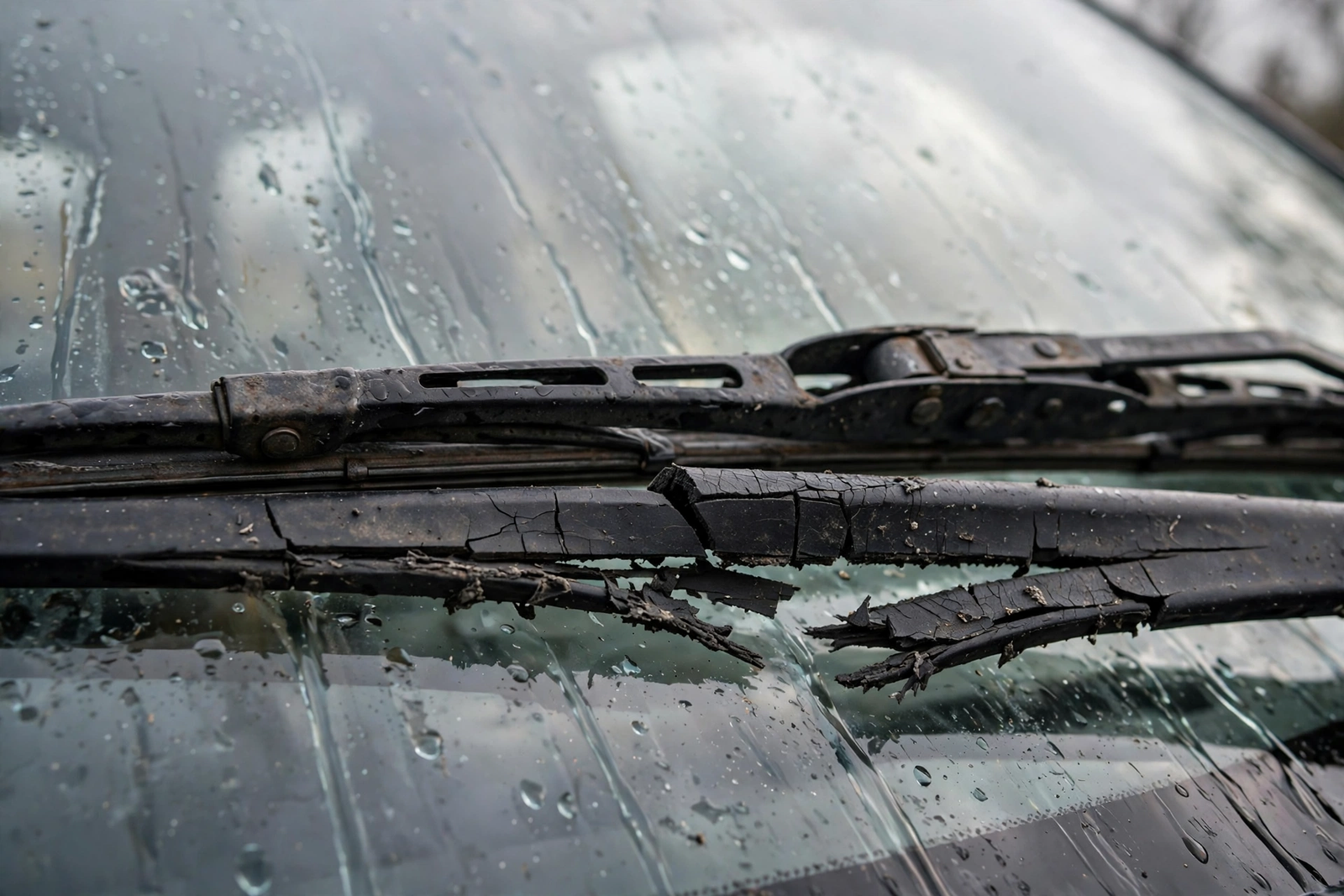
Check the rubber every few months by lifting the arm and running a finger along the edge — a good edge feels smooth and straight, a worn one feels nicked and rough. For most drivers a new set lands about once a year, sooner if the car lives outside in strong sun or freezing winters, because heat and ice harden rubber faster than miles do. That is a rule of thumb, not a specification for any car: your owner’s manual is the authority for your car, and the streak test is the authority in practice — if it streaks, change it whatever the calendar says.
Common Mistakes When You Change a Car Wiper
The most common mistake when you change a car wiper is ordering the wrong length — and the second most common is ordering the right length for the wrong arm. Measure both blades, check the arm type, and use the listing’s vehicle selector; a blade that is one size too long can hit the pillar, and a J-hook blade will not fit a pin arm at all. The third mistake is letting the bare arm snap back onto the glass while the blade is off — a metal hook striking an unprotected windshield can crack it, which is why the towel goes down before the blade comes off.
The fourth mistake is forcing the release tab. If the blade will not slide off, the tab is not pressed far enough or you are pulling in the wrong direction — stop, look at the connector, and press the tab again rather than bending it. The fifth is changing only one blade: the pair is the same age, so the one you leave is nearly as worn as the one you changed, and a new blade next to an old one wipes unevenly. The sixth is skipping the test — spray the washer and watch a full sweep before you drive, because a blade that is not clicked in can come off at speed. And the seventh is forgetting the rear blade entirely, if your car has one. An eighth is running the wipers on a dry or icy windshield to clear it — that drags grit across the glass and tears the rubber edge; clear ice and wash the glass first.
The Verdict
The best way to learn how to change a car wiper is to do it once: lift the arm, press the tab, slide the old blade off, click the new one on, and test it with the washer. The Bosch ICON 26A is the driver-side beam blade in this guide, the Rain-X Latitude 22-inch is the water-repellent option, and the Bosch ICON 22A is the passenger-side match — but the blades matter less than the measurements, because the right blade in the wrong length is the wrong blade. Measure both sides, check the arm type, use the listing’s vehicle selector, and change both front blades together.
Once the wipers are done, the next easy driveway job is a bulb: our how to replace a headlight bulb guide covers another job that takes minutes and no garage visit. Between the two, the car sees better and is seen better — and neither job needs a tool you do not already own.
Frequently Asked Questions
How long does it take to change a car wiper?
A few minutes per blade once you know the release — allow fifteen minutes for both front blades the first time as a rough guide, including measuring the old ones. The job itself is lift the arm, press the release tab, slide the old blade off, click the new one on, and lower the arm back down. Testing with the washer takes another minute.
Do I need any tools to change a car wiper?
No tools on most cars — a J-hook blade comes off by pressing the release tab with your thumb and slides on by hand until it clicks. The only extras worth having are a towel to lay on the glass under the arm and a bottle of glass cleaner. Some cars need the wipers put in a service position before the arms will lift, and your owner’s manual shows how.
How do I know what size wiper blade my car needs?
Measure the old blades tip to tip, driver and passenger separately, because the two sides often take different lengths. Your owner’s manual lists the sizes for your exact car, and the listing’s vehicle selector shows the sizes that fit your year, make and model. Use at least two of the three before you order, and never guess from another car.
Can I replace just one wiper blade?
Yes, you can change a single blade, and if only one is damaged it is the right call. But if both blades are the same age, change both together: the one you leave is nearly as worn as the one you changed, and a new blade next to an old one wipes unevenly. Changing the second blade now also saves a second trip to the store.
Why is my new wiper blade streaking?
Check three things in order. First, clean the windshield — a dirty glass looks like a bad blade. Second, check for a plastic guard over the rubber edge and remove it if your blade shipped with one. Third, check the blade is clicked fully onto the hook and is the right length for that side. If it still streaks after that, the blade itself is faulty and should be returned.
How do I change a car wiper on the rear window?
The same way in principle, with a smaller blade and often a different connector. Measure the rear blade separately, check your owner’s manual for the rear size and connector type, and do not force the arm — support it while you work and never bend it. The 26-inch and 22-inch front blades in this guide do not fit the rear window.