A cabin air filter replacement is one of the cheapest maintenance jobs on a car — and one of the most skipped. The EPAuto CP134 (CF10134) Premium Cabin Air Filter is built for exactly that job: a single activated-carbon filter that fits a long list of Honda and Acura models, from the 2003 Accord to the 2023 Pilot, and swaps in behind the glove box in minutes with no tools. It is a simple part with a simple promise: cleaner cabin air, less smell from traffic and stale vents, and a fresh filter where a clogged one used to sit.
In this review of the EPAuto CP134 cabin air filter replacement, we cover what the filter is and which cars it fits, what the activated carbon and soda media actually do, how the glove-box install works, when to change the filter, and how it compares with the Spearhead BE-285 and the CARORY carbon filter. The Quick Pick table below has the short version first.
As an Amazon Associate I earn from qualifying purchases.
| Pick | Product | Why it stands out | Check Price |
|---|---|---|---|
| Overall Winner | EPAuto CP134 (CF10134) Premium Cabin Air Filter | Activated-carbon media, single-pack, fits a wide range of Honda and Acura models | |
| Best Budget | CARORY Activated Carbon Cabin Air Filter | Carbon odor control at a lower price point, per our cabin air filter roundup | |
| Premium Pick | Spearhead Odor Defense Breathe Easy Cabin Filter BE-285 | Electrostatic media plus activated carbon, up to 25% longer lasting, for Toyota and Lexus models |
Table of Contents
Cabin Air Filter Replacement: What the EPAuto CP134 Is — and Which Cars It Fits
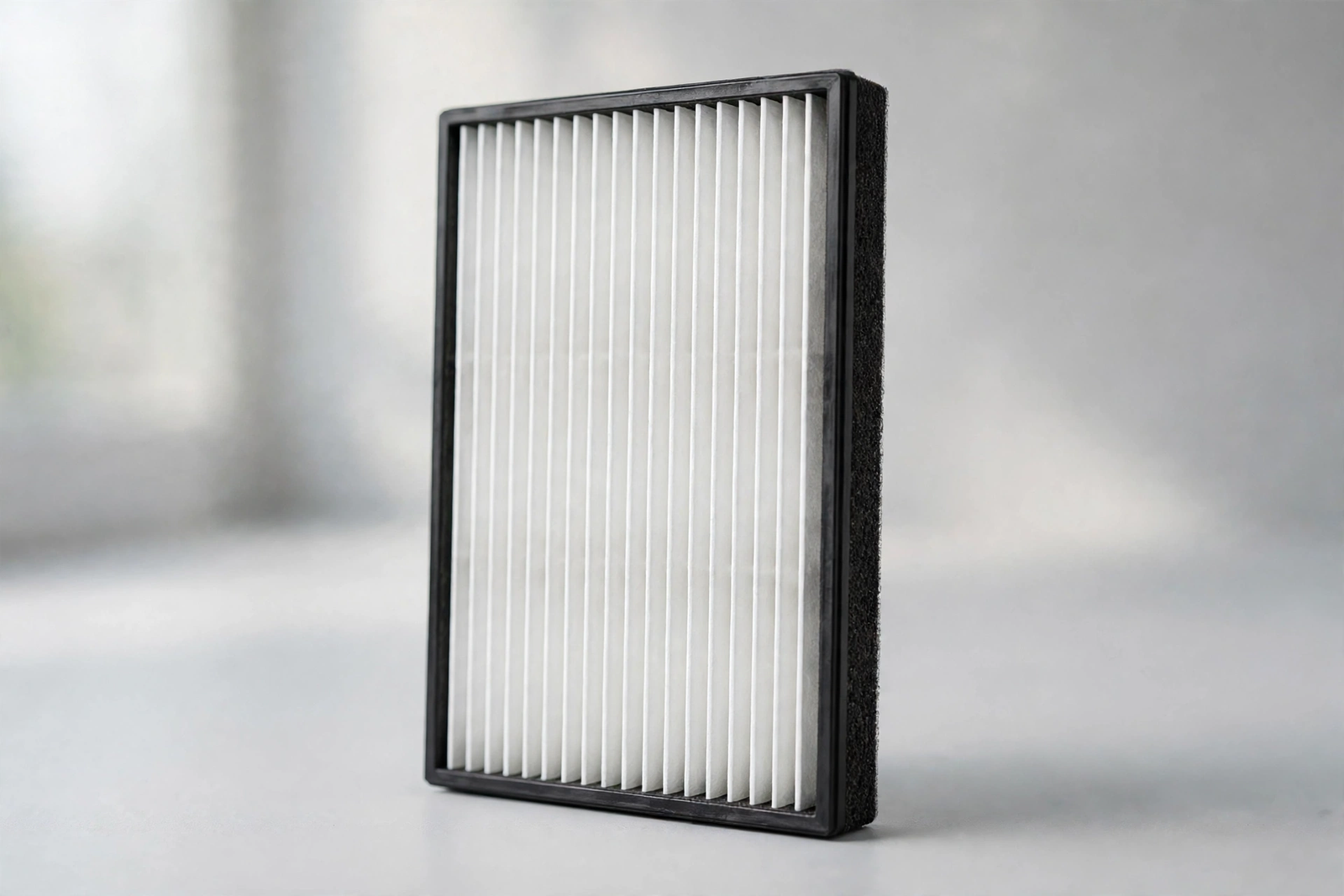
The EPAuto CP134 is a single premium cabin air filter, part number CF10134, with activated carbon in the media. It is a direct replacement for the FRAM CF10134 and for Honda genuine part numbers including 80219-SHJ-A01 and 80292-TZ5-A41. It measures 9 by 9.3 by 1.2 inches and is a vehicle-specific fit — cut for particular models, not a universal size you trim to fit. It is aimed at Honda and Acura owners: the Accord, Civic, CR-V, Odyssey, Pilot, Ridgeline, Crosstour and Passport, plus the Acura CSX, ILX, MDX, RDX, RL, RLX, TL, TLX, TSX and ZDX.
The year coverage is broad. On the Honda side the listing spans roughly 2003 to 2023: the Accord from 2003, the Civic from 2006 to 2015, the CR-V from 2007 to 2016, the Odyssey from 2005 to 2017, the Pilot from 2009, and the Ridgeline from 2006. Acura coverage runs similar years: MDX, RDX, TL, TLX, TSX and ILX. One honest caveat: the listing’s year ranges have varied between crawls, so confirm your exact model year against the fitment chart before you order.
What you get in the box is one filter. There is nothing to assemble and nothing else to buy for the job — no tools, no clips, no housing. The CP134 is disposable: when it is spent, you throw it away and slide a new one in. EPAuto also sells the CP134 in two-pack and three-pack versions, so check that the listing you buy is the single filter linked here.
Activated Carbon and Soda: What the Media Actually Does
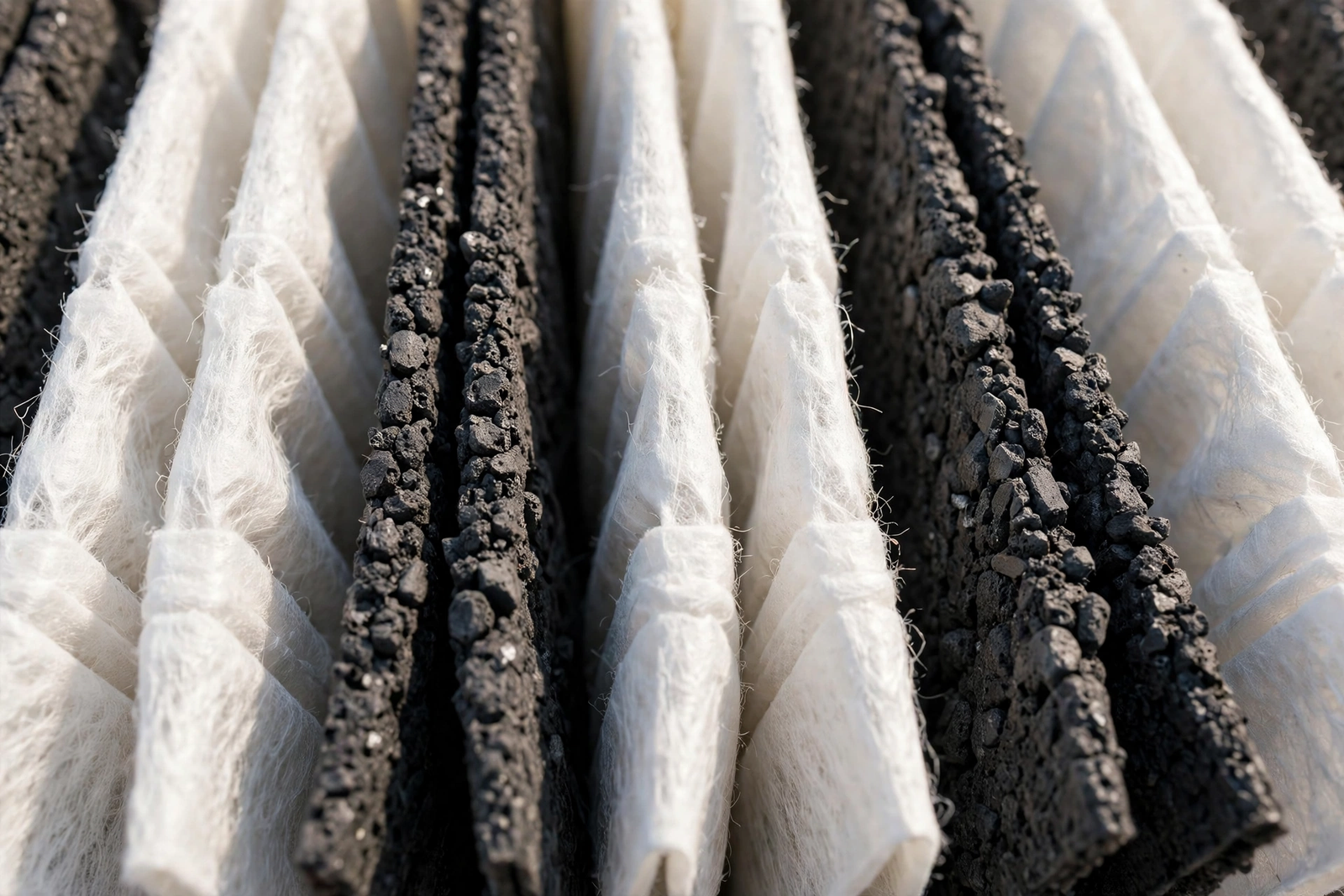
A basic cabin filter is a particle screen: pleated media that catches dust and pollen as air passes through. The CP134 adds a second job. Its media contains soda and activated carbon, which the listing describes as generating a fresh breeze of air. The carbon layer adsorbs gases and odor molecules — exhaust fumes, road smells, musty air — that pass straight through a plain paper filter.
It is worth being clear about what carbon can and cannot do. Carbon helps with odors, not with everything. It will not fix a moldy evaporator core, which needs a proper HVAC cleaning, and it does not last forever — the carbon saturates over time, which is why yearly replacement matters more with carbon filters than with basic ones.
The CP134’s media is a dual-layer design: a pleated particulate layer that traps dust and pollen, and the carbon layer that handles smells and gases. That is the same two-layer idea used across most carbon cabin air filters, and it is why a carbon filter is the rational buy when the complaint is smell. The CP134 does not claim HEPA-level filtration.
Fitment: The One Thing to Get Right
Cabin filters are sized to the millimeter for each vehicle, and the CP134 is no exception. A filter that is slightly too small leaves gaps where unfiltered air bypasses it entirely; one that is too big will not seat and can whistle or rattle. Use the listing’s vehicle selector: enter your exact year, make, model and trim, and confirm the CP134 is listed for your car before ordering.
There are two fitment traps specific to this filter. The first is the model-year drift noted above: the listing’s year ranges have shown different end years in different crawls, so a model year near the edge of a range deserves a second look at the compatibility chart. The second is the part-number family: the CP134 cross-references to many Honda part numbers, and the CF10134 size is shared across a whole generation of Honda and Acura models.
One more check matters before you buy: make sure your car actually takes a cabin filter in this size. Most Hondas and Acuras from the covered years do, but a model year just outside the listed range may not. Your owner’s manual confirms the filter location and part number. Our cabin air filter roundup compares all three side by side.
How to Replace It: A Ten-Minute Glove-Box Job
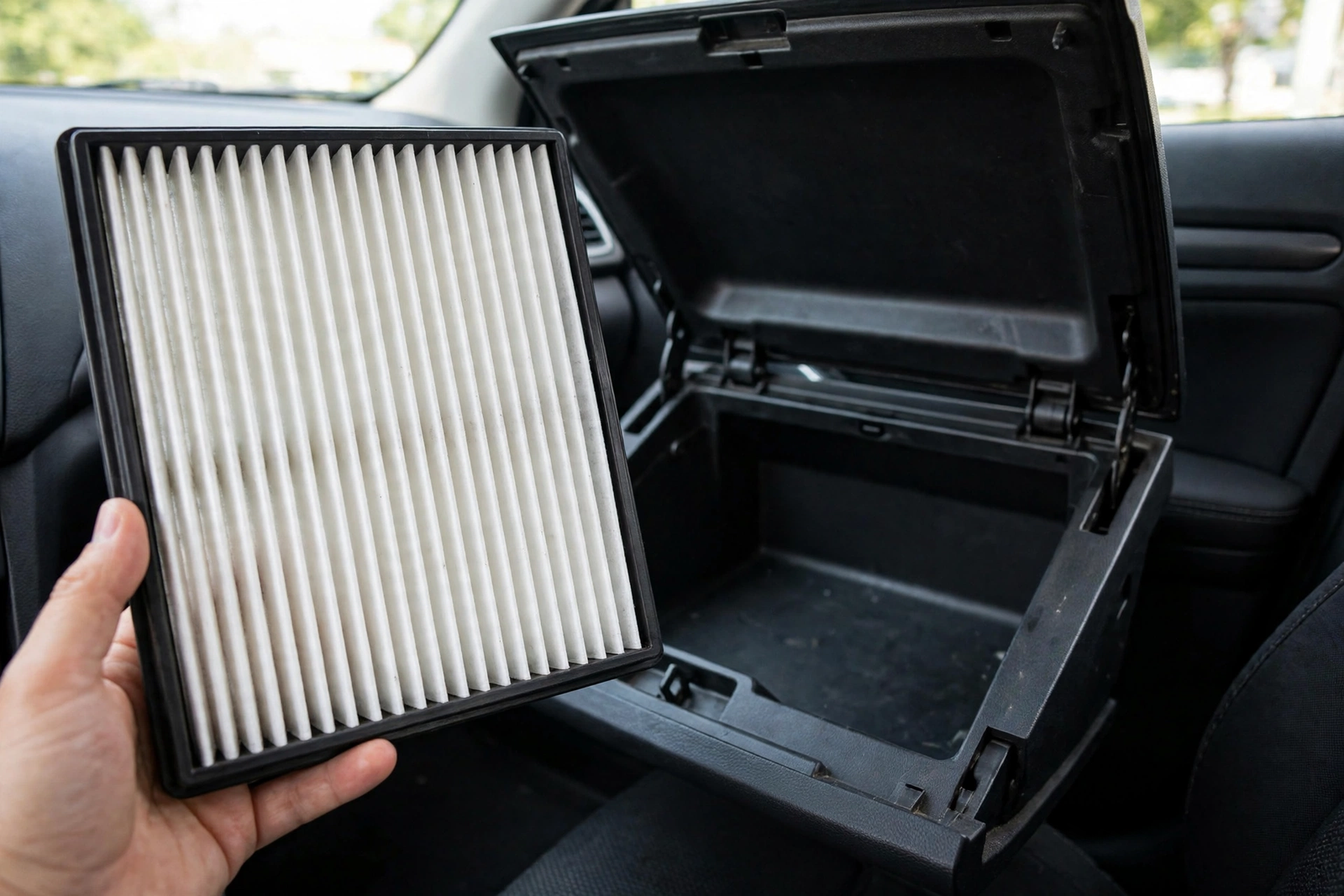
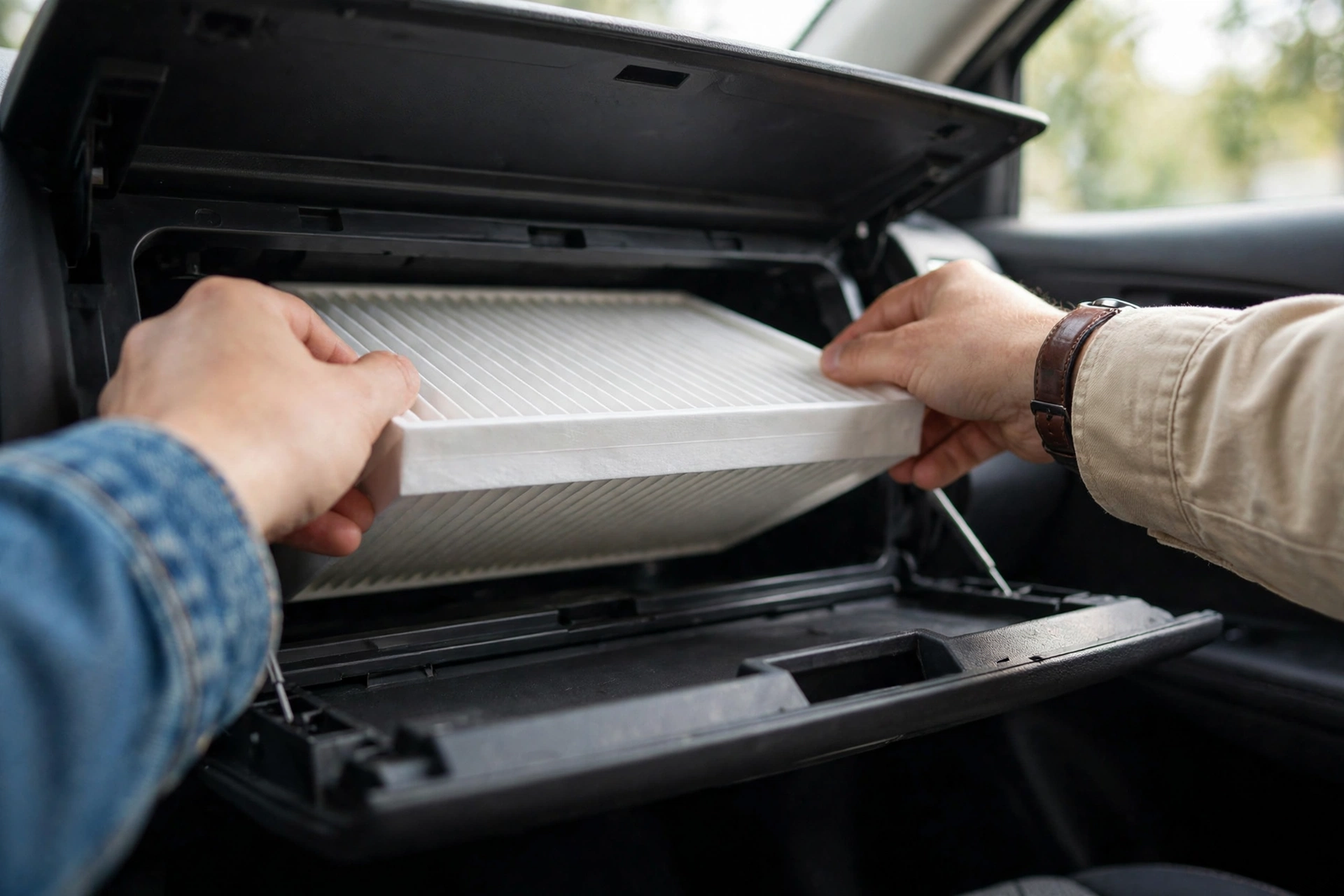
On most cars the cabin filter lives behind the glove box, and the CP134 is a drop-in replacement for that slot. Open the glove box, release the damper arm or the side stops, and drop the glove box down — the filter door is right there. Slide the old filter out and note the airflow arrow direction. Slide the CP134 in with the arrow pointing the same way, close the filter door, and reassemble the glove box. No tools on most models, under ten minutes for a first-timer — a cabin filter replacement with no tools and no extra parts.
The airflow arrow is the one step people get wrong. The arrow points in the direction of airflow, which is almost always downward or toward the cabin. If you did not note the old filter’s direction, the housing usually has an airflow arrow molded into it — match the new filter to that. A filter installed backwards still filters, but it filters worse.
The other mistake is skipping the side-by-side comparison. Hold the new CP134 next to the old filter before you install it. Same length, same width, same thickness, same pleat direction. If anything looks off, stop and check the part number rather than forcing the filter into the housing. A forced filter can bow and let unfiltered air bypass it, which defeats the whole job.
When to Replace It: Signs Your Filter Is Spent
EPAuto recommends replacing the CP134 every 12 months or 12,000 miles. That is slightly more frequent than the general industry guidance of 12,000 to 15,000 miles or once a year, and the difference is worth noting honestly: the listing’s own recommendation is the shorter interval, and carbon filters lose their odor-fighting benefit as the carbon saturates.
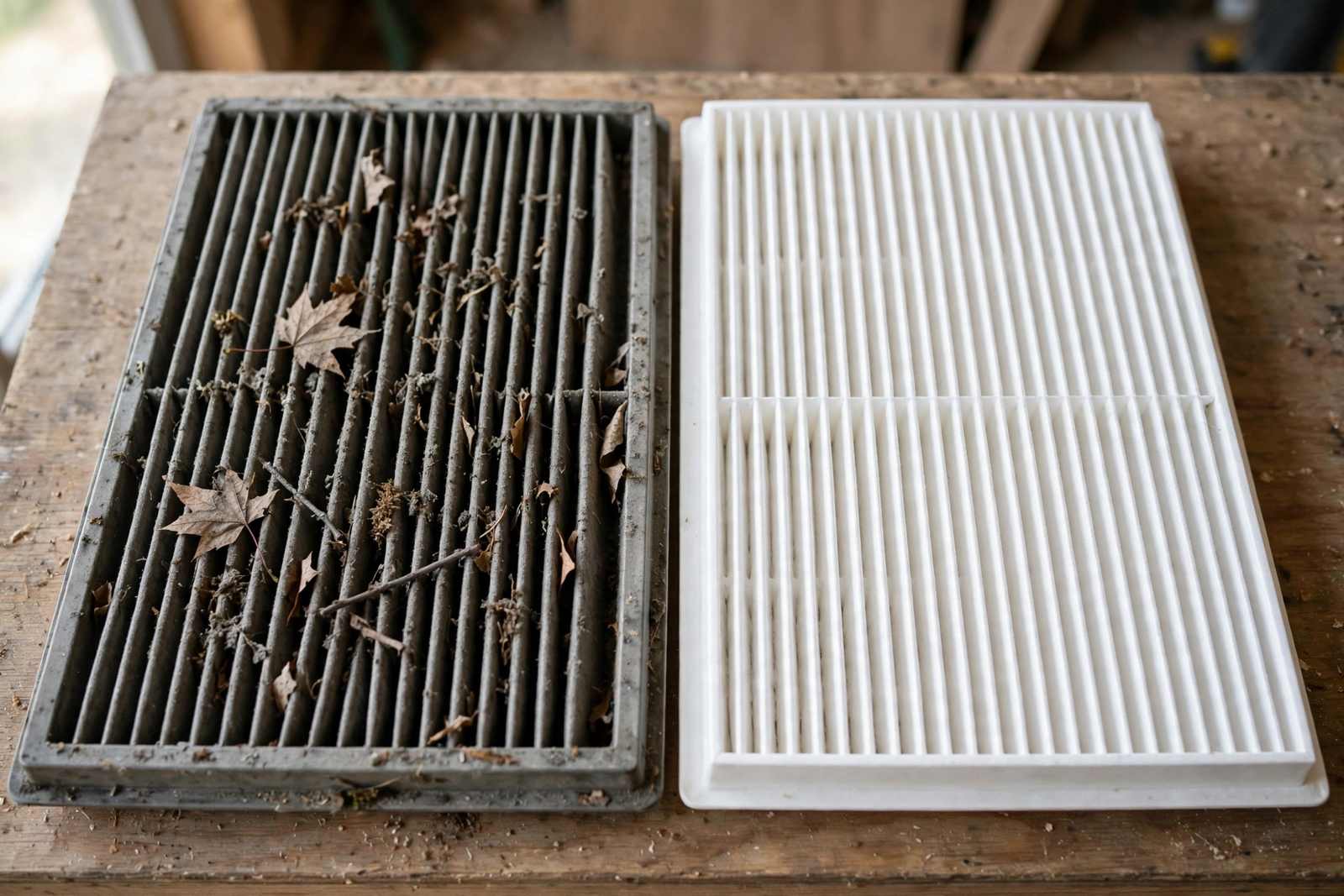
Replace sooner if you notice the symptoms of a spent filter. Weak airflow from the vents is the first sign: a clogged filter restricts airflow, which makes the air conditioning feel weak even when the system is fine, and forces the blower motor to work harder. A persistent musty smell when the air first kicks on is the second. Visible dirt when you pull the filter out is the third — if the pleats are grey or black, or you can see leaves and debris in the media, the filter is overdue.
One symptom deserves a different fix. If a new filter does not clear a musty smell, the problem is probably not the filter: a moldy evaporator core, a clogged air conditioning drain, or odor-soaked upholstery will keep smelling no matter how fresh the filter is. Those need cleaning, not another filter — the filter cleans incoming air only.
EPAuto CP134 vs the Alternatives (Spearhead BE-285, CARORY)
The Spearhead Odor Defense Breathe Easy BE-285 is the premium rival, and it fits different cars. The BE-285 is cut for Toyota, Lexus, Jaguar, Land Rover, Pontiac, Scion and Subaru models from 2005 to 2025 — not for Honda or Acura. So for most CP134 buyers the two filters are not competing for the same car: if you drive a Honda or Acura, the CP134 is the fit; if you drive a Toyota or Lexus, the BE-285 is. The BE-285 pairs electrostatic media with activated carbon, in particulate, activated-carbon and HEPA variants and Spearhead claims up to 25 percent longer service life than standard filters.
The CARORY activated carbon cabin filter is the budget rival, and the one most CP134 buyers will actually cross-shop. Our CARORY cabin air filter review reports a 4.7-star average across 10,300 reviews, and our roundup gave the CARORY the Best Budget slot — carbon odor control at a lower price point, with a wide range of fitments across many makes and models. The CP134’s case is specificity: one size, cut for Honda and Acura, with the FRAM CF10134 cross-reference and the Honda part numbers to match. Our Spearhead vs Mazda cabin filter comparison covers the Spearhead line’s odor-defense media against a Mazda-specific set.
Put together, the three filters cover three different buying decisions. The CP134 is the Honda and Acura carbon replacement. The BE-285 is the Toyota and Lexus carbon replacement with a longer-life claim and a three-variant line. The CARORY is the broad-fit budget carbon filter. None of the three is a universal filter, and none should be bought without checking the fitment chart first — the car decides, not the brand.
Who Should Buy It — and Who Should Skip It
Buy the CP134 if you drive a Honda or Acura in its fitment range and your cabin filter is due — yearly or every 12,000 miles. It suits commuters who drive in traffic and want the carbon layer’s odor control, drivers whose vents have gone weak or whose cabin smells stale, and anyone who wants a ten-minute glove-box job.
Skip it if your car is not a Honda or Acura in the listed range — the CP134 will not fit. Skip it too if your problem is a moldy evaporator smell that persists after a filter change, because that needs HVAC cleaning rather than a new filter. And skip the single-pack listing if you run several cars on the same filter size or change filters twice a year: the two-pack and three-pack versions exist for that buyer. A car air filter is only a good buy when it is the right size for your car.
Verdict
The EPAuto CP134 is an honest, simple part that does exactly what a cabin air filter replacement should do. The activated-carbon and soda media handles odors that a plain particle filter cannot, fitment is easy to confirm, and installs in minutes with no tools. Its limits are equally clear: it fits Honda and Acura models only, the listing’s year ranges have varied between crawls so read the fitment chart carefully, and the carbon layer saturates — so follow the 12-month or 12,000-mile interval. If you drive a covered Honda or Acura and your filter is due, this is a strong buy.
Frequently Asked Questions
How often should I replace the EPAuto CP134?
Every 12 months or 12,000 miles, per EPAuto’s recommendation on the listing. That is slightly more frequent than the general industry guidance of 12,000 to 15,000 miles or once a year, because the activated carbon saturates over time and loses its odor-fighting benefit even while the particle filtration still works. Replace sooner if vent airflow weakens, a musty smell persists, or the filter looks visibly dirty when you pull it out.
Which cars does the CP134 fit?
Honda and Acura models only. On the Honda side it covers the Accord, Civic, CR-V, Odyssey, Pilot, Ridgeline, Crosstour and Passport, roughly 2003 to 2023 depending on the model. On the Acura side it covers the CSX, ILX, MDX, RDX, RL, RLX, TL, TLX, TSX and ZDX. Always confirm your exact year, make, model and trim against the listing’s fitment chart before ordering, because the listing’s year ranges have varied between crawls.
Does the activated carbon really reduce odors?
Yes, within its limits. Activated carbon adsorbs odor molecules and exhaust gases that pass through basic filters — established filter chemistry. It handles traffic fumes, smoke residue and musty smells well. It will not fix a moldy evaporator core or a persistent leak-related smell, and the carbon saturates over time, which is why yearly replacement matters more with carbon filters than with basic ones.
Which way does the airflow arrow point?
Match the old filter’s orientation — the arrow points in the direction of airflow, which is almost always downward or toward the cabin. If you did not note the old filter’s direction, the housing usually has an airflow arrow molded into it. A filter installed backwards still filters, but it filters worse, because the media layers are ordered for airflow in one direction.
Should I buy the single pack or a multi-pack?
Buy the single pack linked here if you need one filter for one car. EPAuto also sells the CP134 in two-pack and three-pack versions, which suit buyers who run several cars on the same filter size or change filters twice a year. Check that the listing you are buying is the pack size you want before you order — the single-pack listing is the one reviewed here.
EPAuto CP134 or Spearhead BE-285 — which should I buy?
Your car decides. The CP134 fits Honda and Acura models; the BE-285 fits Toyota, Lexus, Jaguar, Land Rover, Pontiac, Scion and Subaru models from 2005 to 2025. If you drive a Honda or Acura, buy the CP134. If you drive a Toyota or Lexus, buy the BE-285, which pairs electrostatic media with activated carbon and claims up to 25 percent longer service life. Neither filter fits the other’s cars.