As an Amazon Associate I earn from qualifying purchases.
Frequently Asked Questions
How often should I replace my cabin air filter?
Most manufacturers recommend every 12,000-15,000 miles or once a year. Replace sooner if you notice weak vent airflow, persistent musty smells, or drive regularly on dusty roads. This cabin air filter guide follows the standard 12-month/15,000-mile rule used across the industry.
Do activated carbon cabin filters really remove odors?
Yes, within their limits. Activated carbon adsorbs gases and odor molecules: exhaust fumes, road smells, mild mustiness. It will not fix a mold colony in the evaporator or a clogged AC drain; those need cleaning, not filtering.
Can I install a cabin air filter myself?
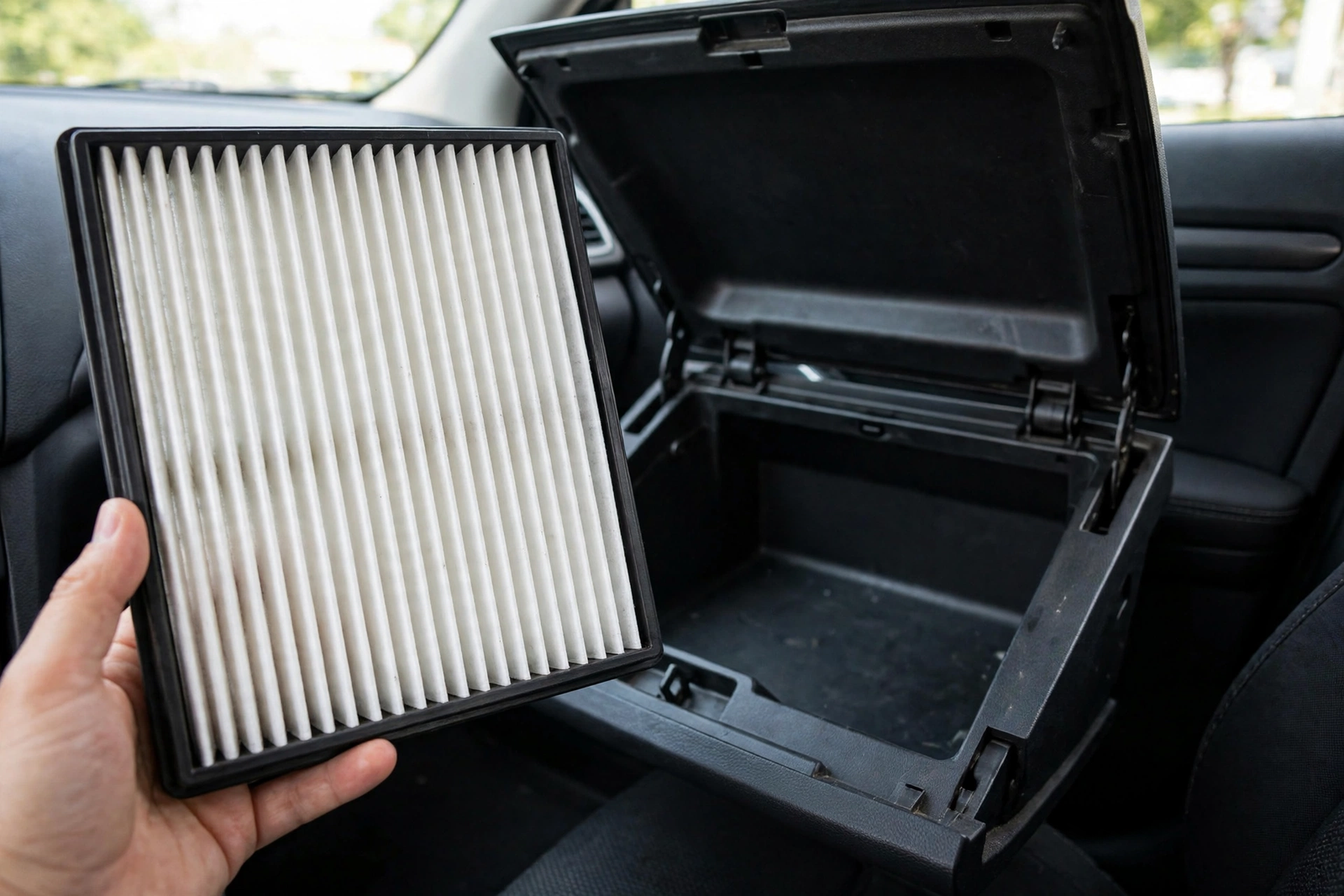
In most cars, yes. It is usually behind the glove box and needs no tools. Squeeze the glove box sides to drop it down, slide the old filter out, note the airflow arrow direction, and slide the new one in the same way. Your owner manual confirms the location.
Are expensive cabin filters worth it over cheap ones?
It depends on the complaint. For odors, any carbon filter beats a non-carbon one regardless of brand. For allergies and dusty conditions, denser premium media filters more and lasts longer. For basic dust, a standard filter changed on schedule is fine.
Why does my car still smell after replacing the filter?
The filter cleans incoming air only. Persistent smells come from the evaporator core (mildew), a clogged AC drain, or odor-soaked upholstery and carpets. If a new filter does not fix it, the next steps are AC system cleaning and interior detailing, not another filter.
Do I need a vehicle-specific filter or will universal fit?
Cabin filters must match your housing to seal properly. Always confirm the listing compatibility chart against your exact year, make, and model. A filter that does not seal lets unfiltered air bypass it entirely.
If your car’s AC smells musty when it first kicks on, or you sneeze every time you drive through pollen season, the cabin air filter is the likely culprit. This small pleated filter sits behind the glove box and cleans every cubic foot of air entering the cabin. This cabin air filter guide compares three replacement options — led by an activated-carbon odor defense pick — with honest notes on fitment, because a filter that doesn’t match your car is worthless no matter how good its media is.
The short answer: the best cabin air filter for most drivers pairs activated carbon media (for odors and gases) with a dense electrostatic layer (for dust, pollen, and allergens), in the exact fitment for their vehicle. The Spearhead Odor Defense filter below leads on that formula, with a budget carbon alternative and a vehicle-specific Mazda pick rounding out the list.
Table of Contents
Quick Pick: Cabin Air Filters
| Pick | Product | Key Spec / Best For | Check Price |
|---|---|---|---|
| Overall Winner | Spearhead Odor Defense Cabin Air Filter | Coconut-shell activated carbon, 2X heavier electrostatic media, up to 15,000 miles | Check Price on Amazon |
| Best Budget | CARORY Activated Carbon Cabin Air Filter | Activated carbon odor control at a lower price point | Check Price on Amazon |
| Best Vehicle-Specific | Engine and Cabin Air Filter for Mazda 3 and CX Models | Tailored fitment for Mazda 3 and CX-series vehicles | Check Price on Amazon |
1. Spearhead Odor Defense Cabin Air Filter: Overall Winner
Spearhead’s Odor Defense line is built around two claims the listings repeat consistently: real coconut-shell activated carbon for odor and gas adsorption, and electrostatic filter media described as twice as heavy as standard filters for particle capture. The line advertises up to 25% longer service life — up to 15,000 miles — versus standard filters.
What stands out: the combination addresses the two separate jobs of a cabin filter. The carbon layer handles what you smell (exhaust fumes, road odors, musty AC); the dense electrostatic media handles what you breathe (dust, pollen, fine particles). Most cheap filters do only the second job.
Worth knowing: Spearhead sells this line in many vehicle-specific part numbers (BE-series). Fitment is everything — confirm the listing’s compatibility chart matches your exact year, make, and model before buying. A great filter in the wrong size doesn’t seal and doesn’t filter.
2. CARORY Activated Carbon Cabin Air Filter: Best Budget
The CARORY filter brings activated carbon to a budget price: a pleated carbon-media filter aimed at drivers who want odor reduction without paying the premium for the Spearhead line. The listing positions it as a direct replacement filter with carbon odor defense.
What stands out: for drivers whose main complaint is smell rather than allergies, a budget carbon filter is the rational buy. Carbon is carbon — the odor-adsorption chemistry doesn’t require a premium brand to work.
Worth knowing: budget filters typically use lighter media than premium ones, so particle filtration and service life are usually a step down. If you drive in heavy pollen or dust, the denser media of the winner earns its keep. As always, verify fitment for your vehicle.
3. Engine and Cabin Air Filter for Mazda 3 and CX Models: Best Vehicle-Specific
This pick is different: a filter set tailored to Mazda 3 and CX-series vehicles (CX-3, CX-30, CX-5, CX-50, CX-90 per the listing’s fitment range — confirm your exact model year). Vehicle-specific filters eliminate the fitment guessing that causes most cabin-filter complaints: poor sealing, whistling airflow, or a filter that won’t seat.
What stands out: when a filter is cut for your exact housing, installation is a five-minute glove-box job with no trimming or forcing. For Mazda owners, that certainty is worth more than a theoretically better universal filter.
Worth knowing: this pick only makes sense if you drive a compatible Mazda. Everyone else should choose between the two universal-fit options above and verify fitment carefully.
Cabin Air Filters Compared
| Filter | Media | Odor Control | Service Life (claimed) | Fitment |
|---|---|---|---|---|
| Spearhead Odor Defense (B07WGCG4CM) | Coconut-shell carbon + 2X electrostatic | Yes — activated carbon | Up to 15,000 miles | Vehicle-specific (check chart) |
| CARORY (B0D9H8R8VQ) | Activated carbon pleated | Yes — activated carbon | Standard | Vehicle-specific (check chart) |
| Mazda 3/CX set (B0FFG77FRQ) | Standard replacement media | Basic | Standard | Mazda 3 / CX-series only |
Buying Guide: Carbon vs Standard, Fitment, and Replacement Intervals
Carbon vs standard media. A standard cabin filter is pleated paper or synthetic media — it catches dust and pollen but does nothing for smells. An activated-carbon filter adds a carbon layer that adsorbs gases and odors: exhaust fumes in traffic, road smells, musty AC. If your complaint is smell, carbon is the fix. If it’s sneezing, media density matters more. The winner does both, which is why it leads.
Fitment is the whole game. Cabin filters are not universal. A filter that’s slightly too small leaves gaps where unfiltered air bypasses it; one that’s too big won’t seat and can whistle or rattle. Always match the listing’s compatibility chart to your exact year, make, model, and trim. The 10 minutes spent confirming fitment saves the return hassle.
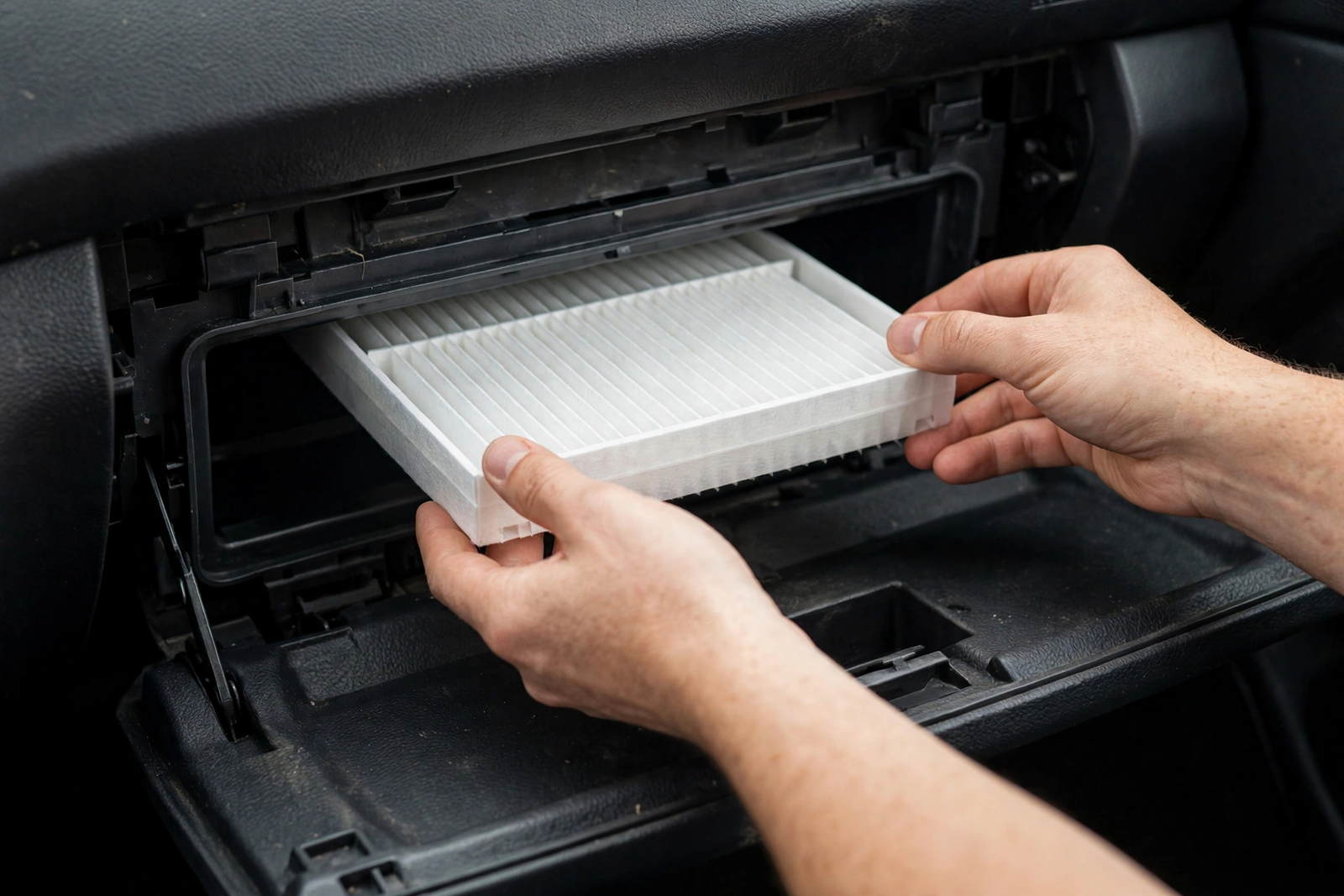
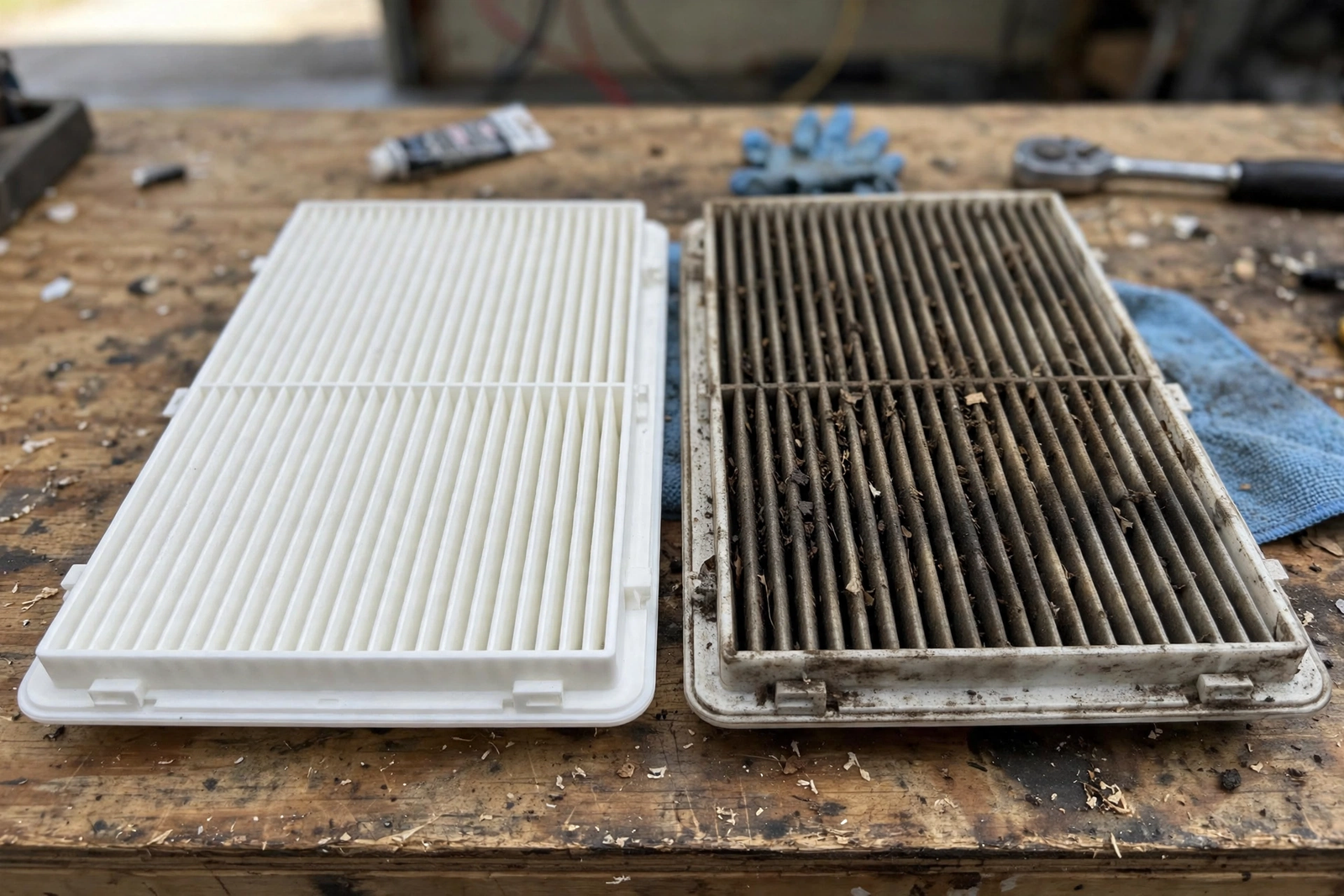
When to replace. Most manufacturers recommend every 12,000–15,000 miles or once a year, whichever comes first — and more often if you drive on dusty roads or in heavy traffic. Symptoms of a spent filter: weak airflow from the vents, persistent musty smell, or visible dirt when you pull it out. Replacement is usually a tool-free glove-box job; your owner’s manual shows the location.
Cabin freshness is a system. A new filter handles incoming air, but odors baked into upholstery need cleaning too. Pair the filter swap with an interior cleaner for seats and a check of the AC drain — a clogged drain breeds the mildew that makes AC smell musty regardless of the filter.
Who Fits Whom
- Daily commuters in traffic: the Spearhead — carbon for exhaust fumes, dense media for the particulate soup of rush hour.
- Allergy sufferers: the Spearhead — the heavier electrostatic media is the relevant spec, not just the carbon.
- Budget-focused drivers: the CARORY — carbon odor control for less, accepting standard service life.
- Mazda 3 / CX owners: the vehicle-specific set — guaranteed fitment beats theoretical media advantages.
- Road-trippers: any of the three, replaced before the trip — clean cabin air matters most on long drives, and it’s one of the cheapest car accessories for road trips in comfort-per-dollar terms.
Verdict
For most drivers, the Spearhead Odor Defense is the pick: carbon for smells plus dense media for particles, with a longer claimed service life. Budget drivers who mainly want odor control get most of the benefit from the CARORY. Mazda 3 and CX owners should take the vehicle-specific set and skip the fitment gamble. Whichever you choose, replace it on schedule — the best filter in the world does nothing once it’s clogged.