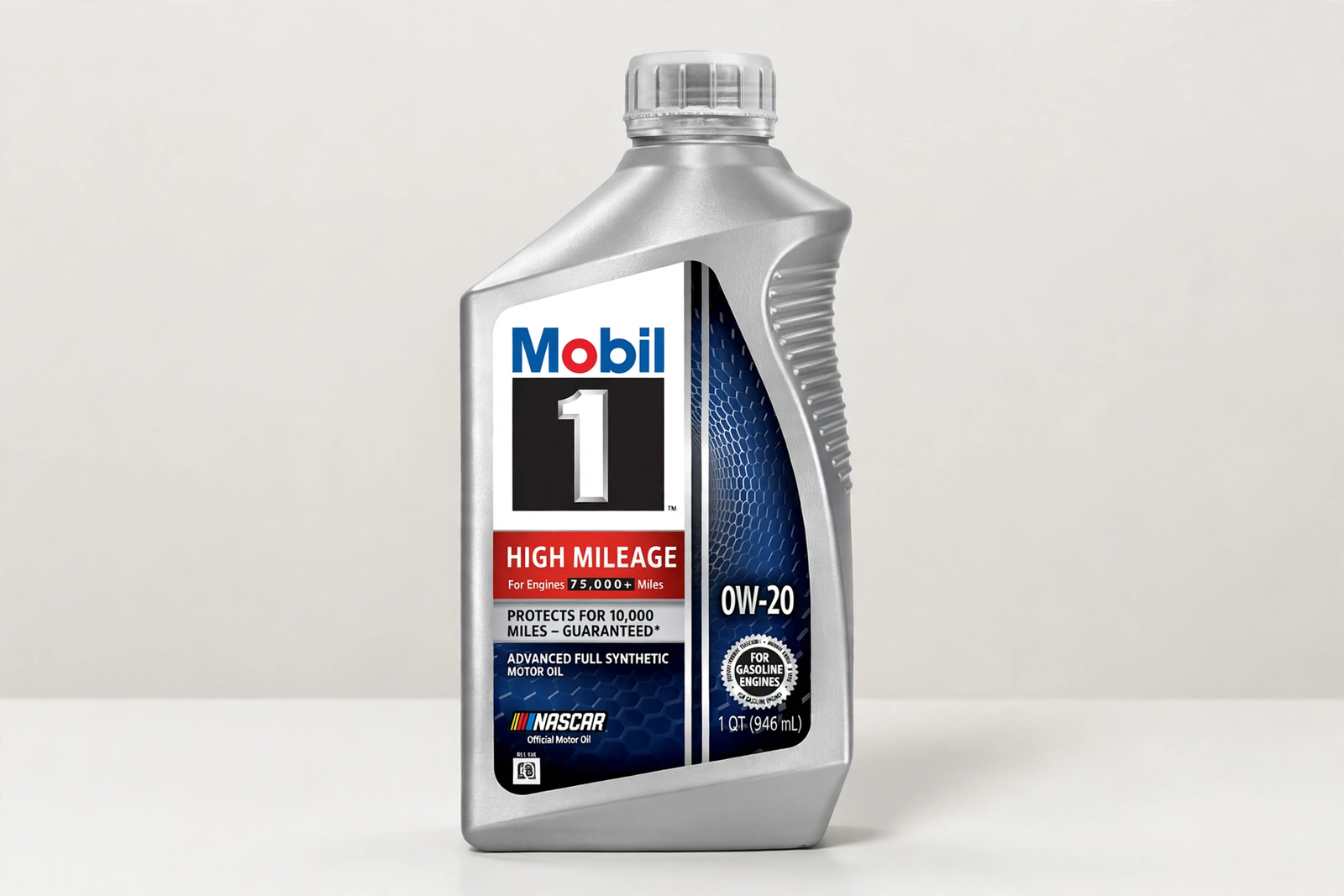
Past 75,000 miles, engines change. Seals harden, clearances loosen, and a little oil consumption between changes becomes normal. High-mileage motor oils exist for exactly this stage: full-synthetic base stocks plus seal conditioners and extra detergents aimed at aging engines. Mobil 1 High Mileage is the best-known name in the category, and this review looks at the 0W-20 variant.
The listing facts: a 4.8-star rating across more than 10,000 reviews, and a full-synthetic 0W-20 formulation marketed for engines with over 75,000 miles. As with any oil, the owner’s manual sets the viscosity; 0W-20 is right only if your manual calls for it.
The short answer: for engines past 75,000 miles whose manual specifies 0W-20, Mobil 1 High Mileage is a legitimate, well-reviewed choice: full-synthetic protection plus seal conditioners aimed at the weeps and consumption that aging engines develop. It will not rebuild a worn engine, but it is the right oil for the mileage.
As an Amazon Associate I earn from qualifying purchases.
Table of Contents
Table of Contents
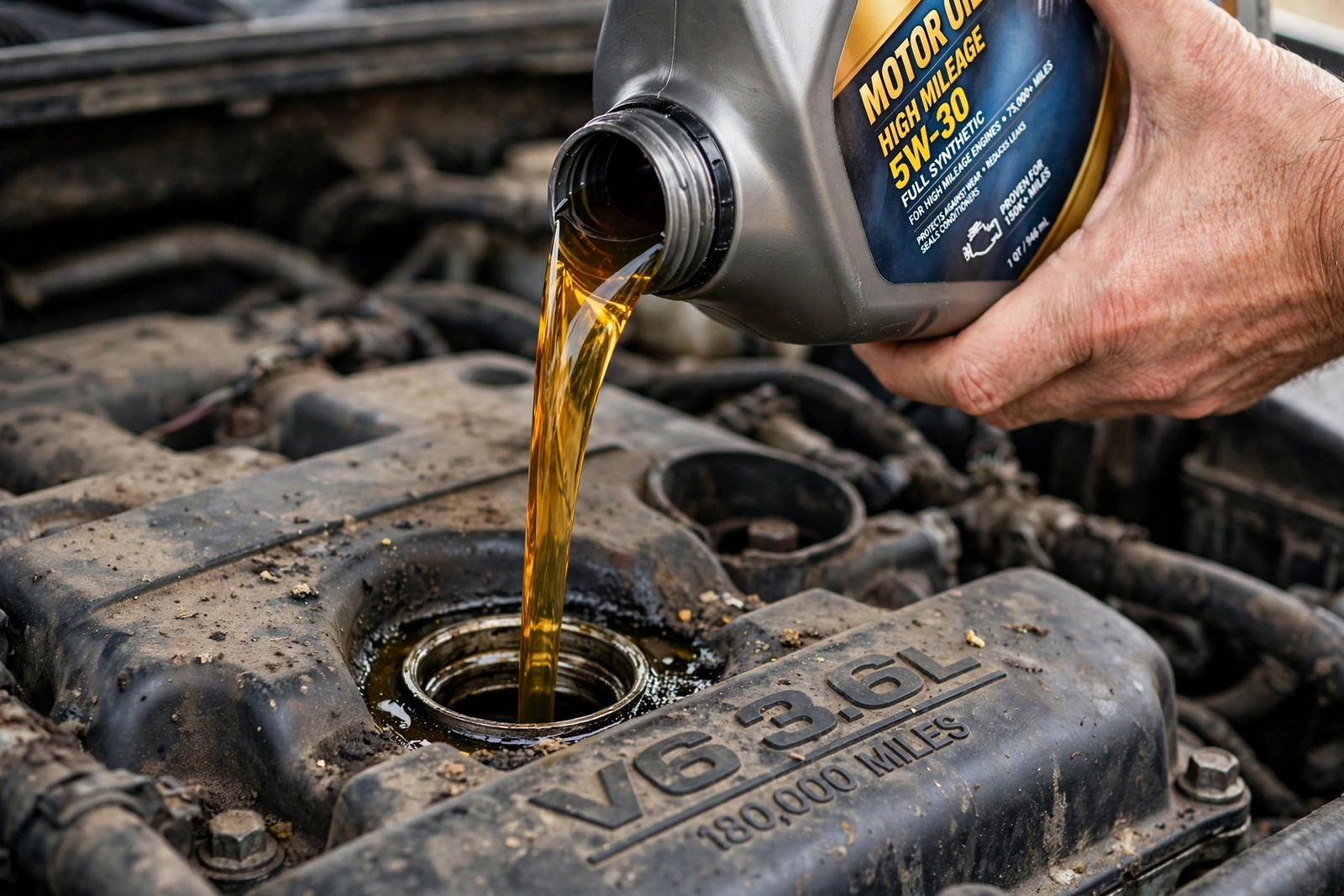
Quick Pick: Mobil 1 High Mileage
| Pick | Product | Why it stands out | |
|---|---|---|---|
| Best Overall | Mobil 1 High Mileage Full Synthetic Motor Oil 0W-20 | 4.8 stars across 10,500+ reviews; the high-mileage standard | |
| Best for 75K+ Engines | Mobil 1 High Mileage Full Synthetic Motor Oil 0W-20 | Seal conditioners for aging engines over 75,000 miles | |
| Best Full Synthetic | Mobil 1 High Mileage Full Synthetic Motor Oil 0W-20 | Full-synthetic protection in the 0W-20 your manual specifies |
Mobil 1 High Mileage Full Synthetic Motor Oil 0W-20
High-mileage oils differ from standard full synthetics in the additive package: seal conditioners that help aging seals stay pliable, plus detergents aimed at the deposits older engines accumulate. Mobil 1 formulates this line for engines with more than 75,000 miles, and the 4.8-star rating across 10,000-plus reviews suggests owners of older cars are satisfied.
What stands out: the rating at this volume, in a category where buyers are experienced and picky. Owners of high-mileage cars report the expected benefits: steady consumption, quiet operation, clean changes.
Worth knowing: honest limits. Seal conditioners can slow minor weeps; they cannot fix a failed gasket or worn rings. If your engine burns a quart every thousand miles, that is a mechanical issue, not an oil-choice issue. And viscosity still rules: buy 0W-20 only if the manual specifies it.
Mobil 1 High Mileage 0W-20 at a Glance
| Viscosity | SAE 0W-20 |
|---|---|
| Type | Full synthetic, high-mileage formula |
| For engines | Over 75,000 miles |
| Key additives | Seal conditioners, extra detergents |
| Rating | 4.8 stars across 10,500+ reviews |
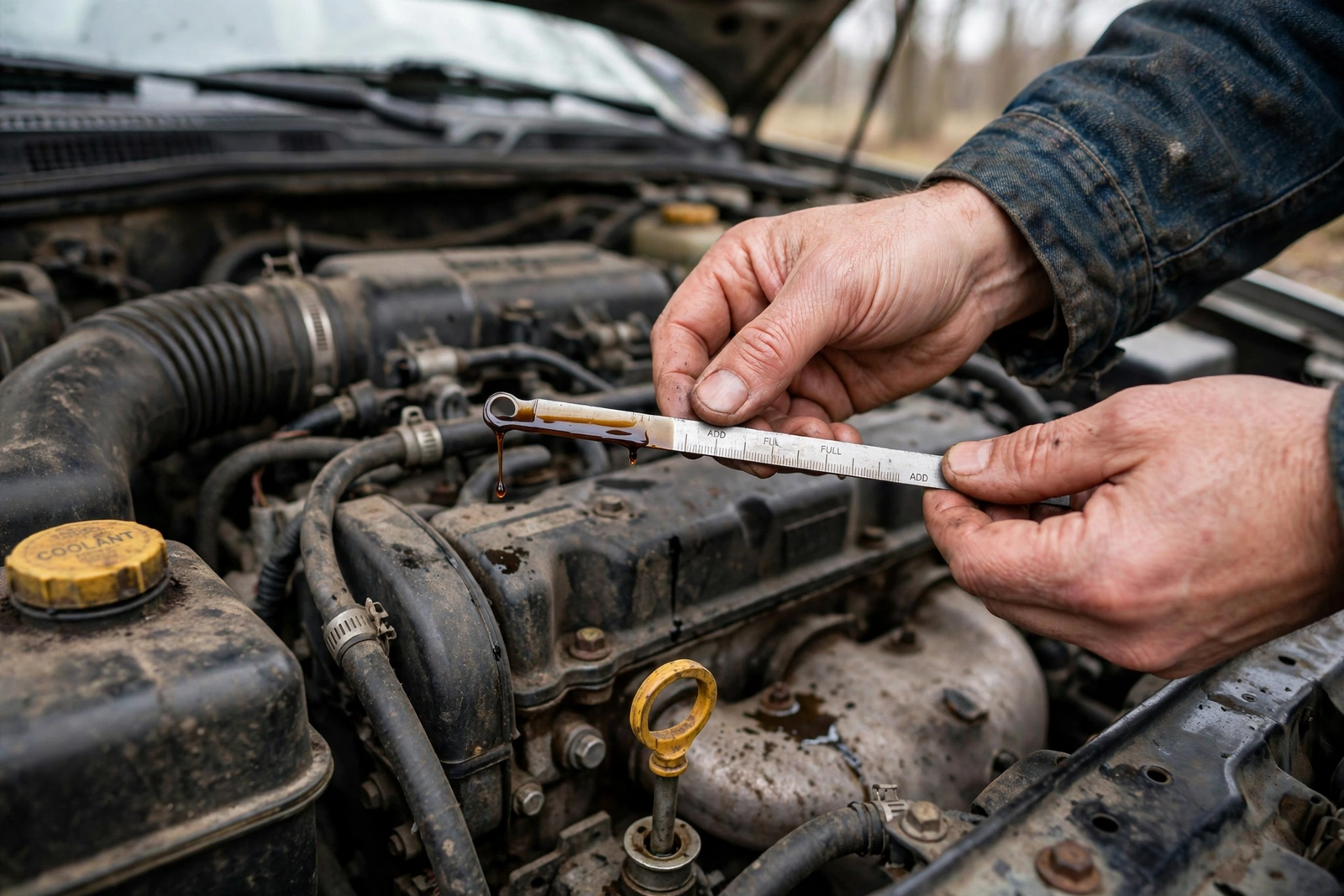
Buying Guide: High-Mileage Oil, Viscosity, and Intervals
When to switch to high-mileage oil. Around 75,000 miles is the industry marker. If consumption is creeping up or you see minor seepage, a high-mileage formula is the reasonable next step before any repair talk.
Viscosity still comes first. High-mileage lines come in multiple viscosities. Match your manual’s spec exactly; the “high mileage” label does not override it.
Watch consumption honestly. Check the dipstick monthly on an older engine. A high-mileage oil helps at the margins; a sudden increase in consumption deserves a mechanic, not a different jug.
Keep the interval. Full synthetic tolerates the manual’s full interval, but older engines benefit from not stretching it. See our car maintenance checklist for what else to watch past 100,000 miles.
Who Fits Whom
- 75,000-plus-mile owners: the target audience; seal conditioners address exactly this stage.
- Minor-consumption engines: if you add half a quart between changes, this is the right formula.
- Low-mileage cars: not needed; a standard full synthetic like Valvoline Advanced is the pick.
- Heavy burners: a quart-plus per thousand miles is mechanical; see a mechanic.
High-Mileage Oil Change: What Else to Do While You Are Under the Hood
Change the filter, obviously. New oil through an old filter is a wasted change. A quality filter matched to your engine costs little and matters a lot on an older engine.
Check the other fluids. Coolant, brake fluid, power steering, transmission: an oil change is the natural moment for a fluid tour. Top up what is low, note what looks dark.
Look for the weeps. High-mileage engines seep. While the oil drains, look at the valve covers, oil pan, and seals with a flashlight. Catching a weep early is a cheap fix; catching it late is not.
Inspect belts and hoses. Cracks, glazing, soft spots: the five-minute inspection that prevents the roadside breakdown. Replace on condition, not on hope.
Log the mileage. Write the date and mileage on the filter or in your phone. Older engines reward meticulous records; the next owner will pay for them too.
Reading Your Dipstick Like a Mechanic
Check it monthly. On a high-mileage engine, the dipstick is your early-warning system. Once a month, on level ground, engine off and cool: pull, wipe, reinsert, read.
Learn the level. Between the marks is the operating range. At the low mark, add the specified amount (usually about a quart to reach full). Below the low mark, add oil before driving.
Read the color. Amber and translucent is healthy. Dark brown to black is normal for used oil near change time. Milky or foamy suggests coolant contamination: stop driving and see a mechanic.
Smell it. A strong fuel smell in the oil suggests fuel dilution, which thins protection. On an older engine, that is a diagnostic flag worth a professional look.
Track consumption. Note the level each month. A stable level means the engine is healthy; a steadily dropping level quantifies consumption and tells you whether the high-mileage formula is holding the line.
One More Check: Oil Analysis
If you want real data on how your oil and engine are doing, a used-oil analysis (around $30 from a lab) reports wear metals, viscosity retention, and contamination. One analysis at 100,000 miles tells you more about your engine’s health than a decade of brand debates. For a high-mileage engine on Mobil 1 High Mileage, it confirms the formula is doing its job.
The Verdict
For engines over 75,000 miles that specify 0W-20, Mobil 1 High Mileage is the safe, well-reviewed choice: full-synthetic protection with the seal conditioners aging engines benefit from, at 4.8 stars across more than 10,000 reviews. It will not fix a worn engine, but it is the right oil for the mileage.
Frequently Asked Questions
Is Mobil 1 High Mileage good oil?
This mobil 1 high mileage review says yes, for its intended audience: engines over 75,000 miles. The 4.8-star rating across 10,000-plus reviews reflects satisfied owners of older cars, and the high-mileage additive package (seal conditioners, extra detergents) addresses the specific needs of aging engines.
When should I switch to high-mileage oil?
Around 75,000 miles, or when you notice minor oil consumption or seepage. It is a preventive step, not a repair; switch before problems, not after.
Will high-mileage oil stop oil leaks?
It can slow minor seal weeps thanks to seal conditioners. It will not fix failed gaskets, cracked seals, or worn piston rings. Those are mechanical repairs.
Can I use 0W-20 in an older engine?
Only if your owner’s manual specifies 0W-20. Viscosity is set by the engine’s design, not its age. Never change viscosity without the manual’s blessing.
How often should I change high-mileage full synthetic?
Follow the manual’s interval, typically 7,500 to 10,000 miles. On older engines, sticking to the shorter end of the range is prudent.
Mobil 1 High Mileage vs Valvoline MaxLife?
Both are reputable high-mileage full synthetics. Choose by your manual’s viscosity and by price; the formulations are comparable, and either is a sound pick for a 75,000-plus-mile engine.