As an Amazon Associate I earn from qualifying purchases.
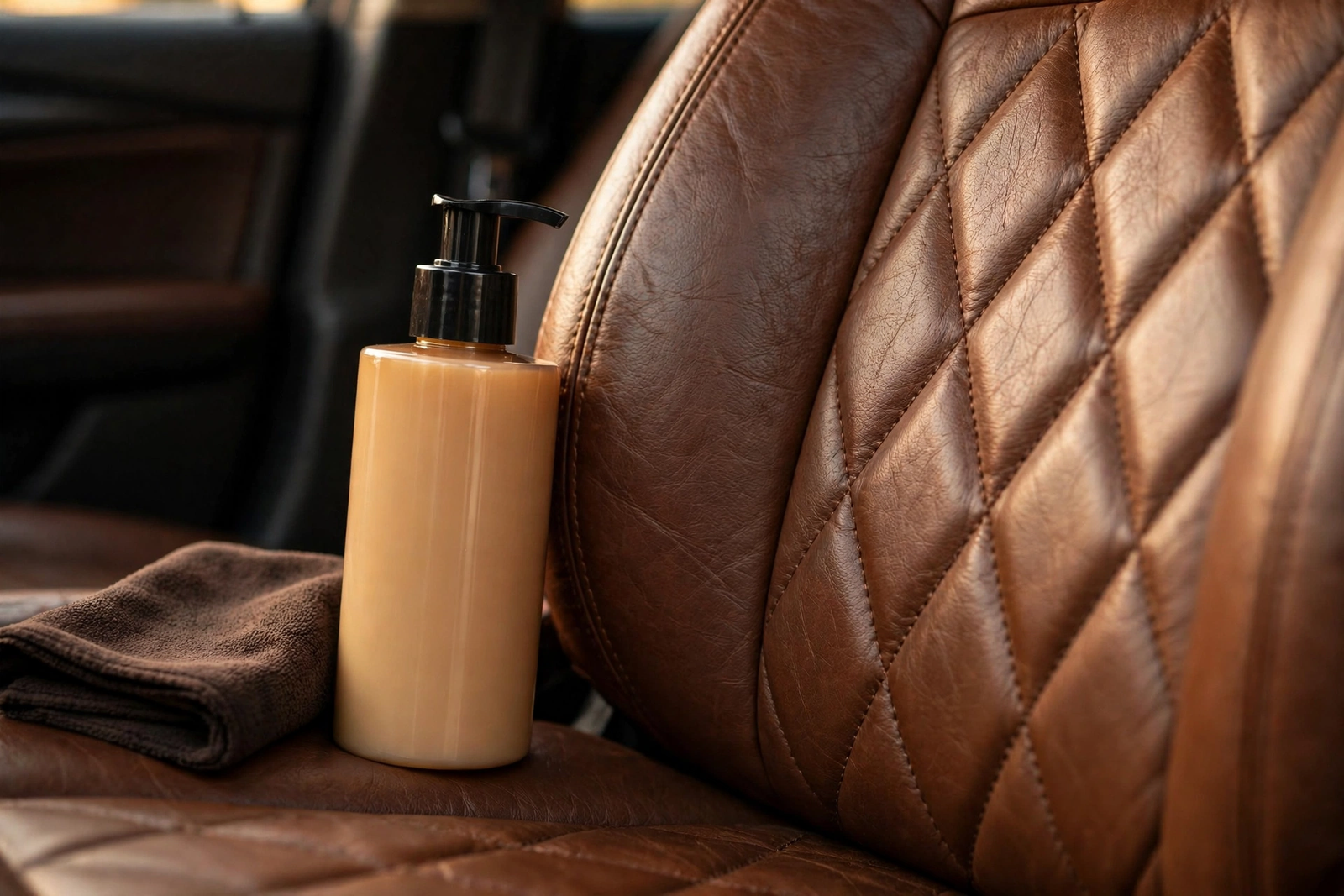
Dry, cracked, dull leather seats make a whole car interior feel old. The fix is a two-step routine — clean, then condition — and Leather Honey’s conditioner is the most-bought leather care product on Amazon for the second step, with a formula unchanged since 1968. This guide walks through the full leather cleaner routine for car seats, with Leather Honey as the conditioning answer, so your leather stays soft and crack-free for years.
Table of Contents
Short answer: Clean first with a dedicated leather cleaner, then condition with Leather Honey. The conditioner is a non-toxic, oil-based formula made in the USA since 1968, free of silicone and solvents, and one application protects for up to six months. It penetrates deep into the leather’s fibers rather than sitting on top — which is why a single 8 oz bottle covers a whole car interior several times over.
Quick Pick: Leather Care with Leather Honey
| Pick | Use Case | Product | Check Price |
|---|---|---|---|
| Overall Winner | Full car interior conditioning | Leather Honey Leather Conditioner — 8 oz, non-toxic, 6-month protection | |
| Best Budget | Single seat or steering wheel touch-up | Leather Honey Leather Conditioner — a little covers a lot; one bottle lasts years for small jobs | |
| Premium Pick | Neglected, dried-out leather restoration | Leather Honey Leather Conditioner — deep-penetrating oils revive tired leather; allow 24-hour absorption |
Why Leather Seats Need Both a Cleaner and a Conditioner
Leather is skin, and it dries out. UV through the windshield, heat, friction from getting in and out, and plain time all wick the natural oils out of the hide. Once those oils are gone, the leather stiffens, then cracks — and cracked leather cannot be un-cracked.
The routine has two steps for a reason. A leather cleaner removes the dirt, body oils, and old product residue sitting on the surface — conditioning over dirty leather just seals the grime in. Leather Honey’s own guidance pairs their cleaner (a non-toxic concentrate) with the conditioner: clean first, let the leather dry completely, then condition to restore the oils and lay down protection.
Skipping the clean step is the most common mistake in leather care. The second most common is over-applying conditioner — with Leather Honey, thin coats are the rule, as the brand itself states.
Leather Honey: What It Is
Leather Honey is a family-owned American brand formulating leather care since 1968 — the original conditioner recipe is still in use today. The conditioner (B003IS3HV0, 8 oz) is the product covered here: a thick, oil-based, non-toxic formula with no silicone, no solvents, and no animal products, per the brand’s published ingredient stance.
What distinguishes it from typical conditioners is penetration. Most spray-on conditioners are water-based with silicones — they make leather look shiny for a week or two, then wear off. Leather Honey’s oil-based formula soaks into the leather’s fibers, restoring flexibility from the inside. The brand claims up to six months of protection per application; independent reviewers consistently report the effect lasting months, not weeks.
The finish is matte and natural, not glossy. If you want shiny leather, this is not your product — and the brand does not pretend otherwise.
Key specs from the brand and listing data:
- Size: 8 oz bottle (a little covers a lot — the brand’s guidance: a quarter-size drop per section)
- Formula: Non-toxic, oil-based; no silicone, solvents, or animal products; free of PFAS
- Protection: Up to 6 months per application; water-repellent against snow and rain
- Compatibility: All leather colors; NOT for suede, faux leather, or vinyl
- Origin: Made in the USA since 1968
- Rating snapshot: 4.5 average, ~68k ratings
How to Use It: The Full Routine
Step 1 — Vacuum. Get grit and dust off the seats first so you are not grinding it into the leather during cleaning.
Step 2 — Clean. Apply a dedicated leather cleaner with a microfiber cloth or soft brush, working one panel at a time. Wipe off residue with a clean damp cloth. Let the leather dry completely — conditioning damp leather traps moisture.
Step 3 — Spot test. Put a small amount of Leather Honey on a hidden area and let it dry. This is the brand’s own instruction, and it matters: leather dyes vary, and you want to confirm the result before doing the whole seat.
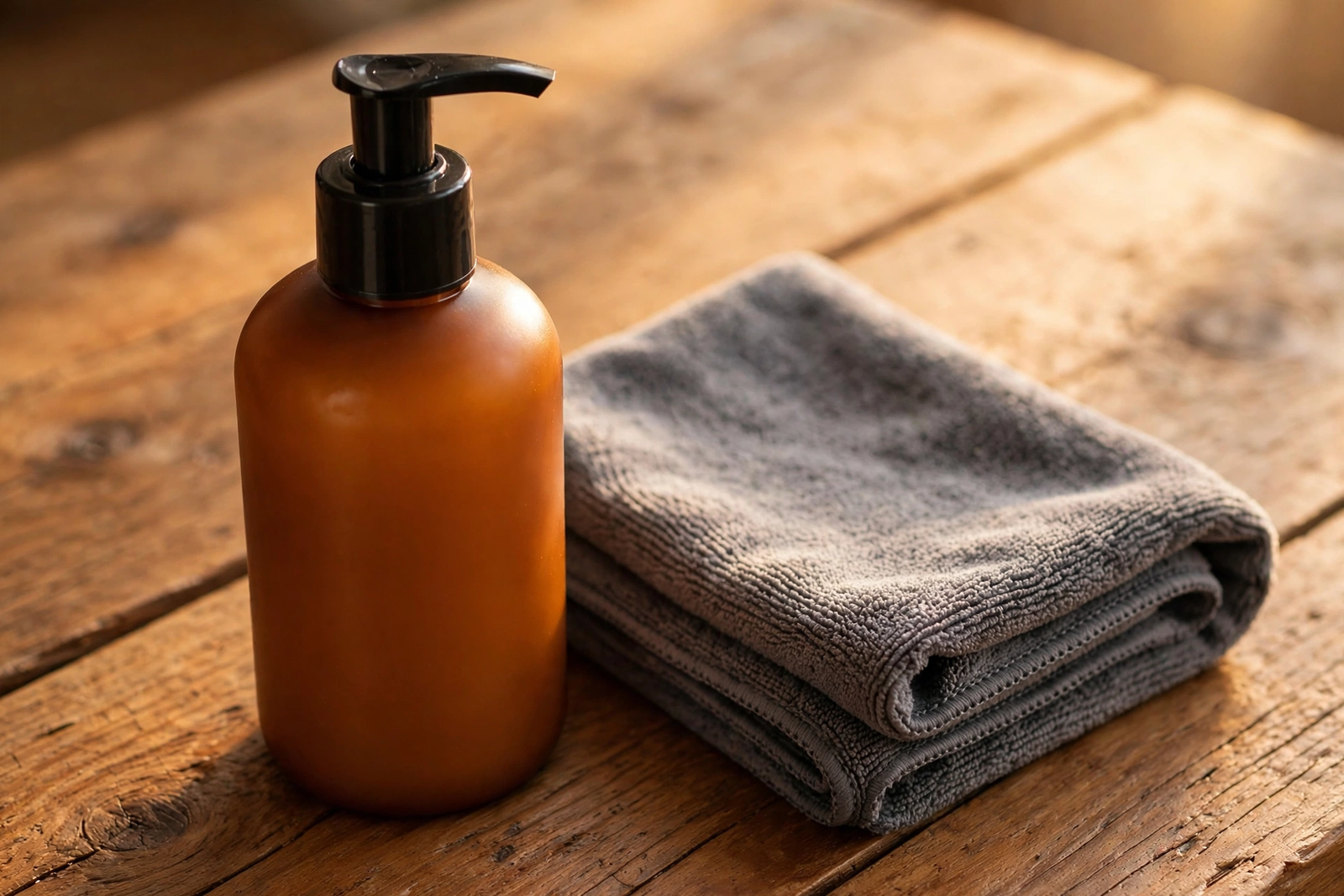
Step 4 — Condition thinly. With a lint-free cloth, spread a thin, even layer over the leather. The brand’s guidance is explicit: thin coats, do not over-saturate. A quarter-size drop goes further than you expect.

Step 5 — Wait. Let it absorb for at least 2 hours, preferably overnight (up to 24 hours for dry or neglected leather). This is the slow-burn part — the oils need time to penetrate.
Step 6 — Buff. Wipe off any excess with a dry cloth for a smooth, non-sticky finish. If the leather still looks thirsty after a day, repeat with another thin coat rather than one heavy one.
What It Does Well — and Its Limits
Strengths: the deep penetration is real and widely corroborated — this is the product reviewers reach for when leather is actually dried out, not just dusty. The six-month protection claim holds up better than the monthly reapplication cycle of lighter conditioners. The non-toxic, silicone-free formula is genuinely safer for the leather long-term (silicone can seal the surface and reduce breathability). One 8 oz bottle covers a full car interior several times over, so the per-use cost is low.

Limits, honestly stated: it is thick and a bit sticky until absorbed — application takes more care than a spray-and-wipe product. It will darken some leathers slightly as the oils penetrate; the spot test exists for exactly this reason. It is not for suede, faux leather, or vinyl — using it on those materials is a misuse, not a limitation. And it is a conditioner, not a cleaner: it does not remove dirt on its own, which is why the two-step routine matters.
For a direct alternative comparison, see our Leather Honey vs Weiman head-to-head.
Buying Guide: Choosing an Auto Leather Cleaner and Conditioner
Match the product to the material. An auto leather cleaner and conditioner routine only works on finished leather — the smooth coated leather on most car seats. Suede, nubuck, faux leather, and vinyl need different products entirely. Check your owner’s manual or a hidden spot if you are unsure what your seats are.
Cleaner before conditioner, always. No conditioner — however good — replaces the cleaning step. A dedicated leather cleaner lifts the grime; the conditioner restores the oils. Buying only the conditioner and skipping the cleaner is the fastest way to disappointing results.
White and light leather needs extra care. A white leather cleaner routine demands dye-transfer vigilance: dark jeans stain light leather, and the spot test is non-negotiable. Leather Honey is listed as safe for all leather colors including white, but test first — every hide takes oil differently.
Thin coats beat heavy ones. With oil-based conditioners, over-application leaves a sticky residue that attracts dust. Two thin coats with absorption time between them outperform one heavy coat every time.
Frequency: conditioned leather in a daily driver typically wants attention every 6 months (Leather Honey’s stated interval); lighter spray conditioners need monthly reapplication. Garage-kept cars can stretch longer; sun-baked daily drivers should not stretch at all.
Who Should (and Shouldn’t) Buy It
Buy it if: your leather seats are going dry, dull, or stiff; you want the longest-lasting protection per application; you prefer a non-toxic, silicone-free formula; you are restoring neglected leather and can give it the full 24-hour absorption.
Skip it if: your seats are suede, faux leather, or vinyl (wrong product category); you want a quick spray-and-shine with no wait time; you want a glossy finish rather than a natural matte one.
The Verdict
Leather Honey earns its reputation the boring way: a 1968 formula that still works, tens of thousands of corroborating buyers, and honest limitations. Clean first, apply thinly, give it time — and your car’s leather gets years of extra life.
Frequently Asked Questions
Is Leather Honey a leather cleaner or a conditioner?
It is primarily a conditioner — the hero product (B003IS3HV0) restores oils and protects leather. The brand also makes a separate leather cleaner, and their own guidance pairs the two: clean first with the cleaner, then condition. Do not expect the conditioner alone to remove dirt.
How often should I condition my car’s leather seats?
With Leather Honey, every 6 months is the brand’s stated interval, and independent reviewers corroborate multi-month protection. Lighter spray conditioners typically need monthly reapplication. Sun-baked daily drivers should stick to the schedule; garage-kept cars can stretch it.
Can I use Leather Honey on white leather seats?
The brand lists it as safe for all leather colors, which is why it comes up as a white leather cleaner option — but the spot test is essential. Apply to a hidden area first and let it dry fully; oil-based conditioners can darken some hides slightly, and you want to confirm the result before treating visible panels.
Will Leather Honey fix cracked leather?
It can improve dry, stiff leather and may make light surface cracking less visible by restoring flexibility — but it cannot repair leather that has cracked through. Conditioning is prevention and early intervention, not restoration of destroyed hides.
Is Leather Honey non-toxic?
Per the brand, the formula is non-toxic, free of silicone, solvents, animal products, and PFAS, and safe for people and pets when used as directed. It is still a chemical product — use in ventilated areas and keep it away from children, as with any car-care chemical.
Why is my leather sticky after applying?
Over-application. Leather Honey is thick by design, and too much product cannot fully absorb. Use thin coats — a quarter-size drop per section — let it absorb 2 to 24 hours, then buff off the excess with a dry cloth. Less is more with this product.