As an Amazon Associate I earn from qualifying purchases.
Frequently Asked Questions
What is the best air compressor for car tires?
In this best air compressor for car tires guide, the short answer: for most drivers, a cordless inflator like the AstroAI L7 (150 PSI, auto shut-off, 12V backup) paired with a dedicated digital gauge. Choose cordless for convenience or a 12V plug-in like the AstroAI AIRUN H if you want zero battery maintenance.
How many PSI do I need in a tire inflator?
At least double your tire’s operating pressure. Car tires at 30-35 PSI need a 100 PSI inflator minimum; truck tires at 40-45 PSI are better served by 150 PSI. More headroom means faster, cooler inflation.
Cordless vs 12V tire inflator, which is better?
Cordless wins on convenience (no engine running, works on bikes anywhere); 12V wins on unlimited runtime and zero charging maintenance. The AstroAI L7 covers both with its 12V backup mode.
Are built-in inflator gauges accurate enough?
For routine top-ups, yes. For confidence, cross-check with a dedicated digital gauge like the AstroAI 150 PSI or ETENWOLF T300 occasionally, especially before long trips.
Do I need special valve caps?
The stock plastic caps work, but aluminum caps seal better and last longer. In salty winter regions, remove aluminum caps once a season to prevent corrosion bonding them to the stem.
Can a portable air compressor fix a flat tire?
It can reinflate a slow leak to get you to a shop, but it cannot repair punctures. A fully flat tire also strains small inflators, that job belongs to a plug-in compressor or roadside service.
Shopping for the best air compressor for car tires is confusing because the category mixes three different tools: the inflator itself, the gauge that tells you when to stop, and the valve caps that keep the air in. Buy them as a system and tire maintenance takes five minutes; buy the wrong combination and you own a drawer of almost-useful gadgets. This guide walks through each decision in order, with a product pick illustrating every choice.
The short answer: for most drivers, the best air compressor for car tires is a cordless inflator like the AstroAI L7 (150 PSI, auto shut-off) paired with a dedicated digital gauge for accuracy checks. Choose cordless for convenience or 12V plug-in for unlimited runtime, match the PSI rating to your tires with headroom to spare, and don’t skip the gauge — built-in inflator readouts are good, not perfect.
Table of Contents
Decision 1: Cordless or 12V Plug-in?
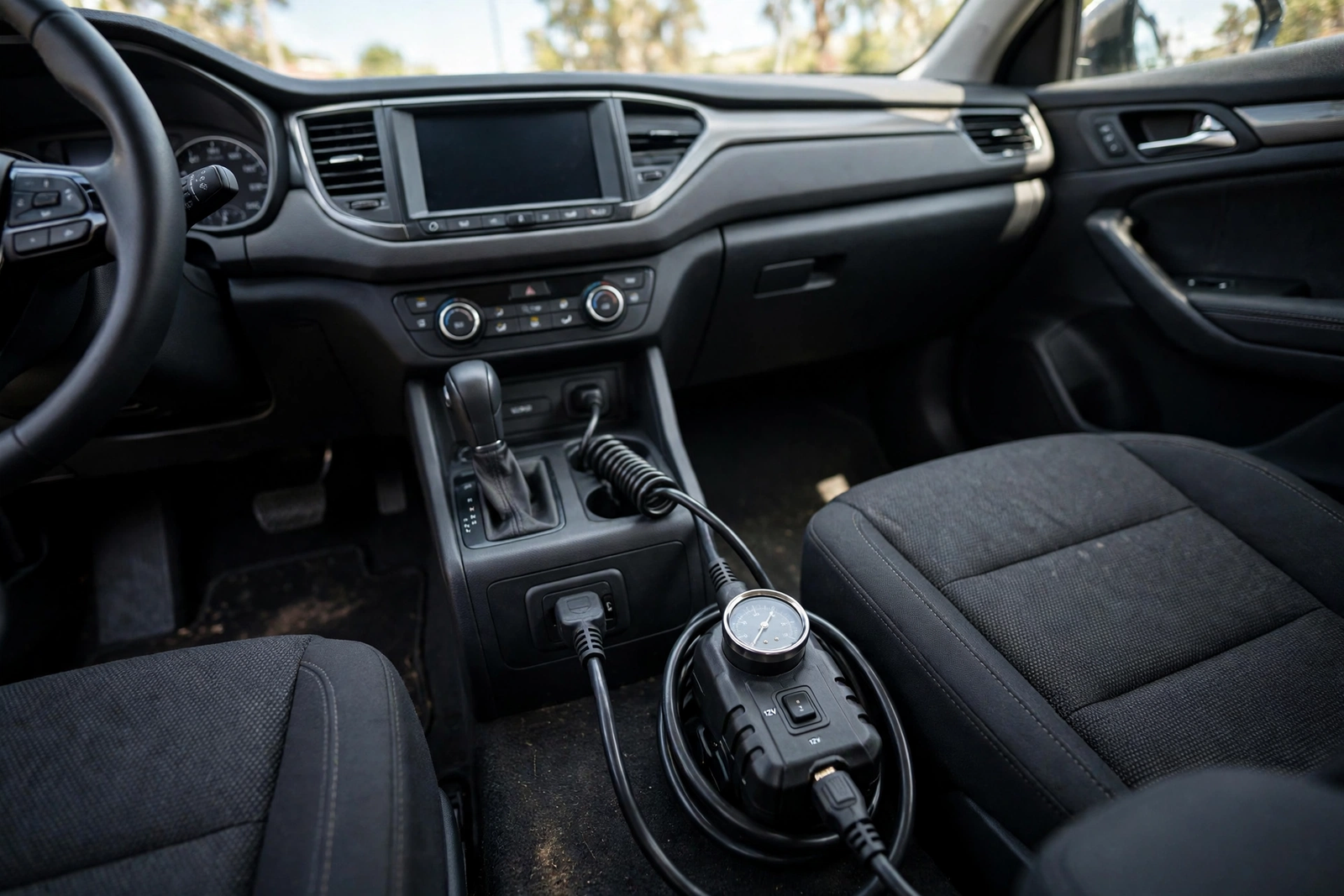
This is the first fork, and it decides everything else. Cordless inflators (battery-powered) let you walk around the car without the engine running and work on bikes and balls anywhere. 12V plug-in inflators draw from the car’s outlet — unlimited runtime, but the car must be on and the cord must reach.
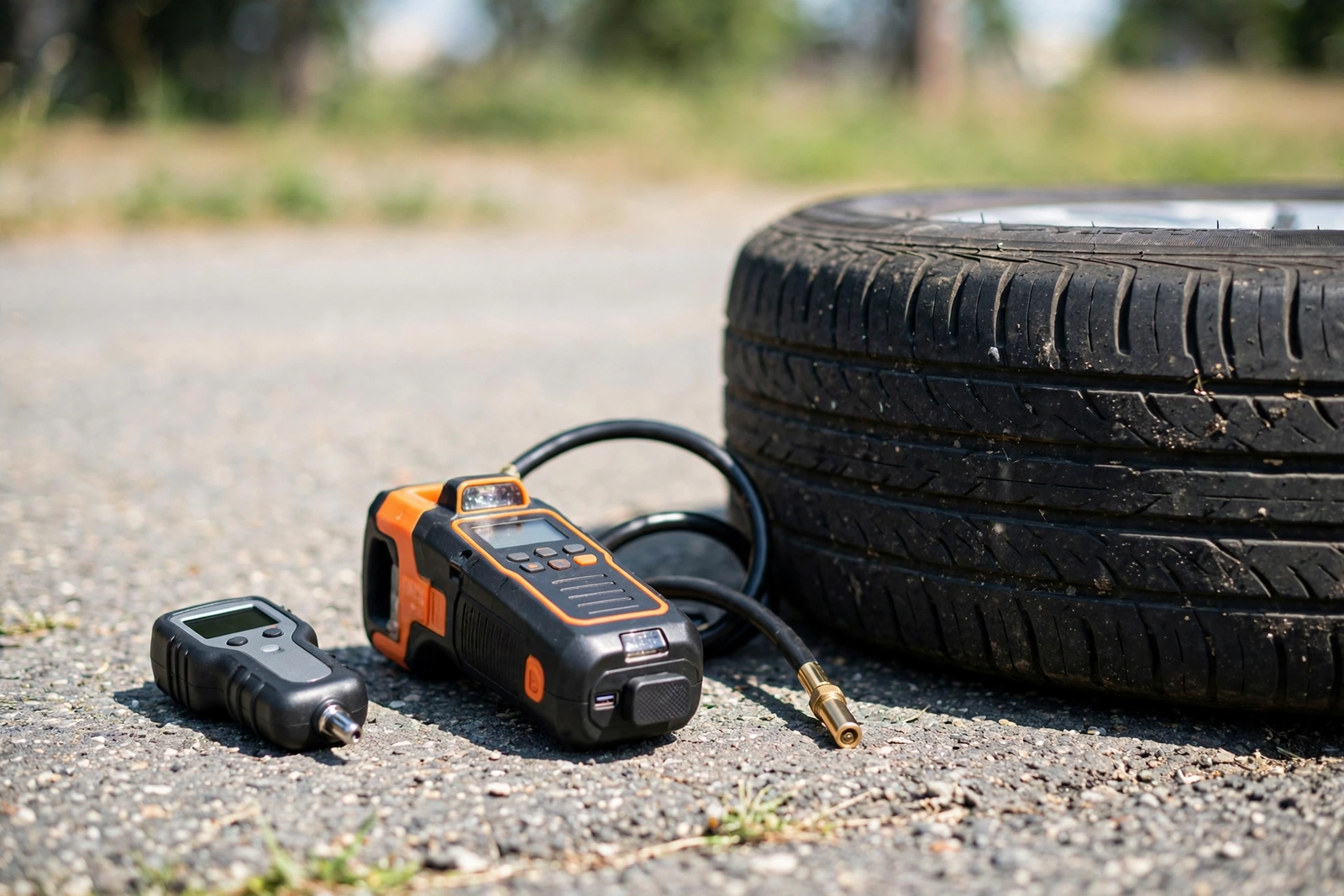
Our cordless pick: AstroAI L7 Cordless (150 PSI). The listing describes a 150 PSI max, 4000mAh USB-C battery, auto shut-off, and — critically — a 12V DC backup mode for the day you forget to charge it. That backup mode is what makes it the safe cordless recommendation: the failure mode of a dead battery is covered.
Our 12V pick: AstroAI AIRUN H (100 PSI). The listing describes a 120W motor on 12V power, 100 PSI max, digital preset with auto shut-off, a 9.8-foot cord, and an LED light. No battery to maintain, no charging routine — it works every time the car runs. The trade-off is the cord and the running engine.
How to decide: if you’ll remember to charge it quarterly, cordless wins on convenience. If you want a tool that works with zero maintenance, 12V wins. Households with two drivers sharing one inflator should default to 12V — shared tools and charging routines don’t mix.
Decision 2: How Much PSI Do You Actually Need?
Car tires typically run 30–35 PSI; light trucks and SUVs run 35–45 PSI. Your inflator’s max rating should sit well above your tire’s operating pressure — a unit working near its limit runs hot, slow, and loud. Choosing the best air compressor for car tires means matching this rating to your vehicle, not chasing the biggest number.
The rule: buy at least double your tire pressure in max rating. For a 35 PSI sedan tire, 100 PSI is plenty (the AIRUN H). For 45 PSI truck tires, the 150 PSI L7 gives comfortable headroom. Nobody driving a passenger car needs more than 150 PSI — ratings above that are marketing for this use case.
What the listings tell us: the L7’s 150 PSI ceiling and the AIRUN H’s 100 PSI max both clear the bar for their intended vehicles. Either is correctly sized for a normal car; the L7’s extra headroom matters for trucks and for faster top-ups (a motor far from its limit inflates quicker and cooler).
Decision 3: Do You Need a Separate Gauge?
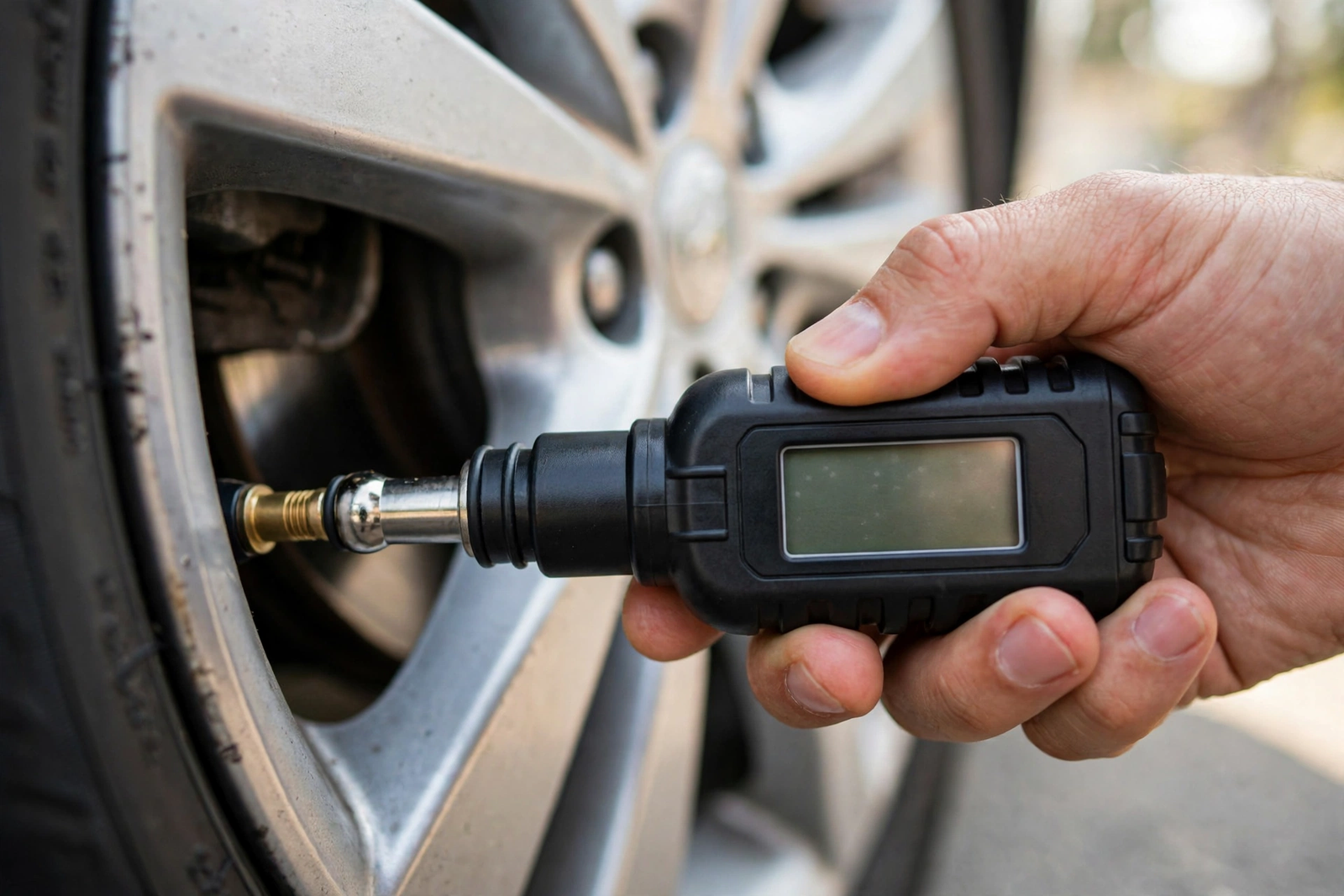
Yes — or at least, you should want one. Inflator built-in gauges are good enough for weekly top-ups, but a dedicated digital gauge is the reference you check them against. Tire pressure affects fuel economy, tire life, and braking distance, so the measurement deserves its own tool.
Our gauge pick: AstroAI Digital Tire Pressure Gauge (150 PSI). The listing describes 0.1 PSI resolution, four units (PSI/Bar/Kgf/cm²/kPa), a backlit LCD with lighted nozzle, and auto shut-off. It is the straightforward, accurate-enough-for-anyone option.
Our premium gauge pick: ETENWOLF T300 (3–200 PSI). The listing describes ±1 PSI accuracy calibrated to ANSI B40.7 Grade 2A, a 3–200 PSI range covering everything from bikes to RVs, AAA batteries (no button cells), and thermal compensation for extreme temperatures. If you maintain multiple vehicles including trucks or an RV, the wider range and standard batteries justify it.
How to decide: one car, normal tires — the AstroAI gauge. Multiple vehicles, trucks, RVs, or a hatred of button-cell batteries — the ETENWOLF T300.
Decision 4: Valve Caps — Small Part, Real Job
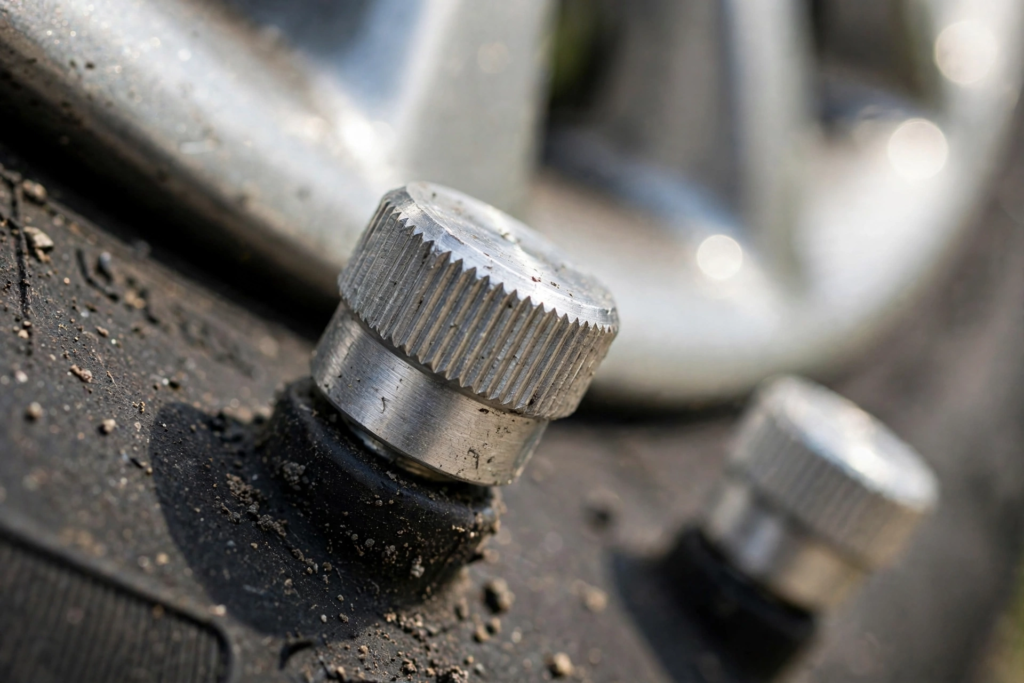
Valve stem caps keep dirt and moisture out of the valve core, which is what actually holds your air. The stock plastic caps work; aluminum caps seal better, look better, and don’t crack with age. It’s a few dollars for a finished system.
Our picks: CKAuto Aluminum Tire Valve Stem Caps (4-pack) and DECURCAR Tire Valve Stem Caps (5-pack). Both are aluminum stem caps per their listings — the CKAuto a 4-pack, the DECURCAR a 5-pack (handy if you lose one, which everyone does). Either completes the kit; the DECURCAR’s extra cap is the tiebreaker.
One caution: aluminum caps on brass valve stems can corrode together over time in salty winter conditions. A dab of anti-seize or simply removing them once a season prevents the annoyance. Plastic caps never have this problem — they’re just uglier.
Quick Pick: The Complete Tire Kit
Here is the shortlist from this best air compressor for car tires guide — the full reasoning sits in the decisions above.
| Pick | Product | Key Spec / Best For | Check Price |
|---|---|---|---|
| Overall Winner | AstroAI L7 Cordless Tire Inflator | 150 PSI, cordless + 12V backup, auto shut-off | Check Price on Amazon |
| Best Budget | AstroAI AIRUN H 12V Inflator | 100 PSI, 120W, no battery to maintain | Check Price on Amazon |
| Premium Pick | ETENWOLF T300 Digital Gauge | 3–200 PSI, ANSI Grade 2A, AAA batteries | Check Price on Amazon |
The Six Products Compared
All six products from this best air compressor for car tires roundup, side by side:
| Product | Type | Key Spec | Role in the Kit |
|---|---|---|---|
| AstroAI L7 (B0CS3B7MD8) | Cordless inflator | 150 PSI, 4000mAh, 12V backup | Main inflator (convenience) |
| AstroAI AIRUN H (B07QR4Q42L) | 12V inflator | 100 PSI, 120W, 9.8 ft cord | Main inflator (zero maintenance) |
| AstroAI Gauge (B01J8DLGU2) | Digital gauge | 150 PSI, 0.1 resolution | Accuracy reference |
| ETENWOLF T300 (B0BY2GD9VC) | Digital gauge | 3–200 PSI, ANSI 2A | Multi-vehicle gauge |
| CKAuto Caps (B06X9L4WBQ) | Valve caps | Aluminum, 4-pack | Valve protection |
| DECURCAR Caps (B09CDN1RR5) | Valve caps | Aluminum, 5-pack | Valve protection + spare |
Putting the Kit Together
The minimal kit: one inflator (cordless or 12V — your call from Decision 1) plus a dedicated gauge. That covers 95% of tire maintenance: top-ups at home, accuracy you can trust, no gas-station detours.
The complete kit: add aluminum valve caps. It’s the finishing touch that keeps valves clean so the pressures you set actually hold.
The emergency kit: the inflator joins the trunk alongside a jump starter and the rest of our car accessories for road trips checklist. A flat discovered at night is a different problem from a low tire at home — the trunk kit is for the former.
Who Fits Whom
- Apartment dwellers, no garage: cordless L7. Inflate anywhere without running the car.
- Forgetful chargers: AIRUN H 12V. Zero battery maintenance.
- Multi-vehicle households: L7 + ETENWOLF T300. Cordless convenience plus a gauge that covers the truck and the RV.
- Perfectionists: any inflator + dedicated gauge. Trust but verify.
- Winter climates: aluminum caps + the anti-seize note above. Salt is the enemy of valve stems.
The Verdict
The best air compressor for car tires isn’t a single product — it’s the right combination: a cordless AstroAI L7 (or the zero-maintenance AIRUN H), a dedicated digital gauge for accuracy, and aluminum valve caps to finish the system. Buy the inflator that matches your charging discipline, verify with a real gauge, and tire maintenance becomes a five-minute driveway job instead of a gas-station errand.