As an Amazon Associate I earn from qualifying purchases.
Frequently Asked Questions
Can I use a fuel stabilizer and a fuel system cleaner together?
Yes. The fuel stabilizer vs fuel cleaner question is really about two different jobs at two different times: the stabilizer preserves fuel during storage, the cleaner removes deposits in a driven engine. A common routine is stabilizer going into storage and a cleaner through the first tank back on the road.
Will STA-BIL fix gasoline that has already gone stale?
No. Gold Eagle states that STA-BIL Storage will not restore or improve old gasoline — it stops fuel from degrading further. Always add it to fresh fuel before storage, and run the engine about five minutes so the treated fuel reaches the entire system.
How often should I use Red Line SI-1?
Per the product listing, use one 15 oz bottle per tank for a full-strength cleaning treatment. For ongoing maintenance, the maker recommends smaller doses (roughly a third to a sixth of a bottle per tank) at fill-ups to keep injectors and valves clean.
Does fuel stabilizer work with ethanol-blended gasoline?
Yes. Per Gold Eagle, STA-BIL Storage is effective in all gasoline including ethanol blends from E-10 through E-85, which matters because ethanol-blended fuel absorbs moisture and degrades faster in storage.
Can a fuel system cleaner damage my engine or catalytic converter?
Red Line SI-1 is oxygen-sensor safe per the product data, and independent usage guides describe it as safe for catalytic converters and oxygen sensors when used at the labeled dose. It will not fix mechanical faults or damage from years of neglect — it is a detergent, not a repair.
Do I need a fuel stabilizer if I drive my car every day?
No. A stabilizer is for engines that sit unused for 30 days or more. If the car is driven regularly, the fuel never sits long enough to degrade, so the money is better spent on a cleaner if deposits are a concern.
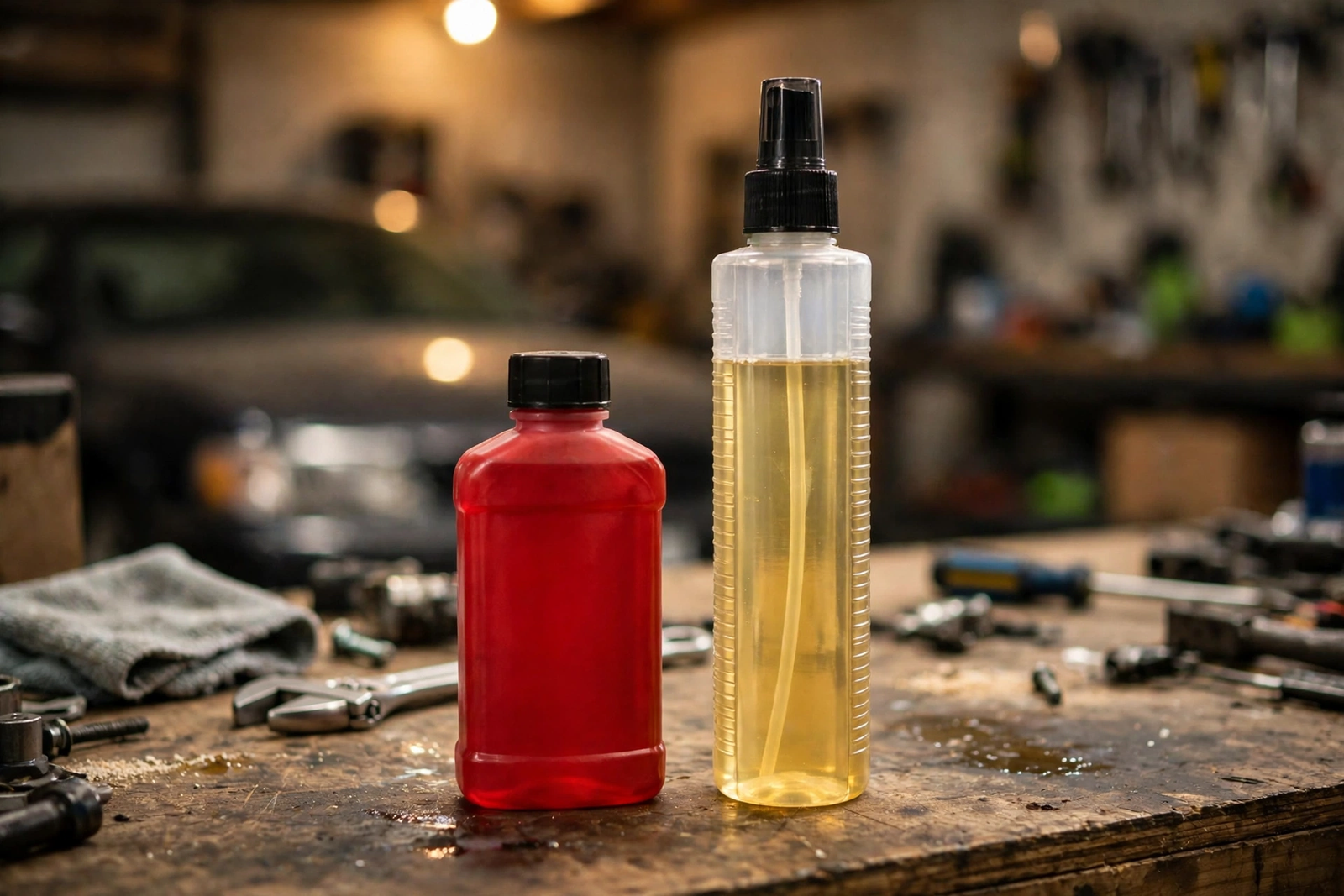
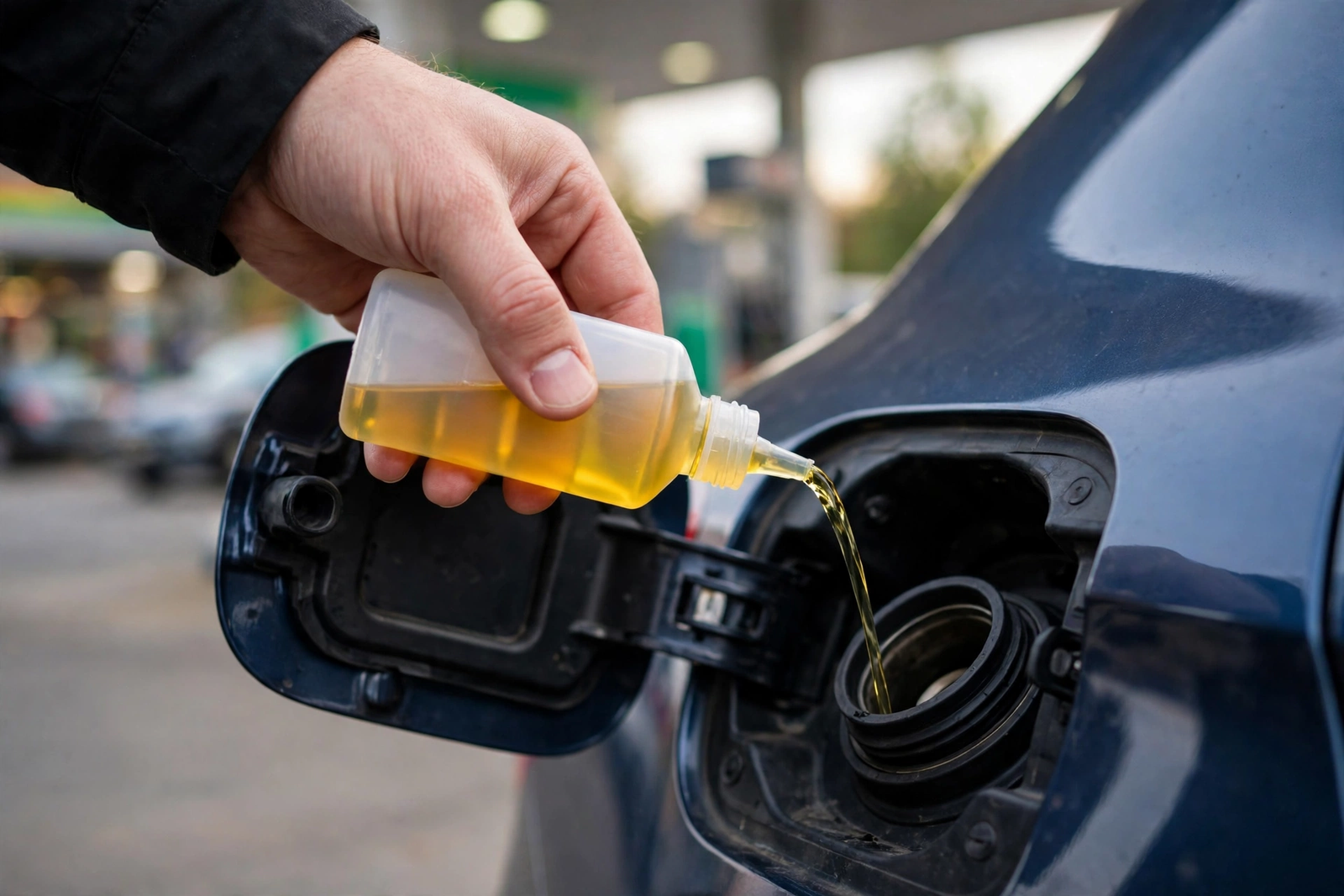
Walk into any auto parts aisle and you will find two kinds of bottles that look like they do the same job: fuel stabilizers and fuel system cleaners. They do not. A stabilizer like STA-BIL is a preservative — it keeps gasoline from going stale while your car, boat, or mower sits unused. A cleaner like Red Line SI-1 is a detergent — it scrubs away carbon deposits from injectors, valves, and combustion chambers in a car you actually drive. Buy the wrong one and you have spent money solving a problem you do not have.
The short answer: if your vehicle sits unused for 30 days or more, you need a fuel stabilizer — gasoline starts breaking down in as little as 30 days, and STA-BIL keeps it fresh for up to 24 months. If your daily driver has rough idle, hesitation, or lost pep from deposit buildup, you need a fuel system cleaner — Red Line SI-1’s concentrated detergents clean injectors and valves in one tank. Many owners eventually need both, just not at the same time.
Quick Picks: Fuel Stabilizer vs Fuel Cleaner
| Pick | Product | Best For | Check Price |
|---|---|---|---|
| Overall Winner | STA-BIL Storage Fuel Stabilizer | Any engine that sits 30+ days — prevents the costliest fuel damage | Check Price on Amazon |
| Best Budget | STA-BIL Storage Fuel Stabilizer | 16 oz treats up to 40 gallons — lowest cost per treatment | Check Price on Amazon |
| Premium Pick | Red Line SI-1 Complete Fuel System Cleaner | Concentrated PEA detergent formula for deep deposit cleaning | Check Price on Amazon |
What a Fuel Stabilizer Actually Does
Gasoline is perishable. Gold Eagle, the maker of STA-BIL, states that gasoline begins to break down in as little as 30 days after leaving the refinery. As it degrades it forms gum and varnish that clog carburetors and fuel injectors, and ethanol-blended fuels can absorb moisture and corrode fuel system parts. A stabilizer is an antioxidant and corrosion-inhibitor package: you add it to fresh fuel before storage, and it slows oxidation so the fuel stays usable for months instead of weeks.
STA-BIL Storage is the long-established name in this category — Gold Eagle describes it as America’s most trusted fuel stabilizer, with the formula dating back decades. Per the product listing, the 16 oz bottle treats up to 40 gallons (1 oz per 2.5 gallons), keeps gasoline fresh for up to 24 months, works in all gasoline including ethanol blends from E-10 through E-85, and is safe for all gasoline engines including 2-cycle.
One honest limitation worth knowing: STA-BIL will not restore gasoline that has already gone stale. It stops degradation; it does not reverse it. Treat fresh fuel, run the engine about five minutes so the treated fuel reaches the whole system, and store with the tank at least 95% full to limit condensation.
STA-BIL Storage Fuel Stabilizer — Best for Storage
The case for STA-BIL is prevention economics. A gummed-up carburetor or a no-start after winter storage costs far more in time and shop bills than a bottle of stabilizer. The measuring bottle meters the dose (1 oz per 2.5 gallons), the treatment covers everything from cars and motorcycles to boats, generators, and mowers, and the opened bottle stays good for two years. If you store anything with a fuel tank — winter, deployment, a project car — this is the bottle you buy first.
What a Fuel System Cleaner Actually Does
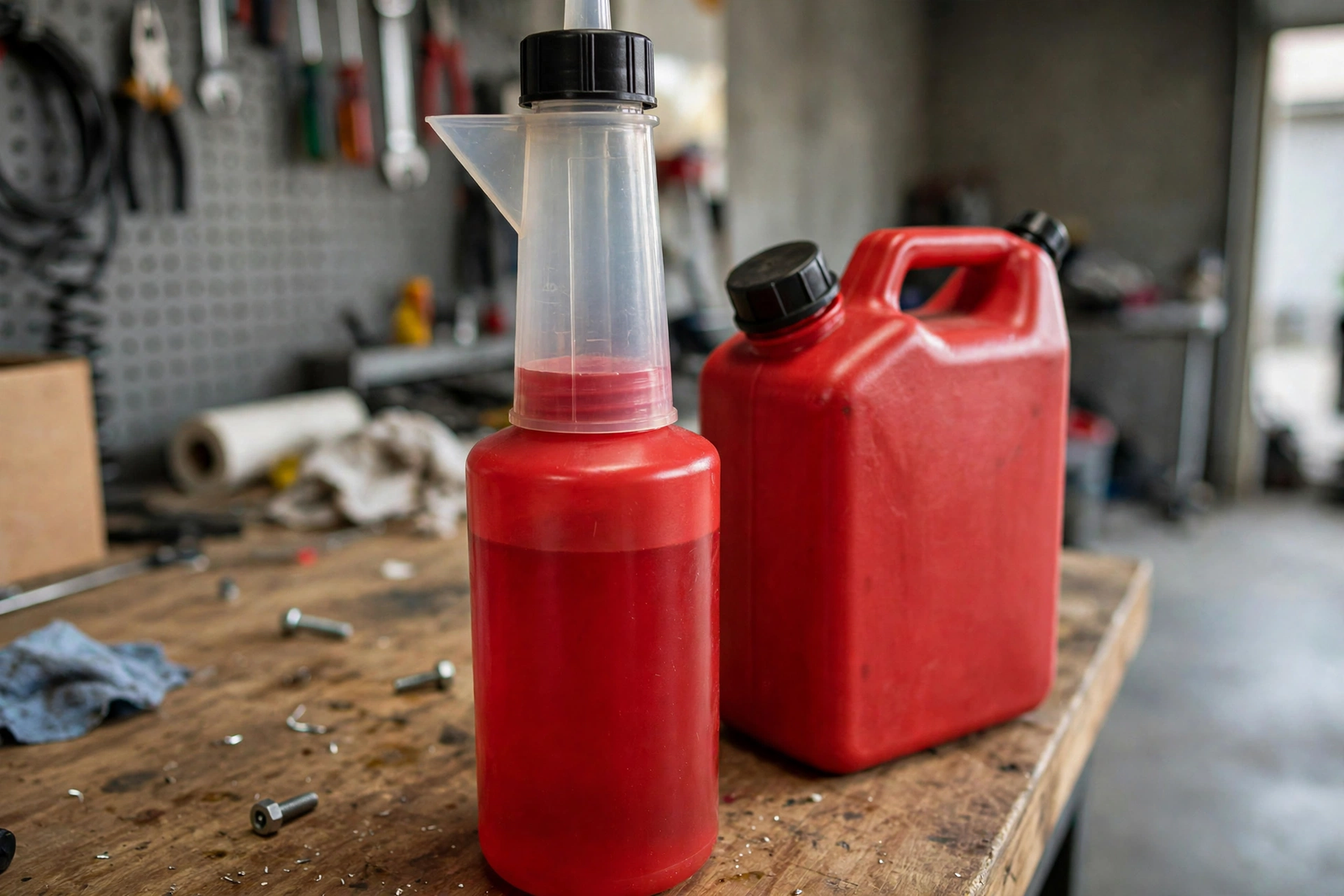
A fuel system cleaner does the opposite job: instead of preserving fuel, it cleans the engine parts the fuel touches. Over thousands of miles, injectors, intake valves, and combustion chambers collect carbon deposits that cause rough idle, hesitation, and lost fuel economy. A cleaner is a concentrated dose of detergents — Red Line SI-1 uses polyether amine (PEA), with the product’s safety data sheet listing 30–50% polyether amine content — that you pour into the tank and burn through with a tank of gas.
Per the product listing, one 15 oz bottle treats a full tank and the concentrated blend of high-temperature and low-temperature detergents cleans injectors, carburetors, valves, and combustion chamber deposits to nearly 100% efficiency in a single treatment. Red Line’s product data adds that a 15 oz dose per 15 gallons of gasoline can restore injector flow to nearly 100%. The formula also contains a synthetic upper-cylinder lubricant and is oxygen-sensor safe. This is a maintenance product for driven vehicles, not a storage product: it does nothing to keep fuel fresh for months.
Red Line SI-1 Complete Fuel System Cleaner — Best for Cleaning
The case for SI-1 is the strength of its detergent package. PEA is the detergent most often recommended by people who work on direct-injection engines, where intake valve deposits are a known issue, and the listing’s #1 Best Seller rank in Fuel System Cleaners (research snapshot) reflects a large owner base. Use one bottle per tank when you notice symptoms, or on a maintenance schedule; for ongoing cleanliness the maker suggests smaller maintenance doses. It will not fix mechanical problems or years of neglect, but for deposit-related drivability issues it is the right tool.

Fuel Stabilizer vs Fuel Cleaner: Head-to-Head
| STA-BIL Storage Fuel Stabilizer | Red Line SI-1 Fuel System Cleaner | |
|---|---|---|
| Job | Preserves gasoline during storage | Removes deposits from fuel system parts |
| When to use | Before storing any engine 30+ days | When a driven car shows deposit symptoms, or on maintenance schedule |
| Key chemistry | Antioxidants + corrosion inhibitors | 30–50% polyether amine detergents (per MSDS) |
| Treat rate | 1 oz per 2.5 gallons; 16 oz treats up to 40 gallons | One 15 oz bottle per tank |
| Duration | Keeps fuel fresh up to 24 months | Single-tank treatment; cleans to nearly 100% efficiency per listing |
| Ethanol fuel | Works with E-10 through E-85 | Suitable for oxygenated fuel |
| Limitation | Will not restore already-stale gasoline | Will not preserve fuel during storage; not a fix for mechanical faults |
| Best for | Stored cars, boats, mowers, generators, motorcycles | Daily drivers with rough idle, hesitation, deposit buildup |
When You Need Which (or Both)
You need the stabilizer when: the vehicle will sit 30 days or longer — winter storage, a boat between seasons, a motorcycle in the off months, a generator on standby, a classic car that comes out on weekends. Add it to fresh fuel, run the engine five minutes, and fill the tank to 95% or more. Our car maintenance checklist covers the full lay-up routine this fits into.
You need the cleaner when: the car is driven regularly but feels off — rough idle, stumble on acceleration, gradually worsening fuel economy — and maintenance is due. Pour a bottle into the tank before a fill-up and drive normally.
You need both when: you are waking a stored vehicle back up. Stabilize the fuel going into storage; run a cleaner through the first tank of the driving season to clear any deposits that formed. They do different jobs at different times, so there is no conflict in owning both.
Who Should Buy Which
Buy STA-BIL Storage if: you own anything with an engine that sits — a car parked for winter, a boat, an RV, a lawn mower, a snow blower in summer, a backup generator. If untreated fuel has ever left you with a no-start in spring, this is your product. Pair it with sensible garage storage — see our guide to garage storage for the rest of the setup.
Buy Red Line SI-1 if: your daily driver has over 50,000 miles and has never had a fuel system cleaning, or you notice idle and throttle-response symptoms. It is also the pick for direct-injection engines, which are more prone to intake valve deposits.
Buy both if: you store a vehicle seasonally and drive it hard in season. Stabilizer for the downtime, cleaner for the comeback.