Best RV Refrigerators: Absorption Fridges for Off-Grid Camping
An RV refrigerator is not a small household fridge and it is not a portable cooler: it is a built-in absorption fridge that runs on propane or shore power, keeps food cold for days off-grid, and fits into a cabinet cutout in the RV. The absorption part matters — these fridges cool with heat, not a compressor, so they run silently and keep working when there is no electrical hookup at all. This roundup covers three verified absorption fridges — a full-size Dometic, a mid-size RecPro 3-way, and a compact Smad 3-way — so you can match the size and the power options to your rig.
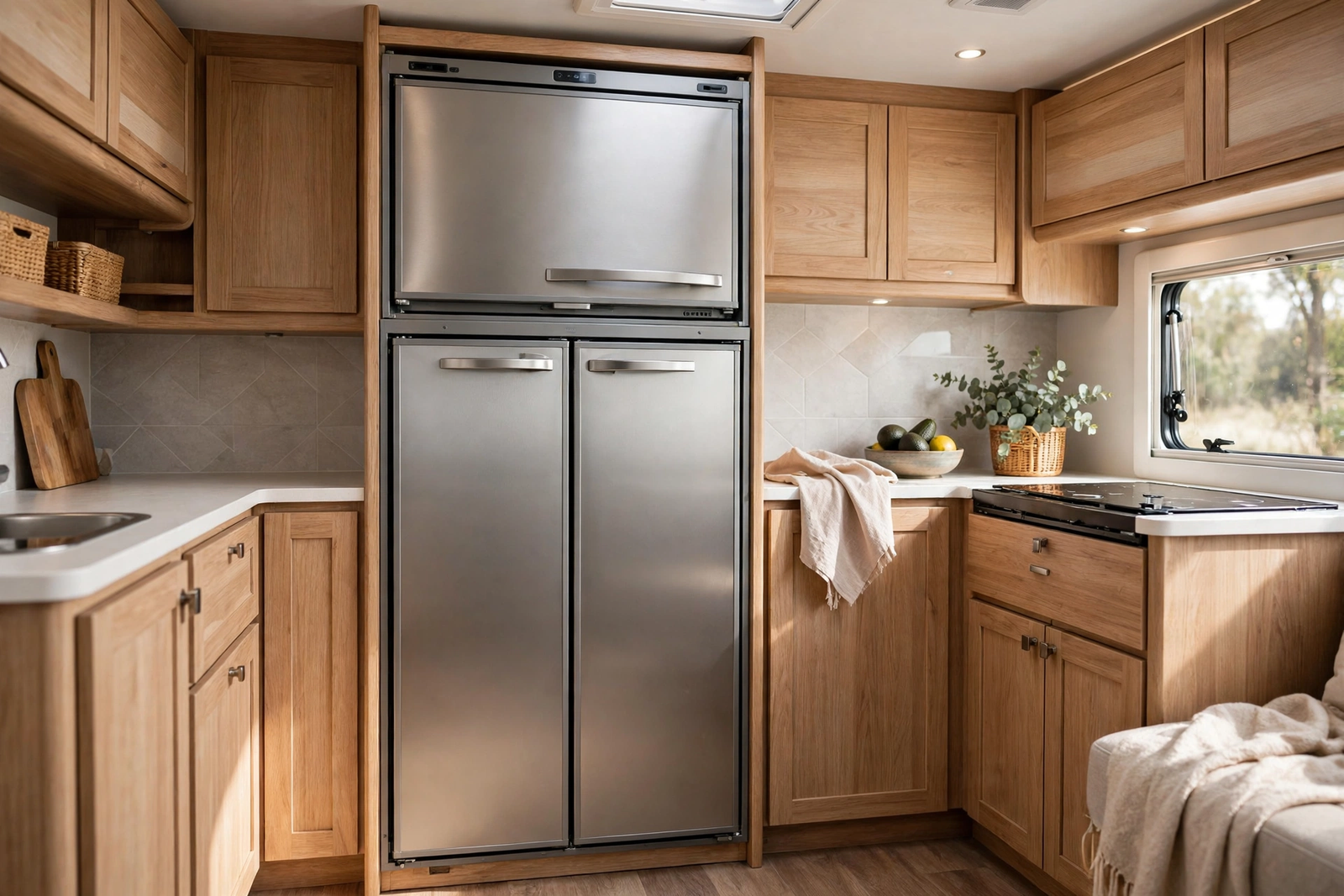
The short answer: for most RV owners replacing a full-size fridge, the best RV refrigerator is the Dometic Americana II Plus DM2882 — an 8 cu ft, two-way absorption fridge that runs on AC power or LP gas, with eye-level controls and automatic LP ignition. For a mid-size 3-way fridge, the RecPro RP-2166 runs on 110V, 12V or propane, and for a compact camper or van, the Smad 3.5 cu ft 3-way fridge covers the same three power sources in a much smaller cabinet.
As an Amazon Associate I earn from qualifying purchases.
Quick Pick: Best RV Refrigerators
| Pick | Product | Best For | Check Price |
|---|---|---|---|
| Overall Winner | Dometic Americana II Plus DM2882, 8 Cu Ft Two-Way Absorption Refrigerator | Full-size replacement: AC or LP gas, eye-level controls, automatic LP ignition | Check Price on Amazon |
| Best Mid-Size 3-Way Fridge | RecPro RV Refrigerator, 6.3 Cubic Feet, Gas and Electric, RP-2166 | Mid-size: 3-way power (110V, 12V, propane), gas absorption, hot-gas defrost | Check Price on Amazon |
| Best Compact 3-Way Fridge | Smad 3.5 Cu Ft Propane Refrigerator, 3-Way, DSG-100B1U(A) | Compact: 3-way power (12V, 110V, LPG), 3.0 cu ft fridge plus 0.5 cu ft freezer, silent absorption | Check Price on Amazon |
Table of Contents
How to Choose an RV Refrigerator
Start with the size, because an RV refrigerator has to fit a cabinet cutout, not just a floor space. Measure the opening in your RV — height, width and depth — before you look at any model, and check the model’s recess dimensions against it. The Dometic in this roundup is a full-size 8 cu ft unit, the RecPro is a mid-size 6.3 cu ft unit, and the Smad is a compact 3.5 cu ft unit, so the three picks cover three different cutouts. A fridge that is too tall for the opening is useless no matter how good it is.
Next, decide the power. A two-way absorption fridge runs on AC shore power or LP gas, which covers campgrounds and boondocking. A three-way fridge adds 12V DC, which lets it run off the vehicle battery while driving — but 12V operation drains a battery fast, so it is for driving hours, not for camping. All three picks here run on propane, which is what makes an absorption fridge an off-grid fridge: with a gas bottle, it keeps food cold for days with no hookup at all.
Then check the cooling type, because this is the decision that trips buyers up. The fridges in this roundup are absorption fridges — they cool with heat from a propane flame or an electric element, with no compressor and no moving parts in the cooling cycle, so they run silently. A compressor fridge cools faster and does not care about levelling, but it needs steady 12V power. The next section explains the difference in full, because buying the wrong type is the mistake this section exists to prevent.
Dometic Americana II Plus DM2882: Best for a Full-Size Replacement
The Dometic Americana II Plus DM2882 is the overall winner because it is the full-size, direct-replacement fridge most RVs were built around. This listing is the DM2882RBF1, an 8 cu ft two-way absorption refrigerator with right-hinge doors, premium controls and a fan, running on 120V AC electricity or LP gas with automatic two-way power selection. The manual lists 7.31 cu ft of total storage volume, and the unit measures about 24-7/8 inches wide by 26 inches deep by 60-13/16 inches high, so it fits the standard double-door cutout in many larger RVs.
The eye-level electronic controls and automatic LP ignition are the practical differences from a basic two-way fridge: the fridge picks its power source itself, and the gas lights itself. One caution stands on this listing: the Amazon identity for this model is confirmed through the manual’s ASIN record rather than a direct listing crawl, so confirm a live offer is showing on the listing before you order — an 8 cu ft fridge is a freight item, and the listing, the hinge side and the door-panel situation all need checking, since this model does not include door panels.
Dometic Americana II Plus DM2882, 8 Cu Ft Two-Way Absorption Refrigerator on Amazon: model DM2882RBF1, 8 cu ft, two-way AC or LP gas absorption, right hinge, premium controls with fan, 440 W AC input per the manual.
RecPro RP-2166: Best for a Mid-Size 3-Way Fridge
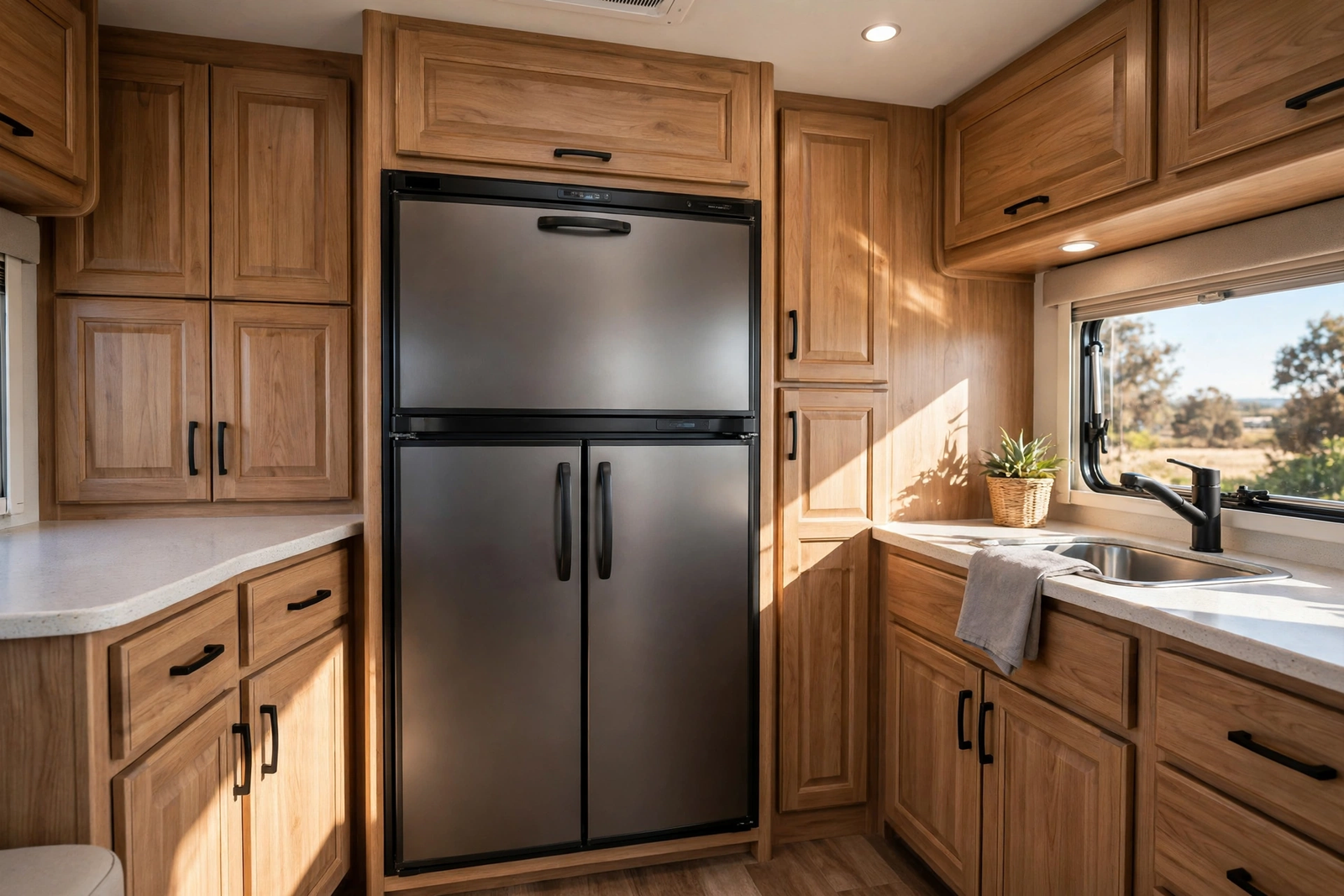
The RecPro RP-2166 is the pick for a mid-size RV that needs three power options. This listing is the 6.3 cu ft gas and electric RV refrigerator, model RP-2166, and it runs on 110V AC, 12V DC or propane gas, using gas-absorption technology. The listing describes a top freezer compartment with a main refrigerator section, hot-gas defrost, and an electronic lock, and the unit measures 25 by 23.25 by 53.5 inches — a smaller cabinet than the Dometic, for a smaller cutout.
The three-way power is the point of this pick: shore power at the campground, 12V while driving, and propane when there is no hookup. RecPro notes that the fridge still needs a 12V connection to function even on propane, and that 12V-only operation should be used while driving, since extended use drains the battery. The listing also notes that the fridge runs on propane gas only, not natural gas, and that it is shipped directly from RecPro.
RecPro RV Refrigerator, 6.3 Cubic Feet, Gas and Electric, RP-2166 on Amazon: model RP-2166, 6.3 cu ft, 3-way 110V, 12V or propane, gas absorption, hot-gas defrost, electronic lock.
Smad 3.5 Cu Ft: Best for a Compact 3-Way Fridge
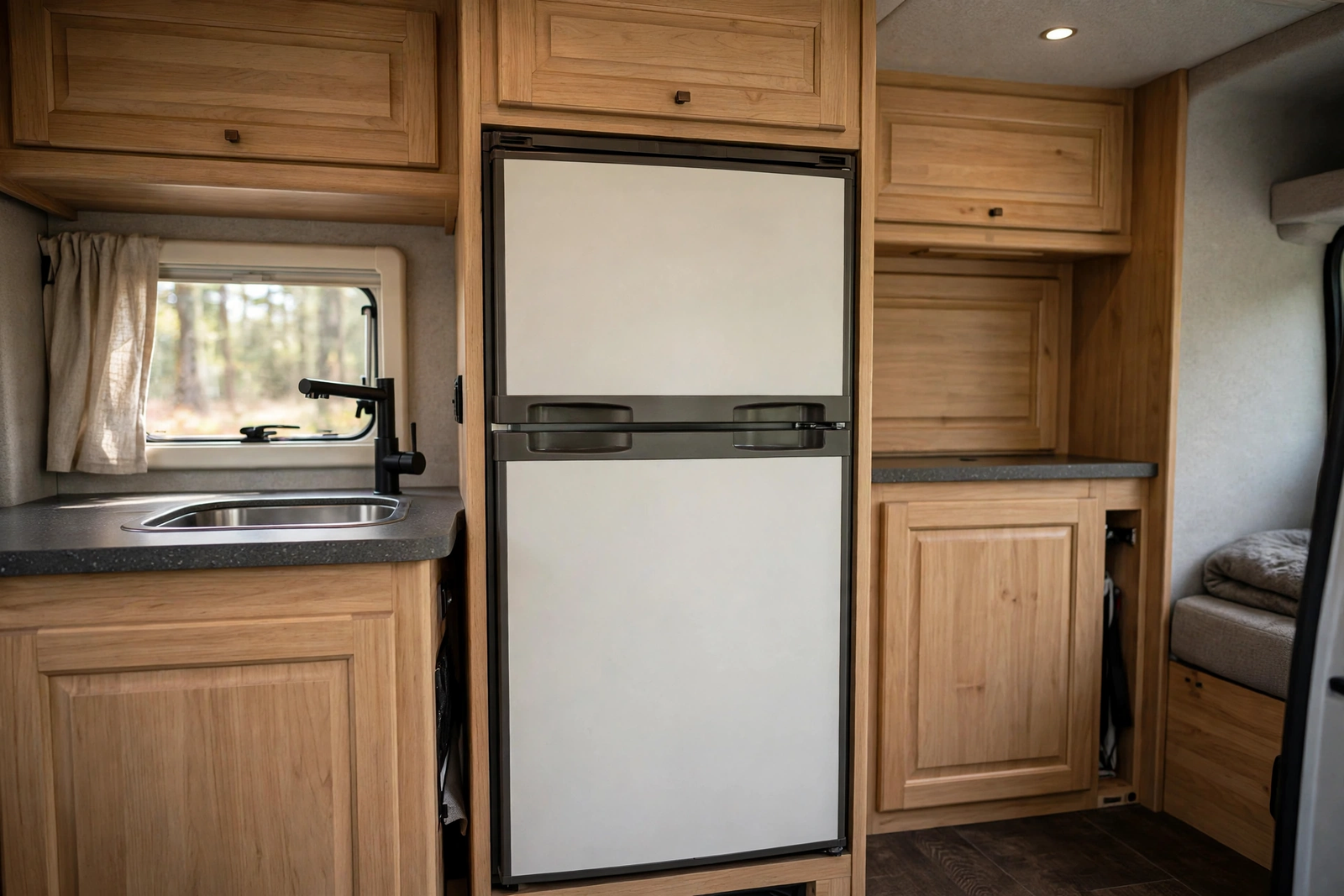
The Smad 3.5 Cu Ft is the pick for a compact camper, van or small trailer where a full-size fridge cannot fit. This listing is the Smad 3.5 cu ft propane refrigerator, model DSG-100B1U(A), and it runs on three power sources — 12V DC, 110V AC or LPG propane — with a quiet absorption cooling system and no Freon. The manual lists 3.5 cu ft of total capacity, split into a 3.0 cu ft refrigerator and a 0.5 cu ft freezer, with adjustable shelves.
The compact size is the trade and the point at once: 3.5 cu ft holds a weekend’s food for one or two people, not a family’s week, and the freezer is a small compartment rather than a full section. The manual notes the LPG pressure must be 2.8 kPa with a standard, non-adjustable regulator, and that only one power source should be active at a time — the fridge prioritises AC power when available, then DC, then LPG. One caution stands on this listing, the same as the Dometic: the Amazon identity is confirmed through the manual’s ASIN record rather than a direct listing crawl, so confirm a live offer is showing on the listing before you order.
Smad 3.5 Cu Ft Propane Refrigerator, 3-Way, DSG-100B1U(A) on Amazon: model DSG-100B1U(A), 3.5 cu ft, 3-way 12V, 110V or LPG, 3.0 cu ft fridge plus 0.5 cu ft freezer, silent absorption per the manual.
The Three RV Refrigerators Compared
The three picks in this roundup are all absorption fridges, and they differ in size, power options and the job they fit. The table is the quick check: match the capacity to your cutout and your crew, then check the power options against how you camp.
| Spec | Dometic DM2882 (B085MM3277) | RecPro RP-2166 (B09SVG1FZS) | Smad 3.5 Cu Ft (B01MQONKCT) |
|---|---|---|---|
| Capacity | 8 cu ft (7.31 cu ft total storage per the manual) | 6.3 cu ft | 3.5 cu ft (3.0 fridge + 0.5 freezer) |
| Power | 2-way: 120V AC or LP gas | 3-way: 110V, 12V or propane | 3-way: 12V, 110V or LPG |
| Cooling | Absorption, R717 refrigerant per the manual | Gas absorption, per the listing | Absorption, no Freon, per the manual |
| Controls | Eye-level electronic controls, automatic LP ignition | Electronic lock, hot-gas defrost | Adjustable thermostat, manual electric control |
| Dimensions | About 24-7/8 x 26 x 60-13/16 inches | 25 x 23.25 x 53.5 inches | 20.5 x 22.2 x 32.8 inches per the manual |
| Door panels | Not included | Not stated in this listing | Not stated in this listing |
| ASIN evidence | Manual ASIN record — confirm a live offer | Direct Amazon listing crawl | Manual ASIN record — confirm a live offer |
Absorption vs Compressor: The Difference That Decides Everything
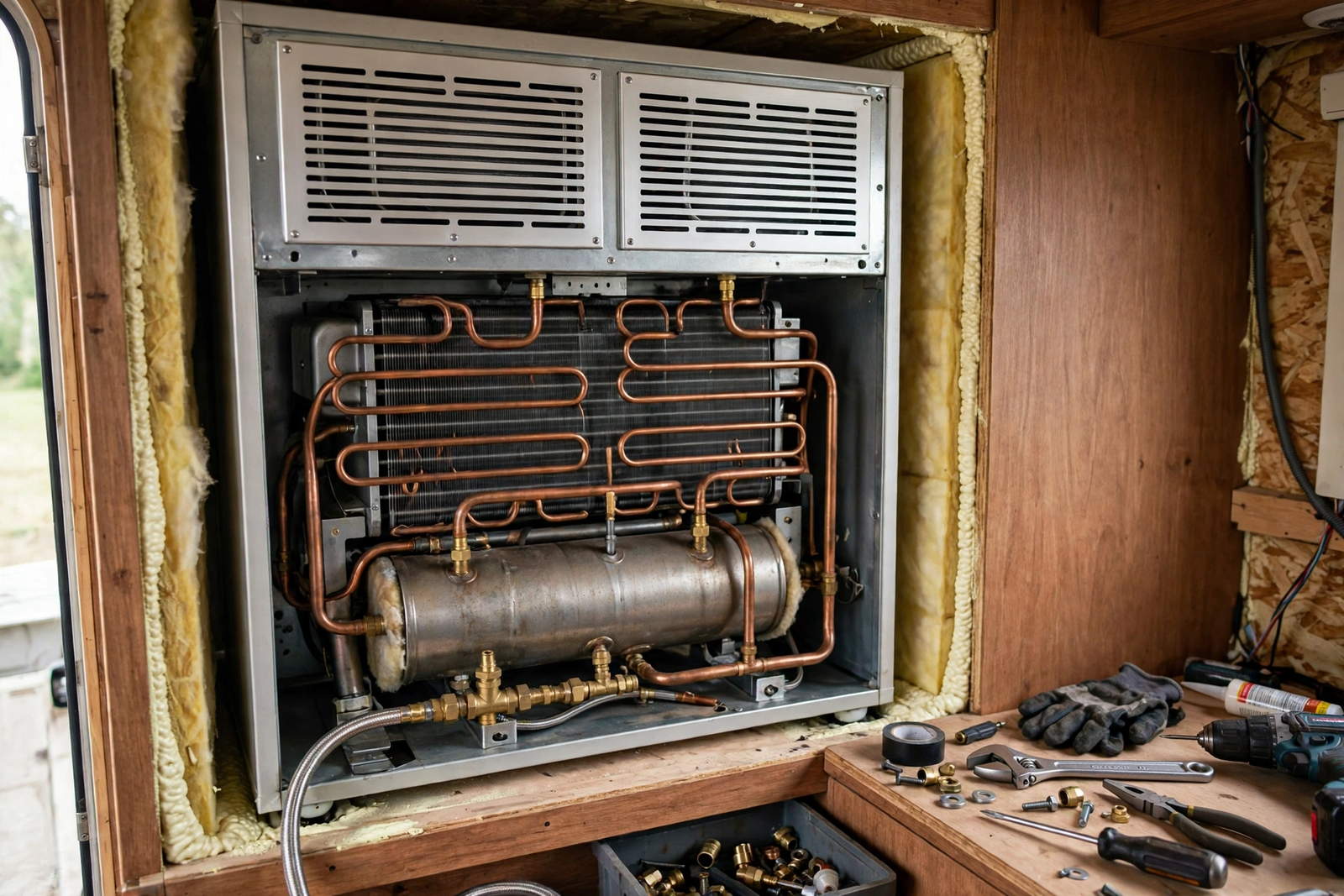
An absorption fridge cools with heat: a propane flame or an electric element heats an ammonia-and-water solution, and the cycle that follows pulls heat out of the cabinet. There is no compressor and no moving parts in the cooling cycle, so the fridge runs silently, and it keeps working on propane when there is no electrical hookup at all. The costs are slow cooling, a need for level ground, and a sensitivity to heat: an absorption fridge cools more slowly than a compressor fridge, it must be fairly level to work properly, and it struggles in very hot weather.
A compressor fridge cools the way a household fridge does: a compressor pumps refrigerant, the cabinet cools fast, and the fridge does not care whether the RV is level. The cost is power: a compressor fridge needs steady 12V electricity, which means a big battery bank or a hookup, and it draws power all day. That is why the portable 12V compressor fridges on this site — our Setpower RF25 portable freezer review and our Alpicool C9 portable fridge review — are a different product class from the fridges in this roundup: they are portable compressor coolers that sit in a car or a campsite, while an RV refrigerator is a built-in absorption fridge that lives in the RV’s cabinet. If you camp off-grid for days with only a gas bottle, absorption is the honest pick; if you have solar and batteries and want fast cooling, a compressor fridge is.
How to Install and Level an RV Refrigerator
Measure first, order second. An RV refrigerator is a built-in appliance, and the cutout decides everything: check the height, width and depth of the opening, the venting behind it, and the gas and power connections. The Dometic and RecPro in this roundup need a proper RV installation with outside ventilation for the propane burner — this is not a plug-in job, and if you are not sure, a qualified technician should do it. A fridge installed without the right venting is a safety problem, not a fitting problem.
Level the RV before you switch the fridge on. An absorption fridge relies on gravity to move the coolant through its tubes, so it must be fairly level to cool properly — running it far off level can damage the cooling unit, and the damage does not always show up right away. Level the RV with the jacks or levelling blocks, check with a bubble level, and only then start the fridge. Allow time for it to cool down before you load it: an absorption fridge cools slowly, so start it the day before a trip and load cold food into a cold fridge.
Who Should Buy Which RV Refrigerator
Buy the Dometic Americana II Plus DM2882 if: you are replacing a full-size fridge in a larger RV and you want the standard 8 cu ft two-way absorption unit with eye-level controls and automatic LP ignition — after confirming a live offer and the hinge side on the listing.
Buy the RecPro RP-2166 if: you need a mid-size 6.3 cu ft fridge with three power options — shore power, 12V while driving, and propane off-grid — and your cutout fits its smaller cabinet.
Buy the Smad 3.5 Cu Ft if: you have a compact camper or van, you need a small 3-way fridge, and a weekend’s food for one or two people is enough — after confirming a live offer on the listing.
Skip this roundup if: you want a portable fridge to carry between the car and the campsite — the portable compressor coolers in our Setpower and Alpicool reviews are that product, not these built-in absorption fridges. And if your RV already has a working fridge, a portable cooler for drinks and overflow, covered in our best car coolers for road trips roundup, is the more useful buy than a replacement fridge.
RV Refrigerator Care: Venting, Defrosting and Winter Storage
Keep the vents clear. An absorption fridge dumps its heat out of the back through the RV’s outside vents, and blocked vents make the fridge work harder and cool worse. Check the roof vent and the side vent for nests, leaves and dust before each season, and never store gear against the back of the fridge. A fridge that cannot shed heat cannot make cold.
Defrost the freezer when ice builds up: absorption fridges are not frost-free, and a thick layer of frost insulates the freezer and makes the whole unit work harder. For winter storage, empty the fridge, clean it, dry it fully, and leave the doors open — a closed, damp fridge grows mould over the winter, and a fridge stored with the doors shut will smell of it in the spring. Turn the gas off at the bottle, and if the RV sits for months, the fridge should sit empty, clean, dry and open.
The Verdict
The best RV refrigerator is the one that fits your cutout, your power and your camping style, and this roundup has a clear overall pick. The Dometic Americana II Plus DM2882 takes it: a full-size 8 cu ft two-way absorption fridge with eye-level controls and automatic LP ignition, built for the standard double-door cutout. For a mid-size rig, the RecPro RP-2166 adds 12V to the mix, and for a compact camper, the Smad 3.5 cu ft covers the same three power sources in a small cabinet.
Measure the cutout first. An absorption fridge that does not fit the opening is a return, not a refrigerator.
Dometic Americana II Plus DM2882, 8 Cu Ft Two-Way Absorption Refrigerator on Amazon: model DM2882RBF1, 8 cu ft, two-way AC or LP gas absorption, right hinge, premium controls with fan, 440 W AC input per the manual.
Frequently Asked Questions
What is the best RV refrigerator?
The best RV refrigerator depends on your cutout and how you camp. For a full-size replacement, the Dometic Americana II Plus DM2882 is the overall pick in this roundup — an 8 cu ft two-way absorption fridge running on AC power or LP gas. For a mid-size 3-way fridge, the RecPro RP-2166 is the pick, and for a compact camper, the Smad 3.5 cu ft 3-way fridge is the pick.
What is the difference between an RV refrigerator and a portable fridge?
An RV refrigerator is a built-in absorption fridge that lives in the RV’s cabinet, runs on propane or shore power, and cools silently with no compressor. A portable fridge is a compressor cooler you carry — it plugs into 12V power, cools fast, and moves between the car and the campsite. They are different product classes: this roundup covers built-in absorption fridges only.
Do RV refrigerators need to be level?
Yes — absorption RV refrigerators rely on gravity to move the coolant through their tubes, so they must be fairly level to cool properly. Running an absorption fridge far off level can damage the cooling unit. Compressor fridges do not have this requirement, which is one of the main differences between the two types.
How does an absorption RV refrigerator work?
An absorption RV refrigerator cools with heat instead of a compressor: a propane flame or an electric element heats an ammonia-and-water solution, and the cycle that follows pulls heat out of the cabinet. There are no moving parts in the cooling cycle, so the fridge runs silently, and on propane it keeps working with no electrical hookup at all.
Can an RV refrigerator run on propane while driving?
Many RV owners run their absorption fridge on propane while driving, but it is a debated practice and some tunnels and fuel stations require the gas to be off — check the rules where you travel. Three-way fridges such as the RecPro and Smad in this roundup can run on 12V while driving instead, which avoids running the gas on the road.
How long does an RV refrigerator take to cool down?
Absorption RV refrigerators cool slowly, so start the fridge the day before a trip and load cold food into a cold fridge — loading warm food into a warm fridge makes the wait much longer. The exact time depends on the size of the fridge, the outside temperature, and whether it is running on gas or electricity.