As an Amazon Associate I earn from qualifying purchases.
Frequently Asked Questions
How long does a portable air compressor take to inflate a car tire?
In this portable air compressor review, the short answer: for a routine top-up of a few PSI, a cordless portable air compressor like the AstroAI L7 typically takes a few minutes per tire. A fully flat tire takes much longer and strains the battery, that job belongs to a plug-in compressor or a tire shop.
Can a portable air compressor replace a gas station air pump?
For maintenance top-ups, yes, that is exactly what it is for. It will not match a shop compressor for speed on large jobs, and it cannot fix punctures. Think of it as replacing the quarterly gas-station trip, not the tire shop.
How often should I charge a cordless tire inflator?
The listing does not state a self-discharge rate, but lithium batteries lose charge over months in a trunk. Charging it every three months is a sensible routine, set a phone reminder tied to the seasons.
Is 150 PSI enough for truck tires?
Most light-truck and SUV tires run 35-45 PSI, well within a 150 PSI rating. Heavy-duty truck tires running 80+ PSI are a different category, check your door jamb sticker and match the tool to the tire.
Does the AstroAI L7 work without the battery?
Yes, according to the listing it has a 12V DC backup mode that runs off the car’s power outlet, so a dead battery does not leave you without inflation.
Cordless or 12V plug-in inflator, which is better?
Cordless wins on convenience: no car running, no cord routing, works on bikes anywhere. Plug-in 12V wins on unlimited runtime for big jobs. The L7 covers both bases with its 12V backup mode, which is why it suits most drivers.
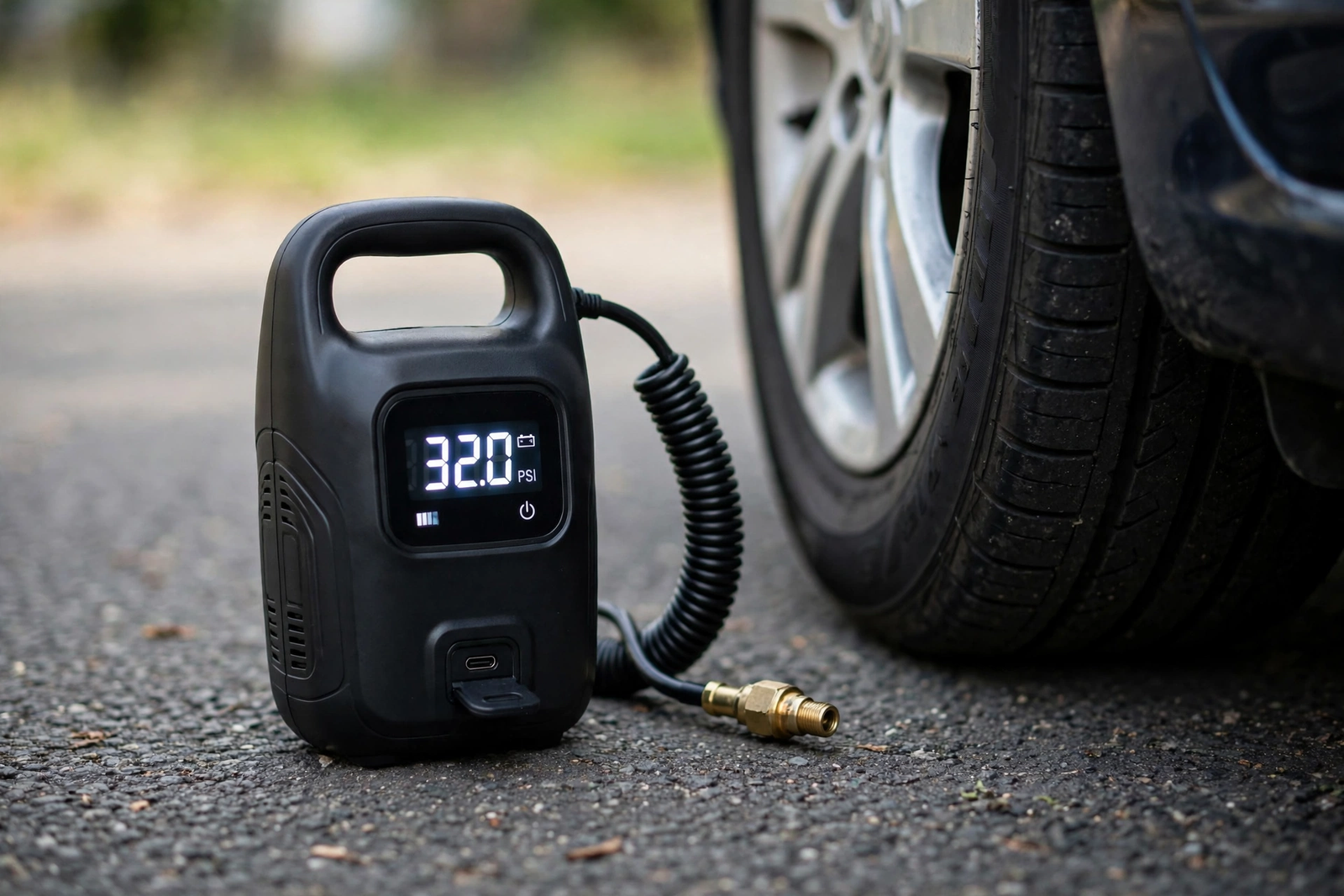
A portable air compressor is one of those tools you forget about until the morning your tire is visibly low and the nearest gas station air pump is broken, coin-only, or ten minutes away. The AstroAI L7 is a cordless portable air compressor built to solve exactly that: a battery-powered inflator with a 150 PSI max rating, a digital gauge, and automatic shut-off, so topping up a tire takes minutes in your own driveway.
The short answer: the AstroAI L7 is a strong cordless portable air compressor for routine top-ups and slow leaks, with a genuinely useful 150 PSI ceiling, preset modes, and auto shut-off. It is not a replacement for a shop compressor on fully flat tires, and like all battery inflators it needs periodic charging. For most drivers, it earns its trunk space.
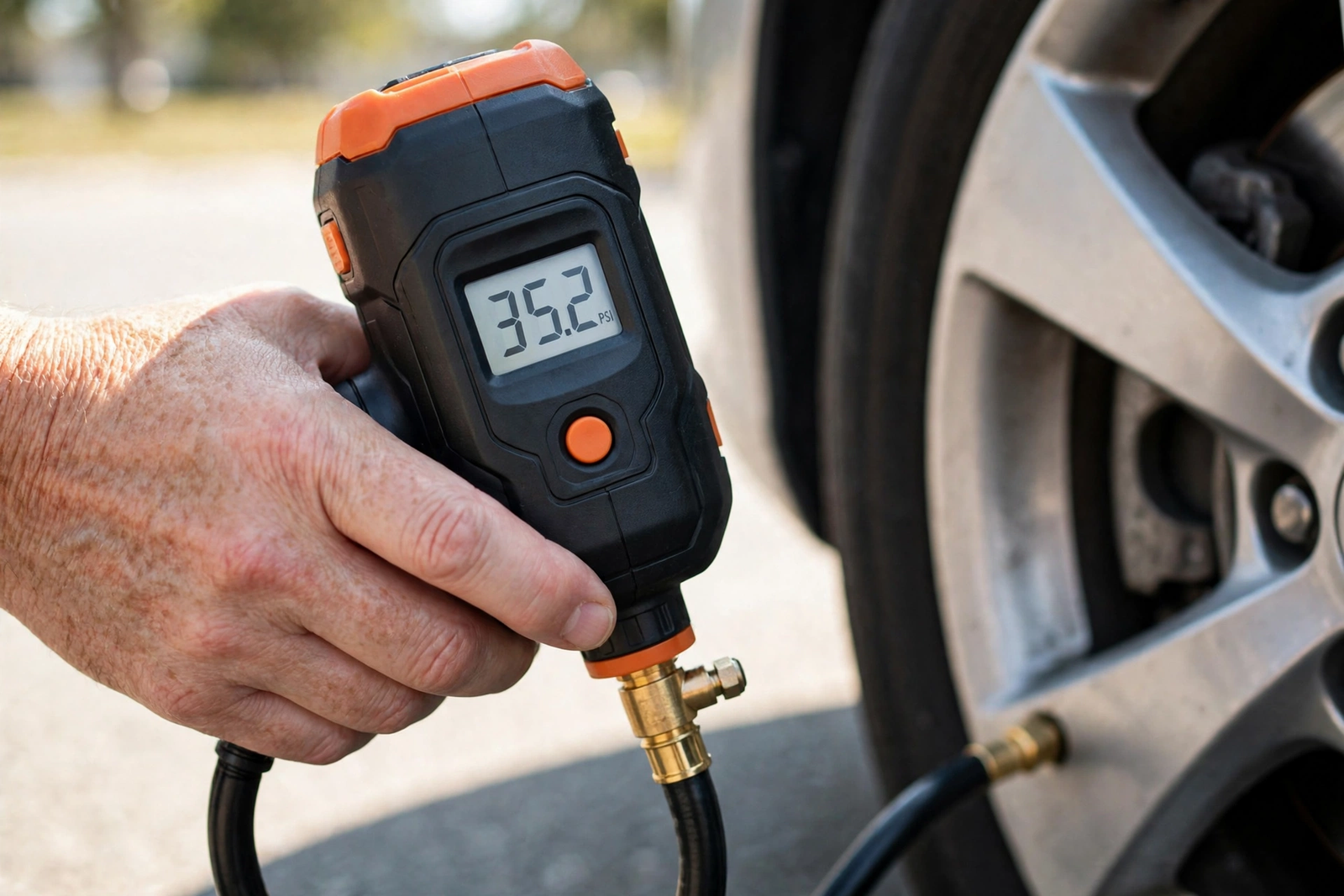
Table of Contents
Quick Pick: AstroAI L7 Portable Air Compressor
| Pick | Best For | Key Spec | Check Price |
|---|---|---|---|
| Overall | Routine top-ups and slow leaks | 150 PSI max, cordless, auto shut-off | Check Price on Amazon |
| Road trips | Trunk emergency kit | Battery + 12V DC backup, LED light | Check Price on Amazon |
| Multi-vehicle homes | Cars, bikes, motorcycles, balls | Preset modes, nozzle kit included | Check Price on Amazon |
Power and Inflation: What 150 PSI Really Means
The headline spec on this portable air compressor is the 150 PSI maximum, and it matters more than it looks. Most car tires run 30–35 PSI, so a 150 PSI ceiling means the motor is never straining at its limit during normal use — it tops up quickly and runs cooler than a unit rated at 100 PSI working flat out. The listing describes 17 L/min airflow, which is the number that decides how long a top-up actually takes.
What stands out: cordless operation changes when you use it. A 12V inflator needs the car running and a cord snaked to each wheel; the L7’s battery means you can walk around the car checking all four tires in one pass, or inflate a bike tire in the garage without moving the car at all.
Worth knowing: battery inflators have a real limit — a fully flat tire on a heavy SUV will drain the battery fast and heat the unit. The honest use case is top-ups, slow leaks, and maintenance, not resurrecting a tire that has been flat for a week. For that, a plug-in compressor or a shop visit is the right tool.
Battery and Charging: The Cordless Trade-off
The L7 runs on a 4000mAh rechargeable battery charged over USB-C, according to the listing. That is the core convenience and the core maintenance item in one: no cords during use, but the battery self-discharges sitting in a trunk, so it needs a top-up charge every few months to be ready when you need it.
What stands out: the listing also describes a 12V DC backup mode, which is the feature that separates thoughtful designs from the rest. If the battery is dead when you discover the low tire, you can still run it off the car’s 12V outlet — the exact situation where a battery-only unit would leave you stranded.
Worth knowing: treat it like a smoke detector battery. Put a recurring phone reminder every three months to charge it. A cordless inflator with a dead battery is just trunk weight.
Accuracy and Auto Shut-off: Set It and Walk Away
The digital gauge reads in PSI, kPa, BAR, and KG/CM², and the auto shut-off stops inflation at your preset pressure. This is the feature that makes a portable air compressor genuinely better than a gas-station pump: you set 35 PSI, start it, and it stops itself instead of you hovering over the gauge and bleeding off overshoot.
What stands out: preset modes for car, motorcycle, bicycle, and ball take the guesswork out. Beginners tend to over-inflate because they don’t know the target; presets encode the right ranges so the most common mistake is hard to make.
Worth knowing: no handheld gauge is a calibration lab. For critical accuracy, cross-check against a dedicated gauge once in a while. For weekly top-ups, the built-in readout is plenty.

Ease of Use: LED Light, Nozzles, and Storage
The listing describes an LED light, a set of accessory nozzles, and a storage bag. These sound like throw-ins until you use them: the LED matters because low tires reveal themselves at night, the nozzles cover bike valves and sports balls, and the bag keeps the hose from tangling with the rest of the trunk.
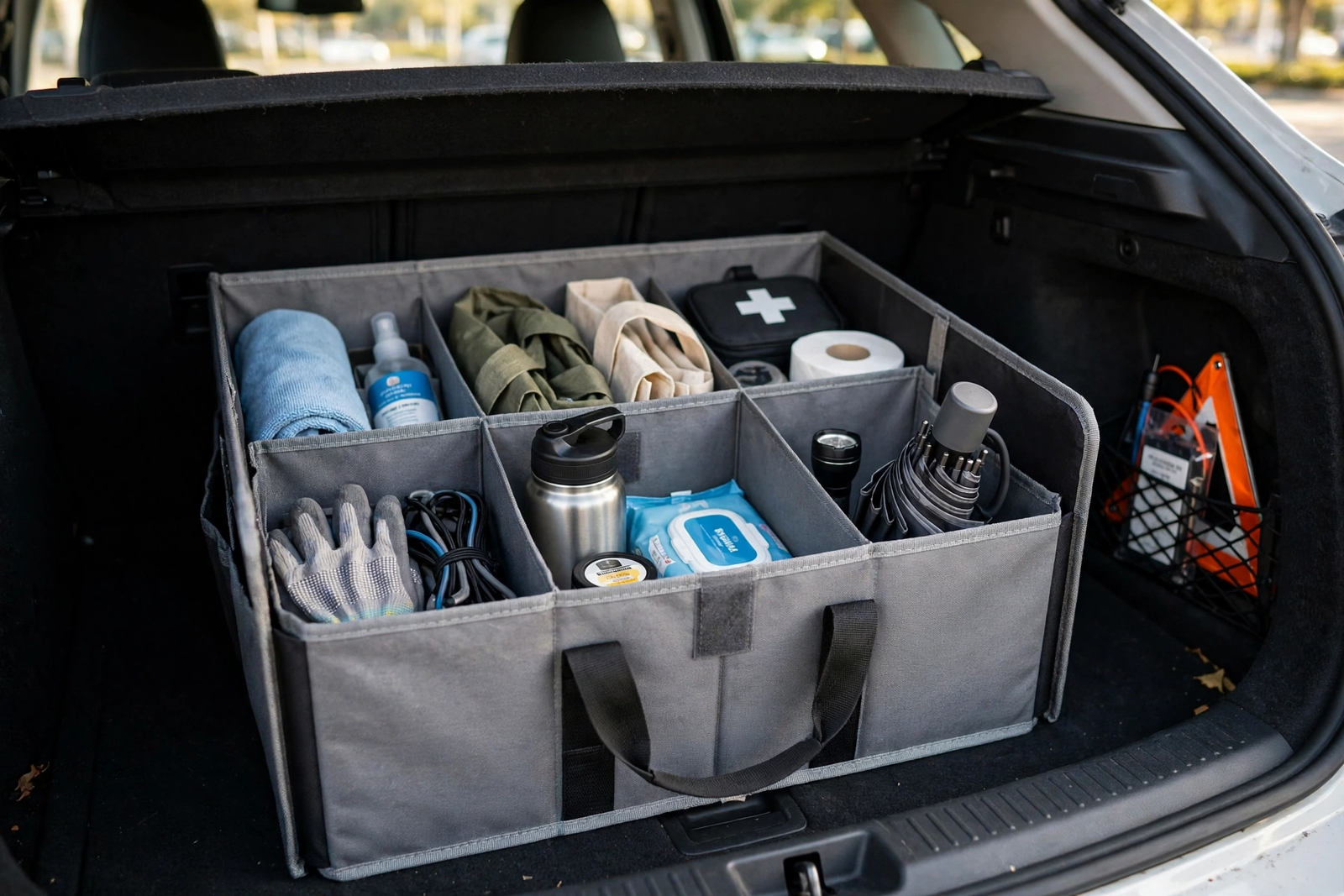
What stands out: everything living in one bag is what makes this a grab-and-go tool rather than a drawer of loose parts. The difference between a tool you use and a tool you own is usually organization.
Worth knowing: keep the manual’s pressure chart for your specific car somewhere you will find it — the driver’s door jamb sticker has your car’s target pressures, which beats any preset.
AstroAI L7 Specs at a Glance
| Spec | Detail (per listing) |
|---|---|
| Max pressure | 150 PSI |
| Airflow | 17 L/min |
| Battery | 4000mAh, USB-C rechargeable |
| Backup power | 12V DC car outlet |
| Gauge units | PSI / kPa / BAR / KG/CM² |
| Preset modes | Car, motorcycle, bicycle, ball |
| Extras | Auto shut-off, LED light, nozzle kit, storage bag |
All specs above come from the product listing and third-party spec roundups checked the same day this article was written.
Who Should Buy It — and Who Shouldn’t
Buy it if: you want to handle routine top-ups at home; you drive an older car with slow leaks; you want a trunk emergency tool alongside a jump starter; you inflate bike tires or sports balls regularly.
Skip it if: you need a shop-grade compressor for fully flat tires or high-volume jobs; you will never remember to charge it (get a 12V-only unit instead); your car already has a built-in compressor or run-flat tires and a service plan.
For road-trip packing, pair it with our broader car accessories for road trips checklist so the trunk kit is complete.

The Verdict
The AstroAI L7 is a well-thought-out cordless portable air compressor: 150 PSI headroom, auto shut-off with presets, USB-C charging, and a 12V backup for the day you forget to charge it. Its honest limits are battery runtime on big jobs and the need for periodic charging. If you want tire top-ups to take five minutes in your driveway instead of a gas-station detour, this portable air compressor earns its place in the trunk.
AstroAI L7 Cordless Portable Air Compressor: 150 PSI, 4000mAh cordless, auto shut-off, 12V backup.
Bottom line: for routine top-ups and a trunk emergency kit, the L7’s cordless freedom plus 12V backup covers every scenario — buy it once and forget gas-station air pumps.